
Queen Bee Marking Colors: The Full Year-by-Year Chart
What color do you mark a queen bee this year? The full international color chart, the mnemonic, and how to mark her safely.
Slug : queen-bee-marking-colors-chart-by-year
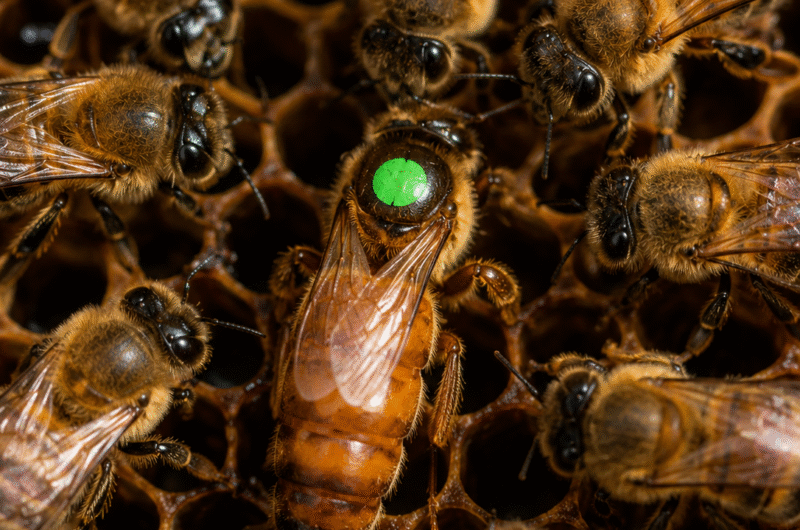
I once spent forty minutes tearing apart a hive looking for a queen I was certain I’d lost, pulling frame after frame, getting more anxious by the minute, before I finally spotted her — a small white dot on her thorax, sitting exactly where she should have been the whole time, just tucked between two nurse bees I’d glanced past twice. That dot didn’t just save me from a false alarm. It told me, at a glance, that she was a current-year queen, which meant the colony wasn’t overdue for requeening. That’s the entire case for marking in one story.
Short answer: In 2026, queens are marked white under the international five-color rotation, which cycles white, yellow, red, green, and blue based on the last digit of the year — white and yellow for years ending in 1/6 and 2/7, red and green for 3/8 and 4/9, and blue for years ending in 0 or 5.
The Current Year’s Color, at a Glance
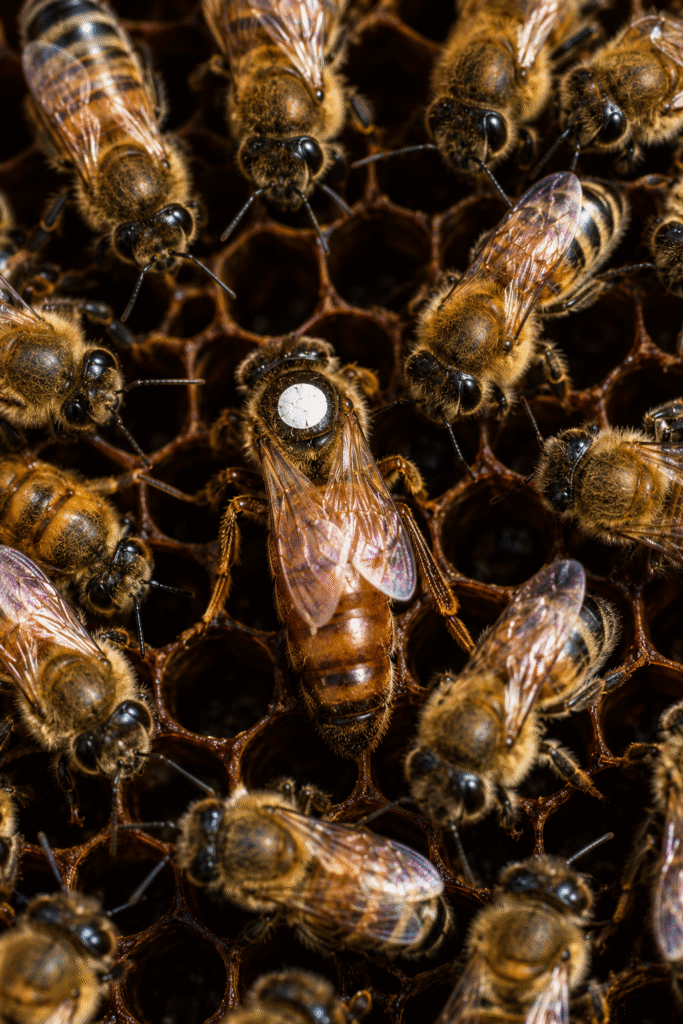
2026 = White. If you’re reading this in a different year, the rotation below tells you exactly what color applies — the system repeats every five years, so you’ll never need more than this one chart.
How the International 5-Color System Works
Before a colony even gets a marked queen, someone had to raise her — a process that’s genuinely more involved than the “feed a larva royal jelly” shorthand most beginners learn, and one that researchers have been actively re-examining in recent findings on how queens are actually made. Once she’s mated and laying, marking her is the beekeeper’s way of tagging that moment in time.
The system was designed to be universal — a marked queen from a breeder in Georgia and one from an apiary in France use the same color for the same year, so any beekeeper anywhere can glance at a queen and know roughly how old she is without checking records.
Color chart by year:
- Year ends in 1 or 6 → White (e.g. 2021, 2026)
- Year ends in 2 or 7 → Yellow (e.g. 2022, 2027)
- Year ends in 3 or 8 → Red (e.g. 2023, 2028)
- Year ends in 4 or 9 → Green (e.g. 2024, 2029)
- Year ends in 0 or 5 → Blue (e.g. 2025, 2030)
The mnemonic beekeepers actually use
The order — white, yellow, red, green, blue — is commonly remembered with the phrase “Will You Raise Good Bees?”, where each first letter matches the color in sequence. It sounds a little silly the first time someone teaches it to you at a bee club meeting, and then it’s permanently stuck in your head, which is exactly the point.
Why Marking Your Queen Matters Beyond Just “Finding Her”
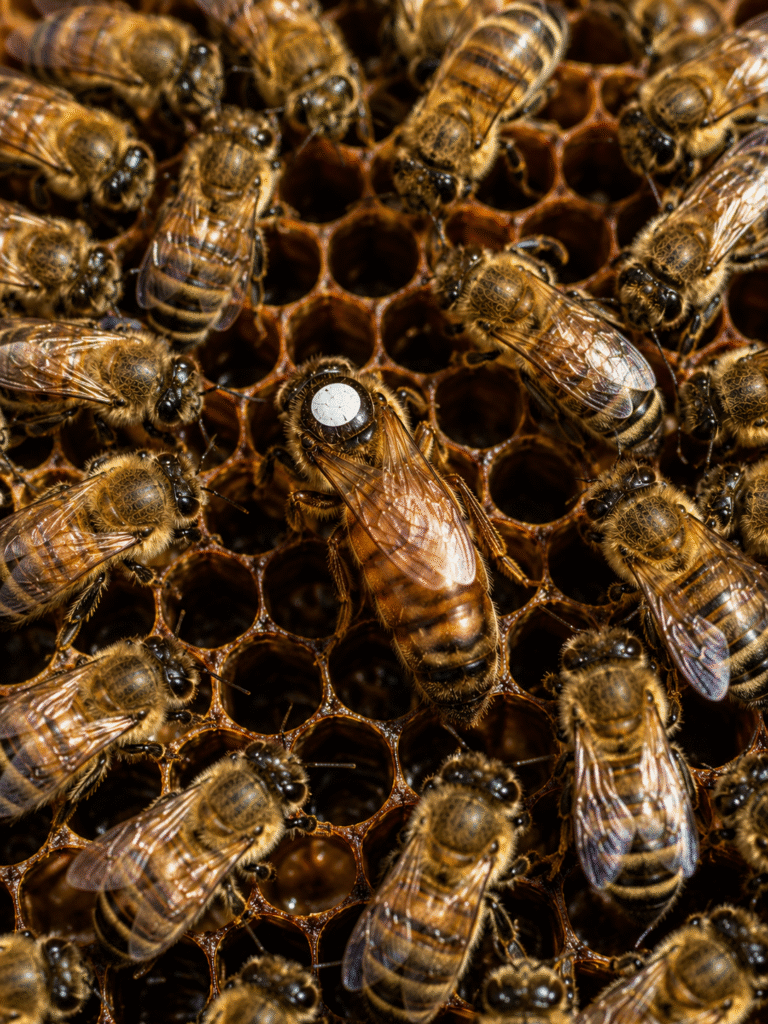
Finding her faster during inspections is the obvious benefit, but the real value shows up over a season, not in a single inspection. A queen’s laying rate typically peaks in her first one to two years and tapers after that — commercial queen-breeding operations, including large-scale climate-controlled rearing programs now running in places like Canada, track this closely because a declining queen directly costs colony strength and honey yield. For a hobbyist with two or three hives, the stakes are smaller but the logic is identical: glance at the color, know the age, decide whether it’s time to plan a requeening before a weak queen drags the whole colony down through a nectar flow.
There’s a second, quieter benefit. If you head into your hive expecting to see a white-marked queen and instead find an unmarked one, you don’t need to guess what happened — you know the colony has either swarmed or superseded her, and you can act accordingly instead of spending your inspection confused about why “the queen” suddenly looks different.
How to Mark a Queen Safely, Step by Step
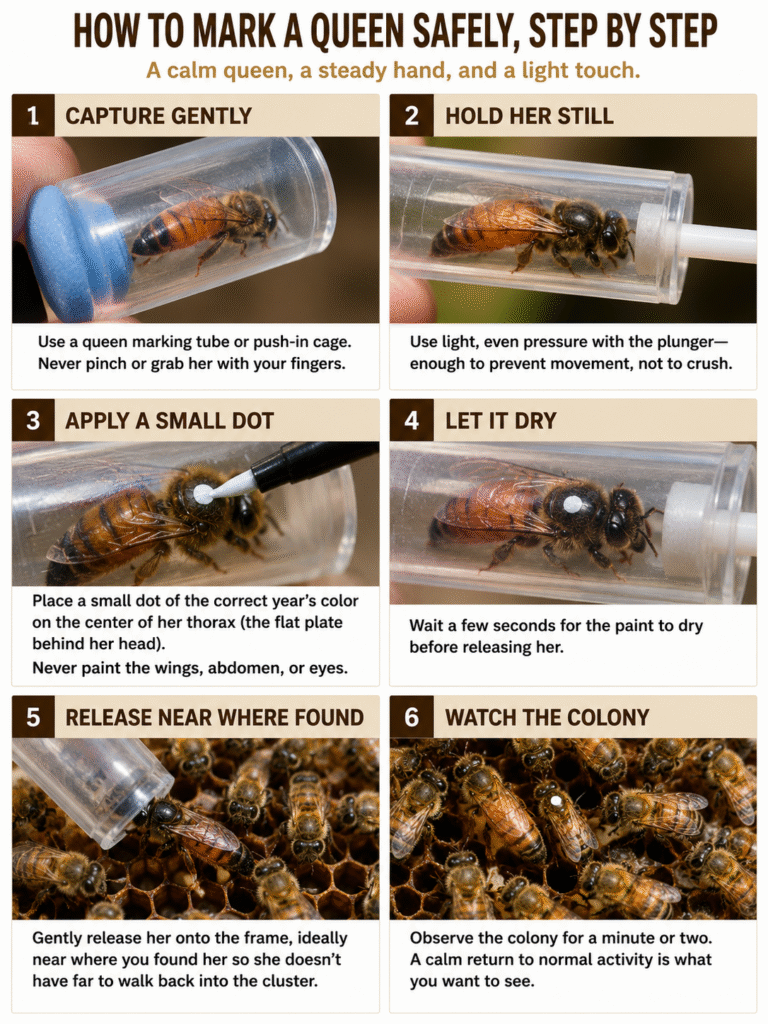
If you’re just getting started with your first hive, I’d actually recommend ordering a pre-marked queen from your supplier for your first season — there’s no shame in outsourcing the riskiest ten seconds of the whole process while you’re still building confidence handling bees at all. Once you’re ready to do it yourself:
Gently capture the queen using a queen marking tube or a push-in cage — never pinch or grab her directly with your fingers. Hold her still with light, even pressure from the tube’s plunger, enough that she can’t walk but not so much that you’re crushing her. Apply a small, single dot of the correct year’s color to the center of her thorax — the flat plate behind her head, never her wings, abdomen, or eyes. Let the paint dry for a few seconds before releasing her back onto the frame, ideally near where you found her so she doesn’t have far to walk back into the cluster. Watch the colony’s reaction for a minute or two — a calm return to normal activity is what you want to see.
- Gently capture the queen using a queen marking tube or a push-in cage — never pinch or grab her directly with your fingers.
- Hold her still with light, even pressure from the tube’s plunger, enough that she can’t walk but not so much that you’re crushing her.
- Apply a small, single dot of the correct year’s color to the center of her thorax — the flat plate behind her head, never her wings, abdomen, or eyes.
- Let the paint dry for a few seconds before releasing her back onto the frame, ideally near where you found her so she doesn’t have far to walk back into the cluster.
- Watch the colony’s reaction for a minute or two — a calm return to normal activity is what you want to see.
Tools that are safe (and ones to avoid)
Water-based paint pens made for queen marking — the beekeeping-supply versions of a Posca-style pen — are the standard for a reason: they’re non-toxic, dry fast, and don’t carry solvents that could disorient her or alarm the colony with an unfamiliar scent. Skip nail polish, permanent markers, and anything solvent-based; the drying time alone increases the risk of her getting “balled” (mobbed) by worker bees who don’t recognize her scent when she’s released too soon.
What an Unmarked Queen Is Telling You
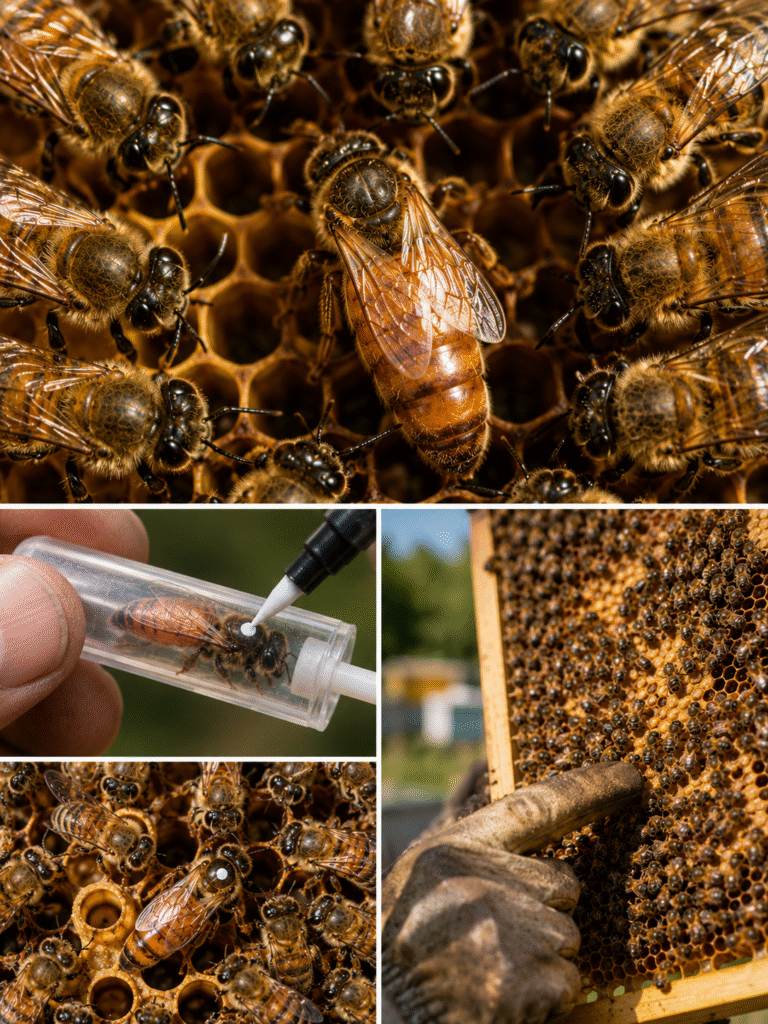
This is where marking earns its keep as a diagnostic tool, not just a convenience. If you marked last year’s queen and this season you find a healthy, laying queen with no dot at all, the colony has replaced her — through swarming, where the old queen left with a portion of the colony, or through supersedure, where the workers raised a replacement on their own because the original was failing. Either way, an unmarked queen is your signal to update your records and start watching brood pattern and temperament closely, since a newly mated queen can take a few weeks to hit her stride.
FAQ
What color do you mark a queen bee in 2026?
White. Under the international five-color rotation, years ending in 1 or 6 are marked white, and 2026 ends in 6.
How does the international queen marking color code work?
It’s a five-color cycle — white, yellow, red, green, blue — tied to the last digit of the year, so the same color always means the same age gap no matter where in the world the queen was marked.
Why do beekeepers mark their queens at all?
It makes her faster to find during inspections and lets you tell her age at a glance, which helps you plan requeening before an aging queen’s declining laying rate hurts the colony.
What’s the safest way to mark a queen without hurting her?
Use a purpose-made queen marking pen and a marking tube or push-in cage, apply one small dot to the center of her thorax only, and avoid her wings, eyes, and abdomen entirely.
How long does a queen marking dot usually last?
A properly applied water-based mark typically lasts the queen’s productive lifespan, though it can fade or get partially groomed off by workers over a year or two, which is why annual color changes still matter even if the old dot is still faintly visible.
Can I use nail polish or a regular marker instead of a bee marking pen?
It’s not recommended — many nail polishes and permanent markers contain solvents that can harm the queen or take too long to dry, raising the risk she’ll be attacked by the colony before the mark sets.
What does it mean if I find an unmarked queen in a hive I marked?
It means the colony has replaced her, either through swarming or supersedure, and you should treat her as a brand-new queen for record-keeping and give her a few weeks before judging her laying pattern.