
For as long as anyone’s kept bees, there’s been one line every beginner hears within their first season: feed a larva royal jelly, and you get a queen. It’s tidy. It’s memorable. It’s also, according to a study published in Nature this June, missing most of the story.
I spent an afternoon in mid-June going back and forth with a beekeeper I’ve corresponded with for years — a sideliner running about 40 colonies in the Central Valley — trying to explain what this new research actually changes about how we think about queen rearing. His first reaction was skepticism. “We’ve been grafting larvae into queen cups for decades and it works,” he told me. “If royal jelly wasn’t the answer, why does the method work at all?”
That’s the right question, and it’s exactly what the research team at UC Riverside’s Center for Integrative Bee Research set out to untangle. The answer turns out to be more interesting than a simple “diet did it” explanation — and it has real implications for anyone who grafts queens, buys queens, or has ever wondered why some queen-rearing attempts fail even when the technique looks textbook-perfect.
What the old model got wrong — and what it got right
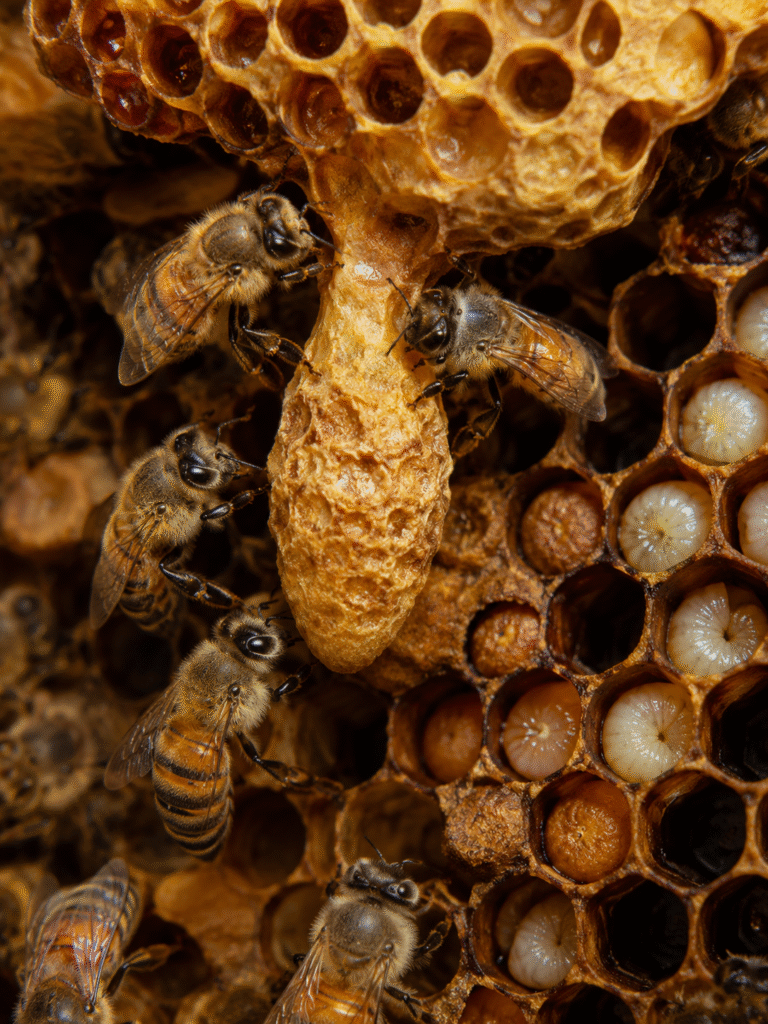
Nobody is saying royal jelly doesn’t matter. It clearly does. What the research shows is that royal jelly was never operating alone. A team led by entomologist Boris Baer used thermal imaging, chemical analysis, and materials science techniques most beekeepers will never see outside a lab to examine exactly what happens inside a queen cell versus an ordinary brood cell — and the differences go well beyond diet.
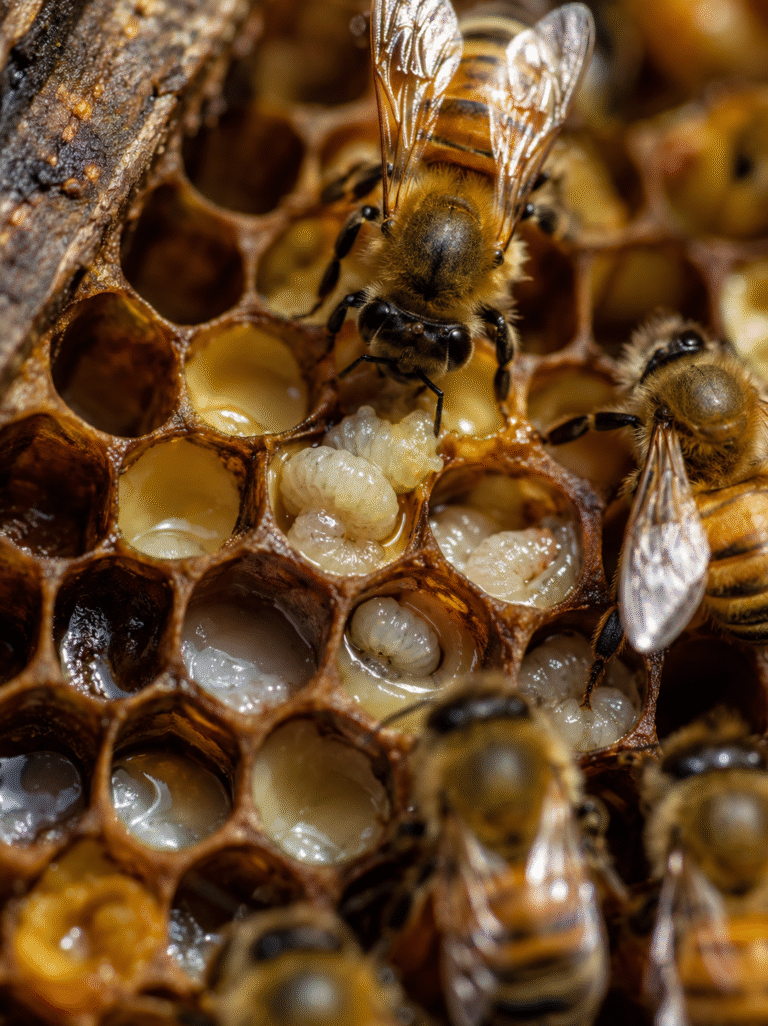
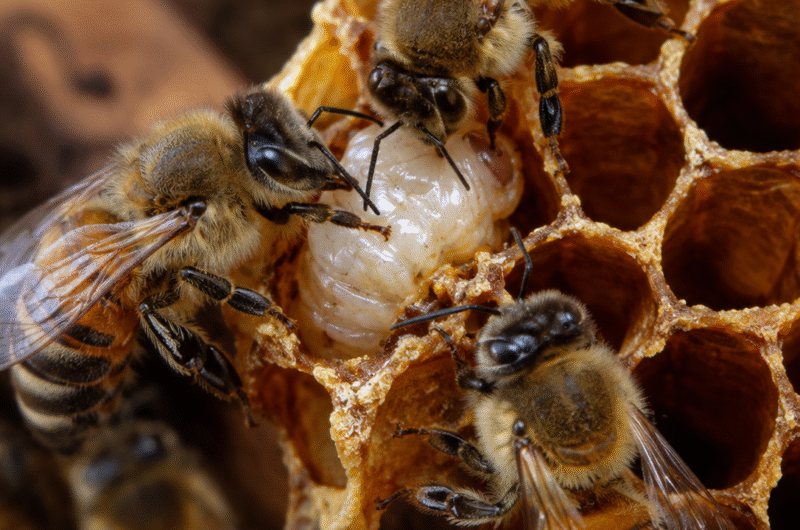
Queen cells, it turns out, are built from a distinct wax. Not just shaped differently — the peanut-shaped structure most beekeepers already recognize — but chemically different. The wax is less dense, holds heat and moisture differently, and carries its own signature of fatty acids that ordinary comb wax doesn’t have. When researchers raised queen larvae in cells built from standard worker wax instead, even while feeding them identical royal jelly, more of those larvae died, and the survivors emerged smaller.
That single experiment is the piece that should make every beekeeper who’s ever grafted a queen sit up. Diet was controlled. Genetics were controlled. The only variable was the material of the cell itself, and it changed the outcome.
Meet the workers nobody had named yet
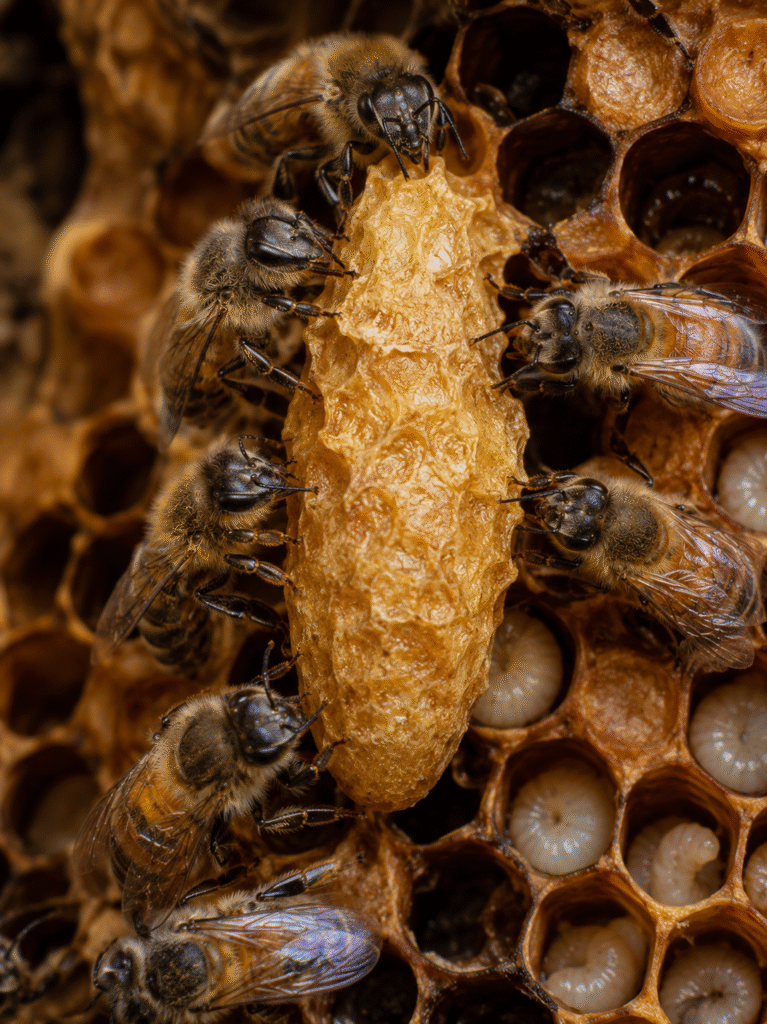
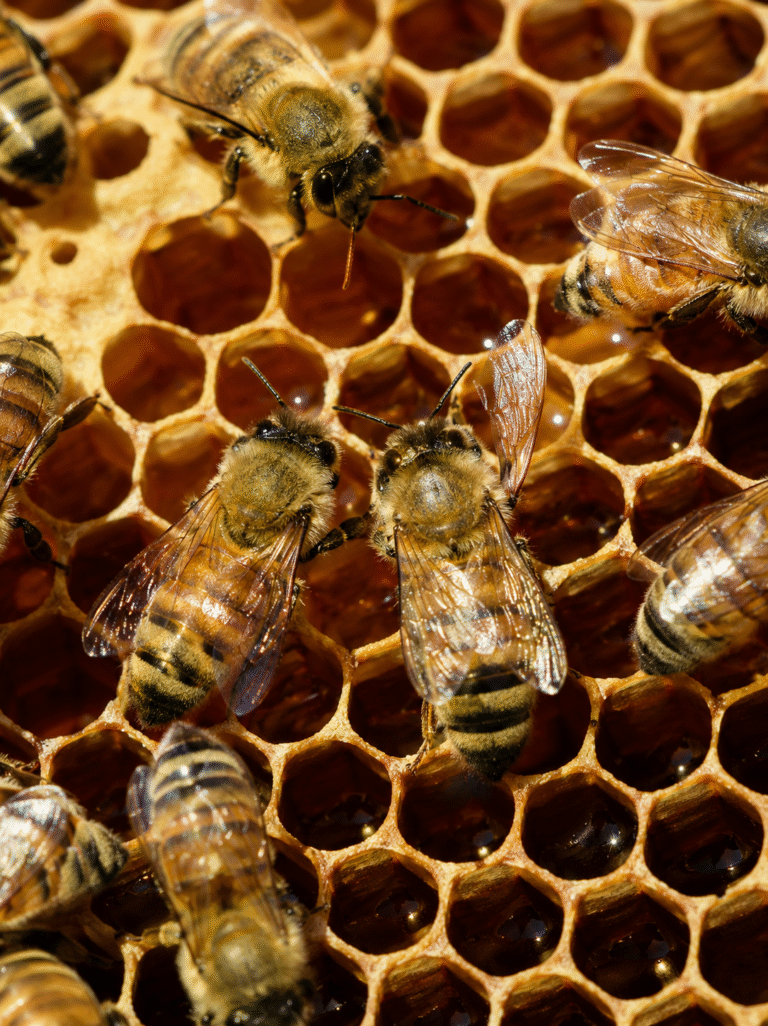
The part of the study that surprised me most wasn’t the wax — it was discovering that a distinct group of young worker bees is apparently responsible for building and tending these chambers. The researchers are calling them queen cell builders, and they behave differently from their nestmates in ways that go beyond division of labor as we usually describe it.
These bees run warmer than the rest of the colony while they’re on queen-cell duty. Their bodies shift into a different physiological mode, activating pathways tied to wax production that aren’t as active in bees doing other jobs. And in a detail I found genuinely clever, the research team traced where the wax was coming from by lacing ordinary comb with trace amounts of graphite. Over time, that graphite showed up inside the queen cells — meaning these builder bees weren’t just secreting fresh wax on the spot. They were actively foraging it from elsewhere in the hive, modifying it, and repurposing it specifically for the royal chamber.
If you’ve ever watched a colony prepare for supersedure or swarm cells and wondered why some queen cells look almost sculpted compared to the rough function of ordinary comb, this is likely why. There’s a dedicated crew, and they’re treating the material differently from the moment they touch it.
Why speed matters here
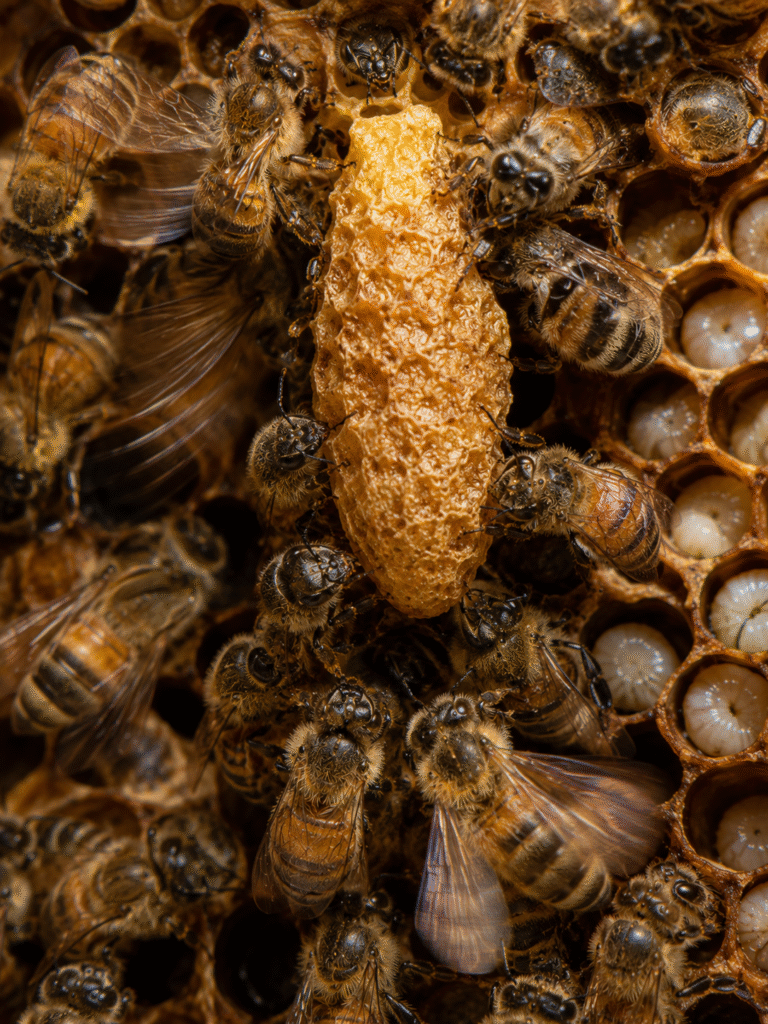
One detail that stuck with me: a queen reaches maturity in about 16 days, compared to roughly 21 for a worker. That five-day gap has always been chalked up to diet alone. The new data suggests the added warmth inside these custom-built cells plays a real role in that accelerated timeline — which makes sense biologically. Development speed in insects is heavily influenced by temperature, not just nutrition. A colony that’s just lost its queen doesn’t have the luxury of waiting. Every day without a laying queen is a day of lost brood production, and in a bad season that gap can be the difference between a colony that rebuilds and one that dwindles into fall queenless.
For anyone managing splits or emergency requeening, this reframes what “give them everything they need” actually means. It’s not just about leaving good frames of young larvae and hoping genetics and royal jelly do the rest. The colony is also managing a construction and climate-control problem, and a weak, poorly resourced colony may simply not have enough bees available to dedicate to that specialized crew.
What this means for grafting and queen rearing in practice
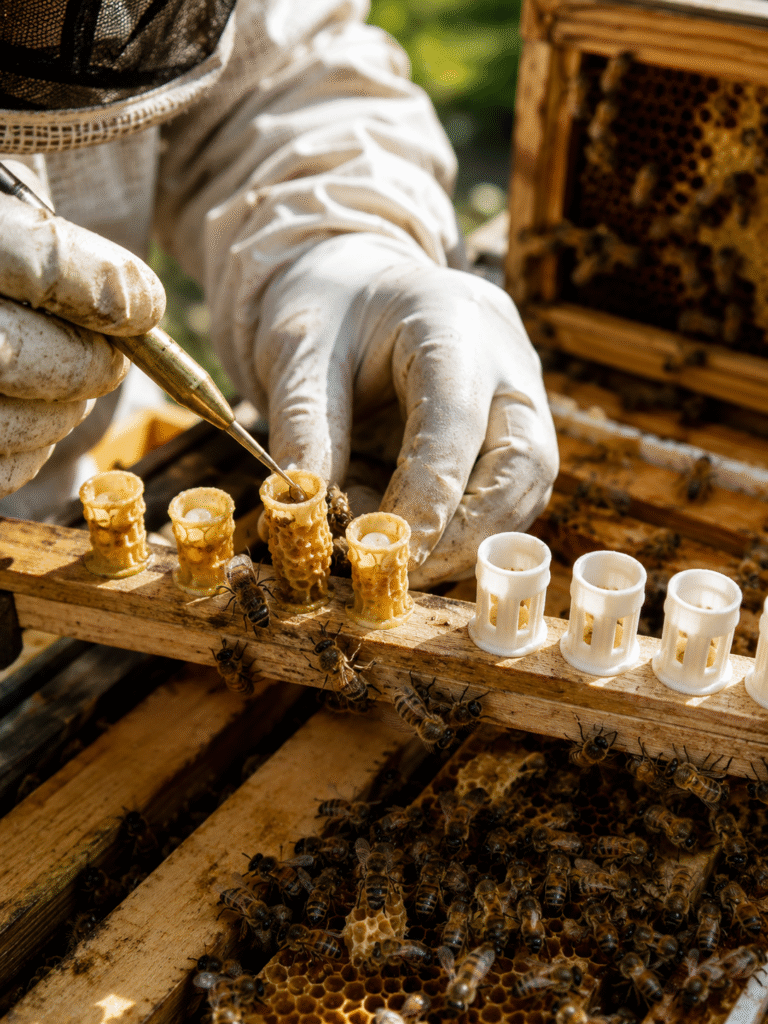
I asked the beekeeper I mentioned earlier — the one skeptical at first — what he made of it once we’d gone through the details. His take was pragmatic, and it’s worth repeating in spirit: cell builders matter as much as cell size. He’s long used plastic queen cups in his grafting setup, largely because they’re durable and easy to clean between rounds. Reading this study, plastic cups suddenly look like a bigger unknown than most of us treated them as. If the chemical and physical properties of the cell wall genuinely shape queen quality, a inert plastic surface that the colony can’t modify, forage into, or chemically enrich the way they do with wax may be quietly working against queen breeders without anyone realizing it.
That’s not a condemnation of plastic cups — they’re widely used and plenty of excellent queens have come out of them. But it does suggest an experiment worth running at home. If you raise queens seasonally, try running a side-by-side comparison: standard plastic cups against cups primed with a thin coating of wax harvested from actual queen cells rather than generic cappings wax. Watch acceptance rates and emerged queen size. It’s the kind of low-cost trial that citizen beekeepers are well positioned to run, and frankly, better positioned than most labs, since you have colonies and seasons that researchers don’t have the luxury of repeating endlessly.
The bigger picture: colonies as engineers, not just insects
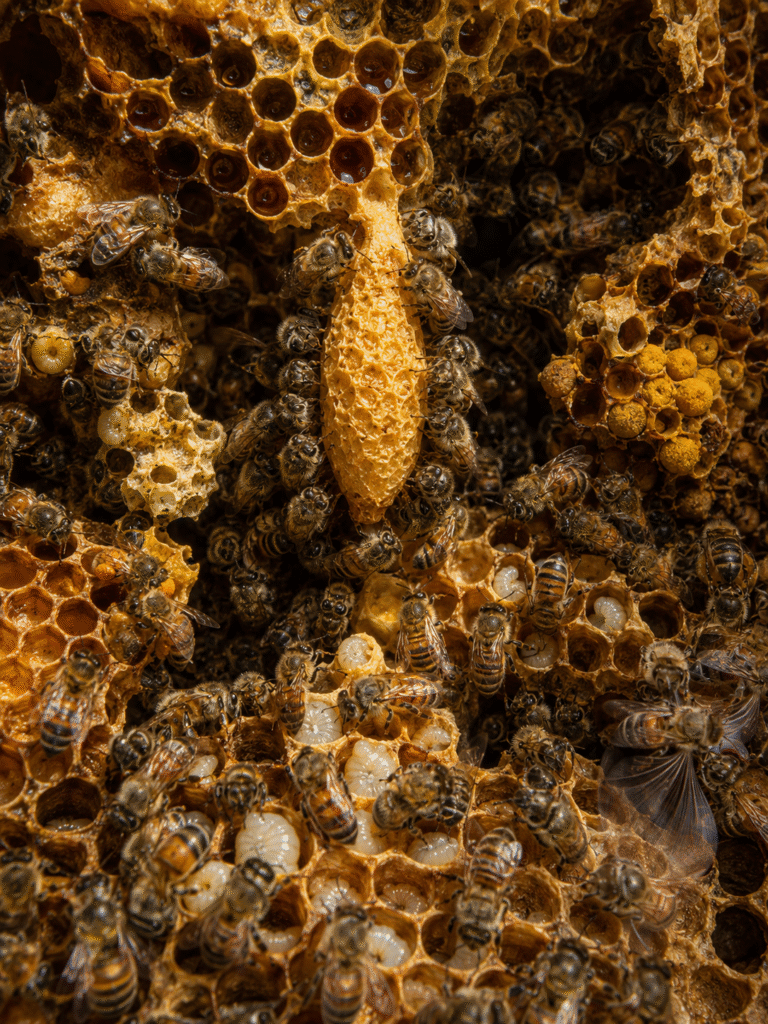
Baer described the queen-rearing process as resembling “something like Buckingham Palace” — a dedicated support structure built around producing one individual whose success determines whether the whole operation continues. I’d push that comparison further. What this study really documents is a colony’s capacity to engineer its own developmental environment on demand, in response to an emergency, using resources gathered and modified specifically for the purpose.
That’s a different way of thinking about a honeybee colony than most of us grew up with. We tend to describe colonies as reactive systems — they respond to nectar flow, they respond to queen loss, they respond to temperature. This research suggests something closer to anticipatory infrastructure: a specialized workforce that exists, seemingly on standby, ready to construct a very specific kind of nursery the moment it’s needed, and apparently doing so across both European and Asian honeybee species, which points to something evolutionarily old and deeply conserved.
For beekeepers, the practical takeaway isn’t complicated even if the biology is: a queenless colony isn’t just missing a queen. It’s mobilizing an entire, previously invisible support system to build one. Understanding that changes how I think about what a “strong” colony really means going into an emergency requeening situation — it’s not just about population numbers, it’s about whether there are enough young bees available and resourced to become queen cell builders in the first place.
That’s a question worth asking the next time you’re evaluating whether a colony has what it takes to raise its own replacement, rather than reaching straight for a mail-order queen.