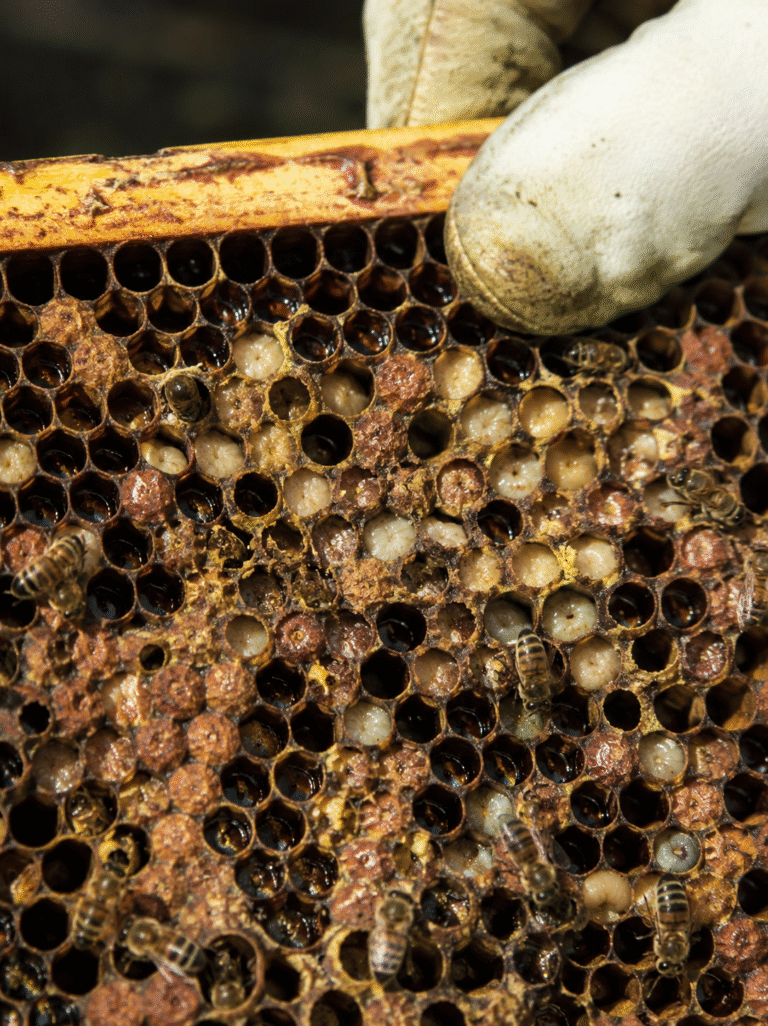

A few years back, I got into a conversation with a beekeeper who’d just lost half his colonies over a brutal winter. He wasn’t angry about the cold, exactly — he expected that. What stuck with him was how avoidable some of it felt. “The queens I bought weren’t built for this,” he told me, shaking his head. “They came from somewhere warm. They’d never seen a winter like ours.”
That conversation came back to me reading about what a group of apiarists near Calgary are doing right now, and I think it might be one of the more practical, unglamorous solutions to a problem that’s been quietly undermining beekeeping operations for years.
The Queen Problem Nobody Talks About Enough
Here’s something that surprises people outside beekeeping circles: Canadian beekeepers import roughly 300,000 queen bees every year. Not from down the road. From Australia. New Zealand. California and Hawaii. Places where winter, as Canadians know it, simply doesn’t happen.
Think about what that actually means for a second. You’re taking a queen raised in a climate where she’ll never face a real freeze, and dropping her into a colony that needs to survive months of brutal Canadian winter. It’s a bit like hiring someone who’s only ever worked in summer to run your operation through the worst stretch of the year. She might be excellent at her job. She’s just never been tested by the conditions that actually matter.
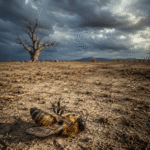
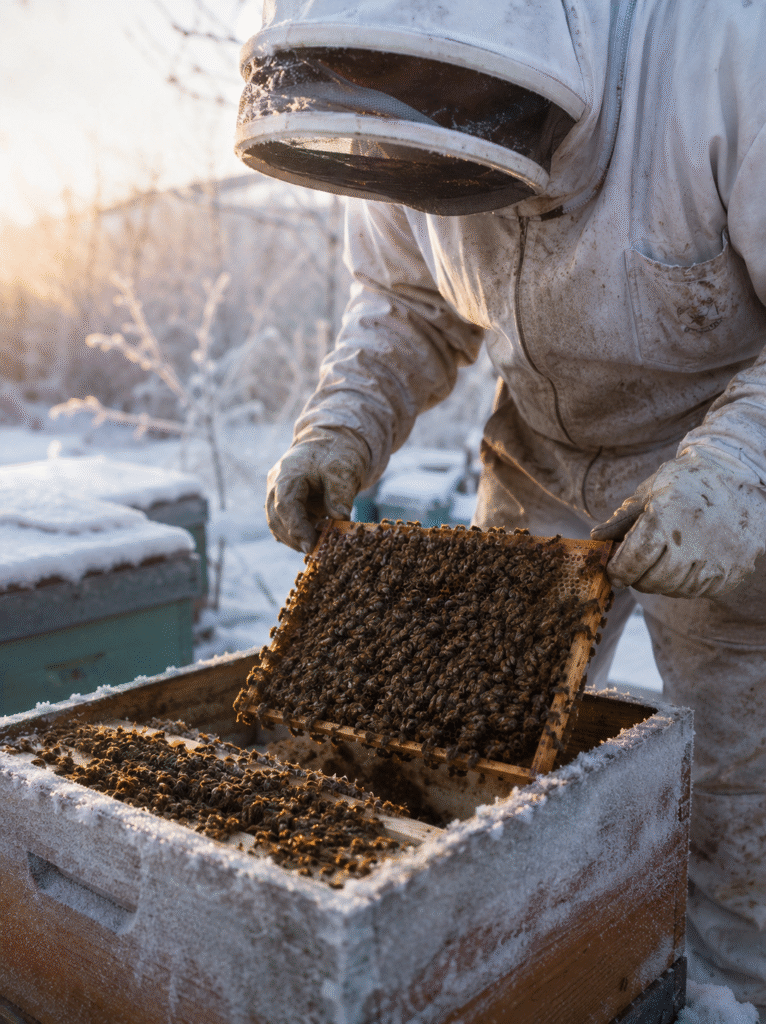
And the numbers back up just how rough those conditions can be. A 2025 report from the Canadian Association of Professional Apiculturists found that more than 41% of honeybee colonies in Alberta failed to survive the winter. That’s not a bad season — that’s nearly half the hives in a province gone in a single winter cycle. When you’re losing colonies at that rate, you start asking different questions. Not just “how do we treat for mites better” or “how do we feed bees through a cold spell,” but something more fundamental: are we even starting with the right genetics?
Building a Cube to Solve It
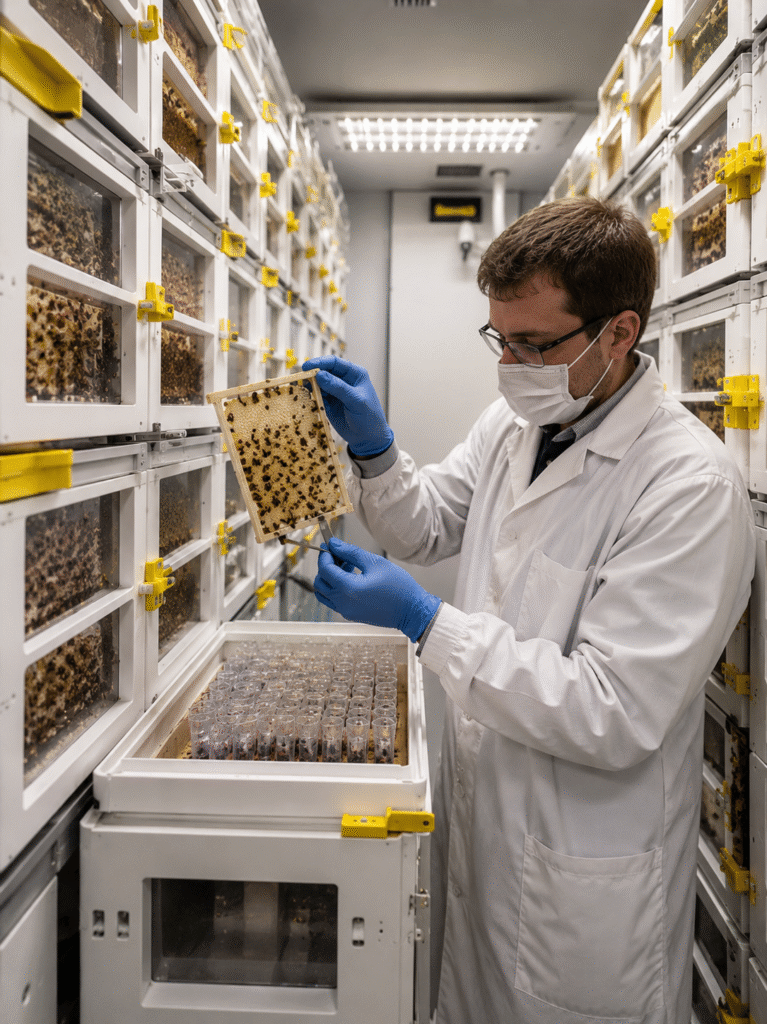
That’s the question a Calgary-area company called Beekeeping Innovations Ltd. decided to tackle head-on. Their answer is something they call the Bee Cube — an apiary built inside a fully climate-controlled environment, designed in the town of Okotoks, capable of housing multiple honeybee colonies at once.
I’ll admit, the name alone made me curious before I even understood what it did. A “cube” doesn’t sound like beekeeping. It sounds like server infrastructure, or maybe a strange art installation. But the concept underneath it is straightforward once you see it: instead of fighting Canada’s climate and hoping your colonies survive long enough to produce strong queens, you control the climate yourself and skip the gamble entirely.
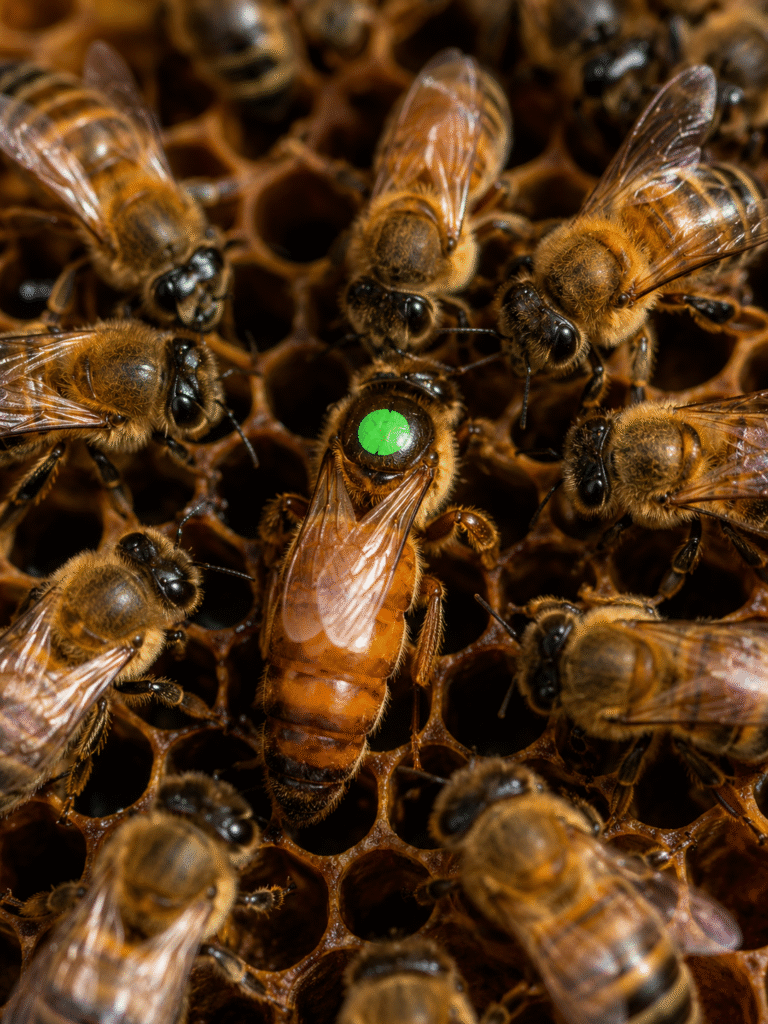
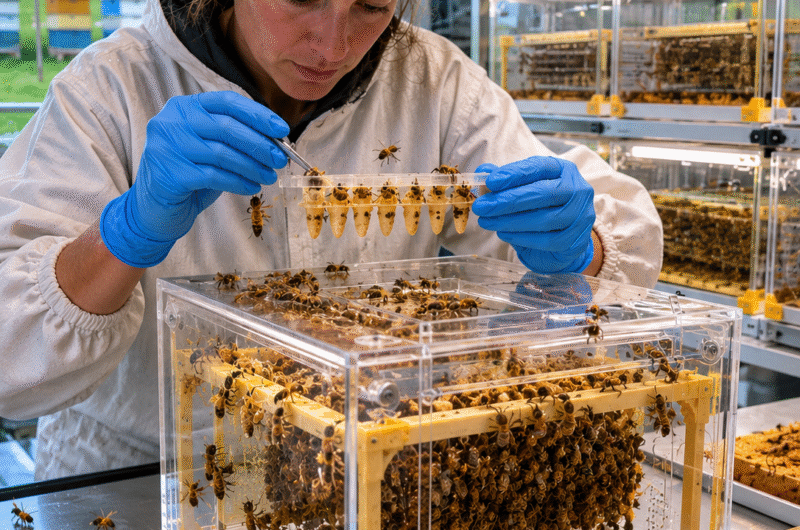
Inside the Bee Cube, multiple queen cells develop side by side. Here’s where beekeeping gets a little ruthless, if you didn’t already know this part: the first queen to emerge doesn’t wait around to negotiate. She kills the other queen cells before they get the chance to hatch and compete with her. It’s one of those facts about bee biology that sounds almost too brutal to be true, and yet it’s just how the species has always operated. Because of that, the team has to monitor emergence days closely and keep newly hatched queens in individual cages, otherwise they’d simply eliminate each other before anyone got the chance to use them.
Once a queen is ready, she’s moved to her own hive. About a week later, she mates with drone bees — the males in a colony, whose entire biological purpose is essentially limited to this one task — and from there she can start laying close to 2,000 eggs a day, building out a colony of her own from scratch.
Why Local Genetics Actually Matter
Herman Van Reekum, one of the beekeepers behind the project, put it in a way that stuck with me: a mother queen who’s already proven she can survive a Canadian winter is passing along more than just her own genes. She’s passing along resilience that’s already been field-tested. Her daughters, and the future queens bred from her line, inherit traits shaped by actually living through the cold rather than traits shaped by a climate that never demanded much from them.
That’s a different kind of selective breeding than most people picture when they hear the term. It’s not about choosing for size, or temperament, or honey output in the way breeders might select for other livestock traits. It’s about choosing for survival in the exact conditions the bees will actually face. There’s something almost obvious about it once you hear it stated plainly — of course bees that survived your winter make better candidates for surviving your winter again — but obvious ideas are often the ones nobody gets around to acting on until someone builds the infrastructure to make it practical at scale.
There’s also a quieter benefit buried in all of this: biosecurity. Every time a queen crosses a border, she potentially brings something with her — a parasite, a pathogen, something that wasn’t on anyone’s radar until it shows up in a colony months later. Breeding locally doesn’t just produce hardier bees. It closes off one more pathway for problems to enter the country in the first place.
What Started Small Is Aiming Bigger
Last year, the team produced about 800 queens using this method. Modest numbers if you compare them to the 300,000 Canada imports annually — a rounding error, really. But Van Reekum and his team aren’t treating it as a finished project. They’re aiming for 5,000 this year, and the ambition behind that jump tells you they’re not building this as a boutique experiment. They want it to scale into something that genuinely chips away at the country’s reliance on imported queens.
I think what I find most compelling about this story isn’t really the technology, even though the climate-controlled setup is the part that grabs headlines. It’s the underlying instinct driving the project — the recognition that the easiest fix (just keep importing) was quietly costing beekeepers more than anyone had really stopped to calculate, in winter losses, in biosecurity risk, in colonies that simply weren’t built for where they ended up living.
What This Means If You Keep Bees Yourself
You probably don’t have access to a climate-controlled queen-rearing cube in your backyard, and that’s fine — most of us never will. But the underlying lesson scales down pretty well regardless of how many hives you manage. If you’re requeening and you have any say in where that queen comes from, local stock that’s already proven itself in conditions similar to yours is worth more than it might look like on paper, even if it costs a little more or takes a little longer to source.
It’s the same logic, really, whether you’re running an operation with thousands of colonies or maintaining three hives behind your house. Bees that have already survived what you’re asking them to survive again tend to be better at surviving it. It’s not a flashy insight. But neither was checking mite counts regularly, until enough beekeepers learned the hard way why it mattered.