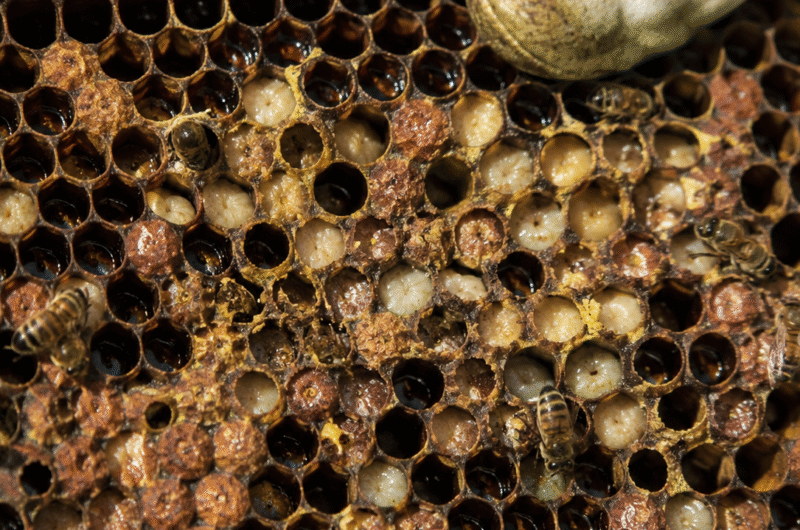

The frame smelled wrong before I even had it fully out of the box. Not the usual warm-wax-and-honey smell I’d gotten used to after twenty-some years of opening hives — something closer to sour glue, with an edge that made me want to put the frame back and pretend I hadn’t noticed. I hadn’t seen American foulbrood in a hive of mine before that afternoon in a client’s backyard apiary outside Richmond, and I remember thinking: I’ve read about this a dozen times and I still almost missed it.
That’s the real problem with American foulbrood. Most beekeepers have heard the name. Far fewer could actually walk up to a frame and tell you, with confidence, whether they were looking at it. I’ve written before about the pest most beekeepers ignore until it’s too late — the small hive beetle — but disease is a different kind of blind spot entirely, because a beetle you can see crawling across a frame. A bacterium hides in plain sight.
If you’re newer to this and haven’t gone through what I wish I’d known before opening my first hive, the rope test below is worth bookmarking before you actually need it — not after.
American foulbrood (AFB) is a lethal bacterial disease of honey bee brood, caused by the spore-forming bacterium Paenibacillus larvae. It kills larvae after their cells are capped, and it is one of the only diseases in beekeeping where the correct response, once confirmed, is destruction of the hive — not treatment. There is no cure. Knowing what it looks like, and what to do the moment you suspect it, is one of the least glamorous and most important skills a beekeeper can carry.
What American foulbrood actually is
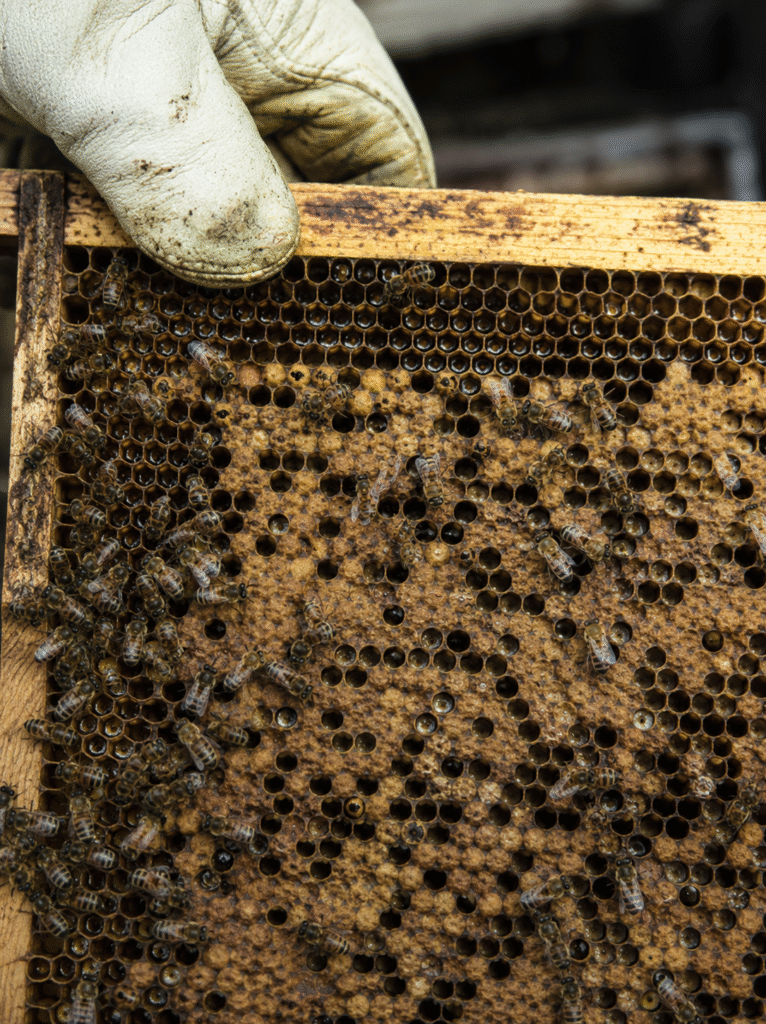
P. larvae spores get carried into a cell by nurse bees feeding a young larva — and it doesn’t take much. Larvae younger than 24 hours old are so susceptible that a spore count in the single digits can start an infection. The bacteria multiply inside the larva as it grows, and the larva usually dies right around the time its cell gets capped, or shortly after — which is exactly why the visible symptoms show up on capped brood rather than the open brood most beekeepers spend more time looking at during a routine inspection. That’s part of why it gets missed: you have to be looking at the right stage, at the right angle, on a day you weren’t necessarily expecting trouble.
Adult bees aren’t harmed by AFB. That’s actually part of what makes it dangerous — a heavily infected colony can look perfectly normal from the outside, bees flying in and out on schedule, right up until the brood pattern collapses. From a distance, a heavy infection can even resemble a colony that disappears without warning — except here, unlike most of those mystery cases, the explanation is sitting right there on the frame, if you know what you’re looking at.
The four field signs to check before you panic
I want to be direct about something: a single odd cell doesn’t mean AFB. Colonies have off days, chilled brood, and other brood diseases that look similar at a glance. What you’re looking for is a pattern, and ideally more than one of the following signs together.
Spotty, irregular brood pattern
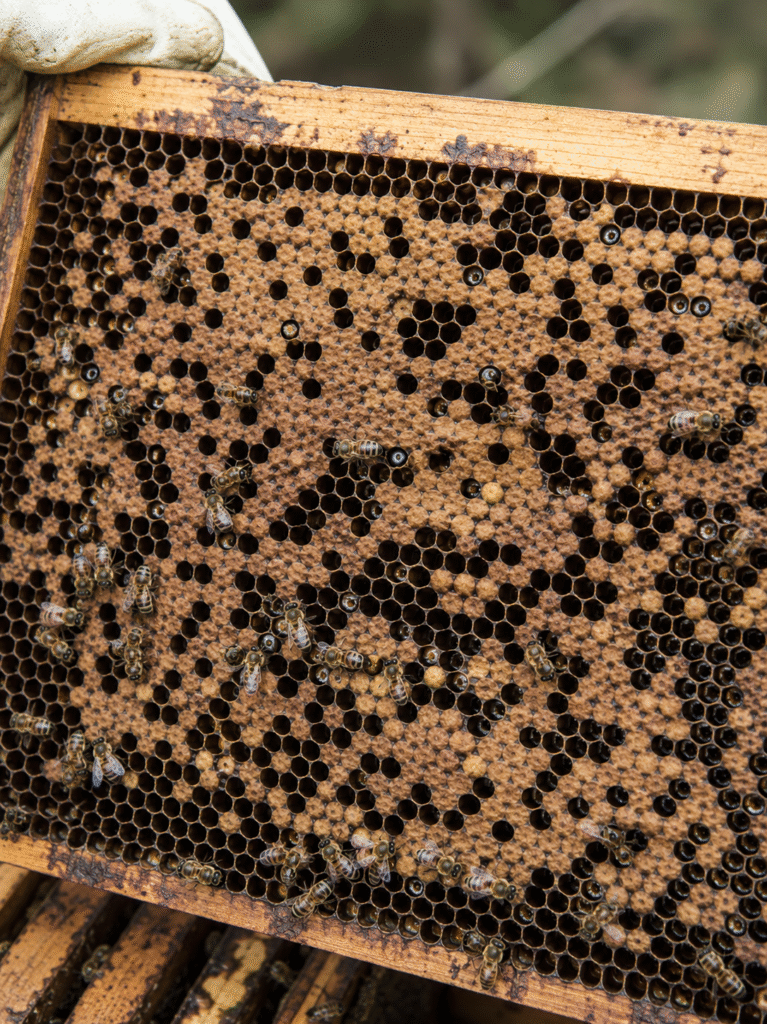
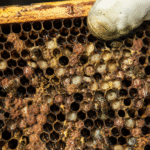
Healthy capped brood reads almost like a solid sheet — tan, even, tightly packed. AFB (and a few other problems, to be fair) breaks that pattern up. You’ll see scattered empty cells mixed in with capped ones, in a way that looks patchy rather than deliberate.
Sunken, greasy, perforated cappings
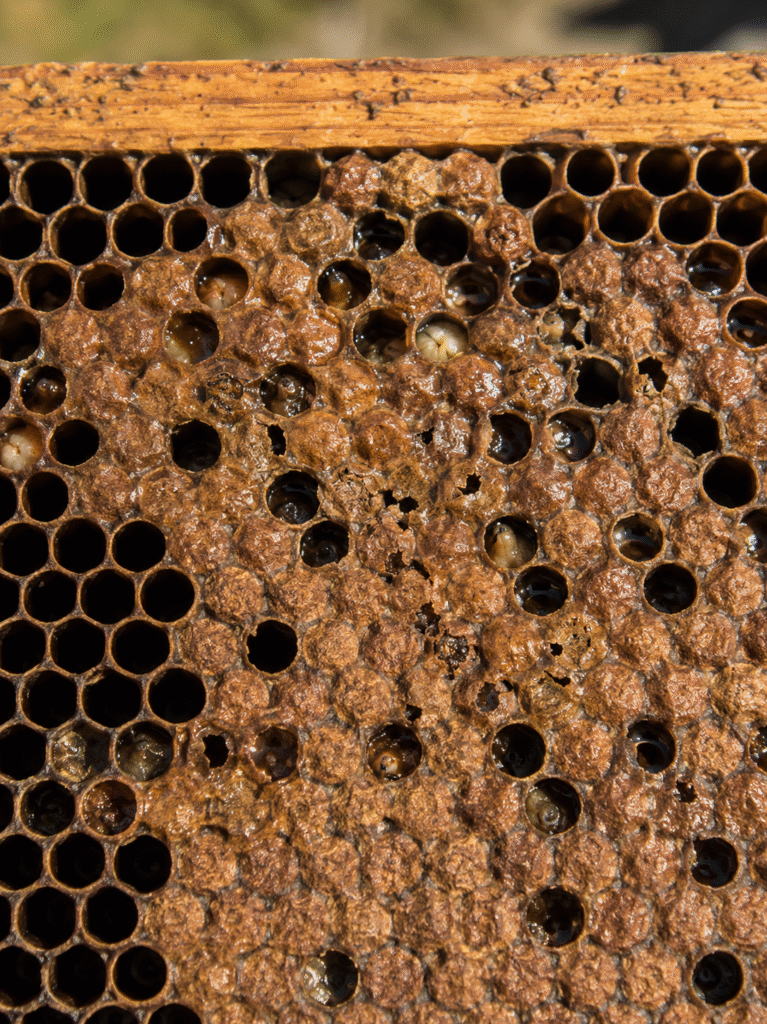
This is the sign that made me stop that afternoon outside Richmond. Instead of the slightly domed, dry-looking cappings of healthy brood, infected cells sink inward, take on a wet or greasy sheen, and sometimes get small perforations where house bees have started — and abandoned — the job of uncapping them.
The smell
Not every infected colony reeks, especially in early or light infections, but when it’s there, it’s distinctive: sour, slightly acrid, closer to old glue or rotting protein than anything you’d associate with a healthy hive. Trust your nose as a secondary signal, never a primary one — plenty of foul smells in a hive have nothing to do with AFB.
The rope test, step by step
This is the field test that actually settles it, and it takes under a minute:
- Find a suspect cell — sunken, discolored, or perforated capping.
- Insert a thin stick, matchstick, or twig into the cell and gently stir the contents.
- Slowly withdraw it.
- Watch what happens to the material clinging to the stick.
If the remains draw out in a long, dark brown, thread-like rope — typically a few centimeters — that’s a strong positive indicator for AFB. If it stretches only slightly, forms a shorter grayish mass, and breaks quickly, you’re more likely looking at European foulbrood, which is a different bacterium with a very different prognosis. It’s not a lab-grade diagnostic, but it’s the tool every apiary inspector I’ve talked with still uses as their first move in the field, because it’s fast and it’s usually right.
AFB vs. European foulbrood vs. chalkbrood and sacbrood
Beekeepers use “foulbrood” loosely sometimes, but these are distinct problems with different stakes.
| Disease | Cause | Larval stage affected | Rope test | Treatable? |
|---|---|---|---|---|
| American foulbrood | Paenibacillus larvae (bacterium) | Capped, pre-pupal/pupal | Long, dark, ropy thread | No — destroy/irradiate |
| European foulbrood | Melissococcus plutonius (bacterium) | Uncapped, younger larvae | Short, grayish, breaks easily | Sometimes recoverable with strong management |
| Chalkbrood | Ascosphaera apis (fungus) | Capped larvae | N/A — mummies, not liquid | Usually self-resolves with genetics/ventilation |
| Sacbrood | Sacbrood virus | Uncapped larvae | N/A — fluid-filled sac under skin | No direct treatment; usually colony-managed |
The reason this table matters isn’t academic. European foulbrood, in particular, gets mistaken for AFB constantly, and the two calls have completely different consequences — one might mean requeening and tightening up your management, the other means notifying an inspector and possibly losing the hive.
What happens after a positive ID
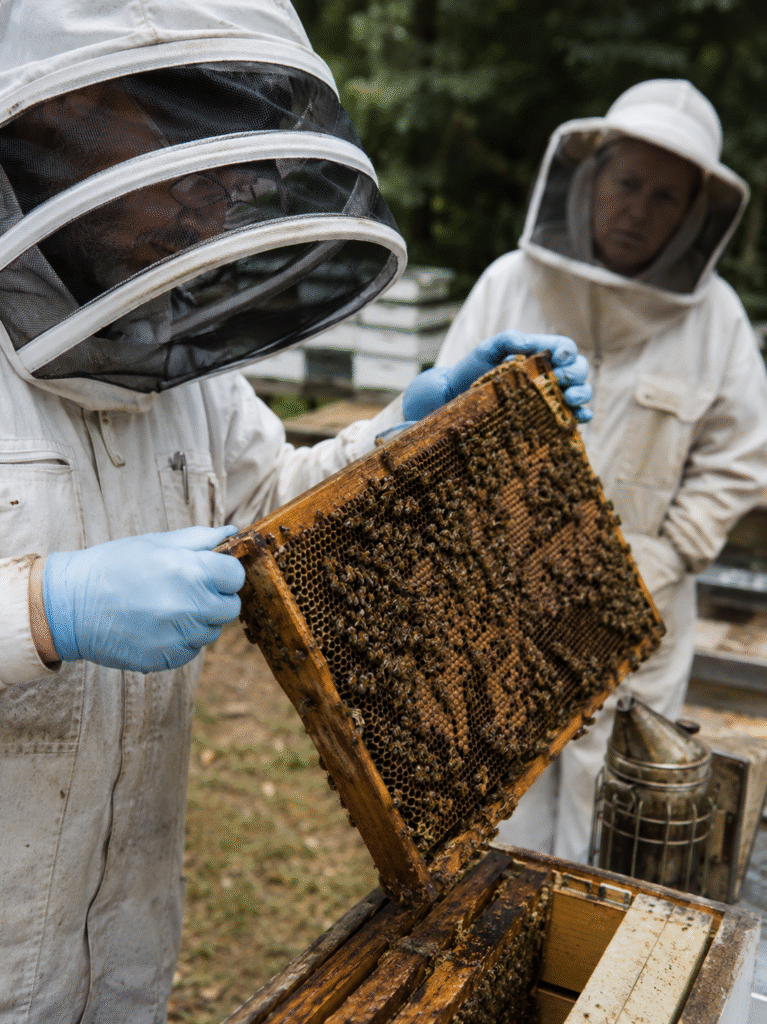
If you’re reasonably confident you’re looking at AFB, the next move isn’t to start treating it yourself. American foulbrood is a legally reportable disease in most U.S. states, and for good reason: the spores this bacterium produces are exceptionally durable — viable for decades on old equipment — and can spread to every colony within flight range through robbing behavior alone, without any help from you.
Contact your state or local apiary inspector. They’ll confirm the diagnosis (often with the same rope test, sometimes with a lab culture), and from there the standard response is destruction of the infected colony and either burning or irradiation of the equipment. Antibiotics can suppress active infection temporarily in some regions, but they don’t touch the spores, and relying on them without addressing the underlying colony is how AFB quietly persists in an apiary for years.
I won’t pretend this part is easy. I’ve talked to beekeepers who put off calling an inspector for weeks because they didn’t want to hear the word “burn.” Every week they waited, the risk to their own other hives — and their neighbors’ — went up.
Prevention: the habits that actually keep AFB out
None of these are exotic. They’re the habits that separate beekeepers who go years without an AFB scare from the ones who don’t:
- Don’t buy or borrow used equipment from a hive of unknown health history without sterilizing it first.
- Sanitize your hive tool between colonies, especially when moving between apiaries — the same discipline behind updated Varroa management guidance applies just as much to disease prevention as it does to mites.
- Rotate out your oldest 3–4 brood frames every year rather than letting comb accumulate indefinitely.
- Keep colonies strong. A robust, well-fed colony with healthy genetics is measurably more resistant to brood disease pressure across the board — it’s part of why interest in naturally resistant bee stock has grown so much in recent years.
- Keep an eye on queen quality, too. Understanding how a colony rebuilds a queen when something goes wrong is worth knowing on its own, but a vigorous, well-mated queen is also part of what keeps a colony’s overall resilience up against brood disease pressure in the first place.
- If you’re keeping bees in tight quarters — rooftops, small urban lots, shared bee yards — treat biosecurity between hives as seriously as you would in a commercial operation, because proximity is exactly what lets robbing-driven spread happen fast.
FAQ
What does American foulbrood smell like?
When it’s present strongly enough to smell, it’s often described as sour or glue-like — closer to rotting protein than anything typical of a healthy hive. Light infections may not have a noticeable smell at all, so absence of odor doesn’t rule it out.
Can American foulbrood be cured?
No. There’s no treatment that eliminates Paenibacillus larvae spores from an infected colony or its equipment. Management is about destruction and containment, not cure.
Do I have to report American foulbrood?
In most U.S. states, yes — it’s a legally reportable disease, and your state apiary inspection program is the right first call once you suspect it.
How is AFB different from European foulbrood?
AFB affects capped brood and produces a long, ropy thread in the field test; EFB affects younger, uncapped larvae and produces a shorter, less consistent rope. EFB is also sometimes recoverable with strong colony management, while AFB is not.
Can I save any part of an AFB-infected hive?
Generally no for the colony itself. Some beekeepers salvage boxes and frames through gamma irradiation at a certified facility, but standard practice for infected comb and brood equipment is destruction.
How long do AFB spores survive in old equipment?
Decades. Spores are highly resistant to freezing, heat, and time, which is exactly why sourcing used equipment carefully matters so much.
Can I catch American foulbrood from my bees or their honey?
No — AFB is specific to honey bee larvae and poses no direct health risk to humans, though it can still be a mechanism for spreading spores if you feed infected honey back to other colonies.