
I’ve spent the better part of two decades with my hands inside hives, and if there’s one lesson that never stops repeating itself, it’s this: the pest you’re not watching for is always the one that gets you. Varroa taught North American beekeepers that the hard way in the 1980s. We adapted, we built entire management calendars around it, we learned to live with a parasite that once felt apocalyptic. Now there’s a new name working its way into apiary inspection reports and conference hallway conversations, and it deserves your attention before it becomes another crisis we’re reacting to instead of preparing for.
That name is Tropilaelaps. And after digging through the research coming out of entomology labs this year, I don’t think “worse than Varroa” is hyperbole. I think it’s a reasonable working hypothesis.
What Exactly Is the Tropilaelaps Mite?
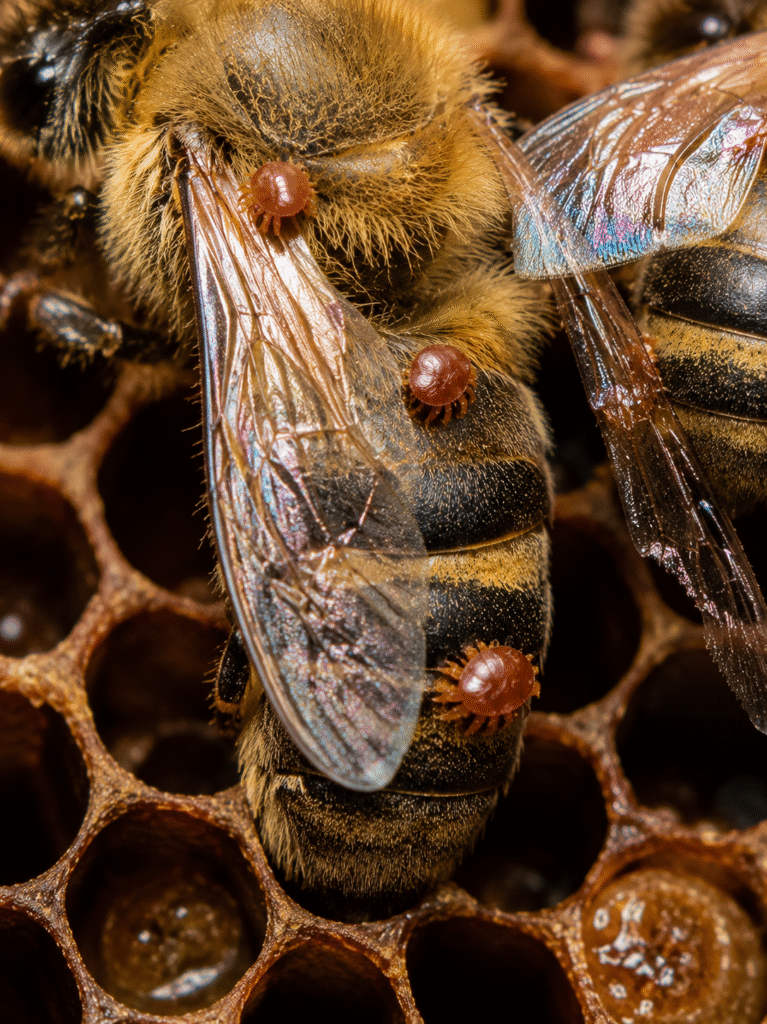
Tropilaelaps is a genus of external parasitic mites, with two species relevant to beekeepers watching the western hemisphere: Tropilaelaps mercedesae and Tropilaelaps clareae, which are difficult to tell apart even under a microscope, so U.S. researchers commonly just call them “Tropi” for short. Of the two, T. mercedesae is the one that matters most to American beekeepers, since it’s the only Tropilaelaps species currently known to widely infest colonies of the western honey bee.
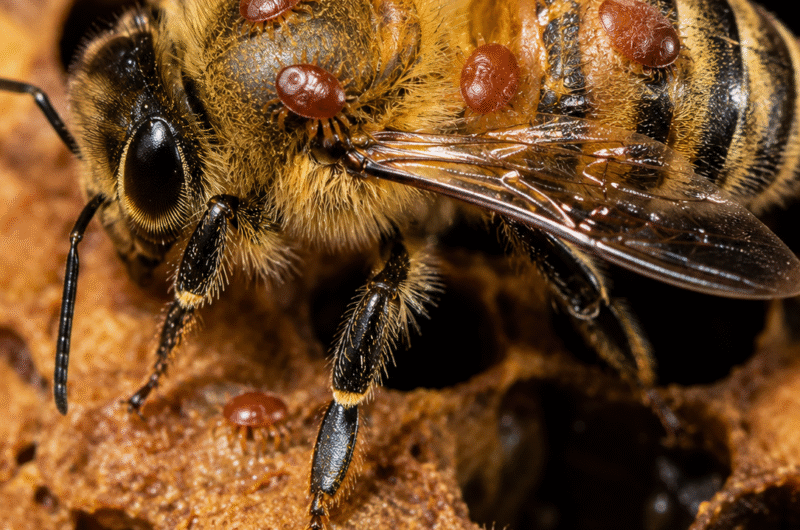
Physically, they’re small — smaller than Varroa, in fact, which already makes field identification a challenge for anyone who hasn’t specifically trained their eye for it. The color difference is your best clue at first glance: Varroa males carry a slightly whitish tint, while Tropilaelaps mites run pale reddish-brown. I’ll be honest — the first time I saw a comparison photo, I understood immediately why so many inspectors admit they’d walk right past one during a routine brood check. You’re not looking for a dramatically different bug. You’re looking for a subtle shift in color on something the size of a pinhead, crawling across a frame you’re already trying to inspect for a dozen other things at once.
The Feeding Difference That Changes Everything
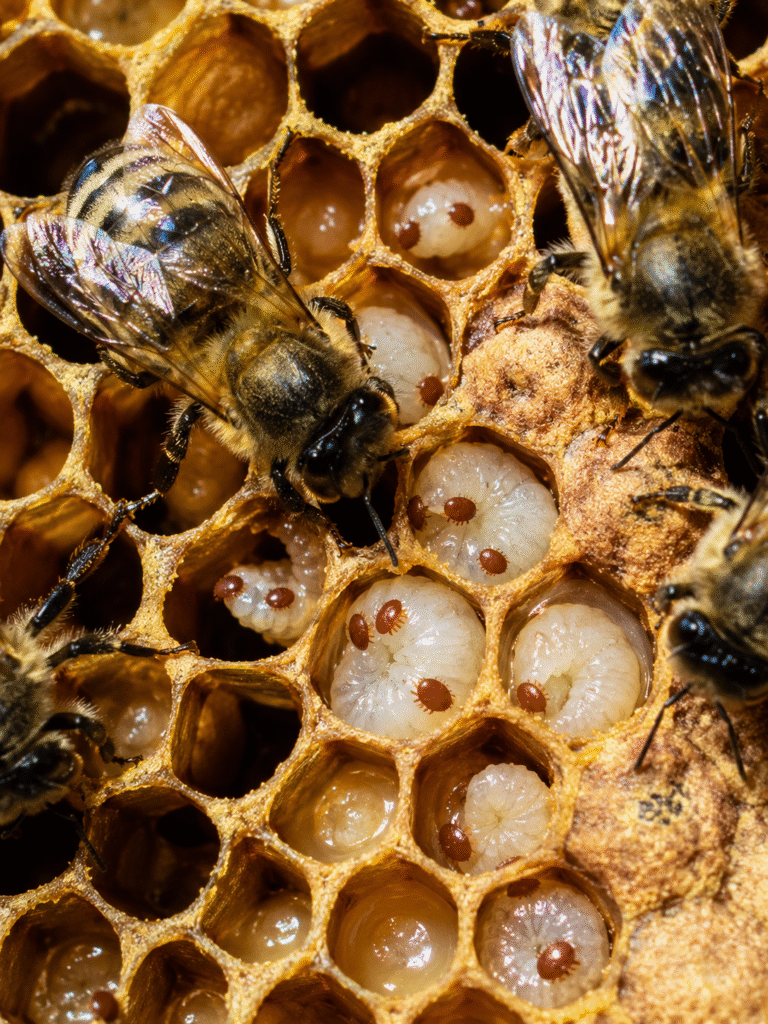
Here’s where I think most casual coverage of this mite undersells the story. Varroa is bad because it feeds on both developing brood and adult bees, and it vectors viruses in the process. Tropilaelaps, by contrast, is almost entirely dependent on brood. These mites are extremely dependent on honey bee brood for both food and reproduction, which sounds, on paper, like a narrower threat.
It isn’t. A parasite locked into a tight relationship with a fast-renewing resource — developing larvae — has every incentive and every opportunity to reproduce quickly, because the honey bee colony is constantly manufacturing more of exactly what it needs. In my own hives, brood production during a strong spring flow can outpace almost anything else happening in the colony. That’s a mite’s dream environment. Varroa has to split its attention between brood and adults; Tropilaelaps doesn’t have to split anything.
And that specificity, oddly enough, is also the mite’s one real vulnerability. Because Tropilaelaps depends so heavily on developing bees, interrupting the presence of brood can effectively starve the mites out — a management angle that doesn’t translate cleanly to Varroa control, since Varroa also feeds on adult bees and isn’t affected by a brood break in the same way. If you’ve ever used a brood-interruption technique from your Varroa management routine and found the results underwhelming, that’s exactly why. Tropilaelaps is a different animal, and the tools we’ve spent forty years refining for Varroa won’t transfer over without adjustment.
Where the Mite Actually Is Right Now
This isn’t some hypothetical pest confined to a research paper. Tropilaelaps has already been documented in China, Georgia (the country), India, Indonesia, Myanmar, Nepal, Papua New Guinea, the Philippines, parts of Russia, South Korea, Thailand, Uzbekistan, and Vietnam. More recently, and more relevant to anyone reading this from North America or Western Europe, the mite has been spreading across honeybee populations in Europe, with researchers confirming it can move onto the European honeybee and cause serious damage there.
The moment that made me sit up and actually start writing this article, though, wasn’t a research paper — it was a near miss. Inspectors intercepted the mite last fall on a container ship traveling from India to New Jersey. Think about that for a second. This wasn’t a beekeeper importing package bees carelessly. It was cargo — the kind of unglamorous, invisible pathway that has introduced nearly every major invasive pest this country has dealt with, from Small Hive Beetle to the yellow-legged hornet. A shipping container doesn’t care about state agricultural boundaries or biosecurity checkpoints unless someone is specifically looking for the thing hiding inside it.
That near-landfall was caught. The next one might not be.
Beekeeper’s Perspective: Why This Feels Different
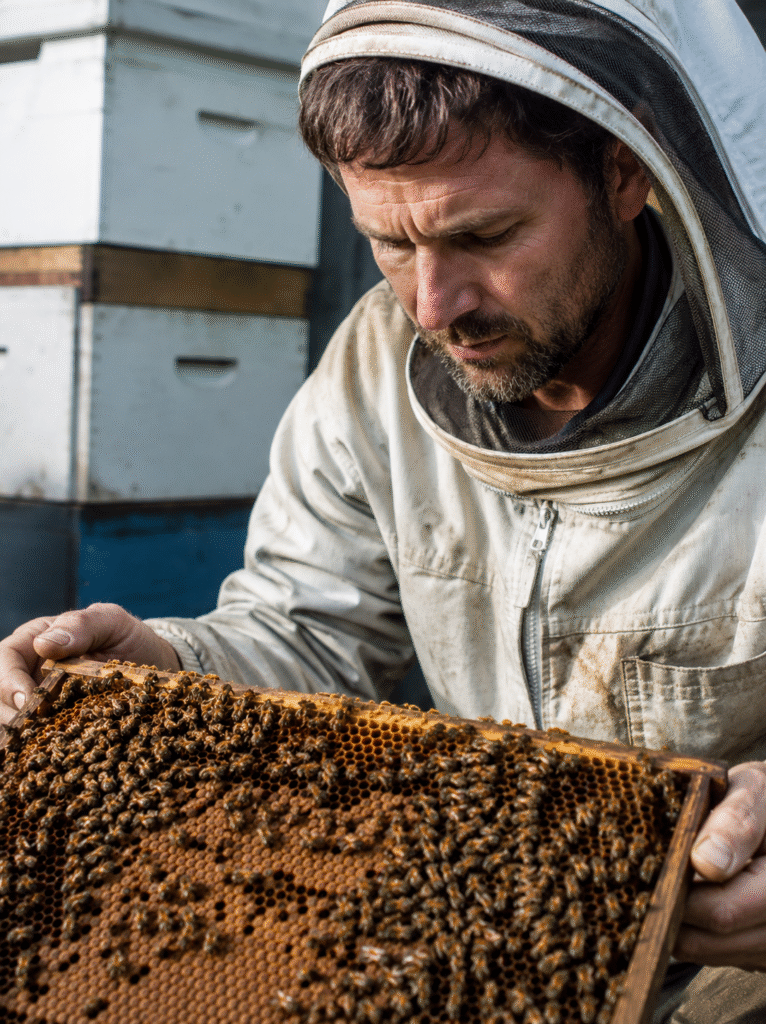
I want to be straightforward about something, because I think a lot of pest coverage in this space leans too hard into either panic or dismissal. I’ve watched Small Hive Beetle go from a novelty to a manageable nuisance over the years. I’ve watched Varroa go from an existential threat to something most operations budget for like a recurring expense. Tropilaelaps doesn’t fit either pattern yet, and that’s precisely what makes it worth writing about now rather than after it arrives.
What concerns me most as someone who’s managed colonies through more than one “new pest” scare is the knowledge gap. Researchers openly acknowledge that far less study has gone into Tropilaelaps compared to Varroa, and more work is needed to develop effective treatment methods before the pest potentially reaches the U.S. That’s not a knock on the science — it’s an honest admission that we’re behind on a mite that may reproduce faster and do more damage per infested colony than the parasite we’ve spent generations learning to manage. When entomologists tell you plainly that they don’t yet have the playbook, that’s worth more attention than a dozen alarmist headlines.
There’s also a hitchhiking factor that changes how this mite could realistically spread once established. A 2025 study in the Journal of Economic Entomology confirmed something researchers had suspected but hadn’t proven — Tropilaelaps mercedesae can attach to and be carried by adult honey bees, including the western honey bee, giving it a dispersal mechanism much like Varroa’s. Notably, the mites are more likely to be found riding on adults when brood availability is limited, which tells me this pest is more adaptable than the “brood-only” label suggests. It doesn’t need brood every single day to find a way to move — it just needs brood most of the time to actually multiply.
What Treatment Might Look Like
There’s a reasonable argument that decades of Varroa management give the industry a head start rather than a blind spot. Researchers are actively drawing on lessons learned from managing Varroa destructor to help detect, track, and control Tropilaelaps mercedesae before it spreads further. That’s the version of this story I want to believe, and honestly, I think it’s the more likely outcome — not because the mite is less serious, but because the beekeeping and research community isn’t starting from zero this time. We know how to run surveillance programs. We know how to coordinate between extension offices, apiary inspectors, and hobbyist networks. We built that infrastructure fighting Varroa, and it’s still standing.
What we don’t have yet is a proven, field-tested chemical or cultural control specifically calibrated for Tropilaelaps in western honey bee colonies at commercial scale. Brood interruption looks promising on paper and in limited trials, but it’s labor-intensive and disruptive to a colony’s build-up in ways that most commercial operations running thousands of hives can’t easily absorb during peak season. That gap between “we have an idea” and “we have a workable protocol” is exactly where beekeepers need to stay informed rather than assume someone else has already solved it.
What You Should Actually Do Right Now
I’m not going to tell you to panic, and I’m not going to tell you to ignore this. Here’s what I’d genuinely suggest based on how I’m handling it in my own operation:
- Pair visual inspection with smart hive monitoring if you already run sensors. Unusual brood-pattern alerts are worth a manual check now more than ever.
- Learn the visual difference now, before you need it. Don’t wait until an inspector hands you a mite under a hand lens and asks if you’ve seen anything like it. Study reference photos of both Varroa and Tropilaelaps side by side until the color and size difference is second nature.
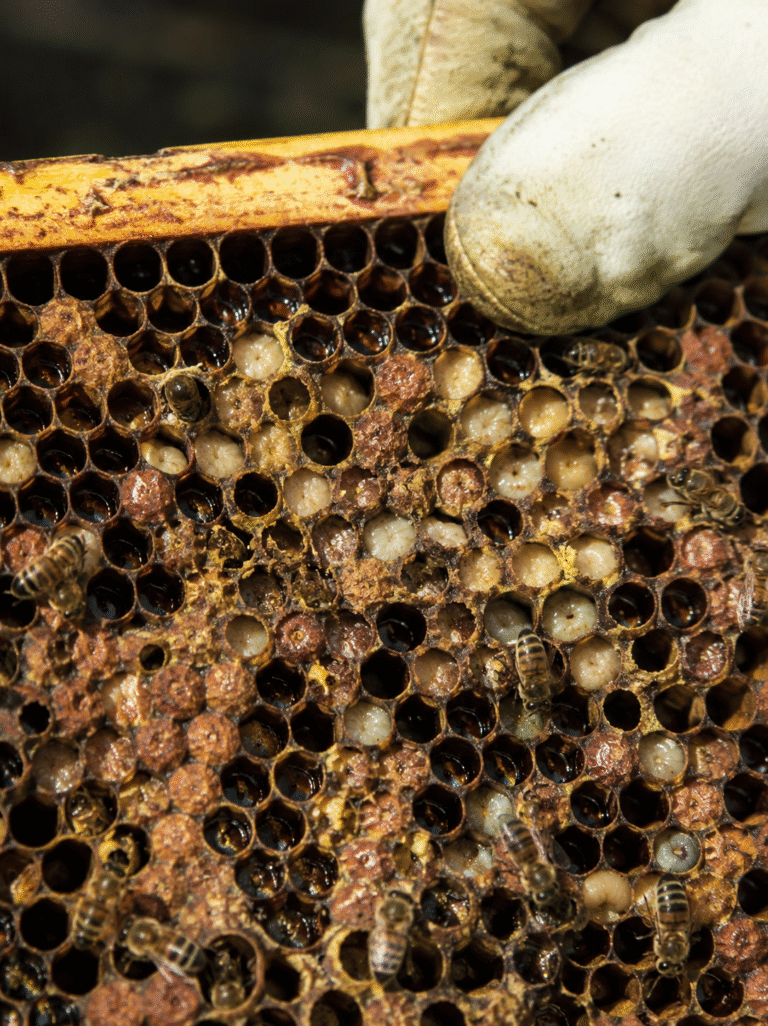
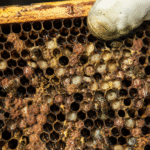
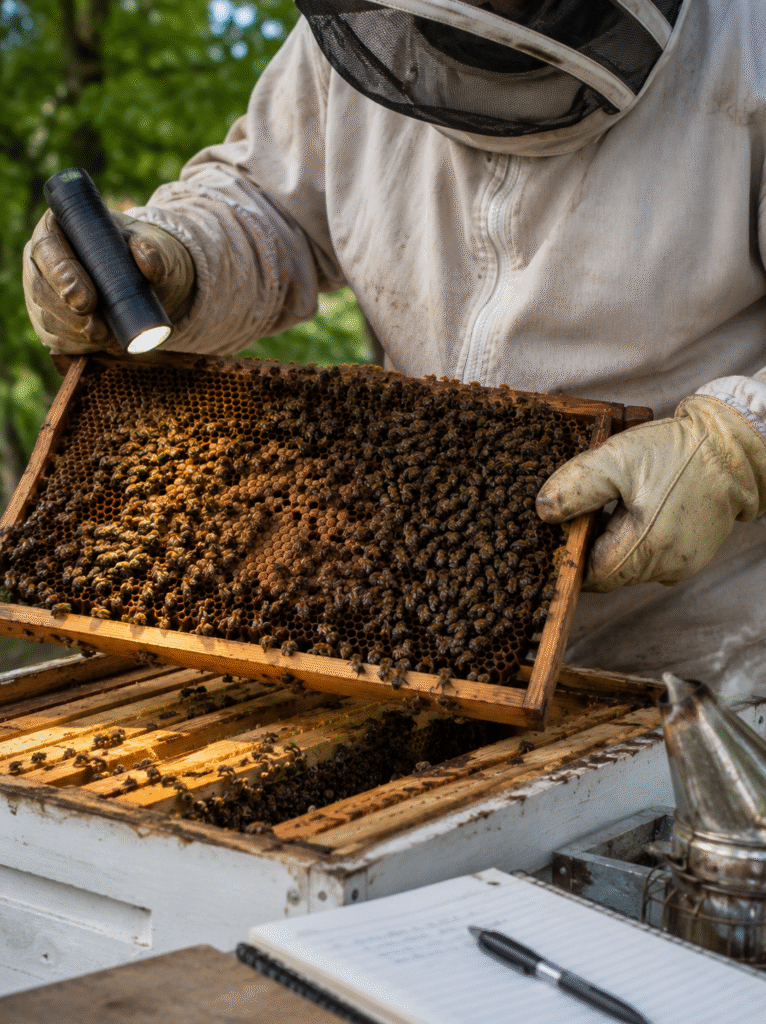
- Pay attention to brood pattern anomalies, not just mite counts. Because Tropilaelaps concentrates its damage on developing bees, irregular brood patterns or unusual pupal mortality may show up before you’d catch a mite on a sticky board.
- Report anything unusual. If you keep bees anywhere near a major port — and more of the country is “near a port” than people assume, once you count air cargo hubs — a mite you can’t confidently identify is worth a call to your state apiary inspector, not a guess.
- Don’t assume your Varroa protocol will translate. If Tropilaelaps does establish here, the brood-interruption angle means requeening timing, splits, and brood breaks may become part of an integrated strategy in a way they never needed to be for Varroa alone.
The Bigger Picture
I think what strikes me most, stepping back from the mite biology itself, is what this story says about modern beekeeping generally. We are managing colonies in a world of global shipping lanes, and every new pest that shows up on our shores arrived because something moved across an ocean faster than our ability to inspect it. Small Hive Beetle did it. The yellow-legged hornet did it. Now Tropilaelaps is knocking, quite literally, in shipping containers.
The good news, if there is any, is that we caught this one early — early enough to write about it as a preparedness story instead of a crisis story. That’s a rare position to be in with an invasive pest, and it’s worth taking advantage of while we still can.
Frequently Asked Questions
Is the Tropilaelaps mite currently established in the United States? No confirmed established population exists in the U.S. as of this writing. A specimen was intercepted on a container ship bound for New Jersey, but that was caught before establishment — not evidence of an active infestation on American soil.
What’s the main difference between Tropilaelaps and Varroa mites? Tropilaelaps mites are smaller, reddish-brown rather than whitish, and feed almost exclusively on developing brood rather than splitting their feeding between brood and adult bees the way Varroa does.
Can Varroa treatments be used against Tropilaelaps? Not reliably. Because the two mites have different feeding behaviors and life cycles, standard Varroa miticide protocols aren’t guaranteed to work the same way, and dedicated research into Tropilaelaps-specific treatment is still catching up.
What should I do if I think I’ve found a Tropilaelaps mite? Don’t attempt to diagnose it yourself from a photo alone. Contact your state apiary inspector or local extension office immediately — early detection and rapid reporting are the single most effective tools against establishment.