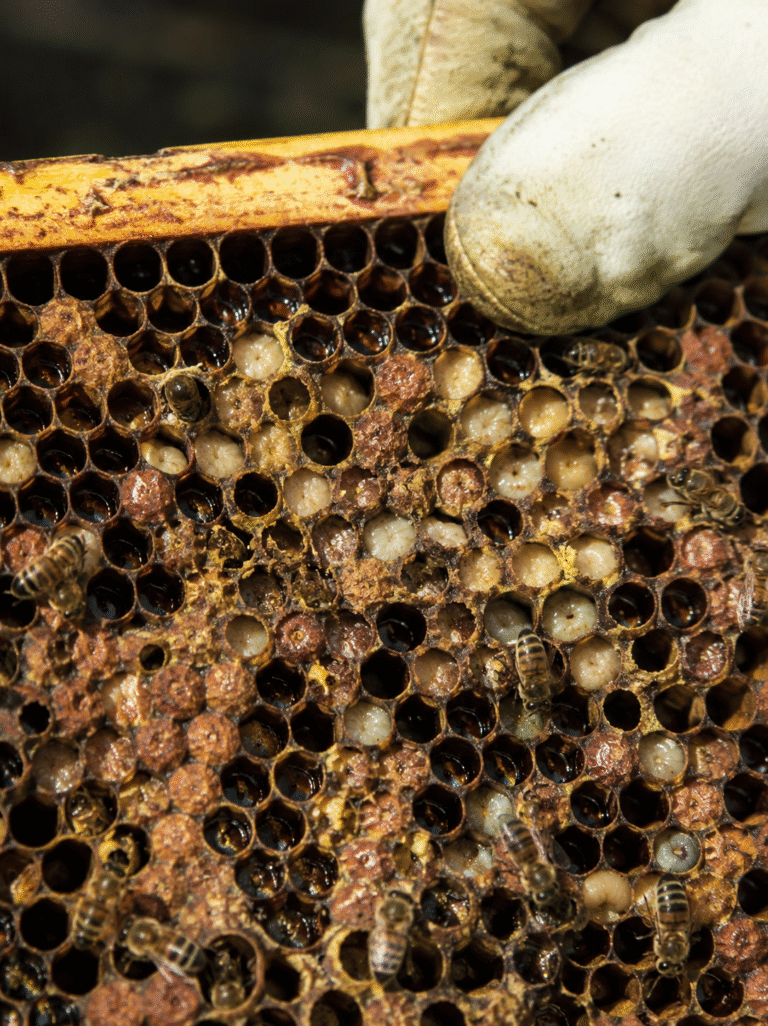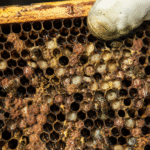
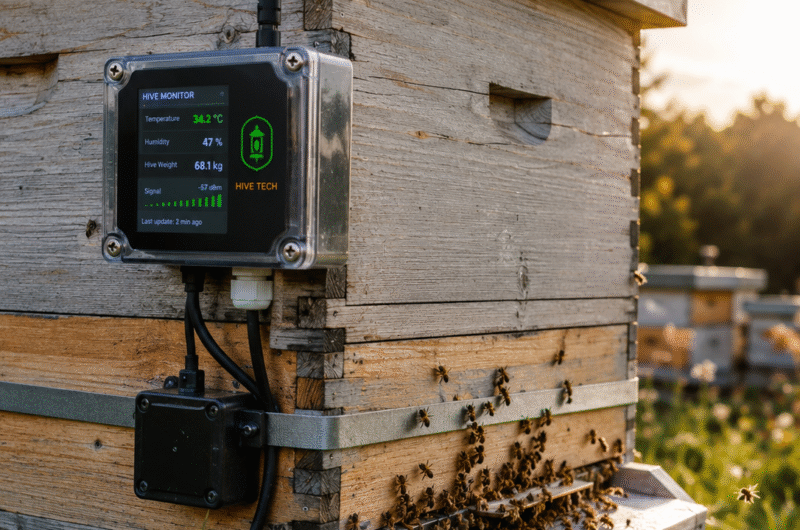

I lost a hive in February a few winters back, and the frustrating part wasn’t that it died. Colonies die. What stung was that I’d walked past that hive three times in the two weeks before it happened and never once picked it up. No buzzing when I put my ear to the side. No weight when I hefted the back corner with two fingers, the way you’re taught to check stores without cracking the lid in the cold. By the time I opened it on a warm afternoon, it had been dead long enough that the cluster had gone moldy. A scale under that hive — something as unglamorous as a bathroom scale wired to a Wi-Fi chip — would have shown me a weight that stopped dropping the normal winter amount and instead flatlined, or worse, ticked up slightly as robber bees hauled the dead colony’s stores away. That’s the kind of signal a human checking hives every ten days will miss almost every time. It’s also exactly the kind of signal a $200 sensor catches without trying.
That’s the honest starting point for any conversation about smart hive technology. It doesn’t replace beekeeping judgment. It replaces the gaps between your visits — and for most of us, those gaps are where colonies actually die.
The Three Tools People Lump Together (And Shouldn’t)
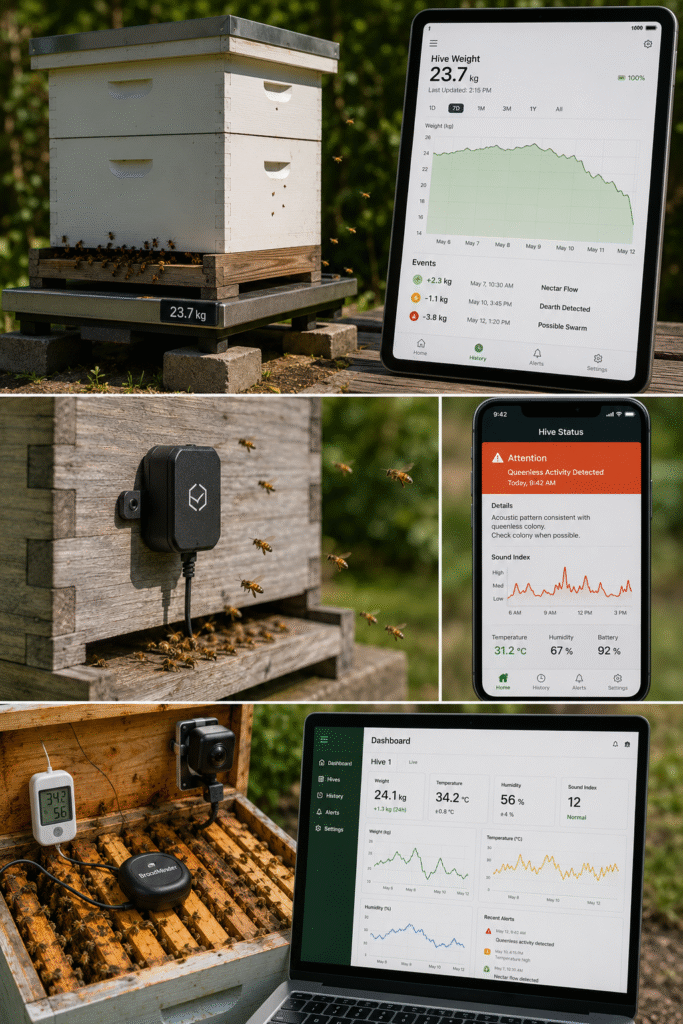
Ask five beekeepers what a “smart hive” is and you’ll get five different answers, because the category covers three genuinely different tools that happen to get marketed under one umbrella.
Hive scales measure weight, full stop. They’re the oldest and cheapest version of this technology, and they’re the one I’d recommend first to almost anyone. A scale tells you when nectar is coming in, when a dearth has hit, when a colony is drawing down its winter stores faster than expected, and — this is the underrated use — when a swarm has left, because the hive gets noticeably lighter within an hour, not gradually over days.
Acoustic and vibration sensors listen to the hive rather than weighing it. This is newer, murkier territory. Queenless colonies genuinely do produce a different sound profile — a kind of restless, higher-pitched roar that beekeepers with good ears have described for a century without needing a microphone. What’s changed is that machine learning models can now pick up that pattern more consistently than the human ear, and some can flag it before a beekeeper would notice on a routine check. I’ve used one of these on a single hive for two seasons as an experiment, and it correctly flagged a failing queen once. It also gave me two false alarms during a period of heavy robbing activity, which sounds similar acoustically to queenlessness. So: promising, not infallible.
Full IoT kits bundle weight, internal temperature, humidity, and sometimes a camera or acoustic sensor into one dashboard. These are the systems being written up in peer-reviewed engineering journals right now — researchers have logged over a hundred published studies on sensor-based hive monitoring in the last few years alone, which tells you this isn’t a fad the market will forget about. It’s becoming an actual subfield of agricultural engineering.
What the Data Can Tell You That Your Eyes Can’t
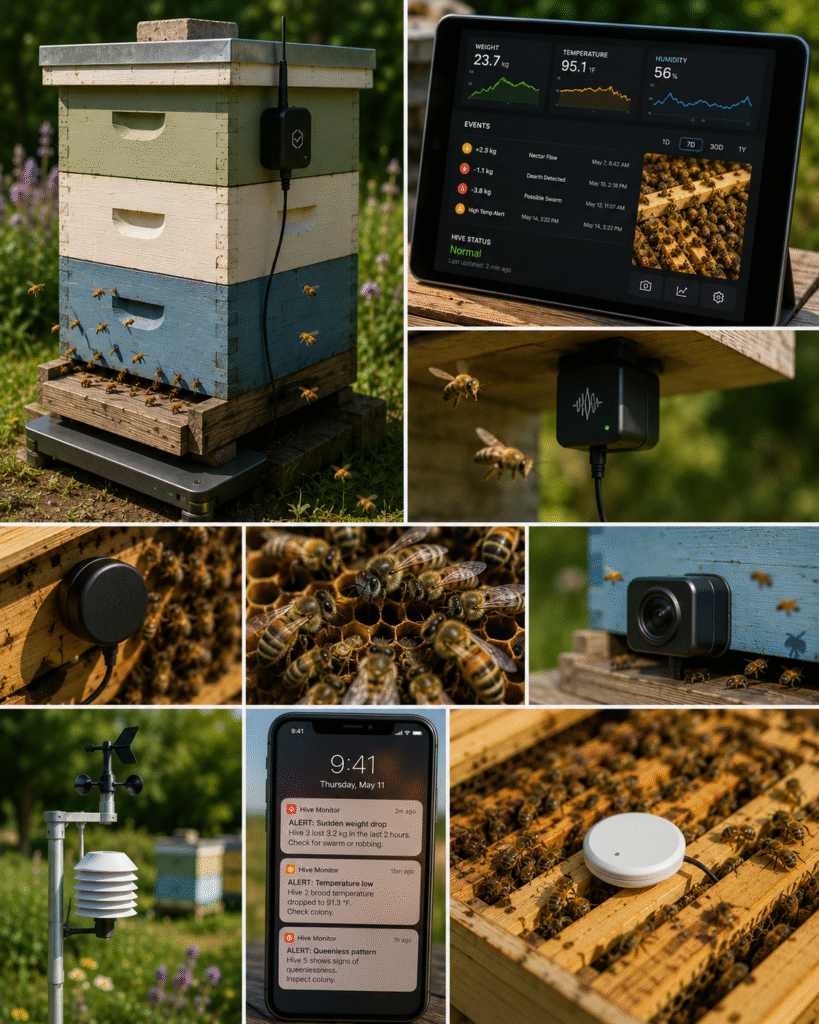
There’s a specific reason temperature monitoring matters more than most new beekeepers assume. A healthy broodnest holds a remarkably tight temperature band, somewhere in the mid-90s Fahrenheit, regardless of what it’s doing outside. Bees will burn through stores fanning and clustering to keep that number stable. When a sensor shows that internal temperature swinging wider than it should, especially dropping, that’s often your first warning that the cluster has shrunk below the size needed to hold the broodnest together — which usually means the colony is in trouble well before you’d see it from the outside of the box.
Here’s the part that doesn’t get said enough in the marketing copy: none of this tells you why. A weight drop could be a swarm, a dearth, robbing, or absconding. A temperature swing could be a shrinking cluster, a dead queen, or a hole in the hive letting in a draft. The sensor gets you to the question faster. It doesn’t answer it. You still have to go open the box.
The Cost Conversation Nobody Frames Honestly
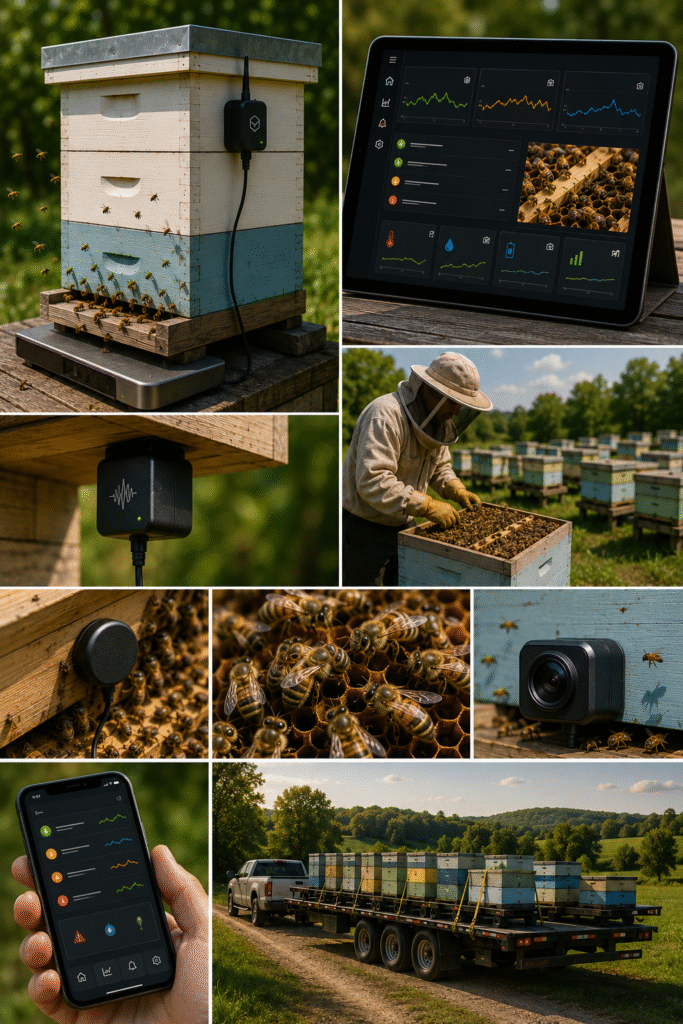
A single hive scale runs somewhere in the neighborhood of $150 to $300, often with a data plan or app subscription layered on top. For someone running two backyard hives as a hobby, that’s a real number to sit with, and I don’t think every hobbyist needs one. If you’re checking your bees weekly and know your local nectar flow calendar, a scale is a nice-to-have, not a rescue tool.
The math changes fast for anyone running more than a handful of colonies, especially across multiple yards. A commercial or sideline beekeeper checking twenty out-yards might only physically visit each location every two or three weeks during the season. That’s a long window for a queen failure or a robbing event to go unnoticed. In that context, a $200 sensor that catches one preventable colony loss has paid for itself — a single overwintered colony is worth considerably more than that in bees, equipment, and lost honey production alone.
Where I’ve Seen It Go Wrong
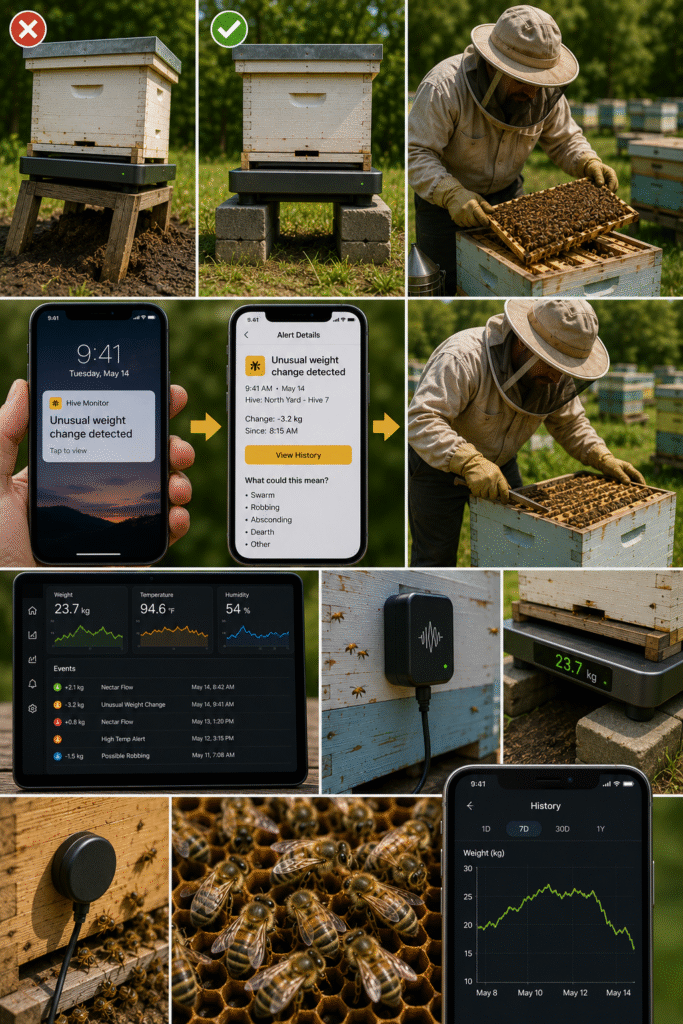
Two mistakes come up constantly with people who buy into smart monitoring and then get frustrated with it.
The first is mounting a scale on an unlevel base or a stand that shifts with frost heave. I’ve seen a beekeeper convinced her hive was losing weight rapidly overnight, ready to intervene, when the actual cause was a stand leg sinking half an inch into softened spring ground. Sensors are only as good as the mechanical setup underneath them.
The second is treating an alert as a diagnosis instead of a prompt. A notification that says “unusual weight change detected” is not the same as “your hive swarmed.” I’ve talked to beekeepers who let three days pass debating what an alert meant before finally going to look, when a same-day check would have told them everything in five minutes. The technology’s entire value is in shortening your reaction time. If you’re going to sit on an alert anyway, you haven’t gained much over the old method of just showing up more often.
Who This Actually Makes Sense For
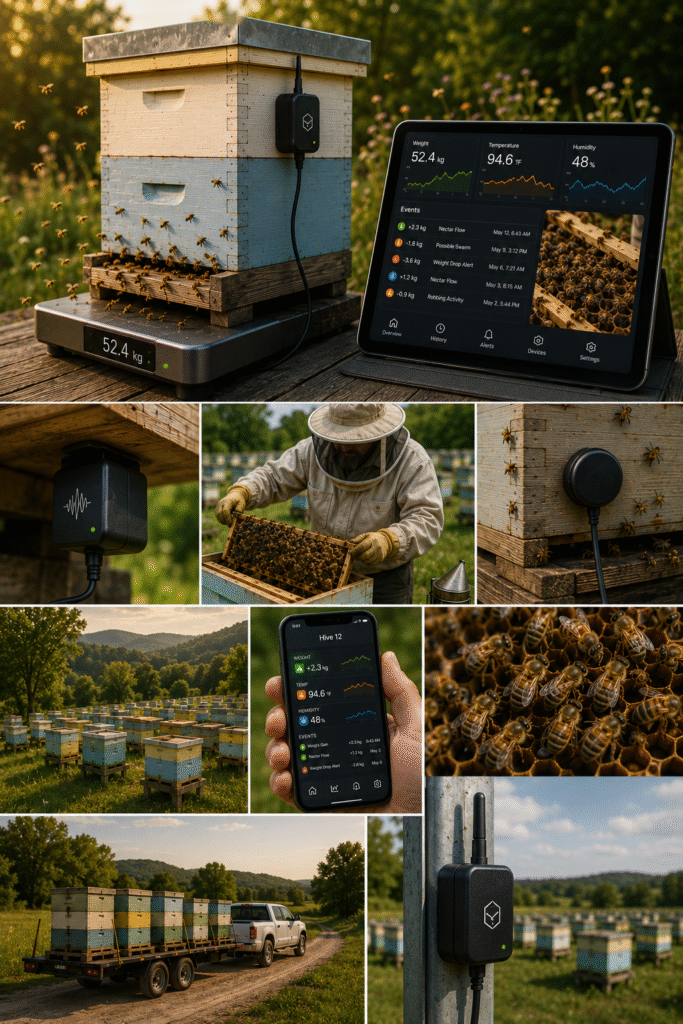
If you keep one or two hives in your backyard and walk past them most days anyway, your own eyes and ears are still your best sensor, and I mean that without irony. You’ll notice a change in flight pattern or a shift in tone at the entrance faster than most apps will alert you.
Smart monitoring earns its keep for beekeepers managing colonies they can’t check often — remote out-yards, pollination contracts that scatter hives across multiple properties, or anyone managing enough hives that daily inspection of every box simply isn’t physically possible. It’s also worth it for anyone who’s lost a colony specifically to a slow-building problem they didn’t catch in time, because that’s the exact failure mode this tech is built to close.
What I’d Actually Buy First
Start with a scale on your weakest or most remote hive, not your strongest one. You learn more from watching a struggling colony’s weight curve than a thriving one’s, and if something’s going to fail, that’s where it’ll show up first. Skip the camera-equipped, full-dashboard kits until you’ve lived with a basic scale for one full season and understand what a normal weight curve looks like for your own apiary, in your own climate, on your own forage. The data is only useful once you know what “normal” looks like for your specific bees — and that’s not something any app can tell you. That part’s still on you.
Have you run a hive scale or acoustic sensor through a full season? I’d genuinely like to hear what it caught — or missed — for you.