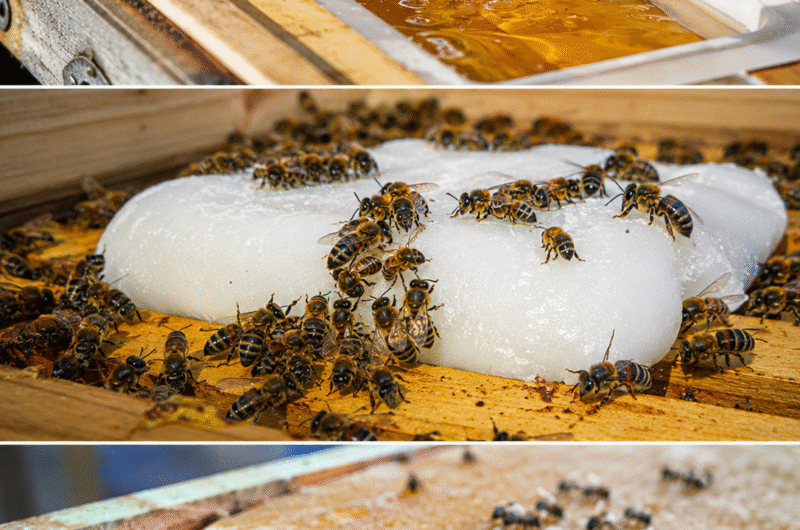

A beekeeper’s real winter feeding guide — when syrup still works, when fondant takes over, and how to build a candy board that actually holds.
I lost a hive in February once, and when I finally worked up the nerve to open it in March, I found out exactly why. There was capped honey four inches away from the cluster — untouched, unreachable, may as well have been on the moon. The bees hadn’t run out of food. They’d run out of the ability to get to it. That’s the mistake winter feeding is supposed to prevent, and it’s also the mistake that most winter feeding, done wrong, actually causes.
Winter feeding bees means supplementing a colony’s stores with sugar syrup, fondant, or a candy board depending on the outside temperature and how far along winter you are — syrup in early fall while it’s still warm enough to evaporate, and solid feed like fondant or a candy board once temperatures drop below roughly 50°F. Get the timing backwards and you can do more harm than doing nothing at all.
Why winter feeding fails more colonies than it saves
Here’s the part nobody tells new beekeepers: feeding isn’t automatically good. A well-meaning but poorly timed feed can chill a cluster, introduce moisture that turns to condensation and drips onto the bees, or simply sit there uneaten because the bees physically can’t break cluster to reach it. I’ve seen beekeepers dump syrup into a hive in December because they felt guilty about a light autumn honey crop, not realizing that cold syrup just sits in the feeder attracting mold, or worse, freezes solid and cracks the feeder.
The three methods — syrup, fondant, and candy boards — aren’t interchangeable. Each one is built for a specific stage of the season, and using the wrong one at the wrong time is where most winter feeding mistakes happen.
Reading your hive — how to tell if bees actually need feeding
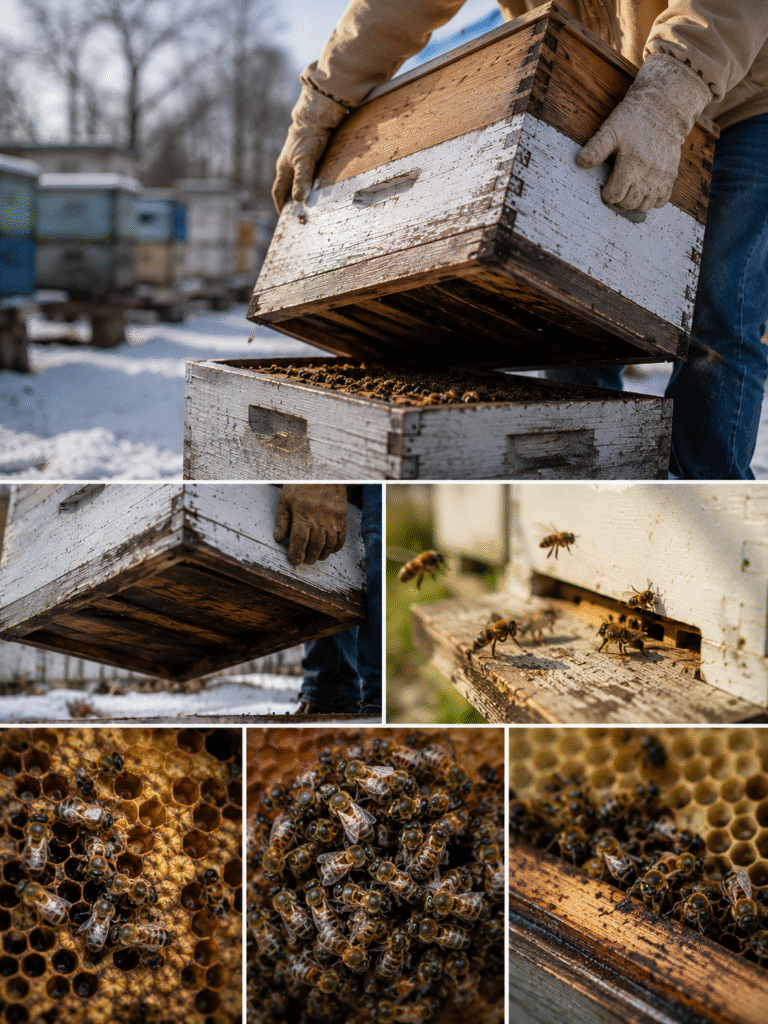
You don’t need to crack the hive open to get a reasonable read on stores. Two checks I use on every apiary visit from November through February:
- The heft test. Stand behind the hive, tilt it back slightly by lifting the bottom edge. A hive with adequate stores feels like lifting a loaded suitcase — real resistance. A hive that comes up light with almost no effort is a hive running low.
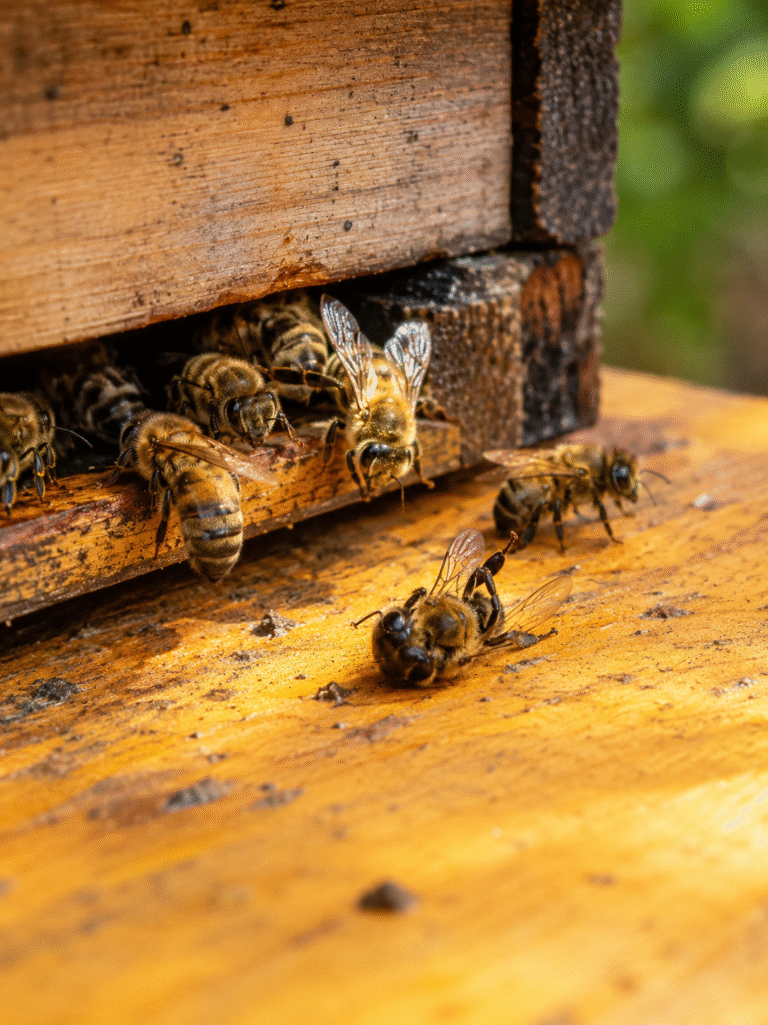
- The entrance check. On a mild day (above 45°F), a few bees taking cleansing flights is normal. A completely silent entrance with no activity even on a 50-degree afternoon, combined with a light hive, is a warning sign worth investigating.
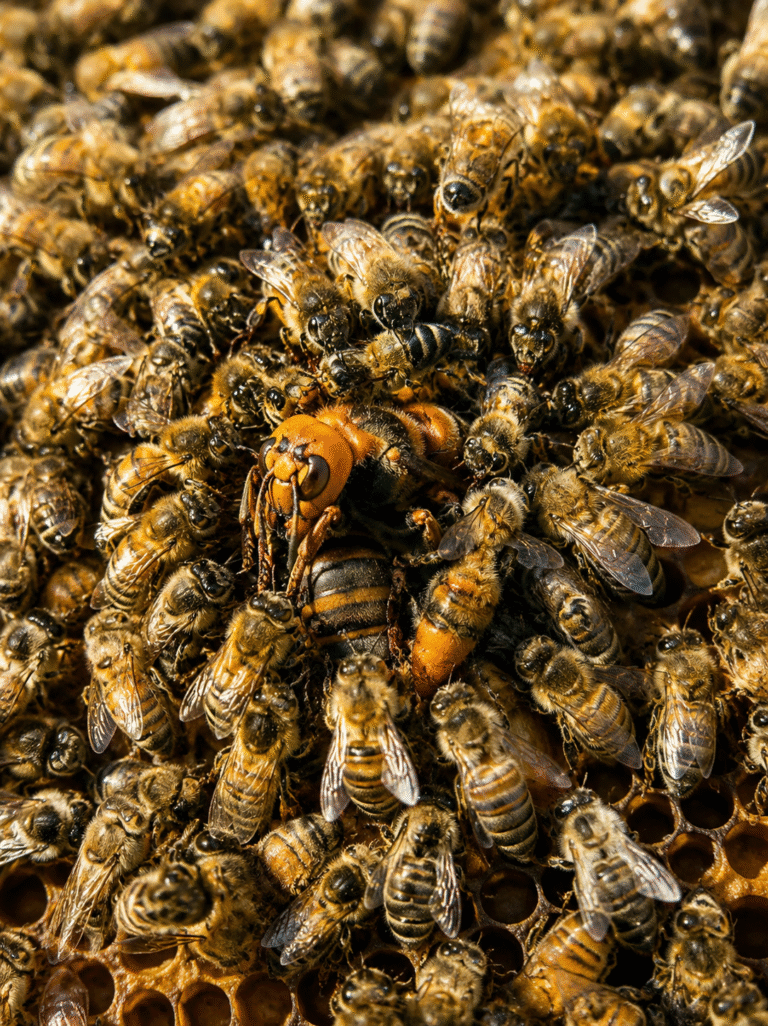
Signs of actual starvation, as opposed to a normal winter cluster minding its business: dead bees head-first in cells (they died reaching for food that wasn’t there), a shrunken, unusually quiet cluster, or bees found dead clustered right up against an empty comb. This is exactly the kind of judgment call that trips up first-year beekeepers most, since a quiet hive on a cold day can look identical whether it’s perfectly healthy or in real trouble — the heft test is what actually tells the two apart.
Sugar syrup — when it still makes sense, and when it becomes a liability
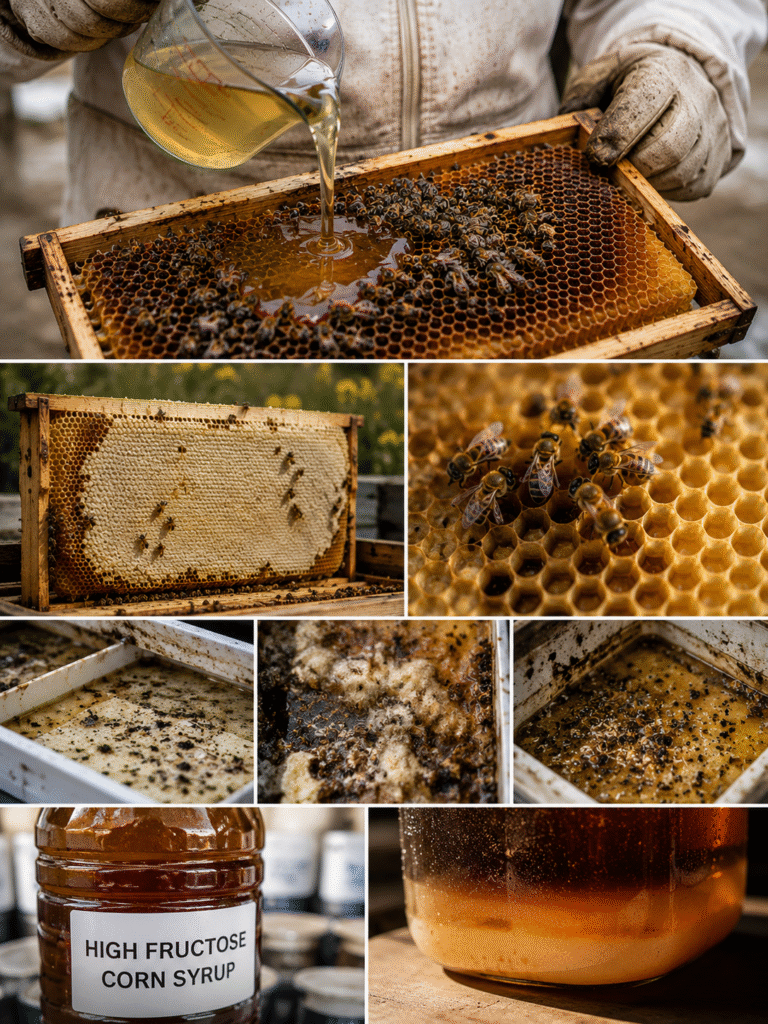
Sugar syrup works for winter prep only in early autumn, while daytime temperatures are still consistently above 50°F — mixed heavy, at a 2:1 ratio of sugar to water by weight, so bees can store it as they would honey rather than needing to process it for immediate use.
The logic is simple: bees dry out syrup by fanning it, the same way they cure nectar into honey. That process needs warmth and airflow. Feed syrup in September in most of the U.S. and Canada, and a strong colony will happily take down several gallons in a couple of weeks, capping it just like a fall honey flow.
Feed that same syrup in December, and you’re asking for trouble. Below 50°F, bees can’t evaporate the water content efficiently. The syrup sits wet in the comb, sometimes ferments, sometimes just goes moldy in the feeder itself. I’ve pulled feeders in January that looked like something out of a lab experiment — genuinely something I wish I’d photographed for a teaching moment rather than just being annoyed about it at 15 degrees outside.
There’s also a practical failure mode worth naming: commercial beekeepers sometimes use high-fructose corn syrup at scale, and older or improperly stored HFCS can develop hydroxymethylfurfural (HMF), a compound that’s toxic to bees in sufficient concentration. If you’re mixing your own with plain white table sugar, this isn’t something you need to worry about — but it’s worth knowing if you’re ever offered “cheap bulk syrup” from an unfamiliar source.
Fondant — the mid-winter standard
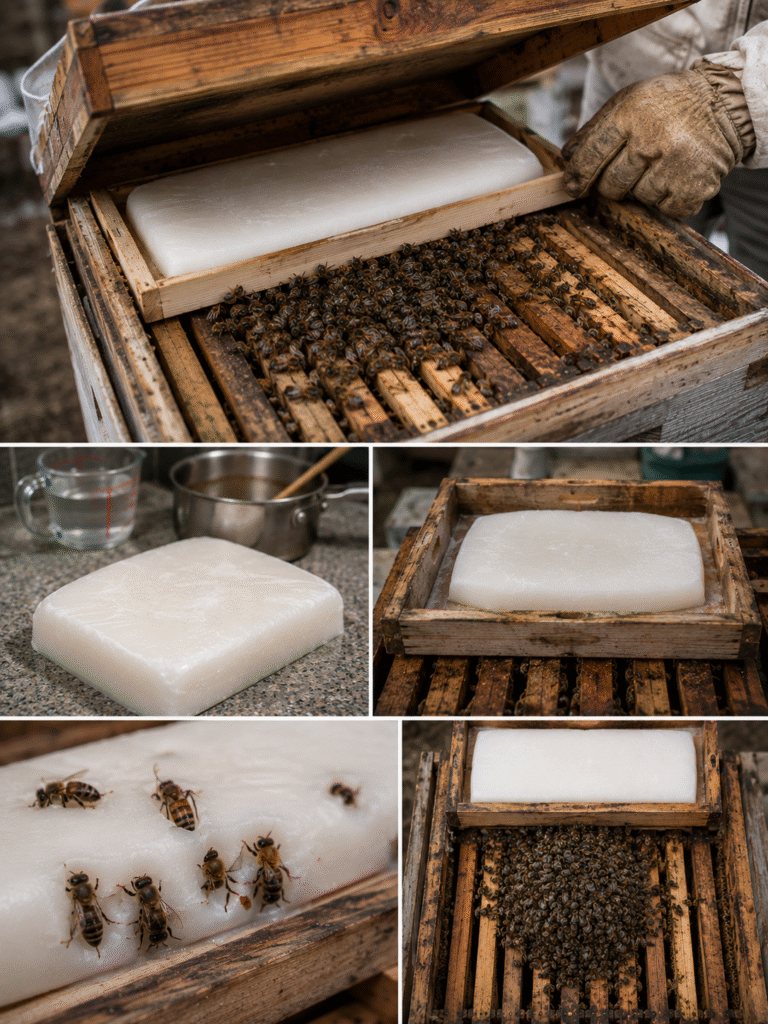
Fondant is a low-moisture sugar paste that bees can eat directly without needing to evaporate water out of it, which makes it the standard winter feed once temperatures drop too low for syrup to be practical.
Unlike syrup, fondant doesn’t ask anything of the bees except to walk over and eat. That’s exactly what makes it usable in genuinely cold conditions — but it comes with its own failure mode. Fondant that’s too soft or placed wrong can trap bees. I say this from experience: early on, I placed a slab of fondant directly on top of the frames without a rim or shim to keep it from sagging into the bee space, and came back three weeks later to find a handful of bees stuck fast in it like flies on old flypaper. Not a catastrophic loss, but an entirely avoidable one, and it taught me to always use a shim or an empty super to give the fondant room to sit without direct contact pressure on the cluster below.
Basic fondant ratio: four parts white sugar to one part water by weight, with a small splash of vinegar to prevent crystallization, heated gently and poured to set. Most beekeepers I know, myself included most winters, just buy it pre-made from a beekeeping supplier rather than deal with the stovetop process — the DIY version saves money but eats an evening.
Placement matters more than the recipe. Fondant needs to sit directly above the cluster, not off to the side, because a winter cluster won’t break formation to travel horizontally across cold comb to reach food — but it will move upward toward warmth and food in the same motion.
Candy boards — for long, hard winters
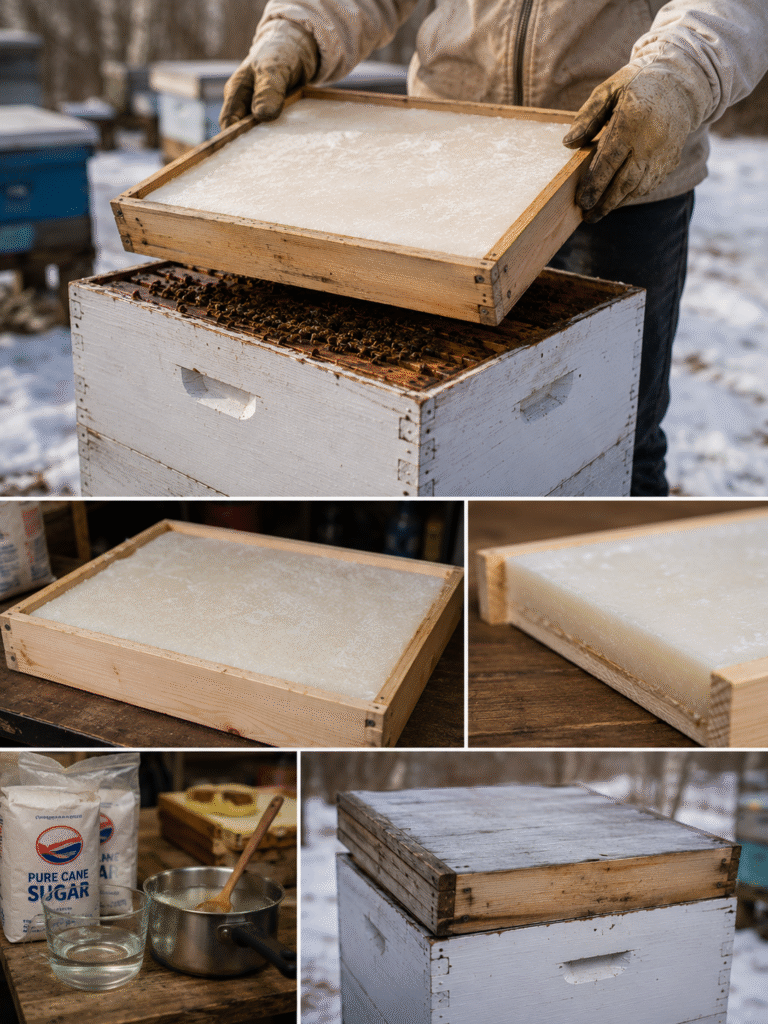
A candy board is a wooden frame filled with a thick sugar-water mixture that sits on top of the hive like a super, providing a much larger reserve of solid food than a single fondant patty — built for regions with long winters where you won’t be opening the hive again until spring.
If you’re in a climate where you genuinely won’t get back into the hive for two or three months at a stretch — northern New England, the upper Midwest, most of Canada — a candy board buys you a much bigger safety margin than fondant alone. I build mine with a simple frame roughly the depth of a shim, screened bottom optional, filled with a poured sugar mixture that sets solid. One candy board, built correctly, holds roughly 12 to 16 pounds of sugar — meaningfully more insurance than a one- or two-pound fondant patty.
The tradeoff is effort and cost. A candy board takes real assembly time up front, and the sugar cost adds up across a full apiary. For a single backyard hive in a moderate climate, fondant alone is often enough. For six hives in a place where January means three weeks of subzero nights, the candy board earns its keep.
The Mountain Camp method — dry sugar as emergency insurance
The Mountain Camp method is the simplest possible winter feed: a layer of plain granulated white sugar spread directly on newspaper over the top bars, misted lightly with water to help it clump, with no cooking or heating required.
This one came out of a beekeeping message board years ago (the name traces back to a BeeSource.com forum discussion, not any formal research), and it’s stuck around because it works and requires almost nothing. No stovetop, no mold, no cracked feeders. The moisture and warmth rising naturally from the cluster below is enough to soften the sugar over time so bees can access it. It’s not as calorically dense or long-lasting as a proper candy board, but as an emergency measure when you discover a light hive in February and don’t have fondant on hand, it’s the fastest thing you can put together with what’s already in your kitchen cabinet.
Comparison: Which Feed, When
| Method | Best Timing | Effort | Approx. Cost | Risk if Misused |
|---|---|---|---|---|
| Sugar syrup (2:1) | Early-mid fall, above 50°F | Low | Low | Ferments/molds if fed too cold |
| Fondant | Mid-late winter, below 50°F | Low-Medium | Medium | Traps bees if placed without a shim |
| Candy board | Long winters, set before cluster forms | High (build time) | Medium-High | Wasted effort if winter is mild |
| Mountain Camp (dry sugar) | Emergency, any winter month | Very Low | Very Low | Least calorie-dense; short-term fix only |
Colony loss rates have been running historically high — the 2024–2025 season logged the worst recorded loss rate in the U.S. on record, per the joint Auburn University and Bee Informed Partnership survey. Winter starvation is one of the few loss causes a beekeeper can directly prevent with the right feed at the right time, which is exactly why getting this sequence right matters more this year than it did five years ago. Those record colony losses hit commercial operations hardest, but the same underlying pressure applies at backyard scale, just with lower stakes per hive and higher stakes per beekeeper’s morale.
I’d also gently push back on one instinct a lot of newer beekeepers have: feeding heavily in fall to “make up for” a light honey crop and then continuing to feed syrup straight through winter because it feels proactive. It isn’t. Over-feeding syrup into cold weather doesn’t add safety margin — it adds risk. If your hive genuinely came into fall light on stores, that’s a conversation for reviewing how much honey you left them when you harvested, not a reason to keep syrup feeders running into December.
When to Stop Feeding Syrup
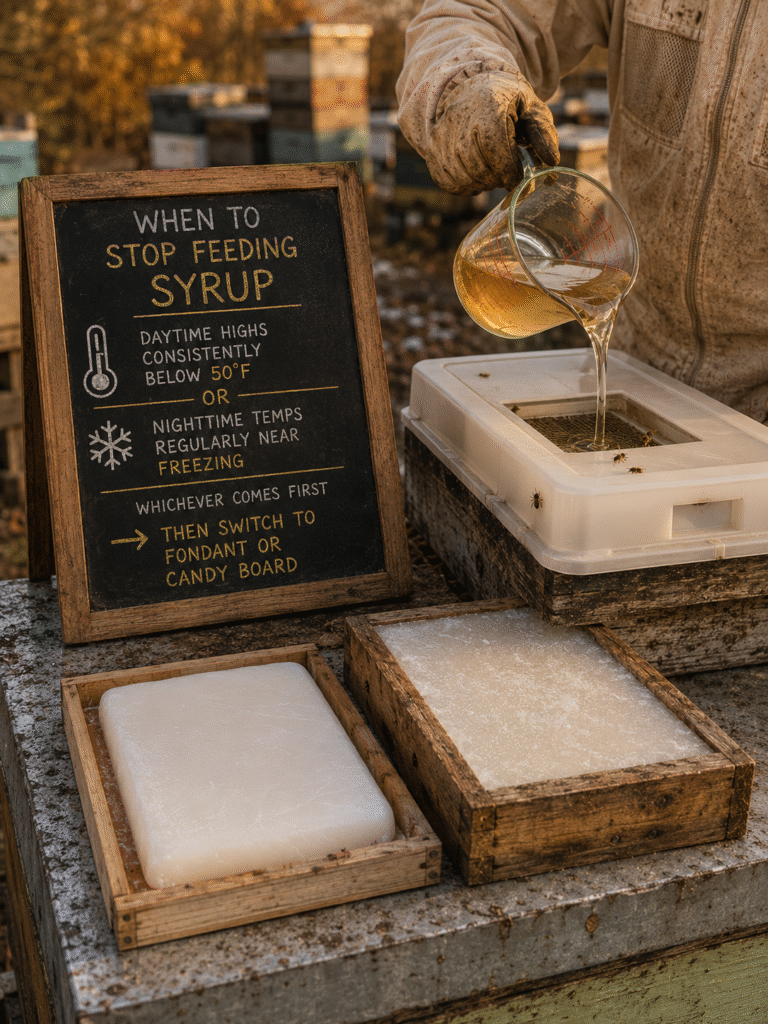
Stop feeding sugar syrup once daytime highs are consistently below 50°F, or once nighttime temperatures regularly drop near freezing — whichever comes first in your region. After that point, switch to fondant or a candy board. This isn’t a fixed calendar date; it varies by region, elevation, and how exposed your apiary site is, so watch your local forecast rather than a generic guide that assumes a single climate.
I’ll also say plainly: this is one of the areas where regional variation genuinely matters and I don’t think any single article — mine included — should pretend otherwise. A beekeeper in coastal Georgia and one in interior Alberta are working with different calendars entirely. What doesn’t change is the underlying rule: warm enough to fan and evaporate means syrup is fine; too cold for that means switch to solid feed.
Signs Your Bees Are Starving in Winter
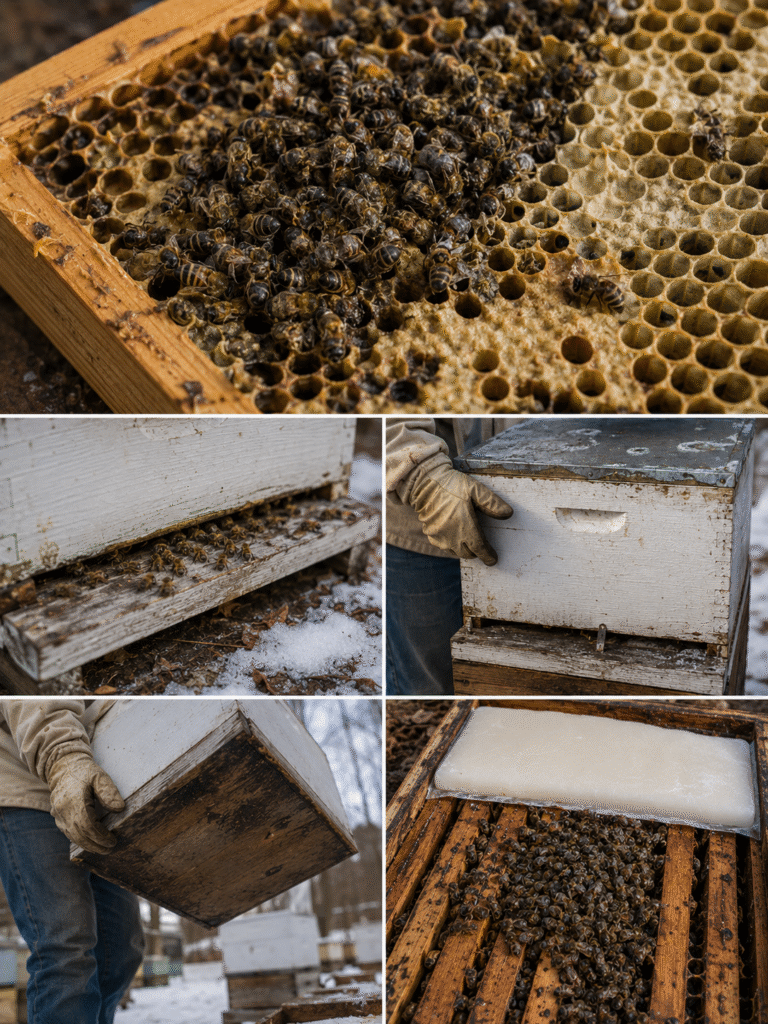
The clearest sign of winter starvation is dead bees found head-first, buried into empty comb cells — a position that shows they died mid-search for food that wasn’t there. Other signs include an unusually silent, shrunken cluster on a day mild enough that some activity would be normal, and a hive that hefts noticeably lighter than others in the same apiary.
If you catch this early — cluster still alive but stores clearly gone — an emergency Mountain Camp feed or a fondant patty placed directly above the cluster is often enough to carry them through to the next warm spell. If you find the cluster already dead, what you’re often looking at gets easily confused with other causes of sudden loss, and starvation specifically tends to leave that telltale “bees stuck in empty cells, honey untouched nearby” pattern rather than an empty hive with no bodies at all.
Winter feeding is really just one half of a year-round temperature management problem — the same colony that needs careful feeding in January is the one you were keeping cool through a summer heatwave six months earlier. Both extremes ask the same underlying question of a beekeeper: can this colony get to what it needs, when it needs it, without you creating a bigger problem trying to help.
FAQ
What’s the difference between fondant and sugar syrup for bees? Syrup is a liquid mixture bees have to actively dry out and store, which only works efficiently in warm weather. Fondant is a low-moisture solid paste bees can eat immediately with no processing required, making it the safer option once temperatures drop.
When should I stop feeding my bees sugar syrup? Switch off syrup once daytime highs are consistently below roughly 50°F. Below that point bees can’t evaporate the water content efficiently, and the syrup is more likely to ferment, mold, or simply go unused.
Can bees starve with honey still in the hive? Yes. A winter cluster moves as a unit and generally won’t break formation to cross cold comb horizontally to reach food that’s out of reach, even if that food is only a few inches away. This is called isolation starvation, and it’s one of the more common causes of winter loss.
How do I make a candy board for bees? Build a wooden frame the depth of a standard shim, pour a thick sugar-and-water mixture into it and let it set solid, then place it directly on top of the hive above the cluster. One properly built board typically holds 12–16 pounds of sugar.
Is it safe to feed bees in freezing temperatures? Solid feed (fondant, candy board, or dry sugar via the Mountain Camp method) is safe in freezing temperatures because bees don’t need to process moisture out of it. Liquid syrup is not recommended once temperatures are consistently near or below freezing.
How much sugar do bees need to survive winter? This varies heavily by colony size, region, and winter length, but as a rough backyard benchmark, many beekeepers aim to leave 40–60 pounds of stored honey or equivalent sugar feed going into winter for a full-size colony in a temperate climate.
Can you use brown sugar or raw sugar to feed bees? No — stick to plain white granulated sugar. Brown sugar, raw sugar, and molasses contain higher mineral and impurity content that can cause digestive stress in bees, essentially the same category of problem as feeding them something their gut isn’t built to process cleanly.