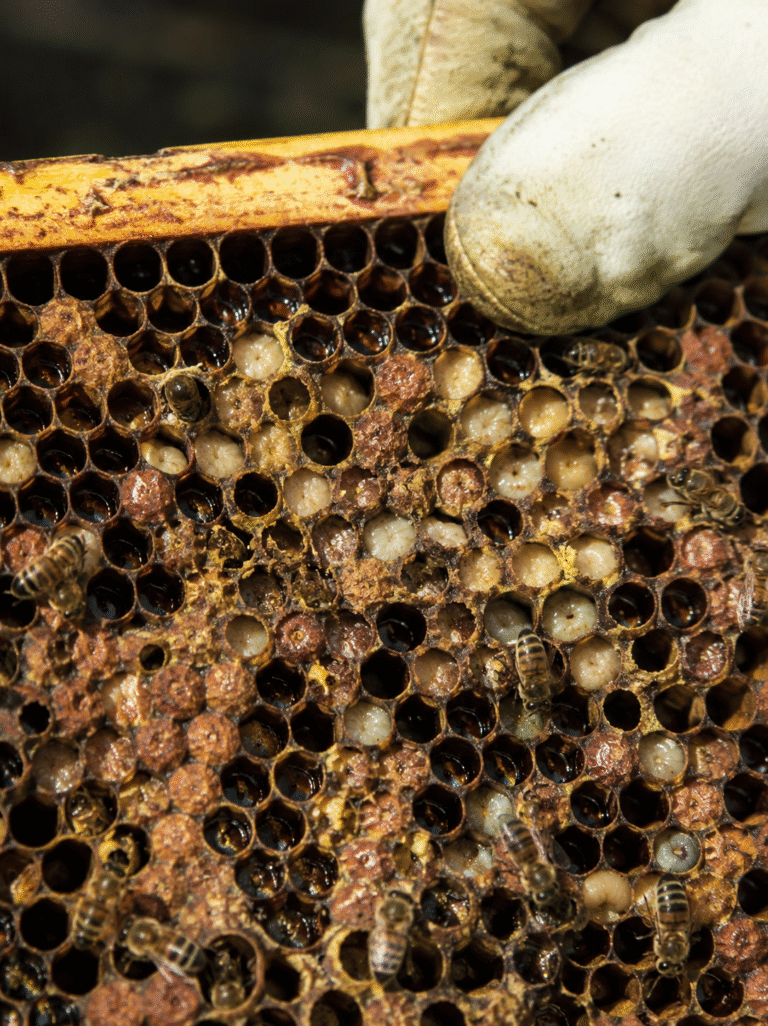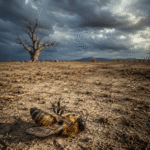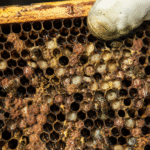
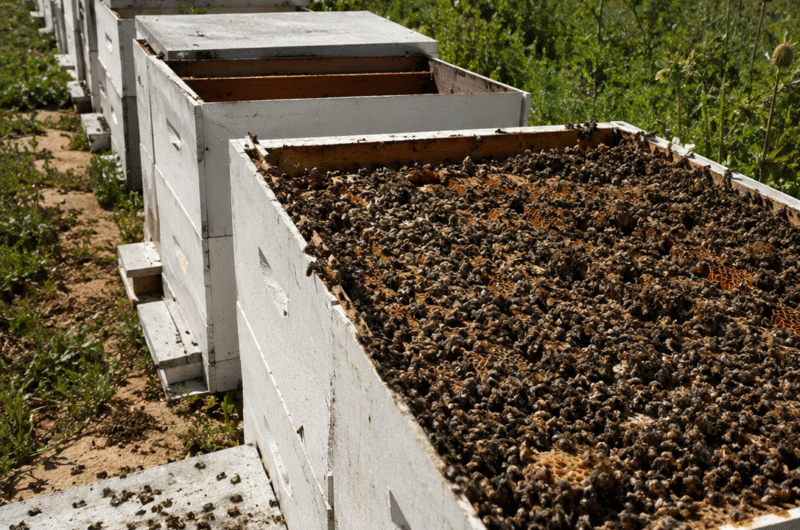

A beekeeper friend of mine in the Central Valley called me back in February, and I could hear it in his voice before he even got to the numbers. He’d opened up his hives after winter, the way he’s done for almost twenty years, expecting the usual mix — some losses, sure, that’s normal, but mostly clusters of bees ready to get back to work. Instead, box after box was silent. Dead. Empty.
He’s not alone, and it turns out his bad winter wasn’t a fluke. It was part of something much bigger.
The Number That Should Stop You
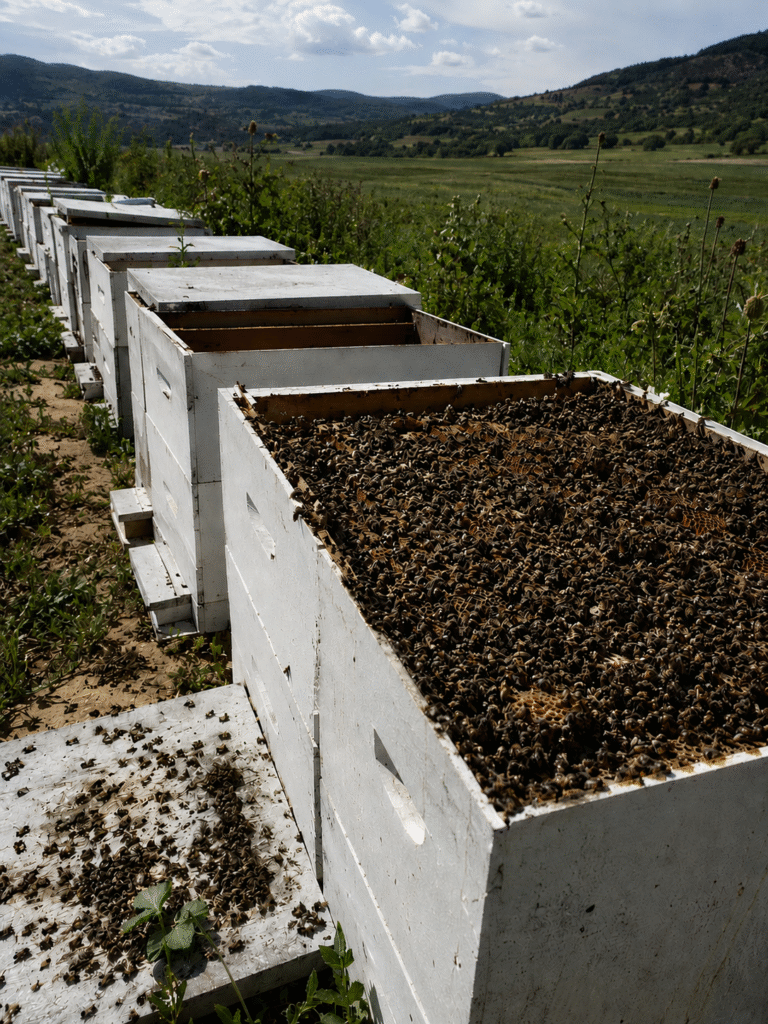
Researchers at Washington State University have been tracking colony losses closely, and what they found this past year is genuinely alarming: commercial honey bee operations lost up to 70% of their colonies. To put that in perspective, normal winter losses for a well-managed operation usually sit somewhere in the 15-20% range — painful, but survivable, and built into the economics of the business. A 70% loss isn’t a bad season. It’s closer to a collapse.
Nationally, the scale gets even harder to wrap your head around. More than 1.6 million colonies were lost across the country, with an estimated economic impact of $600 million. That figure comes from Project Apis m., one of the organizations that tracks pollinator health data most closely, and it doesn’t even capture the downstream effects — the almond growers scrambling for pollination contracts, the beekeepers who can’t rebuild fast enough, the small operations that simply don’t come back from a hit like that.
I want to be careful here, because doom-and-gloom bee headlines have become almost a genre of their own over the past fifteen years, and I think that’s actually dulled people’s reaction to real crises when they happen. This isn’t hype. This is one of the worst loss events researchers in this field have documented.
So What’s Actually Killing Them?
Here’s the frustrating part, and the part that I think gets lost in a lot of the coverage: there’s no single smoking gun. Priya Basu and Brandon Hopkins, the two principal investigators leading WSU’s Honey Bee and Pollinators Program, point to a combination of factors that researchers in the field have started calling the “4 P’s” — pests, poor nutrition, pesticides, and pathogens.
It’s worth slowing down on each of these, because they don’t operate independently. They compound each other.
Pests mostly means varroa mites, and if you’ve kept bees for more than a season, you already know how much damage these things do. They’re parasitic, they weaken individual bees, and worse, they vector viruses directly into the colony. A hive that looks reasonably healthy in September can collapse by December because mite loads quietly crossed a threshold nobody was watching closely enough.
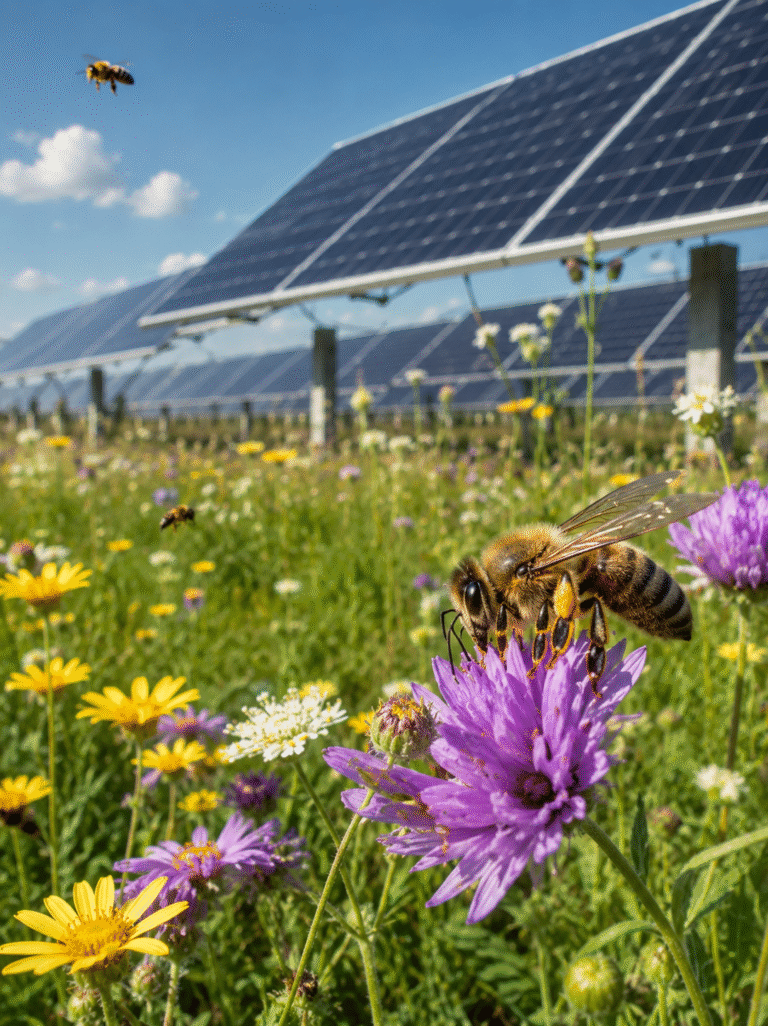
Poor nutrition is the one that doesn’t get nearly enough attention outside beekeeping circles. Commercial bees are often trucked across the country to pollinate single-crop operations — almonds in California, then maybe blueberries somewhere else — and a diet of one pollen source for weeks at a time is the nutritional equivalent of eating the same meal every day for a month. Bees need diversity in their forage just like we need diversity in ours.
Pesticides, even at sublethal doses, mess with a bee’s ability to navigate, forage efficiently, and resist disease. You don’t need a colony wipeout to see the damage. Chronic low-level exposure is its own slow erosion.
Pathogens ride alongside all of the above. Weakened immune systems from poor nutrition and pesticide exposure, combined with mite-vectored viruses, create exactly the conditions where disease spreads fast and hits hard.
Put those four together, hitting a colony at the same time, and you get something much worse than the sum of its parts. That’s the “4 P’s” problem in a nutshell — it’s never just one thing, which is exactly why it’s so hard to solve with one fix.
The Part That Affects You, Even If You’ve Never Owned a Hive
I get it — colony loss statistics can feel like an abstract, faraway problem if you’re not the one losing bees. But pollinators aren’t a side issue for agriculture. They’re load-bearing infrastructure.
Commercial honey bee operators are a linchpin of the U.S. agriculture industry, and when pollinator numbers drop, the ripple effect runs straight into smaller harvests and higher food prices. Almonds alone require nearly the entire U.S. commercial bee population trucked into California every February just to get pollinated. Strip away a chunk of that workforce, and you’re not just hurting beekeepers — you’re hitting the supply chain for a long list of fruits, nuts, and vegetables that depend on insect pollination to exist at all.
So next time the price of almonds, apples, or berries creeps up at the grocery store, there’s a decent chance a bad bee year is somewhere in that story, even if nobody’s talking about it on the shelf tag.
What’s Actually Working
I don’t want to leave this on a completely grim note, because there is real progress happening, even amid a brutal year.
WSU researchers have developed new methods to control mite populations, including a fungal biocontrol that kills mites without harming the bees themselves — a meaningfully gentler approach than some of the older chemical treatments, which always involved a tradeoff between killing mites and stressing the colony. Beekeepers have also shifted management practices in a big way: storing colonies indoors during winter, in cool, controlled environments, to disrupt the mite reproduction cycle and cut down on winter mortality. More than 30% of the nation’s commercial colonies are now overwintered indoors, which would have sounded unusual a decade ago and is quickly becoming standard practice.
There’s also work underway testing supplemental food sources designed to keep colonies fed during pollen shortages, along with efforts to map pollen quality across different regions so beekeepers and growers can make smarter decisions about where and when to place hives. None of this is a silver bullet. But it’s the kind of steady, unglamorous research that actually moves the needle over time.
What I’d Tell You If You Kept Bees
If you’ve got hives of your own, even a couple of backyard colonies, this is the year to take mite counts seriously if you weren’t already. Treat on a schedule, not just when you happen to notice a problem. Diversify forage where you can — plant a mix of flowering plants rather than relying on whatever’s blooming nearby. And don’t assume a strong-looking colony in autumn is guaranteed to make it to spring. This past year proved that wrong for a lot of experienced beekeepers, not just newcomers.
And if you don’t keep bees? Plant something that blooms. Skip the pesticide on your lawn if you can manage it. Buy honey from a local producer instead of the cheapest jar on the shelf. None of that solves a national crisis on its own, but pollinator health has always been one of those rare problems where small, ordinary choices genuinely add up.
My friend in the Central Valley is rebuilding this year — fewer hives than before, more caution, a lot more attention to mite counts than he used to give. He’ll get there. Beekeepers are stubborn that way. But the fact that it takes this much effort and this much loss just to get back to where he started should tell you something about how serious this moment really is.