
A beekeeper explains the real mechanics, risks, and economics behind migratory pollination, and why California’s almond bloom has quietly become one of the most important events in modern beekeeping.
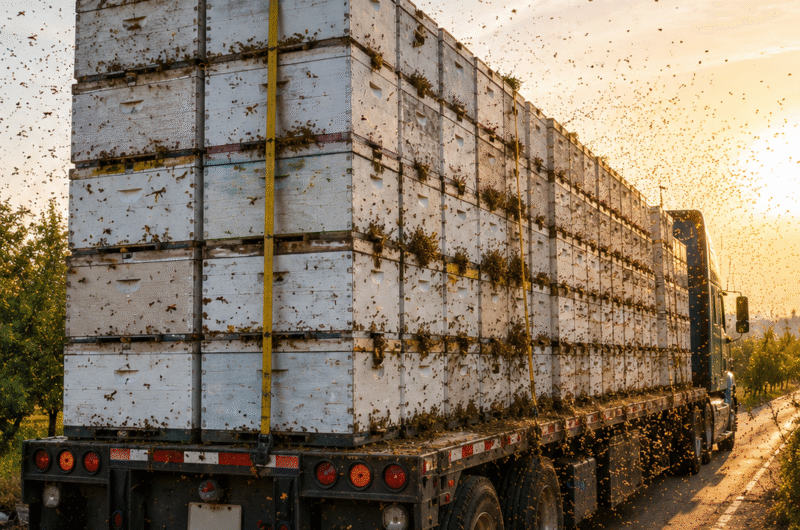
A beekeeper I correspond with in the Dakotas sends his hives on a road trip every February that’s longer than most people’s family vacations. His bees leave the frozen prairie on a flatbed truck in the dead of night, ride roughly 1,800 miles, and wake up — if “wake up” is the right word for a cluster of insects shivering through transit — surrounded by an unbroken sea of pink and white almond blossoms in California’s Central Valley.
He’s not unusual. He’s one of roughly half of all commercially kept honey bee colonies in the United States that make this exact trip every winter. And almost nobody outside of agriculture has any idea it happens, or why an almond — a nut most people associate with snack aisles and milk cartons — has become the single biggest pollination event on the planet.
The Math That Created This Industry
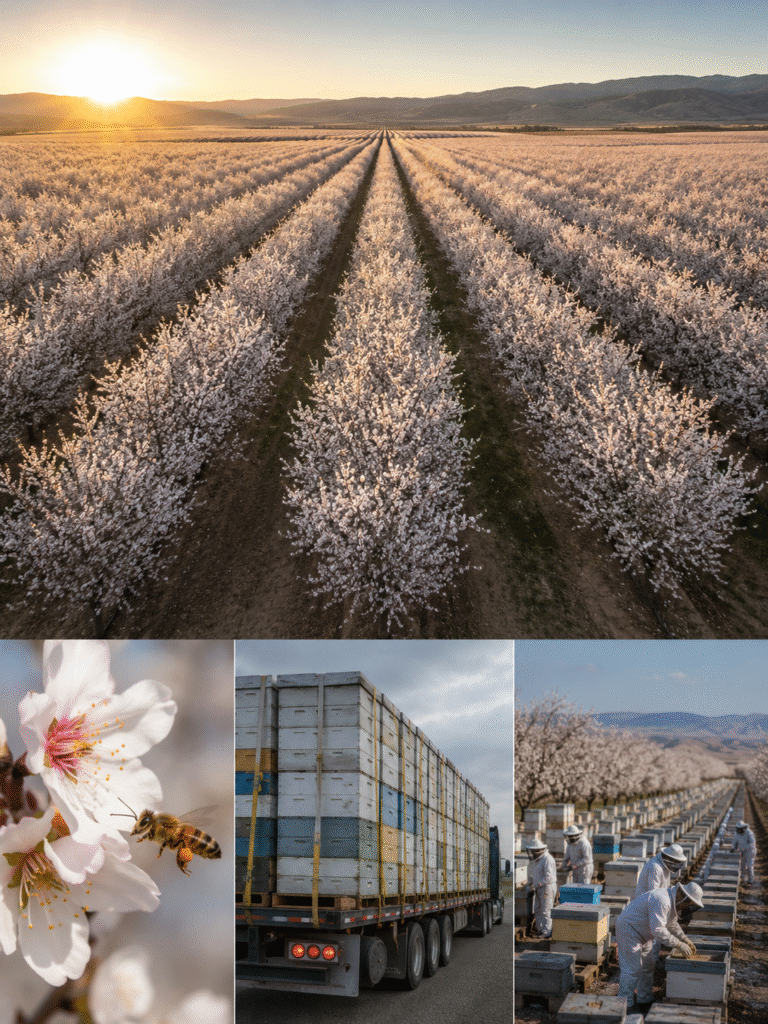
California grows around 80% of the world’s almonds, across roughly 1.6 million acres of orchard. Every one of those almond trees is self-incompatible, meaning a single tree cannot fertilize its own flowers — it needs pollen physically carried from a different variety planted nearby. Wind won’t do it. Almond pollen is too heavy and sticky to travel on air currents in any useful quantity.
That leaves bees as the only practical solution at this scale, and the scale is the part that’s hard to grasp until you see it. Each acre of almonds needs roughly two healthy colonies to set a commercially viable crop, all blooming and needing pollination within the same narrow two-to-three week window in February. Do the multiplication, and California’s almond bloom alone requires somewhere around 2 to 2.5 million colonies showing up, working, and leaving again before the petals drop.
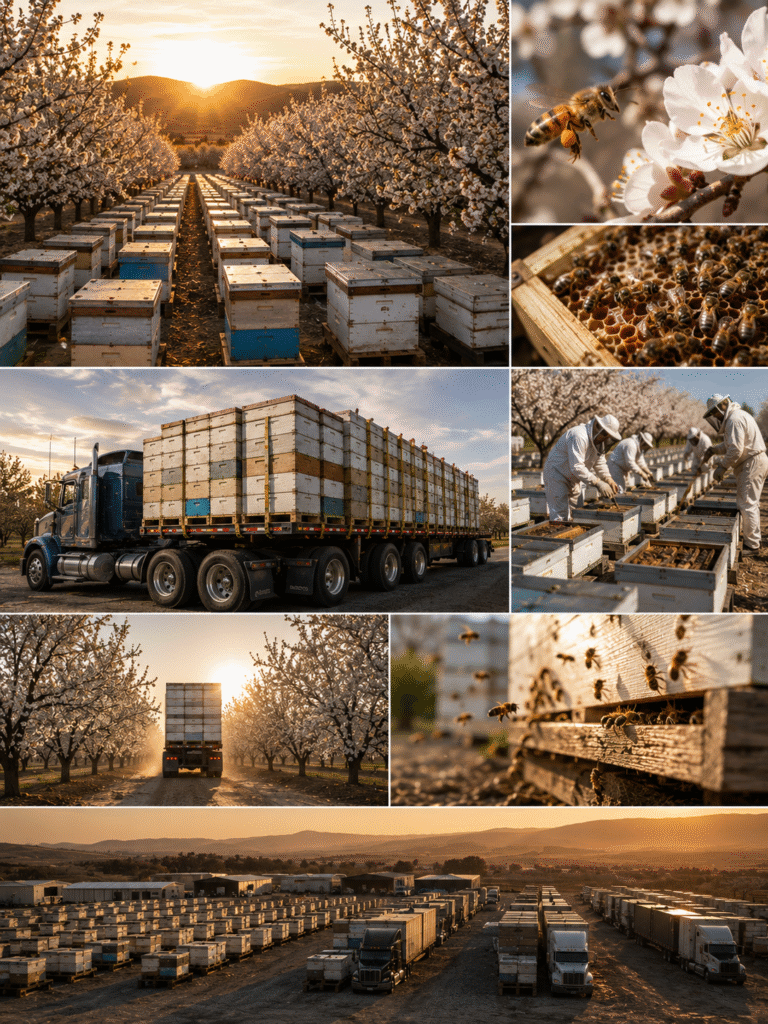
There simply aren’t 2 million colonies of bees living in California year-round. There never have been. So beekeepers from Florida, Texas, the Dakotas, and everywhere in between load their hives onto flatbeds in the weeks before bloom and drive them in.
What a Pollination Contract Actually Pays — And Why That Number Has Quietly Exploded
In the late 1990s, a beekeeper might rent a colony out for almond pollination for around $10-20. Today, depending on colony strength and the year’s almond futures market, that number sits somewhere between $180 and $220 per colony, with strong colonies in tight-supply years occasionally fetching more.
That’s not inflation. That’s almonds becoming, by total contract value, the most lucrative single pollination event in commercial beekeeping — bigger than blueberries, bigger than apples, bigger than the entire honey harvest for many migratory operations combined. I know beekeepers who treat their honey crop as something close to a side benefit now; almond pollination contracts have become the financial backbone of their entire year. A beekeeper running 2,000 colonies can clear close to $400,000 from a single February, before a single jar of honey is ever extracted.
That figure explains something I used to find confusing as a hobbyist: why would anyone subject their bees to a multi-day truck ride in winter, risking colony stress, just for a pollination fee? Once you see the dollar figures next to honey market prices — which have been flat or declining in real terms for years — the math stops being confusing and starts being the obvious business decision.
The Risk Side Nobody Mentions in the Headlines
Here’s the part of the story that gets glossed over in most coverage of the almond bloom, and it’s the part that matters most if you actually keep bees.
Trucking tens of thousands of colonies from dozens of different states into one valley, packed wing-to-wing on staging yards before they’re spread across orchards, creates something beekeepers have started calling — half-jokingly, half-seriously — the largest bee gathering on Earth. And like any large gathering of any species, it’s an extraordinarily efficient way to spread disease.
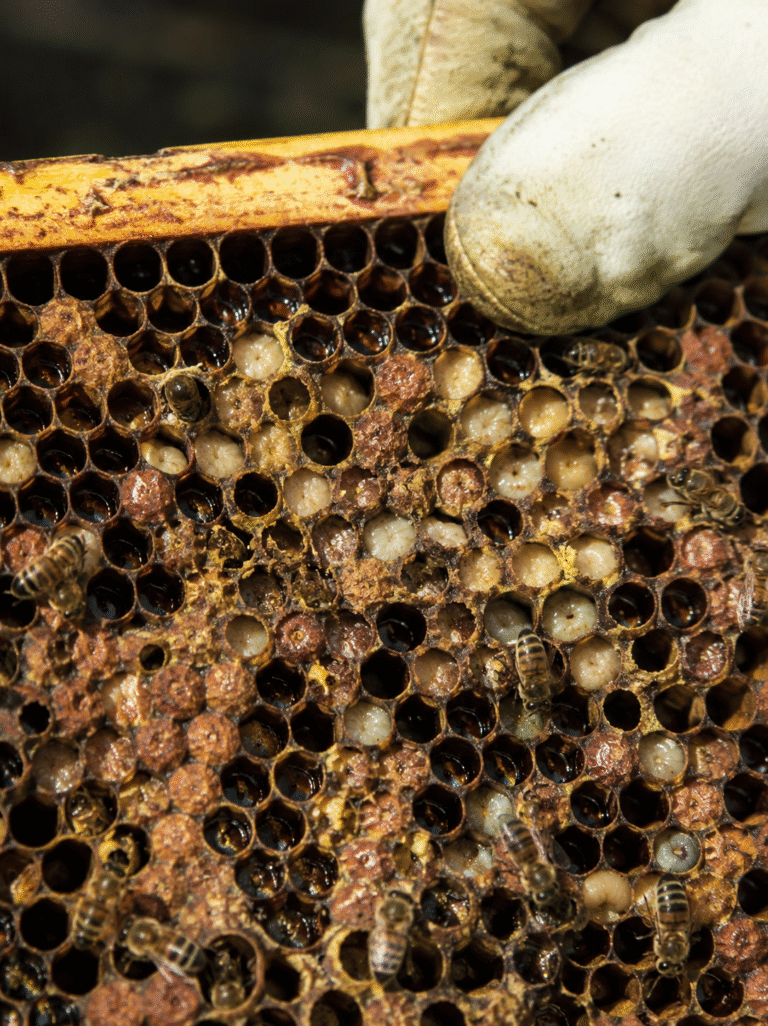
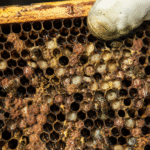
Varroa mites, nosema, and viral loads that one operation has been managing quietly for years can jump to a neighboring beekeeper’s colonies through drifting bees and shared forage, sometimes within days. I’ve talked with California-based beekeepers who don’t truck bees in themselves but who’ve watched their resident colonies pick up mite loads that spiked noticeably the week after a wave of out-of-state hives arrived nearby. There’s no malice in it — nobody’s bees arrive intentionally sick — but density does what density always does with pathogens.
There’s also the trucking itself. Hives are typically wrapped, netted, and moved at night when bees are clustered and calmer, but heat buildup on a stalled truck, rough roads, or unexpected delays at state agricultural inspection checkpoints can cause real losses. Some operations report 5-10% colony mortality directly tied to the stress of transport in a bad year — a cost baked quietly into the economics that the per-colony fee is meant to offset.
Why This Should Matter to You Even If You’ll Never Truck a Hive
If you keep two hives in a backyard and have no intention of ever loading them onto anything, this story still touches your beekeeping, in a roundabout way.
The almond bloom has become an early, large-scale stress test for national bee health. Whatever mite resistance levels, viral strains, or pesticide exposure patterns are circulating through 2 million colonies in February tends to echo through the broader commercial bee population for the rest of the year, because so many of those same colonies get split, requeened, and sold into the nucleus colony and package bee market that hobbyists buy from every spring. If you bought a package of bees this spring from a supplier who also runs almond contracts, there’s a real chance your starter colony’s genetic and health baseline was shaped, at least partly, by what happened in that valley in February.
It’s also worth knowing the next time you eat a handful of almonds, see an almond milk carton, or read a headline about bee declines that conveniently leaves out the agricultural economics behind it. The story usually isn’t “bees are simply disappearing.” It’s closer to: we’ve built an entire branch of agriculture that depends on pollinators being available on demand, at industrial scale, in a two-week window, year after year — and the system holding that together is far more fragile, and far more interesting, than the almond aisle would ever suggest.
The Takeaway
Migratory pollination isn’t a sideshow to beekeeping — for a huge share of the commercial industry, it’s become the main event, and the honey is the side project. Understanding why almonds need bees this badly, and what it costs colonies to provide that service, changes how you read every headline about bee health from here on. The next time someone tells you bees are struggling, ask which bees, doing which job, under which contract — because the prairie hive that never sees a flatbed truck and the almond contractor’s hive parked in a staging yard in February are living two very different versions of “being a honey bee” right now.
If you’ve ever wondered why some commercial beekeepers seem almost obsessed with February, this is why — it’s not the honey flow they’re chasing, it’s the bloom.