
A 20-year beekeeper explains exactly what to do after a bee sting — what’s normal, what’s a warning sign, and when to seek emergency care immediately.
I’ve been stung more times than I could honestly count at this point — somewhere well into the hundreds across two decades of opening hives in every kind of weather and mood a colony can have. Most of those stings were forgettable within the hour. One of them, early in my second year, wasn’t, and it taught me something I think every beekeeper and every parent of a curious kid in a garden should actually understand: the difference between a normal sting reaction and a dangerous one isn’t always obvious in the first few minutes, and knowing what to watch for matters more than knowing how to “treat” the sting itself.
What’s Actually Happening When You Get Stung
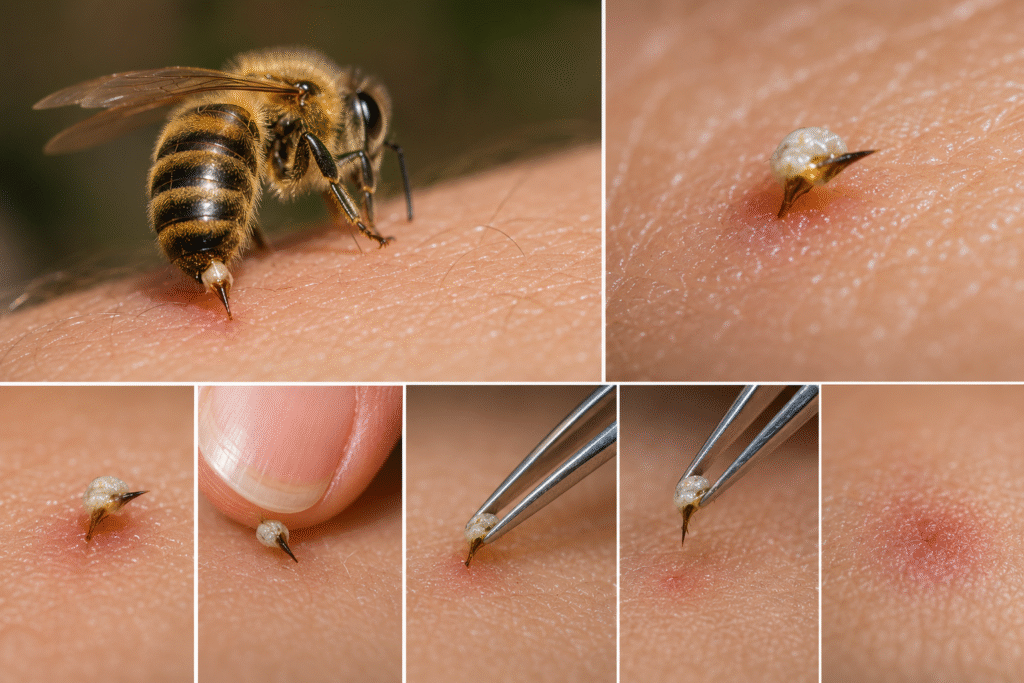
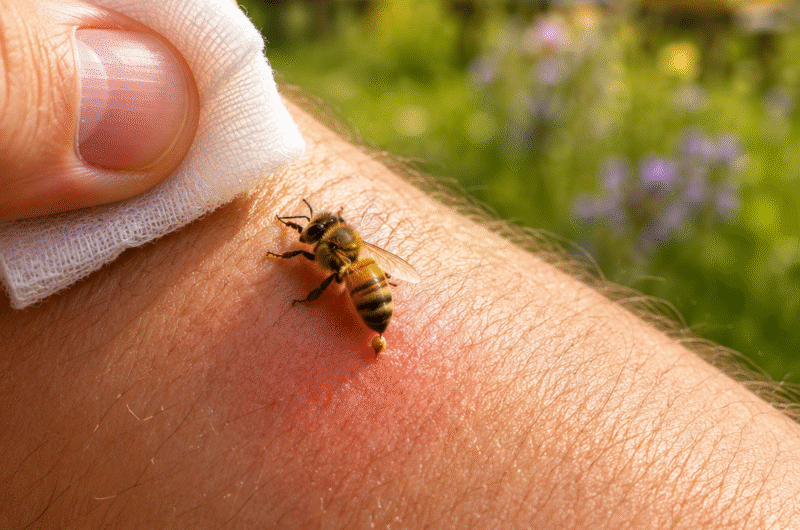
A honey bee sting delivers venom through a barbed stinger that, unlike a wasp’s, tears free from the bee’s body and stays embedded in your skin, continuing to pump venom for a short period even after the bee itself is gone. That’s worth knowing immediately, because it changes the first thing you should actually do.
Remove the stinger fast, but don’t worry too much about how. I grew up hearing you had to scrape it out sideways with a credit card rather than pinch it with tweezers, supposedly to avoid squeezing more venom in. Research on this has actually walked that advice back somewhat — speed of removal matters far more than technique. Get it out within the first few seconds however you can manage, whether that’s a fingernail, tweezers, or the edge of a card. Don’t spend precious seconds hunting for the “correct” tool while venom keeps pumping.
The Normal Reaction — What to Expect
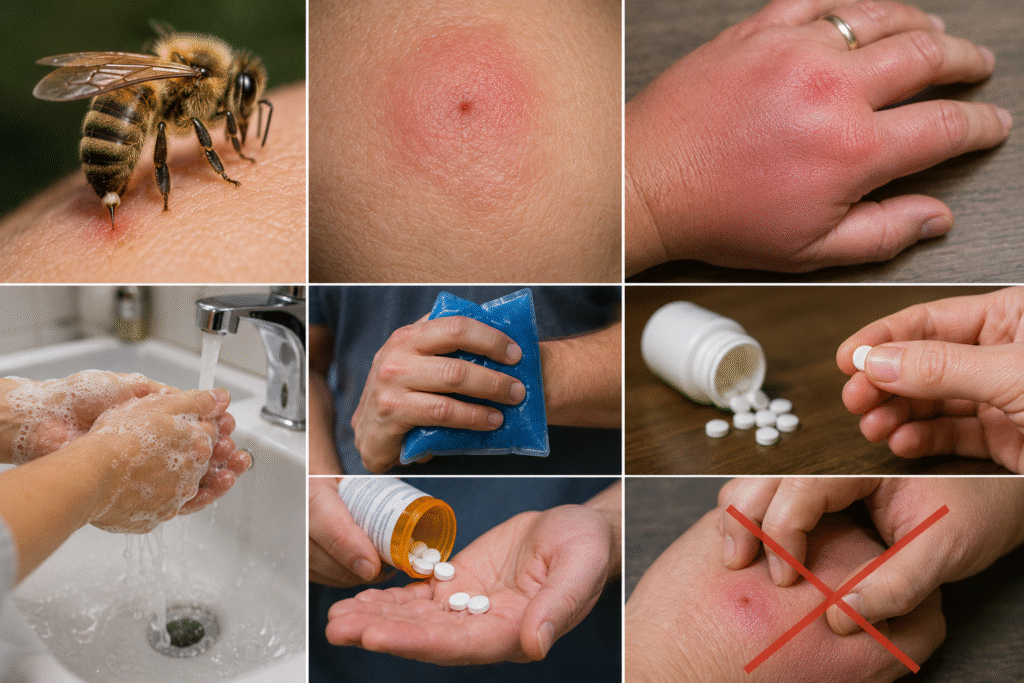
For the vast majority of people, a bee sting produces a fairly predictable, contained response: sharp, immediate pain at the site, followed by redness, swelling, and itching that typically peaks within the first 24 to 48 hours and resolves within a few days. The swelling can look alarming, especially on a finger, hand, or around the eye, where loose tissue allows fluid to accumulate more visibly — I’ve seen a single sting on a knuckle turn an entire hand puffy by the next morning, looking far worse than it actually was.
What helps with this normal reaction:
- Wash the area with soap and water
- Apply a cold compress in intervals to reduce swelling and numb pain
- Over-the-counter antihistamines can reduce itching and swelling
- Over-the-counter pain relievers help with discomfort
- Avoid scratching, which increases infection risk
This is, genuinely, the experience the overwhelming majority of people have, including most people who’ve never been stung before. One sting, localized swelling, uncomfortable for a few days, gone within a week.
What Counts as a Larger Local Reaction
Some people experience what’s medically termed a large local reaction — swelling that extends well beyond the immediate sting site, sometimes covering an entire limb, accompanied by significant redness and warmth, lasting up to a week. This looks more dramatic than a typical sting reaction and understandably worries people, but it’s still generally not a sign of a life-threatening allergy. It indicates a stronger immune response at the local level, not a systemic one.
Where the line actually sits, in practical terms: if the swelling and redness stay confined to the stung limb or area, even if extensive, and you’re not experiencing symptoms anywhere else in your body, this typically falls into the “uncomfortable but not dangerous” category. It’s worth mentioning to a doctor at your next visit, particularly if it happens repeatedly, since large local reactions can sometimes precede a true allergy developing over time. It is not, on its own, a reason to call emergency services.
When It Becomes a Genuine Emergency
This is the part I want to be direct and clear about, because confusion here has real consequences. A systemic allergic reaction — anaphylaxis — is a medical emergency, and it can develop within minutes of a sting in someone who’s allergic, even someone who’s never had a reaction before and has no idea they’re allergic until that moment.
Seek emergency medical care immediately if any of the following appear after a sting:
- Difficulty breathing, wheezing, or a tight feeling in the throat or chest
- Swelling of the face, lips, tongue, or throat — particularly if it interferes with swallowing or speaking
- Hives or widespread itching appearing on parts of the body far from the sting site
- Dizziness, lightheadedness, or a sudden drop in blood pressure
- Nausea, vomiting, or stomach cramping appearing shortly after the sting
- A rapid or weak pulse
- A feeling of impending doom or sudden, overwhelming anxiety that wasn’t present before
If someone carries an epinephrine auto-injector because of a known allergy, use it immediately at the first sign of these symptoms and call emergency services right away — don’t wait to see if symptoms improve on their own first. Anaphylaxis can progress extremely quickly, and epinephrine works best when administered early rather than as a last resort.
One detail worth knowing specifically: symptoms confined to the sting site, even severe local swelling, are not the same thing as a systemic reaction, and they don’t require epinephrine on their own. The distinguishing feature of a true emergency is that symptoms show up away from the sting site — in the throat, the chest, the skin elsewhere on the body — not just at the location where you were stung.
Multiple Stings Change the Calculation
A single sting from a defensive worker is one thing. Multiple stings in a short period — which can happen if you disturb a colony, knock over a nest, or get caught in a defensive response from an aggravated hive — introduce a different risk entirely, independent of allergy status. A large enough dose of venom from numerous stings can cause a toxic reaction even in someone with no bee allergy at all, including symptoms like vomiting, diarrhea, headache, and in rare, severe cases involving very high numbers of stings, more serious complications affecting the kidneys or blood.
If you or someone else receives more than roughly ten to fifteen stings at once, treat it seriously regardless of known allergy status and seek medical evaluation, particularly for children, older adults, or anyone with existing health conditions.
What I’d Tell a New Beekeeper Specifically
Every beekeeper gets stung. That’s simply part of the relationship you enter into with an insect that defends its home the way bees do, and pretending otherwise does new beekeepers a disservice. What I actually tell people starting out isn’t “don’t worry about it” — it’s “pay attention to your own pattern.”
Track how your body responds to your first several stings of a season, even casually. Most experienced beekeepers find their reactions actually decrease somewhat with repeated, regular stinging over a beekeeping season, a mild desensitization effect that’s well documented anecdotally among people who keep bees long-term. But the inverse also happens: some beekeepers develop increasing sensitivity over years of exposure, including, in rarer cases, developing a genuine allergy after a decade or more of stings that previously caused no concern at all. Don’t assume immunity just because your first fifty stings were uneventful. The fifty-first isn’t guaranteed to behave the same way.
Expert Analysis: Why This Matters Beyond the Individual Sting
For hobbyist beekeepers, understanding this spectrum changes how you manage your own apiary practically. If you know you tend toward larger local reactions, working bees during cooler parts of the day when they’re calmer, using adequate smoke, and wearing properly sealed protective gear isn’t excessive caution — it’s reasonable risk management based on your own documented pattern.
For commercial operations managing dozens or hundreds of hives, sting risk management extends to crew safety protocols, particularly during aggressive periods like late-summer dearth or after disturbing a colony during requeening. A crew member’s undiagnosed sensitivity discovered mid-task, away from medical care, is a real operational risk that responsible commercial beekeepers plan around, including keeping epinephrine accessible on-site for crews working remotely.
What to Watch For Next Season
If you keep bees yourself, or you garden somewhere bees are active, the most useful thing you can do isn’t memorizing a treatment checklist — it’s simply paying attention the first time, and every time after, to whether symptoms stay local or start showing up somewhere else on your body. That single distinction, more than any other piece of advice in this article, is what actually separates a bad afternoon from a medical emergency.
Final Takeaway
Most bee stings are uncomfortable, not dangerous, and resolve within days with basic care. The danger isn’t the sting itself — it’s failing to recognize when a reaction has moved beyond the sting site into something systemic. Learn that distinction once, and you’ll know exactly what to do the next time it matters, whether it’s your own hand swelling up after an inspection gone slightly wrong, or a child’s reaction at a backyard barbecue that needs more than just a cold compress and a bandage.
This article is intended for general education and isn’t a substitute for professional medical advice. If you have a known bee allergy, talk to a doctor about carrying an epinephrine auto-injector and creating a personal action plan before you need one.