
My neighbor Sandra is meticulous about what she feeds her family.
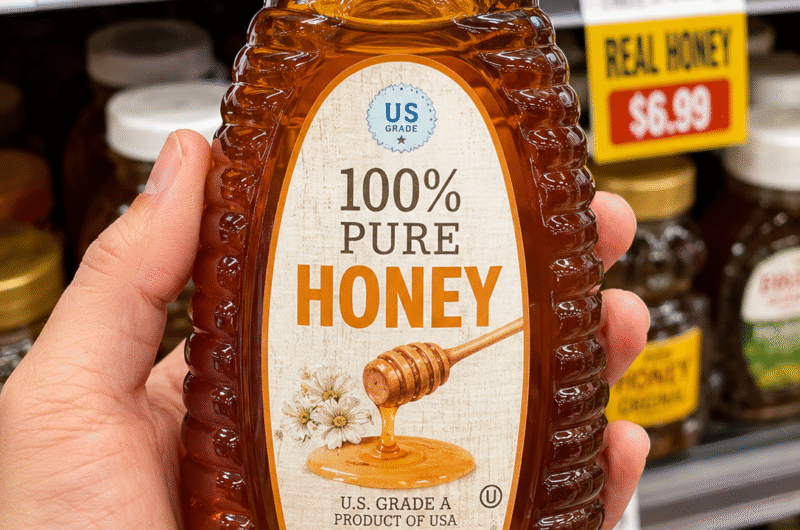
She reads labels. She buys organic when she can. She swapped refined sugar for honey years ago because — as she put it — “at least honey is natural.” She kept a big squeeze bear bottle on the counter, the cheap kind from the big-box store, and drizzled it into everything. Tea, yogurt, salad dressing. Her kids had a spoonful when they had a sore throat.
She was shocked when I told her that bottle might not contain much actual honey at all.
“But it says honey right on the label,” she said.
It does. And that’s the problem.
The Third Most Adulterated Food in the World
Here’s a fact that should change how you look at the honey aisle forever: honey is the third most adulterated food on the planet. Only milk and olive oil beat it.
That’s not a fringe claim from some conspiracy website. It comes from food safety researchers who have been tracking this issue for decades. The economics are simple and brutal: real honey is expensive to produce and labor-intensive to harvest. Corn syrup, rice syrup, and sugar beet fructose are cheap. If you can blend them together, package it in a jar, and sell it as honey, the profit margins are extraordinary.
And someone is always willing to do exactly that.
The scale of the problem is staggering. In 2023, the European Commission analyzed 320 honey samples imported into the EU and found that 46% of them were “suspicious” — meaning they showed signs of being adulterated with added syrups. Nearly half. Of those suspicious samples, honey imported from China accounted for 74%. And in a twist that should make UK shoppers particularly uncomfortable, all 10 UK honey samples tested — honeys that had been imported, blended in the UK, and re-exported to the EU — failed authenticity tests.
In 2025, a German public television documentary called “Fake Honey: The Sweet Illusion” aired on ZDF and drew more than 2.4 million live viewers. It exposed hidden factories specifically designing syrups engineered to pass standard authenticity tests — so-called “lab-proof” fake honey. Not honey cut with cheap syrup by accident or out of ignorance. Honey deliberately, systematically designed to deceive both consumers and regulators.
The World Beekeeping Awards, one of the industry’s most prestigious competitions, cancelled its best honey award in 2025 because of fears of rampant adulteration. When the people who run an international honey competition don’t trust the honey being submitted, you know something has gone seriously wrong.
What “Honey” Can Legally Mean — And What It Actually Contains
Here’s where label reading gets complicated, and deliberately so.
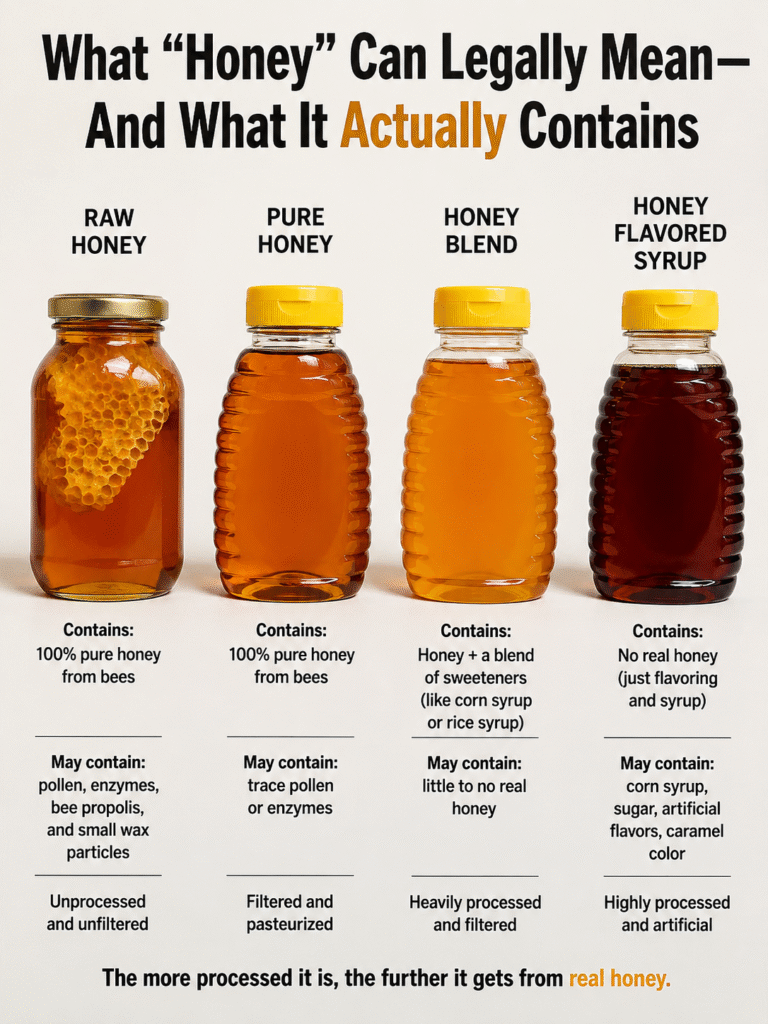
Walk into any supermarket and you’ll find jars labeled “pure honey,” “natural honey,” “wildflower honey,” “clover honey.” These words feel meaningful. They feel like a promise. But legally, the requirements behind them are surprisingly weak.
“Pure” honey means no additional ingredients were added. That sounds great — until you realize it says absolutely nothing about how the honey was processed. A jar labeled “pure” can legally be ultra-filtered at high heat, stripping out every trace of pollen (making it impossible to verify where it came from), destroying the natural enzymes that give honey its antimicrobial properties, and leaving behind something that is, chemically speaking, little more than a sweet syrup. Technically pure. Practically stripped of everything that makes honey worth buying in the first place.
“Natural” is even worse. It’s a marketing term with virtually no legal definition.
And here’s a label that catches many people off guard: “Product of [country]” doesn’t necessarily mean what you think. Honey can be imported in bulk from multiple countries, blended together, and packaged in a given country — and legally carry that country’s label. In the UK, 24 out of 25 non-EU blended supermarket honeys failed DNA authentication tests conducted by the Honey Authenticity Network in 2024. Twenty-four out of twenty-five.
The Honey Authenticity Project has estimated that roughly 1 in 3 honey products on the global market is either fake or significantly adulterated. One in three.
How They Do It (And Why It’s So Hard to Catch)
The adulteration methods have become remarkably sophisticated, which is part of why the problem is so hard to solve.
The classic approach is straightforward: blend honey with high-fructose corn syrup or sugar cane syrup. Both are far cheaper than honey, both have similar textures, and if you’re careful with the ratios, the result looks and pours like the real thing. For years, the standard detection method — a test that measures the ratio of carbon isotopes from “C4 plants” like corn and cane sugar versus the “C3 plants” bees typically visit — could catch this kind of adulteration fairly reliably.
So the fraudsters adapted.
They switched to rice syrup. Rice is a C3 plant, meaning it produces the same carbon isotope signature as the nectar from flowers. Rice syrup added to honey passes the standard C4 test. Some rice syrup manufacturers openly advertised this on their packaging — effectively marketing their product as an undetectable honey adulterant. In late 2024, testing laboratories began detecting a novel syrup marker that hadn’t been seen before in routine authenticity testing, suggesting that fraudsters had developed yet another new adulterant specifically designed to evade existing detection methods.
It’s an arms race. Every time a new test is developed, the fraud adapts. Every time regulators tighten standards, the supply chain finds a workaround. The honey in your cupboard may have passed multiple laboratory tests and still not be what the label says.
What Real Honey Actually Looks Like
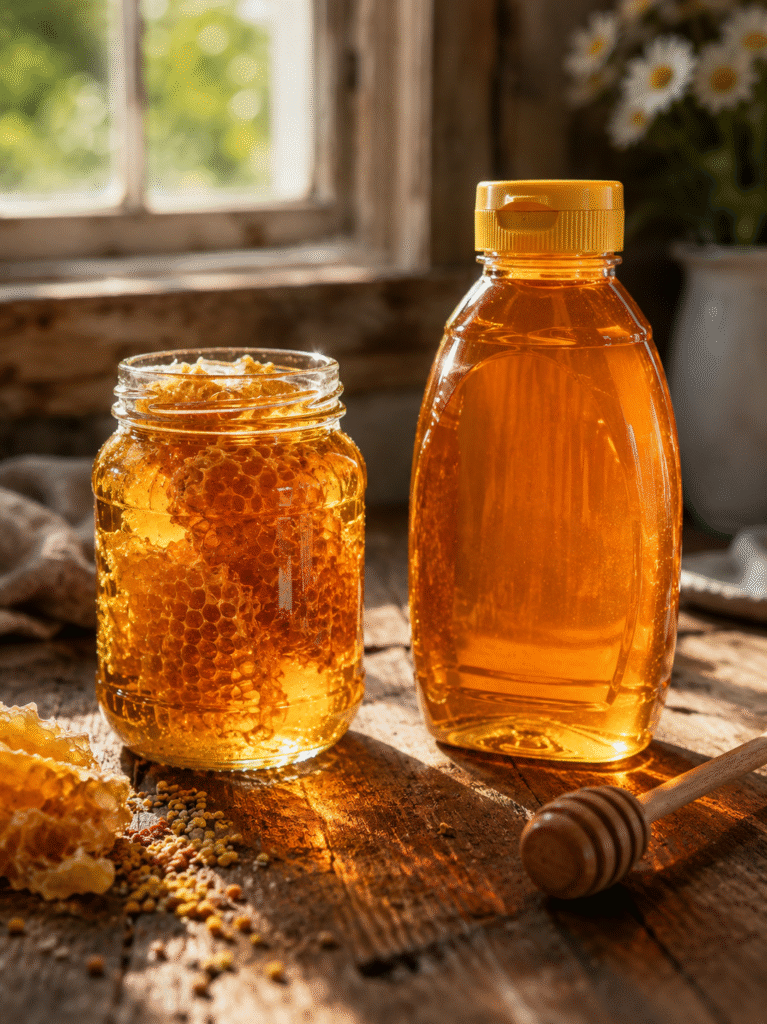
Before we get to what you can do, it helps to understand what genuine honey actually is — because most people have never tasted it.
Real, raw honey is a living product. It contains over 200 natural compounds: enzymes that bees add during the production process, pollen from whatever flowers the bees visited, natural acids that give it mild antibacterial properties, trace minerals, and antioxidants. Its flavor is complex and variable — clover honey tastes different from buckwheat honey, which tastes different from orange blossom honey. Real honey has a smell that tells a story. You can almost sense which flowers the bees were visiting.
And real honey crystallizes. If you’ve ever found a jar of honey gone thick and grainy in your cupboard, you’ve been looking at a sign of authenticity. Glucose in genuine honey naturally forms crystals over time. Most processed, adulterated honey stays perpetually liquid — it doesn’t crystallize properly because the natural sugar ratios have been disrupted or because it’s been ultra-heated to prevent it.
Here’s the bitter irony: most of us have been trained to think crystallized honey has “gone bad” and to throw it away or avoid it. The food industry prefers liquid honey because it photographs better, pours more easily, and has a longer shelf appeal. So they heat it, filter it, and sometimes adulterate it — removing the very properties that crystallization indicates — and we’ve come to see that as normal.
A jar of honey that never crystallizes after six months on your shelf is worth a closer look.
Home Tests: What Works, What Doesn’t, and What the Internet Gets Wrong
You’ve probably seen viral videos claiming you can test honey purity with a drop of water, a flame, an ant, or a piece of paper. The truth is more complicated.
The water test (drop honey in still water and watch if it sinks or dissolves) has some validity as a rough indicator of water content and viscosity, but modern sophisticated adulterants can be formulated to mimic real honey’s density. Don’t rely on it alone.
The crystallization test is genuinely useful. Raw, authentic honey almost always crystallizes within a few months to a year. If your honey has been sitting for six months in a warm kitchen and is still perfectly liquid and clear, that’s a yellow flag.
The taste test is underrated. Real honey has a multi-layered sweetness with fruity, herbal, or spicy notes depending on its floral source. Many people who eat authentic raw honey for the first time are surprised — it doesn’t taste like what they’ve been buying. Many raw honeys also cause a mild tingling sensation at the back of the throat, from their natural acidic compounds. Fake honey tends to taste flat, cloyingly sweet, and one-dimensional.
The smell test is similar. Genuine honey has a complex floral aroma tied to its specific botanical origin. Corn syrup smells like corn syrup. If your “wildflower honey” doesn’t smell like flowers, that’s worth noting.
The ant test, the hexagon water test, and the flame test are not reliable and should be ignored. The ant test is based on a myth — ants eat anything sweet. The hexagon test has no scientific basis. The flame test is both dangerous and produces unreliable results.
The uncomfortable truth is that no home test can definitively detect sophisticated adulteration. The fraudsters specifically design their products to pass visual and physical checks. For true verification, you need laboratory-level analysis: pollen examination under a microscope, carbon isotope ratio testing, NMR spectroscopy, or enzyme activity measurement.
That’s not accessible to most consumers. So what can you actually do?
How to Protect Yourself: A Practical Guide
None of this means you can never trust a jar of honey again. It means you need to shop differently.
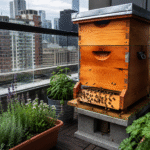
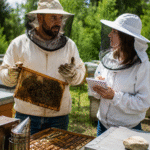
Buy from beekeepers you can verify. This is the single most effective thing you can do. A local beekeeper who lets you visit their operation, who knows your name, who posts photos of their hives — that person is not blending cheap Chinese imports in a factory. Local farmers markets, beekeeping associations, and direct sales from apiaries are your lowest-risk option.
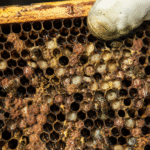
Look for honeycomb. Honey that’s sold still in the comb is extraordinarily difficult to fake. You’d have to manufacture fake comb, which is labor-intensive, expensive, and pointless when there’s so much easier money to be made selling liquid honey. Honeycomb is as close to a guarantee of authenticity as you’ll get in a retail setting.
Price is a signal. Real honey is expensive to produce. Bees need to visit approximately 2 million flowers to produce a single pound of honey. A beekeeper manages those colonies, monitors for disease, harvests and extracts carefully, and takes on enormous financial risk. If a jar of honey costs less than your morning coffee, someone in that supply chain cut a corner. Not always, but often enough to be cautious.
Read labels like a detective. Look for: raw, unfiltered, single-origin, specific harvest location, named botanical source (clover, wildflower, buckwheat), and evidence of third-party testing. Be skeptical of: vague terms like “natural” or “premium,” blended origins (e.g. “Product of EU/non-EU countries”), and low prices on large quantities.
Embrace crystallization. If your raw honey crystallizes, that’s not a flaw. It’s confirmation. You can gently warm it by placing the jar in warm water to re-liquify it if you prefer — but don’t microwave it, as high heat destroys the enzymes that make raw honey valuable in the first place.
Look for certifications with teeth. In the U.S., the True Source Honey certification involves supply chain auditing and testing requirements — it’s not perfect, but it’s meaningfully more rigorous than no certification. In 2026, new mandatory testing requirements for True Source-approved imported honey are expected to take effect, which should improve accountability.
The Bigger Picture
Every jar of fake honey that sells is a jar a real beekeeper didn’t sell.
This matters more than it might seem. Beekeeping is already in crisis — U.S. beekeepers lost 62% of their commercial colonies in 2025, the worst die-off ever recorded. The economics of honest beekeeping are brutal. When cheap, adulterated honey floods the market and undercuts the price that genuine producers need to survive, real beekeepers get pushed out. The bees that remain lose their stewards. The ecosystems that depend on those bees lose their pollinators.
Honey fraud isn’t just about labeling. It’s not just about consumers paying for something they didn’t get. It’s one piece of a larger system that is slowly dismantling the infrastructure that keeps bees alive and crops pollinated.
When Sandra swaps her squeeze bear for a jar from her local beekeeper — even though it costs three times as much — she’s not just getting better honey. She’s keeping a beekeeper in business. She’s keeping a hive alive. She’s participating, in a small but real way, in the solution.
That’s worth knowing, every time you open a jar.
Sources: European Commission From the Hives Report, FDA FY25 Honey Adulteration Assignment, Honey Authenticity Network UK, ZDF Frontal documentary, Honey Bee Health Coalition, Intertek Food Services, The Conversation (Honeygate study)