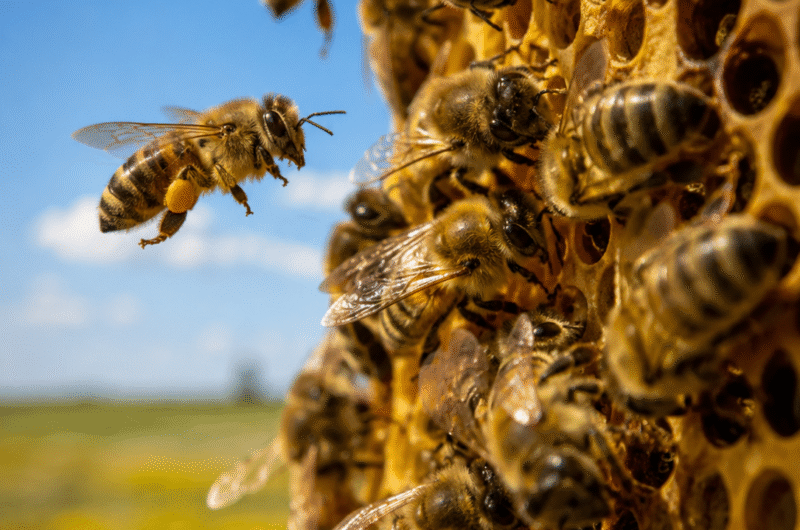

I’ve kept bees long enough to have developed a few pet theories about what’s actually going on inside a forager’s tiny brain every time she leaves the hive. None of them were as elegant as what researchers just confirmed with actual hard data, and I’ll admit, reading about it made me a little jealous I hadn’t thought of the method myself.
Here’s the short version: a team at the University of Freiburg used multicopter drones to track individual honeybees in flight, and what they found is that each bee doesn’t just forage randomly or follow the same general route as her hive-mates. She develops her own personal flight path — a route that’s highly consistent and that she repeats with remarkable precision, using landmarks in the surrounding landscape to stay on course. The research was published in Current Biology this year, and it’s the kind of finding that quietly reshapes a question beekeepers have been asking informally for decades: what exactly are our bees doing out there all day?
Why This Surprised Me More Than I Expected
If you’d asked me before this study, I probably would have said something vague about pheromone trails and general direction-following based on waggle dances back at the hive — which isn’t wrong, exactly, but it’s a different picture from what the drone tracking actually showed. The idea that an individual forager builds something closer to a personal commute, navigating by specific landmarks and sticking to that same route trip after trip, is a much more sophisticated picture of bee cognition than most of us were working with.
It also explains a few things I’ve noticed anecdotally over the years without ever having a good explanation for. Bees from the same hive returning from wildly different directions on the same afternoon. Foragers that seem to consistently favor one tree line or hedge over an apparently identical one nearby. I always chalked this up to flower availability, and sure, that’s part of it — but the idea that bees are essentially memorizing and repeating individualized routes through the landscape adds a layer I hadn’t considered.
What This Means If You’re Moving Hives
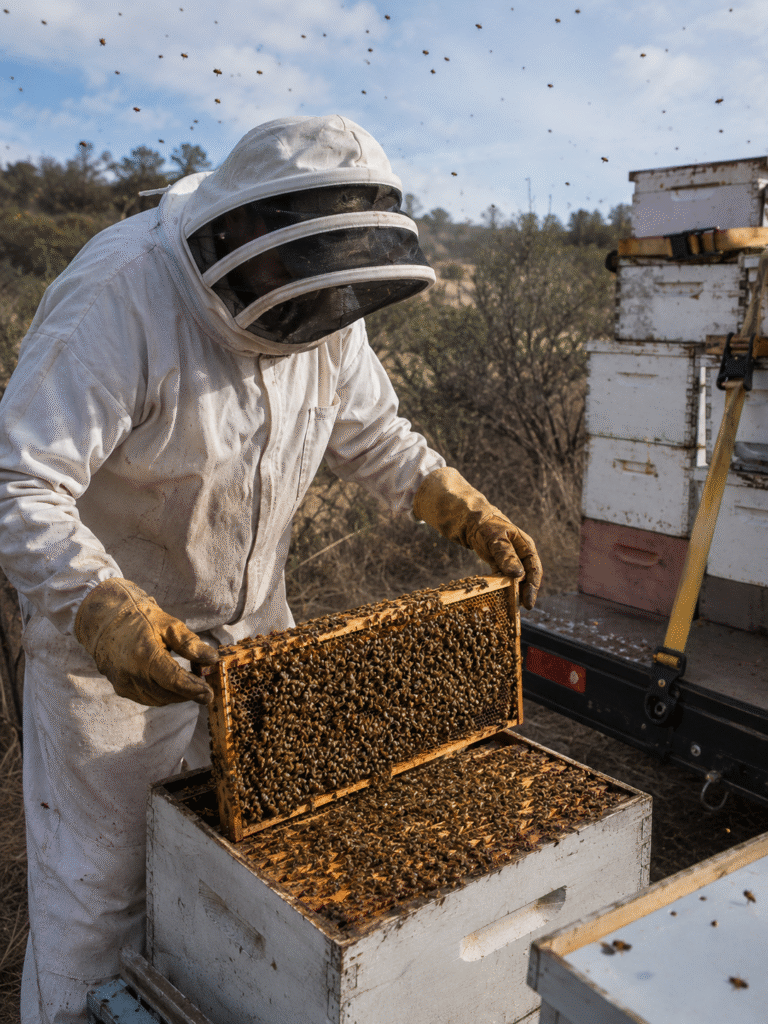
Here’s where this research stops being just a fascinating fact and starts being genuinely useful for anyone managing hives. If individual foragers are building precise, landmark-based mental maps of their territory, that has real implications for what happens when you move a hive — even a short distance.
Beekeepers have long followed the rough rule that you either move a hive less than about a meter or more than a few kilometers, because anything in between risks confusing foragers who can’t find their way back to a hive that’s “almost” where they left it. This new research gives that old rule of thumb a much more concrete foundation. If a bee has spent days building a precise route anchored to specific landmarks, shifting the hive by even a modest distance doesn’t just relocate her destination — it potentially invalidates the entire mental map she’s been relying on to get home.
It’s a good reminder, if you’re planning to reposition hives in your own apiary this season, that “just a little to the left” is sometimes a bigger disruption to your foragers than it looks from the outside.
The Bigger Picture
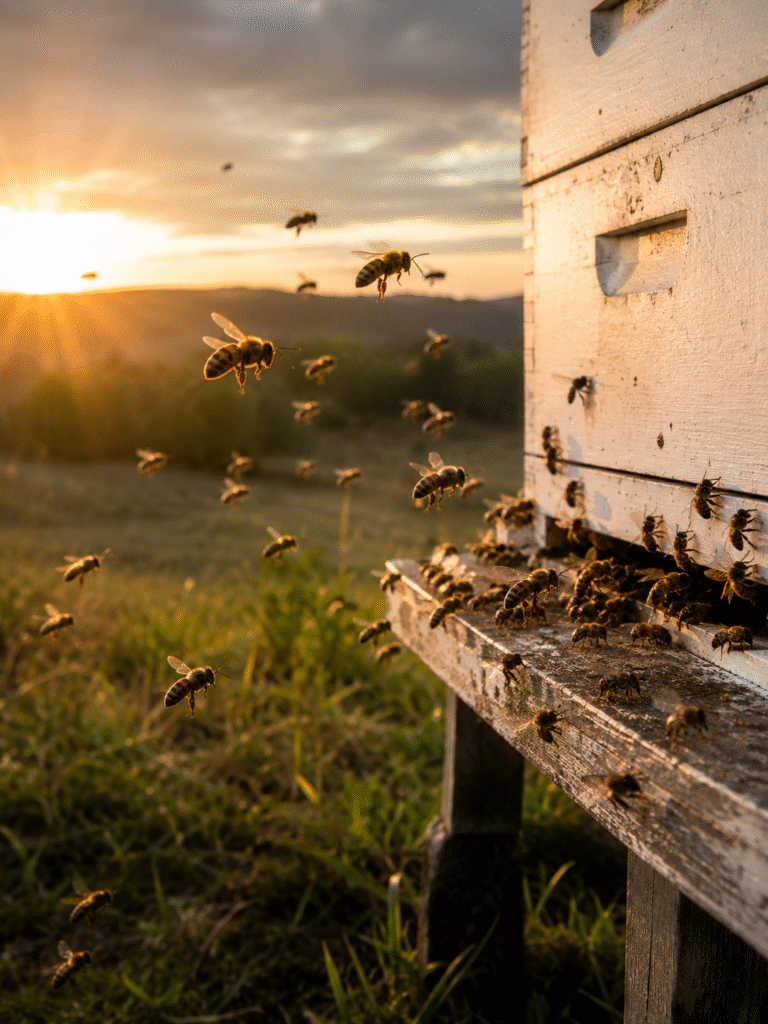
What I like most about this study is that it’s a reminder of how much complexity is packed into something we see every day and mostly take for granted. A bee leaving the hive on a summer morning isn’t improvising. She’s running a route she’s built and refined, oriented by trees, fence lines, and other landmarks most of us wouldn’t think twice about. It’s the kind of detail that makes you look at your own backyard a little differently the next time you watch a forager lift off and head out — because there’s a decent chance she’s about to fly the exact same path she flew yesterday, and the day before that, down to the same patch of clover.
Drone-based tracking like this is still a fairly new tool in pollinator research, and I suspect we’re going to learn a lot more in the next few years about exactly how sophisticated bee navigation really is. For now, it’s a genuinely good piece of evidence that these insects we manage so casually are doing something far more intricate than most of us give them credit for.