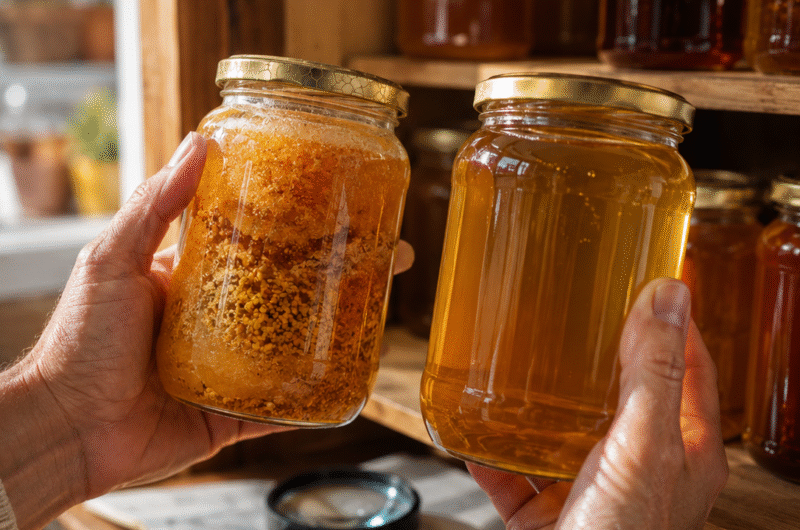

I started asking this question after a beekeeper friend ruined my breakfast.
We were sitting at her kitchen table, and I reached for the little bear-shaped bottle of honey to drizzle over my toast. She watched me with this look — half amused, half pained — and said, “You know that’s probably not real honey, right?”
I laughed it off. I’d been buying that brand for years. It tasted like honey. It looked like honey. What else could it possibly be?
She slid her own jar across the table. Darker, slightly cloudy, with tiny specks suspended inside. “Try this,” she said.
The difference was immediate. Not just sweeter — deeper. More complex. Like comparing a gas station coffee to something you’d wait in line for. I put the bear bottle down and didn’t pick it up again.
That conversation sent me down a rabbit hole I’m still climbing out of.
The Honey Fraud Problem Is Bigger Than You Think
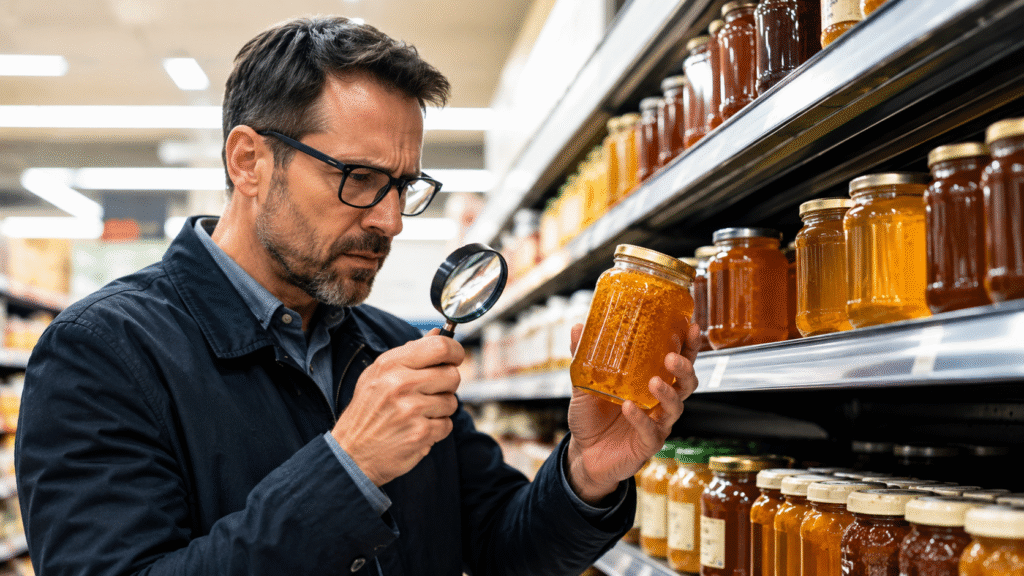
Here’s something the industry doesn’t advertise: honey is one of the most adulterated foods in the world. It consistently ranks in the top five most faked food products globally, alongside olive oil, milk, and saffron.
The scam is straightforward. Real honey is expensive to produce — bees do the work, and you can’t rush them. But sugar syrups — corn syrup, rice syrup, beet sugar solution — are dirt cheap. Blend them into real honey (or skip the honey almost entirely), and you’ve dramatically cut your costs while still selling a product that looks like honey in a jar.
Studies across the U.S., Europe, and Asia have found that a significant portion of commercial honey samples contain added syrups or are diluted beyond what’s considered pure. Some independent tests have found adulteration rates as high as 30% in certain imported honey categories.
And the kicker? It’s genuinely hard to detect without lab equipment. Modern food fraud has gotten sophisticated. Early adulteration used corn syrup, which labs could catch easily. Now producers use “inverted sugar syrups” that mimic honey’s chemical profile closely enough to pass basic tests.
What Happens to Honey When It’s Processed
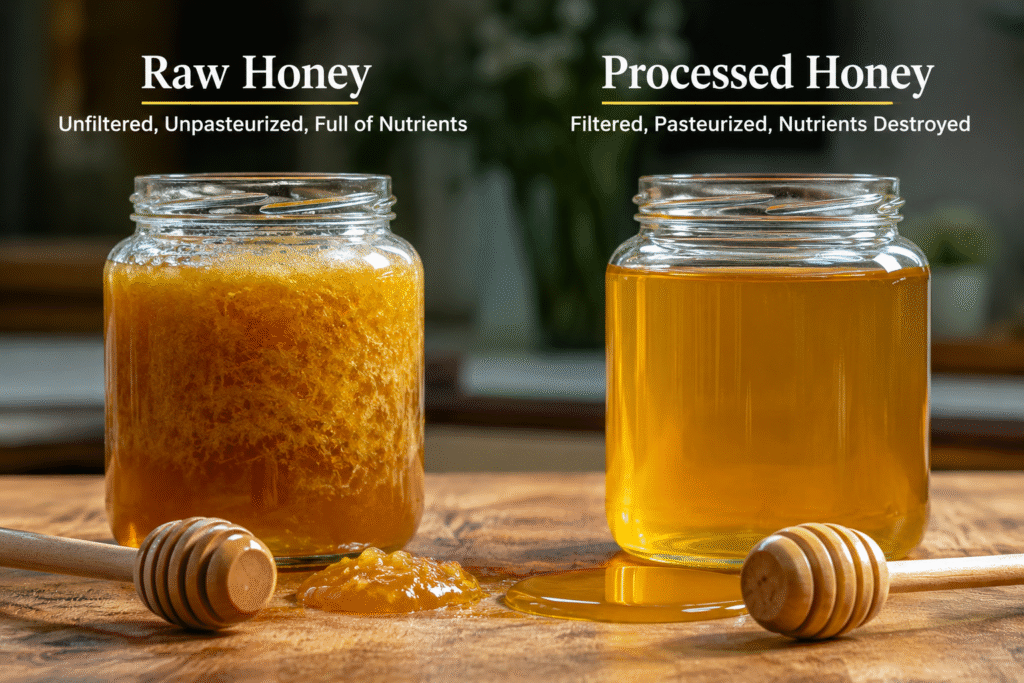
Before we get to the fakes, it’s worth understanding what happens to real honey before it reaches the supermarket shelf — because even authentic honey can be stripped of most of what makes it valuable.
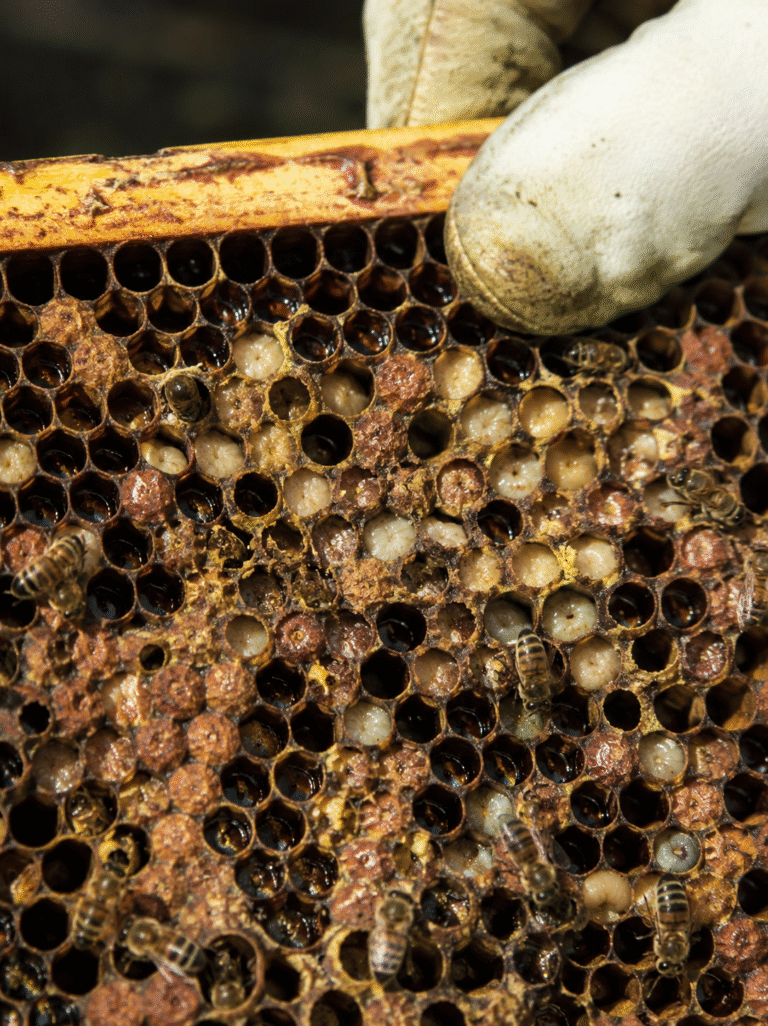
Raw honey comes out of the hive containing:
- Enzymes (like diastase and invertase) that aid digestion
- Propolis — the antimicrobial “glue” bees use in the hive
- Pollen grains — which carry antioxidants and allow traceability back to the source
- Natural yeasts and organic acids that give honey its complexity
Commercial processing typically involves two things: heating and ultrafiltration.
Heating honey makes it liquid and easy to pump through machines. But heat above around 40°C (104°F) starts destroying enzymes and breaking down beneficial compounds. Ultrafiltration — pushing honey through extremely fine filters — removes wax and debris, which sounds fine, but it also removes all the pollen.
That last part matters more than you’d think. Pollen is honey’s fingerprint. It tells you what flowers the bees visited and, crucially, where the honey came from. Remove the pollen, and the honey becomes untraceable. Food safety investigators have noted that ultra-filtered honey can’t be tested for its geographic origin — which makes it considerably easier to mislabel.
The At-Home Tests (And Their Limits)
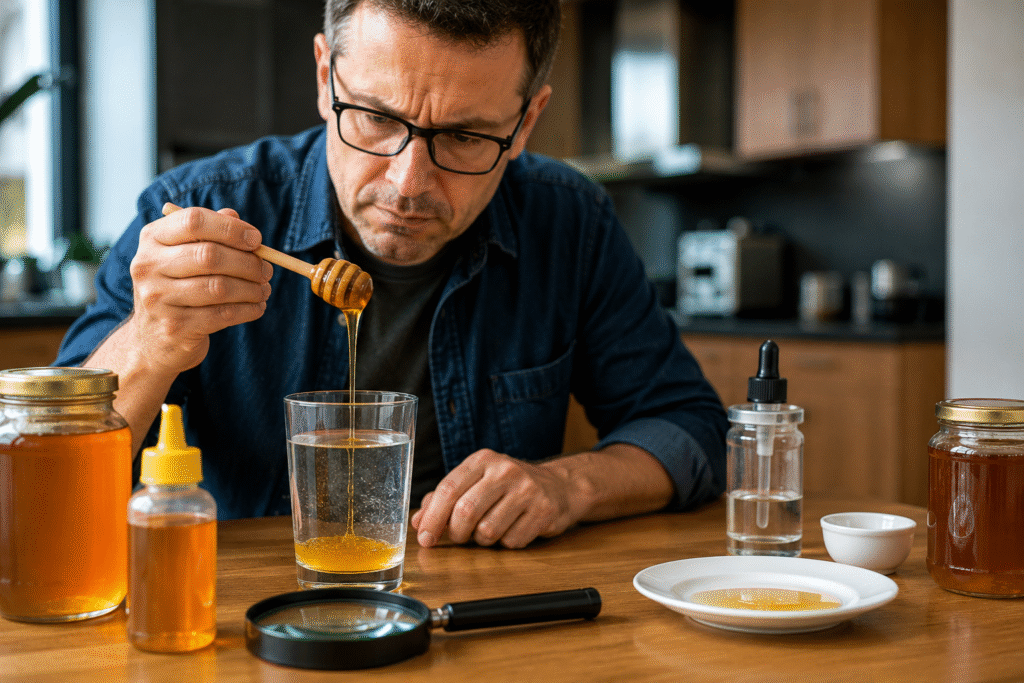
You’ve probably seen these floating around the internet. The water test. The paper test. The crystallization test. Let’s be honest about what they can and can’t tell you.
The water test: Drop a spoonful of honey into a glass of water. Real honey, the story goes, sinks and stays together in a clump rather than dissolving instantly. Adulterated honey dissolves quickly because of the added simple sugars.
Verdict: Somewhat useful as a rough check. Highly diluted honey will often dissolve quickly. But it’s not foolproof — honey consistency varies with moisture content and temperature, and a skilled adulteration can pass this test.
The paper test: Place a drop on a piece of paper or a paper towel. Genuine honey won’t absorb quickly because of its low moisture content. Watery, diluted honey will spread and soak in.
Verdict: Reasonable indicator of water content, but not of other adulterants.
The flame test: Dip a matchstick in honey and try to light it. The claim is that real honey is flammable due to low moisture, while fake honey won’t catch.
Verdict: This one’s a stretch. Moisture content varies in authentic honey, and this test is inconsistent. I wouldn’t put too much stock in it.
The crystallization test: Here’s an underrated one. Pure honey crystallizes over time — it’s a completely natural process caused by glucose molecules forming crystals. Honey that never crystallizes, even after months in the cupboard, is suspicious. Highly processed or adulterated honey often doesn’t crystallize the way raw honey does.
Verdict: One of the more reliable home indicators, though it takes time to observe.
None of these are definitive. The only truly reliable way to test honey is in a laboratory, using methods like Nuclear Magnetic Resonance (NMR) spectroscopy or pollen analysis. But these home tests can at least give you some indication — and they’re a good reason to pay attention to what you’re buying in the first place.
So What Should You Actually Look For?
After my breakfast revelation and quite a bit of research, here’s what I’ve changed about how I buy honey.
Look for “raw” on the label — and understand what it means. “Raw” honey hasn’t been heated above hive temperature and hasn’t been ultra-filtered. It should still contain pollen, enzymes, and propolis. It will likely crystallize over time. It may look cloudy or have small particles suspended in it. These are features, not flaws.
Find out where it came from. Genuine small-scale producers can tell you exactly where their hives are located, what the bees are foraging, and when the honey was harvested. That kind of specificity is nearly impossible to fake. If a label just says “Product of multiple countries” or gives no origin information, be cautious.
Buy local when you can. Local beekeepers at farmers’ markets typically sell genuinely raw, unprocessed honey. You can ask them questions. You can sometimes visit their operation. There’s accountability built into that relationship that simply doesn’t exist with mass-market products.
Expect it to be darker and cloudier than commercial honey. Most people have grown up with the clear, golden, perfectly smooth honey that comes from industrial processing. Raw honey often looks different — thicker, cloudier, sometimes with a thin layer of beeswax or propolis floated on top. That’s what real honey looks like when it hasn’t been stripped down.
Price is a clue, not a guarantee. Genuinely good honey costs more because it costs more to produce. A huge jar of honey for $3.99 should prompt some questions. That said, an expensive price tag alone doesn’t guarantee quality — which is why origin and transparency matter more than cost alone.
A Note on Why This Matters Beyond the Jar
I want to be clear: this isn’t just about getting your money’s worth, though that’s certainly part of it.
When you buy adulterated honey, the economic signal you send doesn’t support beekeepers. It supports the processors and importers who profit from fraud, often at the expense of countries with strict beekeeping standards. Beekeepers who do the work properly — who manage healthy hives, harvest honey carefully, and preserve its quality — struggle to compete on price against products that aren’t what they claim to be.
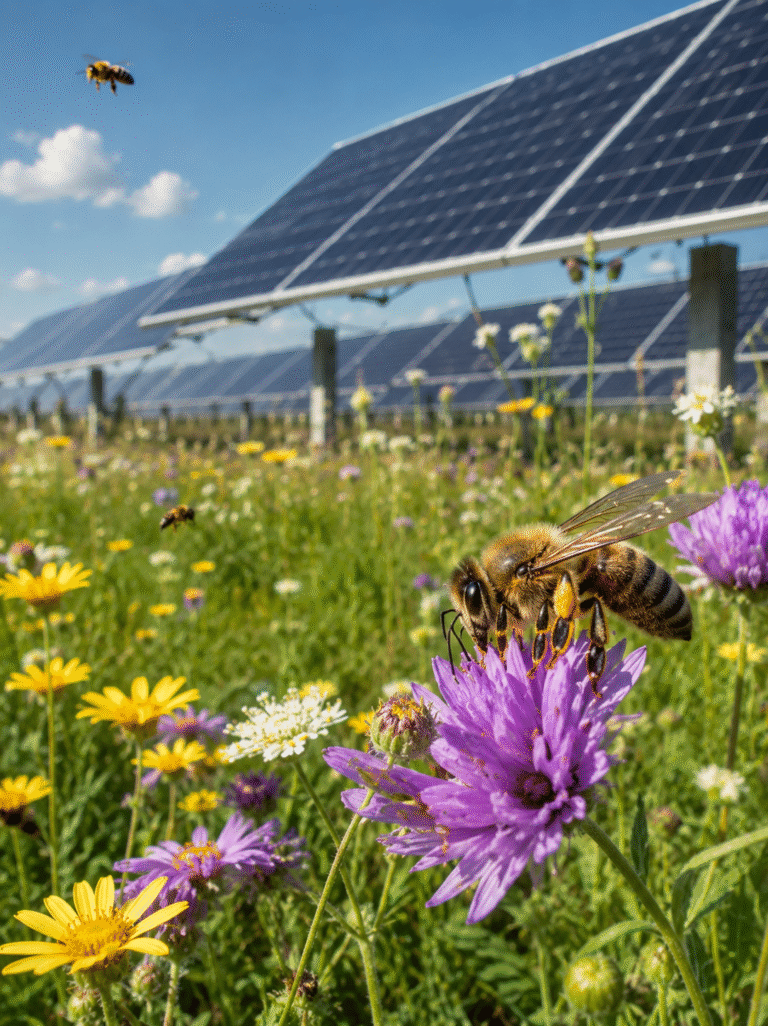
Bees are already under enough pressure. Colony collapse, habitat loss, pesticide exposure — the list of challenges facing pollinators is long and serious. Supporting genuine beekeeping operations, even in the small way of choosing where you buy your honey, is a meaningful part of the picture.
My beekeeper friend sells her honey in simple glass jars with handwritten labels. It costs more than the bear bottle. It crystallizes in winter and turns nearly solid by February. I warm the jar gently in a water bath to loosen it up, and the smell that rises when I open it is something no factory produces.
That’s honey.
Want to learn more about what’s actually in your hive and how bees process nectar into honey? Explore the rest of Beekeepers Corner — we go deep on the science and the craft.