
Robbing can wipe out a weak colony in under 48 hours. A 20-year beekeeper explains how to spot it early, why the summer dearth makes it worse, and the exact setup that actually stops it.
I lost a hive to robbing exactly once, and I still remember the sound of it before I remember what I saw. It was a Tuesday in late July, and I was walking down the row toward my fourth colony when I noticed something off about the noise. Not louder, exactly — sharper. A pitch I hadn’t heard before, somewhere between a buzz and a hiss, coming from a hive that two weeks earlier had been one of my strongest. By the time I got close enough to see what was happening, there were bees fighting on the front porch of that hive like it was a bar brawl, and there was nothing left to save.
That hive had been queenless for about ten days, though I didn’t know it yet. A weak, broodless colony with no queen pheromone to organize a defense is basically an open vault to every strong hive within half a mile, and during a summer dearth, every strong hive is looking for a vault.
Why Robbing Spikes the Moment the Nectar Stops
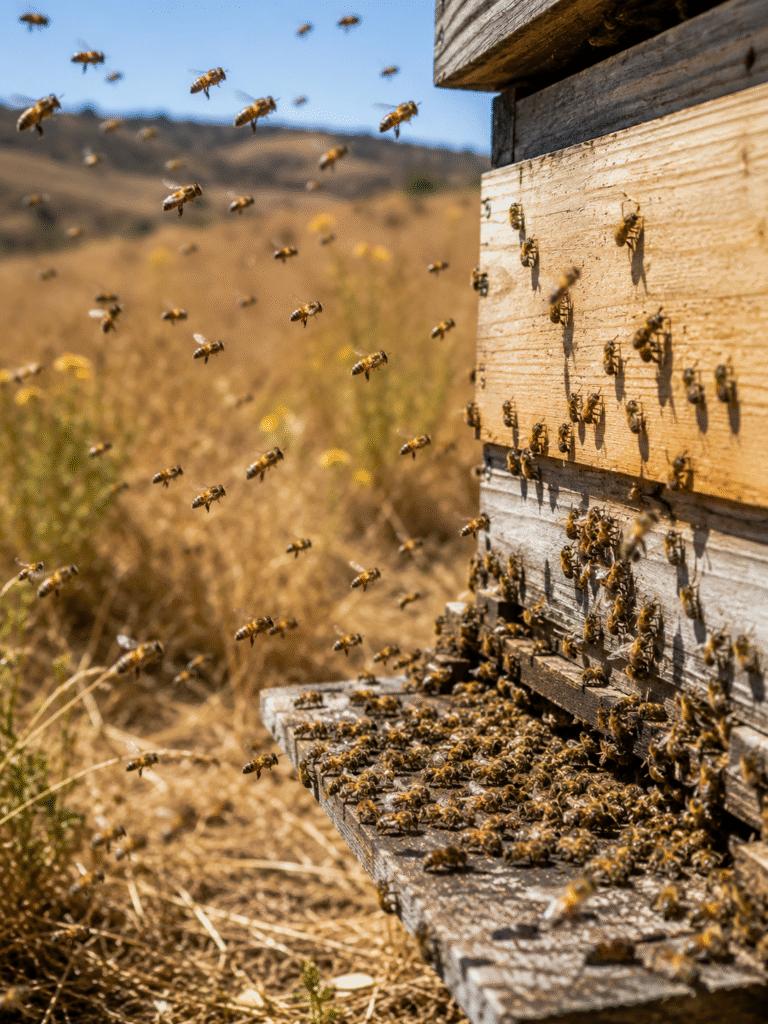
Robbing isn’t random aggression. It’s an economic decision bees make when the math changes. For most of spring, there’s enough nectar flowing that foraging for it is cheaper, in energy terms, than fighting another colony for stored honey. Once the flow stops — and depending on your region, that’s usually sometime between late June and early August — the math flips. Stealing capped honey from a neighboring hive suddenly costs less energy than flying farther and farther for shrinking forage, and bees are ruthless accountants when it comes to energy budgets.
This is the piece a lot of beginner resources skip: robbing isn’t really a behavior problem with the robbing colony. It’s a resource problem in the landscape. You can have two perfectly healthy, well-managed hives sitting eight feet apart, and the moment the dearth hits, one becomes a target purely because it’s weaker, smaller, or has a less defensible entrance. I’ve seen strong colonies rob a weak one and then, three days later, get robbed themselves by an even stronger colony down the road once the first one ran out of easy targets. It cascades.
The Tells: What Robbing Actually Looks Like
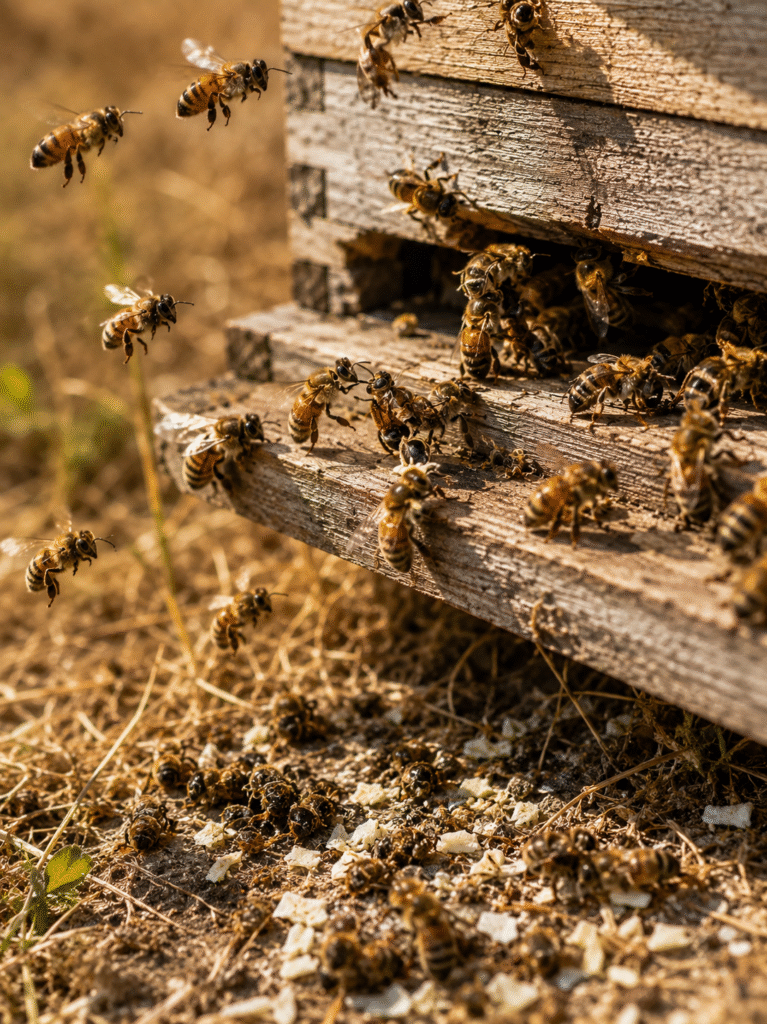
A lot of new beekeepers confuse robbing with normal hive traffic, especially during a nectar flow when there’s already a lot of activity at the entrance. The difference, once you’ve seen it, is unmistakable. Here’s what separates the two:
Normal foraging traffic moves in a steady, almost lazy rhythm. Bees land cleanly, walk in, and the entrance has a kind of predictable choreography to it.
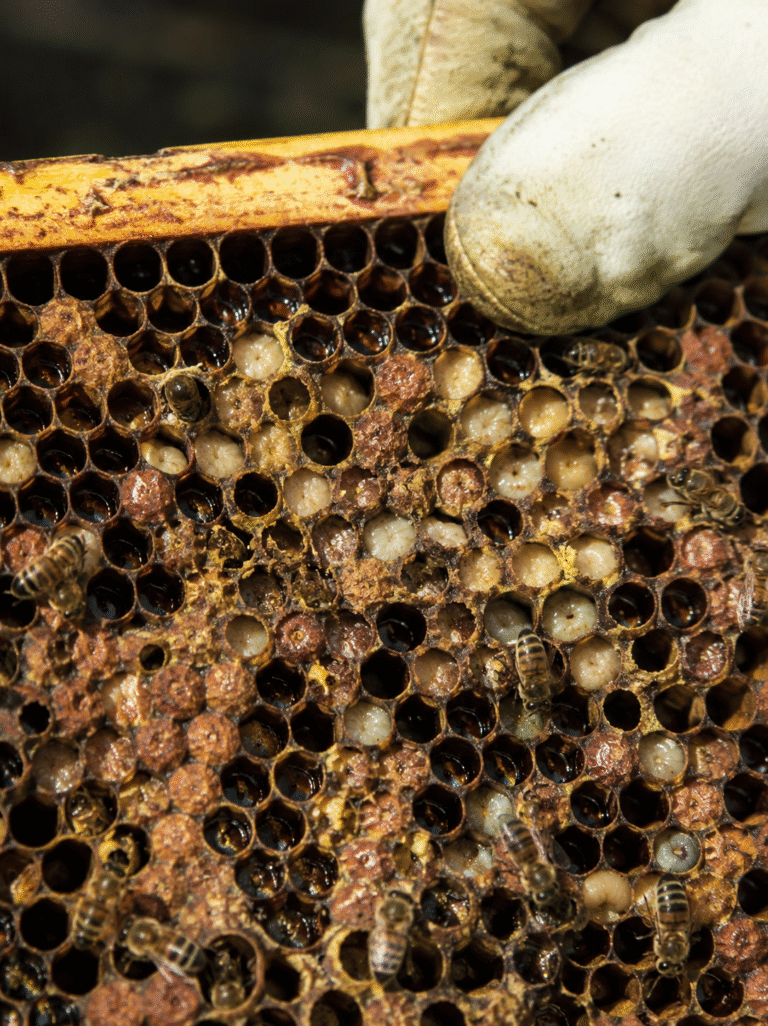
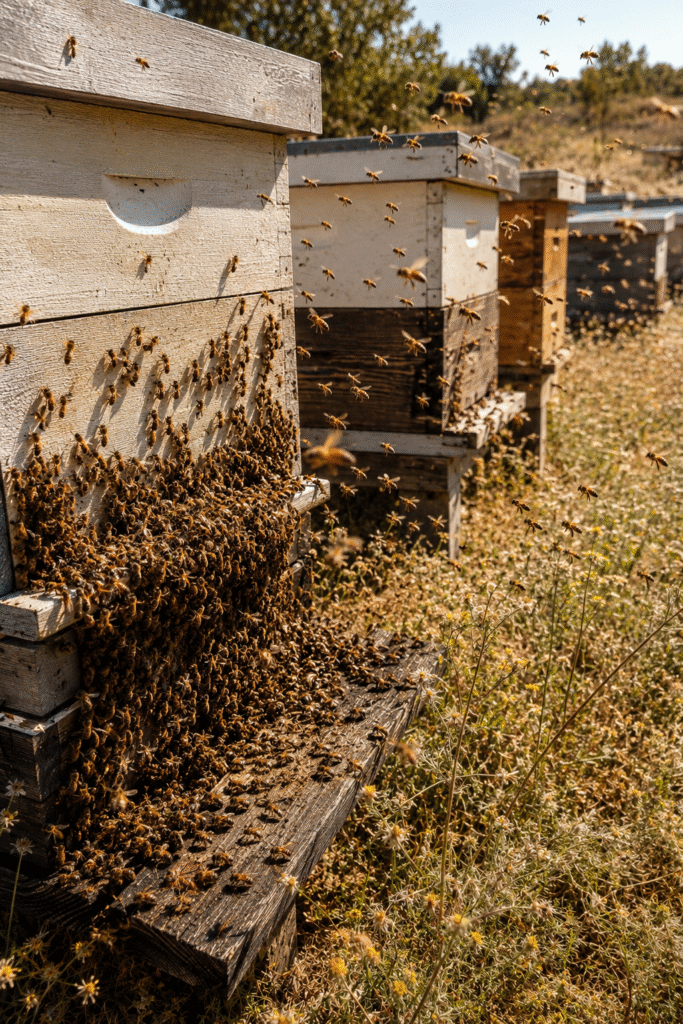
Robbing looks like a fistfight in slow motion. You’ll see bees hovering and darting at the entrance rather than landing directly, a swaying, weaving flight pattern right at the hive front, and — this is the giveaway — bees grappling on the ground in front of the hive, sometimes locked together in pairs, stinging each other to death. The guard bees of the hive being robbed will be visibly agitated, and you’ll often find a scatter of dead bees and torn wax cappings on the ground that weren’t there the day before.
There’s also a smell. I know that sounds unscientific, but ask any beekeeper who’s dealt with a robbing event and they’ll tell you the same thing: a robbed-out hive has a different odor near the entrance, sharper and more acidic than the usual warm wax-and-honey smell. It’s the alarm pheromone the defenders release, mixed with crushed bee bodies. Once you’ve smelled it during an active robbing, you’ll recognize it instantly the next time.
Which Hives Are Actually at Risk
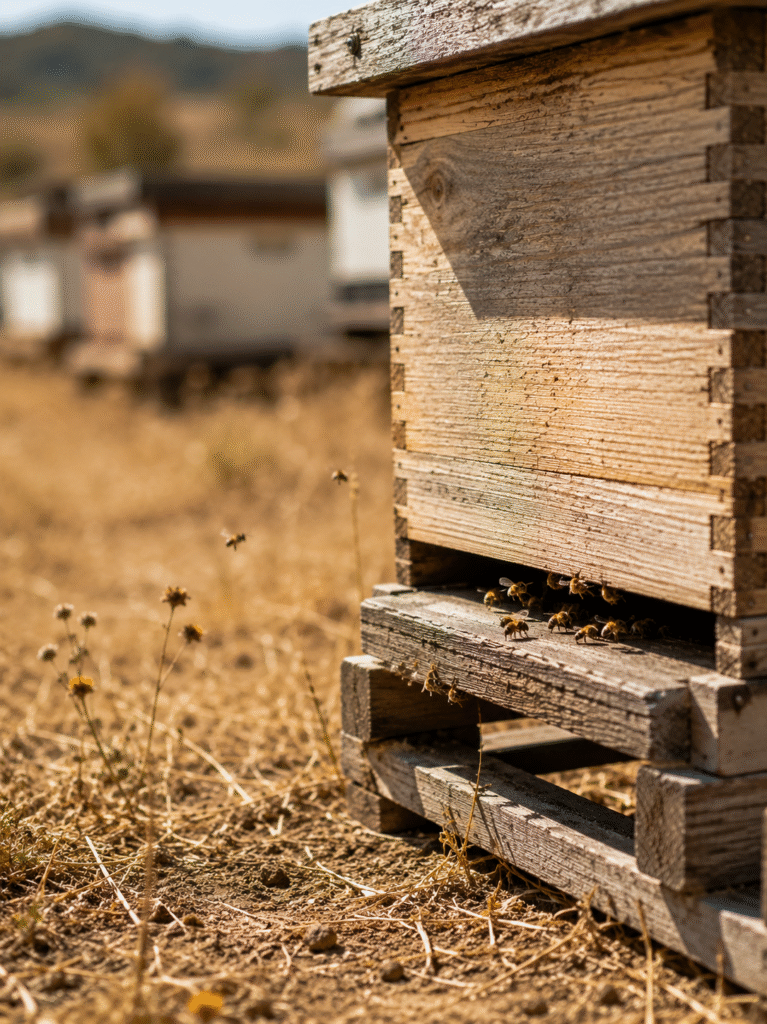
Not every colony is equally vulnerable, and figuring out which of your hives are exposed is half the battle. In my experience, four situations account for almost every robbing event I’ve dealt with or heard about from other beekeepers:
A recently requeened or queenless colony is the highest-risk case, because population and morale both drop fast, and a broodless hive has fewer bees committed to guard duty. A newly installed nuc or package, especially one still building up comb and population, simply doesn’t have the numbers to defend a full-width entrance. A hive that was recently inspected with spilled syrup, dripped honey, or comb left exposed nearby is basically ringing a dinner bell — robbing scouts find that scent trail unbelievably fast, sometimes within twenty minutes. And finally, any colony with a wide-open entrance reducer or no entrance reducer at all during a dearth is offering more frontage than a small population can possibly guard.
If you’ve got a hive that checks two or more of those boxes right now, treat it as a robbing emergency in waiting, not a someday problem.
The Setup That Actually Works
Most of the advice I see passed around forums focuses on reacting to robbing once it’s already started, which is a little like advising someone on how to fight a grease fire after the pan’s already on fire. The real skill is in the setup, done before the dearth even hits.
Reduce the entrance to bee-width. Not “smaller.” Bee-width — meaning one or two bees can pass at a time, forcing every entry to go through a bottleneck the guards can actually watch. A standard entrance reducer set to its smallest opening does this for most hive bodies, but for a genuinely weak colony, I’ll go further and use a strip of hardware cloth folded to leave a half-inch gap, which slows entry even more while still letting air circulate.
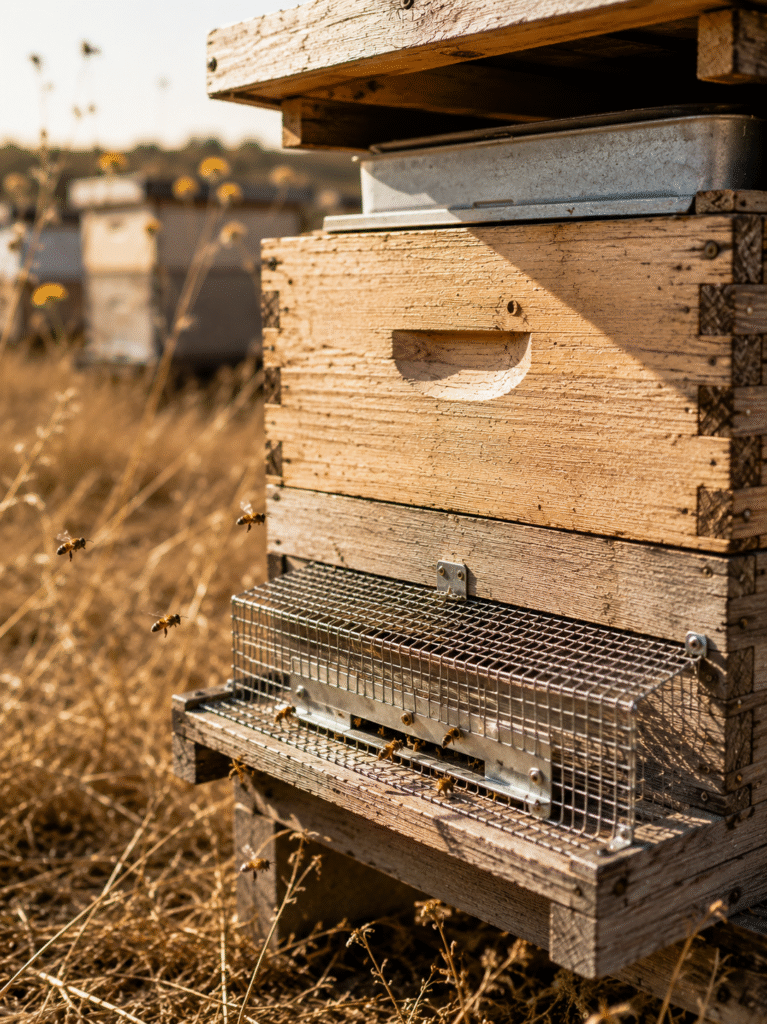
Install a robbing screen if the colony is under active threat or known to be weak. A robbing screen is different from an entrance reducer — it’s a mesh barrier set an inch or two in front of the entrance, forcing both your bees and any robbers to navigate around it rather than straight through. The colony’s own bees learn the new path within a day or two because they’re oriented to scent and position, not a straight-line memory. Robbers, who are working off opportunistic scent-following rather than home recognition, get confused by the indirect path and tend to give up faster than you’d expect.
Never inspect a weak hive in the heat of midday during a dearth if you can avoid it. Early morning or late evening inspections mean fewer foragers from neighboring hives are actively scouting, and any spilled syrup or exposed comb has less time to attract attention before robbing bees go quiet for the night.
Feed inside the hive, never in open trays or entrance feeders, during dearth conditions. I know entrance feeders are convenient, but during a nectar gap they’re an invitation. An internal frame feeder or a hive-top feeder with a tight-fitting cover keeps the scent contained to bees that are already inside.
What to Do If Robbing Has Already Started
If you catch it in progress, the instinct to throw open the hive and “help” is exactly wrong. Opening a hive under active robbing just gives the robbers easier access and disorients your own defenders further.
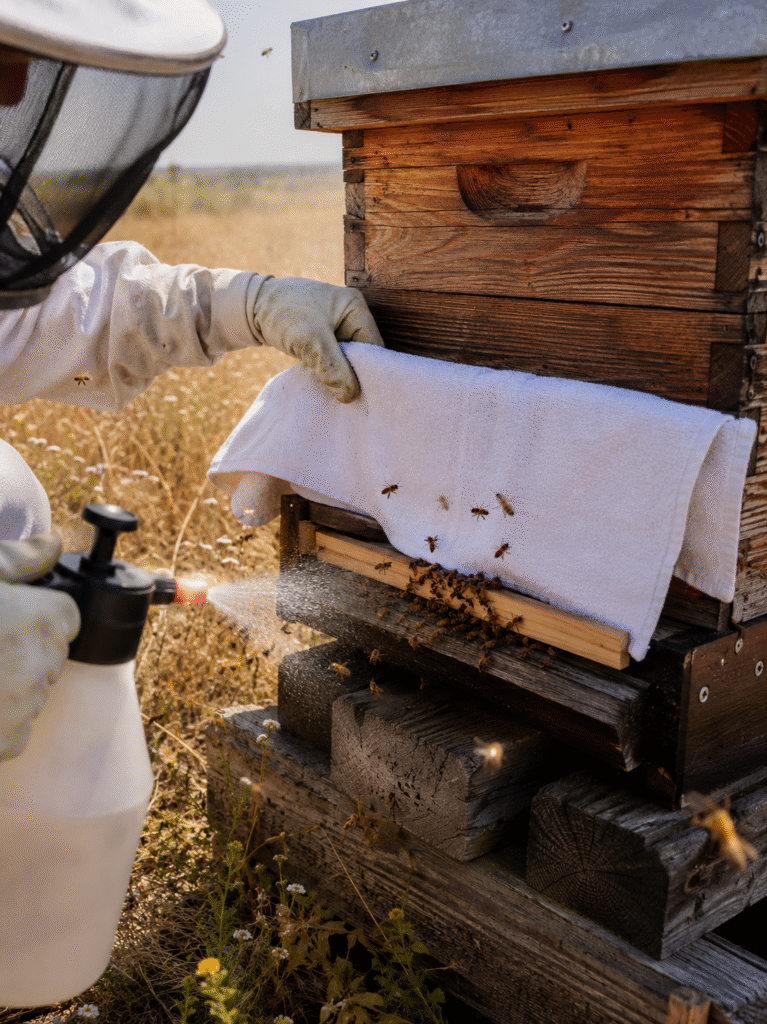
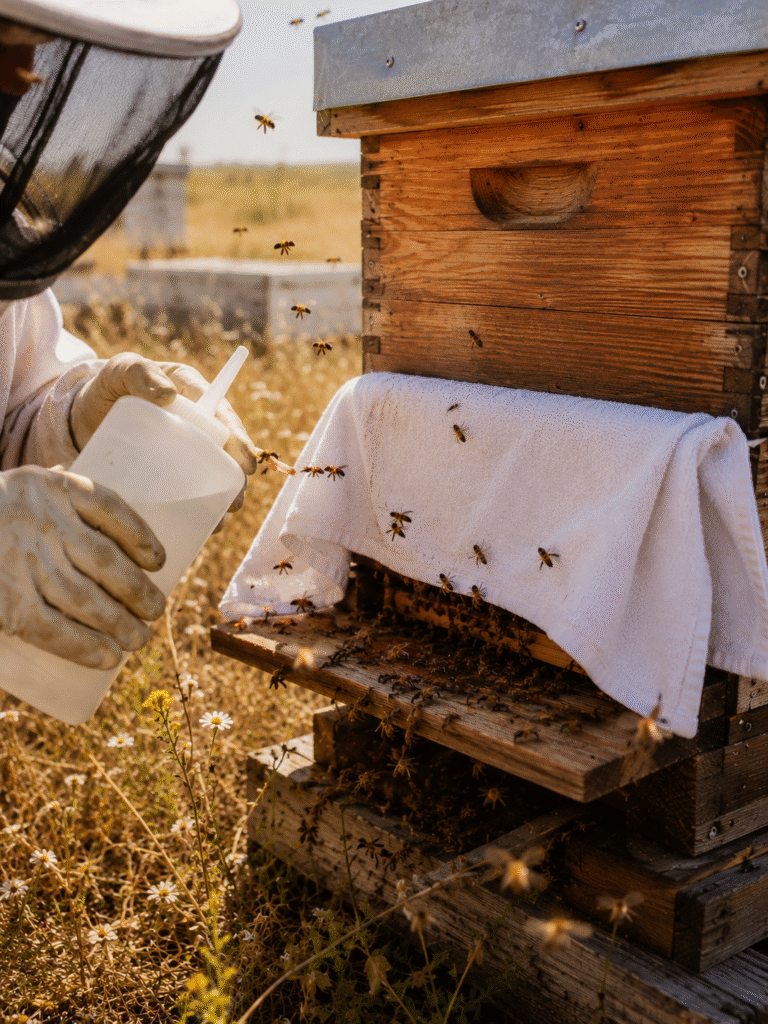
Close the entrance down immediately to the smallest possible gap, even smaller than your normal dearth setting — sometimes down to a single bee-width hole using a wad of grass or a screen wedge as a temporary fix. Wet a towel and drape it loosely over the entrance for fifteen to twenty minutes; it disrupts the visual and scent cues robbers are using without trapping your own bees inside, since they can usually still find their way out through the damp fabric edges once things calm down. Spray a light mist of water directly at the fighting bees on the ground and at the entrance — it grounds fliers temporarily and breaks up the frenzy state, which is more effective than it sounds for de-escalating an active event. And move fast: a robbing event that’s caught in its first hour is recoverable. One that’s been going for half a day usually means the colony’s stores, and often its population, are already gone.
The Mistake That Makes Everything Worse
I want to flag this because I made it myself early on: do not try to “even the odds” by feeding the weak hive heavily right in the middle of an active robbing event. It feels like the right instinct — give the losing side resources — but it backfires almost every time, because the sugar syrup scent only intensifies the frenzy and pulls in robbers from even farther away. If a colony is actively under siege, the priority is sealing the entrance and reducing the attractant, not adding more of it. Feed afterward, once the situation is fully resolved and the entrance has been secured for at least a full day.
Why This Matters Beyond the Hive You Lose
Here’s the part that doesn’t get talked about enough: a robbing event isn’t just a loss for the colony being robbed. The robbing colony itself often suffers real damage, too — a spike in aggression that can persist for days, increased guard activity that pulls foragers off productive work, and in some cases, enough chaos at the entrance that it becomes vulnerable to its own predators or secondary robbing from a third hive. I’ve watched a colony that robbed out a weak neighbor turn unusually defensive toward me for almost two weeks afterward, stinging through gloves I’d worked in for years without issue. Robbing changes the temperament of an apiary, not just its hive count.
It’s also a pattern worth paying attention to at the landscape level. A summer with unusually fast or severe robbing across multiple beekeepers in a region often tracks with a particularly hard dearth — fewer blooming natives, drought stress on forage plants, or competition from a large number of hives placed too close together for the available nectar. If you’re seeing robbing pressure every single year around the same point in summer, it might be less about your management and more about the forage math in your specific location, which is worth factoring into how many colonies your site can actually support.
The Takeaway
Robbing isn’t a beekeeper failure so much as a timing failure — it happens when a vulnerable colony and a hungry one occupy the same stretch of dearth at the same time. The fix isn’t dramatic intervention after the fact. It’s the boring, unglamorous work of identifying your weak hives before the flow stops, narrowing their entrances, feeding them quietly and internally, and resisting the urge to inspect them at the worst possible hour. Do that, and robbing season becomes something you manage instead of something that manages you.