
A neighbor once showed me a bee hotel she’d bought at a garden center — beautiful thing, layered with pinecones, bark, and dried flowers, the kind of object you’d see styled on a patio in a magazine. She’d had it up for two years. Empty the whole time. Meanwhile, a scrap block of wood I’d drilled myself and mounted crookedly on a fence post the same spring had thirty-some holes plugged with mud by June. The difference had nothing to do with money or aesthetics. It came down to about four measurements most bee hotel manufacturers either don’t know or don’t bother getting right.
That’s really the whole story of mason bee houses in one anecdote: the internet is full of pretty ones and empty of understanding why bees choose the nests they choose. So let’s fix that.
This Isn’t Beekeeping. It’s Something Better For Most Gardeners
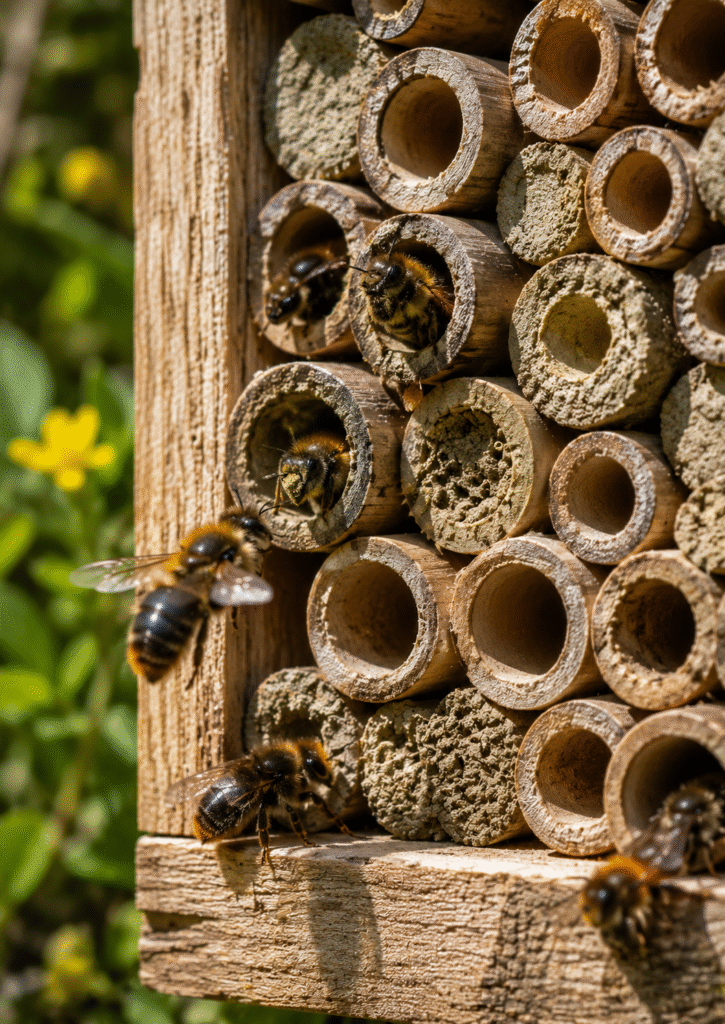
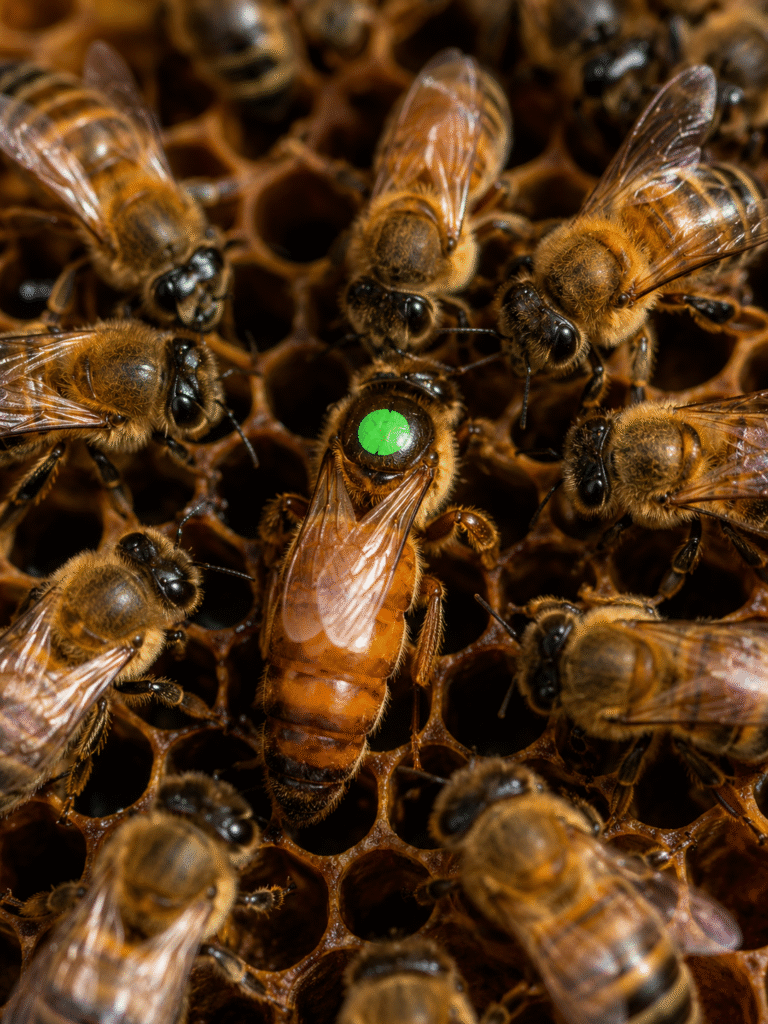
If you keep honeybees, resist the urge to treat this like a smaller version of the same hobby, because it isn’t. A honeybee colony is a superorganism — tens of thousands of bees running one shared operation with a queen at the center. Mason bees are solitary. Every single female is her own queen, her own worker, and her own architect. She finds a hole, provisions it with pollen and nectar, lays an egg, seals it with mud, and moves to the next hole. No hive mind, no defensive guard bees, no stinging unless you genuinely trap one in your hand and squeeze.
What that means practically: you’re not “keeping” mason bees the way you keep honeybees. You’re building real estate and hoping the neighborhood’s existing wild population moves in, the same way you’d put up a birdhouse and hope for a nesting pair rather than importing birds from a catalog. Most successful mason bee houses attract wild, local bees within the first season or two — you don’t need to buy cocoons to start, though it can speed things up.
And here’s the number that changes how people think about them once they hear it: a single female mason bee, working the cool, early-spring bloom that honeybees are often too sluggish to fly in, can accomplish pollination work that would take a much larger number of honeybee visits to match, because she carries pollen loosely all over her fuzzy underside instead of packing it neatly into leg baskets the way honeybees do. Messier bee, better pollinator. If you grow fruit trees, this is the insect doing the heavy lifting in April while your honeybee colony is still building up strength.
The Measurements That Actually Matter
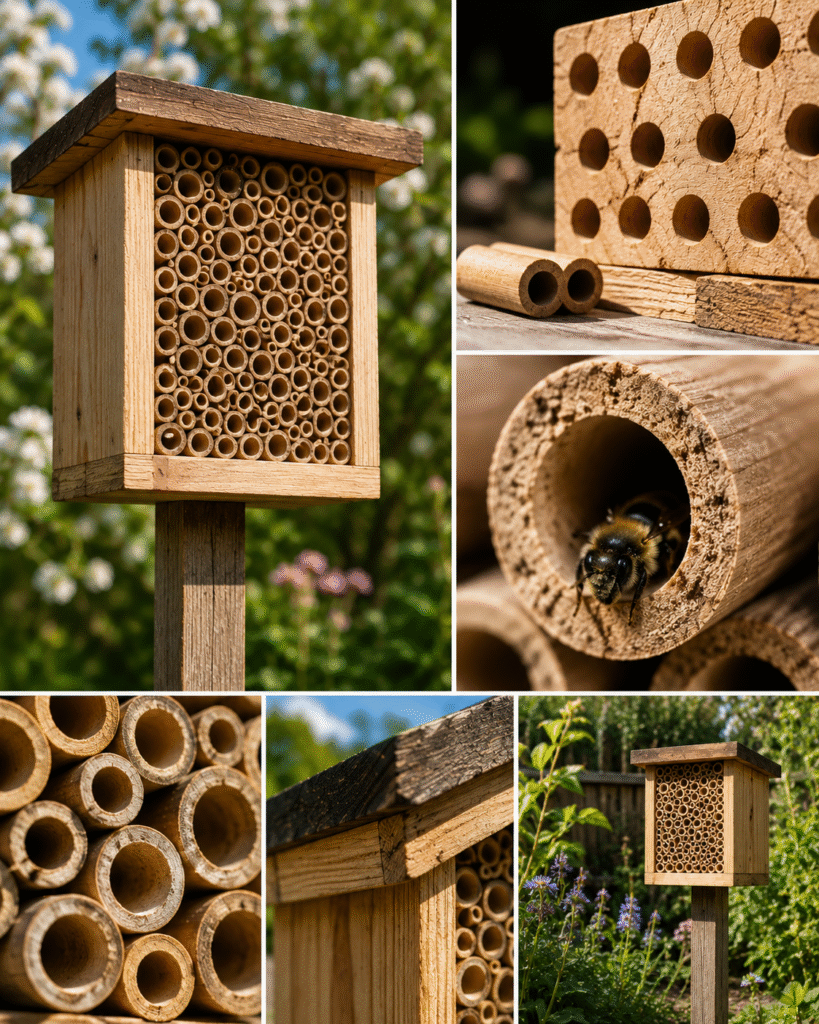
Skip the decorative bee hotel entirely and think like a contractor instead of a florist.
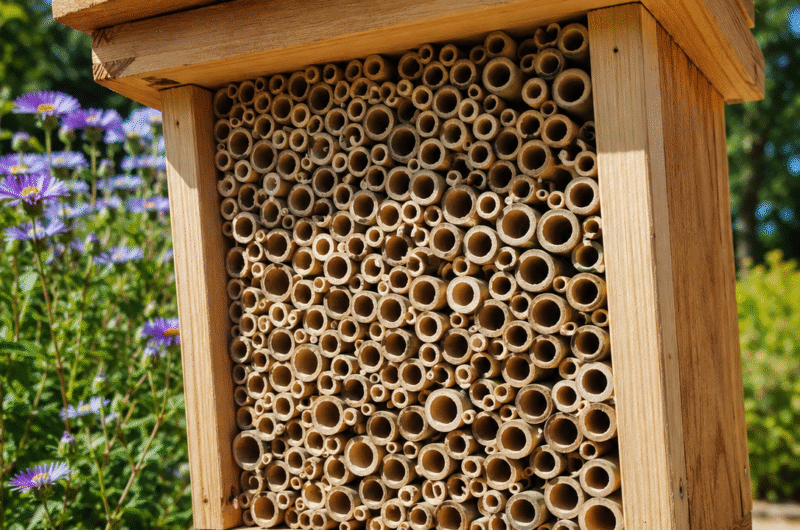
Hole diameter needs to sit in a fairly narrow window — roughly 5/16 of an inch, which is about 8 millimeters, for the common blue orchard mason bee. Go much smaller and she’ll reject the hole outright. Go much larger and you’ll get males disproportionately, since a female provisioning a wider tunnel tends to lay more male eggs in it, which skews your population away from the pollinators you actually want more of.
Depth should run around six inches. Shallow holes produce a heavier ratio of males for a specific biological reason: the mother bee lays female eggs deeper in the tunnel and male eggs closer to the entrance, because males emerge first and need to get out of the way before their sisters do. A short tunnel simply doesn’t leave room for enough female cells before she runs out of depth.
Material matters more than people expect. Untreated, unfinished hardwood works. Softwoods splinter inside the tunnel and can injure the bee’s wings as she comes and goes for weeks. Anything pressure-treated is off the table — the chemicals used to weatherproof lumber aren’t things you want against a developing larva for six inches of its entire early life.
Orientation and mounting height round out the list. Face the entrances toward the morning sun — east or southeast — so the tunnels warm quickly and bees can start foraging early in the day rather than waiting for afternoon heat. Mount the whole thing around four to six feet off the ground, which keeps it clear of ground moisture and most curious pets without putting it so high you can’t reach it for the maintenance step almost nobody talks about.
The Step Every Store-Bought Kit Skips
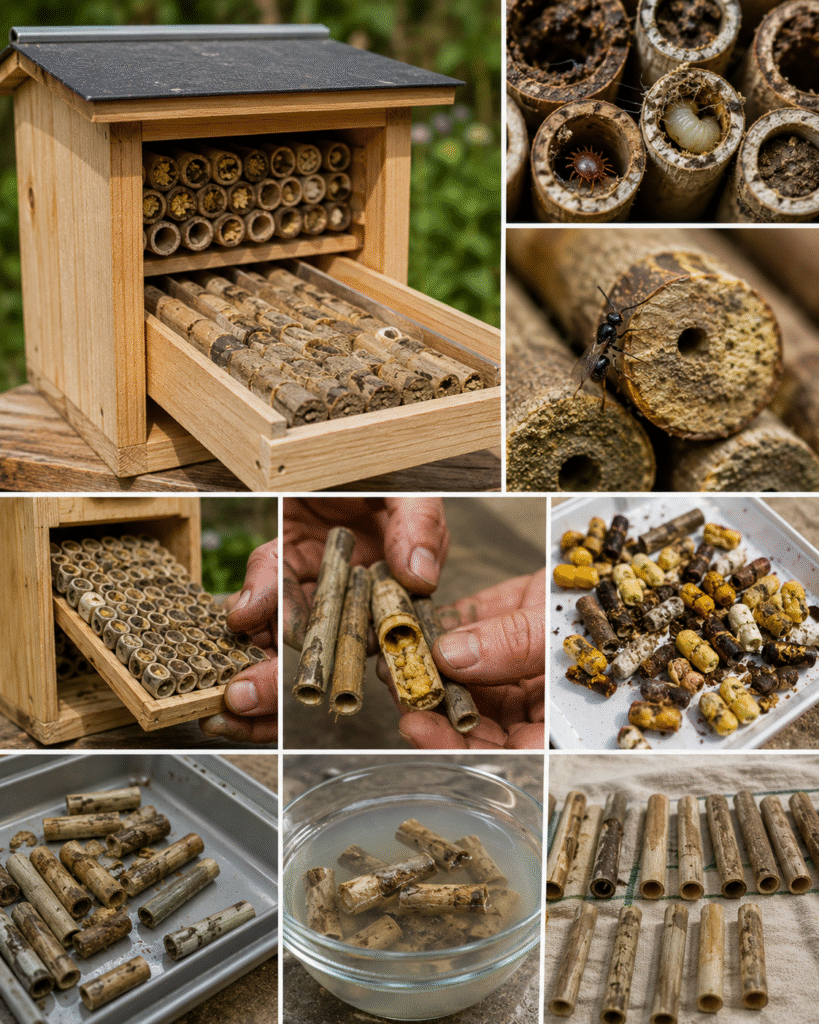
This is the part that separates a bee house that gets better every year from one that quietly turns into a parasite breeding ground by its third season, and it’s also the part almost no commercial bee hotel mentions on the box.
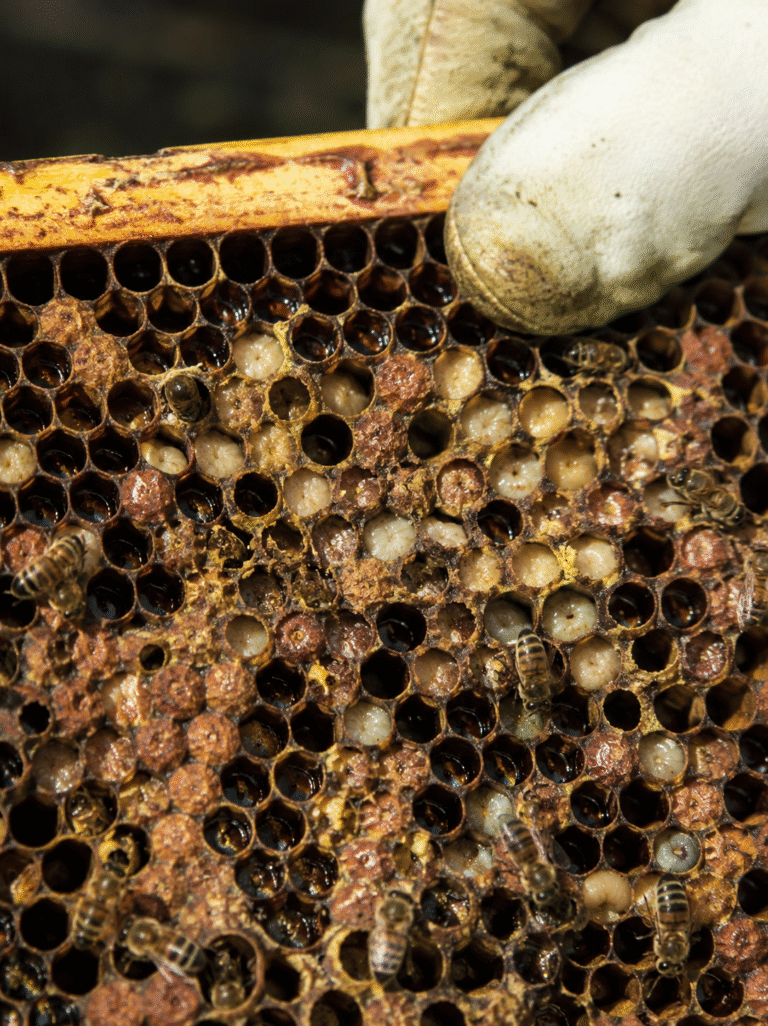
Solitary bee tunnels accumulate problems over time if they’re never cleaned out. Pollen mites hitch a ride on adult bees and multiply inside old nesting material, eventually consuming the food stores meant for developing larvae. Certain small parasitic wasps lay their own eggs through the walls of occupied tunnels, and their larvae consume the bee larva inside before it ever emerges. Fungal issues build up in tunnels that never dry out properly between seasons.
None of this happens in year one. It creeps in by year two or three, which is exactly why so many well-meaning bee hotels start strong and then mysteriously stop producing bees a few seasons later — the owner assumes the bees “moved on,” when really the nesting material became unsafe to use.
The fix is unglamorous: build (or buy) a house with removable nesting material — paper liners, removable trays, or tubes you can pull out — rather than solid drilled logs you can’t inspect. In late fall, once the season’s bees have finished developing and gone dormant as cocoons, open the nesting material, harvest the cocoons, and either store them somewhere cool and protected over winter or clean and disinfect the tunnels before reusing them. It’s maybe thirty minutes of work once a year, and it’s the single biggest factor separating a productive bee house from a decorative one that quietly fails.
Common Reasons a Bee House Sits Empty
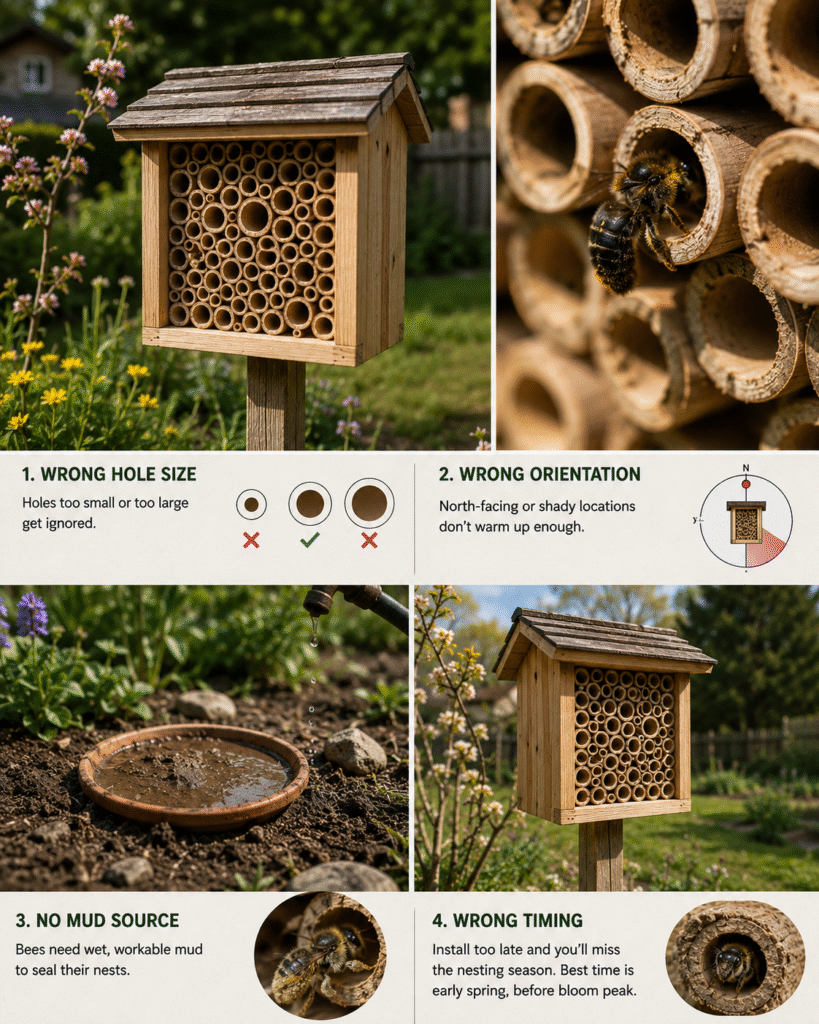
If you’ve built one and nothing’s moved in after a full season, work through this list before assuming your yard just doesn’t have mason bees nearby, because that’s rarely the actual problem.
Wrong hole size is the most common culprit by a wide margin — a diameter even slightly outside the ideal range gets passed over entirely rather than tolerated. Wrong orientation is second; a north-facing or heavily shaded house never warms enough to signal “safe to nest” to a scouting female. No mud source nearby will also stall things, since mason bees need wet, workable mud within a short flying distance to seal each cell — a bare patch of damp soil you keep watered nearby can solve this in a weekend. And simple timing: if the house goes up after the early spring bloom has already passed, you’ve missed the window for that year and won’t see activity until the following spring.
Why This Matters Beyond Your Own Backyard
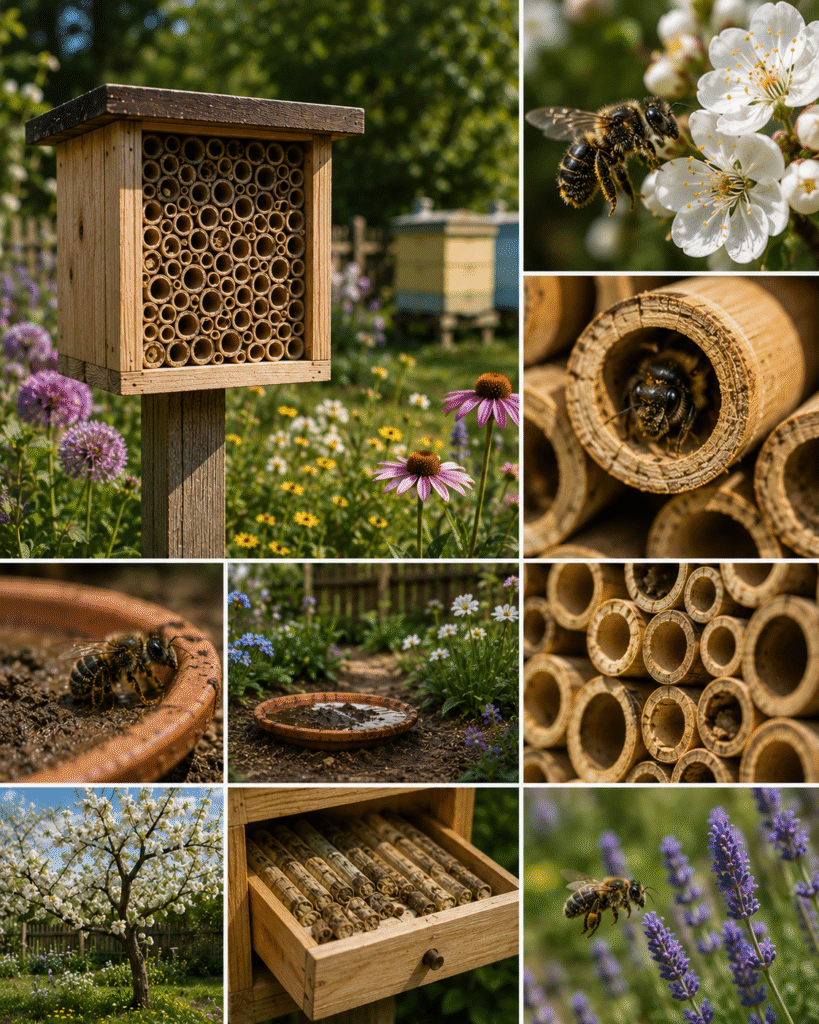
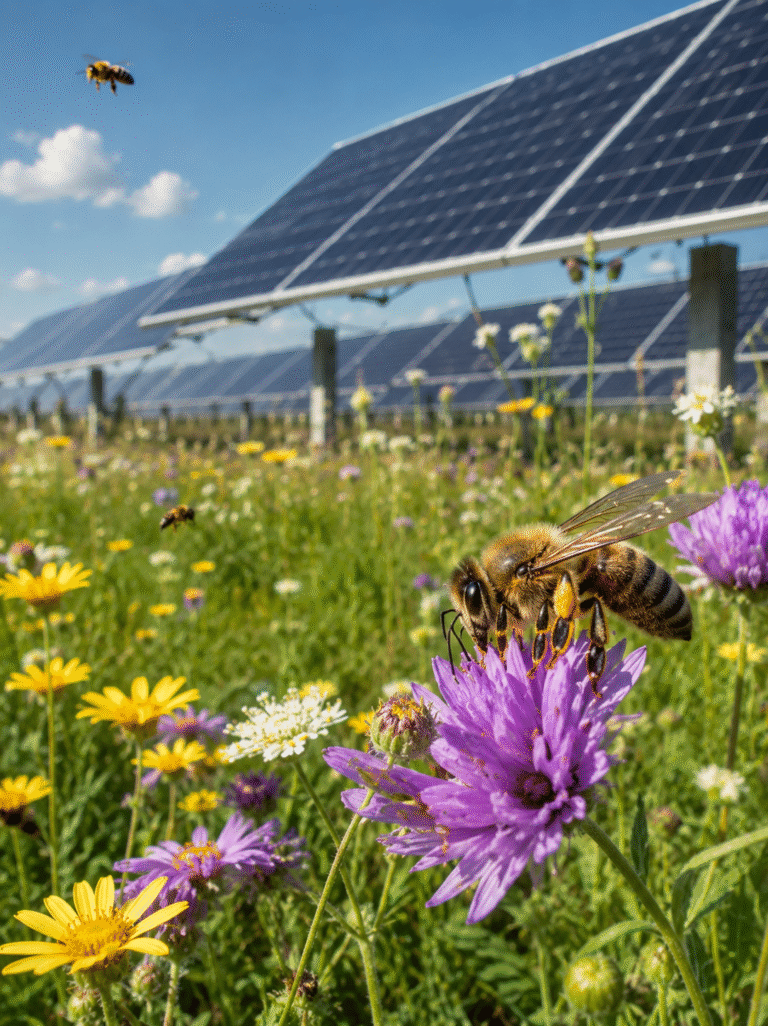
Pollinator decline gets discussed almost entirely through the lens of honeybees, because honeybees are visible, managed, and economically counted. Solitary native bees rarely make the same headlines, despite being the older, more efficient pollinators for a huge share of what actually grows in a home garden or small orchard — tree fruit especially. A single backyard bee house won’t reverse a national trend, but multiplied across enough yards in a neighborhood, it does something honeybee hives can’t: it supports a genuinely wild, locally adapted bee population rather than a managed one that depends on a beekeeper’s ongoing care.
If you already keep honeybees, this is worth doing anyway, not instead. The two don’t compete for the same forage in any meaningful way at a backyard scale, and having both means your garden gets covered earlier in spring, by bees that don’t need smoke, suits, or a single ounce of your Saturday mornings to manage.
Building one this spring? The measurements above are the whole game — get those right and the rest takes care of itself.