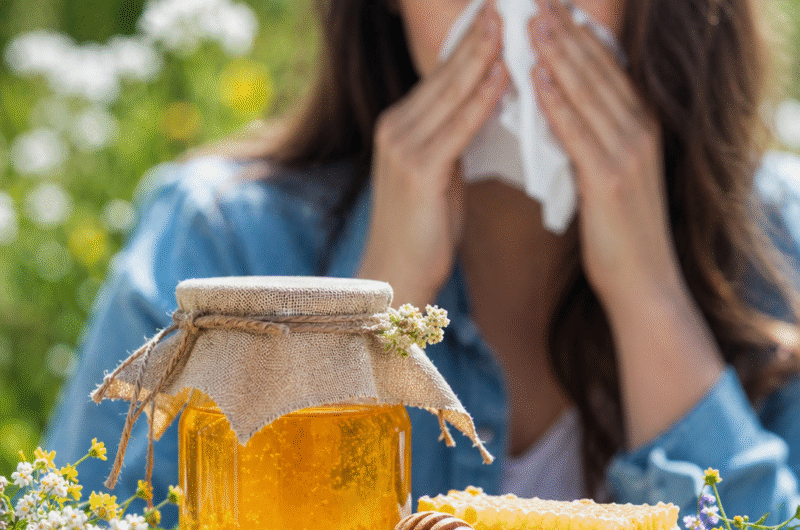

I’ve lost count of how many times someone has handed me cash at a farmers market, pointed at my honey, and said some version of “this is for my allergies, right?” I used to just nod and take the money. These days I ask them to sit for a second, because the real answer is more interesting than either “yes” or “no,” and it’s the kind of thing that changes how you think about honey entirely — not less magical, just differently magical.
Here’s the short version, and then I’ll walk you through why it’s true: eating local honey is not a reliable treatment for seasonal allergies. Not because honey isn’t remarkable — it is — but because of a mismatch most people have never had explained to them. The pollen that makes your nose run in April is almost never the pollen sitting in your honey jar.
Why the Theory Sounds So Convincing
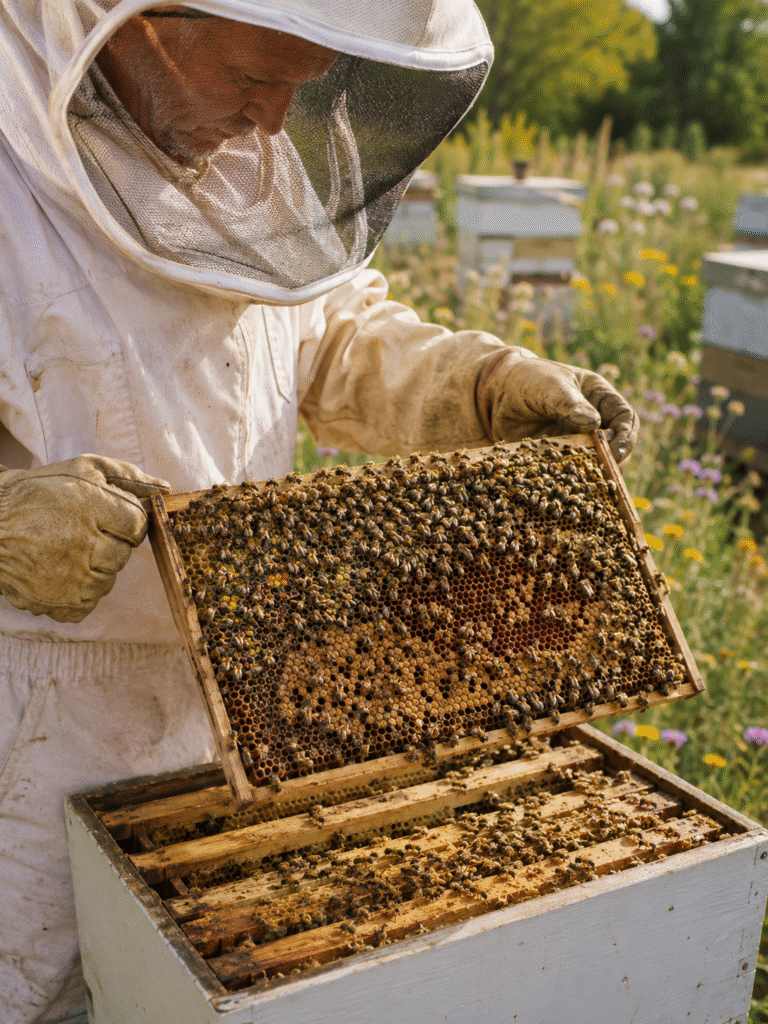
The logic isn’t stupid. It borrows from something real: allergy shots. Immunotherapy works by exposing your immune system to tiny, controlled amounts of an allergen over time, training your body to stop overreacting to it. If you could eat a food that contained trace amounts of the pollen bothering you, the thinking goes, you’d essentially be giving yourself a slow, delicious version of the same treatment.
It’s a good story. I understand why it spread. But it rests on an assumption that doesn’t hold up once you actually watch a hive work through a season, which is something most people repeating this advice have never done.
The Mismatch Nobody Explains
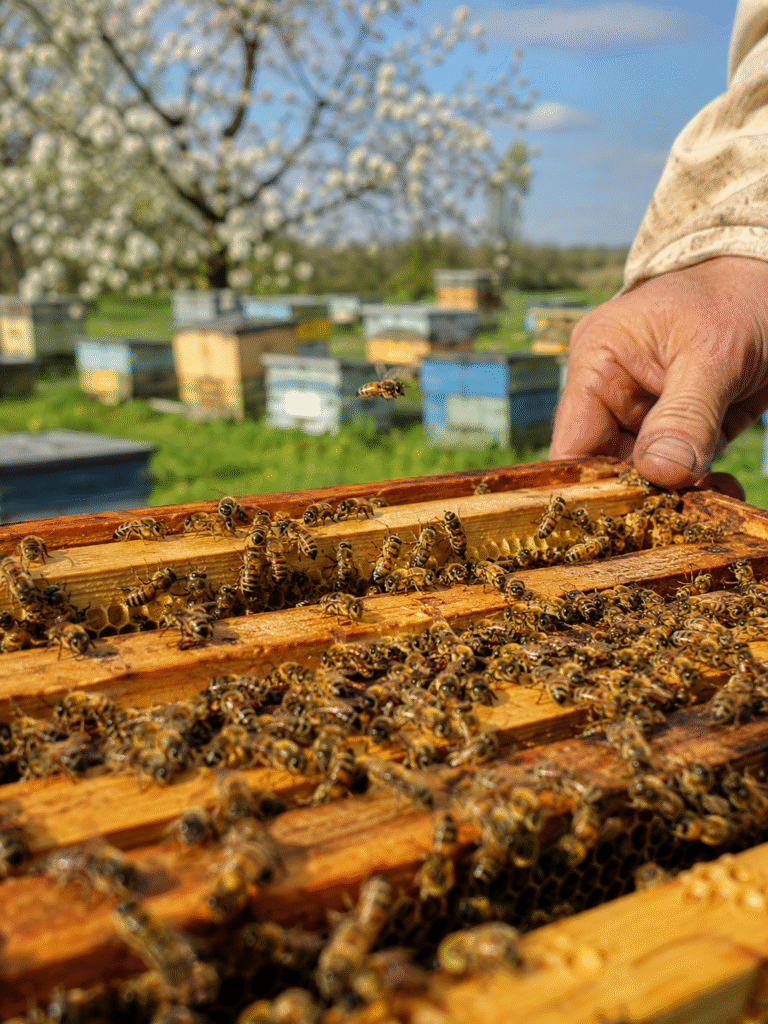
Here’s what I’ve watched my own colonies do every spring for years: my bees are not interested in oak trees, ragweed, or the grass seeding out along the fence line. Those plants don’t offer nectar. They rely on wind to move their pollen — which is exactly why that pollen becomes airborne, drifts for miles, and ends up in your sinuses. Wind pollination doesn’t require an insect’s attention, so evolution never bothered making that pollen sticky, heavy, or appealing to bees.
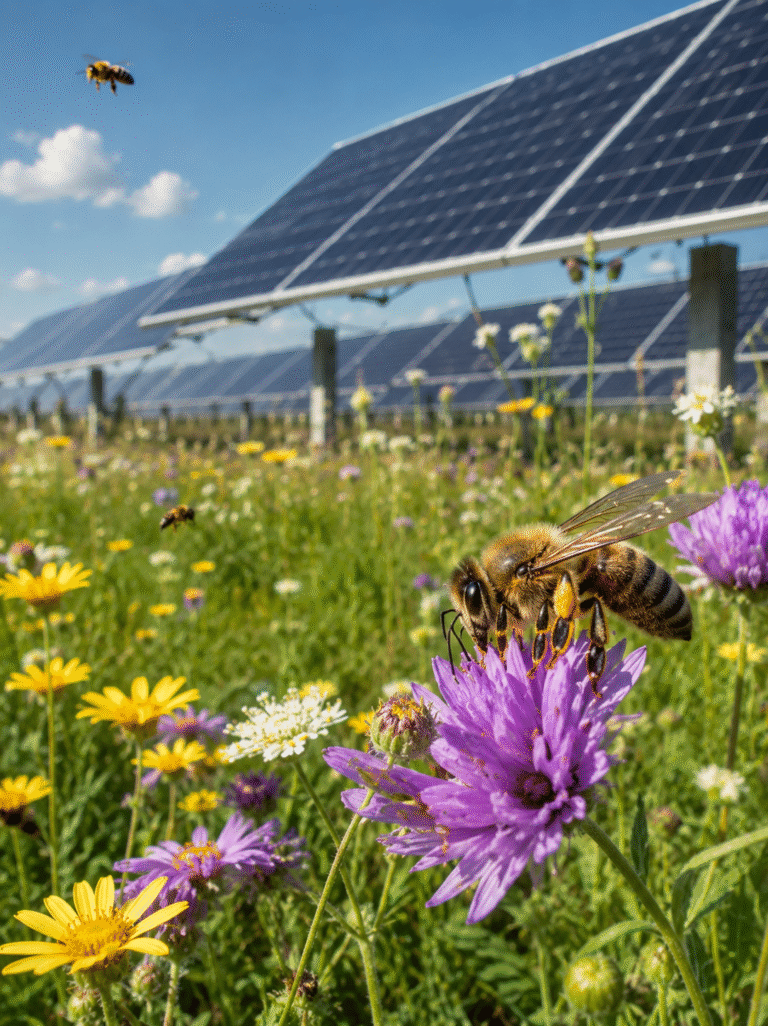
Flower pollen — the kind bees actually forage — behaves completely differently. It’s heavier, textured, and often slightly sticky specifically because the plant wants an insect to carry it. That’s the whole evolutionary bargain: the flower gives up nectar, the bee gets covered in pollen, and some of that pollen rubs off on the next bloom. It’s a transaction, not an accident. And because bees are chasing nectar-rich flowers rather than wind-pollinated trees and grasses, the pollen in a jar of honey is overwhelmingly the wrong kind — biologically irrelevant to the allergens actually triggering your hay fever.
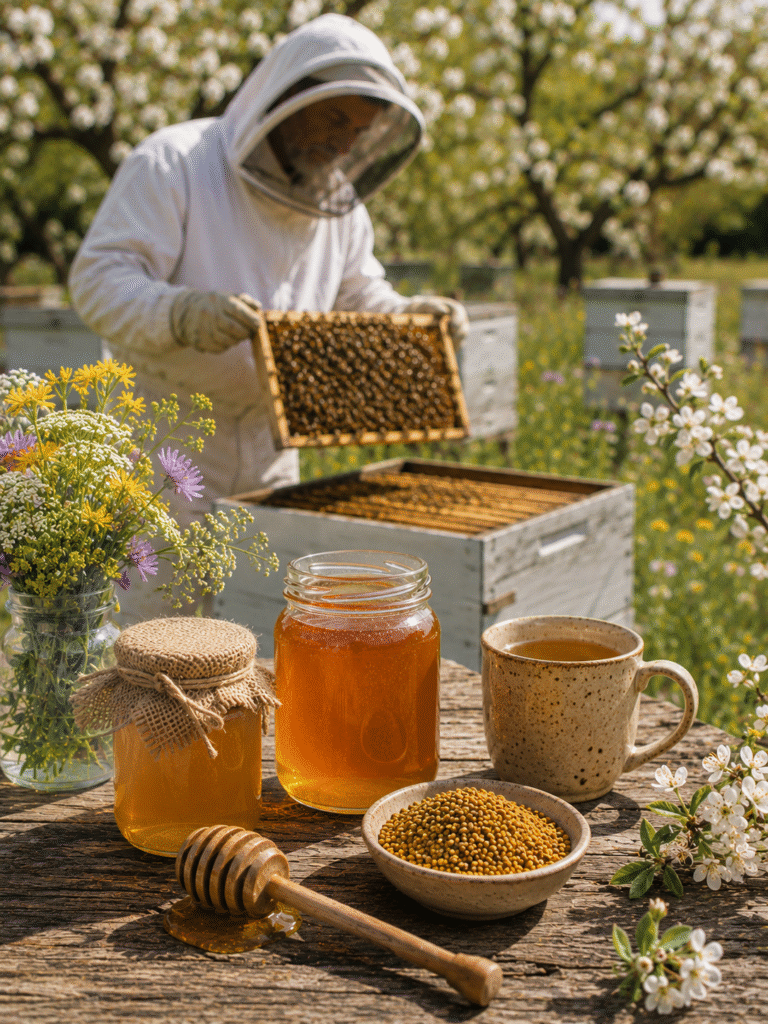
I didn’t fully appreciate this until I started paying closer attention to what was blooming versus what my customers were complaining about. Late March, my hives are working maple, dandelion, and early fruit blossoms. Meanwhile the people sneezing in my town are reacting to birch, oak, and juniper — trees my bees mostly ignore because the payoff isn’t there. Two completely different pollen worlds, operating on the same calendar, and most people assume they’re the same thing because both involve the word “pollen.”
What the Actual Research Shows
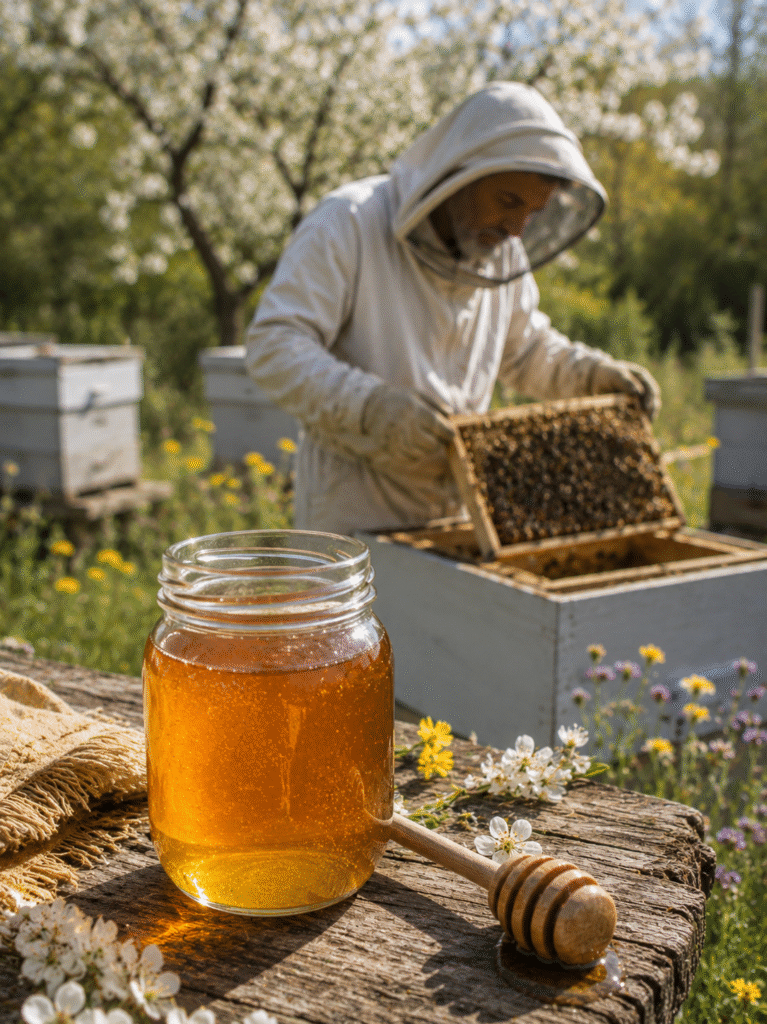
I went looking for real clinical evidence rather than relying on beekeeper folklore, and the picture is more nuanced than a flat “myth” — though it leans hard toward “don’t count on it.” Multiple allergists interviewed across recent reporting have been blunt about this. A pediatric allergist and immunologist at Weill Cornell Medicine put it plainly: there isn’t really great evidence to suggest local honey helps seasonal allergies. A professor of pediatrics and medicine at Northwestern’s Feinberg School of Medicine has said essentially the same thing — ingesting honey hasn’t been scientifically proven to help.
That’s not the whole story, though, and I think the nuance matters more than the headline. One study did find something worth noting: research using honey infused specifically with birch pollen — not random wildflower honey, but honey deliberately loaded with the exact allergen researchers were testing — found that participants reported improved allergy symptoms compared with a control group. That’s a meaningfully different setup than grabbing a jar off a farm stand shelf. It suggests the concept behind local honey immunotherapy isn’t biologically absurd; it’s just that commercial honey almost never contains a concentrated, targeted dose of the specific pollen bothering you.
And when a study did find a real effect from eating plain honey, the dose involved should give anyone pause: roughly one gram of honey per kilogram of body weight. For someone around 150 pounds, that works out to nearly ten teaspoons a day — every day, consistently, likely starting weeks before allergy season even begins. That’s not a spoonful in your tea. That’s closer to a dietary commitment most people won’t sustain, and even then, the research pool behind it is small.
What Honey Can Actually Do
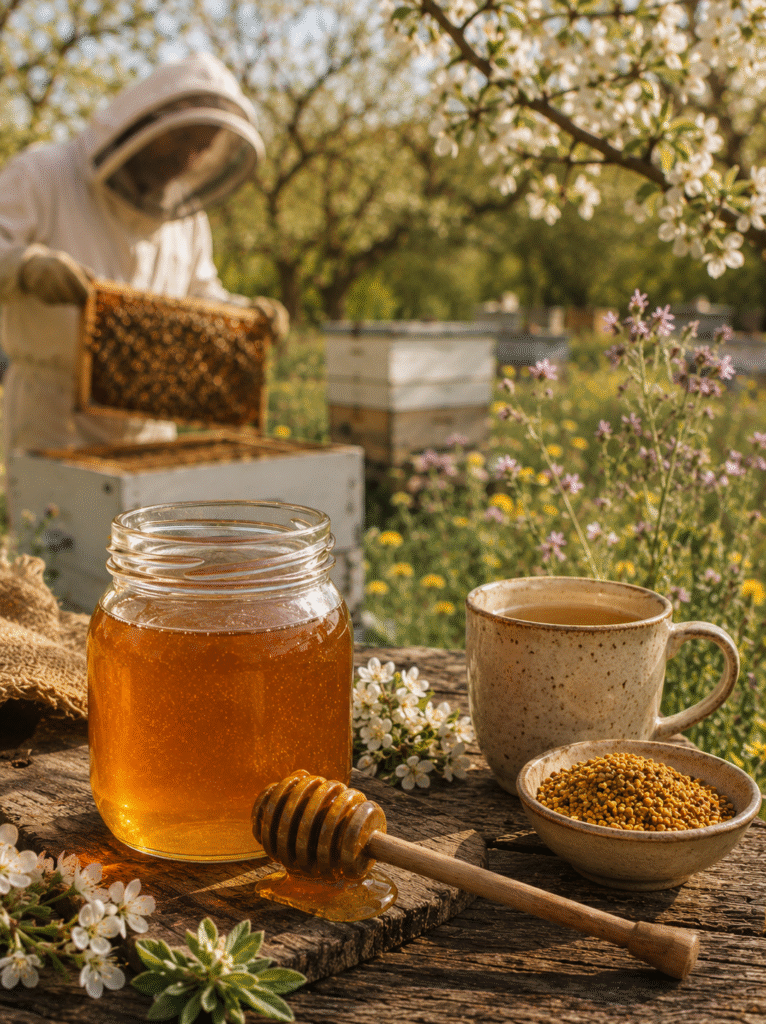
I don’t want this to read as “honey is useless for allergy season,” because that’s not accurate either. Raw honey has genuine, better-supported benefits that get lost in the local-pollen debate. It has documented anti-inflammatory and soothing properties, and it’s well-established for calming a scratchy throat and suppressing cough — particularly in children, where it’s actually one of the better-studied natural remedies for upper respiratory irritation. If your allergies are giving you a raw throat from constant sneezing and post-nasal drip, a spoonful of raw honey in warm water isn’t a cure, but it’s not nothing either. That’s a real mechanism with real research behind it, separate from the pollen-desensitization theory entirely.
There’s also a compound worth knowing about if you’re interested in the “why” beyond the marketing: quercetin, a plant flavonoid found in pollen, has been studied for its role in stabilizing mast cells — the cells responsible for releasing histamine during an allergic reaction. It’s an interesting research thread, but it’s early, and it’s not the same as saying “eat honey, cure your allergies.”
Bee Pollen vs. Honey — A Distinction Worth Making
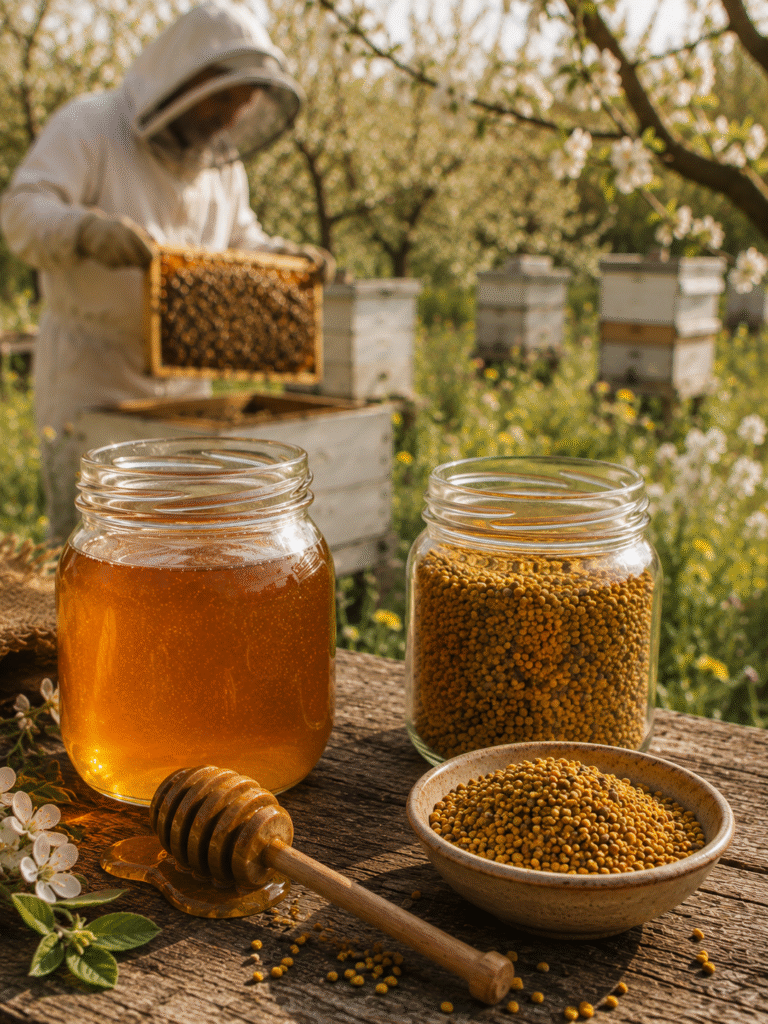
People conflate bee pollen granules with honey constantly, and they’re genuinely different products with different pollen concentrations. Bee pollen — the little pellets foragers pack onto their hind legs and carry back to the hive — is far more concentrated than what ends up diluted into honey. If there’s any plausible mechanism for pollen-based desensitization working through diet, pollen granules are the more biologically relevant candidate, simply because the dose is so much higher per teaspoon. Even then, you’re facing the same core problem: it’s still overwhelmingly flower pollen, not the wind-borne tree and grass pollen driving most seasonal allergies. And bee pollen carries its own risk — for someone with a genuine pollen allergy, eating concentrated pollen granules can trigger a reaction rather than prevent one. That’s not a small caveat. I’ve had beekeeping friends who wanted to try pollen supplementation for their own hay fever get an itchy mouth and throat within minutes.
A Beekeeper’s Honest Take
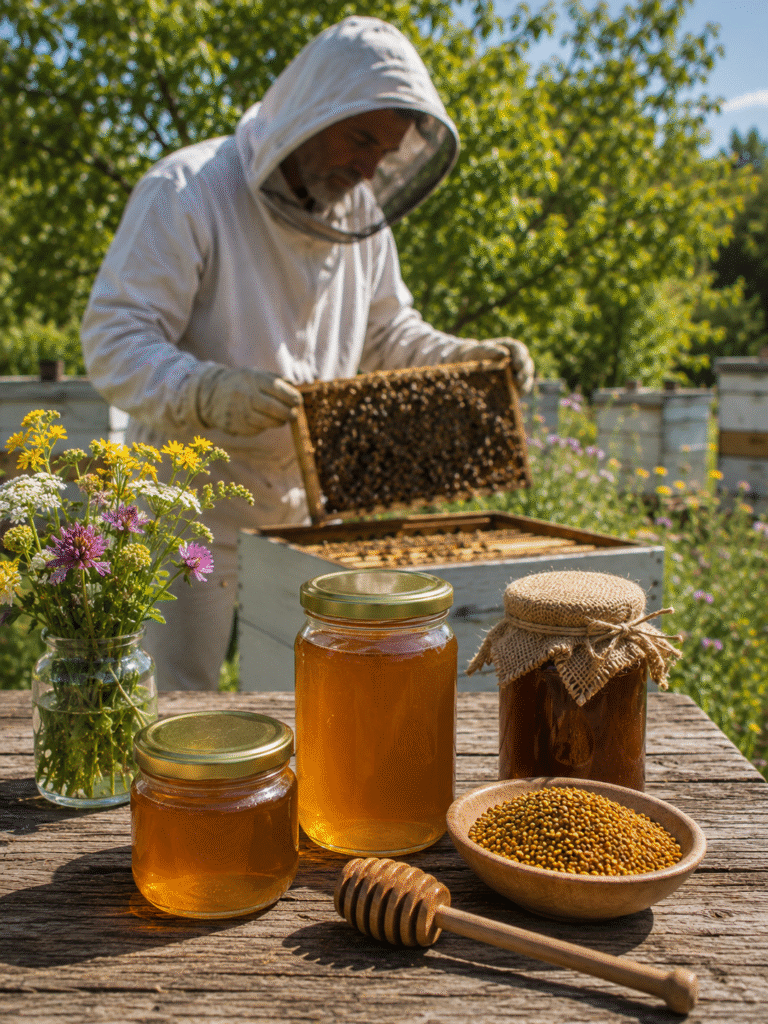
I sell honey. I could just let the myth do my marketing for me. I don’t, because I think it undersells what honey is actually good for and oversells something the science doesn’t support well. If a customer wants honey because they genuinely love the flavor, want a natural cough soother, or are drawn to supporting a local apiary instead of a supermarket squeeze bottle, all of that is honest and reasonable. If they want honey specifically because they believe it will stop their sneezing every April, I think it’s my job to tell them the truth, even if it costs me a sale sometimes.
What I’ve noticed anecdotally, for whatever it’s worth, is that people who eat local honey consistently through the year sometimes report feeling like their allergy season is “a little better” — but I’m genuinely skeptical of how much of that is the honey itself versus general dietary habits, placebo effect, or simply paying closer attention once they’ve made a change. I’d rather be honest about that uncertainty than pretend I have a controlled study running in my backyard.
What Actually Helps More
If you’re dealing with genuine seasonal allergic rhinitis, the treatments with real evidence behind them are the unglamorous ones: antihistamines, nasal corticosteroid sprays, and for people with persistent, disruptive symptoms, actual allergen immunotherapy — the real allergy shots, or sublingual tablets, administered under medical supervision with controlled, measured doses of the specific allergen causing the problem. That’s the legitimate version of the idea local honey is trying to imitate, just done properly, with dosing and allergen specificity that a honey jar simply can’t offer.
None of that makes honey less worth having in your kitchen. It just means you should reach for it because it tastes extraordinary and has real, if more modest, benefits — not because you’re expecting it to outperform a nasal spray.
FAQ
Why doesn’t honey contain the pollen that causes hay fever?
Because bees forage flowers for nectar, and the plants that trigger hay fever — trees, grasses, and weeds — are wind-pollinated and don’t produce nectar, so bees have little reason to visit them.
Is there any real science behind the local-honey theory?
The underlying concept of pollen desensitization is legitimate immunotherapy science, but studies using generic local honey have mostly failed to show reliable benefit. Honey engineered to contain a specific, concentrated allergen has shown more promising results in small trials.
Are bee pollen supplements different from eating local honey?
Yes — bee pollen granules carry a much higher concentration of pollen than honey, but it’s still overwhelmingly flower pollen rather than the wind-borne pollen behind most hay fever, and it carries a real risk of triggering a reaction in pollen-sensitive people.
Can eating raw honey be risky for anyone?
Raw, unpasteurized honey should never be given to infants under one year old due to botulism risk, and anyone with a known pollen allergy should be cautious introducing bee pollen products.
Does timing matter — should you start eating honey before allergy season?
If you’re going to try it, most anecdotal protocols suggest starting weeks before your local pollen season begins, though the evidence supporting meaningful benefit at typical consumption levels remains thin.
What actually helps more than honey for seasonal allergies?
Antihistamines, nasal corticosteroid sprays, and physician-supervised allergen immunotherapy all have substantially stronger clinical evidence behind them than dietary local honey.