
Bees have exactly one mating flight, ever. Here’s what actually happens in a drone congregation area — and why it determines a hive’s future.
The first time I watched a virgin queen leave the hive on a mating flight, I nearly missed it. It was late May, mid-afternoon, unusually still air over an apiary I was documenting near a client’s orchard, and she was gone from the landing board in under four seconds — a blur, then nothing. What I didn’t see, because it happened two or three miles away and forty meters up, was the chase that followed: a honey bee mating flight is a queen’s entire reproductive life compressed into a handful of airborne minutes, played out inside a floating cloud of drones she’ll never meet again.
Most beekeepers know the basic fact — a queen mates once in her life, with multiple drones, and never again. Fewer know where this happens, why it’s fatal for the drones, or why the whole system depends on a phenomenon scientists still can’t fully explain.
Why a Queen Only Mates Once in Her Life (But With Over a Dozen Drones)
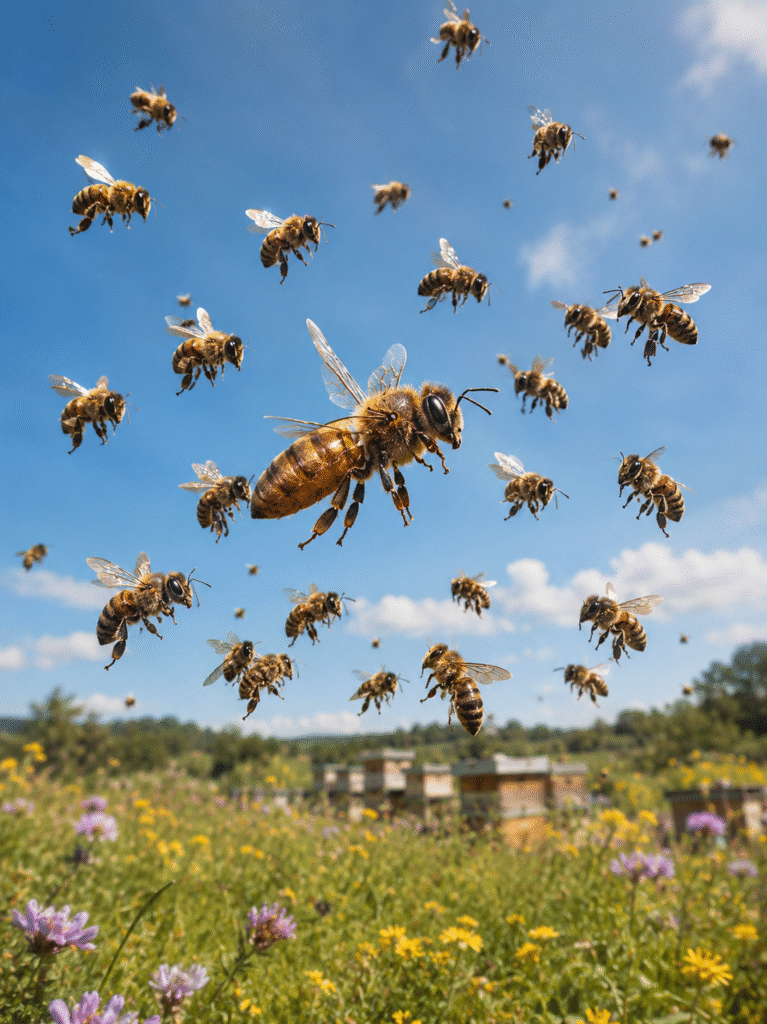
A queen honey bee typically completes her mating flights within the first two weeks of adult life, mating with roughly ten to twenty drones across one or several short flights, then stores that sperm for the rest of her life — she never mates again, even if she lives three or four more years.
That single sentence is the entire reproductive strategy of a honey bee colony, and it’s worth sitting with. A queen bee doesn’t mate seasonally, or annually, or on demand. She has one narrow window — sexual maturity kicks in around five to six days old, and receptive weather (warm, calm, sunny afternoons) has to line up with it — and everything that colony produces genetically for years afterward comes from what she collects during that window.
This is different from how her replacement gets made. If you’ve read our piece on how colonies replace a failing queen, you already know that supersedure is a slow, deliberate process driven by worker bees sensing pheromone decline. Mating flights are the opposite: fast, weather-dependent, and largely out of the colony’s control once she’s airborne.
The multiple-mating part matters more than most new beekeepers realize. A queen who mates with fifteen genetically different drones produces a colony where full sisters (same father) are a minority — most workers in the hive are half-sisters. That genetic patchwork is part of why some colonies handle disease pressure, temperature swings, or pest resistance more unevenly than others. It’s not just diversity for its own sake; it changes how the whole superorganism behaves.
What Is a Drone Congregation Area, and Why Do Scientists Still Not Fully Understand Them
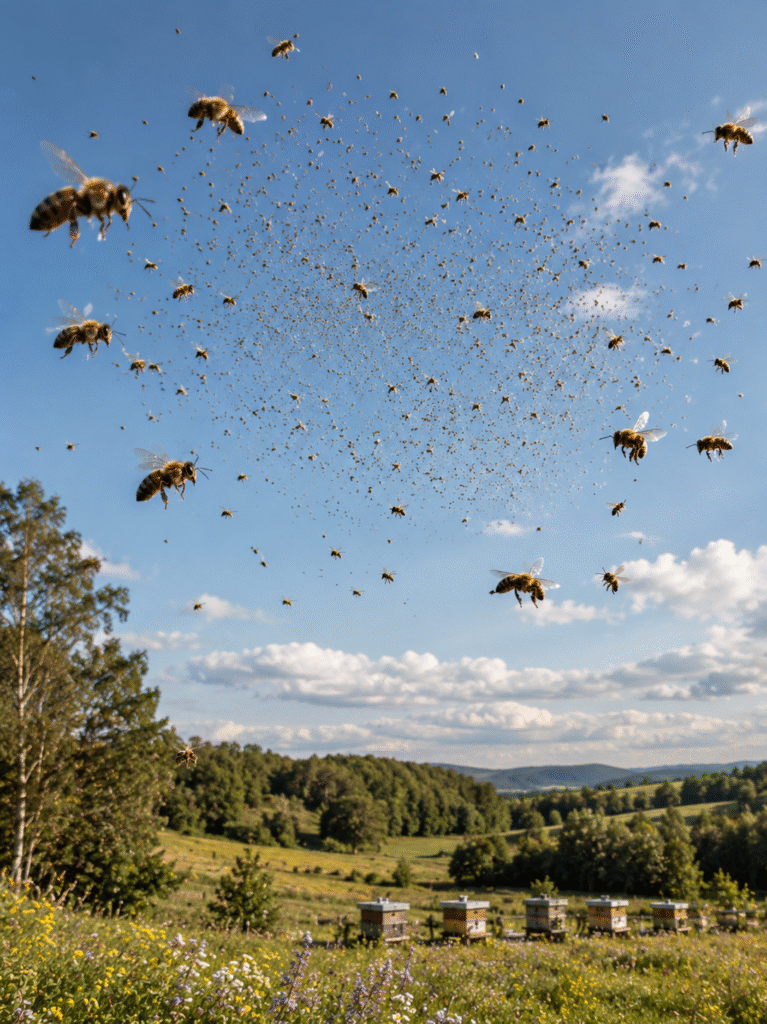
A drone congregation area (DCA) is a specific patch of open sky, usually ten to forty meters above ground, where drones from dozens or even hundreds of different colonies gather every afternoon during mating season to wait for a virgin queen — and despite decades of study, researchers still can’t reliably predict where a new one will form.
That last part isn’t an exaggeration for effect. Researchers analyzing landscape properties of DCAs have been trying since at least the 1960s to identify what makes one patch of sky attractive to drones and another patch, seemingly identical, completely ignored. Some evidence points to landmark features — a tree line, a change in terrain, an open field edge — acting as orientation cues drones use to relocate the same spot day after day, sometimes across generations of bees that never met each other.
How drones find these aerial meeting points
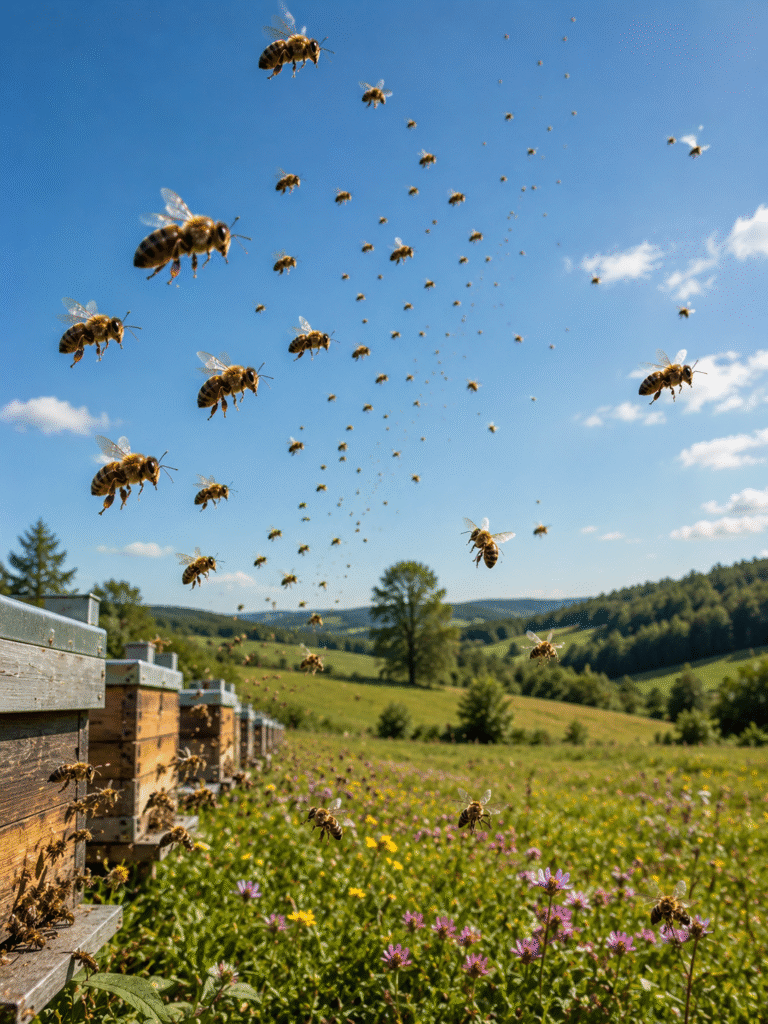
Drones leave their hives in the early afternoon on warm days, orient themselves in short flights first, and then commit to a DCA once they’re sexually mature — usually around ten to twelve days old. What’s genuinely strange is the loyalty involved: colonies in a given area return to the same DCA locations year after year, and unmated queens seem to independently find those same coordinates without ever having been there. Nobody has fully cracked how that consistency works.
The “physical DCA hypothesis” — do landmarks matter?
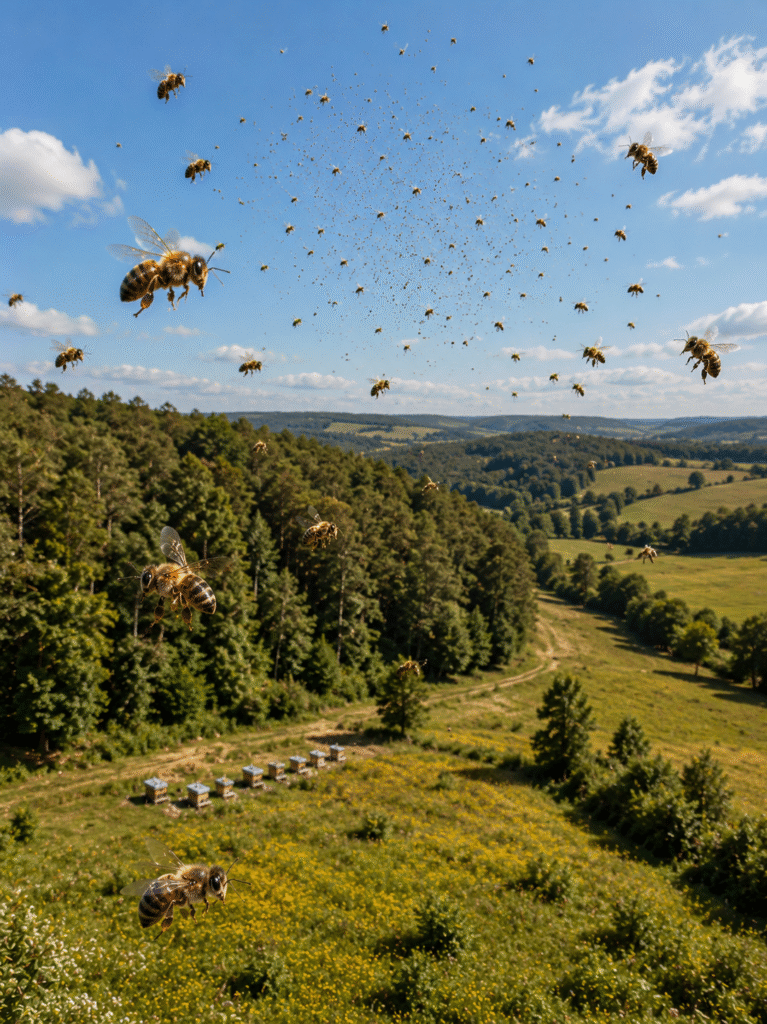
The leading theory, sometimes called the physical DCA hypothesis, suggests visual landmarks anchor these locations in ways similar to how drones use terrain features for basic orientation flights near their own hive. It’s a reasonable theory with real supporting data, but I want to be straightforward about where the science actually stands: this is still an open question, not a settled one. If you keep bees in a spot where mating consistently fails — poor queen turnout, drone-layer symptoms in new queens — a missing or disrupted DCA nearby is a real, if hard-to-verify, possible cause.
Inside the Aerial Chase: The “Comet” Formation
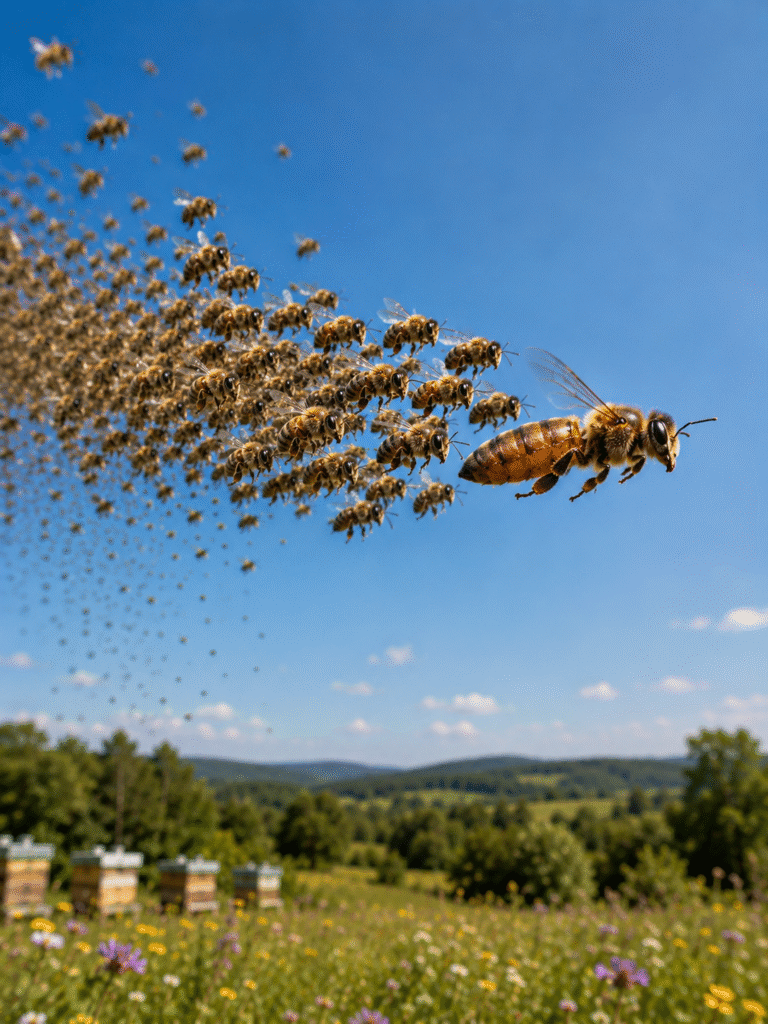
Picture the queen entering airspace already occupied by anywhere from a few dozen to several thousand drones. She releases pheromones, and the drones nearest her pick up the scent first, closing in visually — a drone’s compound eyes are proportionally larger than a worker’s, built almost entirely for this one task. As more drones detect and join the pursuit, the group takes on a recognizable shape from below: a tight, elongating cluster trailing behind her, commonly described as a comet.
Speed and agility decide the outcome, not size or aggression. The fastest, most maneuverable drone catches her first. This isn’t a passive process on her end, either — a queen who isn’t fully receptive, or who senses poor conditions, can and does abort a flight and return to the hive without mating, trying again on a later afternoon.
The Drone’s Final Act — Why Mating Is Fatal
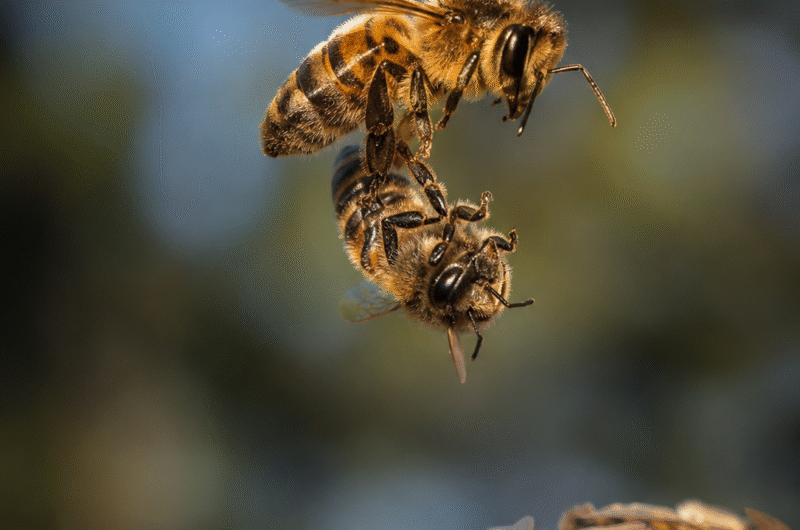
Mating is fatal for a drone because the physical act of transferring sperm requires an explosive, irreversible eversion of his reproductive organ, which breaks off inside the queen and kills him within moments. This is not a metaphor for sacrifice — it’s mechanical. Once a drone successfully mates mid-air, he falls away from the queen, and the next drone in the chase physically removes the remains of the previous mating before continuing, a detail that still catches new beekeepers off guard the first time they hear it described plainly.
If you’ve read our piece on the genetics behind drone behavior, you already know drones are, functionally, single-purpose colony members — no stinger, no foraging role, no defense duties. The mating flight is the entire reason a drone exists, and by design, it only happens once per drone.
How Beekeepers Confirm a Successful Mating Flight
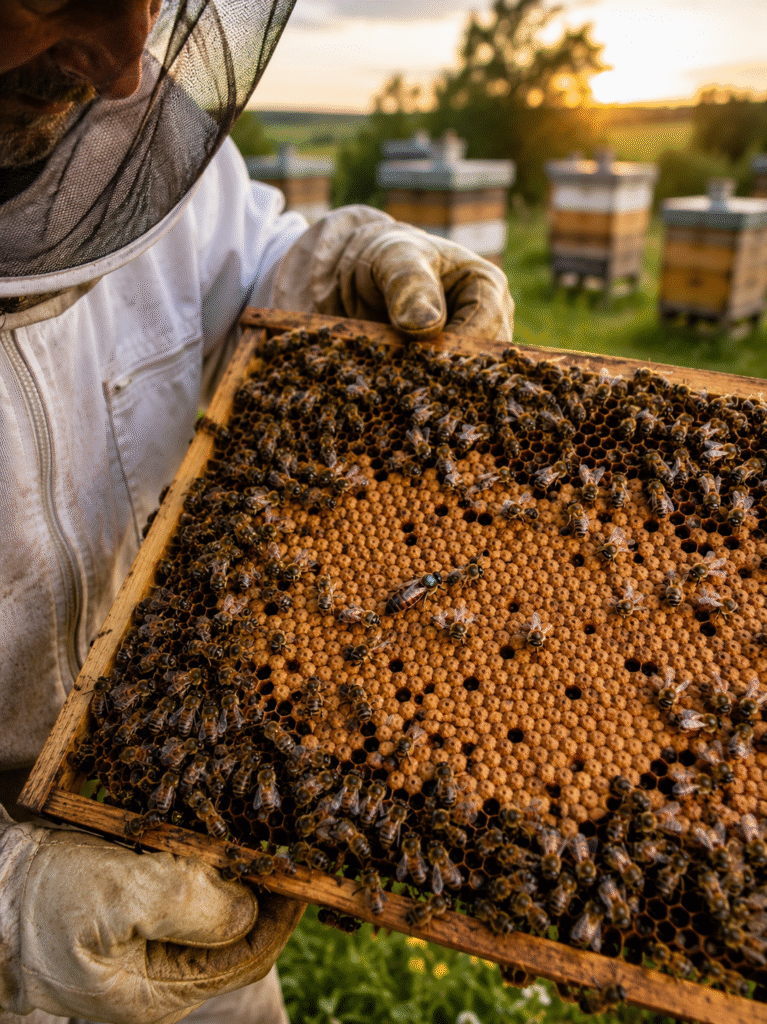
You don’t get to watch the flight itself, realistically, but you can read the aftermath. A well-mated queen returns visibly calmer within a day or two, begins laying within roughly a week to ten days post-emergence under good conditions, and produces a tight, consistent brood pattern — the visual signature every beekeeper learns to recognize on sight. A poorly mated queen, by contrast, often lays a spotty or drone-heavy pattern (unfertilized eggs become drones automatically, which is its own tell), and experienced keepers will often requeen rather than wait for improvement.
This is also where tracking a queen’s age by color becomes genuinely useful rather than just a beekeeping tradition — knowing exactly when she emerged tells you how much of a mating window she’s had, which matters enormously when you’re troubleshooting a weak brood pattern in July versus one you’re seeing on a queen that only emerged two weeks ago.
What Happens When a Mating Flight Fails (Poor Weather, Low Drone Density, DCA Collapse)
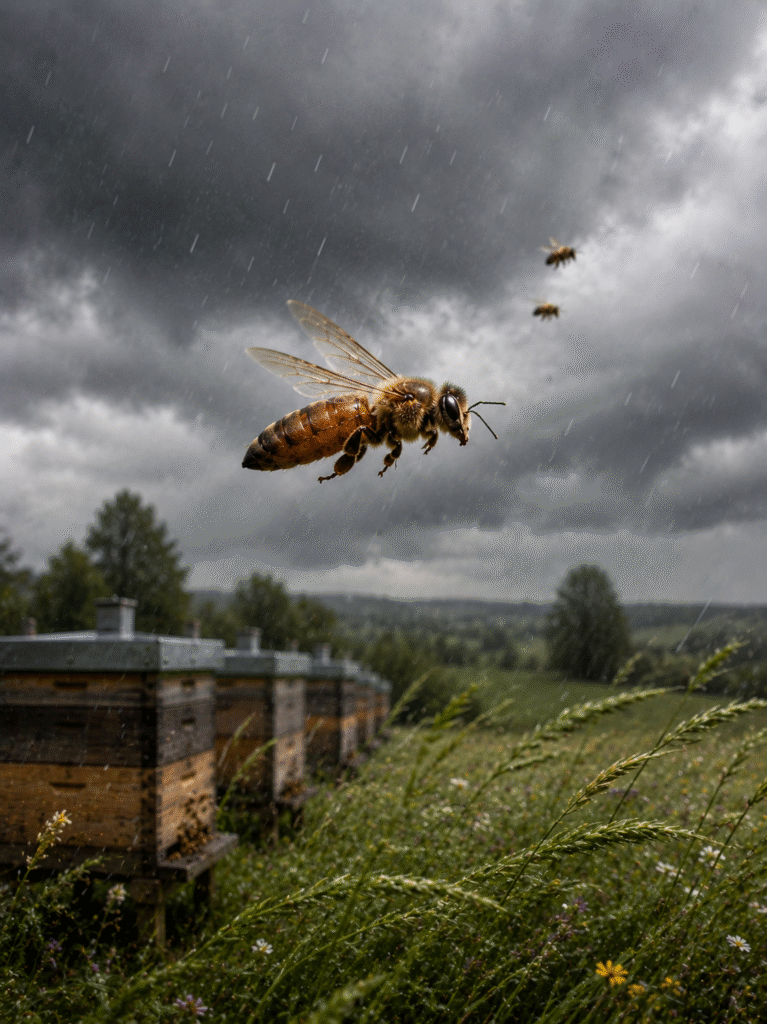
This is the part of queen biology that quietly explains a lot of “unexplained” colony failures. A stretch of cold, rainy, or windy weather during a queen’s narrow mating window can push her past the point where successful mating is still physically likely — queens that mate too late, or not at all, become drone layers, unable to produce workers, and the colony is effectively doomed unless the beekeeper intervenes.
Drone density matters just as much. In areas where Varroa treatment schedules, seasonal drone culling, or simply a lack of nearby colonies have thinned out the local drone population, DCAs can be sparse or absent altogether — which is one of several real, practical reasons regional beekeeping associations encourage keeping enough colonies, or enough neighboring apiaries, to sustain a healthy drone population nearby. If you notice a pattern of poorly mated queens two seasons in a row in the same yard, it’s worth asking whether the local drone population, not your queen-rearing technique, is the actual problem.
Why Genetic Diversity From Multiple Drones Matters for Colony Health
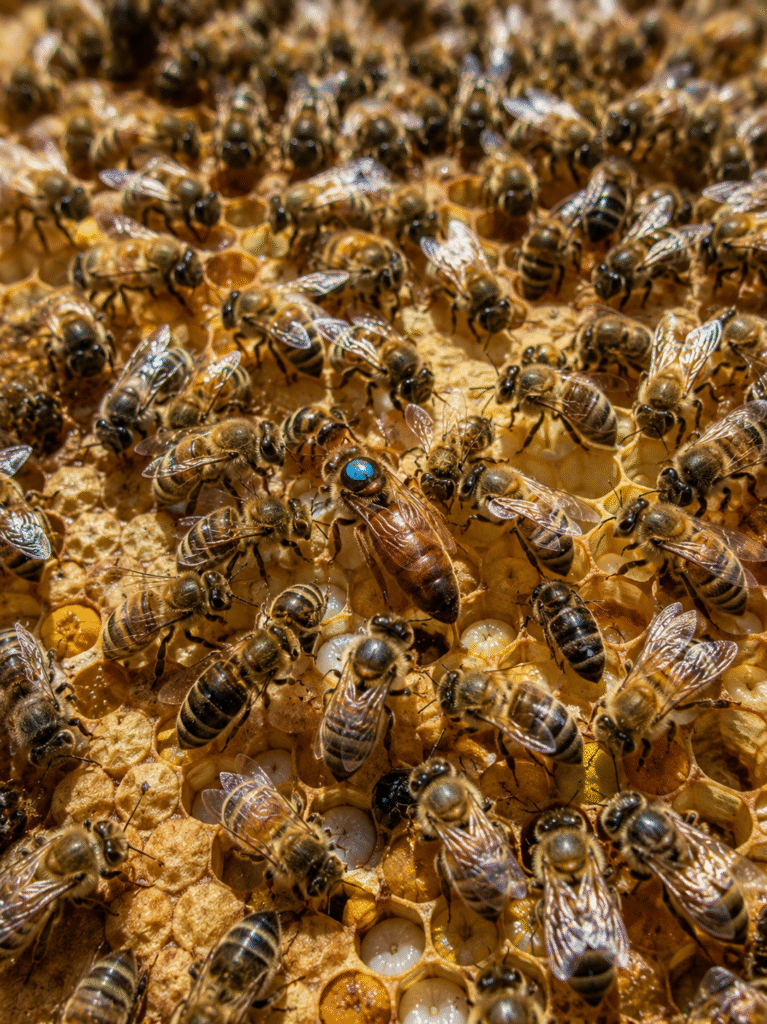
A colony built from a queen who mated with ten to twenty genetically distinct drones is, in a very real sense, hedging its bets. Genetic diversity in the worker population has been linked to better disease resistance, more even temperature regulation, and more resilient foraging behavior across a colony — because different patrilines respond differently to the same stressor, the colony as a whole has more options.
This is part of why controlled queen breeding programs, like the climate-controlled queen production I covered in our look at Canada’s Bee Cube, put so much engineering into managing mating conditions rather than leaving it entirely to chance — and it’s also a factor worth weighing if you’re choosing a bee breed for your apiary, since some breeding programs prioritize instrumental insemination precisely to control this genetic mix more tightly than open mating allows.
Speaking of that mating window closing without success — it’s worth knowing the signs your colony is about to swarm, since a poorly mated queen and a swarm-prone colony often show up in the same weak-pattern symptoms, and telling the two apart early saves a lot of guesswork. And if any of this is new territory for you, our guide to beekeeping for beginners is a good next stop.
FAQ
How many drones does a queen bee mate with?
Typically ten to twenty, across one or occasionally several short flights over a few days. She stores this sperm for the rest of her life and doesn’t mate again.
What is a drone congregation area and where are they located?
It’s a specific area of open sky, usually 10–40 meters up, where drones from many colonies gather daily during mating season. Scientists still can’t reliably predict exactly where a new one will form.
Why do drones die immediately after mating?
The mating act requires an irreversible eversion of the drone’s reproductive organ, which breaks off inside the queen. The drone dies within moments as a direct physical result.
How does a queen bee know where to find drones?
She flies toward established drone congregation areas that colonies in the region return to consistently, though the exact mechanism she uses to locate them remains an open research question.
Can a queen bee mate more than once in her life?
She can complete multiple flights within her initial mating window (first one to two weeks of life), but once she begins laying eggs, she never mates again for the rest of her life.
How long does a queen bee’s mating flight last?
Individual flights typically run ten to forty minutes. A queen may take several flights across a few days if weather or drone density isn’t favorable on the first attempt.
What happens if a queen bee doesn’t get mated successfully?
She becomes a drone layer — capable only of laying unfertilized eggs that become drones, not workers. Most beekeepers requeen a colony rather than wait for this to resolve on its own.
Do drones from the same hive mate with their own queen?
Not typically. Drones travel to congregation areas relatively close to their own hive, but queens fly farther — often several miles — which helps reduce the odds of mating with related drones.