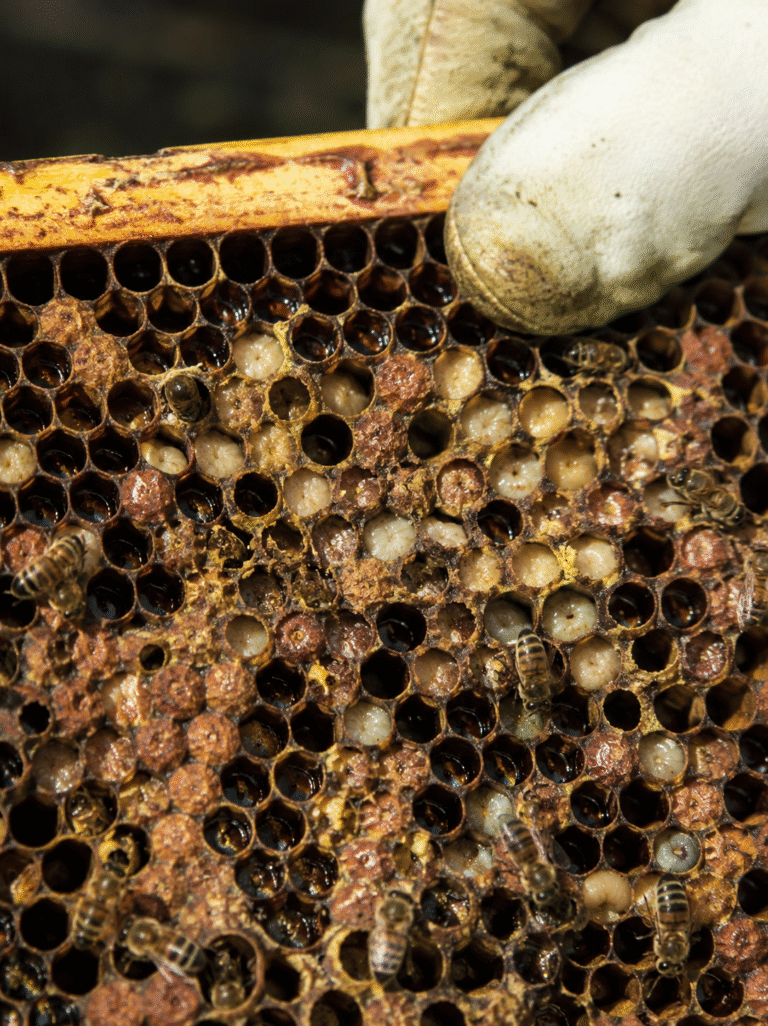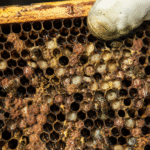
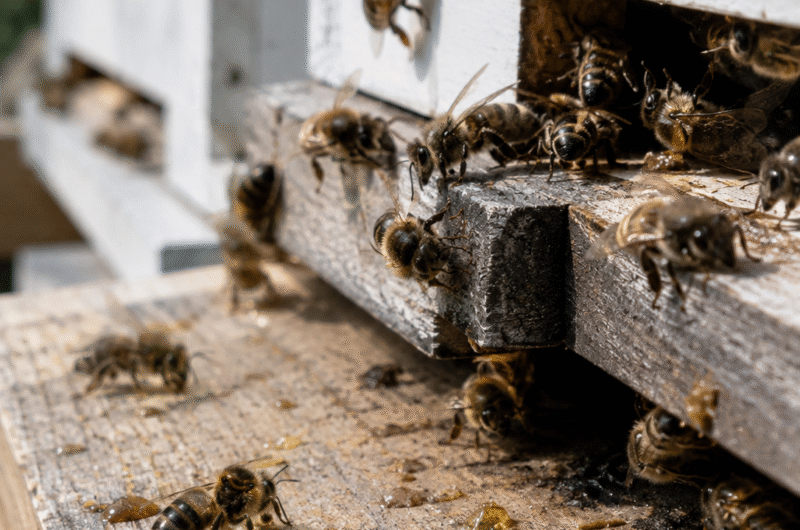

I lost a hive once to something I never actually saw coming. No mites on the sticky board worth worrying about, no small hive beetles scuttling in the corners, no obvious brood disease. The colony just got weaker through late summer, then weaker still, and by the time I pulled the frames in September I was looking at a shadow of what had been a strong spring colony three months earlier. It took a lab test — not a hive inspection — to tell me what had actually happened. Nosema.
If you’ve kept bees for more than a season or two, you’ve probably heard the name in passing at a bee club meeting, usually mentioned somewhere between Varroa and foulbrood, then quickly forgotten. That’s a mistake, and it’s one I made myself for longer than I’d like to admit. Nosema doesn’t announce itself the way other threats do. There’s no dramatic pest crawling across your comb, no larvae collapsing into telltale goo. It works quietly, inside the gut of adult bees, and by the time you notice something’s wrong, the damage has usually been building for weeks.
Two Parasites Wearing the Same Name
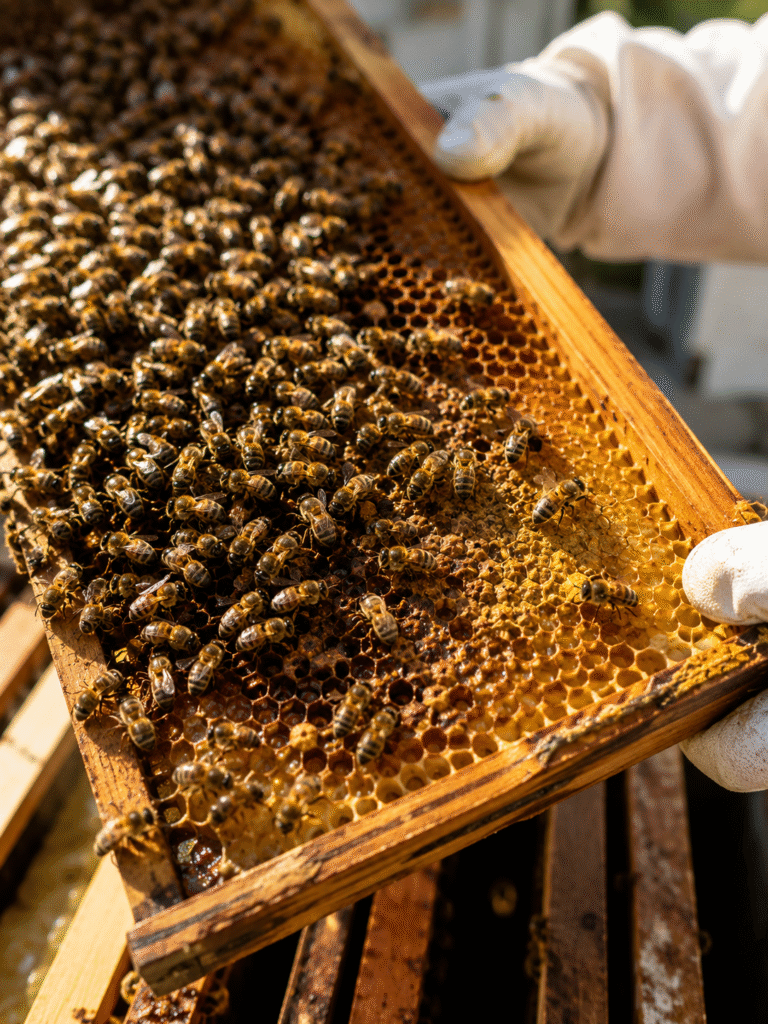
What most beekeepers call “Nosema” is actually two distinct microsporidian fungi — single-celled, spore-forming parasites that infect the midgut lining of adult honey bees. Nosema apis is the older, more familiar species, first documented decades ago and closely tied to classic dysentery symptoms. Nosema ceranae is the newer arrival, originally identified in the Asian honey bee before it made the jump into Apis mellifera colonies worldwide, and it behaves differently enough that treating the two as interchangeable is part of why this disease gets underdiagnosed.
Here’s the distinction that matters most in the field: N. apis tends to leave visible clues. Fecal streaking on frames and the front of the hive, bees crawling on the ground unable to fly, a telltale smell some old-timers describe as almost yeasty. N. ceranae, by contrast, is a quieter parasite. Infected bees often show no obvious dysentery at all. They simply become less efficient — foraging earlier in life than they should, flying shorter routes, dying sooner — without a single visible symptom that would make you reach for a microscope. That’s precisely why it’s the species researchers increasingly associate with unexplained colony weakening, including patterns that overlap with what beekeepers describe as colony collapse.
What This Actually Does to a Bee
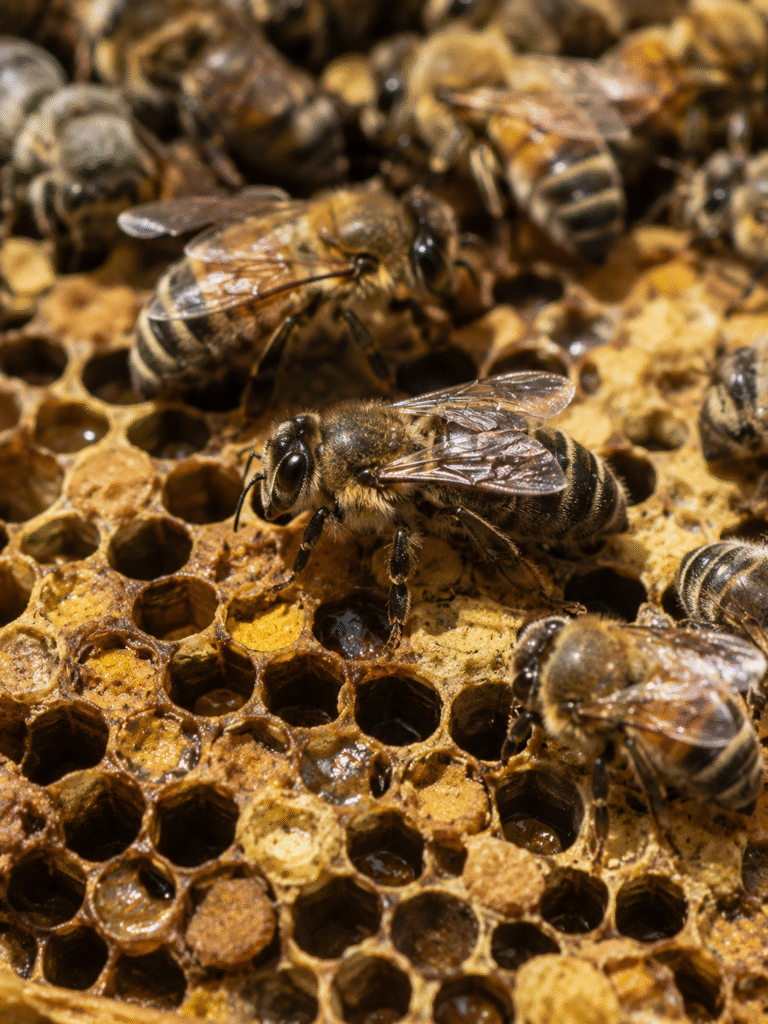
The infection cycle is almost elegant in its cruelty. A forager picks up spores — from contaminated comb, shared food stores, or drifting bees from a neighboring hive — and those spores germinate in the midgut, essentially hijacking the digestive cells that a bee relies on to process pollen and produce the proteins her body and her colony need. Research has connected N. ceranae infection to measurably impaired navigation and memory, a shortened lifespan, and a kind of chronic energy stress that pushes infected bees to start foraging younger than a healthy bee would. A colony doesn’t need every bee infected to feel this. It needs enough of its workforce quietly underperforming, day after day, for the whole operation to fall behind on stores heading into a dearth or into winter.
That’s the part I wish someone had explained to me clearly years ago: Nosema rarely kills a colony outright. It erodes one. The colony that succumbs to Nosema usually looks, from the outside, like it just had “a rough year” — smaller cluster than expected, lighter honey stores, a slow spring buildup that never quite catches up. Beekeepers blame the queen, blame the weather, blame anything but the actual cause, because the actual cause doesn’t leave fingerprints the way Varroa does.
What 2026 Research Is Revealing
Two recent studies changed how I think about managing this disease, and both are worth knowing about if you’re serious about keeping healthy colonies rather than just reactive ones.
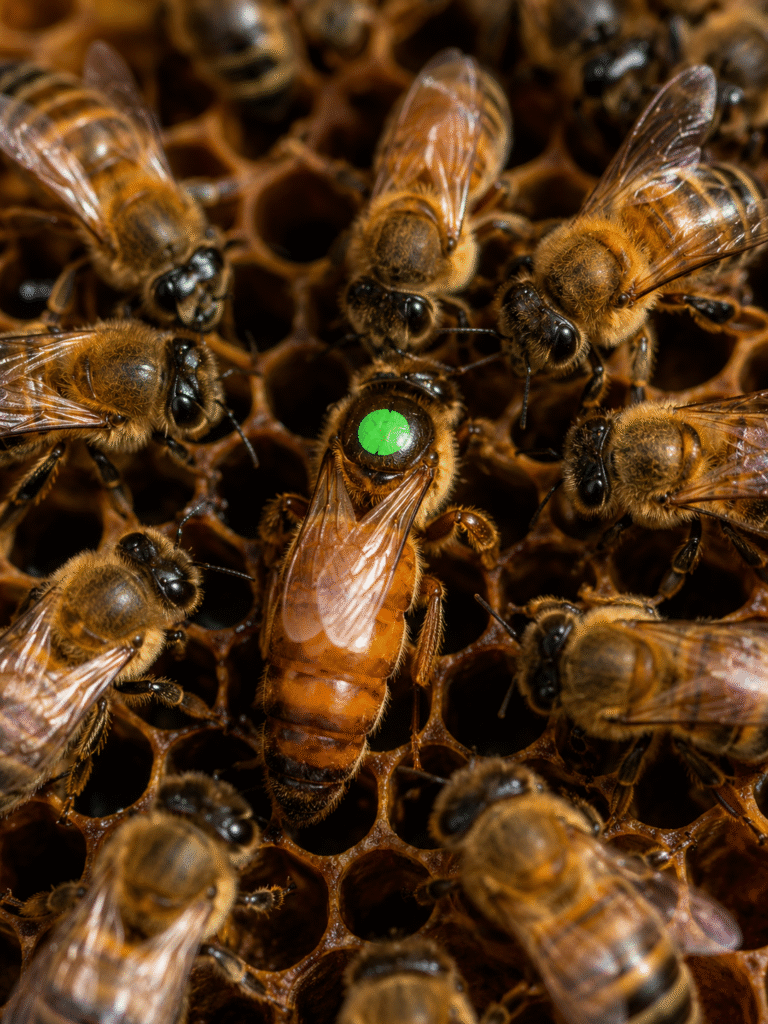
The first, published this March by researchers at the University of Vermont working with the USDA’s Beltsville Bee Research Lab, looked specifically at hygienic colonies — the same bee lines increasingly bred for their ability to detect and remove diseased or mite-infested brood — and asked whether that hygienic instinct extends to defending against Nosema at the individual level, not just the brood level. Their findings point to a dual-layer defense system: bees within hygienic colonies appear to mount stronger internal, physiological resistance to N. ceranae infection, on top of the social behaviors, ranging from simple avoidance to active aggression, that nestmates already direct at visibly sick colony members. That’s a meaningful finding for anyone choosing breeding stock. If you’re already selecting queens for VSH or general hygienic behavior to manage Varroa, you may be getting a Nosema-resistance benefit you didn’t know you were selecting for.
The second study, out of Taiwan and published in Frontiers in Insect Science this year, took a more treatment-focused angle, examining whether a plant-derived compound from Bidens pilosa — a common flowering weed used in traditional medicine across parts of Asia — could suppress N. ceranae gene expression in infected bees. It’s early-stage research, done in controlled lab conditions rather than open apiaries, but it’s part of a broader and genuinely useful shift in Nosema research: away from antibiotic treatments like fumagillin, which have become harder to source and raise their own resistance concerns, and toward phytogenic, plant-based interventions that could eventually give beekeepers another tool that doesn’t carry the same regulatory and residue baggage.
What This Means for Your Apiary
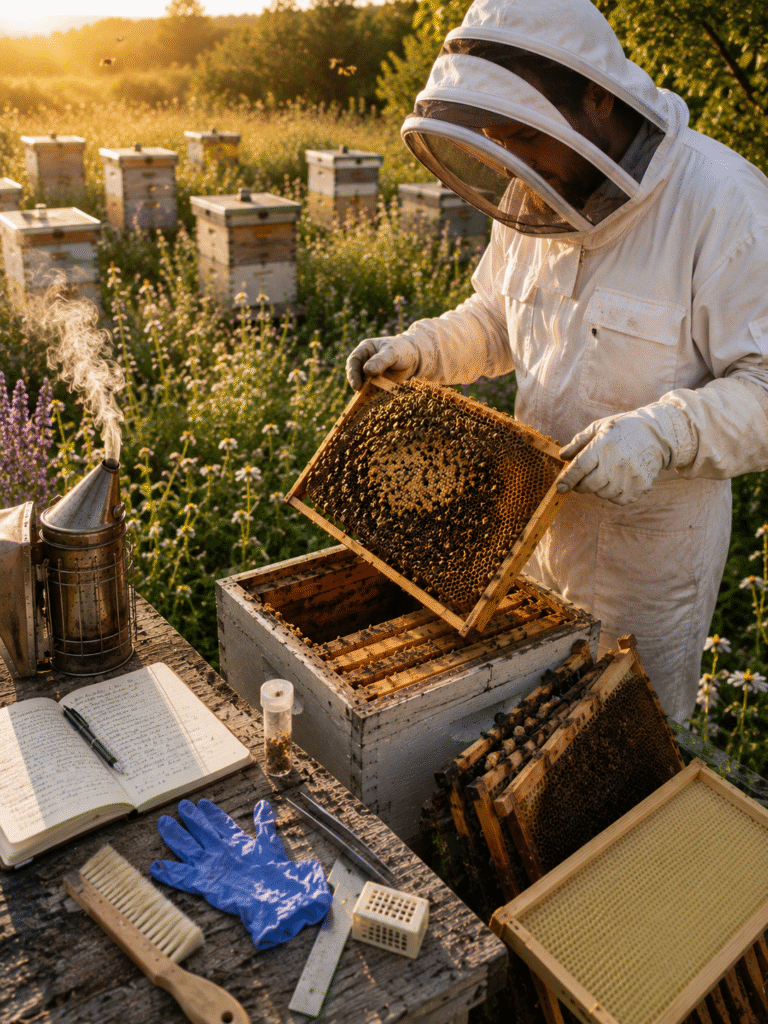
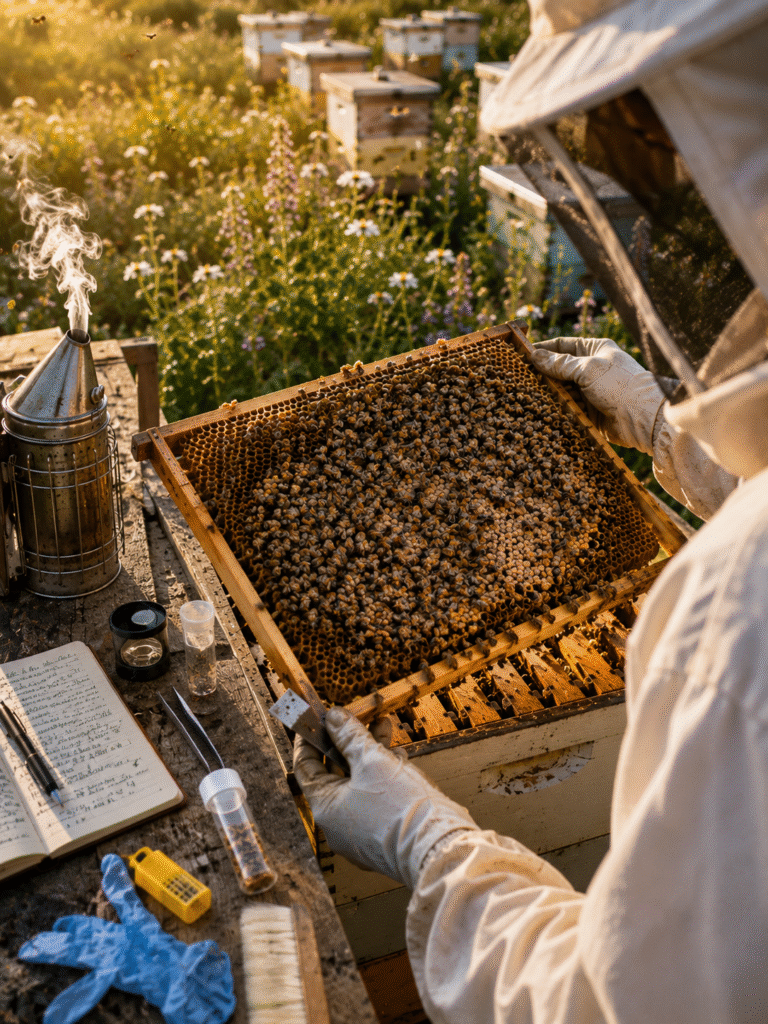
I’ll be straightforward about the practical takeaway, because I think a lot of Nosema advice online is vaguer than it needs to be. You cannot diagnose Nosema by looking at a frame. If you suspect it — unexplained weakness, poor spring buildup despite decent mite counts, a colony that just never seems to thrive — the only reliable confirmation is a lab test, typically spore counts done via microscopy on a sample of older forager bees, which many state apiary programs and university extension labs offer at low or no cost.
Beyond testing, the management basics that actually move the needle are unglamorous but effective: keep colonies strong and well-fed rather than stressed, since stress is what tips a low-level infection into a colony-level problem; rotate out old, dark comb periodically, since spores persist in comb and can reinfect a colony for years after the original outbreak; and avoid excessive drifting between hives in crowded apiaries, since drifting bees are one of the primary ways Nosema spreads between colonies that never directly share equipment. None of this is complicated. It’s just easy to skip, because Nosema doesn’t create the same urgency Varroa does. There’s no visible mite to count, no obvious deadline. That’s exactly the trap.
Frequently Asked Questions
What’s the difference between Nosema apis and Nosema ceranae?
N. apis typically causes visible dysentery and crawling bees, making it easier to spot during a hive inspection. N. ceranae usually shows no obvious symptoms and instead causes a quieter decline in colony strength, which makes it harder to diagnose without lab testing.
Can I see Nosema during a normal hive inspection?
Not reliably. Fecal staining can indicate N. apis, but N. ceranae often produces no visible signs at all. A microscopic spore count from a sample of forager bees is the only dependable diagnostic method.
Does treating for Varroa also help with Nosema?
Not directly, though colonies under less overall pest and disease pressure tend to handle Nosema better simply because they’re not managing multiple stressors at once.
Are hygienic bee lines more resistant to Nosema?
Recent 2026 research suggests hygienic colonies may have stronger individual-level physiological resistance to Nosema ceranae, in addition to their known social hygienic behaviors, though this remains an active area of study.
How does Nosema spread between colonies?
Primarily through drifting bees, shared or robbed food stores, and contaminated comb or equipment moved between hives.