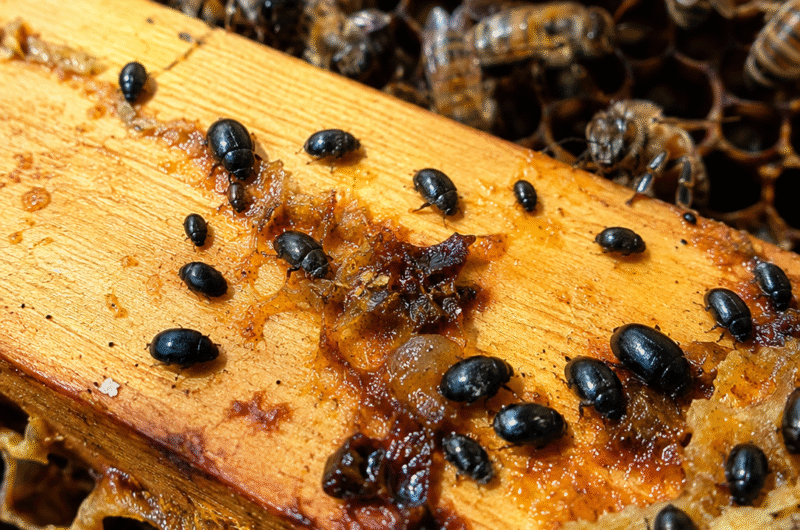

Every beekeeper I know can rattle off their Varroa count without blinking. Ask the same person about small hive beetle pressure in their yard, and you’ll usually get a shrug. That gap in attention is exactly why this beetle keeps winning.
A Beetle That Just Jumped 400 Kilometers
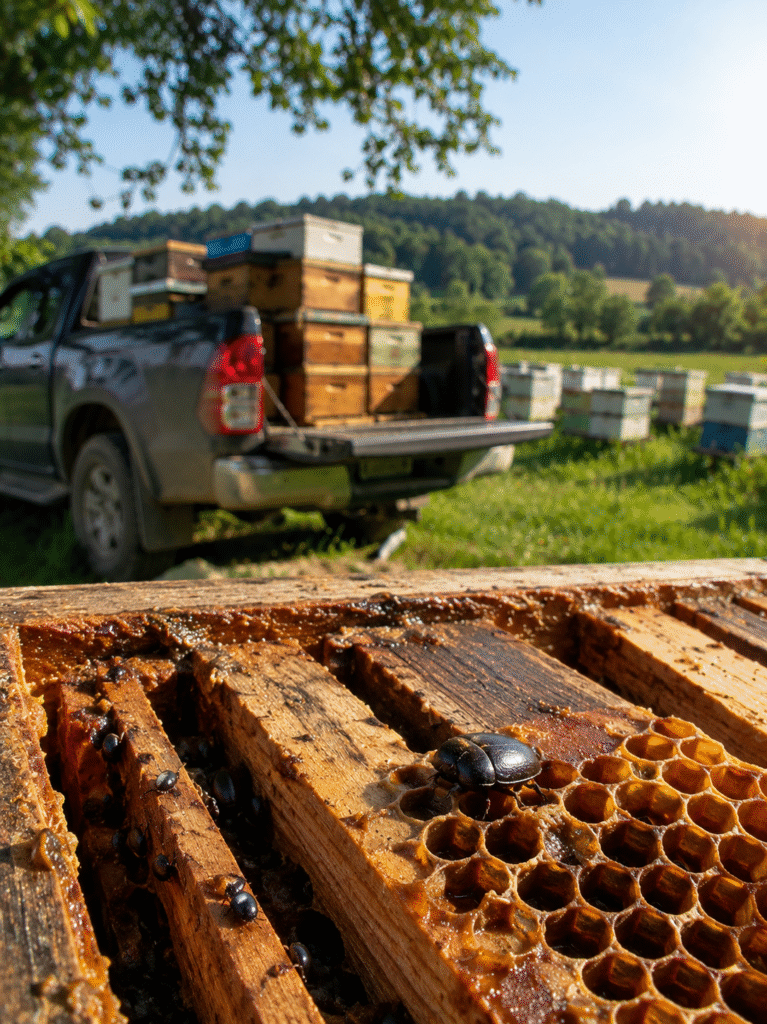
I want to start with something that happened this June, because it’s the clearest illustration I’ve seen of how this pest actually behaves. Italian authorities confirmed a small hive beetle detection in an apiary in Latina, in the Lazio region of central Italy — outside all previously affected areas of the south. The new site was more than 400 kilometers from the established infestation zone in Calabria, and inspectors reading the map concluded the jump pointed to long-distance movement of infested equipment or bees rather than the beetle simply spreading on its own wings. Wikipedia + 2
That detail is the whole story of small hive beetle in one sentence. This isn’t a pest that creeps outward from a single point like Varroa did. It hitchhikes — in nucs, in package bees, in a trunk full of “spare” supers somebody picked up secondhand at a swap meet. One infested load of equipment can put the beetle a full country away from where anyone was watching for it.
Why This Pest Deserves the Attention We Give Varroa
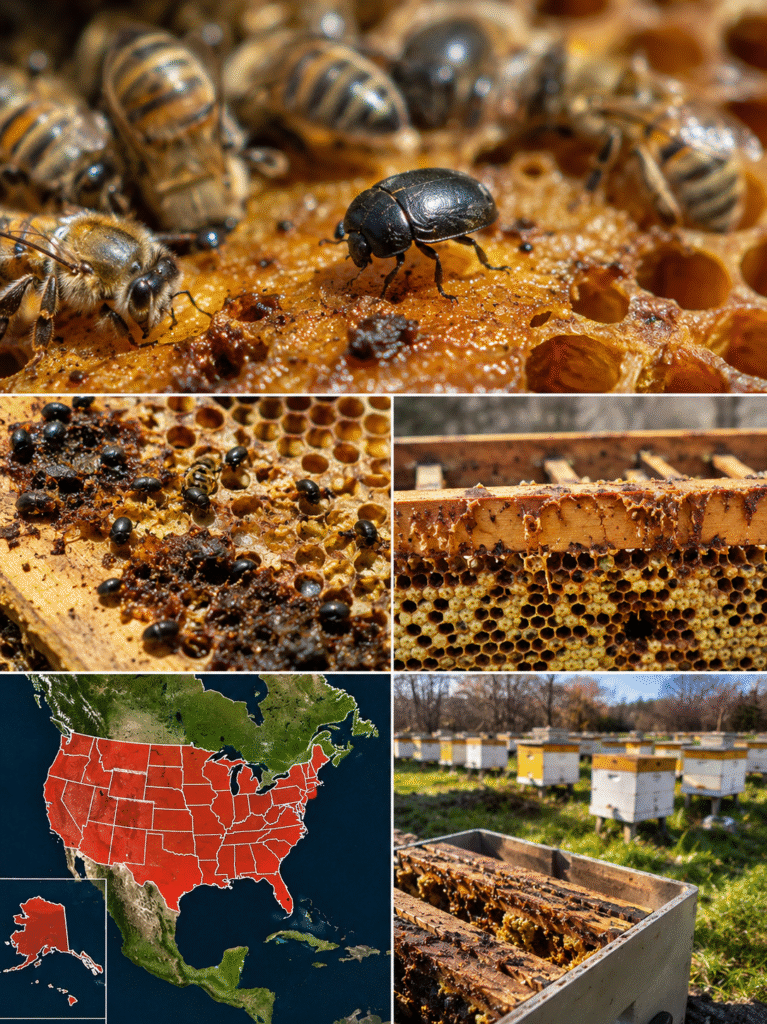
Small hive beetle, Aethina tumida, is native to sub-Saharan Africa, where the local bee subspecies evolved alongside it and mostly shrug it off. It’s a different story everywhere else. Since jumping continents, the beetle has established itself across North America, Australia, and the Philippines, and separately across much of continental Europe. European-derived honeybee colonies never built the behavioral defenses African colonies have, which is why an infestation that would be a minor nuisance in Kenya can devastate a European-heritage colony, damaging honey stores, pollen supplies, and even the comb itself. Beekeeper Cornernih
The U.S. experience is the cautionary tale worth knowing. The beetle was first detected near Charleston, South Carolina in 1996, and formally identified two years later in Fort Pierce, Florida. By the end of that first season, it had already been blamed for the loss of more than 20,000 honey bee colonies in Florida alone, with new occurrences reported the same year in Georgia and the Carolinas. Within a couple of decades, it had become established in every county of North Carolina and across most of the continental United States. That’s not a slow-burn pest. That’s an insect that can go from “unknown in this hemisphere” to “everywhere” inside a generation of beekeeping careers. Izsvenezie + 2
What You’re Actually Looking For
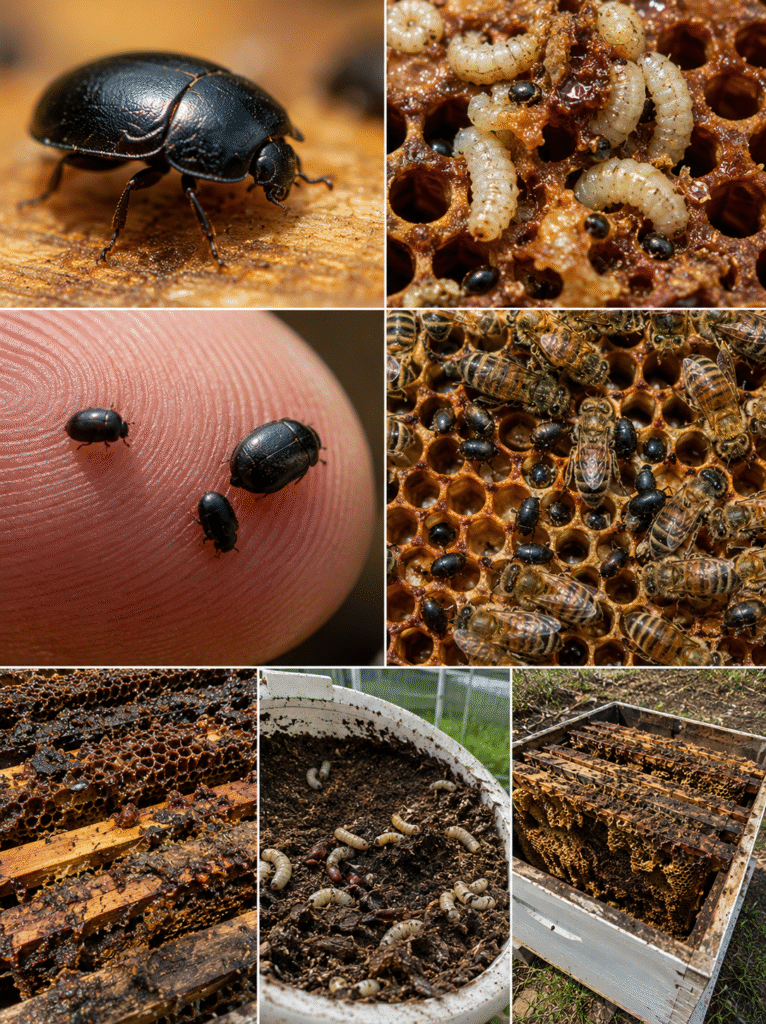
The adult beetle is small and easy to dismiss at a glance — roughly the size of a lentil, with a dark, shiny, oval-shaped body. If you’ve never specifically looked for one, you’ll walk right past it on an inspection, because it moves fast toward the darkest corner of the hive the second you crack the lid.
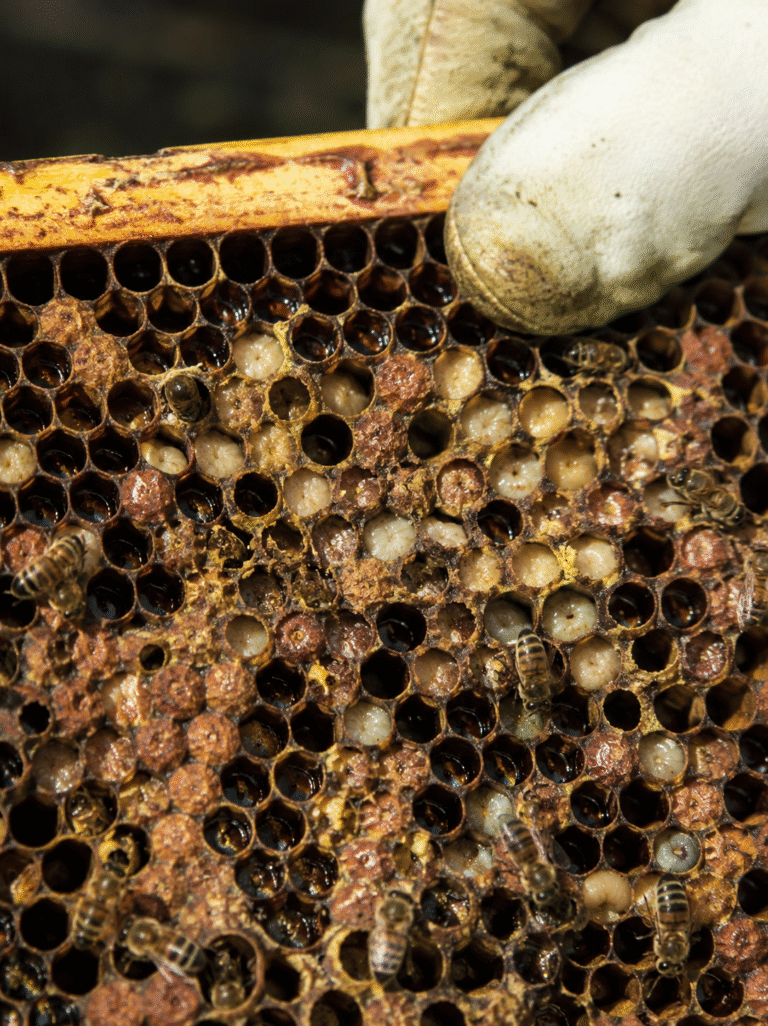
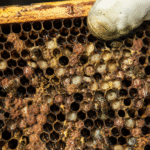
The larvae are the real damage engine, and this is the part beekeepers underestimate. Once the beetles get established, a mass reproduction event can see the larvae devour brood, stored pollen, and honey in numbers large enough to collapse the entire colony — not weaken it over a season the way Varroa does, but collapse it in a matter of weeks. I’ve walked into yards where a beekeeper found a strong colony reduced to a fermented, slimy mess of ruined comb in less time than it takes Varroa mite counts to double. nih
The life cycle explains the speed. From egg to adult, small hive beetle can complete a generation in roughly a month, with larvae hatching about a week to ten days after eggs are laid in comb cells or nearby debris, then feeding on brood and honey before pupating and re-emerging as adults to start the cycle again. Compare that to Varroa’s reproductive cycle tied tightly to brood cycles, and you can see why this beetle can go from “a few stragglers” to “colony-ending event” faster than most beekeepers check their hives. NC State Extension Publications
There’s also a wrinkle almost nobody accounts for: the larvae don’t need the hive to finish developing. Research has confirmed small hive beetle larvae can successfully pupate in greenhouse growing substrates, meaning an infestation isn’t necessarily contained to your beeyard soil. If you’re running colonies anywhere near commercial greenhouse pollination work, that’s a pathway worth knowing about. nih
Detection: Low-Tech, High Value
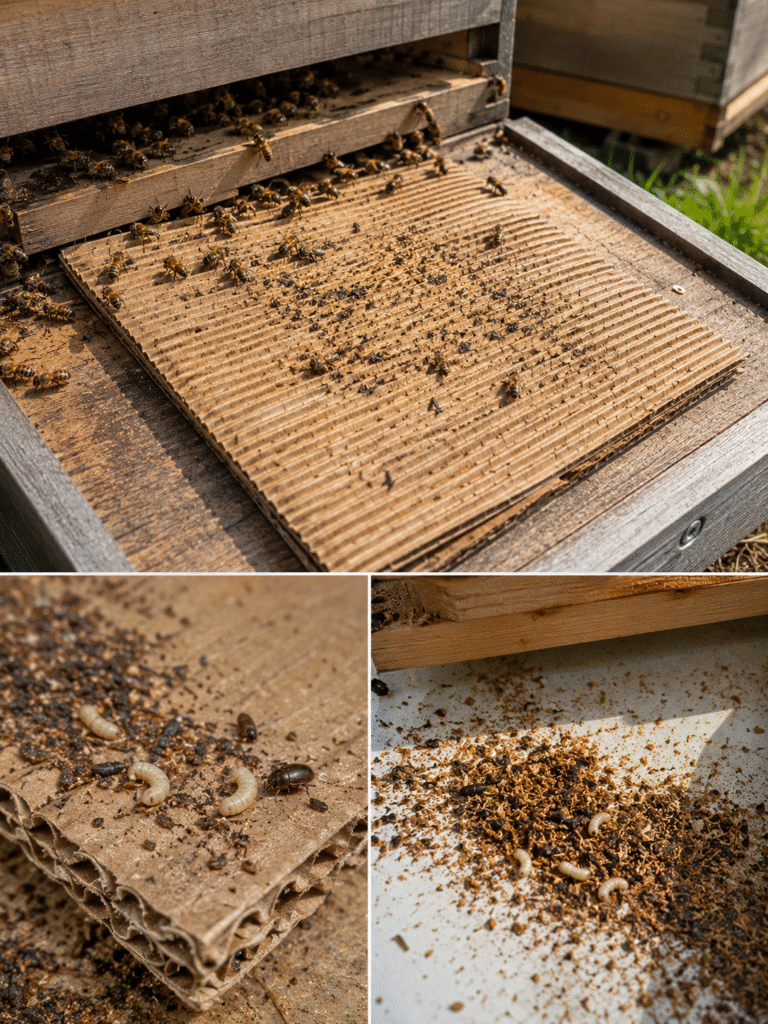
You don’t need lab equipment for this. The simplest field method I use and recommend to every beginner I mentor: lay a piece of corrugated cardboard on the hive’s bottom board — the fluted channels give beetles and larvae an appealing place to crawl and hide, which makes them far easier to spot on inspection than searching bare wood. Check it every two to three weeks during active season. It costs nothing and takes thirty seconds. nih
Beyond cardboard, look at your bottom board debris for small, white, worm-like larvae fleeing light when you open the hive — that’s usually your first real warning sign, well before you’d see comb damage with the naked eye.
Control That Actually Works
There’s no single silver bullet here, and anyone who tells you otherwise is selling something. What actually moves the needle is layered:
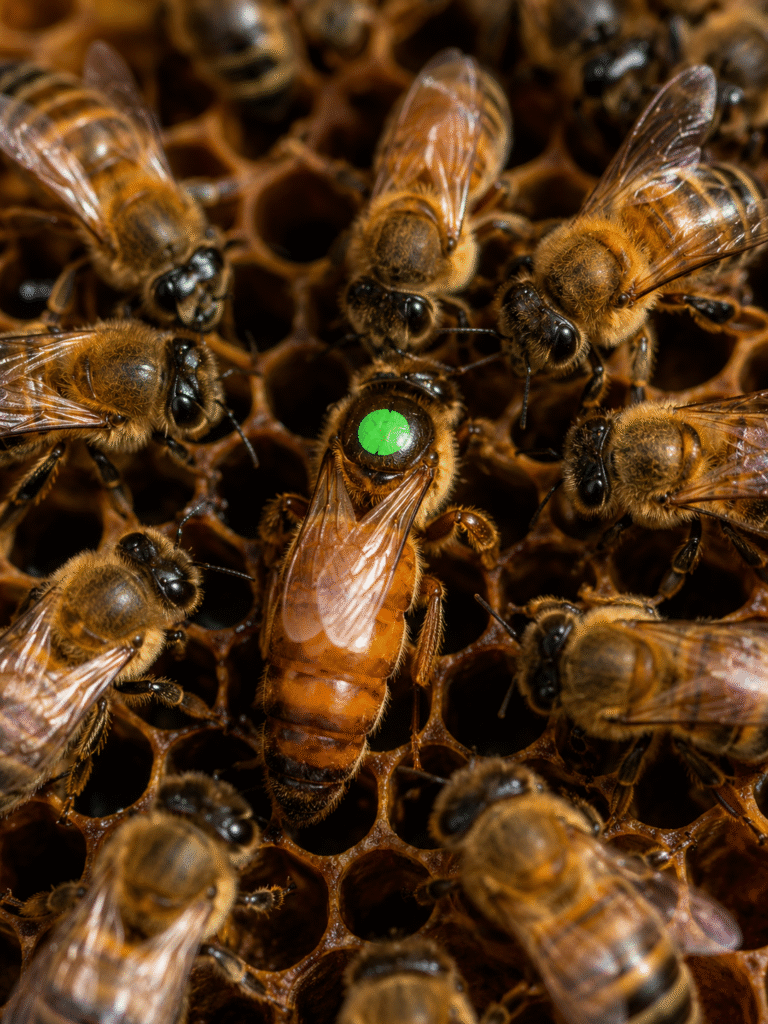
Keep colonies strong. A booming, well-populated colony can physically corral small numbers of beetles into corners and guard them there, starving them out. Weak or queenless colonies get overrun fastest — this is the single biggest predictor of a bad outcome I’ve seen in the field.
Use in-hive beetle traps. Oil-filled or diatomaceous-earth traps placed between frames catch adults as they flee light and fall through the trap mechanism. They won’t stop an infestation outright, but they meaningfully suppress the adult population feeding the next generation.
Treat the ground, not just the hive. Beetle larvae leave the hive to pupate in soil near the colony — this is a step people forget entirely. Drenching the soil immediately around hive stands with an approved soil drench during peak season interrupts the part of the life cycle that happens outside the box.
Quarantine incoming equipment and nucs. Given how the Italian jump happened, this is the single highest-leverage habit you can build. Any used equipment, any purchased nuc, any package from an unfamiliar supplier should sit isolated and monitored before it joins your main yard.
Harvest and extract promptly. Don’t leave supers stacked in a warm room waiting to be extracted. Beetle larvae can complete their damage in stored, unextracted comb just as easily as in the hive.
The Real Takeaway
Varroa gets the beekeeping world’s full attention because it’s slow, visible, and countable — you can literally put a number on your mite load and watch it trend. Small hive beetle doesn’t offer that comfort. It’s a pest that rewards vigilance you can’t quantify with a single count, and punishes the beekeepers who assume “I haven’t seen one yet” means “I don’t have a problem yet.”
If there’s one habit I’d ask every beekeeper reading this to adopt by next inspection, it’s the cardboard trick. It’s free, it takes less time than checking your phone, and it’s the difference between catching this pest at “a few stragglers” and finding it at “collapsed colony.”
Frequently Asked Questions
What does a small hive beetle look like compared to other hive pests?
Adults are roughly lentil-sized, dark brown to black, shiny, and oval-shaped — noticeably larger and faster-moving than Varroa mites, and they actively flee toward dark corners when the hive is opened.
How fast can small hive beetle destroy a colony?
Under a mass reproduction event, a colony can go from apparently healthy to collapsed within weeks, far faster than the seasonal decline typical of a Varroa infestation.
Can small hive beetle be eliminated completely once established in a region?
Realistically, no — once established regionally, the goal shifts from eradication to suppression and colony-level management, similar to how Varroa is managed rather than eliminated.
Does freezing or extracting honey kill hive beetle larvae?
Prompt extraction limits larval feeding time in stored comb, but it doesn’t address the soil-based pupation stage, which is why ground treatment near hive stands matters as much as in-hive control.