
A beekeeper explains the real science behind crystallized honey, why it’s not a sign of fake or spoiled honey, and the right way to bring it back to liquid without destroying it.
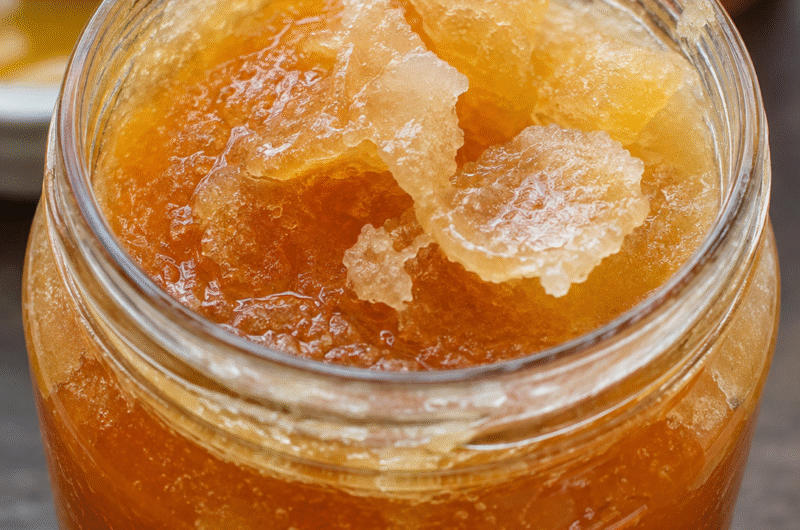
My mother-in-law called me in a small panic last winter. She’d opened a jar of honey she’d bought from a roadside stand in autumn, and instead of the golden syrup she remembered pouring over her toast, she found something closer to wet sugar — pale, grainy, and stuck to the bottom of the jar like cement. Her first instinct was that she’d been sold a fake. Her second was to throw it out.
I told her to do neither.
This conversation happens more than you’d think, and not just with people who buy honey occasionally. I’ve had beginner beekeepers bring me jars from their own hives, convinced something had gone wrong with their bees, when really the only thing that had “gone wrong” was time and temperature doing exactly what they always do to real honey.
It’s Not Spoiling. It’s Doing What Sugar Does.
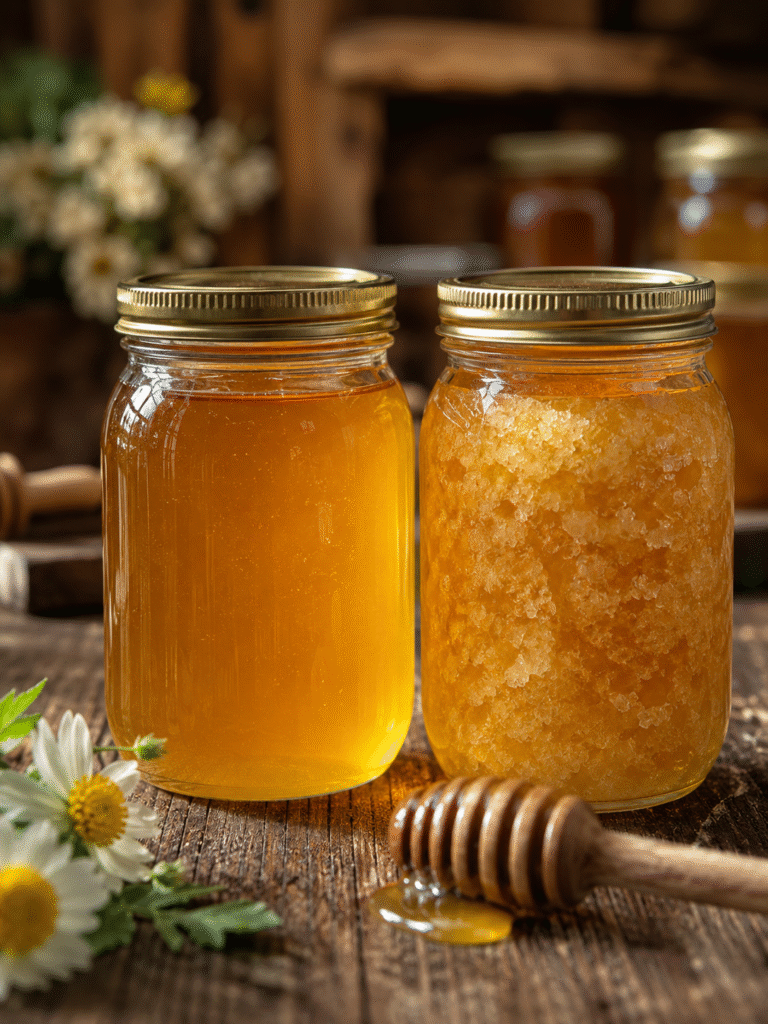
Honey is, chemically speaking, a supersaturated sugar solution. That phrase sounds clinical, but it explains everything. A typical jar of honey holds roughly 30-35% glucose, 35-40% fructose, a smaller share of other sugars, and around 17-18% water — way more sugar than that small amount of water should be able to hold in solution under normal conditions. It only stays liquid because the sugar molecules are, for the moment, evenly dispersed and behaving themselves.
Glucose is the troublemaker here. It’s less soluble than fructose, and given enough time, individual glucose molecules start finding each other, linking up, and forming tiny crystal seeds. Once a few crystals form, they act like scaffolding — more glucose molecules attach to them, the crystals grow, and eventually you get that grainy, semi-solid texture sitting in your cupboard.
What surprises people is how predictable this is once you know the glucose-to-fructose ratio of a particular honey. I’ve kept side-by-side jars from the same apiary, harvested on the same day, where one crystallized within six weeks and the other stayed liquid for the better part of a year — and the only real difference was the nectar source the bees had been working.
The Floral Source Tells You More Than the Label Does
This is where beekeeping experience actually matters, because no amount of reading replaces watching dozens of harvests crystallize at different rates and learning to connect the texture back to the bloom.
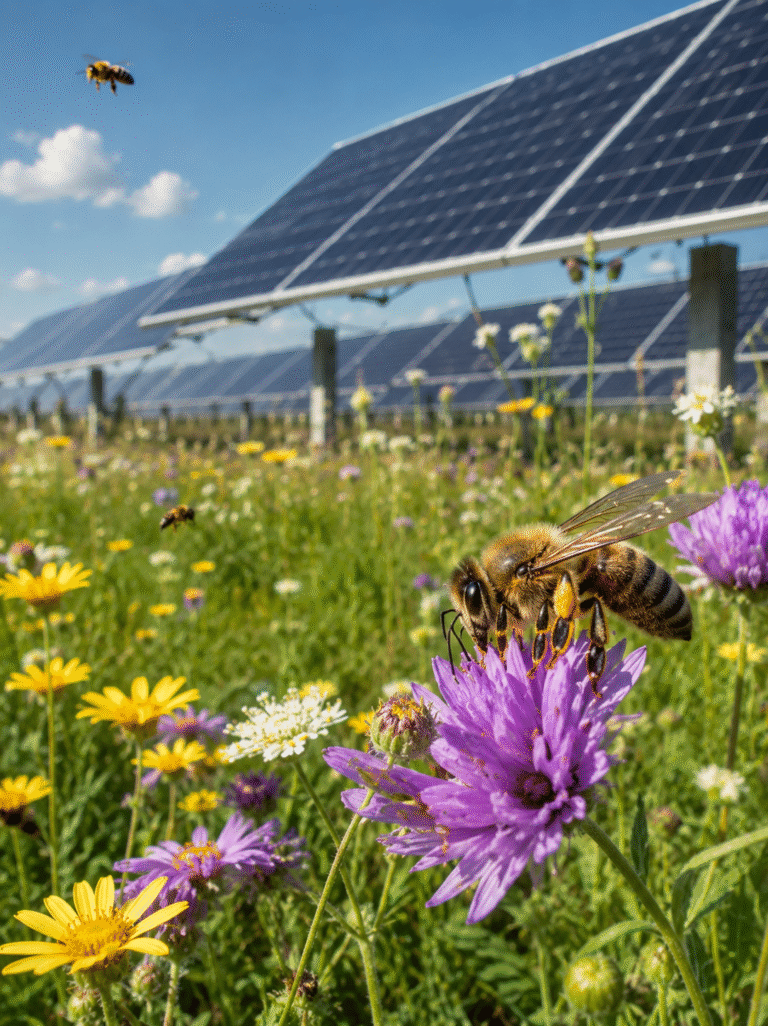
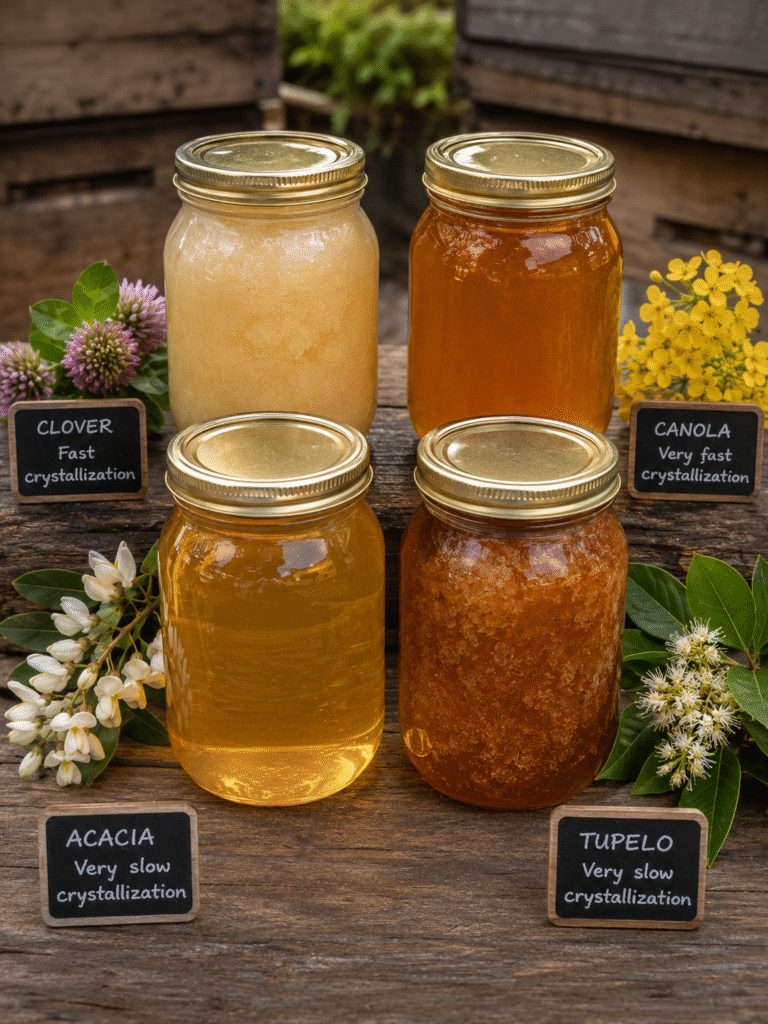
Clover and dandelion honey, both high in glucose relative to fructose, crystallize fast — often within a month or two of extraction. Canola and mustard honey are notorious among commercial beekeepers for going solid in the comb itself if it isn’t extracted promptly, which is exactly why oilseed-rape beekeepers in the UK and Canada extract on a tight schedule rather than waiting for a “full” super.
On the other end, tupelo honey from the American Southeast and acacia honey from parts of Europe are fructose-dominant and can stay liquid for two years or longer at room temperature. I’ve had a jar of acacia honey from a beekeeping conference sit on my shelf for nineteen months without a single grain forming.
So when someone insists that crystallization proves a honey is “fake” or adulterated, I usually ask what flowers were blooming when it was harvested — because nine times out of ten, the answer explains the texture far better than any accusation of fraud would.
Temperature Is the Variable Most People Get Backwards
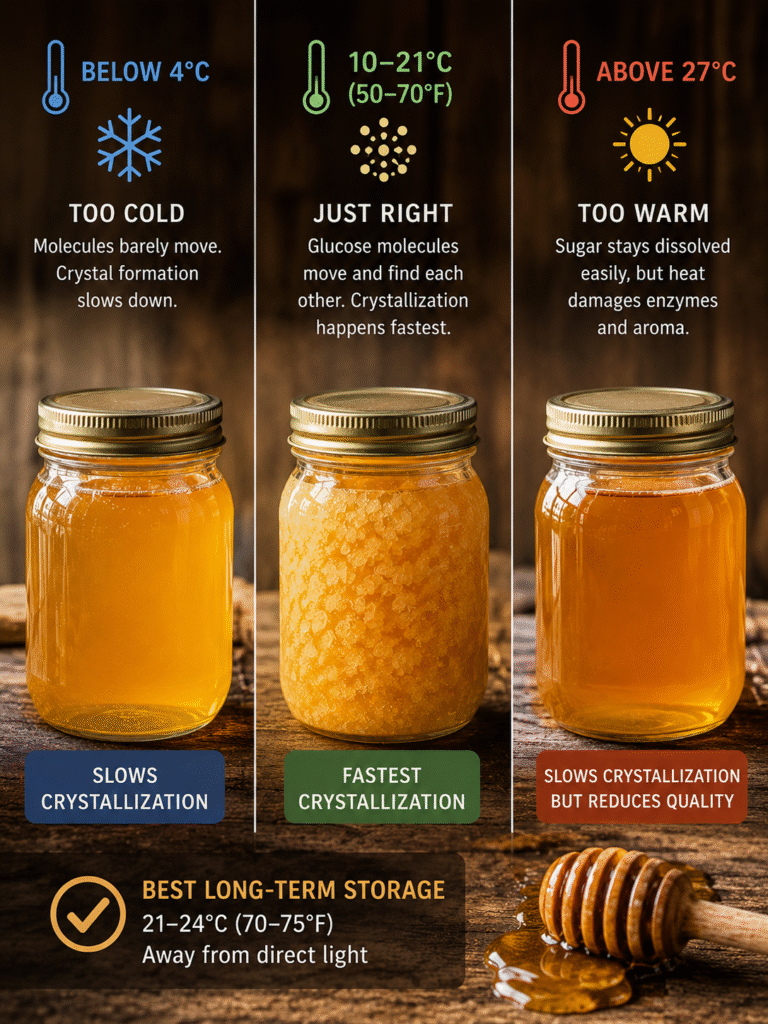
Here’s something that trips up even experienced hobbyists: the temperature range where crystallization happens fastest isn’t the freezer, and it isn’t a hot kitchen counter either. It’s roughly 10-21°C (50-70°F) — exactly the temperature most people consider “cool room temperature” for storage.
That range gives glucose molecules enough mobility to move around and find each other, but not so much that they stay dissolved. Store honey somewhere genuinely cold (below 4°C) and the molecules barely move, which slows crystal formation. Store it warm (above 27°C) and the sugar stays dissolved more easily, though warmth brings its own tradeoff — it accelerates the breakdown of beneficial enzymes and aromatic compounds that give raw honey its character.
This is the part most “storage tip” articles skip entirely: the safest long-term storage temperature for preserving both texture and quality is actually a notch above where most people keep it, somewhere around 21-24°C, away from direct light. Counterintuitive, but it’s borne out by both commercial packer practice and what I’ve observed running my own stock through a full Moroccan summer and winter cycle.
Bringing It Back Without Ruining It
The standard advice — set the jar in warm water — is correct, but the details people skip are where the damage happens.
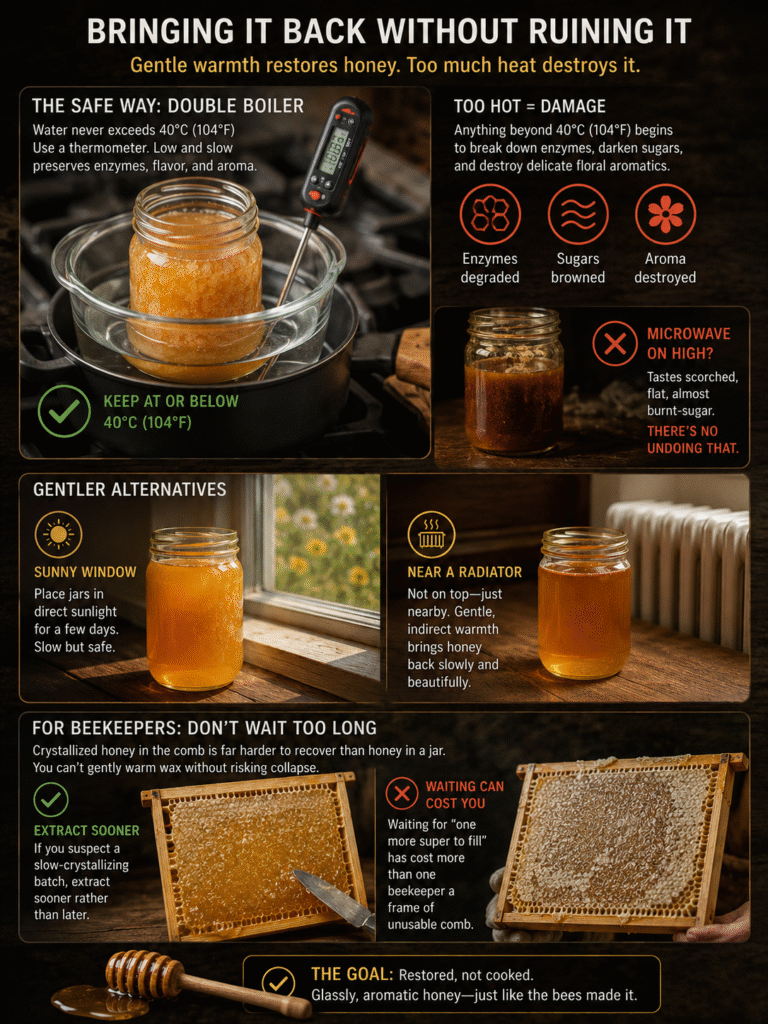
I use a double-boiler approach with water that never exceeds about 40°C (104°F), checking it with a kitchen thermometer rather than guessing. Anything beyond that starts degrading the enzyme invertase, browning the sugars (the same Maillard-type reaction that darkens caramel), and quietly destroying the floral aromatics that took the bees weeks to concentrate. I’ve tasted “rescued” honey that was microwaved on high for two minutes — it tastes scorched, flat, almost burnt-sugar. There’s no undoing that.
A gentler method I’ve come to prefer for smaller jars: leave them in a sunny window or near (not on top of) a radiator for a few days. It’s slower, but the honey comes back glassy and full-flavored rather than cooked.
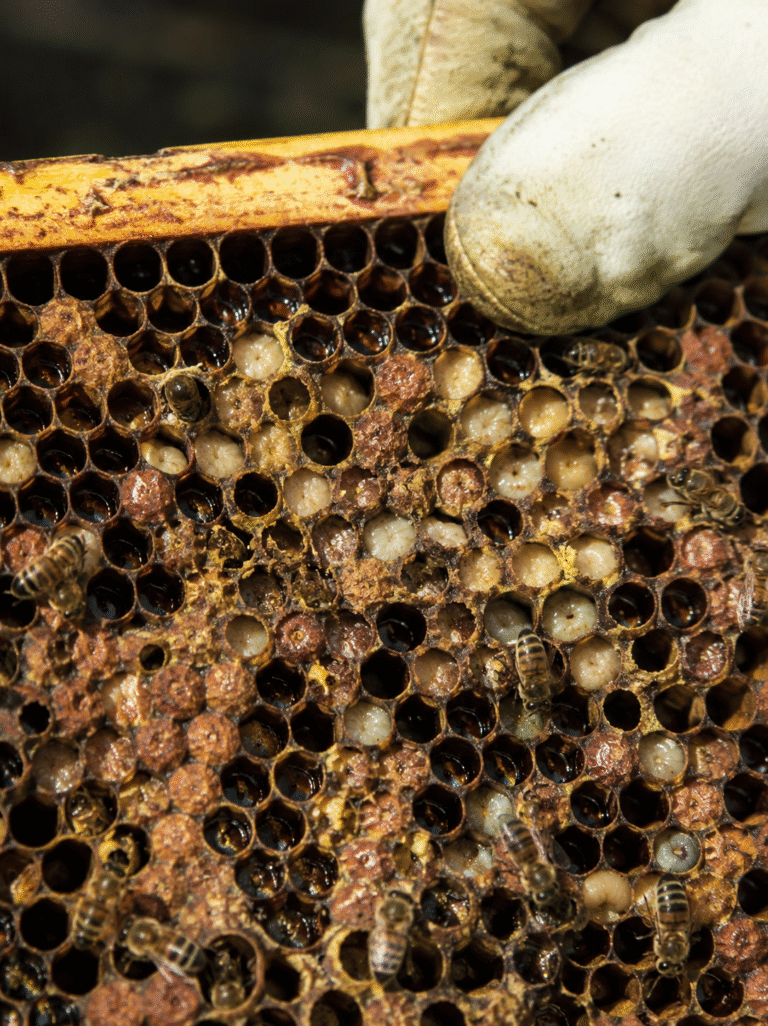
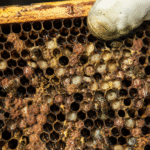
One detail worth knowing if you keep bees yourself: crystallized honey left in the comb is far harder to recover than honey in a jar, because you can’t gently warm wax the same way without risking collapse. If you suspect a slow-crystallizing batch, extract sooner rather than later — waiting for “one more super to fill” has cost more than one beekeeper a frame of unusable comb.
Why This Actually Matters Beyond the Kitchen
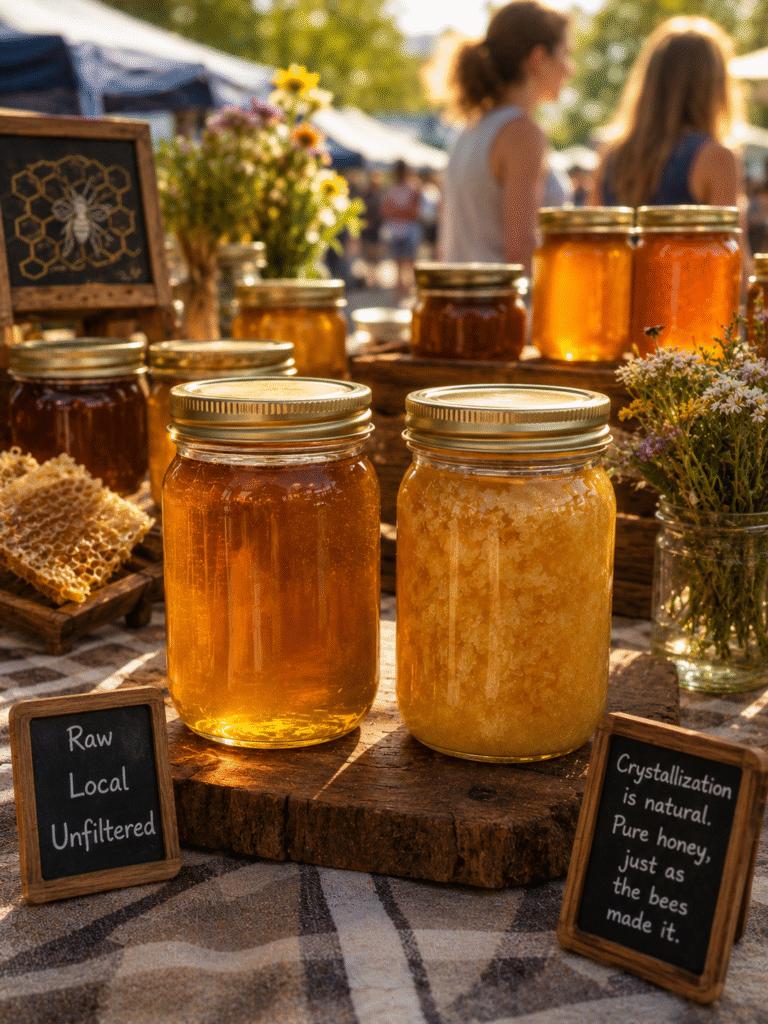
This isn’t just a kitchen curiosity. Crystallization confusion has real consequences for small honey producers. I’ve spoken with beekeepers selling at farmers’ markets who’ve had loyal customers quietly switch to a competitor’s honey simply because their batch crystallized in the off-season and the customer assumed something had gone wrong. Meanwhile, the honey that customer switched to may have been ultra-filtered specifically to delay crystallization for shelf appeal — a process that strips out pollen and some of the very qualities that make raw honey worth buying in the first place.
In other words, the honey that never crystallizes is sometimes the one that’s been processed the most, not the one that’s purest. That’s the opposite of what most consumers assume, and it’s a detail I wish more sellers explained at the point of sale instead of letting a grainy jar quietly cost them a customer.
The Takeaway
Crystallization is honey behaving exactly as a natural, minimally processed product should. It tells you something true about the flowers your bees visited and the conditions the jar has lived through since — not that you were cheated, and not that anything has spoiled. Warm it gently if you want it liquid again, or do what I usually do: spread it on toast exactly as it is. Crystallized honey has a texture almost like soft fudge, and once you stop expecting syrup, it’s genuinely good eating.
Have you noticed certain honeys in your own kitchen crystallize faster than others? It usually comes down to where your bees — or your local producer’s bees — were foraging that season.