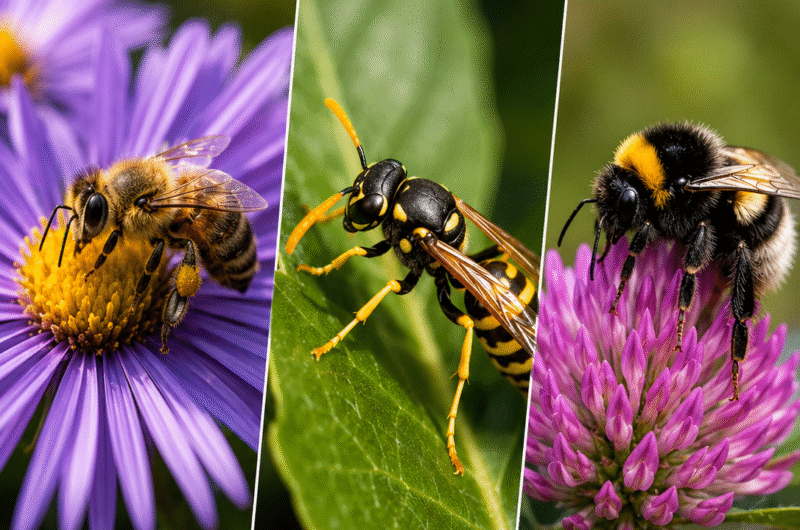

Confused between honey bees, wasps, and bumblebees? A 20-year beekeeper breaks down the real differences in looks, behavior, and risk — with field-tested tips.
A neighbor knocked on my door a few summers back holding her phone out like evidence in a trial. “Is this one of yours?” she asked, showing me a photo of something fuzzy and black-and-yellow hovering near her porch light. It wasn’t. It was a bumblebee, not even closely related to anything living in my hives a few hundred yards away, and definitely not the thing that had apparently stung her son the week before — that one, going by her description, was almost certainly a yellowjacket wasp.
This happens more than people realize, and it happens to smart, observant people too. I’ve had this same basic conversation with gardeners, parents, exterminators, and once with a county park ranger who genuinely should have known better. The three insects get lumped together in everyday conversation as “stinging bugs,” and that’s a shame, because they’re biologically distinct, behave completely differently, and matter to a beekeeper — or to anyone managing a yard — in very different ways.
Why This Mix-Up Actually Matters
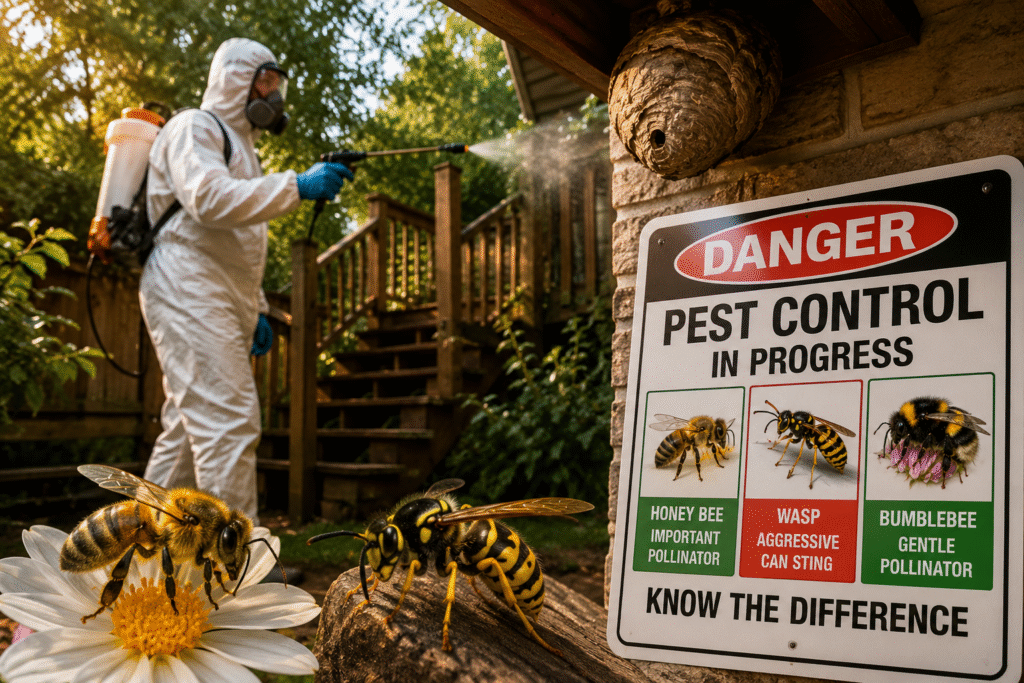
Before getting into identification, it’s worth being honest about why this confusion isn’t just trivial. Honey bees are in genuine, well-documented decline and serve as essential pollinators for a huge share of global food crops. Wasps, particularly yellowjackets, are aggressive predators that provide some ecological pest control but pose a real sting risk, especially in late summer when their colonies peak in size. Bumblebees sit somewhere in between — vital pollinators, mostly docile, but increasingly rare in many regions due to habitat loss.
When someone calls an exterminator to deal with “bees” near their deck, and that exterminator sprays a bumblebee nest or a feral honey bee colony instead of a wasp nest, the wrong species pays the price for a problem they didn’t cause. I’ve watched this happen more than once, and it’s one of the more avoidable tragedies in the pest control world — avoidable, that is, if people knew what they were actually looking at.
Honey Bees: The One Most People Picture First
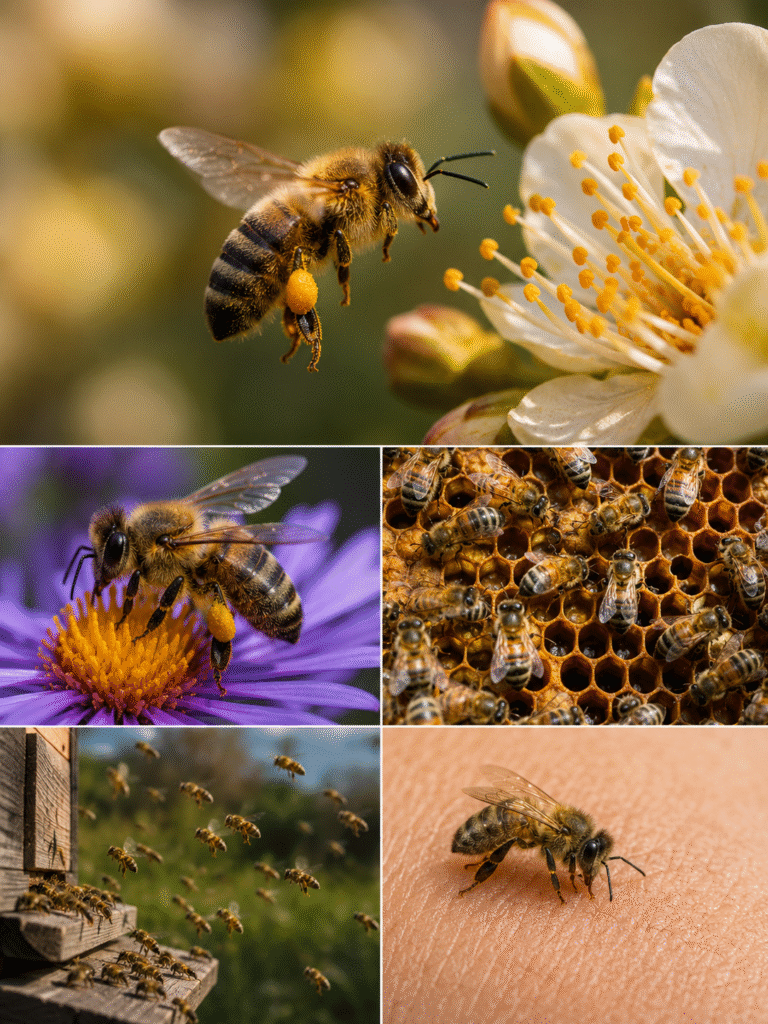
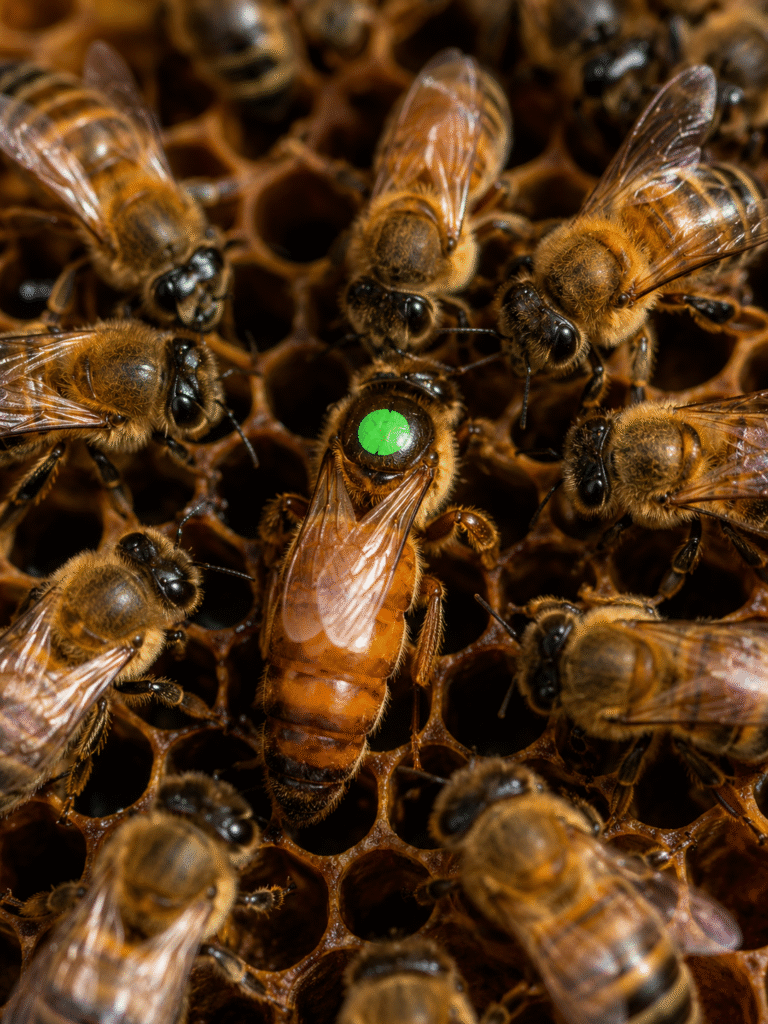
Honey bees are roughly the size of a grain of rice to slightly larger, fuzzy-bodied, with a golden-brown and black striped abdomen that’s softer and less glossy than a wasp’s. The fuzziness isn’t incidental — it’s functional. Those hairs are what let honey bees collect pollen efficiently, and if you look closely at a foraging worker, you’ll often see visible pollen packed onto her hind legs in little colored clumps, sometimes yellow, sometimes a surprising shade of orange or even blue depending on what she’s been visiting.
Here’s something most identification guides skip entirely, and it’s one of the most reliable field markers I use: honey bees almost never show interest in your sandwich, your soda, or your trash can. They’re nectar and pollen specialists. If something is aggressively investigating your picnic, hovering near a soda can, or crawling around an open trash bin, you are almost certainly not looking at a honey bee, regardless of how similar the coloring looks at a glance.
Behaviorally, honey bees are defensive, not predatory. They sting to protect the colony when they perceive a direct threat, and a honey bee worker can only sting once — she dies shortly after, since her barbed stinger tears free from her body along with part of her abdomen. That single-use sting mechanism is actually a useful identifying clue after the fact, if you’re trying to figure out retroactively what stung you: a honey bee sting typically leaves the stinger embedded in the skin, looking like a tiny dark splinter, which a wasp sting never does.
What beekeepers notice that most people don’t: A healthy honey bee colony has a distinct, fairly consistent flight pattern around the hive entrance — workers leaving heavily loaded with pollen in the morning, returning steadily throughout the day, with very little erratic or aggressive movement unless the colony is actually disturbed. Wasp nests, by contrast, tend to show much more chaotic, fast, darting flight near the entrance, even when nobody’s bothering them.
Wasps: Smooth, Fast, and Built Differently
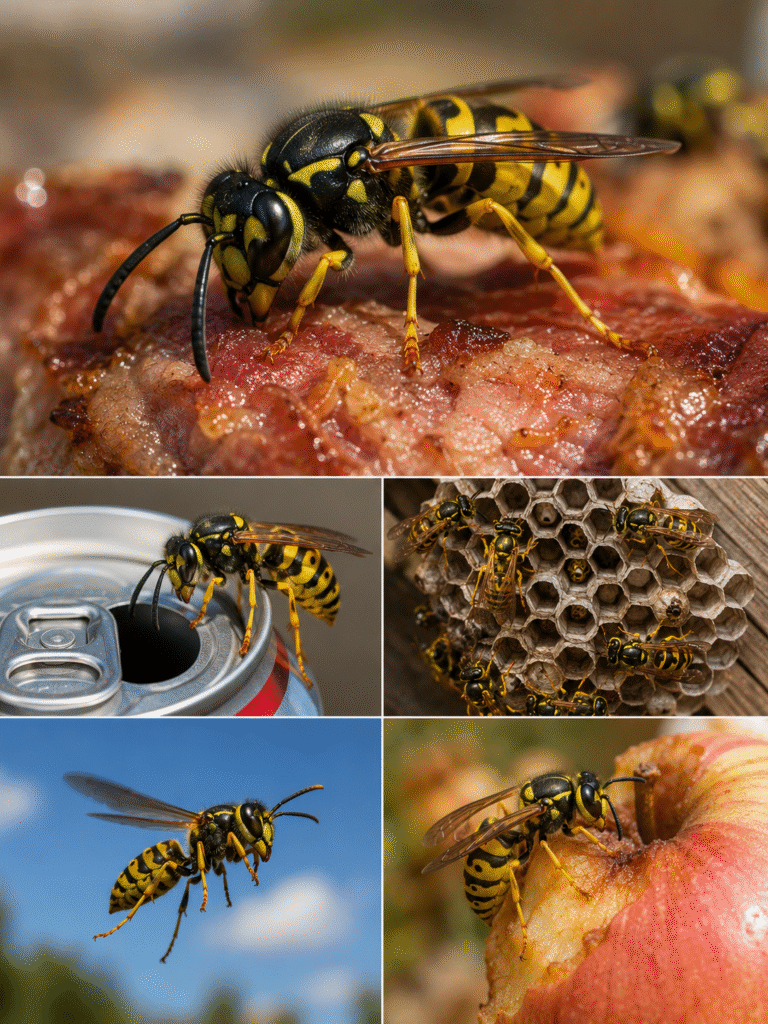
Wasps — and I’m grouping yellowjackets, paper wasps, and hornets loosely here since the general distinguishing principles overlap — look noticeably different once you know what to check. Their bodies are smooth and shiny rather than fuzzy, with a narrow, pinched waist connecting the thorax to the abdomen that gives them a slimmer, more streamlined silhouette than a honey bee’s rounder shape. Coloring varies by species, but yellowjackets in particular tend toward a brighter, more vivid yellow-and-black pattern with sharper, more defined stripe edges compared to a honey bee’s softer, more blended coloring.
Behaviorally, this is where the real differences show up, and where I think most identification confusion actually gets resolved fastest. Wasps are predatory and omnivorous. They hunt other insects, and they’re drawn to protein and sugar sources humans leave lying around — meat at a barbecue, soda, fallen fruit, open trash. If you’ve ever had a persistent, aggressive insect harassing you at an outdoor meal specifically, refusing to leave your food alone, that’s almost certainly a wasp, not a bee.
Unlike honey bees, wasps can sting multiple times. Their stinger isn’t barbed the same way, so it doesn’t get left behind, which means a single aggravated wasp can deliver repeated stings in one encounter. This matters practically: if you’re stung once and the insect immediately flies off and dies, or you find a stinger left in your skin, you were likely dealing with a honey bee. If you’re stung multiple times by what appears to be the same insect in rapid succession, that points firmly toward wasp behavior instead.
A seasonal note experienced beekeepers track closely: Wasp aggression spikes noticeably in late summer and early fall, once their colonies have reached peak population and their own food sources start drying up. This is exactly the period when wasp-related stings climb sharply, and it’s also, unfortunately, when more people start blaming bees for problems that are actually wasps looking for sugar at the end of their colony’s season.
Bumblebees: Big, Loud, and Mostly Harmless
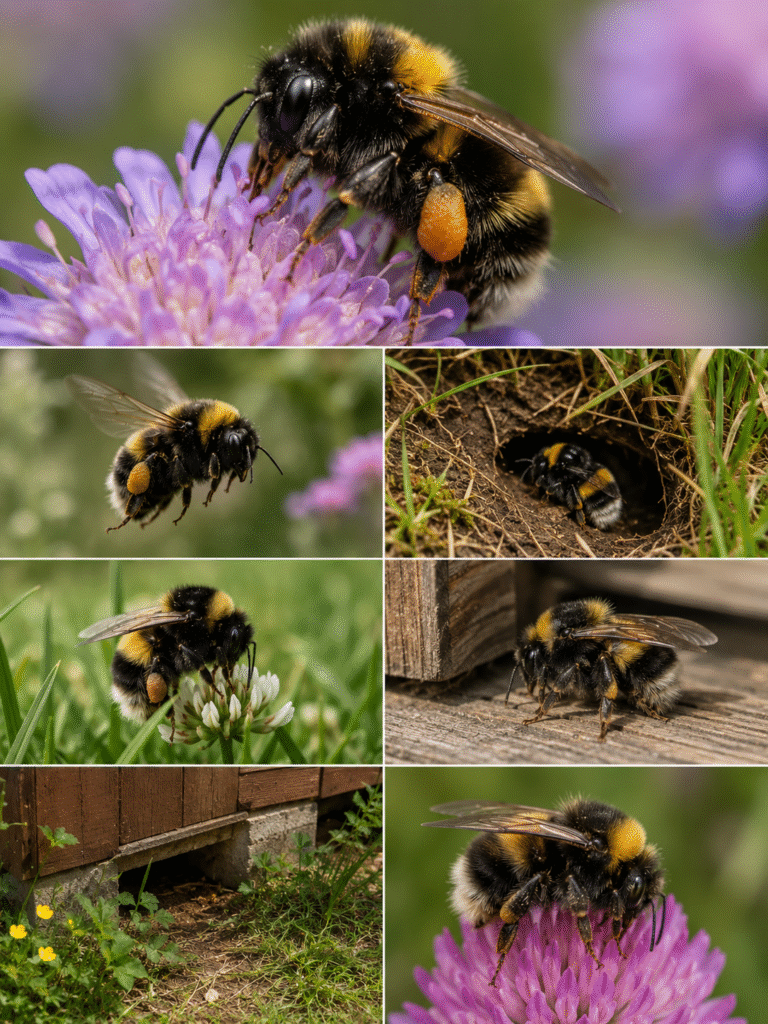
Bumblebees are the easiest of the three to identify once you’ve actually seen one up close, mostly because of sheer size and fuzziness. They’re noticeably larger and rounder than honey bees, often appearing almost comically plump, covered in dense fuzz that can range from classic black-and-yellow to, depending on species and region, patches of orange, white, or even red toward the tail end.
Their flight is loud — that low, droning buzz is distinctive once you’ve learned to recognize it — and surprisingly clumsy-looking compared to the more efficient, purposeful flight of a foraging honey bee. Bumblebees tend to nest in small colonies, often in the ground, in abandoned rodent burrows, under sheds, or in dense grass clumps, rather than in the large, organized comb structures honey bees build.
Temperamentally, bumblebees are generally the calmest of the three. They’re not naturally aggressive and will typically only sting if directly handled, stepped on, or if their nest is physically disturbed. Like wasps, they can sting more than once, since their stinger also isn’t barbed in the way a honey bee’s is, but in practice, bumblebee stings are relatively rare precisely because the insects themselves are so unbothered by human presence most of the time.
What this means practically: if you find a bumblebee nest under your shed or in a corner of your yard, the responsible move in most cases is simply to leave it alone. Bumblebee colonies are seasonal, typically dying off naturally by autumn except for new queens who overwinter elsewhere, and they’re far too valuable as pollinators — and increasingly too rare in many regions — to treat as a pest problem on the same level as a wasp nest near a doorway.
What Beekeepers Actually Watch For Each Season
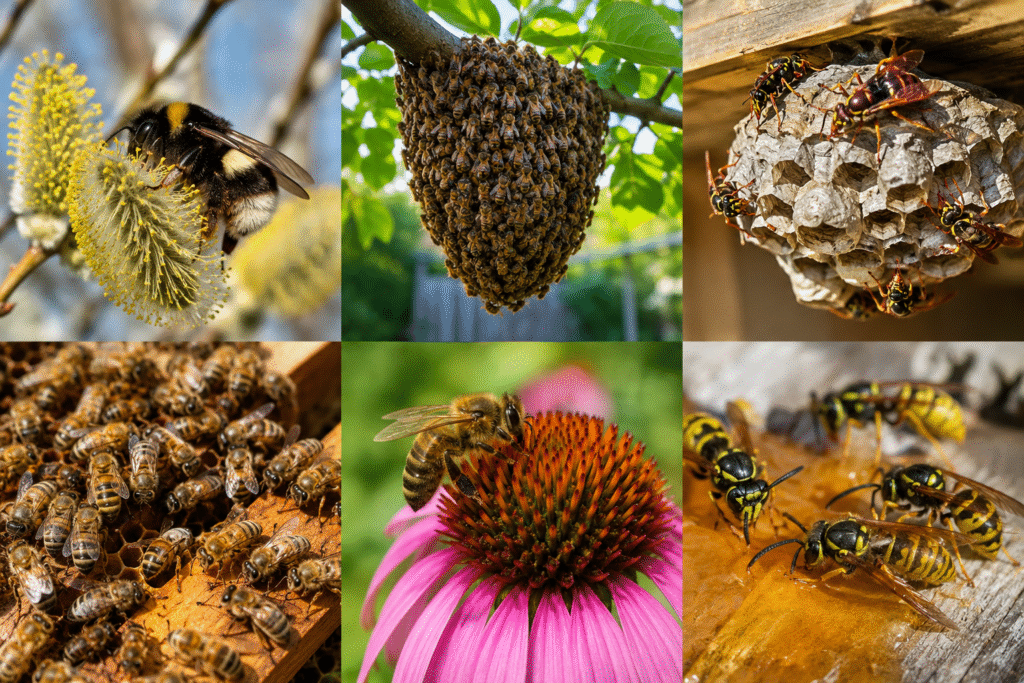
Spring is when misidentification peaks, in my experience. Overwintered bumblebee queens emerge early, looking large and a little disoriented as they search for nesting sites, and they get reported as “giant bees” with alarming frequency. Early honey bee swarms, meanwhile, get mistaken for aggressive wasp activity simply because a swarm in flight — thousands of bees moving together — looks dramatic even though swarming bees are, counterintuitively, some of the calmest bees you’ll ever encounter, since they have no hive or brood to defend yet.
By midsummer, the confusion shifts. This is when wasp colonies are building toward their peak, honey bee colonies are at full foraging strength, and bumblebee activity is steady but unremarkable. Late summer brings the wasp aggression spike I mentioned earlier, right as honey bee colonies are also defending themselves more actively against robbing attempts from other colonies and, yes, sometimes from wasps themselves trying to steal honey stores.
Expert Analysis: Why Getting This Right Has Real Consequences
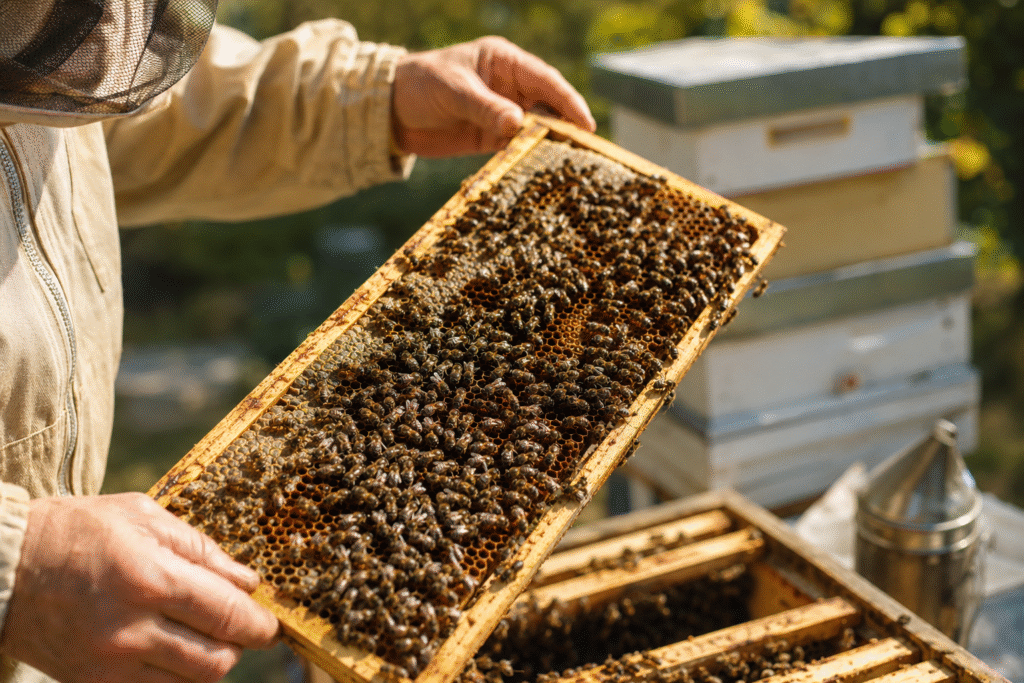
For hobbyist beekeepers, correctly identifying what’s actually causing a problem in a neighbor’s yard isn’t just a point of pride — it directly affects community relations and, frankly, the survival of bees that have nothing to do with anyone’s stings. I’ve personally intervened more than once to identify a “bee problem” that turned out to be wasps, preventing what would have been an unnecessary call to spray a feral honey bee colony that was doing nobody any harm.
For commercial operations, the stakes shift slightly but remain significant. Misidentified pest reports near agricultural areas can trigger unnecessary pesticide applications that harm managed honey bee colonies brought in for pollination contracts, creating exactly the kind of collateral damage that’s been quietly contributing to broader pollinator decline for years. Getting identification right at the community level isn’t just good etiquette — it has a measurable downstream effect on colony health in a given area.
What to Watch For Next
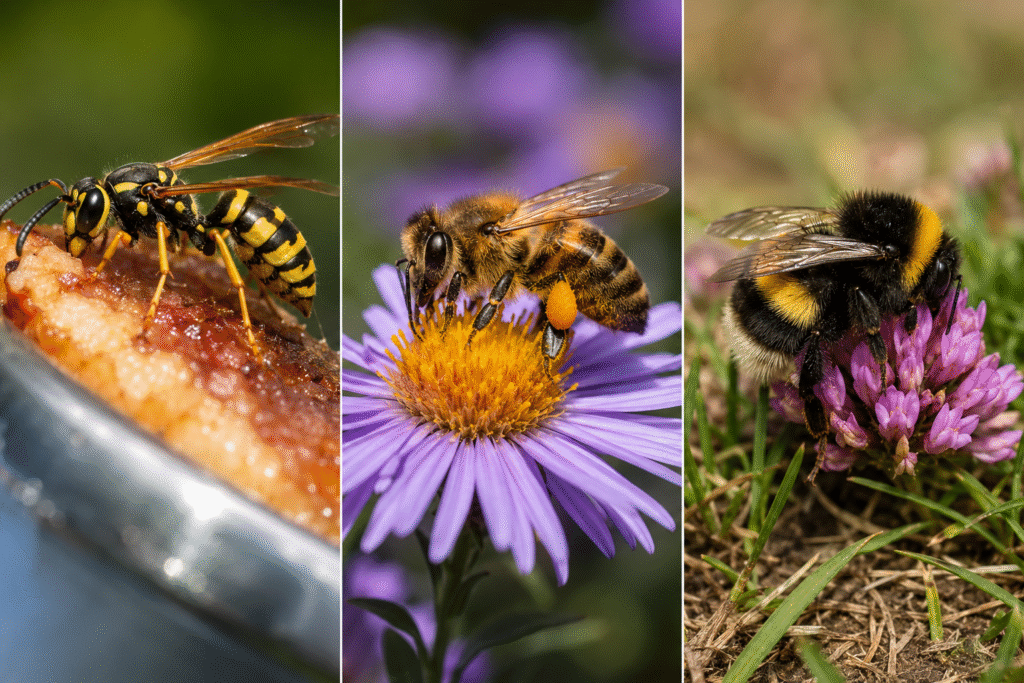
If you’re trying to identify something in your own yard, start with behavior before you even worry about precise coloring: is it interested in your food, or is it interested in flowers? That single question resolves most cases faster than any visual comparison chart. If it’s investigating your soda can, it’s a wasp. If it’s working flower to flower with visible pollen on its legs, it’s almost certainly a honey bee. If it’s large, fuzzy, loud, and minding its own business near the ground, you’re looking at a bumblebee.
Final Takeaway
None of these three insects deserve the blanket fear that “bee” or “stinging insect” tends to generate in casual conversation. Honey bees are defensive specialists doing essential pollination work. Bumblebees are gentle giants increasingly worth protecting rather than removing. Wasps are the ones actually worth giving a wide berth, particularly from midsummer onward. Learning to tell them apart takes less time than most people assume, and it’s one of the more useful, low-effort skills anyone with a backyard can pick up — useful for your own safety, and honestly useful for the bees that keep getting blamed for someone else’s bad afternoon at a barbecue.
If you’re ever genuinely unsure what’s nesting near your home, most local beekeeping associations will identify a photo for free before you call an exterminator — it’s a five-minute favor that’s saved more than a few innocent colonies over the years.