
Meta description: A practical, region-specific guide to winterizing beehives across the US, Canada, UK, and Australia — covering insulation, moisture control, feeding, and the mistakes that cause winter colony loss.
I want to start with a confession, because I think it’ll save someone reading this from making the exact mistake I made years ago. My first winter as a beekeeper, I assumed cold was the thing that killed bees. It isn’t, not directly anyway. What actually kills overwintering colonies, more often than not, is moisture — condensation dripping down from a poorly ventilated lid onto a cluster of bees that can survive brutal cold but cannot survive being wet while cold. I lost a strong colony that winter to exactly that, and it taught me more about hive ventilation than any book had managed to.
Winter prep gets far less attention than it deserves in most beekeeping content, probably because it’s unglamorous and doesn’t photograph well. There’s no satisfying honey dripping from a frame, no dramatic swarm capture. Just quiet, careful work in autumn that determines whether your bees are alive come March. So let’s actually walk through it properly, because the right approach depends heavily on where you keep bees — and that’s the part most generic guides skip entirely.
Why Winter Losses Happen — The Real Mechanics
Before getting into region-specific advice, it helps to understand what’s actually going on inside a hive during winter, because it explains why certain fixes matter more than others.
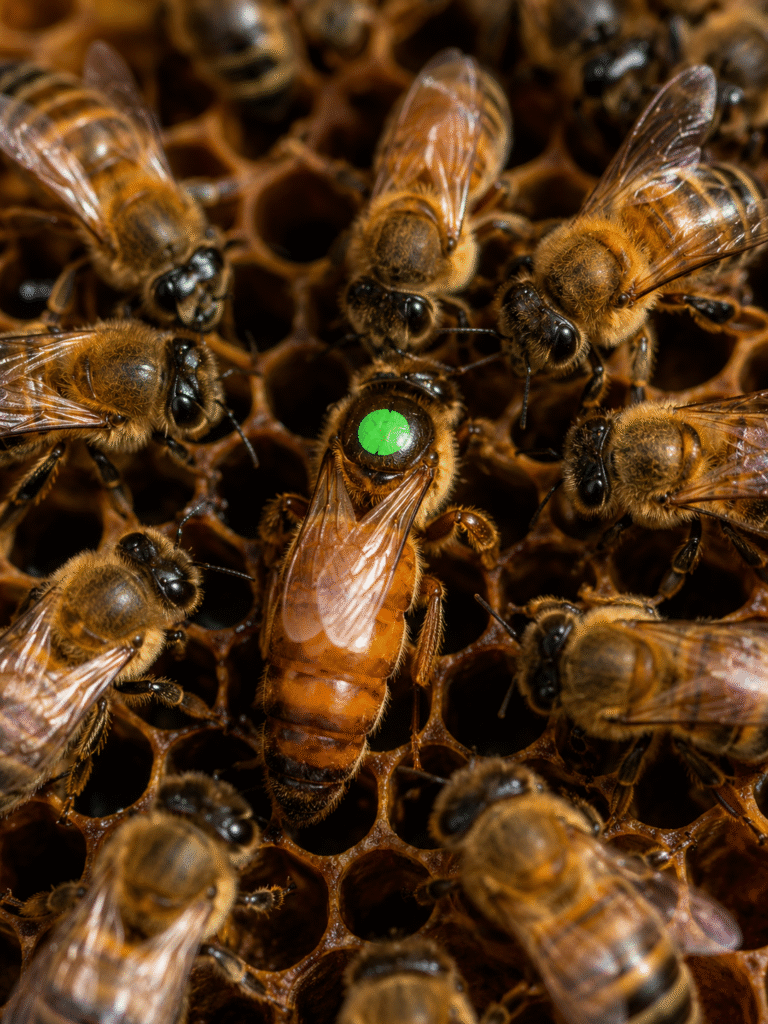
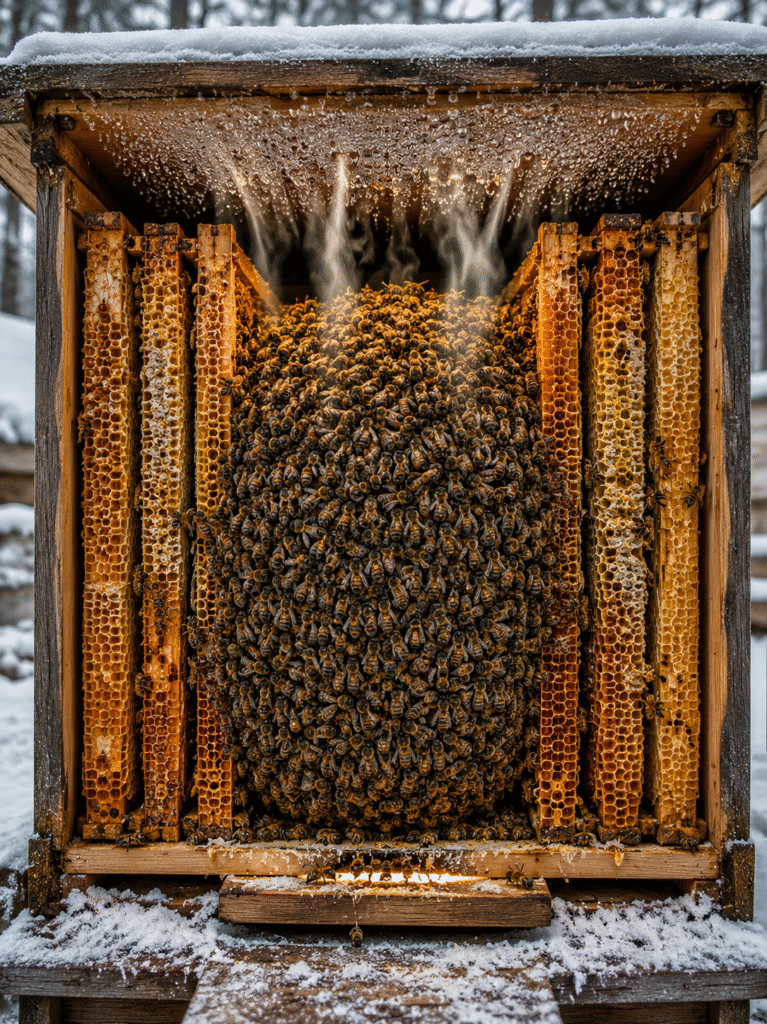
Honey bees don’t hibernate. They form a tight cluster around the queen and generate heat by vibrating their flight muscles, maintaining a core temperature well above freezing even when it’s brutally cold outside the hive. That’s an impressive feat of collective biology, but it comes with two vulnerabilities. First, the colony needs enough stored honey to fuel that heat generation for months without foraging. Second, the warm, moist air the cluster produces has to escape somehow — and if it can’t, it condenses on the cold underside of the hive lid and drips back down onto the bees as cold water. A colony that could have handled minus twenty degrees outside can collapse from dampness it never needed to face in the first place.
Keep that mechanism in mind. Everything below is really just different regional answers to the same two questions: do these bees have enough food, and can the moisture they generate actually get out?
United States — The Northern and Midwestern Belt
If you’re keeping bees anywhere from the upper Midwest through New England, or up into the mountain states, you’re dealing with genuinely harsh winters, and your prep needs to reflect that.
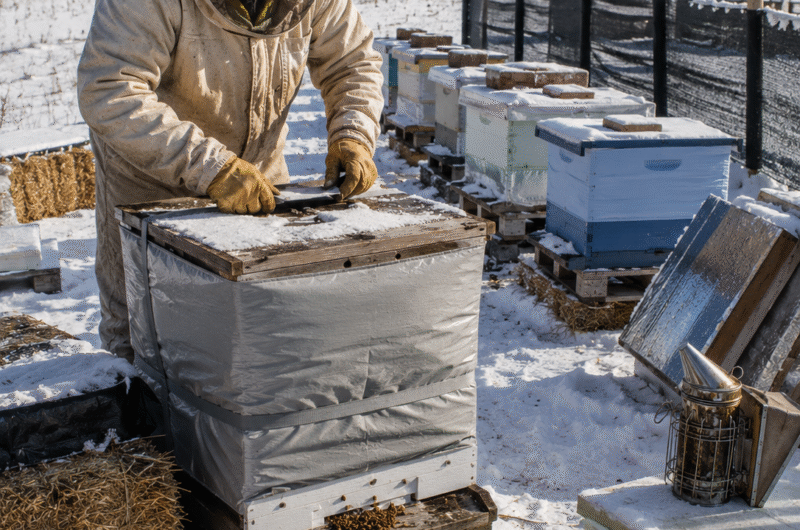
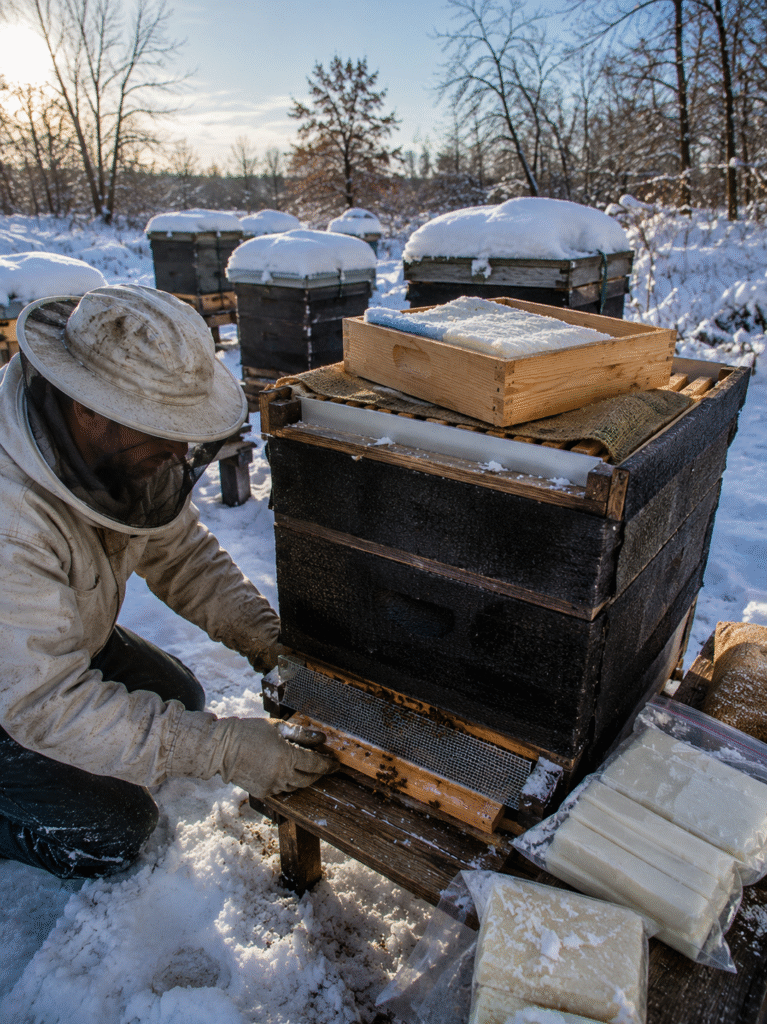
Insulation matters here, but ventilation matters more. Wrapping your hive in roofing felt or a commercial hive wrap like a Bee Cozy helps cut wind penetration and gives the cluster a slightly easier job maintaining temperature. But don’t make the common mistake of sealing the hive up so tightly that moisture has nowhere to go. A screened board under the inner cover, paired with something absorbent like burlap or a moisture quilt above it, gives condensation somewhere to collect and evaporate instead of raining back down on your bees.
Make sure your colonies are heading into winter with at least 40 to 60 pounds of stored honey per hive — if they’re light, supplement with sugar bricks or fondant placed directly above the cluster, since liquid syrup won’t get taken up reliably once temperatures drop. And install a mouse guard at the entrance before the first hard frost. A reduced entrance that’s perfectly fine for bees is still wide enough for a field mouse looking for a warm place to spend the winter, and a mouse inside a hive does real damage to comb and stores.
Southern and Mild-Winter US States
If you’re in the Southeast, Texas, California, or anywhere with mild winters, your prep looks different, and frankly easier — but don’t skip it entirely just because hard freezes are rare.
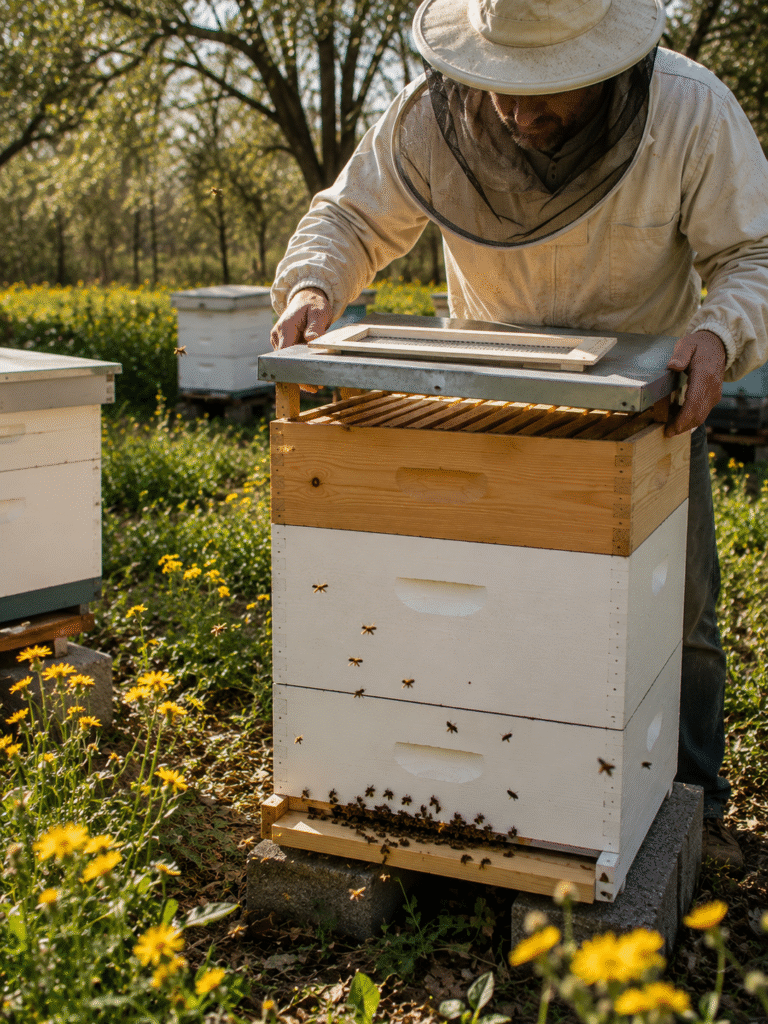
The bigger risk in mild climates is actually fluctuating temperatures. Bees in warmer regions may not cluster as tightly and can stay more active through winter, which means they burn through stores faster than colonies further north that settle into a deeper, more efficient cluster. Check stores more frequently rather than assuming a mild winter means low risk. Light ventilation adjustments and a reduced entrance are usually sufficient; heavy insulation is rarely necessary and can actually cause overheating on unseasonably warm winter days.
Canada
If you’re keeping bees in Canada, you’re facing some of the most demanding overwintering conditions in the developed beekeeping world, and it shows in the data — winter colony losses well above 40% aren’t unusual in provinces like Alberta during a hard year.
This is where serious insulation stops being optional. Many Canadian beekeepers wrap hives completely, sometimes grouping several colonies together under a shared insulated wrap to share warmth, a technique sometimes called “quadding.” Indoor overwintering in climate-controlled storage has also become increasingly common among commercial operations specifically because outdoor losses have been so severe — more than 30% of Canada’s commercial colonies are now overwintered indoors rather than left outside to face the cold directly.
If indoor overwintering isn’t practical for your setup, prioritize a windbreak — a hedge, fence, or even strategically placed straw bales — positioned to block prevailing winter winds. Combine that with generous stores (Canadian winters are long enough that 60 pounds of honey per hive is a safer minimum than the 40 pounds that might suffice further south) and rigorous ventilation management, since the same condensation risk applies here, just with higher stakes given how long your bees will be sealed in before a proper spring inspection is even possible.
United Kingdom
British winters present a different challenge entirely: they’re rarely as cold as a Canadian or northern US winter, but they’re consistently damp, which makes moisture management the single most important factor in UK overwintering.
Persistent drizzle and high humidity mean condensation risk is elevated for months at a time, not just during a few cold snaps. UK beekeepers tend to favor open mesh floors specifically for this reason — they allow continuous airflow underneath the hive, reducing the moisture buildup that a solid floor traps. Pairing this with a well-ventilated roof, rather than sealing everything tightly against cold the way a Canadian beekeeper might, tends to serve UK colonies better given the actual climate they’re facing.
Stores-wise, 40 pounds per colony is generally adequate given the UK’s milder temperatures, but check more than once during winter — UK winters often include brief mild spells that trigger bee activity and stores consumption, followed by sudden cold returns. That inconsistency catches out beekeepers who assume one autumn check is sufficient for the whole season.
Australia
Here’s where regional advice gets genuinely interesting, because Australia flips the calendar entirely. Winter runs from June through August, which means if you’re reading this in late June, Australian beekeepers are right in the middle of their winter prep window right now, while their counterparts in the Northern Hemisphere are still thinking about summer honey flows.
Conditions vary enormously by region. Tasmania and the colder parts of Victoria face winters that genuinely resemble a mild UK winter — damp, chilly, requiring real attention to moisture management and adequate stores. Queensland and the Northern Territory, by contrast, barely experience what most beekeepers elsewhere would recognize as winter at all, and colonies there often continue foraging through the cooler months with minimal additional intervention needed.
For the temperate southern regions — Victoria, southern New South Wales, South Australia — the playbook looks similar to UK guidance: prioritize ventilation over heavy insulation, ensure adequate stores heading into June, and keep entrances reduced but not fully blocked to manage airflow without inviting excessive cold drafts directly into the cluster.
The Mistake That Cuts Across Every Region
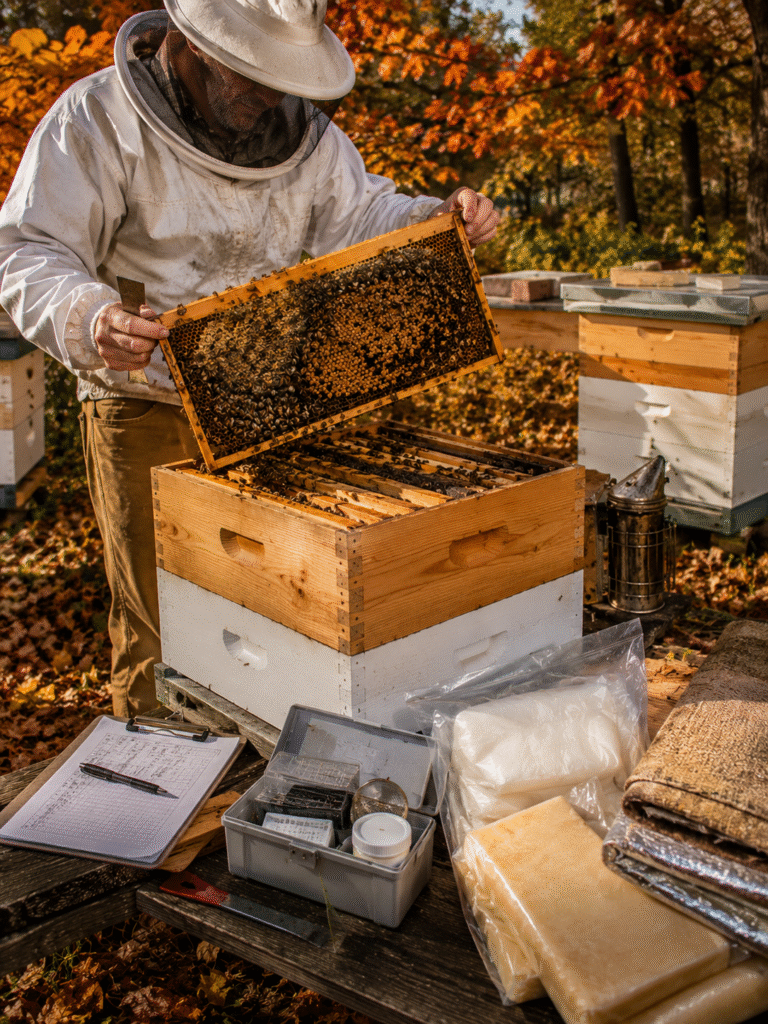
Regardless of where you’re keeping bees, there’s one error I see repeated more than any other, and it has nothing to do with insulation or ventilation specifically: beekeepers wait too long to assess their colony’s winter readiness. By the time you can visibly tell a colony is light on stores or weak heading into the cold, you’ve often lost the easiest window to fix it. Liquid feeding becomes unreliable once temperatures drop consistently, and emergency feeding in the dead of winter is a much harder, riskier intervention than a simple autumn supplement would have been.
Do your winter assessment while you can still meaningfully act on what you find — early autumn in the Northern Hemisphere, early autumn (around March-April) in Australia. Check stores, check for a healthy, visible queen and brood pattern, treat for varroa before winter stress compounds whatever mite pressure already exists, and make your ventilation and insulation decisions based on your actual regional climate rather than generic advice that might be calibrated for a completely different kind of winter than the one your bees are about to face.
What Surviving Winter Actually Tells You
There’s a quiet satisfaction in walking out to your hives on the first warm day of spring and seeing bees flying again, after months of uncertainty about what was happening inside that box. It’s one of the few moments in beekeeping where you get a clear, unambiguous answer to whether your preparation actually worked.
But I’d push back gently on treating a successful overwinter purely as luck, the way I think a lot of beekeepers do, especially after a tough year elsewhere makes headlines. Winter survival is mostly the accumulated result of decisions made months earlier — stores checked in autumn, ventilation matched to your actual climate, mites treated before they compounded the stress of the cold. Get those right, consistently, region by region, and the bees tend to take care of the rest.
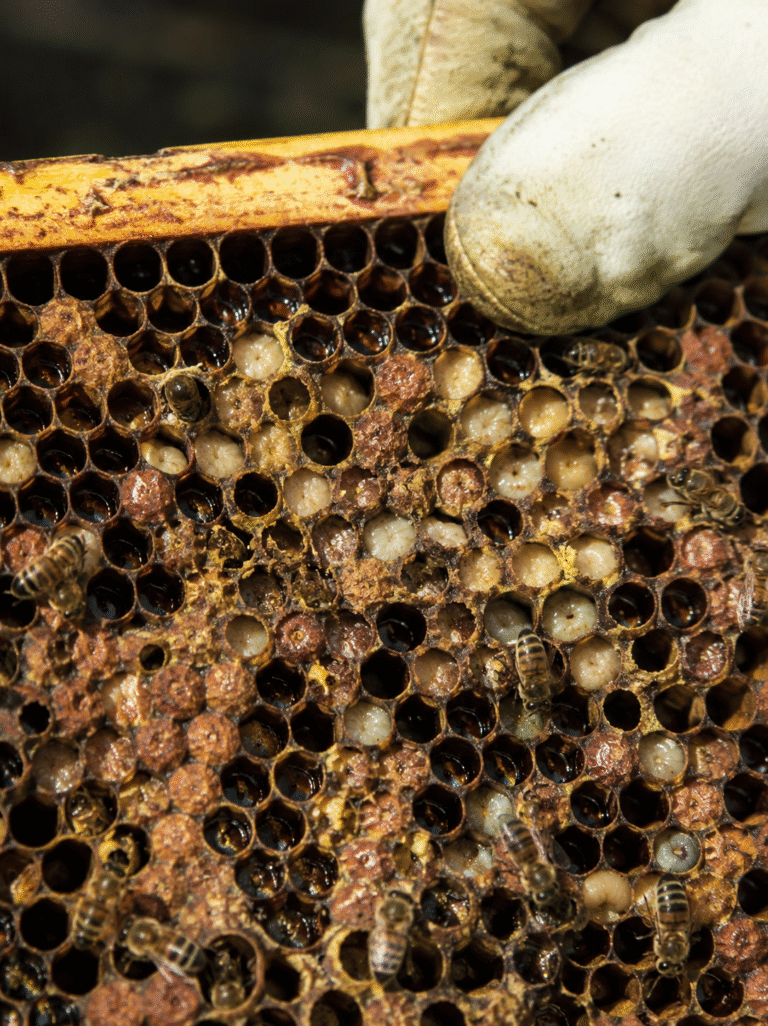
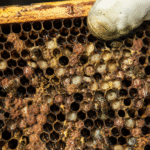
If you’ve lost a colony over winter before, it’s worth doing a proper post-mortem inspection once temperatures allow — dead bees with their heads buried in cells usually points to starvation, while a damp, moldy interior points toward the ventilation and moisture issues this guide focuses on. Knowing which one you’re dealing with changes what you fix going into next winter.