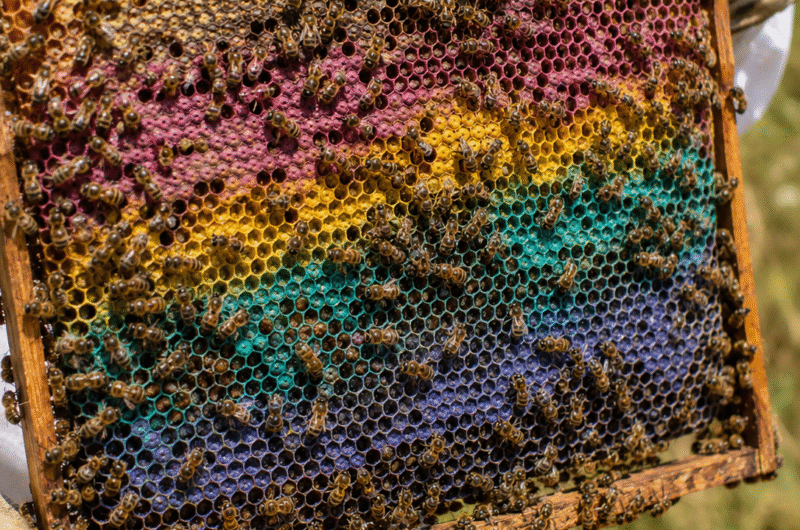

Meta description: A Massachusetts beekeeper used colored wax to track how bees recycle and relocate it inside the hive — revealing comb-building habits that challenge long-held beekeeping assumptions.
There’s a specific kind of beekeeper I’ve grown to trust more than almost any researcher with a fancy lab — the backyard experimenter who just keeps poking at the same question, season after season, until the bees finally tell them something nobody expected. Dave Wade, a beekeeper out of Sturbridge, Massachusetts, and an active member of the Worcester County Beekeepers Association, is exactly that kind of person. And the question he started poking at a few years ago has quietly turned into one of the more interesting pieces of citizen science I’ve come across in this field.
Here’s the assumption Wade decided to test: most of us think of wax production as something that just happens, almost automatically, whenever bees are building comb. Bees make wax, bees use wax, simple as that. What Wade wondered was whether bees are doing something far more deliberate underneath that simple picture — constantly recycling and relocating wax throughout the hive as the colony’s needs shift, rather than just producing fresh wax on demand every time they need to build.
Where the Idea Actually Started
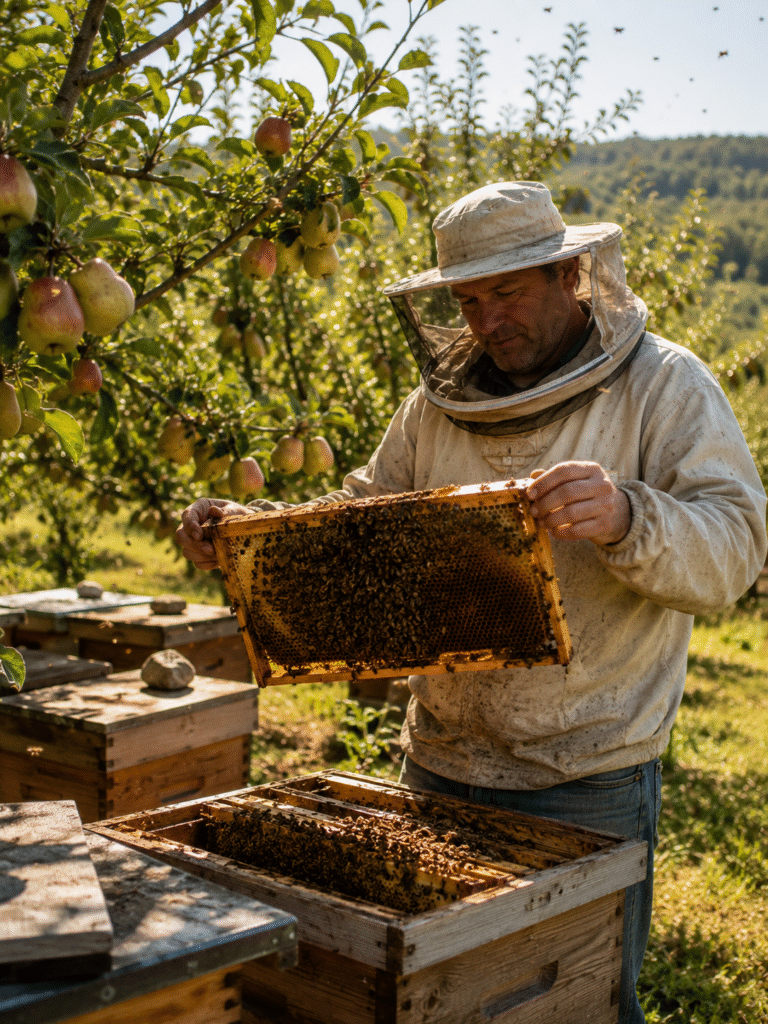
Wade’s path into beekeeping wasn’t some grand calling. He got into it almost twenty years ago because he was worried about pollination for his backyard fruit trees, which led him to a local bee school, which led to nearly two decades of hands-on observation in his own bee yard. That’s worth sitting with for a second. This isn’t a credentialed entomologist running a university-funded study. It’s someone whose curiosity about his own fruit trees eventually turned into research collaborations with actual PhDs — Dr. David Tarpy, Dr. Michael Smith, and Dr. David Peck have all worked alongside him at various points. That’s a pretty good origin story for a discovery, and it’s the kind of thing that happens more often in beekeeping than people outside the field realize.
The original experiment was practical, almost mundane on the surface. Wade noticed that wax production naturally slows down after the summer solstice, right around when colonies start shifting into winter prep mode. That timing creates a real problem — colonies can end up short on comb for winter stores, or even short on space to raise the brood that needs to survive the cold months. So Wade started testing whether he could just hand bees extra wax directly, instead of waiting for them to produce it themselves, to see if they’d actually use it.
The Method, and Why It Worked Better Than Expected
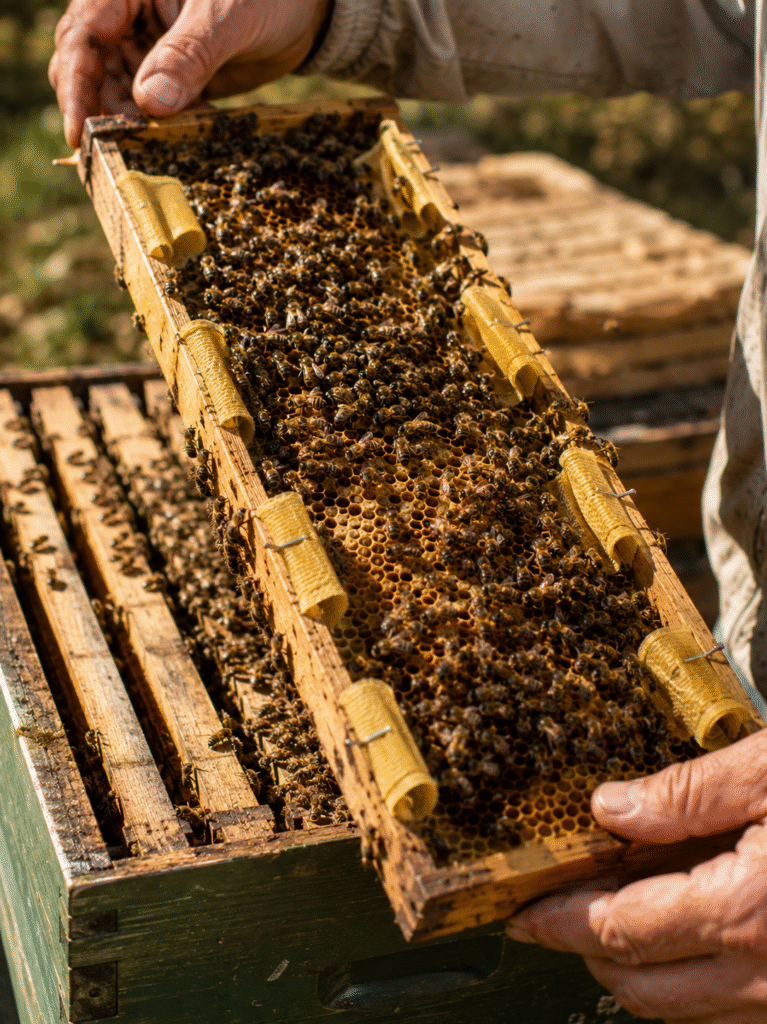
What he landed on was almost absurdly simple. Take slices of wax foundation, fold them lengthwise twice to make small rolls, and pin those rolls onto the inside edges of a frame. No special equipment, no elaborate setup — just folded wax held in place with pins until the bees took over.
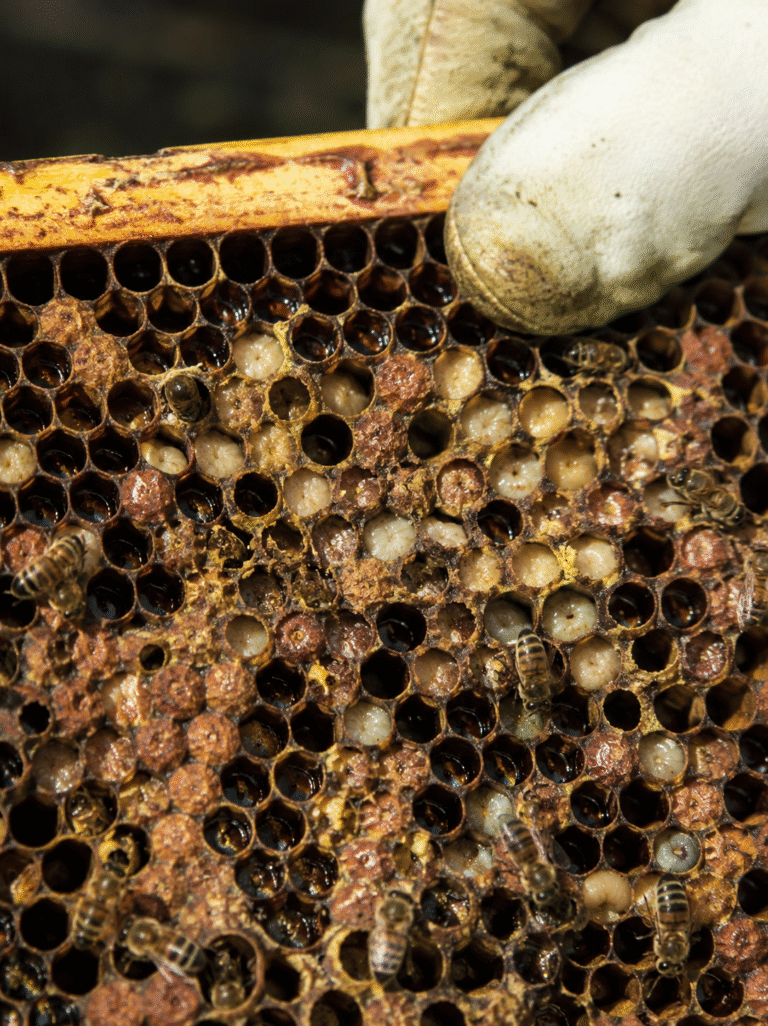
And they did take over, more readily than Wade initially expected. He documented colonies rapidly incorporating that supplemental wax into comb construction, even late in the season, well past the point when bees typically stop producing wax flakes from their own bodies. He tried it with multiple wax sources beyond just foundation sheets — cappings, burr comb, even older comb pulled out of frames and crumpled up — and got consistent results across what he described as all seven of his hives.
I want to pause on how unglamorous this is, because I think that’s part of why it matters. Nobody’s filming a satisfying reel of pinning wax rolls into a frame. But what Wade was doing, frame by frame, hive by hive, season after season, was building a genuinely useful body of evidence that bees aren’t nearly as rigid about “make your own wax or go without” as conventional wisdom assumed.
Where the Colored Wax Comes In
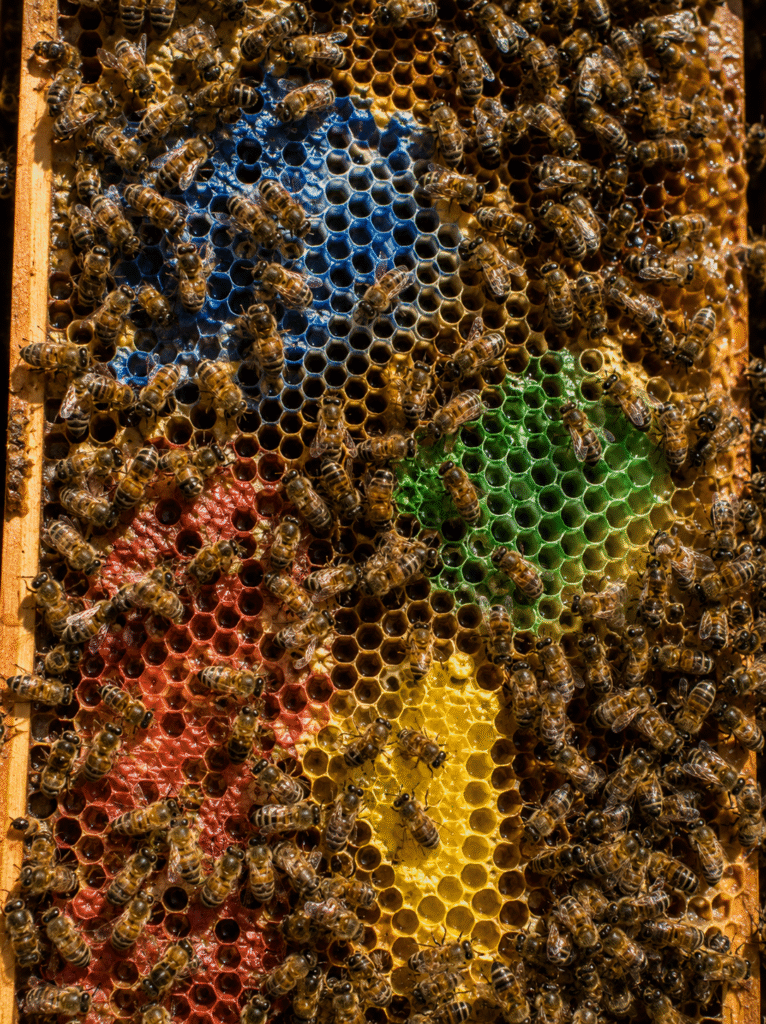
Here’s the part that pushed Wade’s work from “useful trick” into something closer to real behavioral research. To actually prove the bees were using the wax he gave them — and not just coincidentally building comb nearby — he started using colored wax specifically so he could visually track where it ended up inside the colony.
Think about what that lets you see that you couldn’t see before. Without color, you’re just looking at finished comb and guessing at its origin. With a distinct, trackable color mixed into the wax he supplied, Wade could watch it travel — see whether bees used it where they placed it, moved it elsewhere, or broke it down and redistributed it across different parts of the hive entirely, for comb construction, brood nest expansion, or other structural needs as the colony’s priorities shifted.
That’s a genuinely clever piece of low-tech science. You don’t need a research grant or a thermal camera to ask a sharp question and find a way to answer it. You need patience, a few years of seasons, and the willingness to keep adjusting your method until the bees show you something real.
What This Actually Means for How We Understand Wax
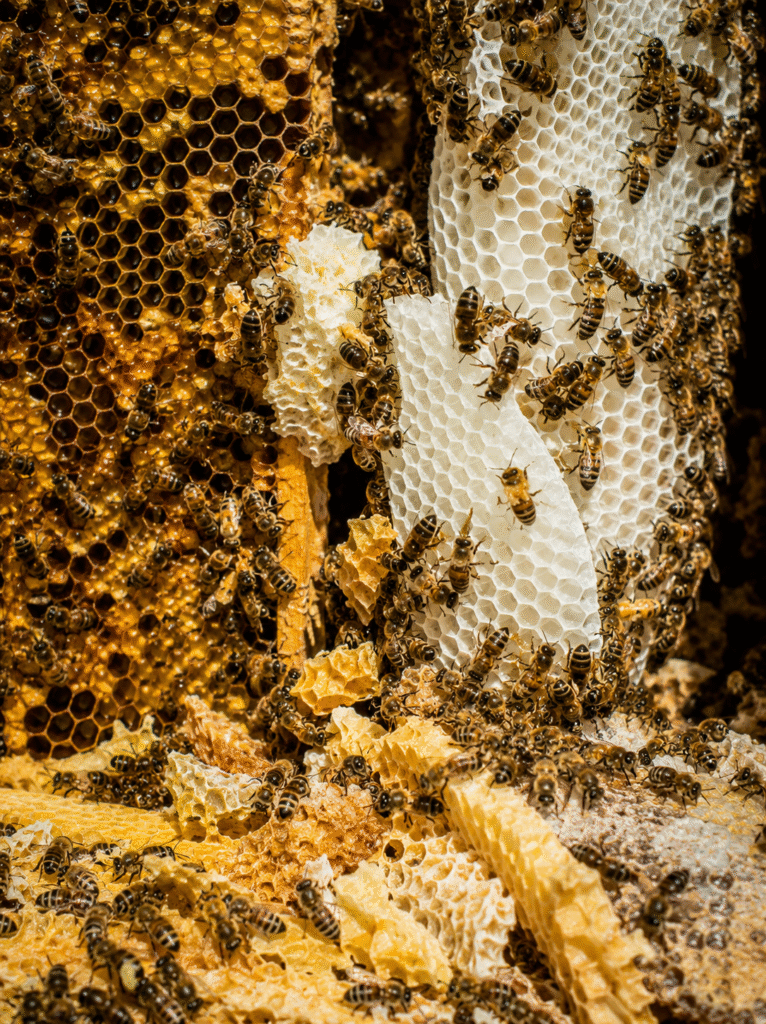
If colonies are capable of recycling and relocating wax this fluidly, depending on what they need at a given moment, that suggests something a bit more sophisticated than the simple “bees make wax, bees use wax where they make it” model most of us grew up with in this hobby. It points toward bees treating wax more like a flexible, hive-wide resource to be redistributed as needed, rather than a fixed material that stays wherever it was originally produced.
For commercial and hobbyist beekeepers alike, the practical upside is fairly direct: if your colonies are running short on comb late in the season, when bees would normally be slowing down wax production anyway, supplementing with wax rolls — or repurposed cappings, or crumpled old comb — gives them raw material they’re clearly willing to put to immediate use, rather than your colony simply running short on space for winter stores or brood right when it can least afford to.
What I Keep Thinking About
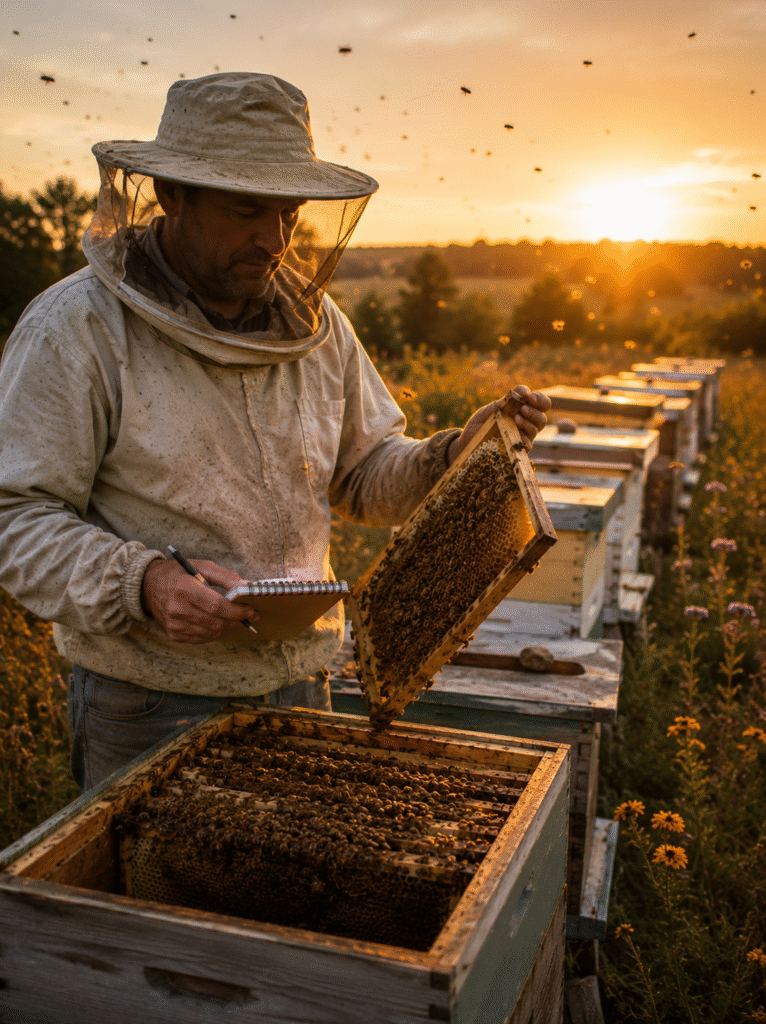
What stays with me about Wade’s project isn’t really the wax-rolling technique itself, useful as it is. It’s the reminder that some of the most quietly important advances in beekeeping still come from someone in a bee yard, noticing something slightly off from the textbook explanation, and deciding to actually test it rather than just wonder about it out loud.
There’s a version of this story where Wade notices the same thing every fall — colonies running short on comb after the solstice — and just shrugs and accepts it as a seasonal limitation, the way generations of beekeepers before him probably did. Instead, he started folding wax into rolls and pinning them into frames, then years later started coloring that wax so he could actually watch where it went. That’s the whole arc, really. Curiosity, a simple method, then a more rigorous version of the same method, stacked patiently over years until it turned into something worth a national podcast and a few university collaborations.
It’s also a good reminder for the rest of us managing far fewer hives than commercial operations: you don’t need to be a research scientist to learn something real about your bees. You just need to keep watching closely enough, for long enough, to notice when something doesn’t quite match what you were told to expect.