
Meta description: New research reveals worker bees stage coordinated revolts against weakened queens, driven by viral infections that disrupt pheromone signals — and a possible fix is already being tested.
I’ve talked to a lot of beekeepers over the years who treat a failed queen the way you’d treat bad luck — a thing that just happens sometimes, no real explanation, you requeen and move on. I used to think about it the same way. Then I came across a piece of research out of the University of British Columbia that reframed the whole thing for me, and I haven’t been able to look at a struggling queen the same way since.
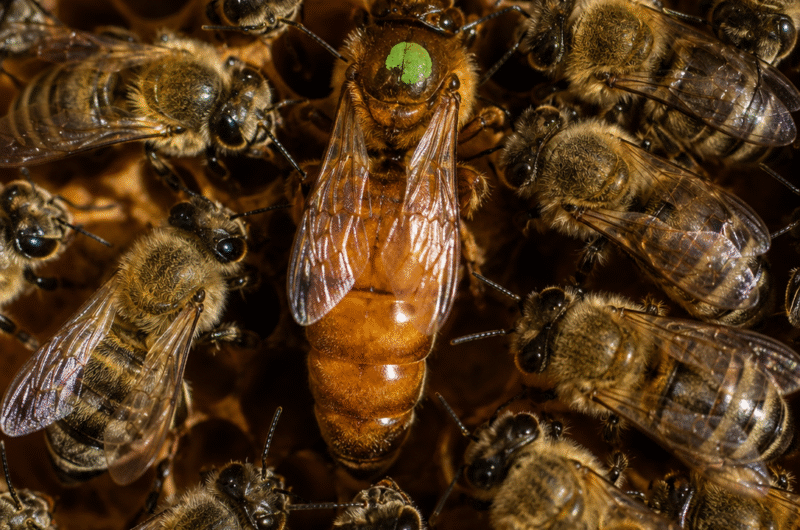
Here’s the short version: what beekeepers have been calling “queen failure” for generations might actually be something closer to a coordinated uprising. And the trigger isn’t bad genetics or bad luck. It’s a virus.
A Story That Sounds Like Fiction, Except It Isn’t
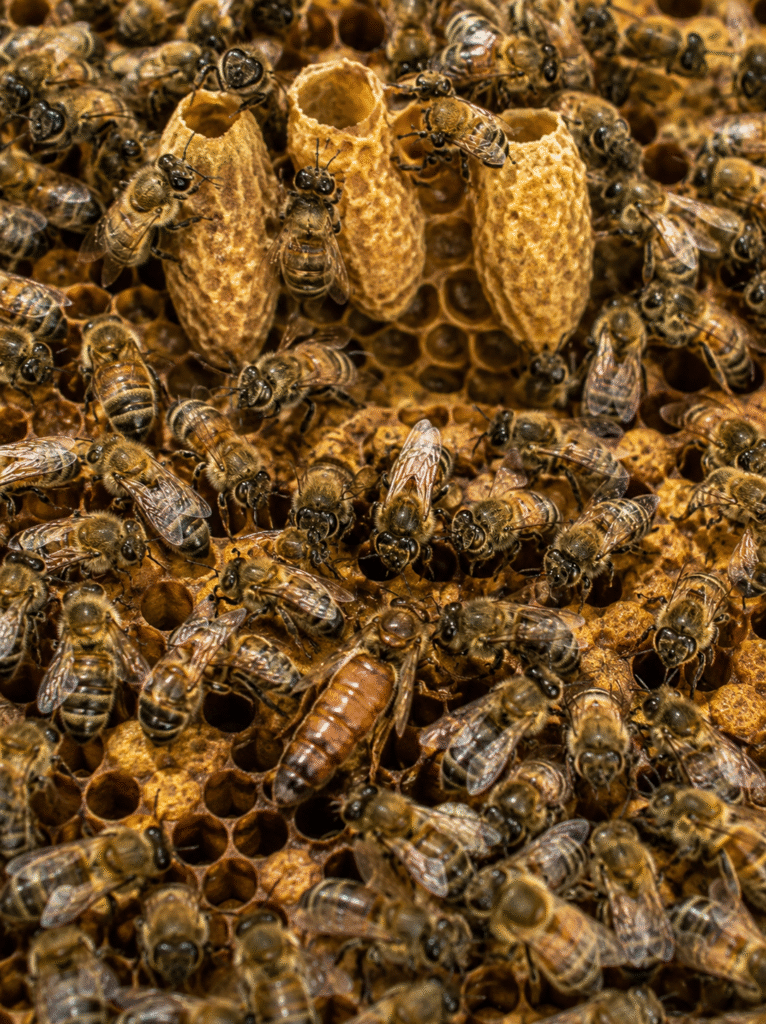
Picture this setup, and tell me it doesn’t sound like something out of a historical drama. A ruler who’s held power for as long as anyone can remember starts to weaken. Her subjects notice before she does. Quietly, without any single dramatic moment, they begin preparing her replacement. By the time the transition happens, it feels almost inevitable — like everyone already knew it was coming except the queen herself.
That’s not a plot summary. That’s what happens inside a honeybee colony during something called supersedure, and according to research published recently in the journal PNAS, it happens with far more precision and far more biological logic than anyone fully appreciated before.
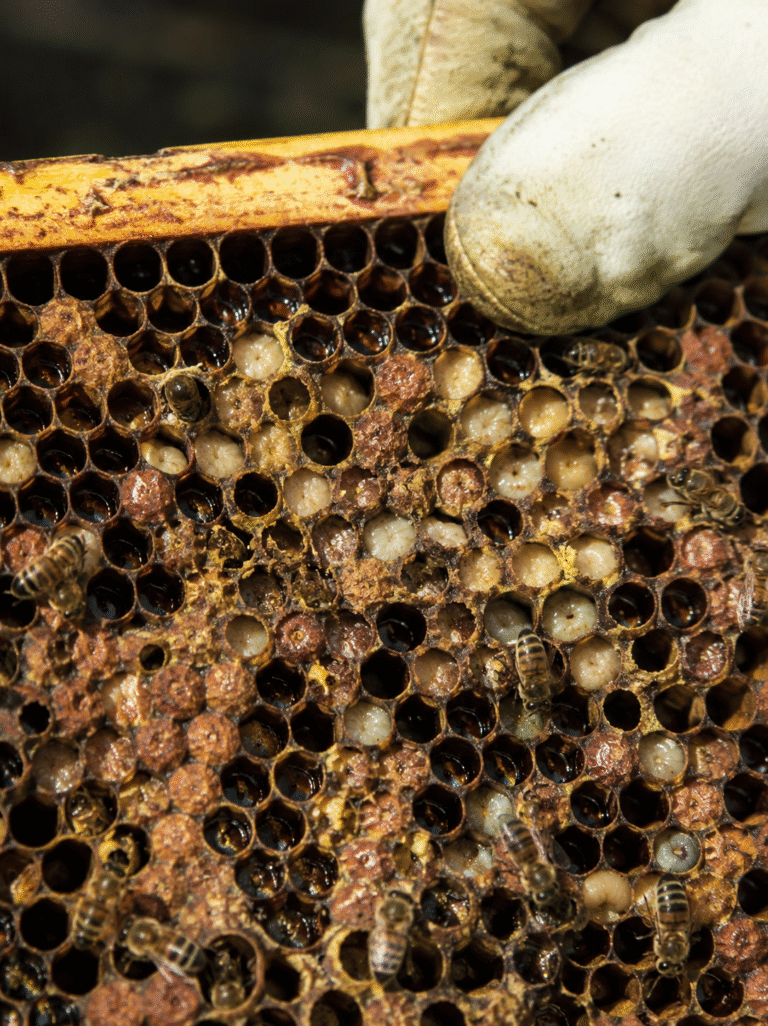
Supersedure isn’t new to beekeeping vocabulary. Every experienced beekeeper has opened a hive to find a fresh queen cell being raised next to a queen who, as far as you could tell, looked perfectly fine. It’s one of those moments that used to just get filed under “bees do what bees do.” What this research adds is the missing mechanism — the actual signal that tips thousands of worker bees into deciding, all at once, that their queen’s time is up.
What’s Actually Happening Inside the Hive
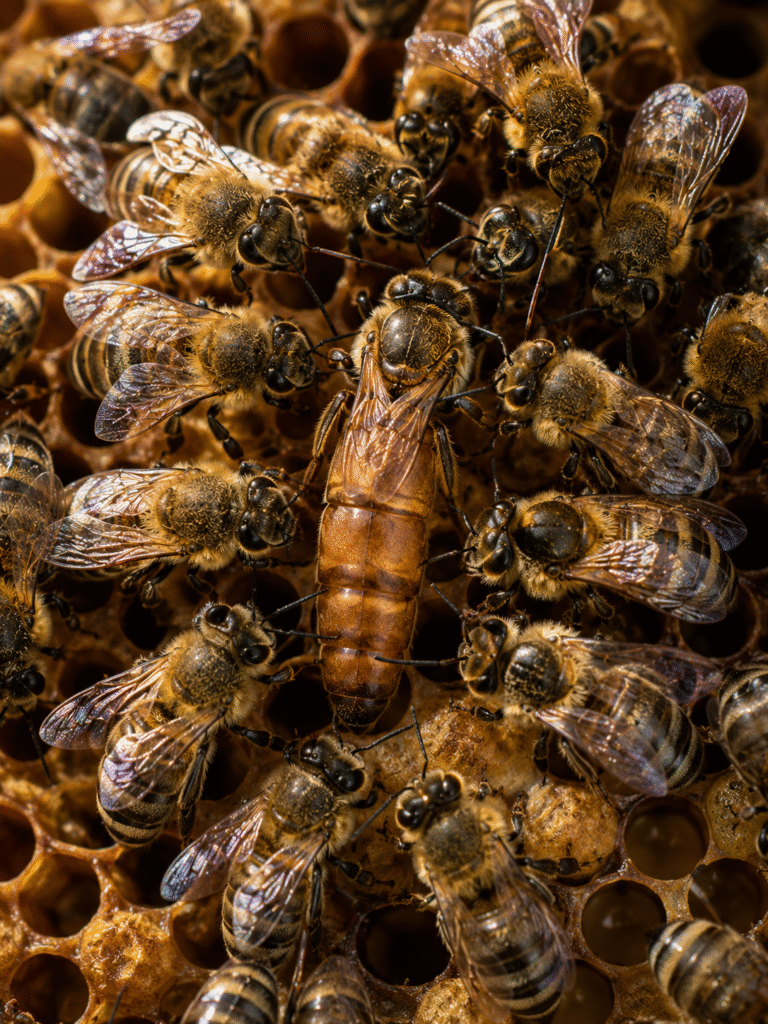
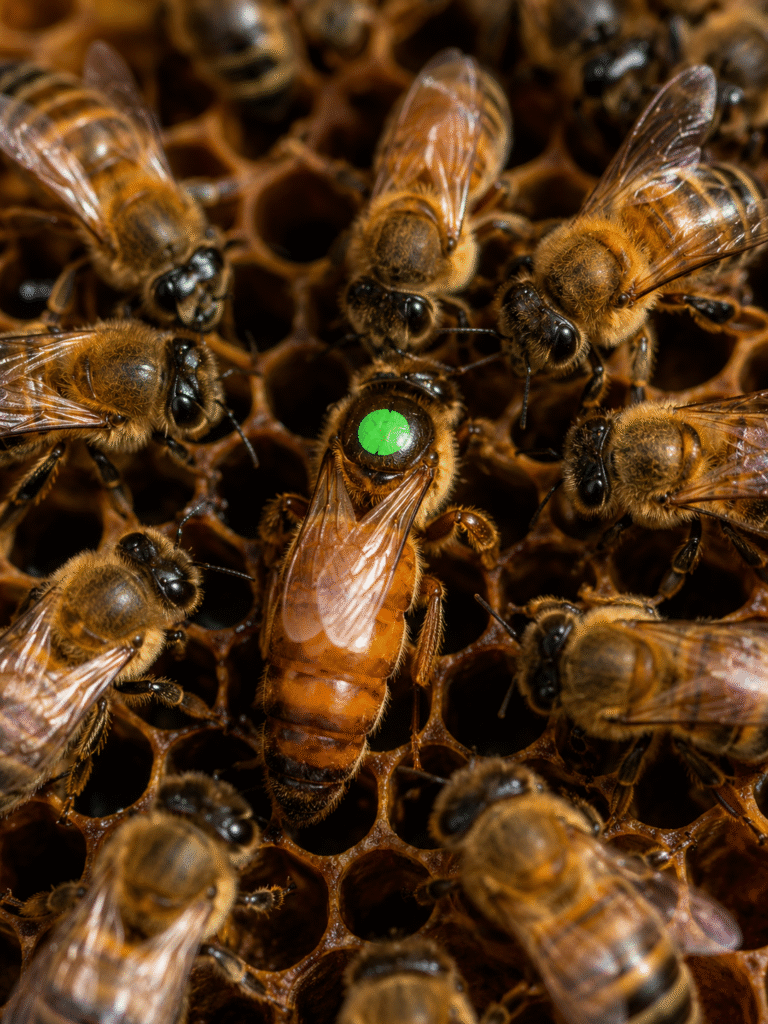
Dr. Leonard Foster, a professor of biochemistry and molecular biology at UBC, led a team that traced the whole process back to a single chemical signal. A healthy queen can lay somewhere between 850 and 3,200 eggs a day — a number that, as Foster pointed out, exceeds her own body weight in output, day after day. That kind of biological performance depends on her ovaries functioning properly, and it turns out common viral infections can shrink those ovaries, quietly reducing how many eggs she can lay.
But the egg count isn’t actually what tips off the workers. It’s something subtler. As her ovaries shrink, the queen also produces less of a pheromone called methyl oleate — a chemical signal that normally tells the rest of the colony, in no uncertain terms, that she’s healthy and fit to lead. When methyl oleate levels drop, workers pick up on the change almost immediately, and that’s the spark. Not visibly fewer eggs in the comb. A chemical whisper that something’s wrong.
I find that detail almost more interesting than the supersedure itself. The colony doesn’t wait to see declining productivity play out over weeks. It reacts to a chemical signal long before a human inspector would ever notice a problem just by looking at the brood pattern. Workers are essentially running a constant, real-time health check on their queen through scent alone, and they act on bad data the moment it shows up — sometimes well before the consequences would be obvious to anyone watching from the outside.
Why This Matters Beyond the Hive
It’s easy to read this and file it under “interesting bee trivia,” but the implications reach further than that. Bees pollinate roughly a third of the crops grown worldwide, and queen health sits at the center of colony stability. When beekeepers report unexplained overwintering losses, “poor queens” comes up constantly as the explanation — but until now, that explanation didn’t really explain anything. It was a label, not a cause.
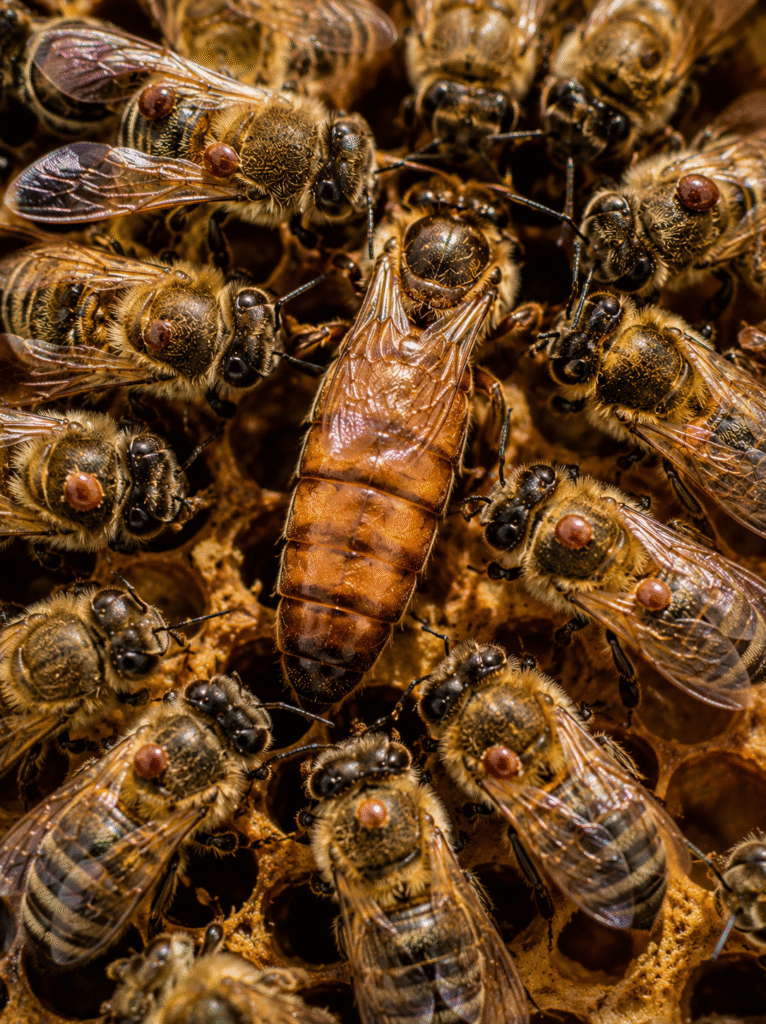
This research gives that label an actual mechanism. Dr. Alison McAfee, the study’s first author, put it plainly: earlier work had already shown failing queens carried heavier viral loads, but nobody had connected that infection directly to the supersedure process itself. Now there’s a clear chain of cause and effect — virus weakens queen, weakened queen produces less methyl oleate, workers detect the drop, workers begin raising a replacement. Each link in that chain was previously invisible to anyone managing a hive from the outside.
And there’s a villain lurking behind all of it that every beekeeper already knows by name: varroa mites. These parasites are major vectors for the very viruses driving this whole process, which means mite control isn’t just about preventing the obvious, visible damage mites cause directly. It’s also, indirectly, about protecting the queen’s hormonal signaling system from collapsing in a way that triggers her own colony to turn against her.
A Fix That’s Already Being Tested
Here’s the part of this story that actually changes how a beekeeper might manage a hive, not just how they understand one. In field trials, colonies given synthetic pheromone blends containing methyl oleate were significantly less likely to begin raising a replacement queen compared to colonies that didn’t receive the supplement.
Foster described the potential impact in pretty direct terms — supersedure is disruptive and expensive to manage, and if supplementing a colony with methyl oleate can help stabilize things during critical stretches, that’s a genuinely useful tool. Think about when queen loss hurts the most: right before a major nectar flow, or in the lead-up to almond pollination season, when a colony needs every bit of consistency it can get. A pheromone supplement that buys a struggling queen some extra time, or at least keeps the colony from panicking prematurely, could matter quite a bit in those windows.
I want to be careful not to oversell this. It’s still early-stage field research, not a product sitting on a shelf at your local supplier yet. But the direction is promising, and it’s the kind of solution that addresses a root cause instead of just treating a symptom after the fact.
What I’d Tell You If You Manage Hives Yourself
If you’ve ever pulled a frame and found an unexpected queen cell next to a queen that looked otherwise normal, this research gives you a real answer instead of a shrug. It’s worth treating that discovery as a signal worth investigating rather than dismissing — because if a virus is behind it, the same colony likely has elevated varroa pressure somewhere in its recent history, even if you haven’t caught it on your last mite count.
There’s no treatment yet for the viruses themselves directly. What you can control is varroa. McAfee made that connection herself — staying ahead of mite levels isn’t just about preventing the damage mites do directly, it’s now also a defense for your queen’s chemical signaling, the very system that determines whether your colony trusts her leadership or starts quietly planning a transition you won’t notice until it’s already underway.
It’s a strange thing to sit with, honestly. We’ve spent years thinking of queen failure as something close to random. It turns out the colony’s been watching all along, reading signals we didn’t even know existed, making decisions about leadership long before we’d ever think to look.