
There’s a particular kind of bee story I’ve started craving lately, mostly because so few of them come my way. Most of what crosses my desk is some version of bad news — collapse, loss, disease, an industry under pressure. So when I came across what’s happening on a tiny island off the west coast of Ireland, I read it twice just to make sure I wasn’t projecting hope onto something smaller than it actually was. It isn’t. This one’s genuinely good news, and it’s worth sitting with for a minute.
A Bee Most People Have Never Heard Of
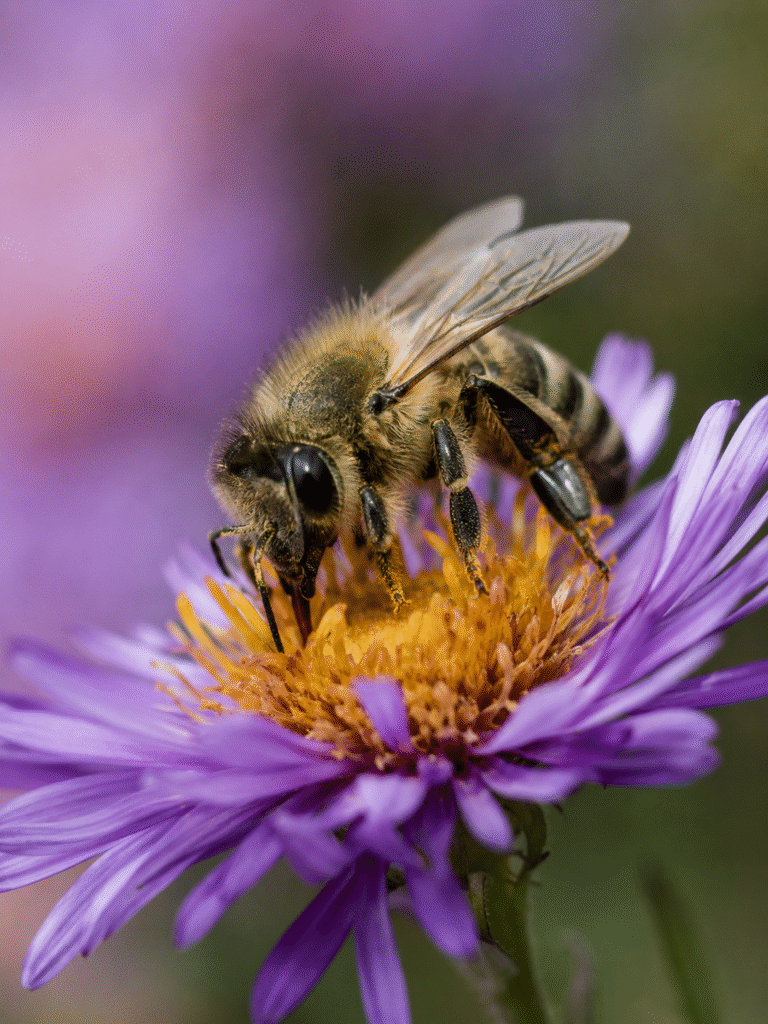
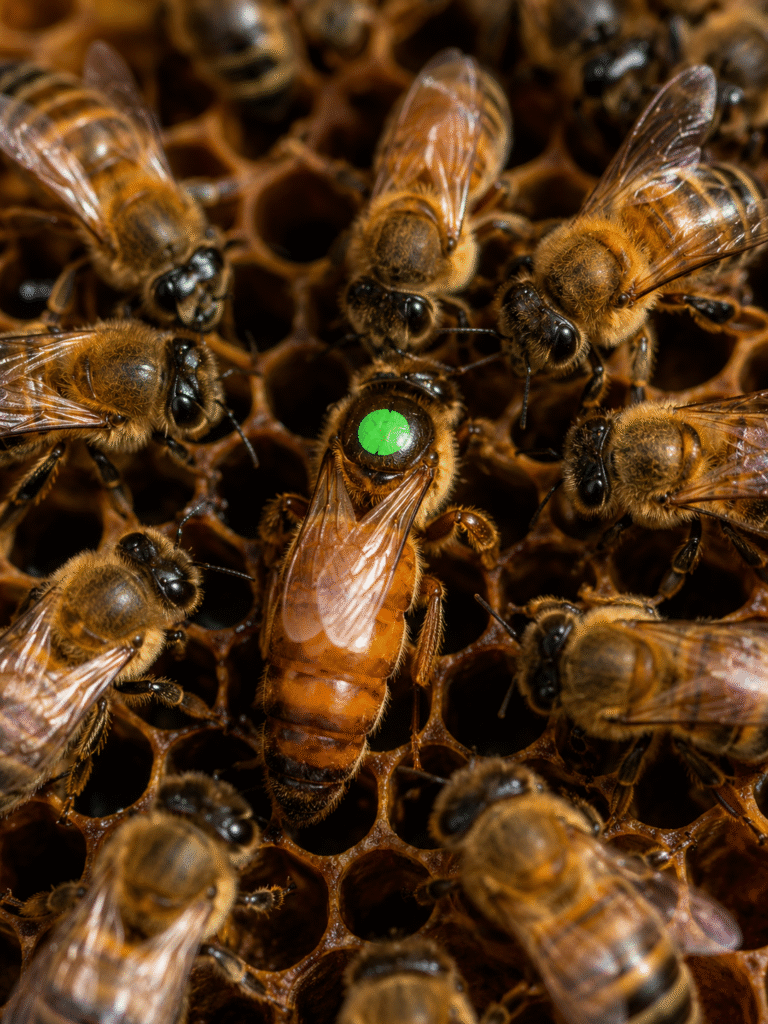
Most honeybee stories in the U.S. center on Apis mellifera, the European honeybee that dominates commercial beekeeping here. But Ireland has its own subspecies, Apis mellifera mellifera — sometimes called the native Irish honey bee, or the European dark bee — and it’s been there since just after the Ice Age. Long before anyone was managing hives or trucking colonies across state lines, these bees had already settled in on their own, adapting specifically to Ireland’s cool, wet, unpredictable Atlantic climate.
That kind of deep-time adaptation matters more than it might sound like on paper. A bee that’s evolved over thousands of years in a specific climate isn’t just tolerating that environment — it’s built for it, the way certain crop varieties are bred for drought or cold. And like a lot of native species that quietly do their job without much fanfare, this one has been disappearing for decades without most people noticing until the numbers got genuinely alarming.
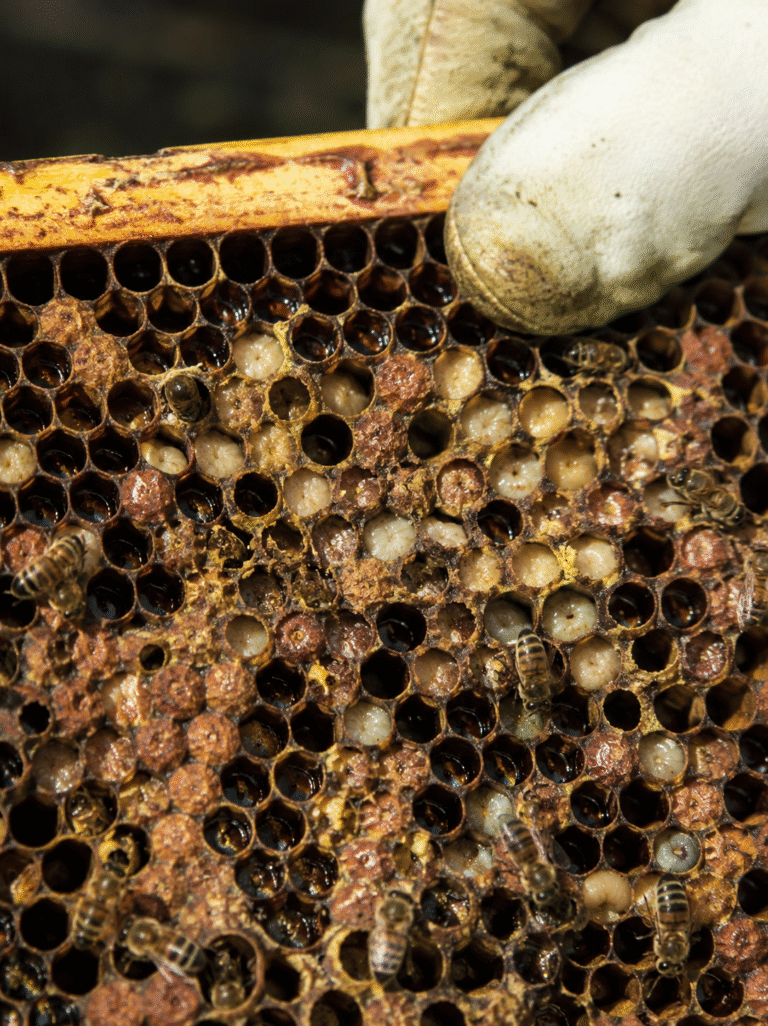
Honeybee populations across Ireland and Europe have declined significantly over the past twenty years, with estimates running as high as a 50% drop, driven largely by the same villain that haunts beekeepers everywhere: the parasitic varroa mite. The native Irish honey bee has now been formally designated as endangered by the EU. If you’ve spent any time around conservation work, you know what that word tends to mean in practice — a quiet countdown that most people never hear ticking until someone decides to do something about it.
Why Inishturk Island Was Chosen for the Sanctuary
Here’s where this story gets genuinely clever, in a way I didn’t expect. Dr. Sean O’Connor, founder of Wild Atlantic Honey & Mead, partnered with the Inishturk Community Development Company to establish what’s now Ireland’s first dedicated native honey bee sanctuary, located on Inishturk Island, roughly 15 kilometers off the County Mayo coastline.
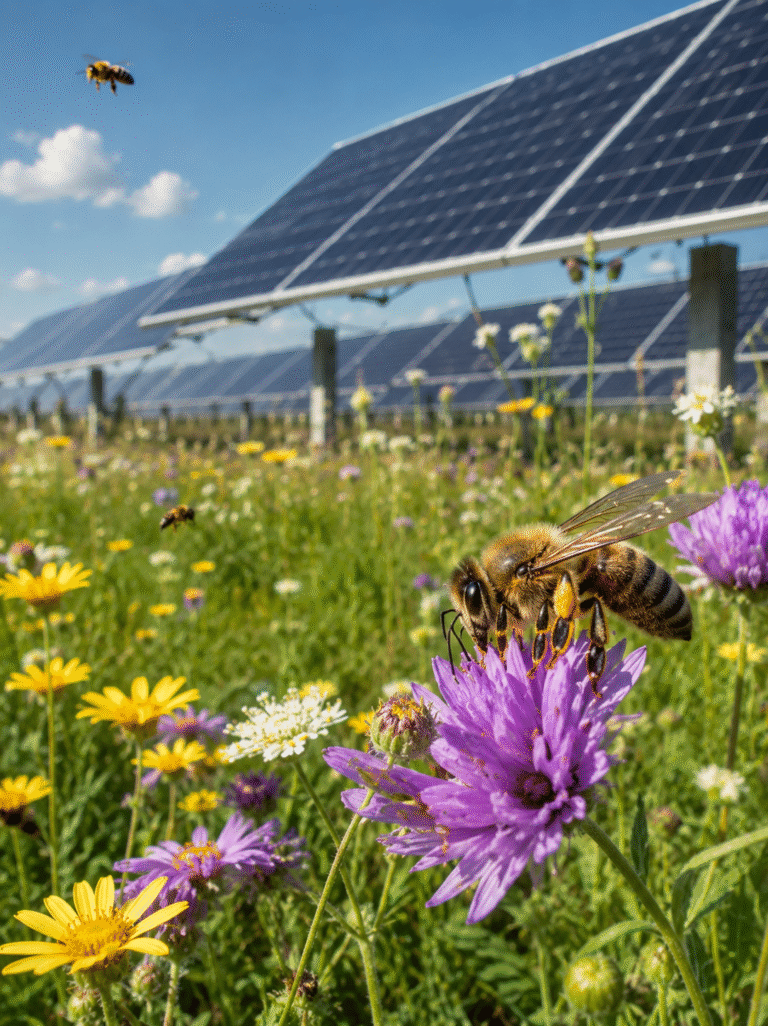
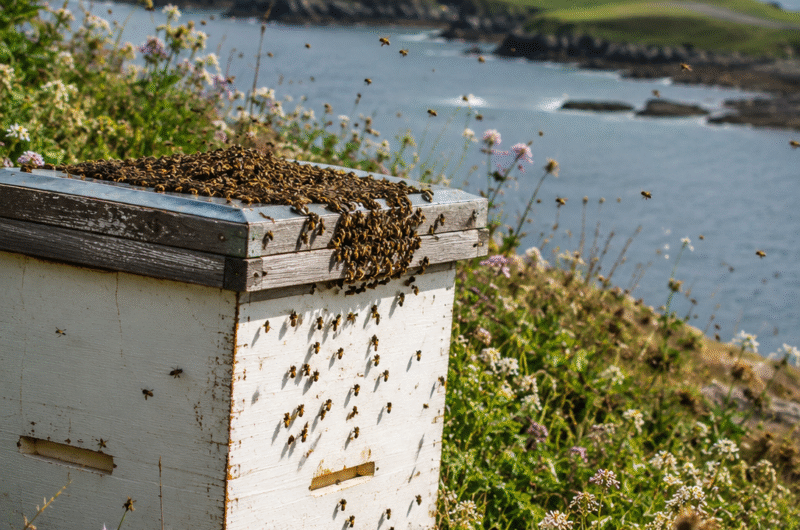
Inishturk is small. Fewer than 60 residents, shaped by cliffs, heather-covered hills, and wildflower landscapes that haven’t been carved up by industrial agriculture. And that smallness, combined with the natural isolation of being an island in the Atlantic, is exactly what makes it valuable here. It’s one of the few places in Ireland where you could realistically maintain a varroa-free, biosecure population of native bees, simply because the mite has a much harder time reaching a colony that isn’t connected to the mainland by anything except a ferry crossing.
I keep coming back to how sensible this is as a piece of conservation strategy. You don’t beat varroa by treating harder. You beat it, in this case, by finding a place mites can’t easily get to in the first place, and then guarding that place carefully. It’s the kind of solution that looks obvious in hindsight and probably wasn’t obvious at all until someone actually looked at a map and thought about which Irish landscapes were naturally cut off from the mainland bee population.
How It Actually Started
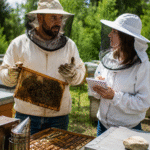
The project launched with two native overwintered colonies brought over from Connemara, hosted at the home of island residents Paddy and Ann O’Toole. From there, it grew quickly — by World Bee Day in May, roughly 10,000 bees had made the ferry crossing to take up residence on the island, an arrival that turned into something of a community celebration. Locals gathered at the O’Tooles’ field for an afternoon of hands-on beekeeping, and the students at St. Columba’s National School received their own beekeeping suits as part of learning about the sanctuary, pollinators, and biodiversity.
I love that detail more than almost anything else in this story. A handful of kids on a remote Atlantic island now own actual beekeeping suits because a conservation project decided their education mattered as much as the bees themselves. That’s the kind of thing that doesn’t show up in a funding report, but it’s exactly how a project like this outlives its founder — by handing the next generation a reason to keep caring about it.
Each hive on the island is fitted with sensor technology tracking temperature, humidity, hive weight, and activity levels in real time, with that data compared against similar monitored hives on the mainland in County Mayo. Researchers and the public alike can follow the comparison through a dedicated online platform — which means this isn’t just a feel-good preservation story, it’s also genuinely useful science, generating real data on how island and mainland bee populations diverge over time.
What Success Would Actually Look Like
The long-term goal here is to establish a sustainable, varroa-free colony of native Irish honeybees on Inishturk — something that, if it holds, would be the only biosecure project of its kind currently operating in Ireland. There’s also a quieter, practical ambition baked into the plan: eventually supplying the island’s own honey needs locally, reducing its reliance on imports the same way the bees themselves are meant to reduce Ireland’s reliance on imported, non-native colonies.
If it works, the people behind it hope it becomes a template — a case study that other offshore islands and isolated regions could adapt for protecting their own native pollinators. That’s the part I find most compelling. This isn’t framed as a one-off rescue mission for a single endangered bee. It’s framed as a proof of concept, something other communities facing the same slow erosion of native species could actually replicate, rather than just admire from a distance.
What This Means Beyond Ireland
You don’t need a remote Atlantic island to take something useful from this story. The broader principle — that isolation and careful biosecurity can protect a population that open exposure would slowly erode — applies at smaller scales too, whether that’s a regional queen-breeding program or simply being thoughtful about which colonies you introduce into an area that’s been relatively mite-free.
But honestly, I think the bigger takeaway here is simpler than any management lesson. Sometimes the right response to a slow-motion disappearance isn’t a massive industrial fix. It’s sixty people on a small island, two hives from Connemara, a ferry crossing on World Bee Day, and a handful of schoolkids in tiny beekeeping suits, all betting that something worth saving is still worth the effort of saving carefully.