
So you checked your hive last weekend and everything looked fine. Bees coming and going, honey getting capped, the queen doing her thing. Then a week later — half your colony is gone, hanging in a ball from your neighbor’s apple tree.
It happens to almost every beekeeper at least once. And the frustrating part? The signs were there the whole time. You just didn’t know what to look for.
Swarm season 2026 is already well underway — reports from across North America show it started earlier than usual this year, driven by a warmer-than-normal winter and spring. If your hives made it through winter strong, there’s a real chance they’re building up fast right now. Which means you need to act.
Here are 7 signs your bees are getting ready to swarm — and what to actually do about each one.
1. Your Hive is Packed to the Ceiling
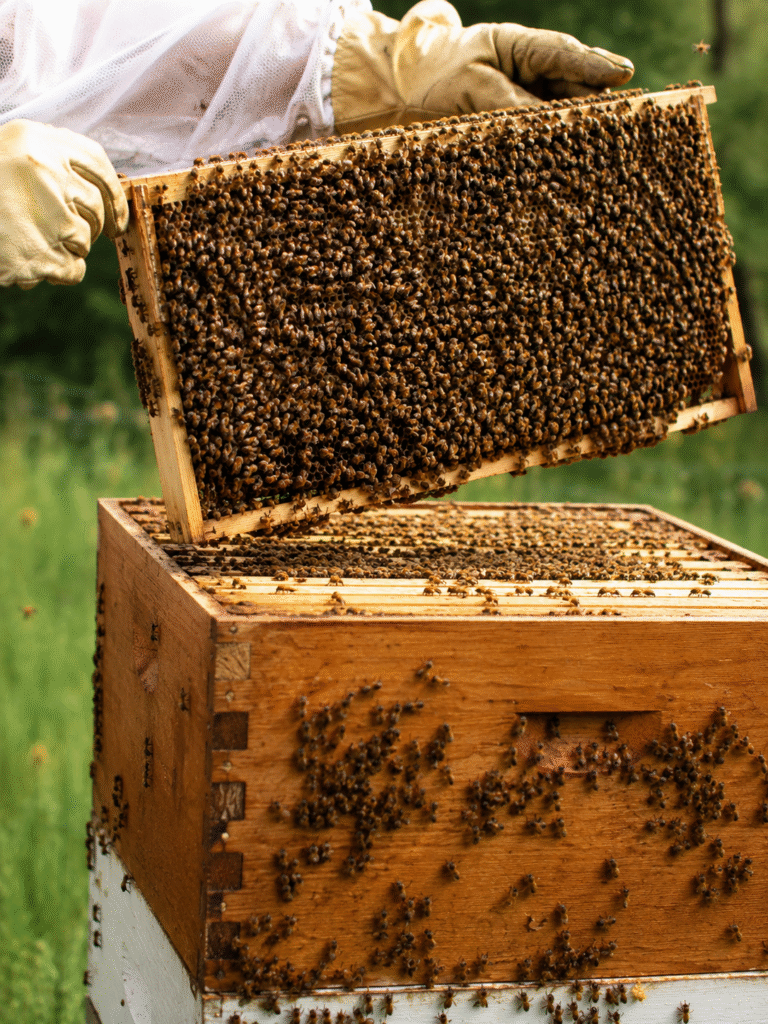
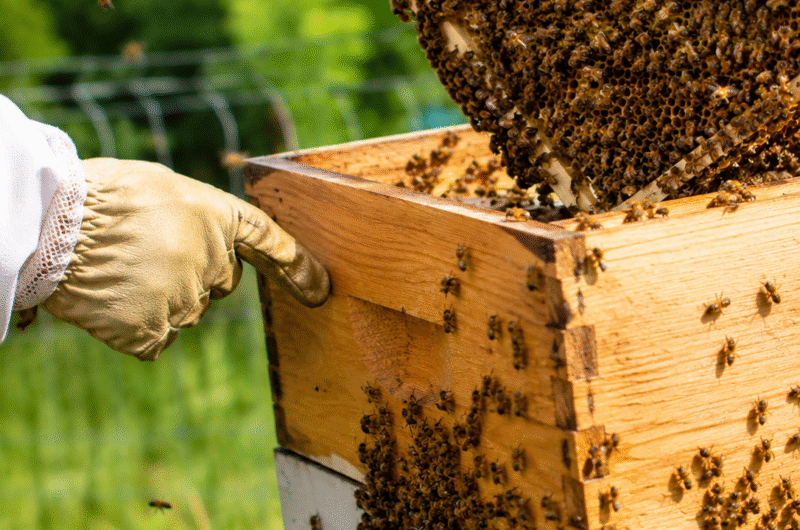
Walk up to your hive on a warm morning and look at the entrance. If you’re seeing a big cluster of bees hanging outside the front — what beekeepers call “bearding” — that’s a hive running out of room. Bees don’t swarm randomly. They swarm because the colony got so big there’s no space left to grow. When you see that cluster spilling out, your hive is already under serious pressure.
What to do: Add a super immediately. If you’ve been putting it off, stop putting it off.
2. You’re Finding Queen Cups Along the Bottom Bars
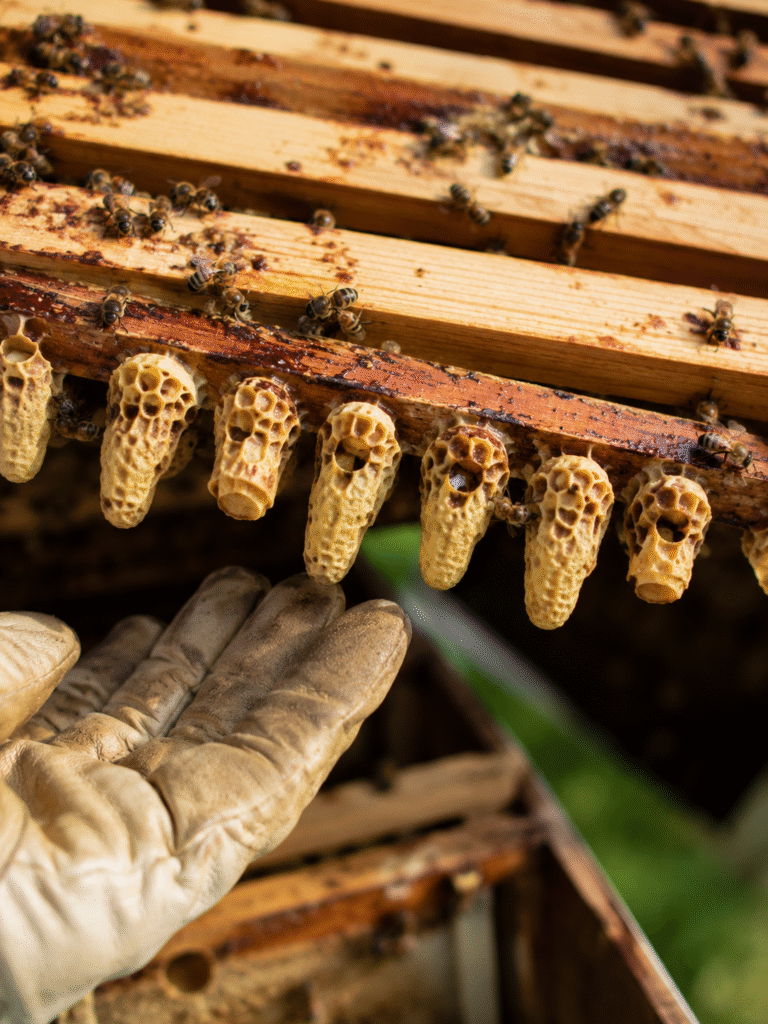
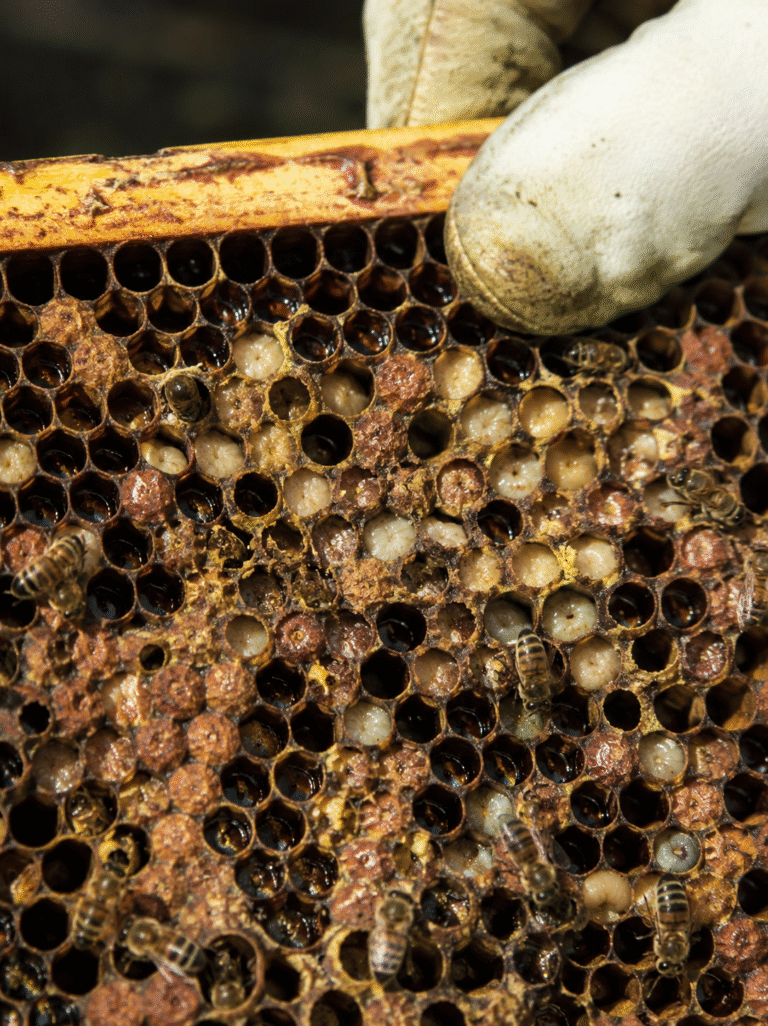
Open your hive and flip a few frames. Look specifically at the bottom edges. See anything that looks like a small acorn or peanut shell pointing downward? That’s a queen cup. On its own, a cup isn’t a crisis — bees build them out of habit sometimes. But if there are several of them, and especially if they look freshly waxed and polished on the inside, the bees are preparing to raise a new queen. That’s step one of the swarm process.
What to do: Check every frame carefully. If cups are empty, watch closely. If even one has an egg or larva inside, you’re on the clock.
3. You Find Actual Queen Cells (Not Just Cups)
This is different from cups. A capped queen cell looks like a big, bumpy peanut hanging off the comb. Once a queen cell is capped, the clock is ticking fast — the new queen will emerge in about 8 days. At that point, the old queen will almost certainly leave with a swarm before the new one hatches.
What to do: Don’t panic, but move fast. You have a few options — split the hive, remove the queen cells (though this rarely works long-term if the colony is determined), or do a walk-away split and let them raise a new queen on their own.
4. The Queen Is Thinner Than Usual
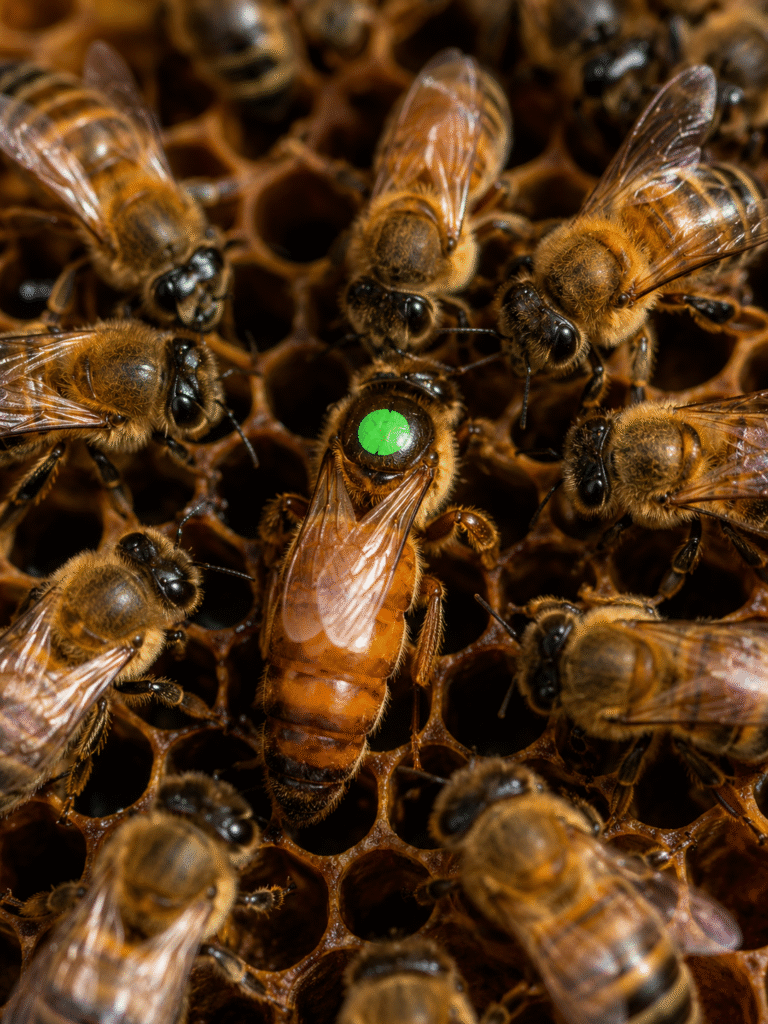
Most beekeepers don’t notice this one until they’ve been keeping bees for a few years. About a week before a swarm, the worker bees actually start putting the queen on a diet. They reduce her food so she loses weight and can fly. A laying queen is fat and heavy — great for egg production, bad for flight. A pre-swarm queen is slimmer, more agile, and ready to go.
If you’ve been handling your queen long enough to know what she normally looks like, and she suddenly seems smaller or less robust, pay attention.
5. Drone Population Has Exploded
Drones don’t do hive work. They exist to mate with new queens. And a colony preparing to swarm produces a lot of them. If you open your hive and notice way more drones than usual — the big, round, loud ones with no stinger — that’s a biological signal. The colony is shifting resources toward reproduction.
One frame of drone brood isn’t unusual. Three or four frames, especially combined with other signs on this list, is a red flag.
6. Bee Scouts Are Acting Strange Around Your Property
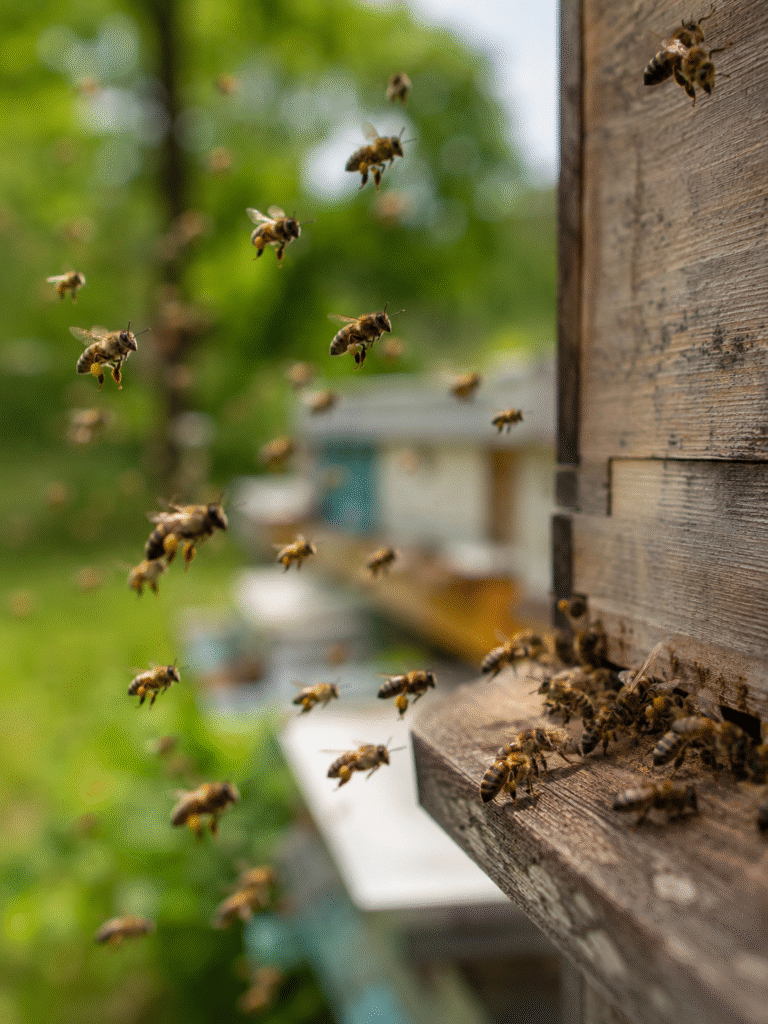
A day or two before a swarm, scout bees start looking for a new home. They fly out and inspect cavities — hollow trees, gaps in walls, sometimes chimneys or the inside of a garden shed. If you’re noticing a few bees investigating odd spots around your property that they’ve never cared about before, it might not be random.
This one is subtle and easy to miss, but once you know what to look for, you start seeing it.
7. The Hive Sound Has Changed
Experienced beekeepers often talk about “reading” a hive by sound. A healthy, calm hive has a steady, low hum. A hive building up toward a swarm gets louder, almost restless. There’s an energy to it that’s hard to describe until you’ve heard it, but it’s there.
If your hive sounds different — more intense, more chaotic — trust your gut and open it up.
The Bigger Picture
Here’s the thing about swarming that a lot of beginning beekeepers don’t fully appreciate: the bees are not doing anything wrong. Swarming is how bee colonies reproduce at the colony level. It’s healthy behavior. A strong colony that swarms is, in some ways, a success story.
The challenge for you as a beekeeper is that losing half your bees mid-season can set your honey production back significantly. And a swarm that lands somewhere inconvenient — a neighbor’s fence, a busy street, someone’s garden wall — becomes a problem fast.
The earlier you catch these signs, the more options you have. A colony showing signs one and two on this list gives you weeks to act. A colony at sign three or four gives you days. By the time you hear a roar and see a cloud of bees rising out of your hive, your window has closed.
Check your hives this week. Really check them — every frame, every bottom bar. Swarm season 2026 is moving faster than usual, and the colonies that made it through winter are strong and ready to split.