
It started quietly.
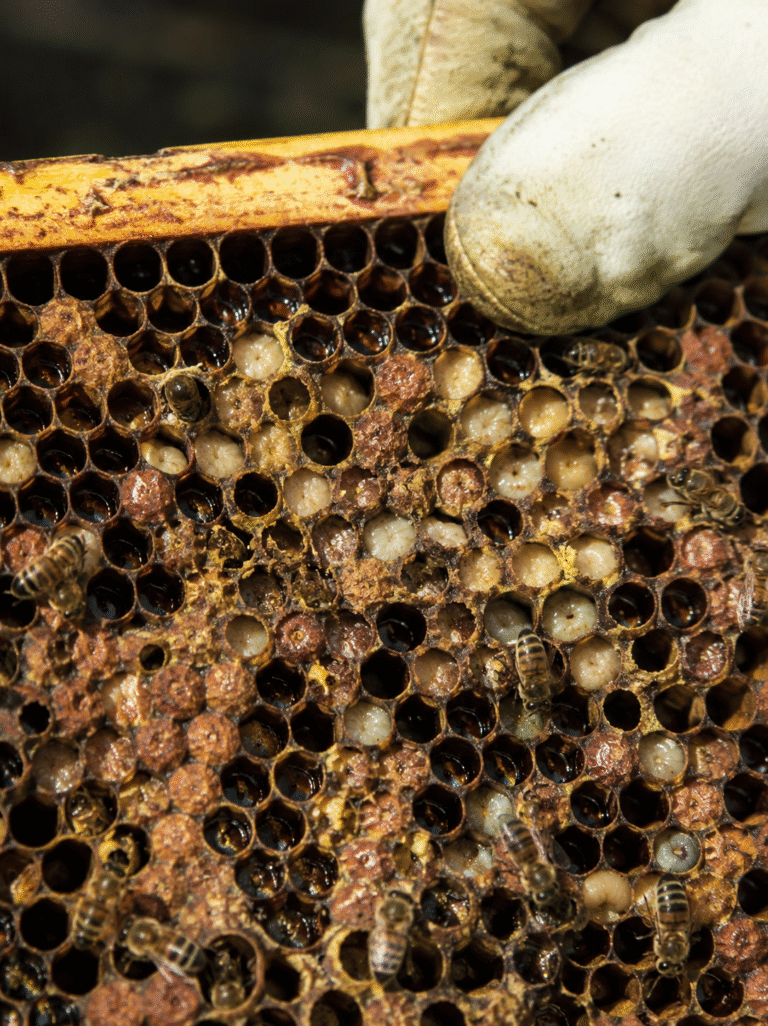
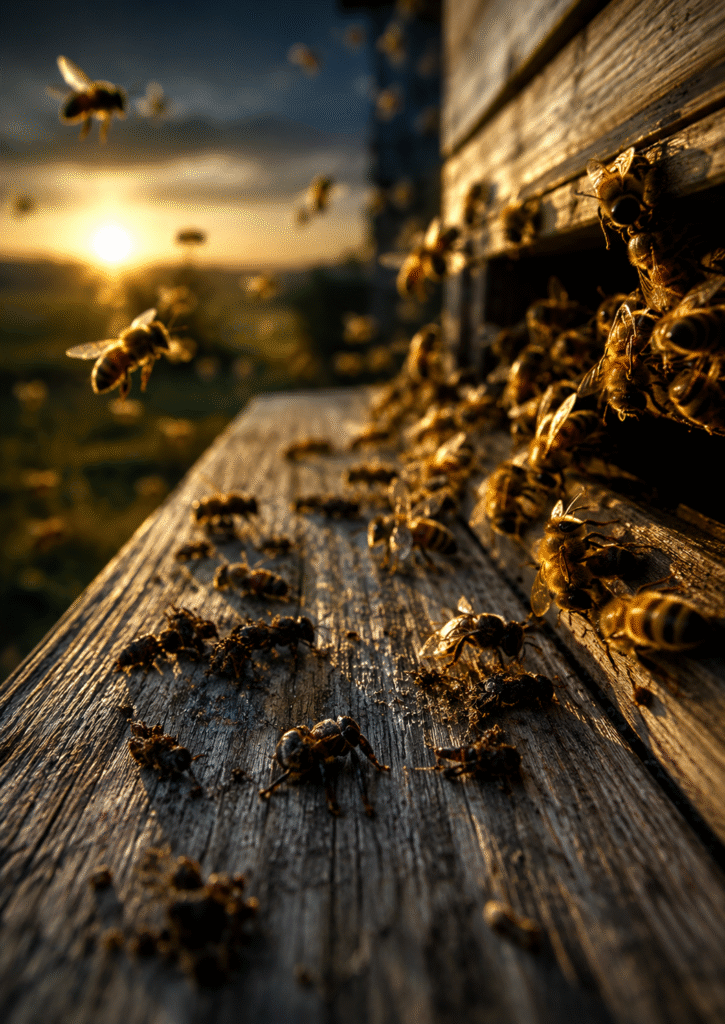
In January 2025, beekeepers across the United States began making the same phone call. Different states, different operations, but the same hollow voice on the other end: “My hives are gone.”
Not sick. Not struggling. Gone.
Gary Ashurst manages 25,000 colonies in Southern California. He’s seen bad winters before. He’s lost bees to mites, to pesticides, to drought. But nothing prepared him for what he found when he opened his hives that January.
“My phone was ringing off the hook,” he said. “‘Hey, you got any extra bees? Got any extra bees?’ — because there was a huge demand. Everyone was losing everything.”
By the time researchers tallied the numbers, the result was staggering: commercial beekeepers across the U.S. had lost an average of 62% of their honey bee colonies between June 2024 and March 2025. That’s 1.7 million colonies. The worst bee die-off ever recorded in American history.
And it’s not over.
Why This Is Different From Every Other “Bee Crisis” You’ve Heard About
You’ve probably seen the headlines before. “Bees are dying.” “Colony collapse disorder threatens our food supply.” Those stories have been circulating since 2006, and while they were serious, the beekeeping industry adapted. Losses of 30–40% per year became the painful new normal. Not good, but survivable.
This is not that.
Before 2006, a beekeeper could expect to lose around 10–15% of their colonies over a winter. Last year, some operations lost everything. And unlike previous collapses where losses were concentrated among hobbyists or smaller outfits, this time the hardest hit were the large commercial operations — the professionals with the most resources, the most experience, the most sophisticated management tools at their disposal.
When the big guys lose 62%, something has gone fundamentally wrong.
“This is unprecedented,” said Danielle Downey, executive director of Project Apis M., the nonprofit that conducted the national survey. “Definitely higher losses than we’ve ever seen before, even with colony collapse disorder.”
The Culprit: A Mite That Learned to Survive Our Best Weapon
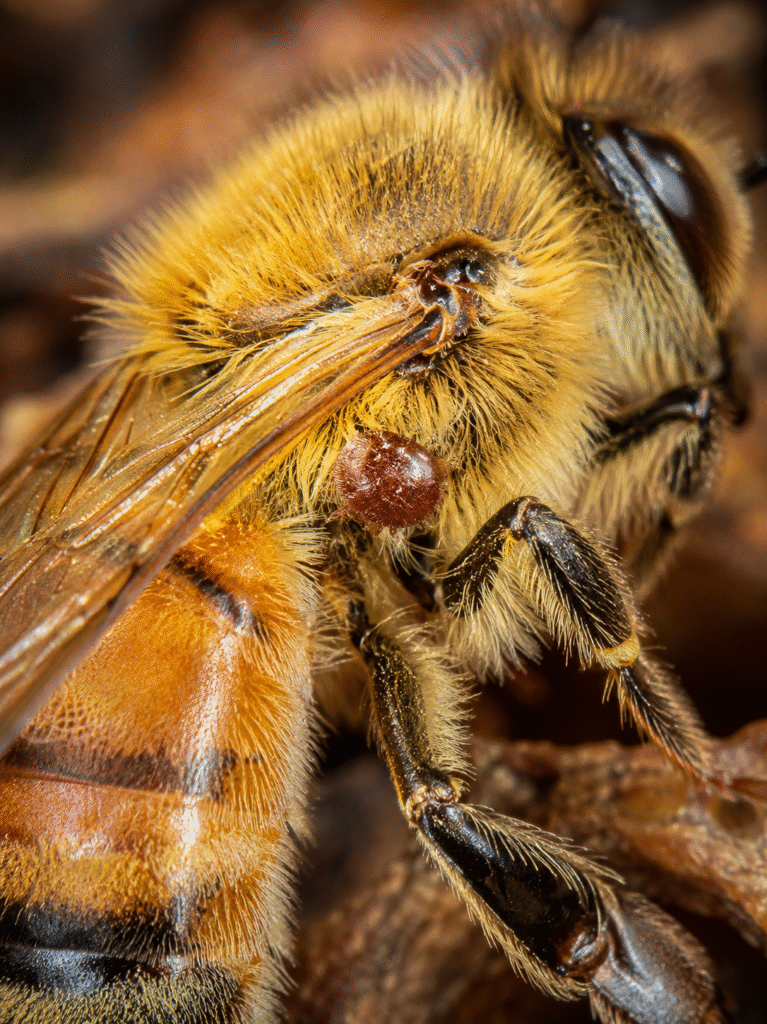
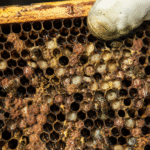
For years, beekeepers have been fighting a parasite called Varroa destructor — a fitting name if there ever was one. The Varroa mite is about the size of a sesame seed, but don’t let that fool you. It latches onto bees and feeds on their fat body tissue — the organ that controls a bee’s immune system, energy storage, and metabolism. A heavily mite-infested bee is essentially immunocompromised, weakened, and unable to fight off disease.
The go-to weapon against Varroa has been a miticide called amitraz. It works by attacking the mite’s nervous system. Beekeepers have relied on it for decades, and for a long time, it was effective.
Then the mites figured it out.
In June 2025, USDA scientists confirmed what many beekeepers had been suspecting for years: Varroa mites had developed widespread resistance to amitraz. When they screened mites from collapsed colonies across California and the western United States, they found genetic markers for amitraz resistance in virtually every single mite they tested.
Not some mites. Not most mites. All of them.
“Once the viruses start, you can’t stop it,” Ashurst said. “It’s gonna run rampant.”
He’s right — because the mites don’t just weaken bees directly. They also act as needles, injecting dangerous viruses directly into a bee’s bloodstream every time they feed. The USDA’s Bee Research Laboratory found high levels of Deformed Wing Virus A and B and Acute Bee Paralysis Virus in all recently sampled bees from collapsed colonies. These viruses are, as the name suggests, devastating. Bees with deformed wing virus can’t fly. Bees with acute bee paralysis virus tremble, lose coordination, and die within days.
With the mites now immune to the main treatment, those viruses spread unchecked through a hive like wildfire through dry grass.
What $600 Million in Lost Bees Looks Like on Your Plate
You might be thinking: okay, this is terrible for beekeepers. But what does it mean for me?
More than you might expect.
The USDA estimates the financial impact of these colony losses at $600 million — and that’s just what’s directly measurable. It doesn’t fully account for what happens downstream, when those bees aren’t available to pollinate crops.
Here’s the thing most people don’t realize: honey production is almost a side business for commercial beekeepers. The real money — and the real service they provide — is pollination. Almonds, blueberries, cherries, apples, melons, pumpkins — all of these crops depend on managed honeybee colonies to reproduce. The almond industry alone requires roughly 80% of all commercial U.S. honeybee colonies every February.
When 62% of those colonies disappear, farmers start scrambling. Pollination contracts go unfulfilled. Yields drop. Prices rise.
“Honey bees are the backbone of our food system, pollinating the crops that feed our nation,” said Zac Browning, a fourth-generation commercial beekeeper and board chairman of Project Apis M. “If we continue to see losses at this rate, we simply won’t be able to sustain current food production.”
The crops most at risk — the ones that could see reduced yields or higher prices — are worth more than $18 billion annually to U.S. agriculture.
Those berries in your cereal bowl. The almonds in your trail mix. The apples your kids pack for school. They all exist because someone, somewhere, moved a hive of bees next to a field in February.
The Domino Effect Nobody Is Talking About
It gets more complicated. Rebuilding a bee colony takes time. A beekeeper who lost 60% of their operation in winter can’t simply replace those bees by spring. They have to split surviving colonies, purchase expensive replacement packages, and nurse them through a full season before those new hives are strong enough to be commercially useful.
Some beekeepers won’t survive that financial gap.
“There’s only so much hits you can take before you start saying, ‘I don’t know if I can keep doing this,'” Ashurst said.
When large commercial operations fail, that doesn’t just hurt their own bottom line. It removes pollination services from entire agricultural regions. It contracts the supply of queen bees needed to rebuild other operations. It drives up the price of replacement packages — which are already in short supply because everyone is trying to replace bees at the same time.
The beekeeping industry is discovering what every fragile system eventually learns: once a collapse starts, the second-order effects can be just as damaging as the first.
Is There Any Hope? (Yes — But It’s Complicated)
The picture is bleak, but researchers and beekeepers aren’t giving up. A few bright spots are emerging from the wreckage.
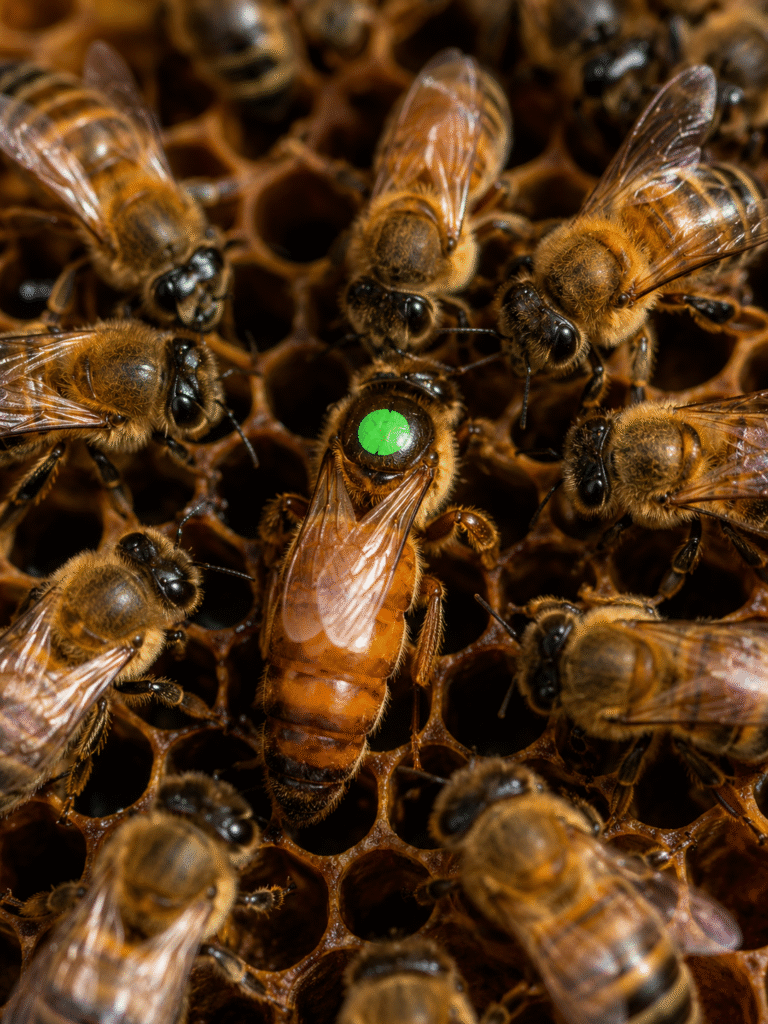
Resistant bees exist. A study published in early 2026 out of the University of California Riverside tracked 236 honeybee colonies over three years and found that locally-raised hybrid queens — drawing from a naturally mixed population including African, Eastern European, Middle Eastern, and Western European bee lineages — carried about 68% fewer Varroa mites on average compared to commercial queens. They were also more than five times less likely to reach mite levels requiring chemical intervention. These aren’t lab-engineered super bees — they evolved naturally from feral California colonies. Breeding programs focused on this kind of natural resistance may be one of the most promising long-term paths forward.
New treatment strategies are being developed. With amitraz resistance now confirmed across virtually all tested Varroa populations, the industry is urgently pivoting to alternatives. Oxalic acid treatments, formic acid, and various integrated pest management approaches that rotate chemical classes are gaining traction. The key lesson: never rely on a single treatment. Rotate, rotate, rotate.
Funding and research are mobilizing. The USDA, Project Apis M., the American Beekeeping Federation, and the Honey Bee Health Coalition are coordinating on an unprecedented scale to investigate causes and fast-track solutions. Emergency funding mechanisms are being explored. The scientific community is treating this with the urgency it deserves.
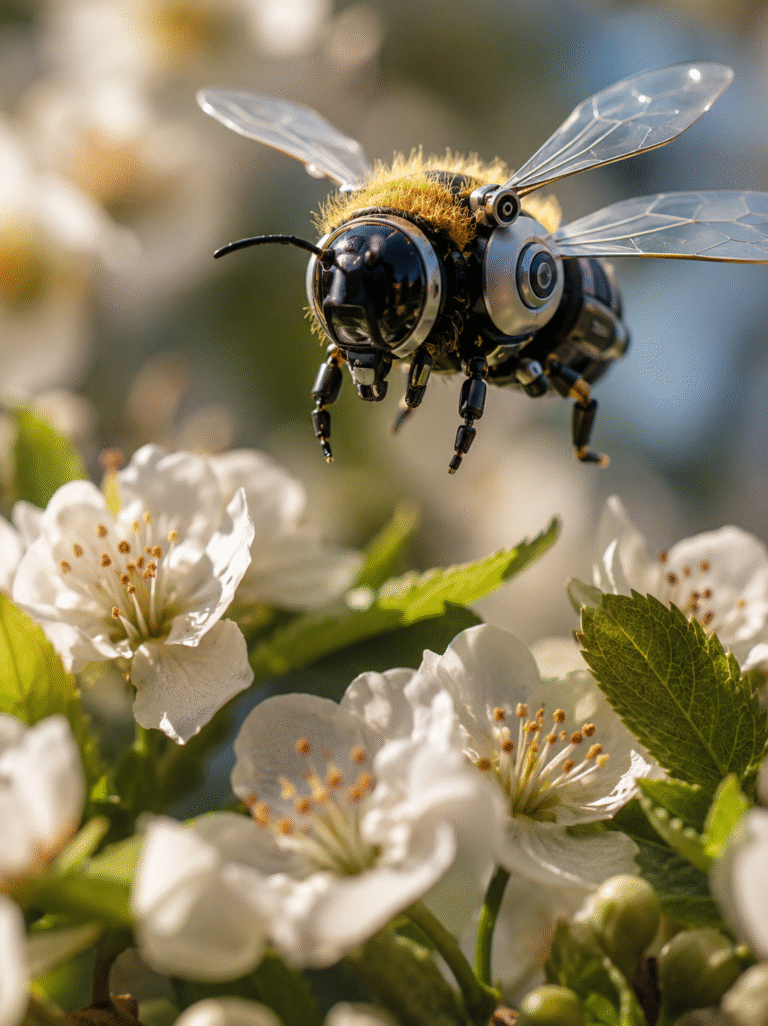
Smart hive technology is spreading. IoT sensors that monitor hive temperature, humidity, bee activity, and even sound frequencies in real-time are helping beekeepers catch problems earlier — before a mite infestation becomes catastrophic. Adoption is growing fast, with projections suggesting more than half of commercial operations will incorporate some form of smart monitoring by end of 2026.
What You Can Do Right Now
If you’re a beekeeper, the most actionable advice from researchers right now:
- Stop relying on amitraz alone. Resistance is now effectively universal. Rotate between miticide classes every treatment cycle.
- Monitor obsessively. Alcohol washes and sugar rolls should be routine, not occasional. Catching a rising mite count early is the difference between a treatable situation and a dead hive.
- Consider locally-adapted queens. The evidence for naturally mite-resistant genetics is growing. Talk to local breeders — the bees that have been surviving in your region without treatment may be your best long-term investment.
- Feed proactively. Nutritional stress was identified as a significant compounding factor in last year’s losses. Supplemental protein and carbohydrates during scarcity aren’t optional anymore.
If you’re not a beekeeper, you can still help:
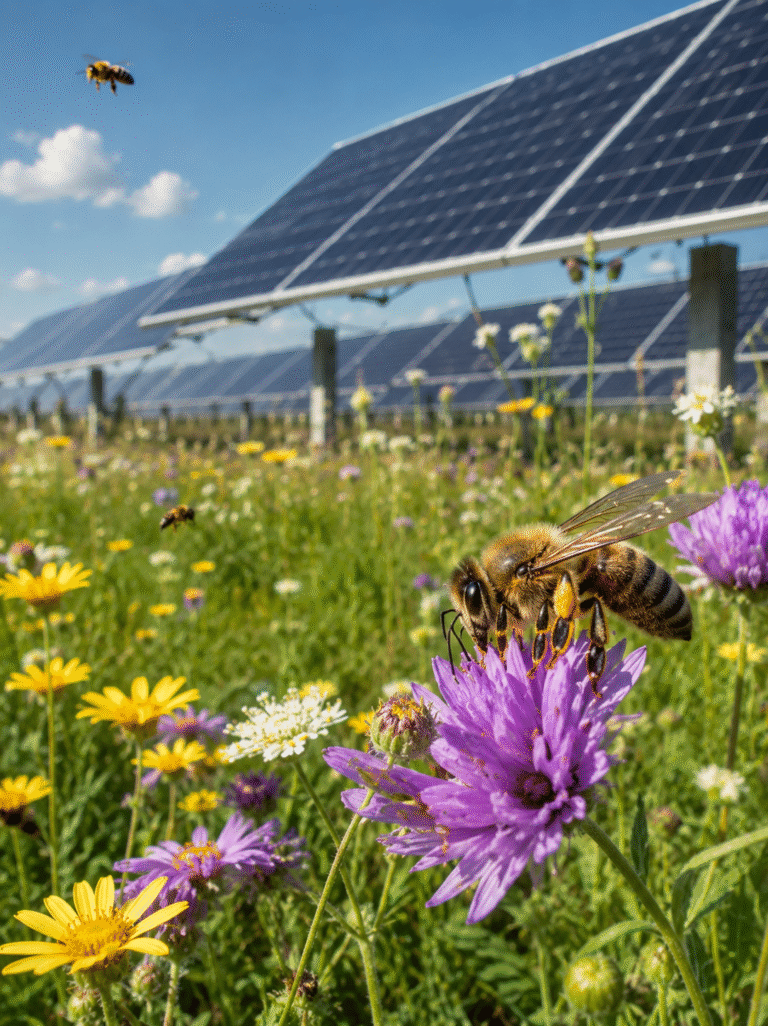
- Plant pollinator-friendly gardens. Lavender, borage, phacelia, and native wildflowers give bees the nutrition they desperately need.
- Reduce or eliminate pesticide use in your yard, especially during bloom periods.
- Support local beekeepers. Buy raw honey from producers you know. The economics of beekeeping right now are brutal — every jar matters.
- Talk about this. The more people understand what’s happening to bee colonies, the more pressure there is on policymakers to fund research and reform pesticide regulations.
The Bottom Line
What happened to America’s bees in 2025 wasn’t just a bad year. It was a warning.
A parasite that we’ve been fighting for decades has outpaced our best weapon. The consequences are already rippling through the food system. And the beekeepers who have dedicated their lives to keeping these colonies alive are staring down losses that may force many of them to walk away.
But here’s what I keep coming back to: bees have survived for 30 million years. They have survived ice ages, mass extinctions, and every challenge evolution has thrown at them. The Varroa mite is devastating — but it’s also a relatively recent arrival. Bees in certain populations are already beginning to adapt.
The question isn’t whether bees can survive. They can.
The question is whether we’ll give them enough time — and enough support — to do it.
Sources: USDA Agricultural Research Service, Project Apis M., Honey Bee Health Coalition, University of California Riverside, Food Tank, InvestigateTV