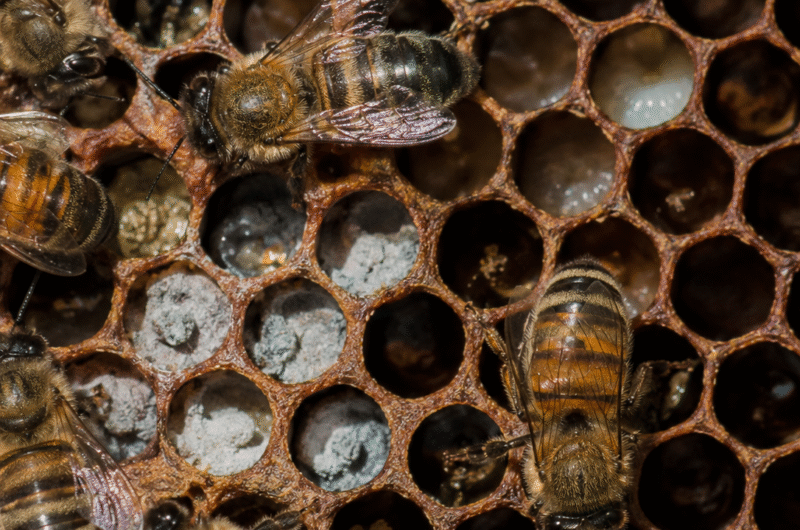

Chalky white mummies at your hive entrance? Here’s what chalkbrood really is, why it shows up, and what actually helps a colony recover
Chalkbrood in Bees: The Fungal Disease Hiding in Plain Sight
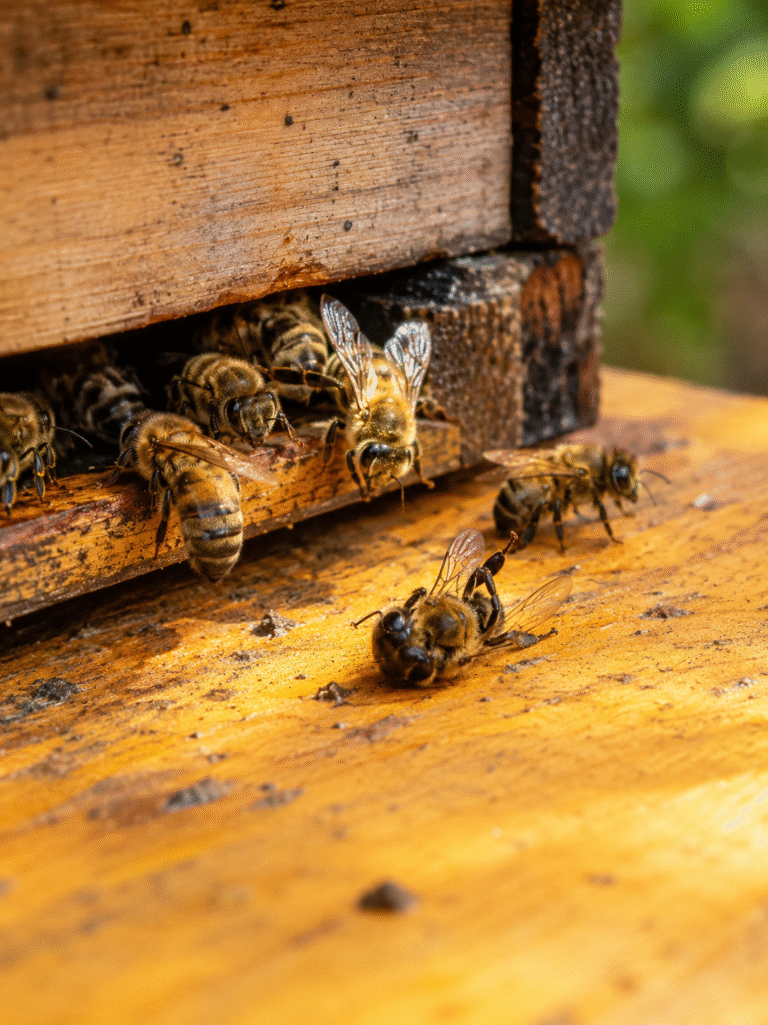
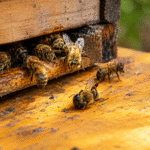
The first time I found them, I thought someone had dropped a handful of chalk pieces at my hive entrance. Small, hard, chalky white lumps, some going gray toward one end, scattered across the landing board like debris. It took me a second look — and a slightly sinking feeling — to realize I wasn’t looking at debris at all. I was looking at dead brood.
That’s chalkbrood, and if you keep bees long enough, you’ll eventually find it. It looks alarming the first time. It usually isn’t the disaster it appears to be.
What Chalkbrood Actually Is
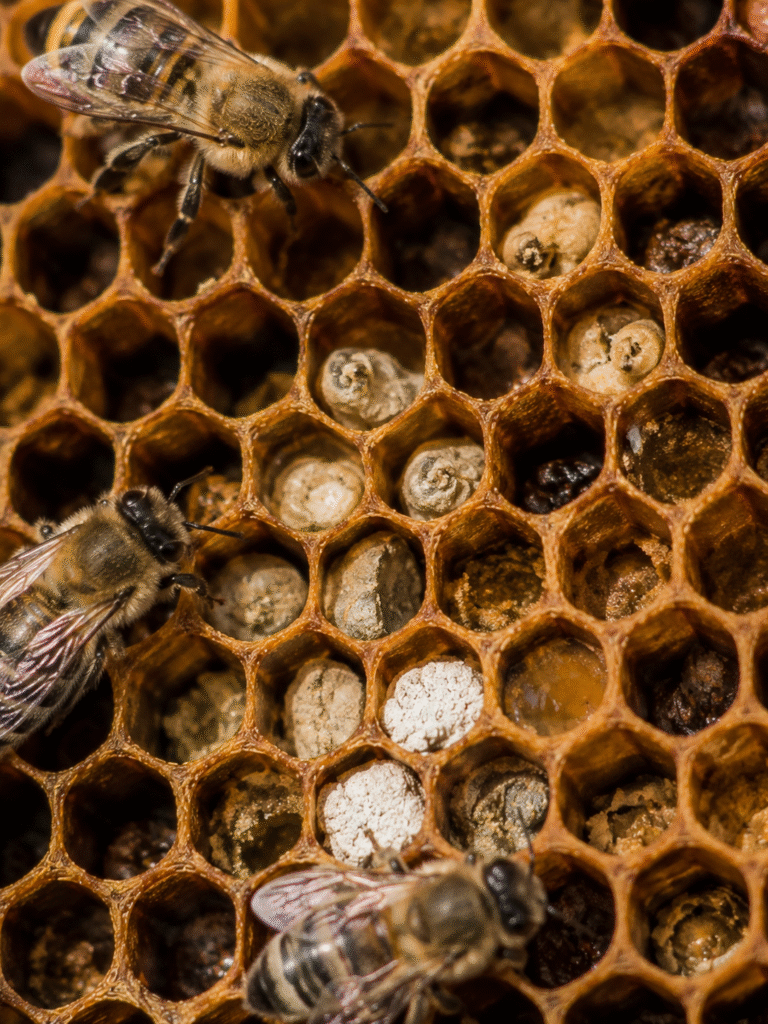
Chalkbrood is caused by a fungus, Ascosphaera apis, that infects developing larvae rather than adult bees. A larva picks up fungal spores through contaminated food, the spores germinate in its gut, and the fungus essentially consumes the larva from the inside out. What’s left behind hardens into a chalky, mummified husk — hence the name.
Here’s the direct answer, if that’s what brought you here:
Chalkbrood is a fungal brood disease caused by Ascosphaera apis that kills and mummifies bee larvae, turning them into hard, chalk-white (sometimes gray-to-black) lumps. It spreads through spore-contaminated food fed to larvae, thrives in cool, damp conditions and stressed colonies, and has no chemical treatment — management relies on improving hive conditions and encouraging hygienic behavior.
What makes it distinct from most of the other brood problems I deal with is that it’s fungal, not bacterial or viral. That single fact explains almost everything else about how it behaves and why it’s managed so differently from something like foulbrood.
The Telltale Signs — Spotting the Mummies
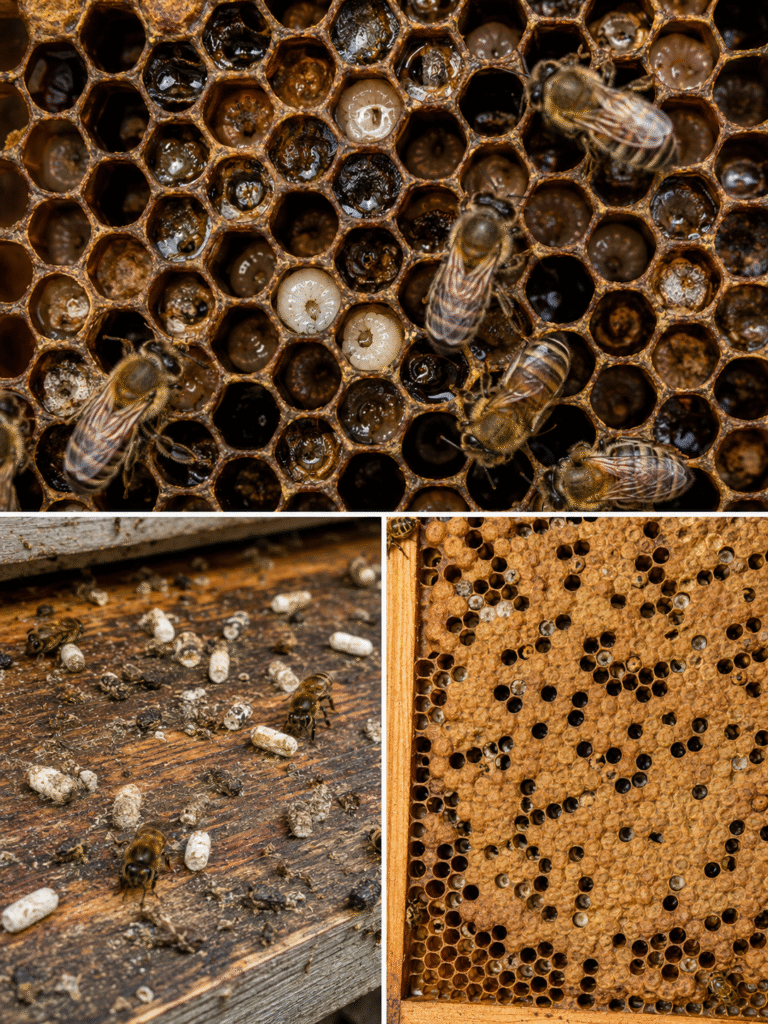
The clearest sign is the mummies themselves: hard, shrunken, chalk-like larval remains, usually white when fresh and darkening toward gray or black as fungal fruiting bodies develop on the surface. You’ll typically find them in two places — inside uncapped or partially chewed-open brood cells, and scattered on the bottom board or right at the entrance, where worker bees have already started hauling them out. It’s worth a proper look at the bottom board while you’re down there anyway, since it’s the same spot you’d catch early signs of the small hive beetle.
A second sign, easy to miss if you’re not looking for it, is a scattered or “shot-hole” brood pattern — healthy capped cells interspersed with irregular gaps where infected larvae have died and been removed. If you pull a frame and the brood looks patchier than usual, chalkbrood is one of several things worth ruling out, alongside adult-bee issues like Nosema, which produces a very different symptom picture entirely.
The larvae most commonly affected are the ones on the outer edges of the brood nest, where nurse bees have a harder time maintaining the tight temperature control that developing brood needs. That’s not a coincidence — it’s the mechanistic thread connecting almost every risk factor below.
Why Chalkbrood Shows Up
Chalkbrood outbreaks track closely with a specific combination of conditions: cool temperatures, high humidity or poor ventilation, and colony stress. A colony that’s otherwise strong can carry the fungus without visible symptoms for years — the spores can remain viable in and around a hive for over a decade — and only show a clinical outbreak when conditions tip in the fungus’s favor.
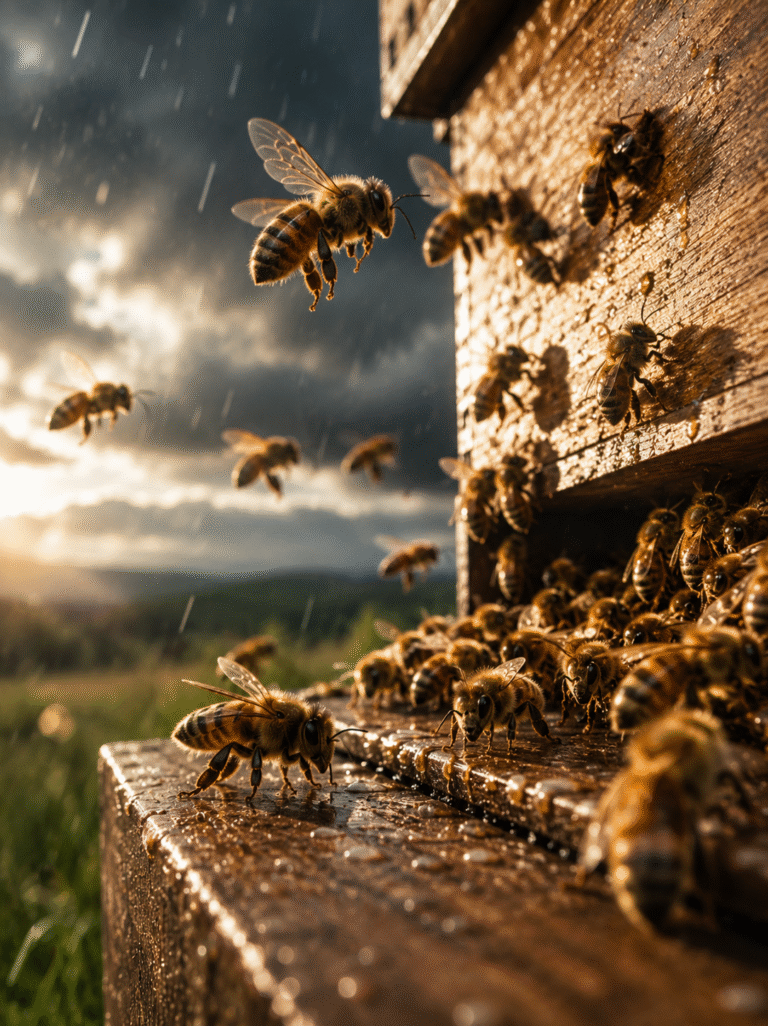
Spring is peak season for exactly this reason. Brood production is ramping up faster than the workforce can comfortably manage, temperatures are still swinging cool overnight, and a rain-heavy stretch can push humidity inside the hive higher than the colony can easily regulate. I’ve had colonies show a handful of mummies during a wet April and then clear up completely by the time consistent warm weather settled in — which tracks with what the research on this consistently shows.
A weak or failing queen, recent hive movement, and general colony stress from other sources — a rough mite season, for instance — all seem to lower a colony’s resistance as well. None of these factors cause chalkbrood on their own — the fungus has to be present first — but they tip the balance toward a visible outbreak.
Chalkbrood vs. Foulbrood vs. Nosema — Quick Comparison
It’s easy to lump every brood problem together the first few seasons, so here’s how to tell them apart at a glance:
| Chalkbrood | American Foulbrood | Nosema | |
|---|---|---|---|
| Cause | Fungus (Ascosphaera apis) | Spore-forming bacterium | Microsporidian parasite |
| Affects | Larvae | Larvae | Adult bees |
| Appearance | Hard, chalky white/gray mummies | Sunken, greasy dark cappings; ropy brown residue | No visible brood symptoms; adult dysentery, dwindling |
| Smell | None distinctive | Foul, sulfurous | None distinctive |
| Severity | Usually self-limiting | Serious, often reportable/regulated | Can be serious, especially in spring |
| Treatment | None chemical; hygienic behavior, requeening | Regulated — often requires destroying/treating equipment | Fumagillin (where legal), colony strengthening |
If you’re seeing chalky, hard mummies with no foul odor, you’re almost certainly looking at chalkbrood rather than the more serious foulbrood. That distinction alone should take some of the panic out of the discovery.
Is There a Treatment?
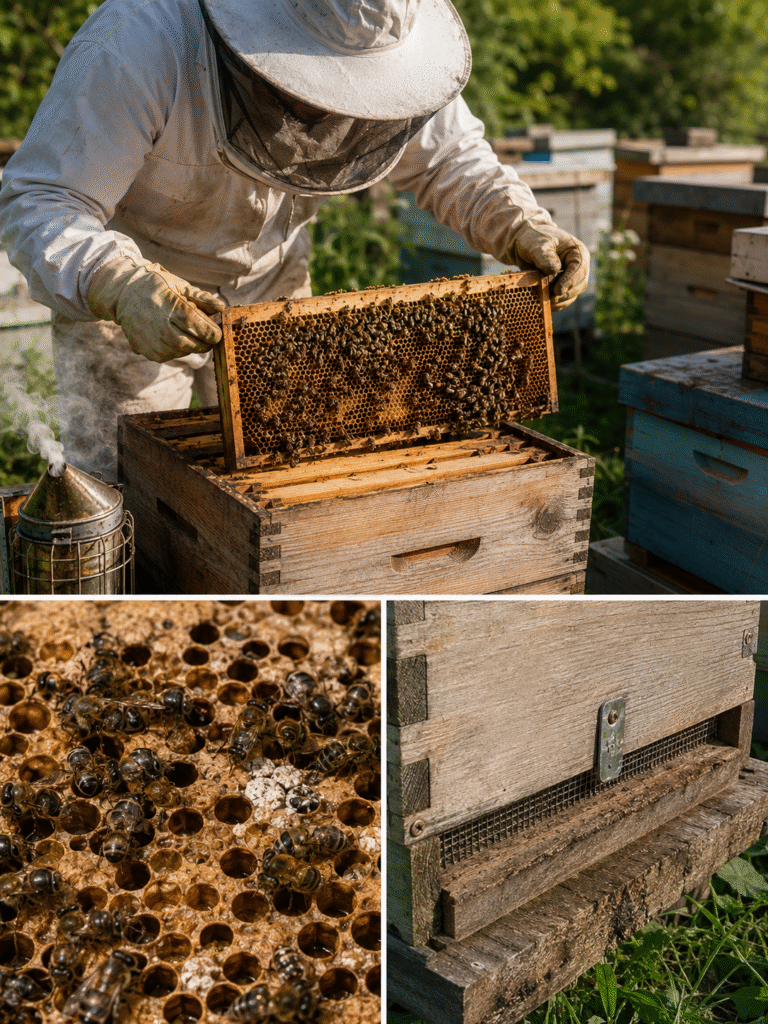
There’s no approved chemical treatment for chalkbrood — no product you spray, dust, or feed that clears it directly. That surprises a lot of newer beekeepers, myself included the first time I looked into it, since it can feel counterintuitive that a real, visible disease just doesn’t have a pharmaceutical answer.
What actually works is indirect, and it comes down to two things: improving the colony’s environment, and improving the colony’s genetics.
On the environment side, that means addressing ventilation and moisture — tilting the hive slightly forward so condensation drains rather than drips back onto brood, adding an upper entrance or ventilation gap during damp stretches, and making sure the colony isn’t overcrowded relative to its ability to regulate its own microclimate.
On the genetics side, hygienic behavior is the real lever. Some bee lines are simply better at detecting and removing infected larvae quickly, before the fungus can complete its lifecycle and produce more spores. Requeening with a queen bred from hygienic, resistant stock is one of the most consistently effective management strategies documented for chalkbrood — not because it eliminates the fungus from the environment, but because it improves the colony’s ability to keep the outbreak from establishing itself.
Will My Colony Recover on Its Own?
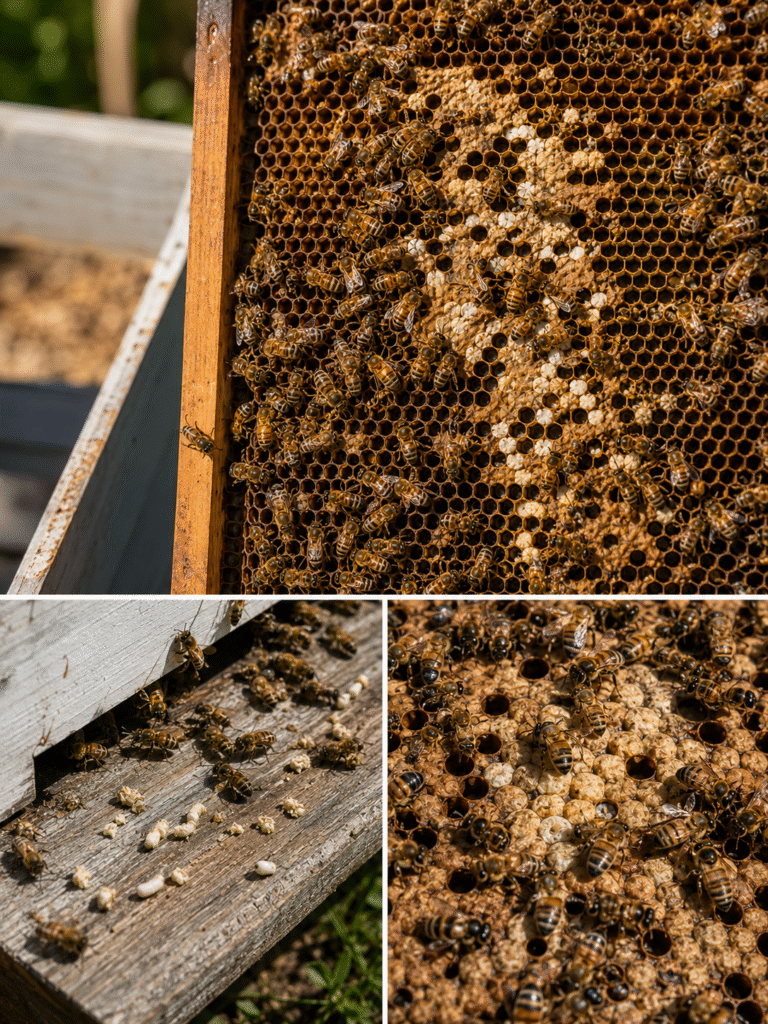
In most cases, yes. A strong, populous colony with a healthy laying queen typically clears a mild chalkbrood outbreak without any intervention at all — the bees identify and remove the mummies, conditions improve as the season warms, and symptoms taper off. I’ve watched this happen more than once and it’s honestly a little anticlimactic after the initial alarm of finding mummies at the entrance.
Where it becomes a genuine concern is in a colony that’s already weak, has a failing queen, or is dealing with chalkbrood on top of another stressor. In that situation, the disease is less a standalone problem and more a symptom of an underlying colony-health issue that’s worth addressing directly.
Field Notes
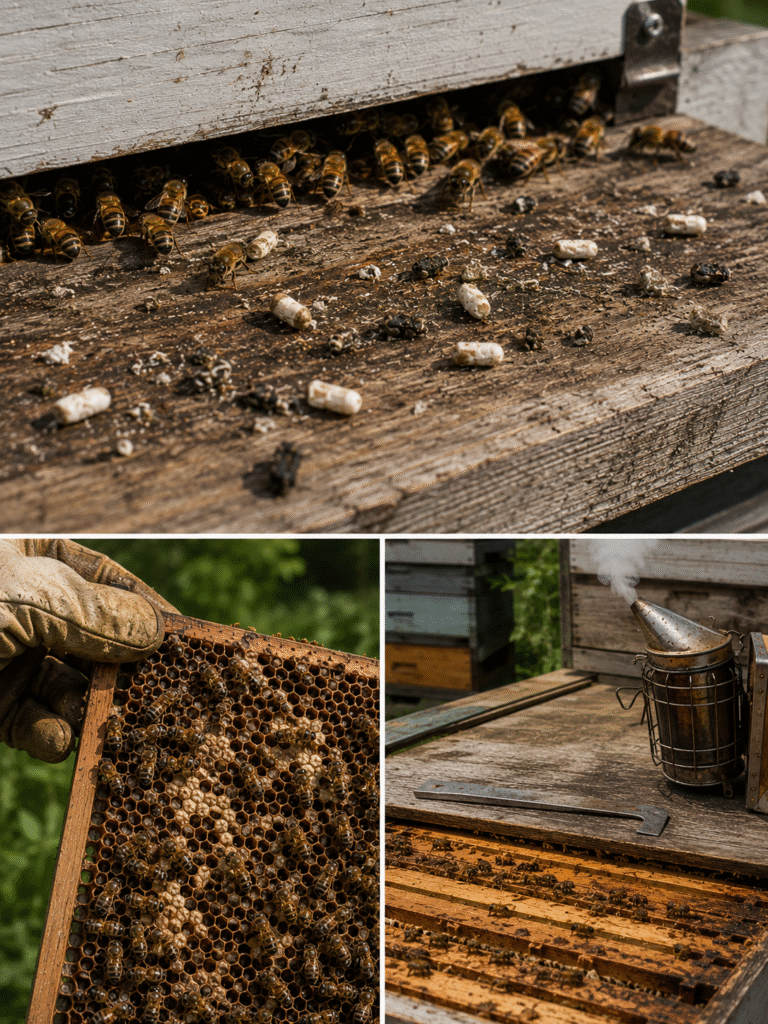
That first colony of mine — the one with mummies scattered across the landing board like spilled chalk dust — cleared up within about three weeks without any intervention from me beyond confirming it wasn’t foulbrood and keeping an eye on the brood pattern. What I took away from it wasn’t really about chalkbrood specifically. It was a reminder that not every abnormal thing you find in a hive is a five-alarm emergency, and that learning to tell the difference between “concerning” and “worth monitoring” is most of what separates a panicked first season from a calmer fifth one.
FAQ
What does chalkbrood look like in bees? Chalkbrood produces hard, chalk-like mummified larvae — white when fresh, darkening to gray or black — typically found inside brood cells or scattered on the bottom board and hive entrance.
Is chalkbrood contagious to humans? No. Chalkbrood only affects developing bee larvae and poses no risk to humans, and it doesn’t affect the safety of honey from an infected hive.
How do you treat chalkbrood? There’s no chemical treatment. Management relies on improving hive ventilation and moisture control, reducing colony stress, and requeening with hygienic, resistant stock if outbreaks recur.
Will a colony recover from chalkbrood on its own? Usually, yes — a strong, populous colony typically clears a mild outbreak without intervention as conditions improve and hygienic workers remove infected larvae.
Is chalkbrood the same as foulbrood? No. Chalkbrood is a fungal disease affecting larvae with a distinctive chalky appearance and no odor, while American Foulbrood is a much more serious bacterial disease with a foul smell and different regulatory implications.ns.