
Suddenly aggressive hive? Here’s how to safely find, remove, and replace your queen — and what to expect in the weeks after.
The hive had been calm for two full seasons — the kind of colony you could work in a t-shirt on a warm afternoon without a second thought. Then, almost overnight, opening the lid turned into a genuine confrontation: bees on my veil before I’d pulled a single frame, that particular high-pitched buzz that means business. Nothing about my routine had changed. The queen, it turned out, had superseded herself sometime that summer, and her daughter had mated with drones carrying noticeably hotter genetics than her mother’s. That’s requeening in a nutshell — not a punishment for the colony, just a genetics reset.
Short answer: To requeen an aggressive hive, you locate and remove the existing queen, wait roughly 24 hours for the colony to register it’s queenless, then introduce a new mated queen in a cage with a candy plug so the workers accept her scent gradually before she’s released — most colonies noticeably calm down within three weeks as her genetics take over the population.
Is It Really the Queen? Ruling Out Other Causes First
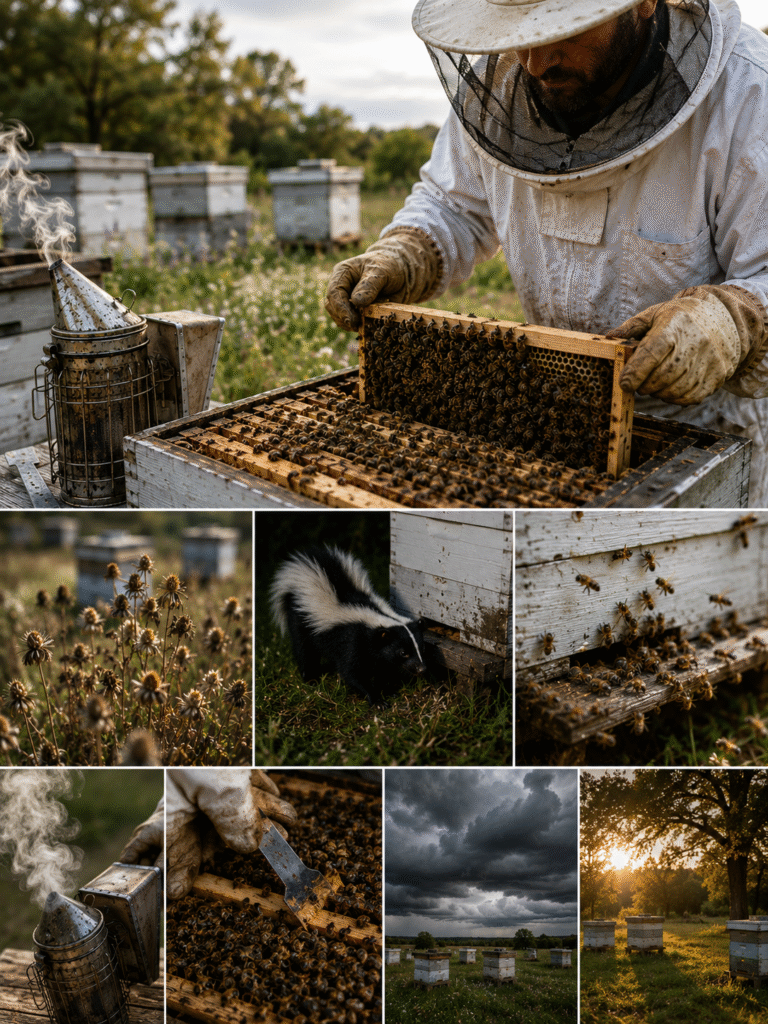
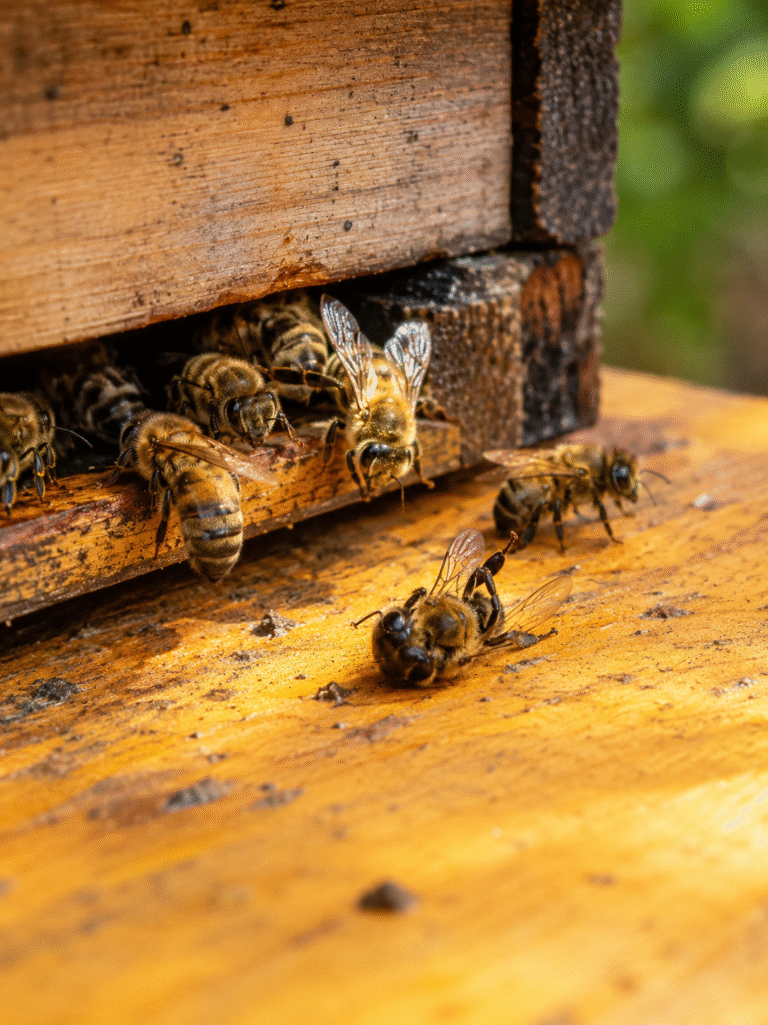
Before you go hunting for a queen to remove, it’s worth ruling out the causes of aggression that have nothing to do with her at all, because requeening a hive that was never the problem wastes a queen and doesn’t fix anything. A nectar dearth will make even gentle colonies defensive and quick to rob. A recent predator visit — skunks scratching at the entrance overnight are a classic culprit — leaves a colony on edge for days. Heavy-handed inspections, too much smoke or too little, and working a hive on a cold or overcast afternoon (when foragers that would normally be out are all home and irritable) can all produce a temporary hot streak that has nothing to do with genetics.
Signs a Requeen Is the Right Call
The distinction that actually matters is duration and consistency. Weather-related or handling-related aggression tends to spike and settle back down within a visit or two once conditions change. A genetics-driven temperament shift holds steady across multiple inspections, in different weather, regardless of how gently you work the colony — that consistency is the real signal.
Step-by-Step: Finding and Removing the Old Queen
An aggressive colony makes queen-finding harder than usual, so plan for it rather than fighting it.
- Work the hive at midday, when the maximum number of foragers are out and the population inside is at its smallest and calmest.
- Use more smoke than you’d normally think necessary — a genuinely defensive colony needs a heavier hand than a calm one.
- Pull frames from the outside in, setting each one aside in order, scanning both sides before moving to the next.
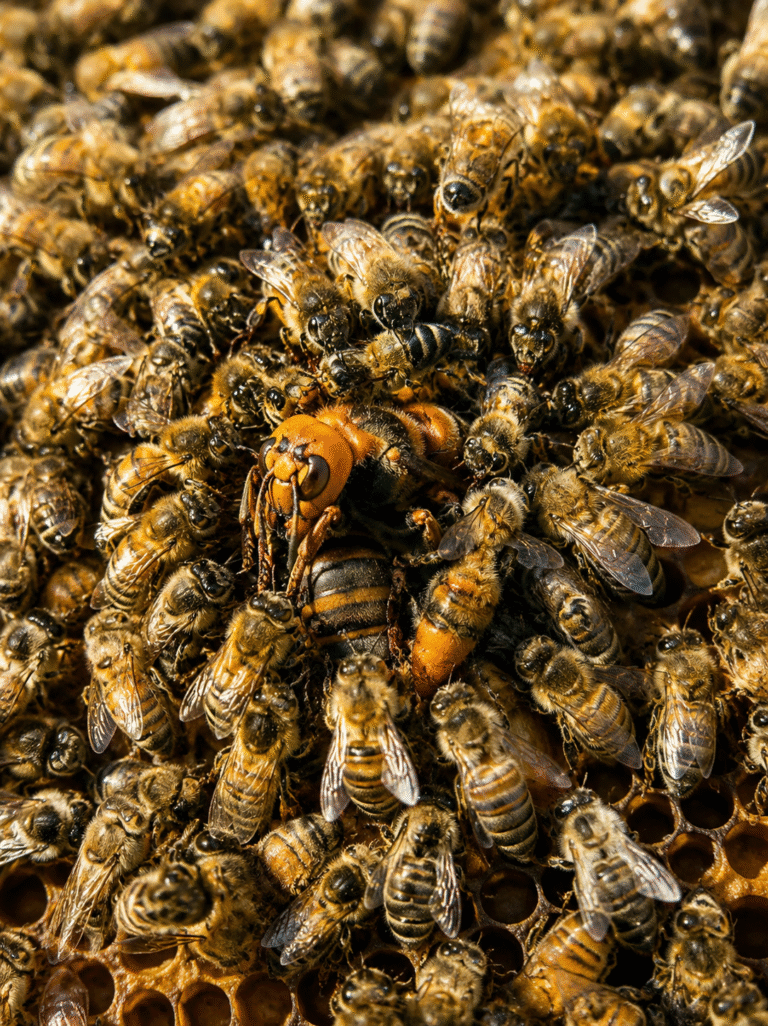
- If you can’t find her after a full pass, split the boxes onto separate stands a few feet apart for an hour; the frames holding open brood and eggs will draw the field bees back toward wherever she is, narrowing your search.
- Once located, remove her — most beekeepers cull her at this point rather than keeping her, since the entire point of the exercise is replacing her genetics.
Introducing the New Queen Safely
Cage introduction and the candy-plug wait
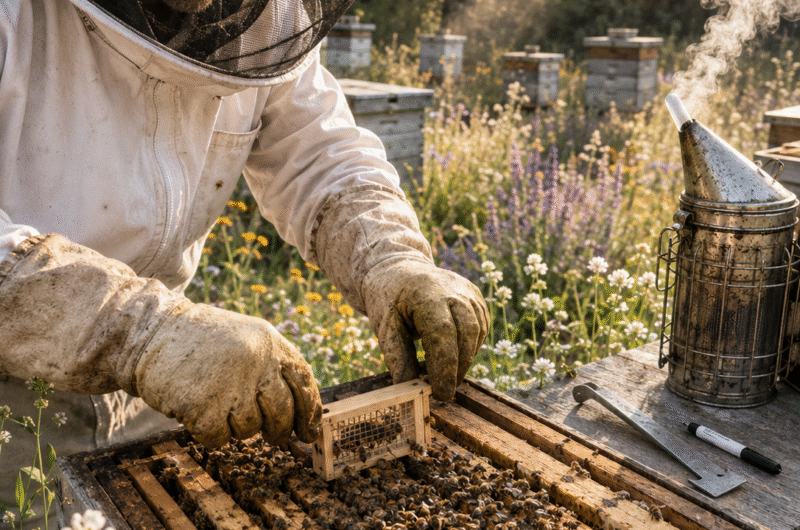
Don’t release a new queen directly into a hive that’s just lost its own — a colony in that state is high-strung and will likely kill her before she has a chance to establish her scent. Instead, suspend her introduction cage, candy plug facing down, between two brood frames near the center of the nest. The workers spend three to seven days chewing through the candy plug, during which time they gradually acclimate to her pheromones through the cage mesh rather than encountering her all at once. By the time she walks out on her own, she generally smells familiar enough that the aggression response doesn’t trigger.
What to Expect in the First 3 Weeks
| Timeframe | What’s happening | What you should see |
|---|---|---|
| Days 1–7 | Candy plug being chewed through, queen still caged | Bees calmly clustered around the cage, not balling it aggressively |
| Days 7–14 | Queen released, begins laying — this is the point to mark her right away so you always know her age at a glance | First new eggs visible; colony temperament still mixed (old workers still present) |
| Weeks 3–4 | Original aggressive-genetics workers dying off naturally | Noticeably calmer inspections as the new queen’s brood becomes the majority |
Temperament doesn’t flip overnight because the workforce alive on day one was raised by the old queen — real change tracks the worker bee lifecycle, roughly three to six weeks, not the moment the new queen starts laying.
If the New Queen Is Rejected — Troubleshooting
A ball of workers clustered tightly and aggressively around the cage, rather than calmly investigating it, is the clearest rejection sign — intervene by misting the ball with sugar water to break up the aggression and giving the colony another 24 hours queenless before trying again. If a second attempt also fails, the more likely explanation isn’t the queen — it’s that the colony wasn’t given enough queenless time beforehand to genuinely register her absence, so extend the queenless period to 48 hours on the next attempt rather than assuming every subsequent queen will fail the same way.
FAQ
Why did my calm hive suddenly become aggressive?
The most common cause is the colony superseding its own queen and the new queen mating with drones carrying more defensive genetics — but nectar dearths, recent predator activity, and rough handling during inspections can all cause temporary aggression that isn’t genetic at all.
How do I requeen an aggressive hive safely?
Locate and remove the existing queen, wait about 24 hours queenless, then introduce a new mated queen in an introduction cage with a candy plug so the colony gradually accepts her scent before she’s released.
How long until a new queen calms down the colony?
Expect three to six weeks for a full temperament shift, since the workers alive when you requeen were raised by the old queen — real change tracks as that generation is replaced by the new queen’s offspring.
What happens if the new queen is rejected?
Workers will ball tightly around her cage in an aggressive cluster rather than calmly investigating it; misting the ball with sugar water and extending the queenless period to 48 hours before a second attempt usually resolves it.