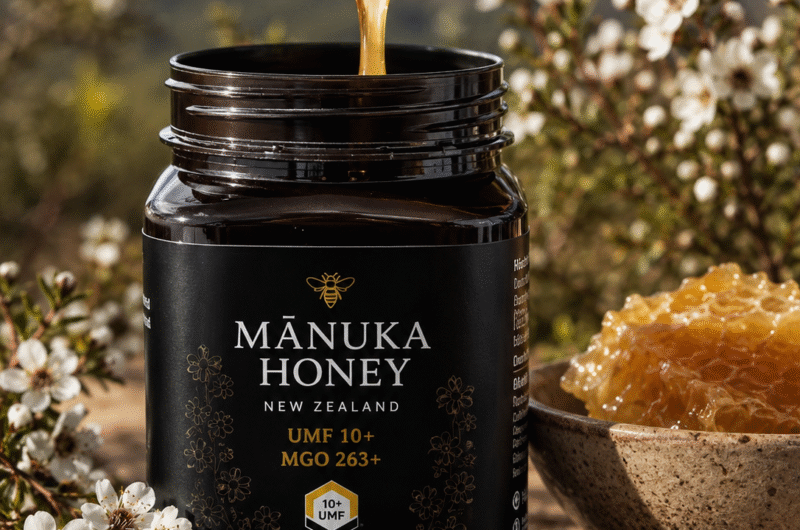

A reader named Priya emailed me a photo last month of a jar she’d just bought at her local pharmacy. Small jar, maybe 250 grams. Sixty-two dollars. She wanted to know if she’d been robbed.
I didn’t answer right away, because the honest answer required pulling a jar of my own dark wildflower honey off the shelf, setting it next to a UMF-certified manuka I keep around for exactly this kind of question, and tasting both side by side before I said anything definitive. That’s the only fair way to talk about this honey. Not from a spec sheet. From a spoon.
Here’s what I came back to her with, and what I think anyone holding an expensive jar of this stuff deserves to know.
The plant is the whole story
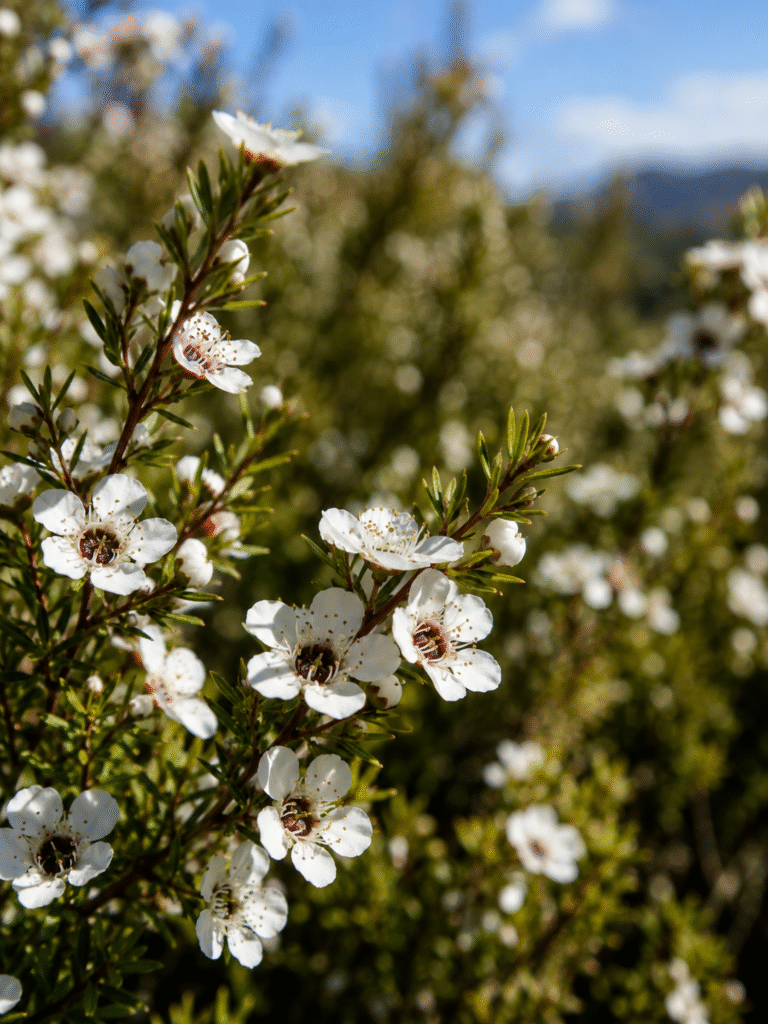
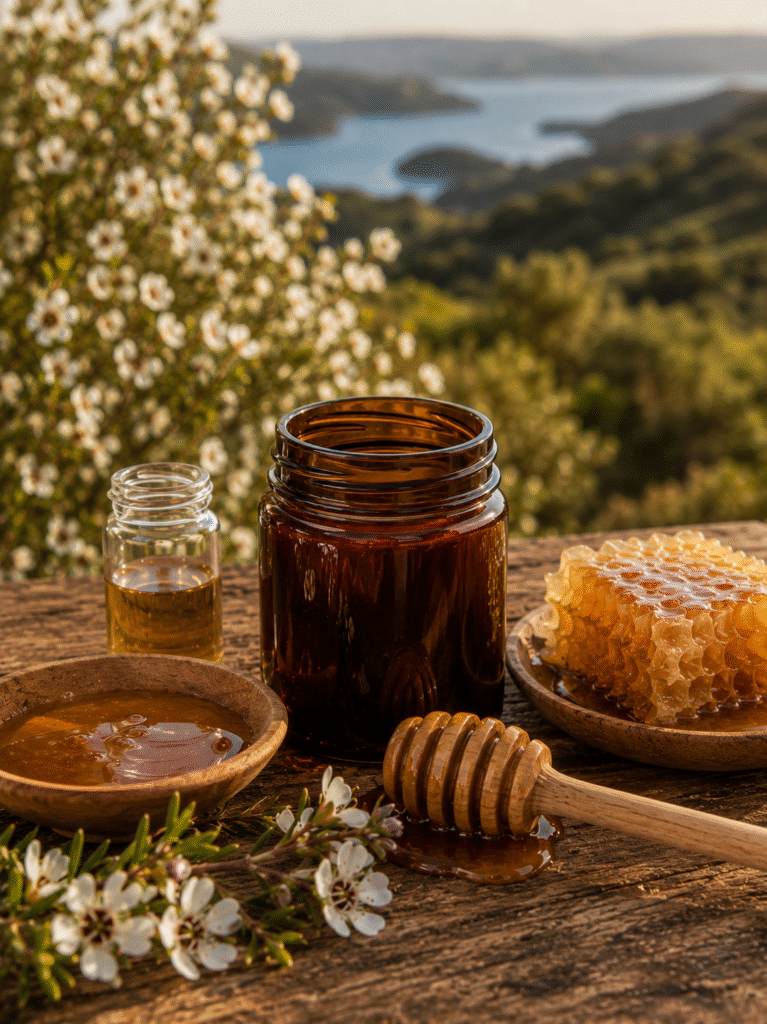
Manuka honey comes from Leptospermum scoparium, a scrubby flowering shrub native to New Zealand and parts of southeastern Australia. I’ve never kept bees near manuka myself — it doesn’t grow anywhere close to where I work my hives — but I’ve spent a fair amount of time on the phone with a beekeeper named Hamish who runs around 400 hives across the Coromandel Peninsula, moving them onto manuka stands every November when the bush comes into bloom.
What struck me talking to him wasn’t the chemistry. It was the logistics. Manuka flowers for roughly four to six weeks a year, and the bloom is brutally weather-dependent — a few days of rain or wind at the wrong moment and the flowers drop before the bees can work them properly. Hamish told me he’s had entire seasons where a planned harvest came in at a third of normal volume because of one bad week. You don’t get that kind of supply volatility with clover or alfalfa, which bloom reliably across huge acreages for months. Scarcity here isn’t manufactured. It’s baked into the plant’s biology.
That alone explains part of the price tag. It does not explain all of it.
The chemistry that actually matters
Every honey on earth has some antibacterial activity from hydrogen peroxide, which forms naturally as honey’s glucose oxidase enzyme reacts with moisture in the air. It’s why honey has been used as a wound dressing for thousands of years, and it’s not unique to manuka in the slightest. I want to be clear about that up front, because a lot of marketing copy quietly implies manuka invented antibacterial honey. It didn’t.
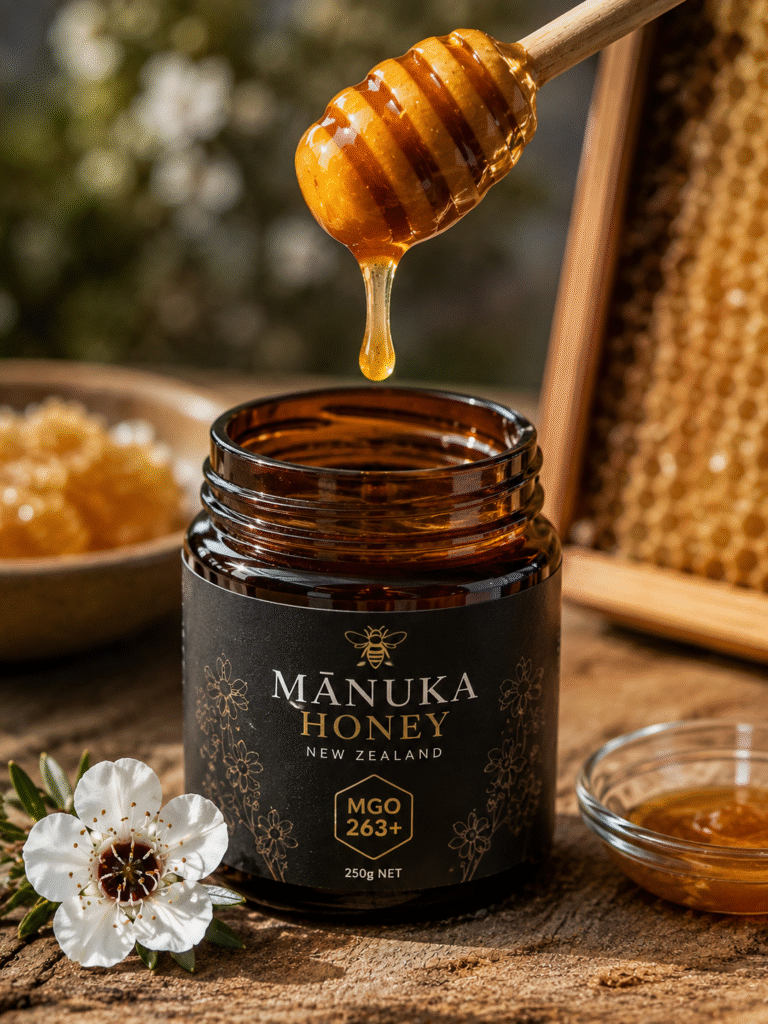
What manuka brings to the table is a separate, non-peroxide compound called methylglyoxal, or MGO, which forms over time from a precursor called dihydroxyacetone present in manuka nectar. This reaction happens slowly and continues as the honey sits in the comb and the jar, which is part of why manuka honey is typically tested and graded months after harvest rather than immediately. MGO is stable even when the honey is diluted or exposed to light and heat — conditions that destroy the hydrogen peroxide activity in ordinary honey almost instantly. That stability is the genuinely interesting part, scientifically speaking. It’s also the part that gets buried under marketing language about “superfoods” and “liquid gold.”
The grading system is confusing on purpose
This is where I get a little irritated on behalf of regular buyers, because the labeling here is needlessly hard to parse, and I don’t think that’s an accident.
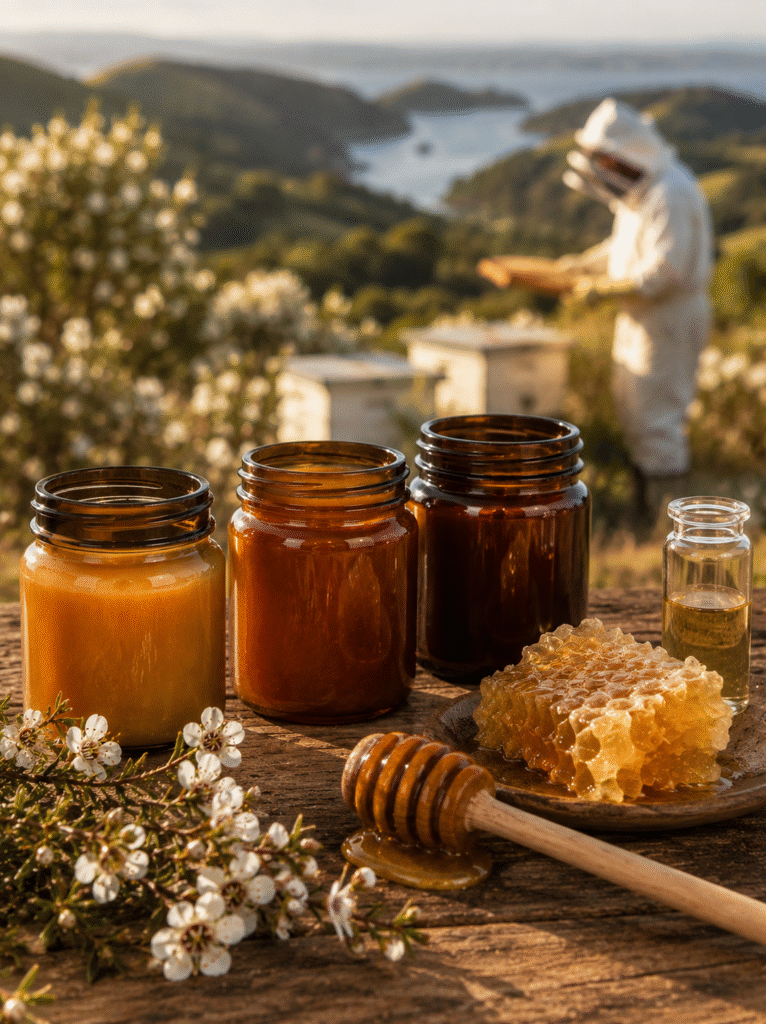
You’ll see UMF ratings, MGO ratings, and “Manuka Factor” numbers, sometimes all three on the same jar, sometimes just one. UMF (Unique Manuka Factor) is a trademarked grading system tied to a New Zealand industry group, and it bundles together MGO level along with two other markers — leptosperin and DHA — that help verify the honey actually came from manuka nectar rather than being blended or adulterated after the fact. MGO-only labeling just states the methylglyoxal concentration directly, in milligrams per kilogram, without the additional authenticity markers. Neither system is fake. They’re just measuring overlapping things in different ways, and a brand can pick whichever number makes their jar look most impressive on a shelf next to a competitor using the other scale.
My rule of thumb after going down this rabbit hole: UMF 5+ is genuinely low-grade and barely distinguishable from a decent local honey in terms of any special activity. UMF 10+ is where you start getting honey that behaves meaningfully differently — slower to ferment, noticeably more bitter, with real laboratory-measured non-peroxide activity. UMF 15+ and above is premium, expensive, and genuinely rare, because that concentration of MGO only shows up in a fraction of any given season’s harvest even from dedicated manuka apiaries. If a jar doesn’t list a number at all and just says “manuka blend” on the front, you’re very likely paying a manuka premium for honey that’s mostly something else.
Where the real fraud happens, and it’s not where you’d guess
People assume the scam is at the retail counter — someone swapping labels on a jar of cheap honey. That does happen, but it’s not the main problem. The bigger issue sits further up the supply chain, at the export and bulk-blending stage, long before the honey ever sees a retail shelf.
New Zealand’s manuka industry has openly acknowledged, through its own trade body’s public statements over the years, that the country exports several times more “manuka honey” by declared volume than its apiaries could plausibly produce given known manuka acreage and typical hive yields. The gap gets filled by blending small amounts of genuine high-grade manuka into much larger batches of ordinary honey, then labeling the result as manuka because the testing thresholds used by some markets are loose enough to allow it. This is why the UMF trademark and its stricter authenticity testing exist in the first place — the honey industry built its own policing mechanism because regulators were too slow.
What this means practically: a UMF-certified jar with a license number you can verify on the UMF Honey Association’s own site is a meaningfully different purchase than a jar that simply prints “Manuka Honey” on the front with no verifiable certification at all. I’d treat the second category the way I’d treat an unlabeled bottle of olive oil claiming to be extra virgin. Possibly fine. Possibly not what it says.
Tasting them side by side
Back to Priya’s question, and the spoon test I mentioned at the start.
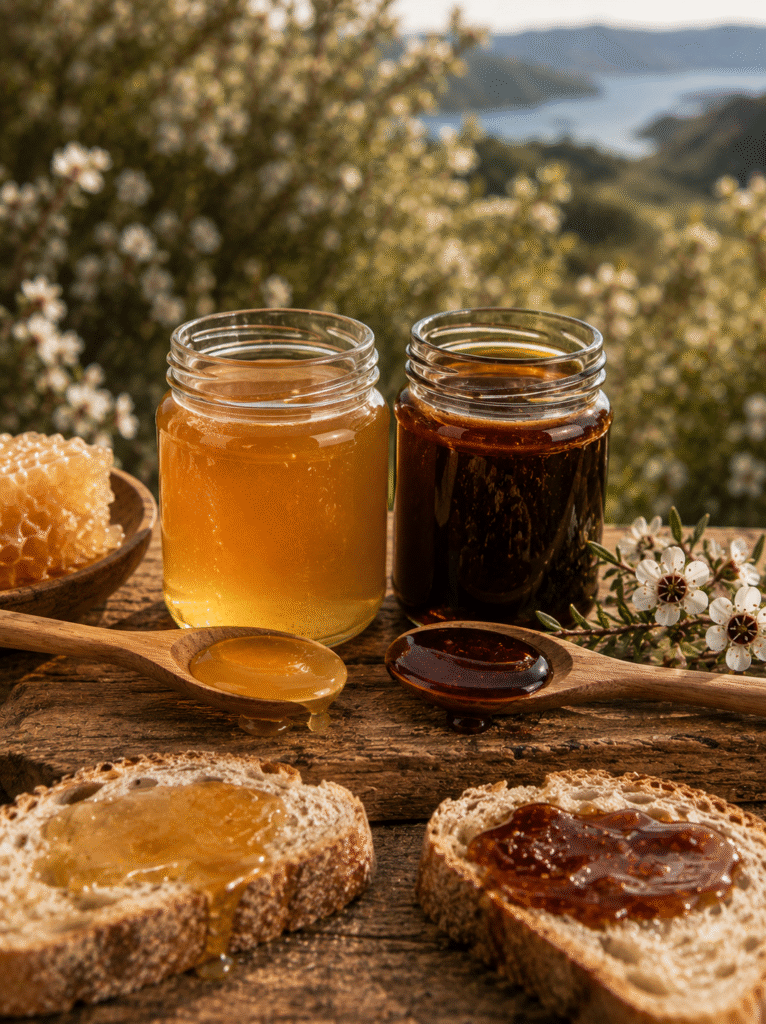
My wildflower honey is bright, floral, a little grassy, sweet in a straightforward way. The manuka jar I keep for comparison is darker, almost like molasses in color, and the first thing you notice isn’t sweetness — it’s bitterness, followed by an earthy, slightly medicinal aftertaste that lingers in a way regular honey doesn’t. People who haven’t tried real manuka before are often disappointed by this. They expect “premium” to taste like “more delicious,” and instead they get something that tastes more like a tincture than a dessert topping.
That bitterness is actually a decent quality signal, for what it’s worth. Lower-grade manuka blended heavily with other honeys tends to taste sweeter and milder, because there’s less of the actual manuka character in the jar. If your expensive manuka tastes basically like clover honey, that’s worth questioning.
Could I just plant manuka and skip the import markup?
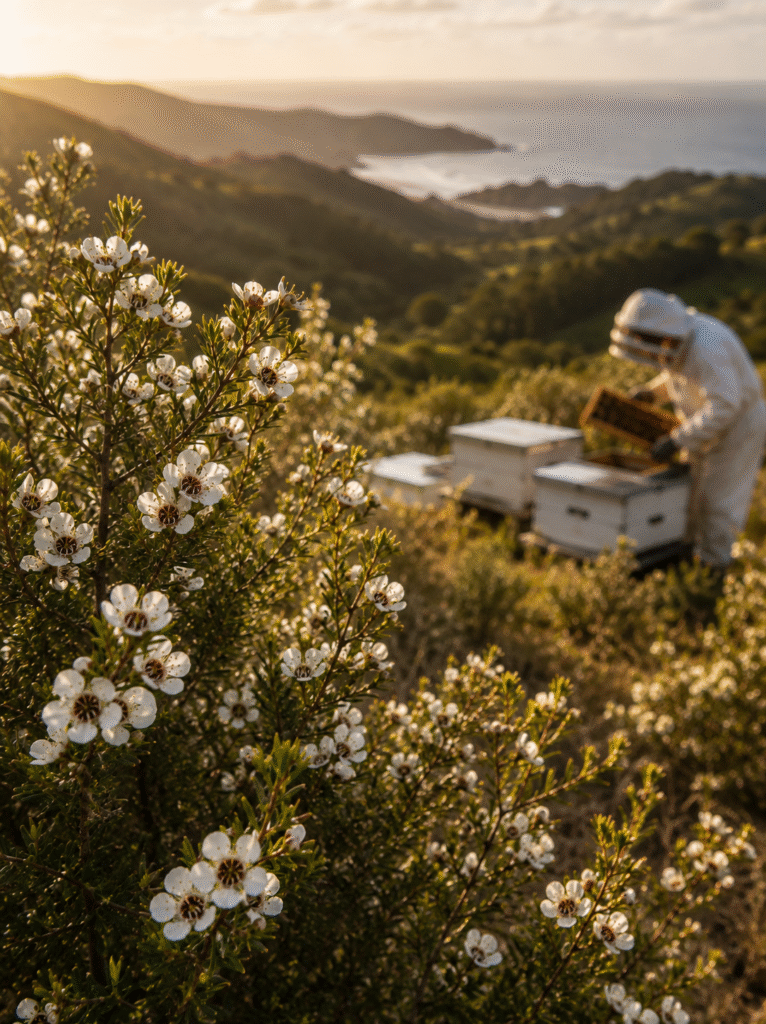
I get this question constantly from hobbyist keepers in temperate climates who’d love a piece of this market. Realistically, no. Leptospermum scoparium needs specific soil acidity, a frost-free or near-frost-free climate, and several years of growth before it flowers reliably enough to support honey production at scale. A handful of growers have experimented with manuka cultivation in parts of California and the UK, but none of it has reached commercial volume, and the resulting honey hasn’t matched the MGO levels of wild New Zealand stands, possibly because of differences in soil chemistry that researchers still don’t fully understand. This isn’t a “grow your own” workaround. It’s a genuinely place-bound product, more like Champagne than like wheat.
My actual verdict
Is it worth the money? For a verified UMF 10+ jar with a checkable license number, used specifically for what it’s good at — topical wound care, a sore throat soother, or just because you like the taste — yes, I think the price reflects real scarcity and a real, measurably different product. For UMF 5 or unlabeled “manuka blend” jars at premium prices, you’re mostly paying for the word on the label, and your money would do more for you spent on a well-sourced local honey from a beekeeper you can actually ask questions to.
I told Priya to check for the UMF license number on the bottom of her jar. She found one. Turns out her sixty-two dollars was reasonably well spent. Not every story like this ends that way, which is exactly why it’s worth checking before you buy, not after.