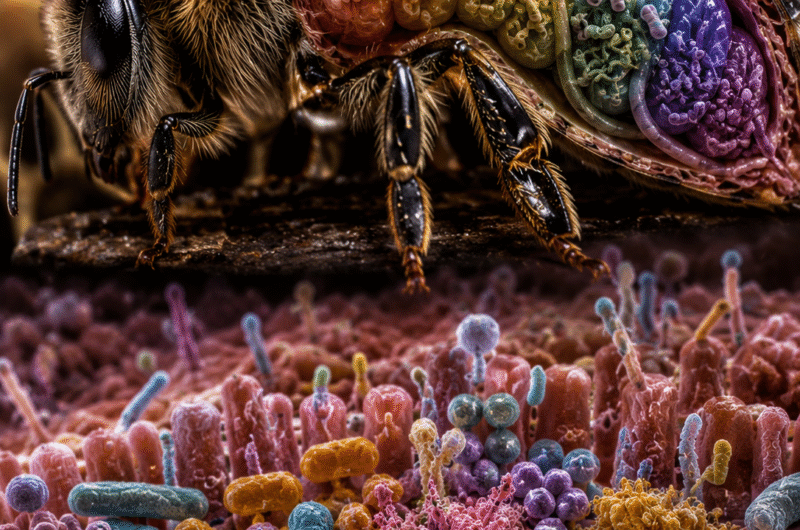

Bees have a gut microbiome too. Here’s what lives inside it, why it matters for colony health, and whether probiotics for bees actually work.
I didn’t think much about bee gut bacteria until a colony I was documenting came out of a rough Nosema season looking physically fine — full frames, decent stores — but never quite bounced back to full strength that summer. The beekeeper I was shadowing said something that stuck with me: “the mites you can treat, the gut you can’t always fix.” That offhand comment sent me down a research trail I wasn’t expecting, and it turns out 2026 is a genuinely active year for exactly this question — what’s living inside a honey bee’s digestive tract, and how much does it actually control?
What’s Actually Living Inside a Bee’s Gut
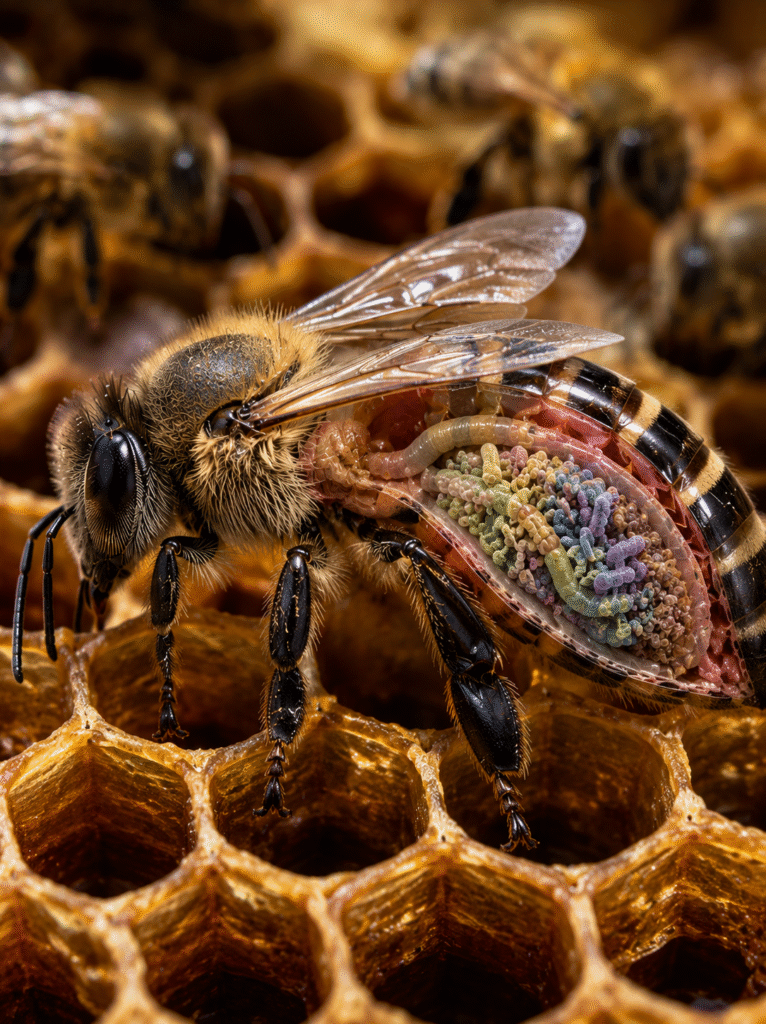
A healthy adult honey bee’s gut hosts a surprisingly simple, tightly consistent set of bacteria — dominated by just a handful of core genera, including Lactobacillus, Bifidobacterium, and Gilliamella — that colonize the hindgut within days of emergence and stay remarkably stable across a bee’s short life.
This consistency is actually one of the more interesting things about the honey bee gut microbiome compared to, say, the human one. Human gut bacteria vary enormously between individuals based on diet, environment, and genetics. Bee gut communities are far more standardized — a healthy worker bee in California and a healthy worker bee in Belgium carry a strikingly similar core bacterial set, which is part of why researchers increasingly treat the honeybee as a model organism for studying how gut microbes interact with immune function generally, not just in insects.
The five core bacterial groups every healthy colony relies on
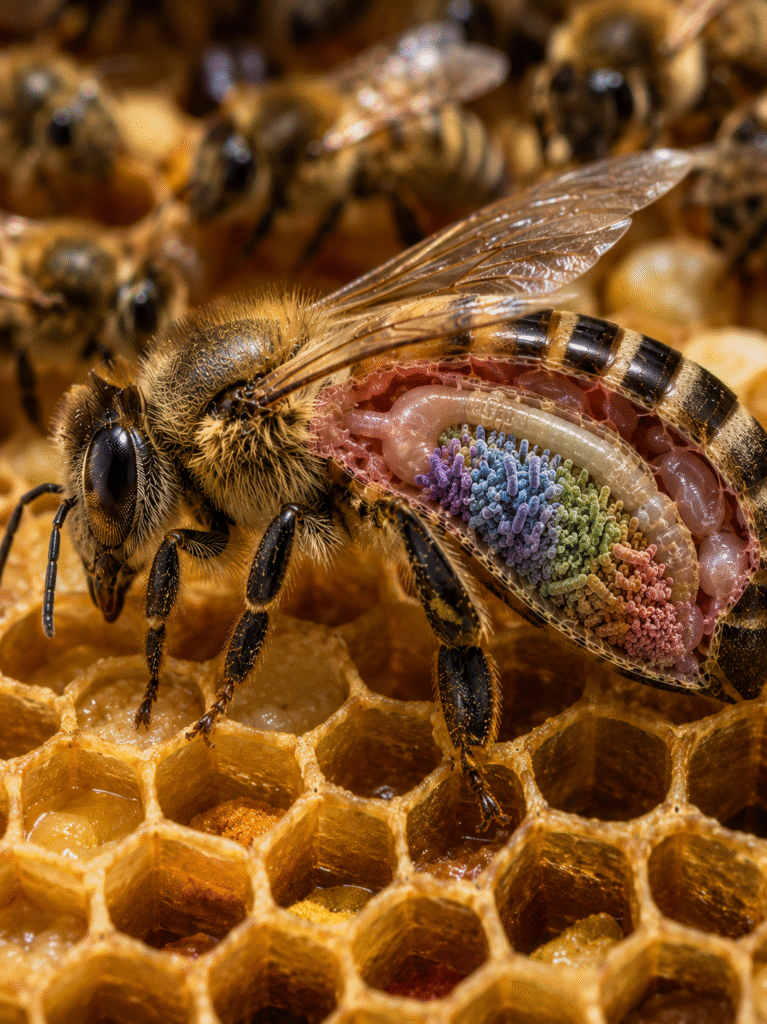
- Lactobacillus species (including strains like Apilactobacillus kunkeei) — associated with acid production that helps suppress pathogen growth
- Bifidobacterium — plays a role in breaking down complex sugars from pollen and nectar
- Gilliamella apicola — one of the most abundant hindgut residents, tied to pollen digestion
- Snodgrassella alvi — forms a biofilm lining the hindgut wall, thought to be part of a physical barrier against pathogens
- Frischella — found in smaller amounts but consistently present in healthy adult workers
These aren’t just passengers. Recent review work treats the honeybee gut microbiome as central to colony immune homeostasis — meaning these bacteria aren’t incidental to bee health, they’re actively part of the system that keeps a bee’s immune response balanced and functional.
Why Scientists Are Suddenly Paying Close Attention to Bee Gut Bacteria
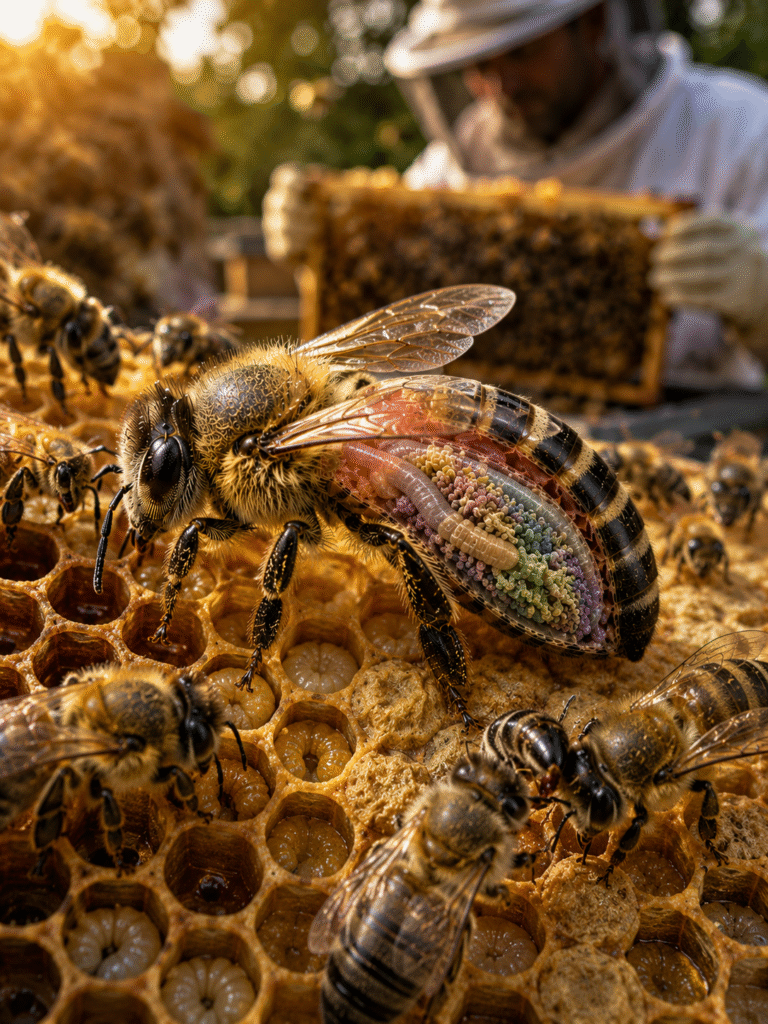
There are two separate threads pulling researchers toward this topic right now, and it’s worth separating them because they get conflated in casual conversation.
The first is disease resistance. If a stable gut microbiome genuinely contributes to a bee’s ability to fight off pathogens, that reframes how we think about colony losses — it’s not purely “which pesticide, which mite load, which pathogen,” but also “how disrupted was this colony’s baseline gut health going into the stress event.” This connects directly to something we’ve covered before — bees that self-medicate by choosing infected food appear to be making decisions that affect their internal microbial and immune balance, not just satisfying hunger, which is a strange and genuinely underappreciated piece of honey bee behavior.
The second thread is antimicrobial resistance. A 2026 review published through FEMS (Federation of European Microbiological Societies) explicitly frames the honeybee gut as a useful system for tracking how antibiotic resistance genes move between bacteria and their environment — which matters well beyond beekeeping, since commercial hives are treated with antibiotics for diseases like American foulbrood, and what happens inside that gut afterward has implications researchers are only now starting to map carefully.
What Happens When the Gut Microbiome Breaks Down (Dysbiosis)
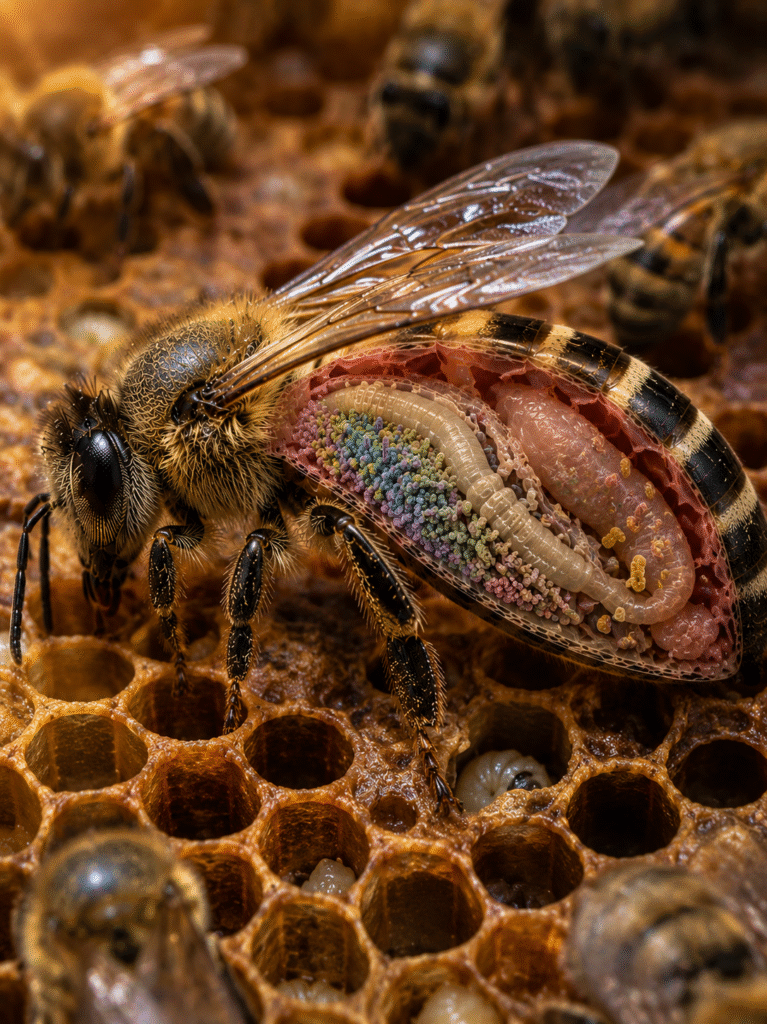
Gut dysbiosis in bees means the normal, stable bacterial community gets disrupted — usually by antibiotic treatment, pesticide exposure, or pathogen infection — and it doesn’t just reduce diversity, it can leave the door open for opportunistic pathogens the healthy microbiome would normally have kept in check.
This isn’t theoretical. Field research examining colonies treated with the antibiotics oxytetracycline and tylosin found an immediate, sharp drop in gut microbiome size following treatment, with distorted, persistent changes to the hindgut bacterial community lasting well beyond the treatment window itself. If you’ve ever treated a colony for American foulbrood and noticed it seemed to take longer than expected to fully rebound afterward — even with the disease itself cleared — this is one plausible piece of that puzzle.
The antibiotic problem — field research shows antibiotic treatment sharply reduces gut microbiome diversity
I want to be careful here, because this is exactly the kind of finding that gets oversimplified into “never use antibiotics,” and that’s not what the research says or what I’m suggesting. Antibiotics remain a legitimate, sometimes necessary tool against brood diseases. What the data actually supports is a more specific point: antibiotic treatment has a real, measurable, lingering cost to gut health, which is a reason to treat it as a last resort rather than a routine intervention, and a reason to think seriously about recovery support afterward rather than assuming the gut simply resets on its own.
Do Probiotics for Bees Actually Work? What the 2026 Research Says
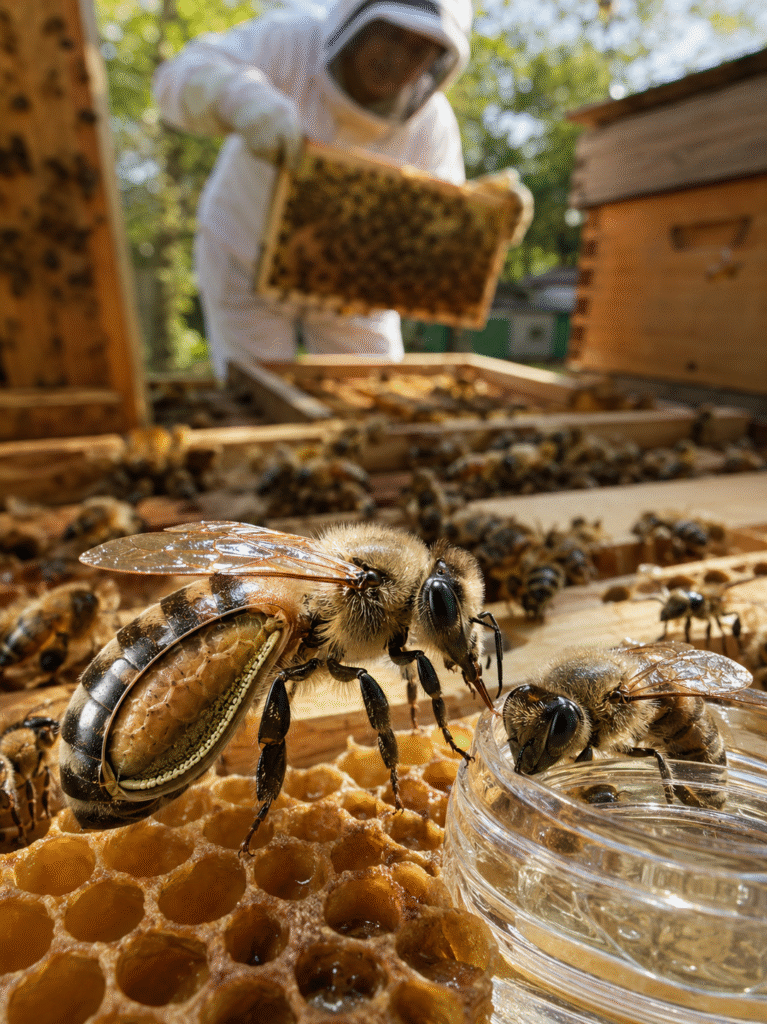
This is where I have to push back gently against some of the marketing you’ll see for commercial bee probiotic products, because the science is genuinely mixed, not uniformly encouraging.
On one hand, in vitro screening work published in early 2026 evaluated specific lactic acid bacteria strains and combinations as probiotic candidates, testing things like their ability to survive in sugar-based feeding syrup and their compatibility with each other — early-stage, promising groundwork toward bee-specific probiotic formulations rather than generic ones borrowed from other animals.
On the other hand, a longitudinal field study looking at commercial honey bee colonies found that non-native probiotics did not reliably rescue colonies from antibiotic-induced gut disruption, and in general didn’t show much benefit at all under real field conditions — a useful, honest counterweight to the more optimistic lab-only findings.
The short version: lab research on bee-specific probiotic strains looks genuinely promising, but the commercial probiotic products available to backyard beekeepers right now haven’t been shown to reliably help under real field conditions. That’s not a reason to dismiss the whole idea — it’s a reason to be skeptical of specific product claims until the bee-specific formulations catch up to the marketing.
The Gut-Immunity Connection: Why This Matters for Nosema and Disease Resistance
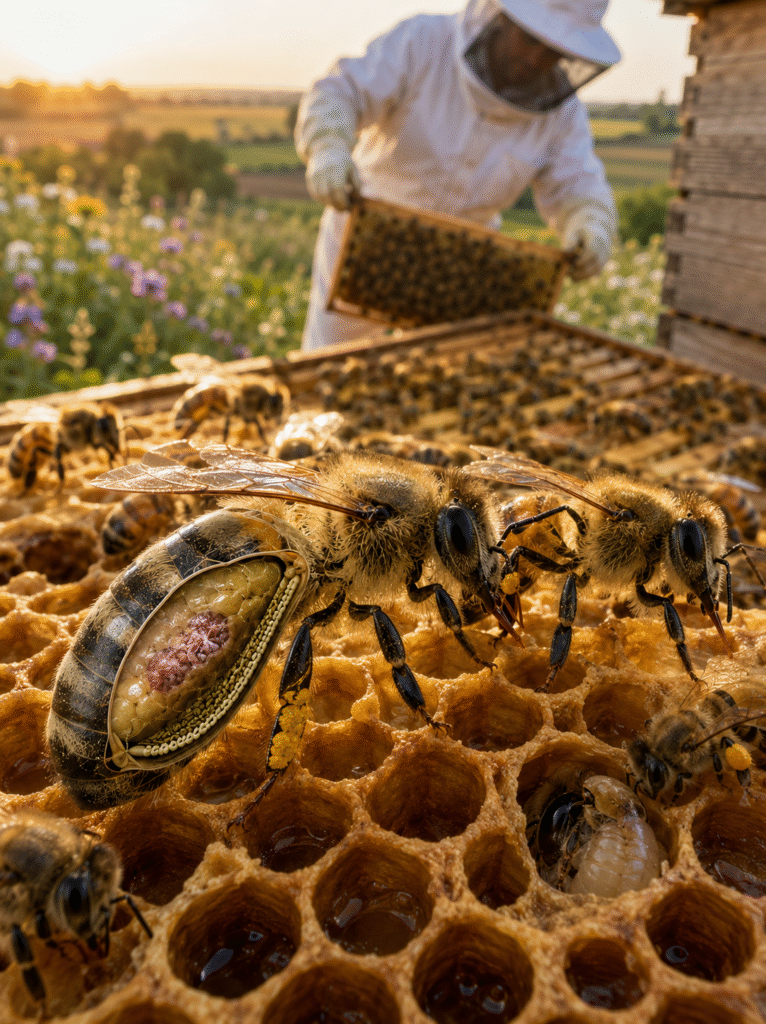
Nosema, a gut infection beekeepers often miss, is a useful case study here because it’s literally a gut-level disease — Nosema ceranae infects the midgut directly. Research looking at how the gut microbiome responds to Nosema infection has found that the response is itself modulated by other factors present at the same time, including certain probiotic bacteria and, notably, pesticide exposure — specifically neonicotinoid compounds like thiamethoxam changing how the gut community reacts to the infection.
That’s a genuinely important layered finding: it’s not just “Nosema affects the gut” or “pesticides affect the gut” as separate stories. They interact. This lines up with what we’ve written about pesticide exposure through hive food more broadly — a colony rarely faces one clean, isolated stressor. It’s usually several overlapping at once, and the gut microbiome seems to be one of the places where those overlapping stresses actually show up first.
What Beekeepers Can Realistically Do Today
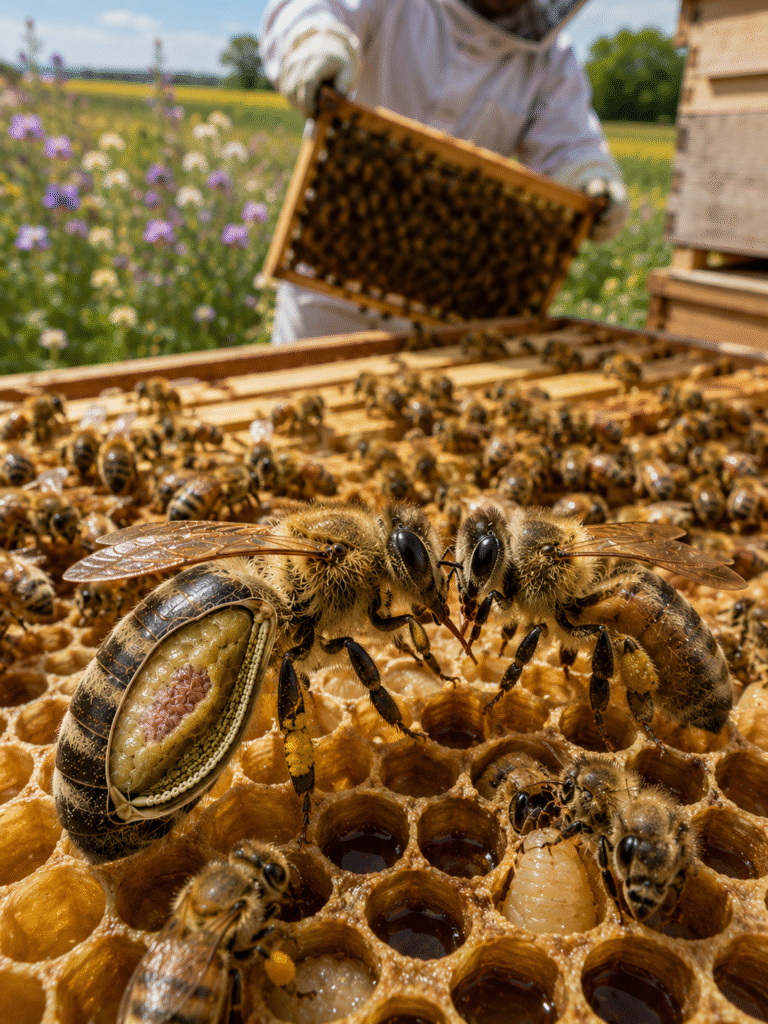
I’m not going to pretend there’s a simple gut-health protocol you can follow this weekend, because the science genuinely isn’t there yet for precise recommendations. But there are a few grounded, defensible things worth doing:
- Use antibiotics only when actually needed, not preventatively, given the documented cost to gut microbiome stability
- Prioritize solid nutrition — colonies with reliable access to diverse pollen sources appear better positioned to maintain gut health, which is part of why we’ve looked at engineered superfoods for bee colonies and the practical role of bee pollen and propolis as hive superfoods
- Watch recovery time after any antibiotic treatment, and don’t assume a colony that looks fine on the surface has fully recovered internally
- Be skeptical, not dismissive, of commercial probiotic products — ask what strain research backs the specific product, since “probiotic” on a label doesn’t guarantee it’s bee-specific or field-tested
- Pay attention to colonies with naturally strong disease resistance — the mechanisms in colonies like the ones we covered in bees that resist disease without chemical treatment in Southern California may well include gut microbiome factors researchers haven’t fully isolated yet
None of this is a finished protocol. It’s an honest snapshot of where genuinely new science is pointing, and where it still has real gaps.
FAQ
Do honey bees have gut bacteria like humans do?
Yes, though the bee version is far more standardized. A small set of core bacterial groups — including Lactobacillus, Bifidobacterium, and Gilliamella — consistently colonizes healthy worker bees, with much less individual variation than in human gut microbiomes.
Can probiotics actually help a struggling bee colony?
The evidence is mixed. Lab research on bee-specific bacterial strains looks promising, but a 2026 field study found commercial, non-native probiotics didn’t reliably help colonies recover from antibiotic-induced gut disruption under real conditions.
What is gut dysbiosis in bees and what causes it?
Dysbiosis means the normal gut bacterial balance has been disrupted, most commonly by antibiotic treatment, pesticide exposure, or infection. It can leave a colony more vulnerable to opportunistic pathogens the healthy microbiome would otherwise help suppress.
Does treating a hive with antibiotics harm its gut bacteria?
Yes. Field research on colonies treated with oxytetracycline and tylosin found an immediate, sharp reduction in gut microbiome size, with disrupted bacterial communities persisting well beyond the treatment period.
What bacteria naturally live inside a healthy bee’s gut?
The core community includes Lactobacillus, Bifidobacterium, Gilliamella apicola, Snodgrassella alvi, and Frischella species, each playing a different role in digestion, pathogen resistance, or forming a protective hindgut lining.
Is there a connection between gut health and Nosema infection?
Yes — Nosema ceranae infects the midgut directly, and research shows the gut microbiome’s response to Nosema is influenced by other factors present at the same time, including pesticide exposure, which can change how the infection plays out.
Are commercial bee probiotic products worth buying?
Current evidence is mixed. Field research hasn’t shown reliable benefits from non-native, generic probiotic products, so it’s worth checking whether a specific product is backed by bee-specific strain research before relying on it.