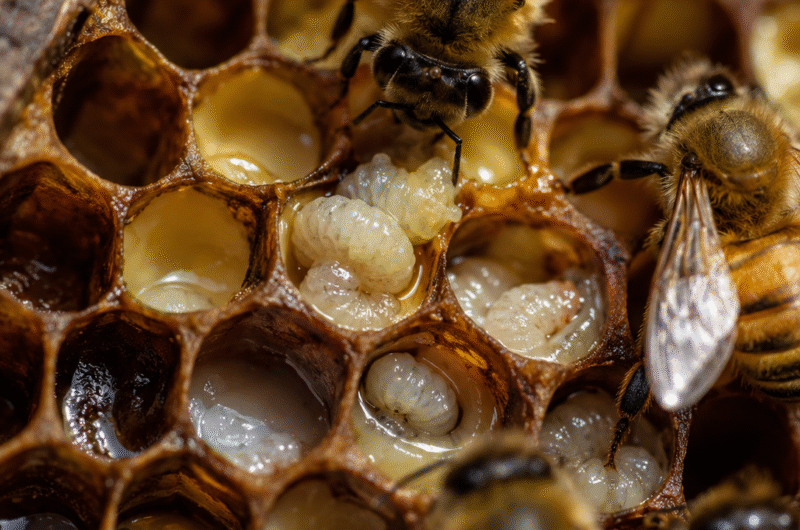

Most conversations about pesticides and pollinators default to honey bee colonies almost automatically — the forager coming back from a treated field, the contaminated pollen ending up in the hive. It’s a familiar storyline. What’s less familiar, and what a study published this spring in Environmental Science & Technology makes clear, is that solitary bees — the ones nesting alone in tunnels, stems, and soil rather than in a hive — may be picking up pesticide exposure through a route nobody was really watching: the building materials of their own nests.
I want to sit with that for a moment, because it’s a genuinely different mechanism than what most beekeeping content covers, and it matters to a much bigger audience than commercial apiarists. If you’ve ever put up a mason bee house, left a patch of bare soil for ground-nesting bees, or just let a few hollow stems stand through winter for the sake of “supporting pollinators,” this research is directly about the insects you were trying to help.
The mechanism nobody had fully mapped
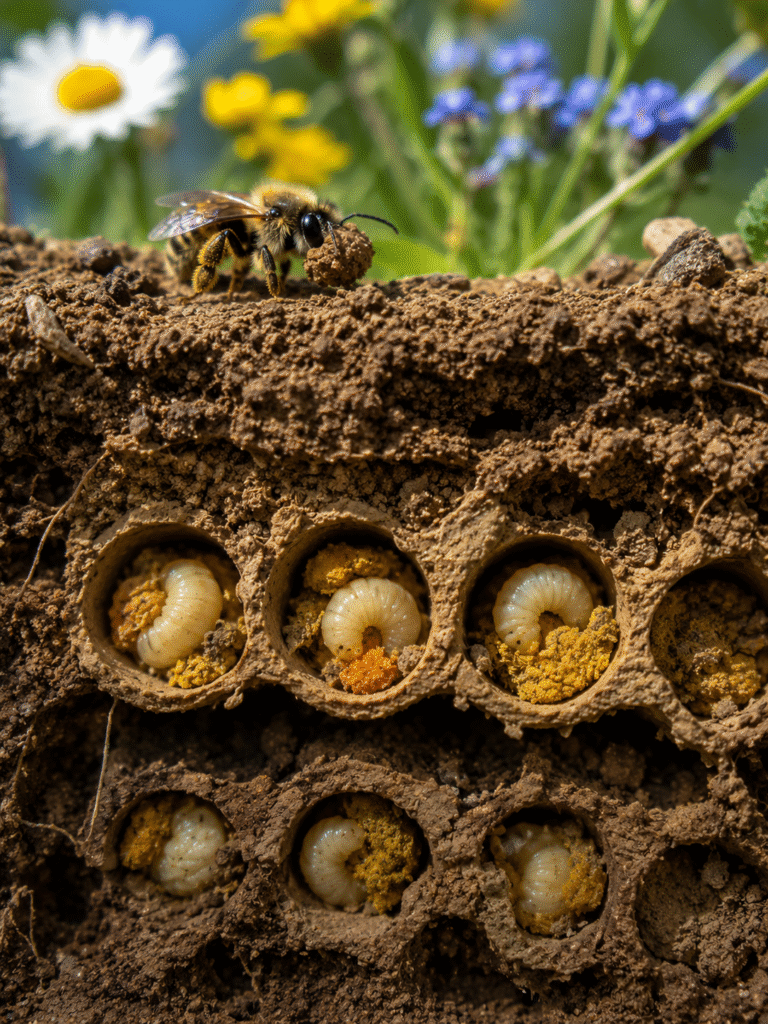
Solitary bees — and it’s worth remembering they make up the overwhelming majority of bee species, far more than honey bees and bumblebees combined — build their nests very differently from a hive. Depending on the species, they use mud, chewed leaf material, plant resin, or excavated soil to construct and seal individual brood cells. Each cell gets provisioned with a mix of pollen and nectar, sealed up, and left for the developing larva to consume as it grows.
The research team, working across institutions including Utah State University, tested whether pesticide residues present in the soil or plant material a bee uses for construction can migrate into the food provision sitting right next to it inside the sealed cell. The answer was yes — pesticides transferred between the nesting material and the stored food, meaning a larva could be exposed to residues that never came from contaminated pollen or nectar at all. The chemical was already sitting in the walls of its own nursery.
That’s a meaningfully different exposure pathway than the one most home gardeners and small-scale growers think about when they’re trying to be pollinator-friendly. You can plant only untreated, pollinator-safe flowers and still have solitary bees nesting in soil nearby that was treated with a systemic pesticide months earlier, or building cells with mud drawn from ground that had pesticide runoff sitting in it. The exposure isn’t necessarily about what’s blooming. It’s about what’s in the dirt and the surrounding plant debris.
Why honey bee-focused risk assessments miss this
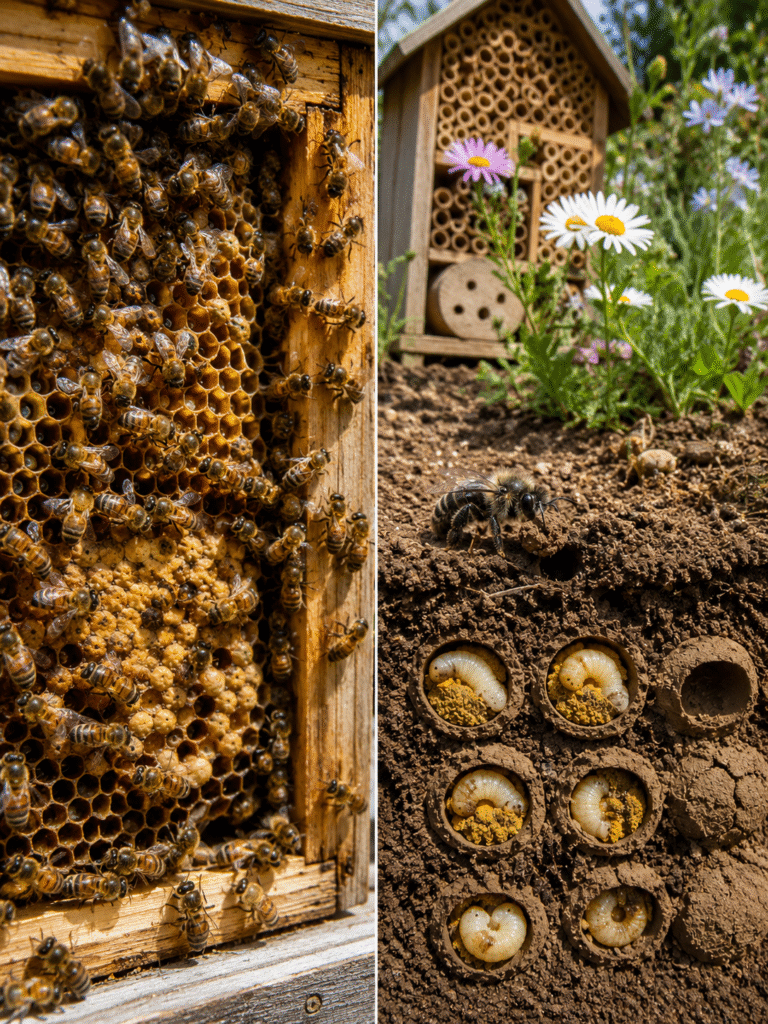
Most pesticide risk assessment work — the studies regulators actually rely on — has historically centered on honey bees, largely because they’re easy to study at colony scale and because of their outsized commercial importance in pollination services. It’s a practical choice, but it leaves a real gap. Honey bees don’t build brood cells out of soil or chewed leaf pulp. They don’t have this exposure route at all. A honey bee-centered safety threshold, however carefully calculated, simply isn’t designed to catch a risk pathway that only exists for ground- and cavity-nesting solitary species.
The researchers were fairly direct about this limitation, noting that current assessments may be underestimating the risk to species with nesting behaviors this different from honey bees. I’d go a step further based on what I’ve seen talking to backyard native-bee enthusiasts over the past couple of seasons: most people setting up bee hotels or leaving nesting habitat have never once considered soil contamination history as a factor in site selection. Flower choice gets all the attention. Substrate gets almost none.
What this actually means if you’re hosting solitary bees
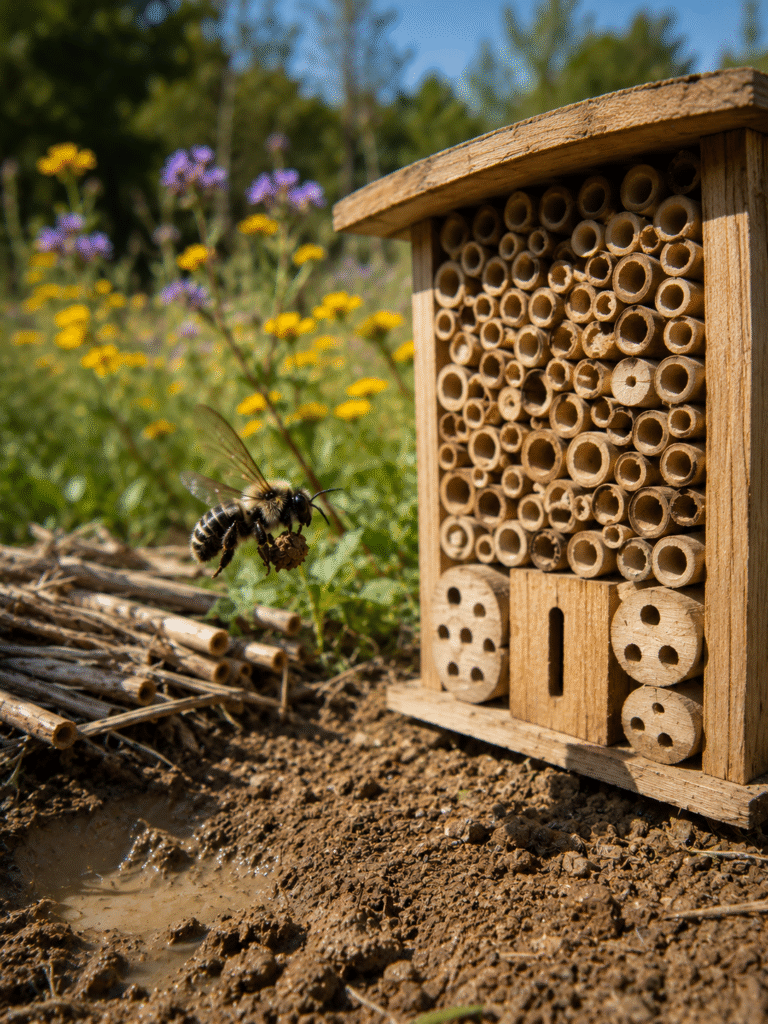
I spoke with a Master Gardener volunteer who’s spent the last several years converting part of her yard into pollinator habitat, including a bare-soil patch specifically left for ground-nesting species. Her reaction, once I walked her through the study, was less alarm and more recalibration. She’d been meticulous about avoiding pesticide use on the flowers themselves but had never thought about the history of the soil she’d left exposed — soil that, in a lot of suburban yards, may have had lawn treatments applied to it years before anyone decided to turn part of it into bee habitat.
That’s the practical shift this research should prompt. If you’re setting up habitat for solitary bees:
Choose nesting sites — bare soil patches, brush piles, bundled stems — in areas with a known history free of pesticide or herbicide application, not just areas that look untouched. A patch that hasn’t been actively treated in the current season may still carry residues from prior years, particularly with certain systemic products that persist in soil.
Be cautious about “borrowing” mud or plant material sources near treated agricultural edges, roadside sprays, or recently treated lawns if you’re trying to encourage nest-building nearby — mason bees in particular are known to actively seek out mud sources, and they’re not selective about pesticide history when they do.
If you’re offering commercial mason bee tubes or nesting blocks, consider the surrounding landscape within their fairly limited foraging and nest-material gathering range — usually just a few hundred meters — rather than assuming the immediate flower bed tells the whole story.
The part that connects back to honey bees anyway
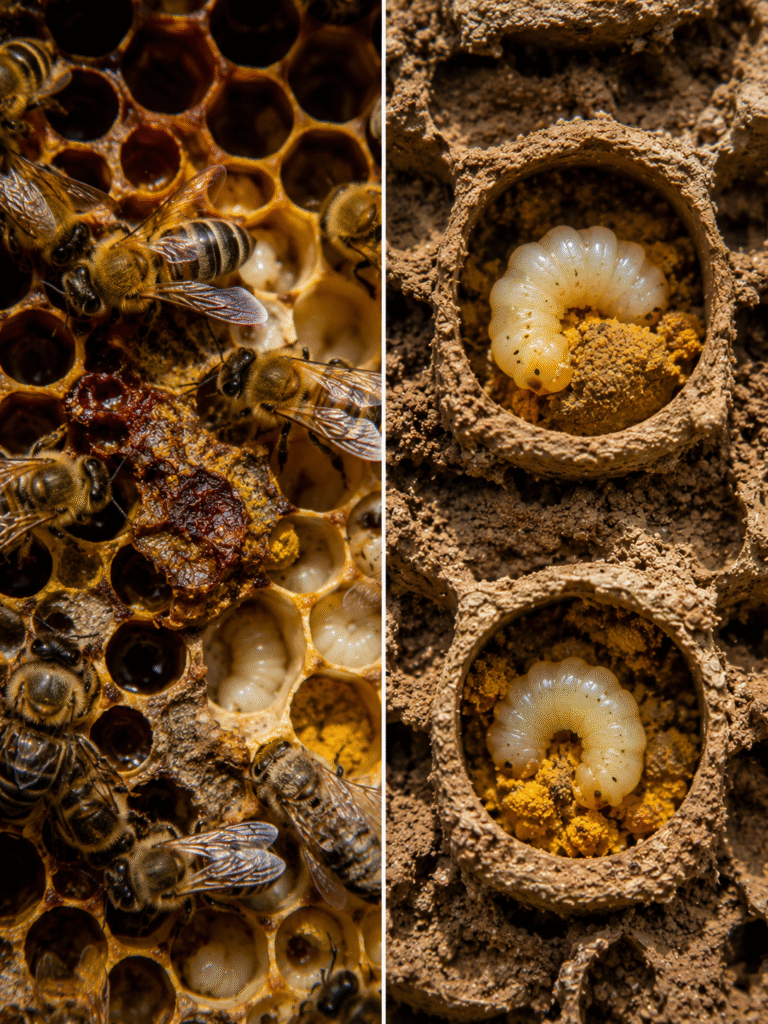
Even though this study is specifically about solitary bees, there’s a broader lesson for anyone managing honey bee colonies too: exposure pathways are more varied than the “contaminated forage” model most of us default to. Propolis, wax, and comb all have documented capacity to absorb and retain pesticide residues over time, sitting in the hive long after a contamination event and continuing to expose developing brood in a slow, low-level way that’s easy to miss if you’re only checking incoming nectar and pollen sources.
The solitary bee research is really a reminder that the container matters, not just the contents — a nesting cell, a piece of comb, a wax cup. Whatever’s built around the developing bee can carry its own chemical history, independent of what gets actively foraged. That’s not a comfortable idea, because it means “clean forage” alone isn’t a complete pesticide-safety strategy, for a hive or for a bee hotel in someone’s backyard.
Why this deserves more attention than it’s gotten
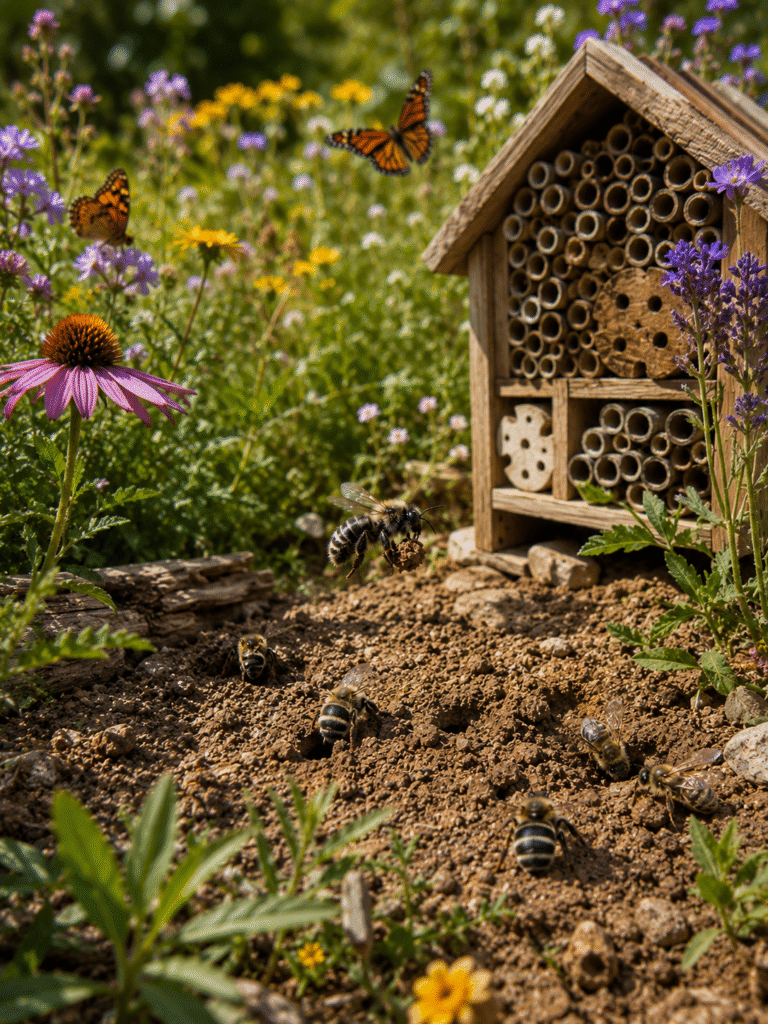
Solitary bees don’t get anywhere near the media coverage honey bees do, despite doing the majority of wild pollination work in most ecosystems. A story about pesticide residue leaching into a mason bee’s nest wall isn’t going to trend the way a headline about vanishing honey bee colonies does. But for the millions of home gardeners who’ve been told, correctly, that solitary bees are essential and easy to support with a bee house and some bare dirt, this research is a meaningful correction to a well-intentioned but incomplete picture.
Supporting solitary bees was never just about avoiding pesticides on flowers. It was always also about what’s underneath them.