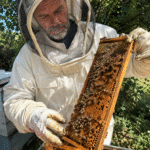
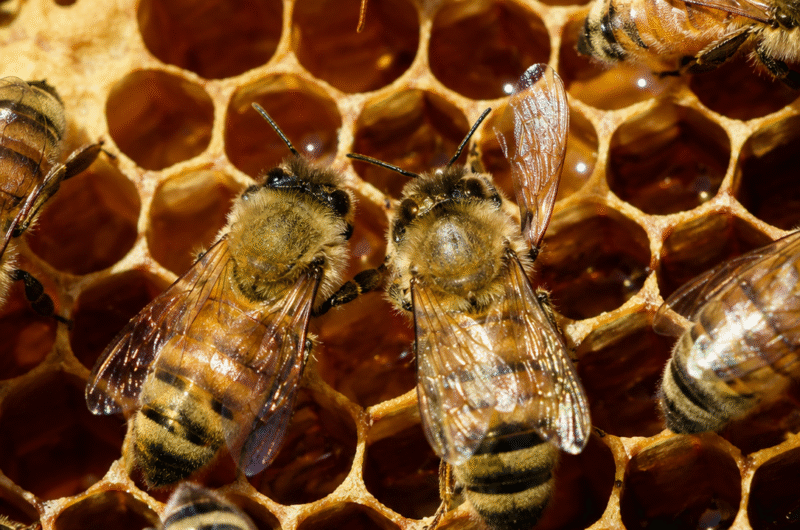

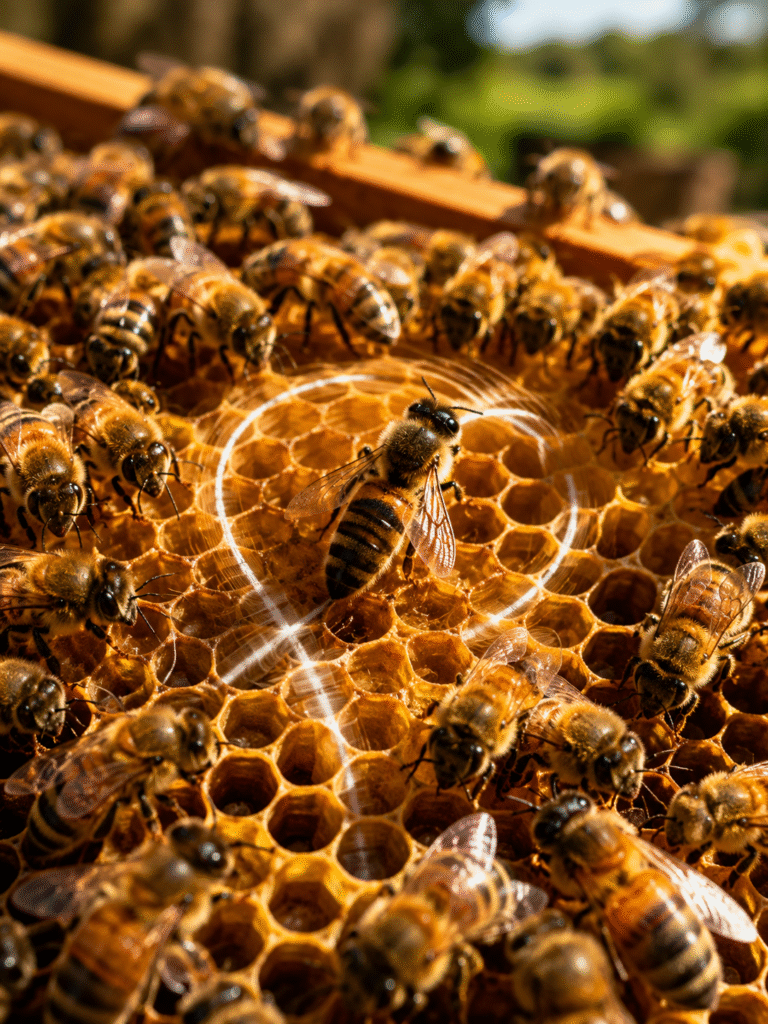
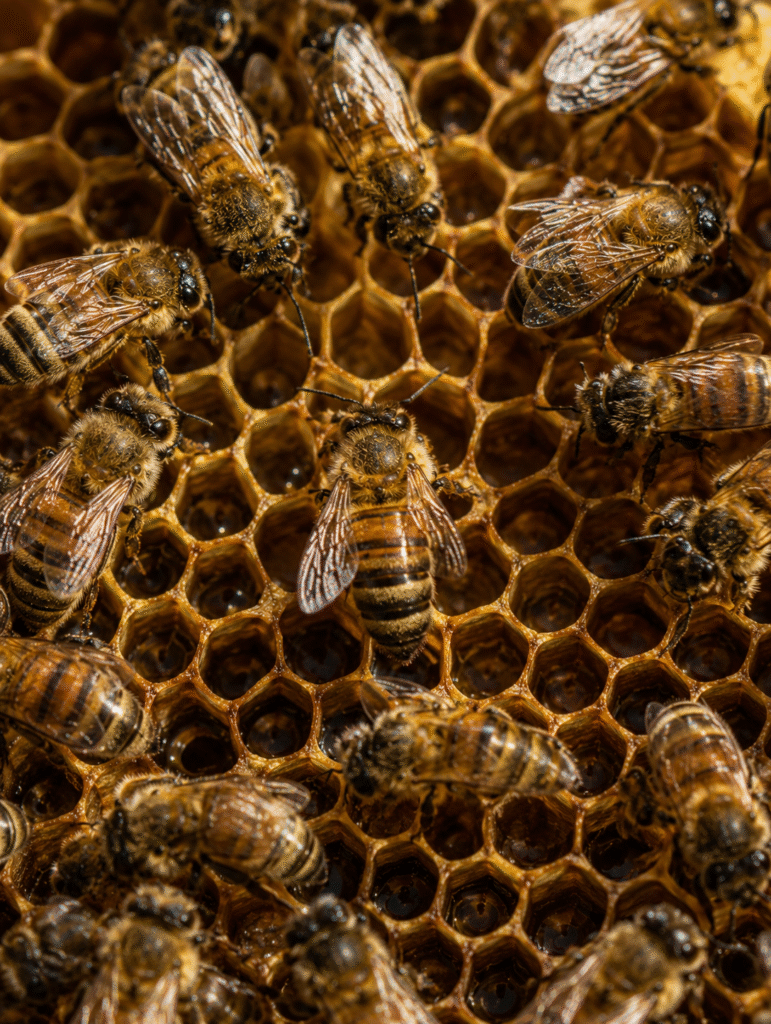
I’ve spent enough afternoons crouched beside an observation hive to know that most of what a colony does looks like chaos until you slow down. Thousands of bodies moving in every direction, no obvious leader, no shouted instructions. And then, if you watch one spot on the comb long enough, a single bee starts moving in a pattern too precise to be random. She traces a tight figure-eight, vibrating her body hard enough that you can hear it if the hive is quiet. Other bees stop what they’re doing and crowd around her, touching her with their antennae like they’re reading braille.
They are, in a sense. That bee isn’t performing. She’s reporting.
The Discovery Nobody Believed at First
Beekeepers had noticed bees “dancing” on the comb for centuries before anyone understood why. Old apiary journals mention it almost in passing, the way you’d mention weather. It took an Austrian zoologist named Karl von Frisch, working across nearly three decades starting in 1919, to prove that this wasn’t fidgeting or excitement. It was information.
Von Frisch identified two distinct movements. A round dance, tight circles with no waggling, told nearby bees that food was close, without specifying much beyond “not far, go look.” The waggle dance was the real breakthrough. When a forager located a rich source further from the hive, she’d return and cut a figure-eight pattern with a straight run through the middle, shaking her abdomen side to side during that straight section. The angle of that straight run relative to vertical on the comb corresponded to the angle between the sun and the food source outside. The duration of the waggle told the others how far to fly.
Von Frisch spent years testing this before he trusted his own conclusion, and honestly, I understand the hesitation. It’s a strange thing to accept, that an insect with a brain smaller than a sesame seed is running the rough equivalent of trigonometry and reporting it accurately enough that her hivemates fly out and land within a few meters of the right spot. He won the Nobel Prize for it in 1973. He wasn’t exaggerating when he called it the most remarkable example of communication we know of outside primates.
What Beekeepers Actually See When It Happens
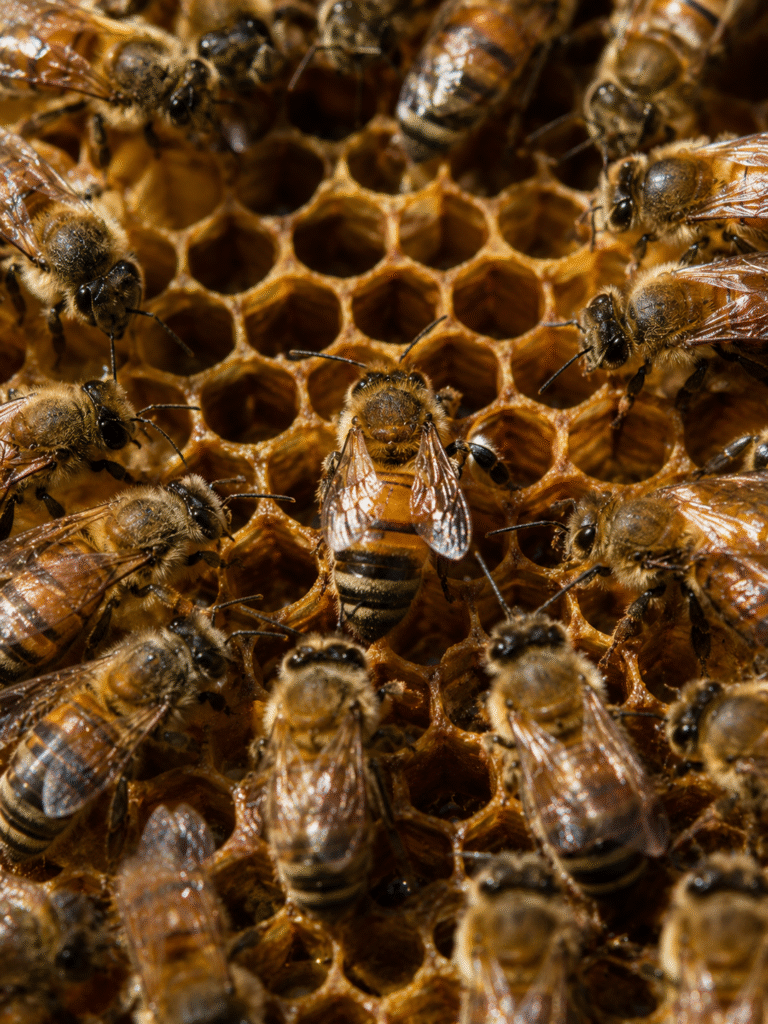
Here’s what doesn’t come through in the textbook explanation: the intensity varies, and that variation carries meaning too. A forager who’s found something exceptional — a stand of clover in full bloom, say, or a neighbor’s flowering linden tree that nobody else has tapped yet — will dance harder and longer, with more followers accumulating around her with each pass. A mediocre source gets a half-hearted, brief performance that peters out fast. Researchers at McMaster University even found that bees dance less enthusiastically for a food source if a dead bee is placed near it, as though the dancer is weighing risk against reward and adjusting her enthusiasm accordingly.
I’ve watched this happen in real time at an observation hive and it’s genuinely hard not to anthropomorphize it. It looks like she’s excited. Maybe “excited” isn’t the wrong word, just the wrong species doing the feeling.
There’s also a detail most casual explanations skip entirely: the dance doesn’t happen in silence, and it isn’t purely visual. Inside a packed, dark hive, most of the surrounding bees can’t actually see the dancer clearly. They’re reading her through touch and through the air itself. Honey bees generate a small electric charge as they fly and move, and a dancing bee’s wing and body vibrations create both airflow patterns and weak electric field pulses that nearby bees detect through their antennae. It’s a multi-sensory broadcast, not a visual show.
Why This Matters Beyond Curiosity
It’s tempting to file the waggle dance under “neat trivia,” but it has real consequences for how a colony survives, and understanding it changes how I think about hive placement and forage planning.
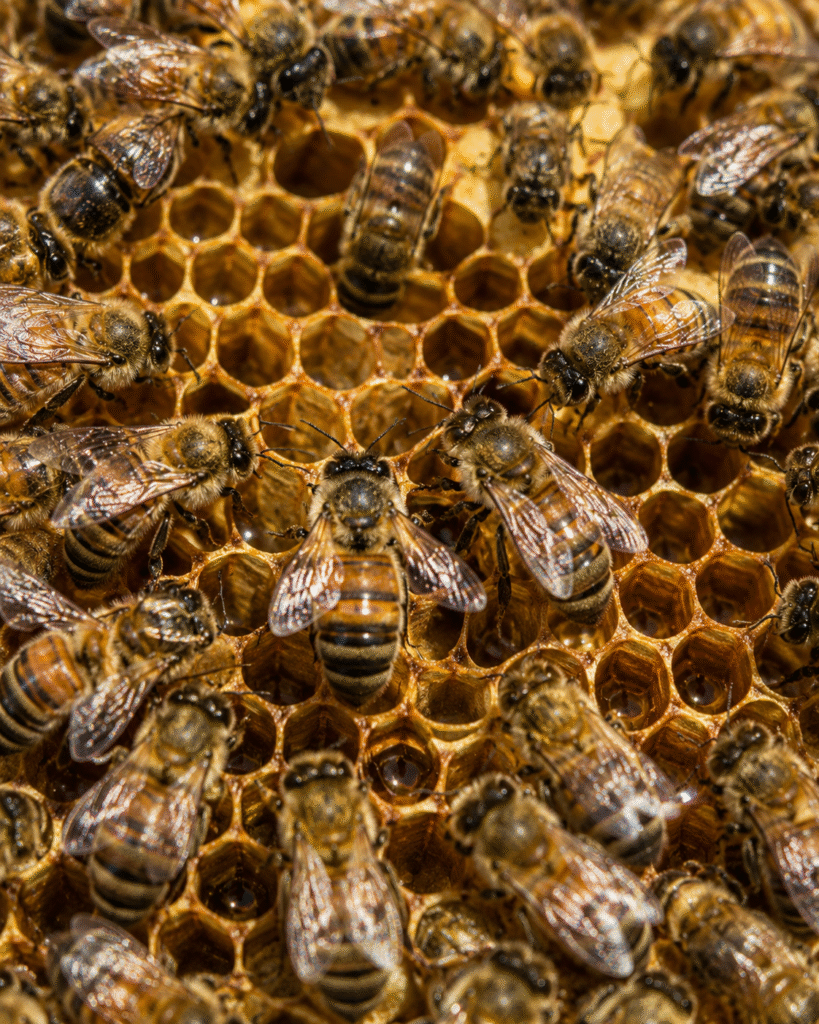
A colony’s success hinges on how efficiently its foragers find and exploit good resources before a competing colony — or the weather — gets there first. The dance lets a single successful scout effectively recruit a task force without anyone needing to physically lead the group there. Research summarized in recent behavioral ecology reviews has found the benefit isn’t uniform, though. In landscapes where flowers are scattered unpredictably and vary a lot in quality, dance communication meaningfully increases how much forage a colony brings in. In more uniform environments, or heavily human-altered ones, the advantage shrinks and in some studied cases barely mattered at all. That’s a detail that surprised me when I first read the research, because it suggests the dance isn’t just a fixed instinct performing at full strength regardless of context. Its usefulness is conditional on how patchy and unpredictable the environment actually is.
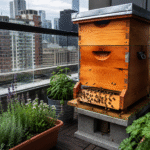
For anyone managing hives, that has a practical edge. If you keep bees in a monoculture agricultural area with one crop blooming in a wall of sameness, the waggle dance is doing comparatively little extra work for your colony’s foraging efficiency, because there’s no “secret good spot” to report. Move those same bees to a mixed suburban landscape with gardens, hedgerows, and scattered flowering trees of wildly different quality, and that dance becomes the difference between a colony that finds the good stuff fast and one that stumbles onto it by chance days later.
The Part Still Being Argued Over
Not everything about the dance is settled science, and I think that’s worth saying plainly instead of pretending the story wraps up neatly. Researchers still debate how much a colony’s overall foraging success actually improves because of the dance versus other cues bees use, like scent trails left on returning foragers or simply following the general direction other bees are already flying. Some studies have found dancing increases the diversity of pollen a colony collects without necessarily increasing total weight gained. Others found almost no measurable colony-level benefit at all in certain environments. Neuroscientists are still working out exactly which brain circuits process the dance information and how a following bee converts a pattern of waggles into an actual flight decision.
None of that undercuts how extraordinary the behavior is. If anything, it makes it more interesting, because it means bees evolved a genuinely sophisticated communication system whose value depends on ecological context rather than working as a blunt, always-on instinct.
What I Take Away From Watching This Up Close
The thing that stays with me isn’t the trigonometry, impressive as it is. It’s that this entire system runs on a bee that gains nothing personally from doing it. She’s already fed. The dance costs her energy and time she could spend foraging again herself. She does it anyway, apparently because the colony’s success is functionally her success, in a way that doesn’t map neatly onto how we think about individual motivation.
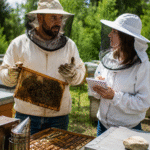
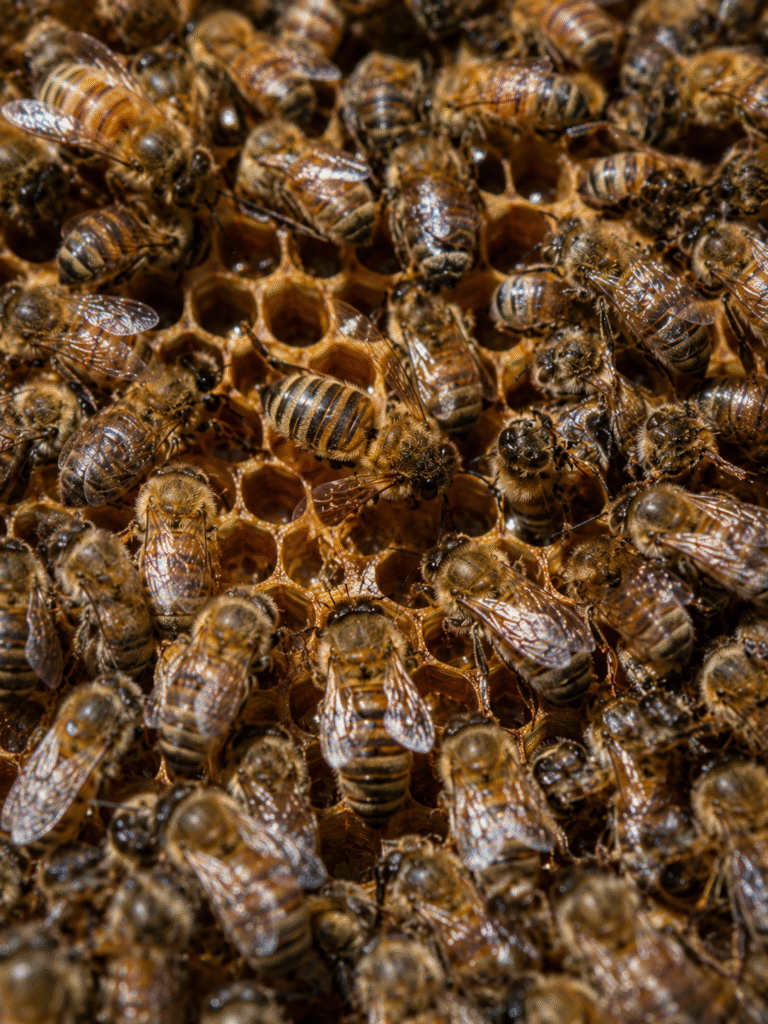
Next time you’re at an inspection and you see a cluster of bees huddled tight around one individual who’s moving in a strange, deliberate pattern, resist the urge to move on to the next frame too quickly. You’re looking at a genuine act of communication, refined over millions of years, happening a few inches from your face.