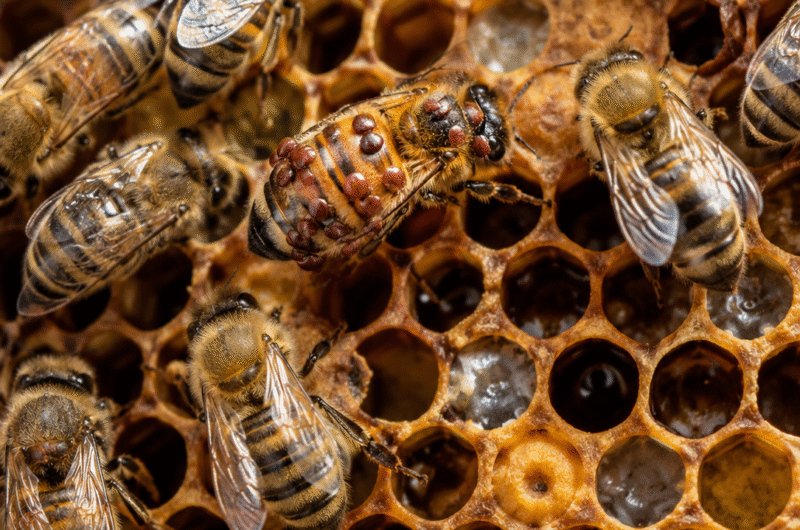

Ask any beekeeper in the United States what keeps them up at night and the answer, almost universally, comes back to the same eight-legged parasite. Varroa destructor has been reshaping the economics and psychology of beekeeping since it jumped from Asian honey bees to Western honey bee populations in the 1980s, and in the forty years since, the industry’s response has been almost entirely reactive: find a chemical, apply it, watch the mites develop resistance, find another chemical. The carousel hasn’t stopped. It’s just gotten more expensive and more stressful with each rotation.
Which is why a study published in spring 2026 by researchers at the University of California Riverside stopped a lot of experienced beekeepers mid-read. Not because it announced some new miticide or treatment protocol, but because it documented something beekeepers had been noticing anecdotally in Southern California for years without anyone taking it seriously enough to test rigorously.
A distinct population of hybrid honey bees has been quietly thriving in the region — feral colonies and managed hives alike — with mite loads so significantly lower than commercial colonies that the difference can’t be explained by management practices alone. And the more researchers looked at why, the more the answer pointed toward something the industry has been hesitant to embrace: letting bees adapt to their environment.
The Discovery That Started in Beekeeper Conversations
What makes this research notable isn’t just the finding. It’s how the finding came to be investigated in the first place.
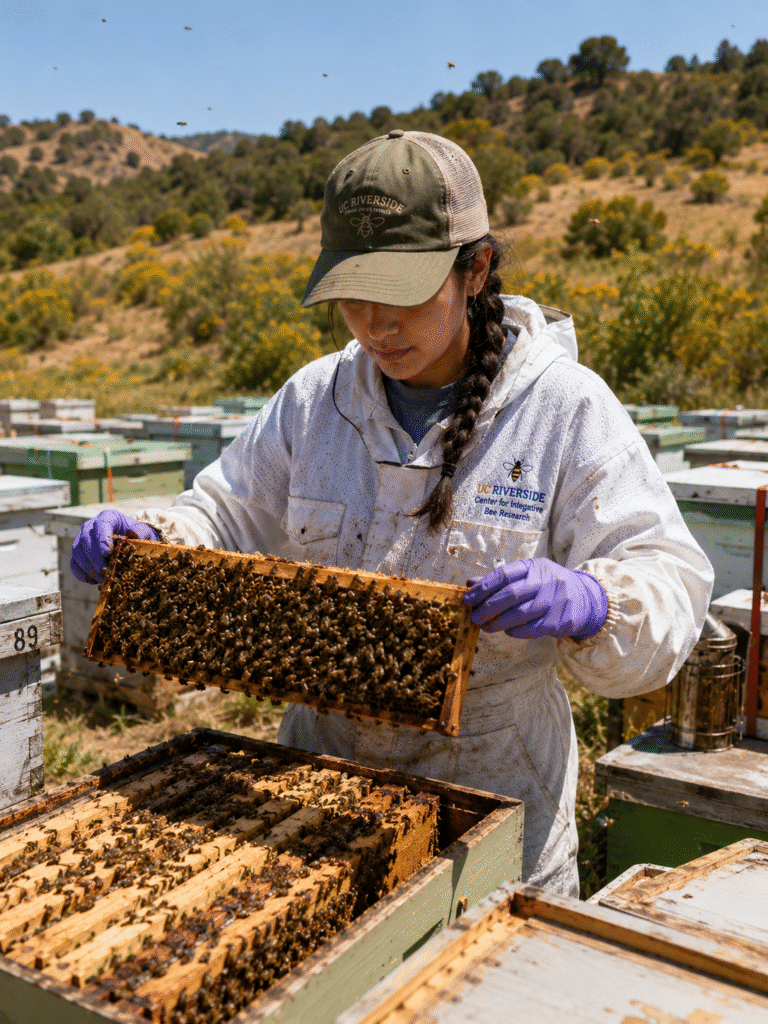
Genesis Chong-Echavez, the UCR graduate student who led the study, has been direct about the origin story: “We kept hearing anecdotally that these Californian honeybees were surviving with way fewer treatments. I wanted to test them rigorously and understand the driving force behind what the beekeepers were seeing.”
That’s a sentence worth sitting with for a moment. Not a hypothesis generated in a lab. Not a grant proposal built on theoretical modeling. Beekeepers noticed something, talked about it among themselves, and eventually the conversation reached a researcher willing to take field observations seriously as the starting point for rigorous science.
This is actually how some of the most useful applied entomology has always worked, and it’s a pattern worth recognizing because it validates something that field beekeepers have experienced firsthand — that careful observation over many seasons produces knowledge that lab conditions can’t always replicate or anticipate.
Chong-Echavez and her team at UCR’s Center for Integrative Bee Research tracked 236 honey bee colonies from 2019 through 2022. The scale and duration of the trial is significant: this isn’t a six-week controlled experiment. Four years, two hundred and thirty-six colonies, real apiaries in a real landscape. The results held consistently.
What the Numbers Actually Show
Colonies led by locally raised hybrid queens carried approximately 68% fewer mites on average compared to colonies led by commercial queens brought in from outside the region. That’s not a marginal difference. In Varroa management terms, where the threshold between “manageable” and “crisis” can be a matter of a few percentage points on an alcohol wash, 68% is an enormous gap.
Even more striking: these hybrid colonies were more than five times less likely to reach mite levels where chemical intervention becomes necessary at all.
Think about what that means in practical terms. A commercial beekeeper managing a hundred hives on a standard treatment schedule — oxalic acid vaporization, miticide strips, timing treatments around brood cycles — is putting in substantial labor, cost, and chemical load per hive per season. Multiply that across thousands of colonies, factor in the regulatory overhead of miticide application near certain crops, and the economics of mite management represent a significant drag on commercial viability. Five times less likely to need treatment isn’t just an interesting biological fact. It’s a potential rewriting of the cost structure of professional beekeeping.
The researchers were careful not to overstate the finding. These bees are not immune to Varroa. Mites are present in the hybrid colonies — just at dramatically lower levels. That distinction matters because “resistant” in popular science writing often gets distorted into “immune,” and a beekeeper who abandons monitoring protocols based on a misread headline is a beekeeper heading toward a preventable crisis.
Why These Particular Bees Are Different
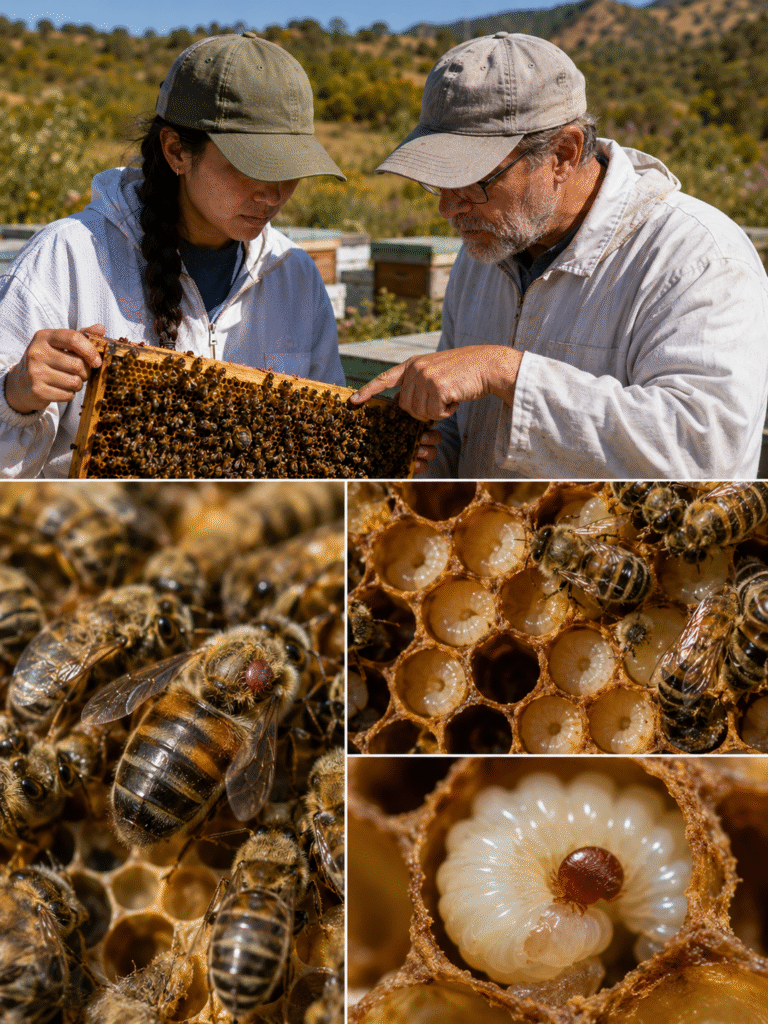
The Southern California hybrid population isn’t the product of a deliberate breeding program. There’s no company selling these queens commercially. No university lab designed them. They emerged from decades of genetic mixing between multiple Apis mellifera lineages — commercial bees that absconded or were released, feral populations that survived without treatment, various European subspecies that intermingled in California’s distinctive climate — and the result is a locally adapted, genetically diverse population that has been under natural selection pressure for Varroa resistance for longer than most managed populations.
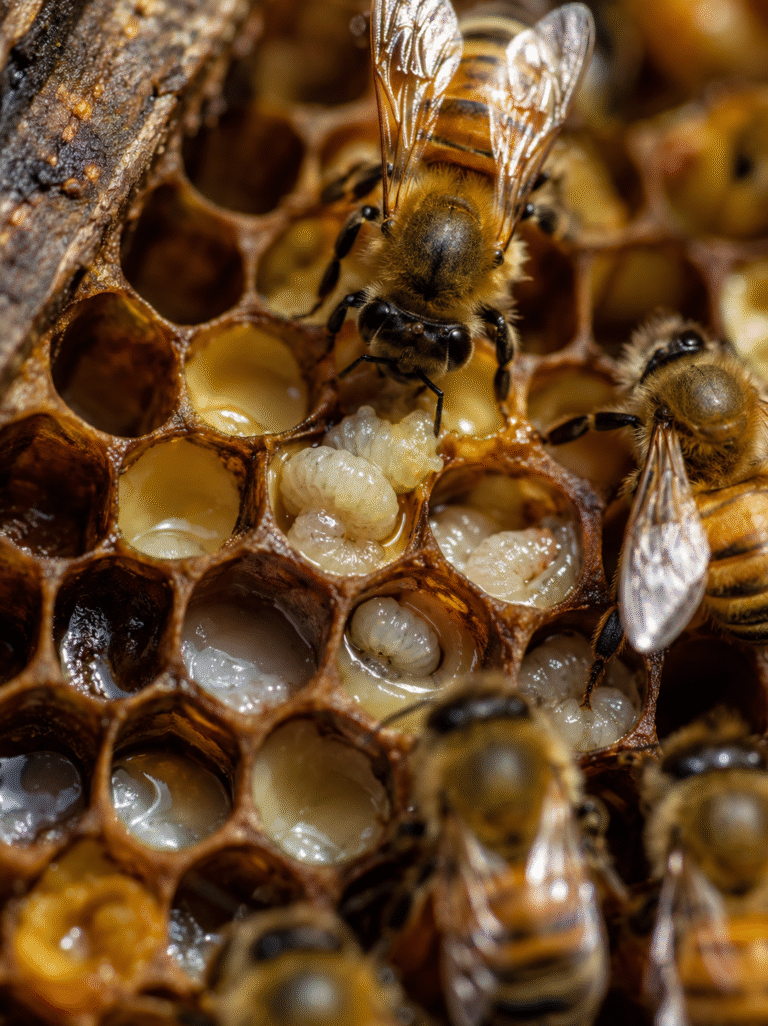
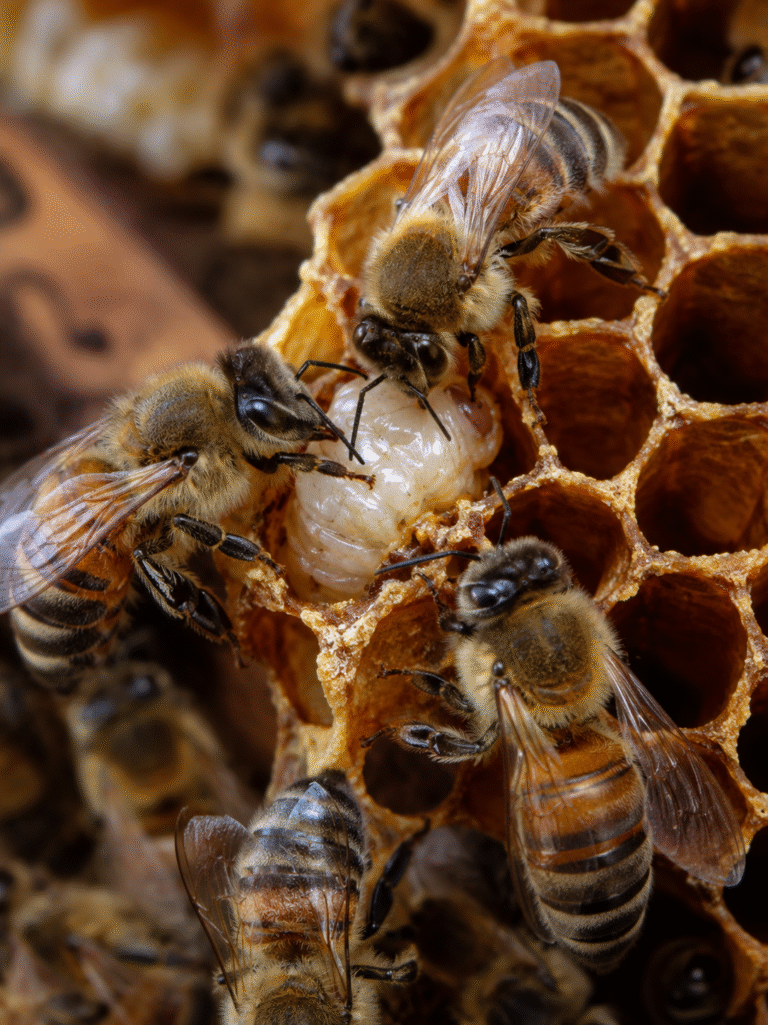
This is where the biology gets interesting. The researchers identified that the resistance appears to begin unusually early in the life cycle: the hybrid queens produce larvae that are less attractive to Varroa mites during the critical window when the parasite seeks out cells to enter for reproduction. If a mite can’t reproduce efficiently, mite population growth slows down dramatically — even in the absence of any chemical intervention.
This early-larval resistance is distinct from other documented resistance mechanisms. Some Varroa-resistant bee populations show heightened hygienic behavior — bees that detect and remove mite-infected brood before the parasites can complete their reproductive cycle. Others show grooming behavior, physically dislodging mites from each other’s bodies. The Southern California population may use a combination of mechanisms, including this larval-level deterrence, though the precise genetics behind it are still being mapped.
Boris Baer, UCR entomology professor and co-author of the study, framed the broader significance clearly: “This question did not start in the lab. It started in conversations with beekeepers. They were not just observers; they helped shape the questions behind this research.” The cross-pollination between practitioner knowledge and formal research is exactly the kind of collaboration that produces findings with real-world traction.
What This Means for Breeding Programs — and Why It’s Complicated
The obvious next question is whether these resistance traits can be extracted from the Southern California population and incorporated into commercial breeding programs. The answer is yes, eventually, but the path is more complicated than it might appear.
Commercial queen breeding in the United States operates at enormous scale and is built around specific economic traits: high honey production, docility, rapid spring buildup. These traits have been selected for intensively, sometimes at the expense of genetic diversity. The Southern California hybrid population’s resistance may be partly a function of that genetic diversity itself — the mixing of multiple lineages producing a broader immune and behavioral repertoire than any single intensively selected line possesses.
This is a pattern that shows up repeatedly in insect resistance research: the genetically diverse, “messy” population outperforms the optimized one in the face of a novel or escalating stress, because diversity preserves options that pure selection eliminates. Introducing resistance traits from these hybrid bees into commercial lines will require careful work to avoid losing the very diversity that makes the resistance possible.
The Hilo Bee breeding project in Hawaii has been working along parallel lines for years — selecting for mite-resistant traits in isolated island populations where gene flow can be controlled — and the UCR findings give that broader class of breeding effort a significant research foundation to build on.
The Practical Question Beekeepers Are Already Asking
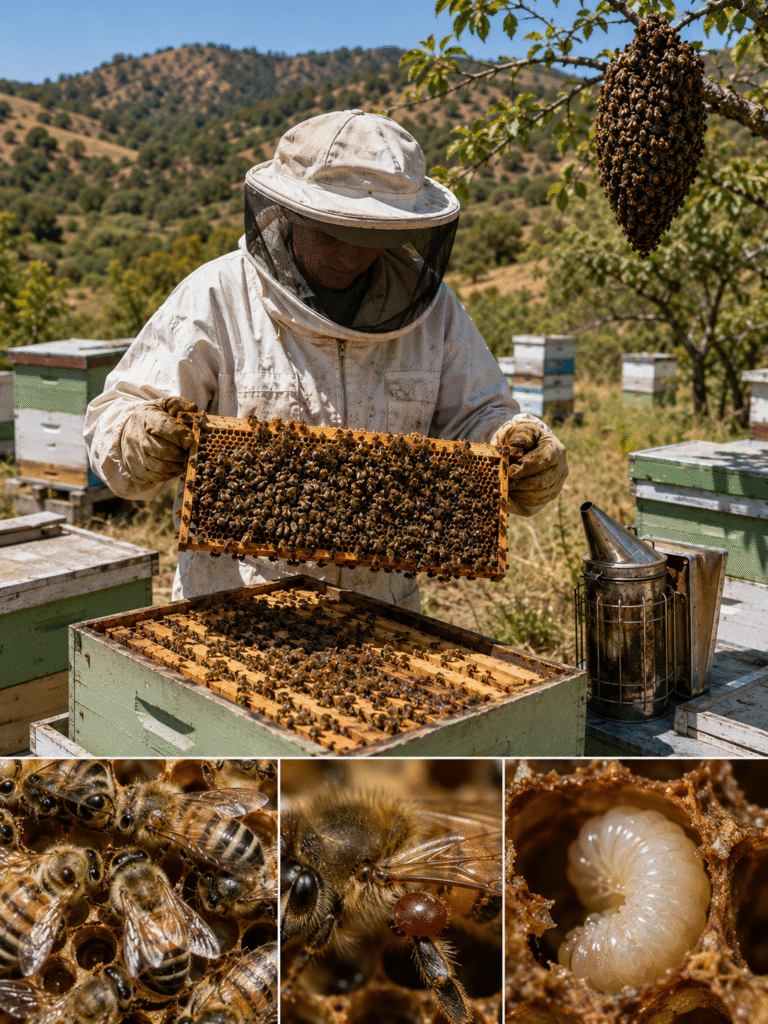
When research like this goes public, the first message that hits beekeeping forums and social media is some version of: “Where can I get queens from these bees?” The answer right now is: you can’t, not reliably, not at commercial scale.
But the more productive framing — the one that’s actually actionable for a working beekeeper reading this in 2026 — is to treat this research as a case for rethinking how you evaluate local feral populations in your region.
In most of North America, feral honey bee colonies are treated as nuisance calls, swarm removal jobs, and occasionally a source of “wild” genetics that beekeepers romanticize but rarely integrate into their breeding stock systematically. The UCR findings suggest that at least some of those feral populations may have been undergoing exactly the kind of informal Varroa selection that produced the Southern California hybrids — surviving without treatment, with mite-resistant traits slowly accumulating across generations.
This doesn’t mean you should immediately start raising queens from every feral colony you encounter. Feral populations can carry disease, may be defensively tempered, and their genetic merits are unknown without testing. But it does mean that a beekeeper who captures a local swarm, runs it alongside commercial colonies, and monitors its mite loads carefully over two full seasons is doing genuinely useful observational work. If that swarm consistently tests lower than your managed colonies on alcohol wash counts without any treatment differential, you have a queen worth evaluating for breeding purposes.
That’s not a radical protocol. It’s methodical. It’s what the UCR beekeepers were doing informally for years before the researchers showed up to measure it.
The Wider Argument This Research Is Making
Colony losses in the United States have become so severe and so persistent that the conversation about solutions has largely defaulted to two camps: better chemistry (new miticides, more effective application methods) and better management (more frequent monitoring, tighter treatment thresholds). Both are real contributions. Both are also, fundamentally, ways of managing a problem rather than reducing it.
What the Southern California hybrid bee study points toward is a third possibility that’s older than both of those approaches: allowing bees to adapt. Not in the romantic, hands-off “treatment-free beekeeping” sense that sometimes ignores the welfare of colonies suffering under heavy mite loads without intervention. But in the rigorous, scientifically grounded sense of identifying what natural selection has already produced, understanding the mechanisms behind it, and deliberately integrating those mechanisms into managed populations.
Commercial beekeeping has run so hard on genetic uniformity for so long that the industry sometimes forgets what it’s sacrificing to get it. These California bees are a reminder that the diversity the industry has been selecting away from contains solutions the industry has been trying to buy in chemical form.
The treatment carousel isn’t going to stop overnight. Varroa is too established, the chemical dependency too deep, the economic pressures too immediate to allow a clean break. But the UCR research points toward what the long-term off-ramp might look like — not a new spray, not a new strip, but a bee that simply does the job better on its own. That’s not a fantasy. It’s already living in Southern California. The work now is figuring out how to scale what’s already there.