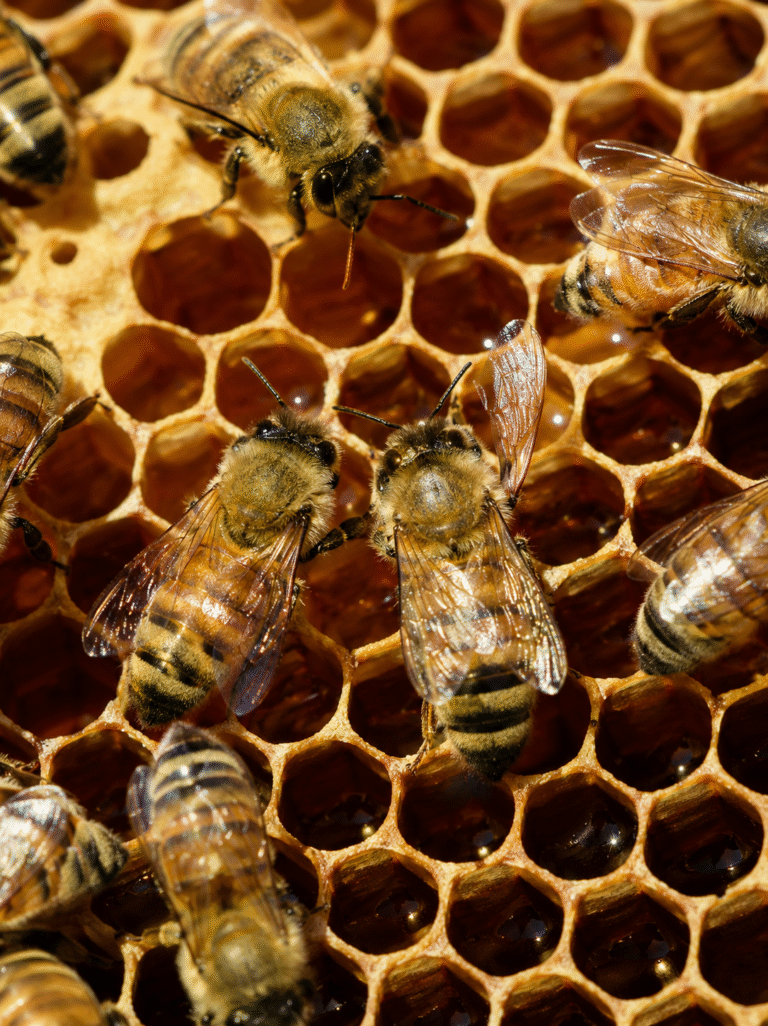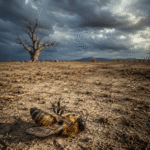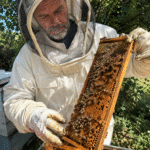

There’s a particular kind of frustration that settles over a beekeeper in late August when they pull a frame and find it lighter than it should be. Not alarming, not yet — just a colony running thinner than you’d want heading into the back half of the season. You know the feeling: the nectar flow has narrowed, the landscape has dried out, and the bees are working harder for less return. You feed syrup to keep the colony’s energy up, but experienced beekeepers have always known that sugar water buys time — it doesn’t actually solve anything at the cellular level.
That gap between what beekeepers can feed bees and what bees actually need to thrive has been one of the quiet frustrations of modern apiculture for decades. And now a team of researchers at the University of Oxford, working with the Royal Botanic Gardens Kew, the University of Greenwich, and the Technical University of Denmark, has identified exactly what’s been missing — and engineered something to replace it.
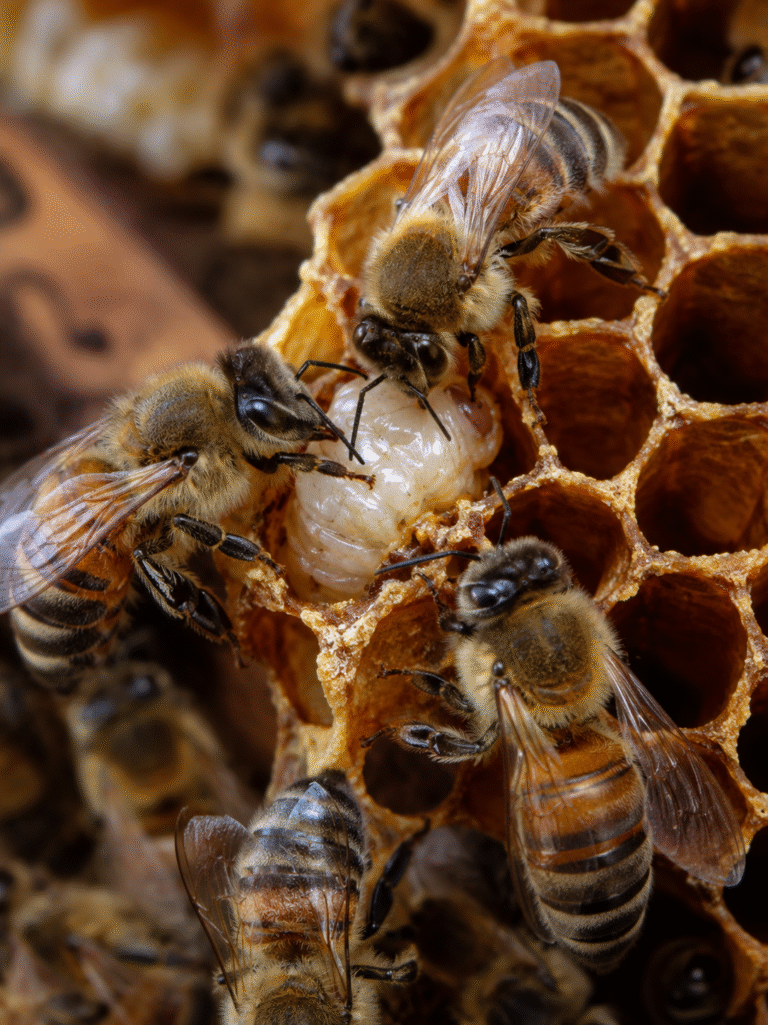
The results, published in early 2026, are remarkable enough to stop most beekeepers mid-sentence when they hear the headline for the first time: colonies fed the new supplement produced up to fifteen times more larvae that successfully reached the pupal stage compared to colonies on standard artificial diets.
Fifteen times. Not fifteen percent. Fifteen times.
The Sterol Problem Nobody Was Talking About Loudly Enough
To understand why this breakthrough matters as much as it does, you need to know something about bee nutrition that rarely gets discussed outside entomology labs.
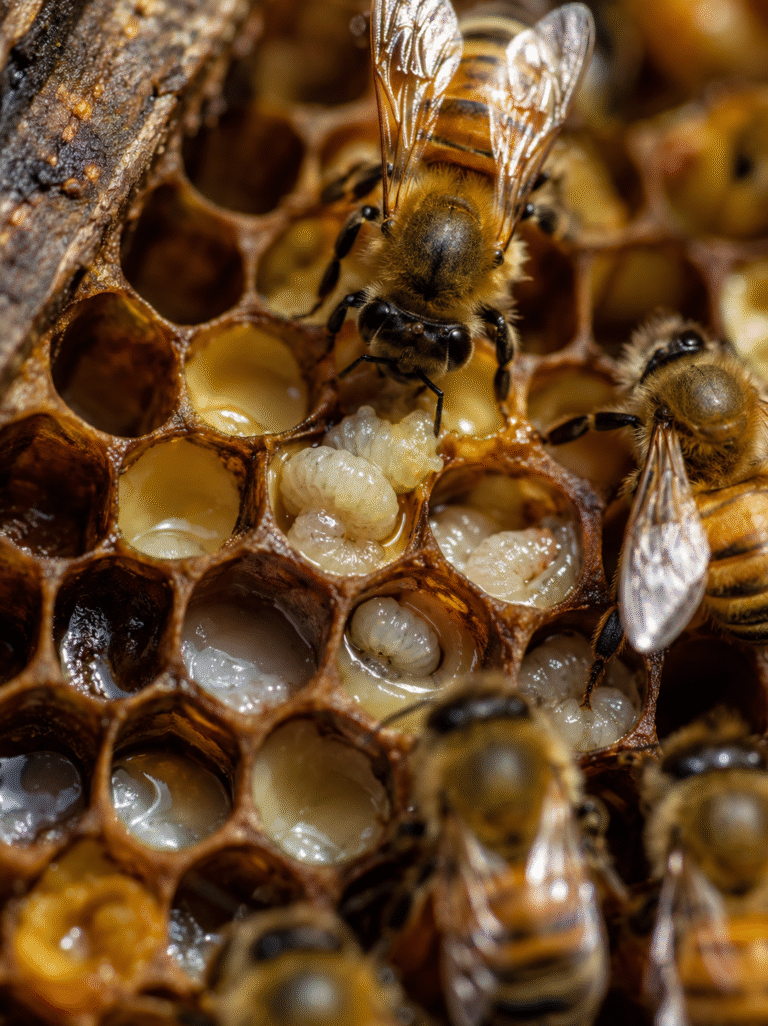
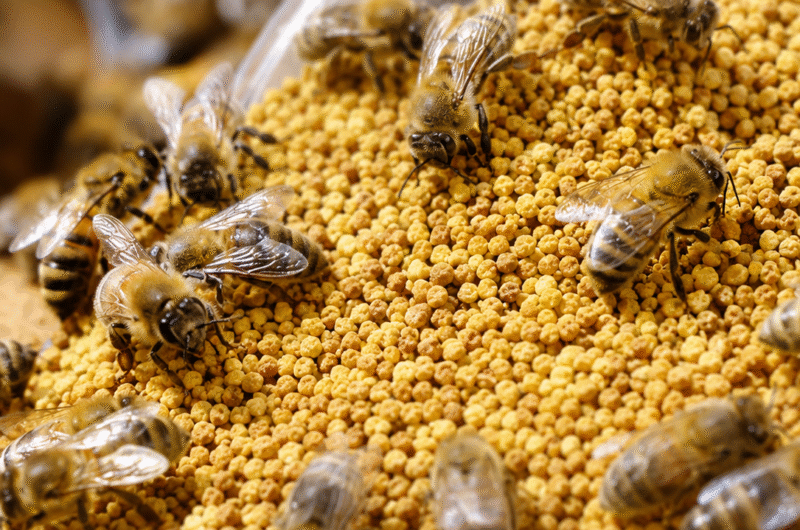
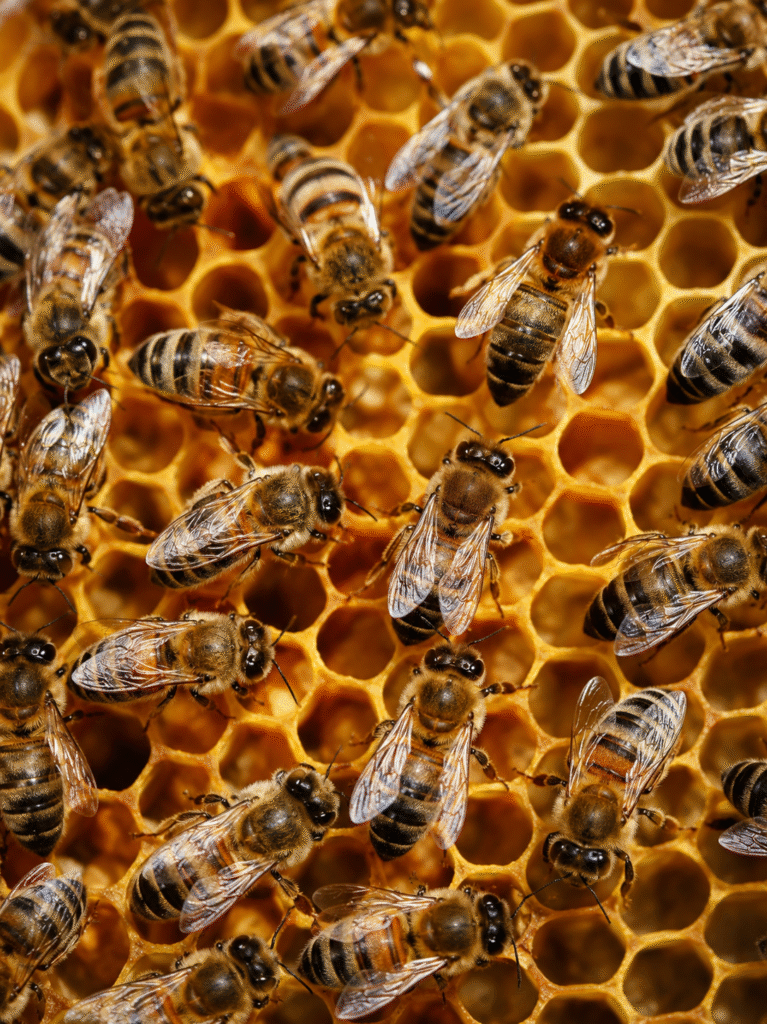
Honey bees, like all insects, cannot synthesize cholesterol and other essential lipids called sterols on their own. They have to get them from pollen. Sterols are fundamental to cell membrane function, hormone production, and larval development — the kind of foundational biological processes that, when running short, don’t produce dramatic visible symptoms right away. Instead, colonies just develop more slowly, produce weaker bees, and struggle to bounce back from stressors that a well-nourished colony might shrug off.
The problem is that most commercial pollen substitutes — those protein-based supplements that beekeepers have used for years to prop up colonies during dearth periods — supply calories, amino acids, and bulk, but they miss sterols almost entirely. Beekeepers who noticed their colonies looked “fine but slow” after extended supplemental feeding weren’t imagining it. They were probably observing a nutritional deficiency that had no name in mainstream beekeeping literature, at least not one that translated into product labels or management advice.
The Oxford team specifically targeted this gap. They engineered a strain of the yeast Yarrowia lipolytica to produce a precise blend of six essential sterols that mirror what bees would naturally extract from a diverse pollen diet. The yeast was then incorporated into a bee feed formulation and tested over three months in controlled glasshouse experiments — closed environments where researchers could confirm the bees consumed only the experimental diet, ruling out confounding inputs from natural foraging.
What “15 Times More Larvae” Actually Means for a Beekeeper
When a result like this lands, the temptation is to immediately translate it into operational terms: does this mean a colony fed this supplement will explode into a population giant? The honest answer is more nuanced than that, and the researchers are careful to say so.
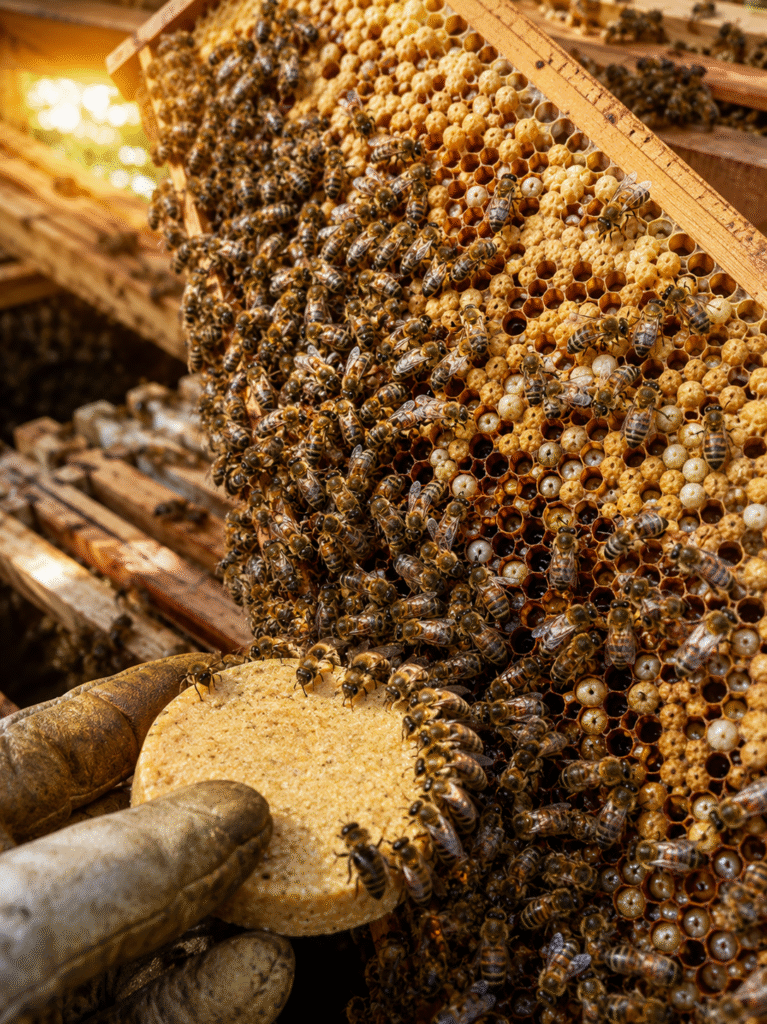
The controlled glasshouse setting was deliberately extreme. Bees in those trials had no access to natural pollen whatsoever, which meant the baseline comparison — colonies on standard artificial diets — was already nutritionally compromised in a way that field colonies rarely are, even during the worst dearth. The 15x figure reflects how severely standard supplements fall short when pollen is completely absent, not what you’d expect to see in an apiary where bees are still foraging even minimally.
But here’s where field experience fills in what the published numbers can’t fully express: there are real, recurring periods in commercial beekeeping when colonies genuinely do approach that nutritional isolation. Almonds in California in February, before much of the surrounding landscape is in bloom. Indoor overwintering operations where bees are confined for weeks. Regions hit by simultaneous drought and agricultural monoculture, where the flower diversity bees need simply doesn’t exist within foraging range.
In those contexts, the gap between standard protein supplement and sterol-enriched diet isn’t academic. It’s the difference between a colony that emerges from a stressful period at functional strength and one that limps forward with depleted brood and aging workers who can’t be replaced fast enough.
I’ve spoken with beekeepers operating in the Central Valley who describe the weeks immediately following almond pollination as some of the most nutritionally barren their colonies experience all year. The almonds finish, the bees are exhausted from the work, and the next major forage source is often two months away. Feeding during that window is standard practice, but the results are inconsistent in ways that have never been entirely explained by protein levels alone. The sterol hypothesis, if it holds up in larger field trials, would go a long way toward explaining those inconsistencies.
Why This Is Different From Previous “Bee Nutrition” Research
Nutritional research in apiculture is not new. There’s a substantial body of literature on protein requirements, lipid composition in larval food, the role of phytochemicals in pollen, and how dietary diversity affects immune function in worker bees. What’s different about the Oxford work isn’t the question it’s asking — it’s the engineering solution it proposes.
Previous approaches to bee nutrition have generally worked within the constraints of available ingredients: blending different plant protein sources to improve amino acid profiles, adding oils to approximate pollen’s lipid content, fermenting ingredients to improve digestibility. These are improvements at the margins of what’s possible with conventional food science.
Engineering a microorganism to biosynthesize specific target molecules and then delivering those molecules in a stable, scalable feed format is a different category of intervention. It’s not mixing ingredients more cleverly — it’s manufacturing the precise nutrient that was missing. The distinction matters because it suggests a pathway toward dietary supplements that could be engineered to address other specific deficiencies as they’re identified, rather than depending on the nutritional lottery of whatever plant-based ingredients happen to be commercially available.
The same yeast platform, the researchers note, could potentially be adapted to support other pollinators or farmed insects — a hint that this line of work has ambitions well beyond honey bees, though that’s a longer-term prospect still years from practical application.
What Beekeepers Should Actually Do With This Information Right Now
The supplement doesn’t exist as a commercial product yet. Field trials are ongoing, and the researchers estimate that, if larger tests confirm the glasshouse results, a viable product could reach the market within roughly two years. That timeline is aggressive for agricultural science, and there’s no guarantee it holds — field conditions introduce variables that controlled experiments can’t fully anticipate, and regulatory approval for novel food products in both the US and EU takes time.
So in the immediate term, the practical takeaway isn’t “wait for the Oxford supplement to arrive.” It’s something more fundamental: take the sterol question seriously in your existing supplemental feeding program.
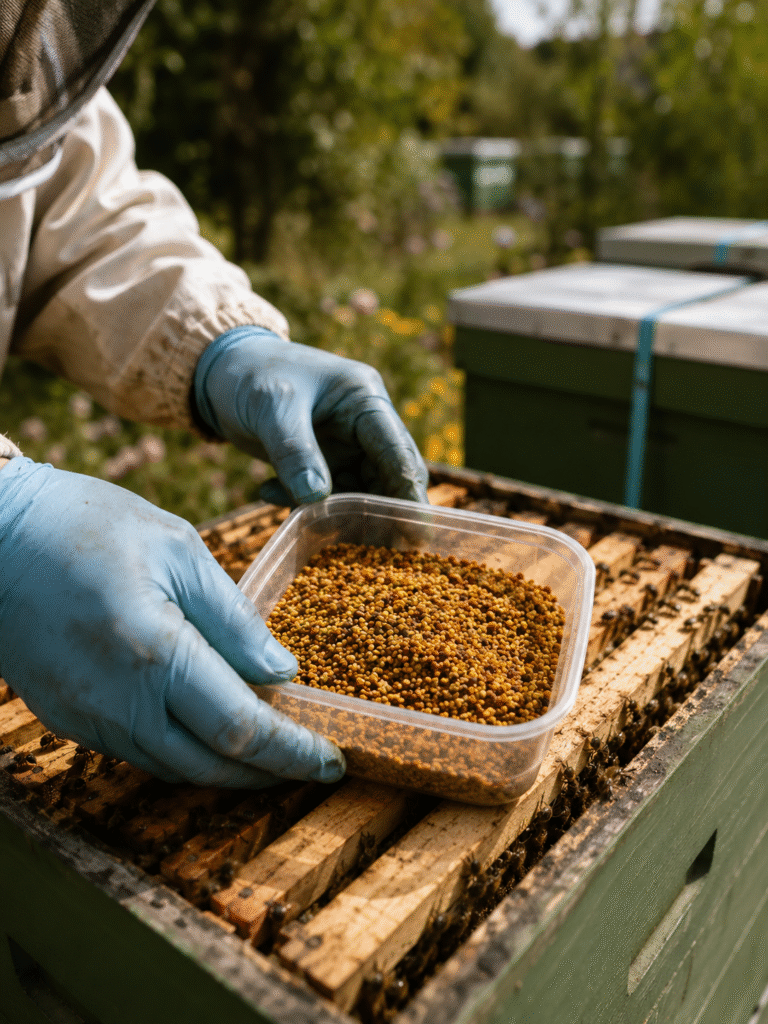
The most actionable thing a beekeeper can do right now, based on what this research clarifies, is prioritize genuine pollen trapping and storage during heavy flow periods to bank real pollen for dearth supplementation. Frozen pollen patties made from authentic trapped pollen contain the sterol profile that commercial substitutes lack. They’re more labor-intensive to produce than buying bulk protein supplement, but the nutritional difference is real.
For beekeepers who can’t feasibly trap and store adequate pollen, it’s worth paying attention to the composition labels on commercial supplements more critically than most people currently do. Some manufacturers have begun incorporating small quantities of actual pollen or testing novel lipid additions precisely because the sterol gap has been quietly known in research circles even before this paper landed. The product landscape will shift as this research gets wider attention — knowing what to look for puts you ahead of that curve.
The Larger Picture This Research Is Drawing
Danielle Downey, Executive Director of Project Apis m. — one of the more credible voices in commercial pollinator research — put the significance of this work in terms that translate directly into the economics beekeepers live with daily: bees are responsible for roughly one in three bites of food humans eat, and in landscapes where natural forage is shrinking, “a more complete diet supplement could be a game changer” for colony survival and the beekeeping operations that underpin food production.
That framing isn’t hyperbole. The relationship between nutritional deficiency and susceptibility to other stressors in bee colonies is well-documented. Varroa-vectored viruses do more damage in nutritionally compromised colonies. Pesticide sublethal effects are more pronounced when bees are already running low on cellular building blocks. The colony loss crisis that’s driven news coverage for years isn’t caused by any single factor — but nutritional inadequacy is one of the threads running through virtually every documented case of accelerated decline.
This research doesn’t solve colony collapse. It doesn’t eliminate Varroa or fix the landscape. What it does is close a specific, identifiable hole in the nutritional foundation that bees have been propped up on with inadequate substitutes for decades. That’s not a minor refinement. For an industry where the margins between a functional season and a catastrophic one have been thinning steadily since the late 2000s, closing that hole is exactly the kind of targeted, concrete progress that actually changes outcomes on the ground.
The fifteen-times figure will get the headlines. But for beekeepers who have spent years watching colonies underperform on supplemental feeding without a clear explanation, the more important number might be simpler: zero. As in, zero essential sterols in most of what we’ve been feeding our bees. That’s the number this research has finally put a clear face on.