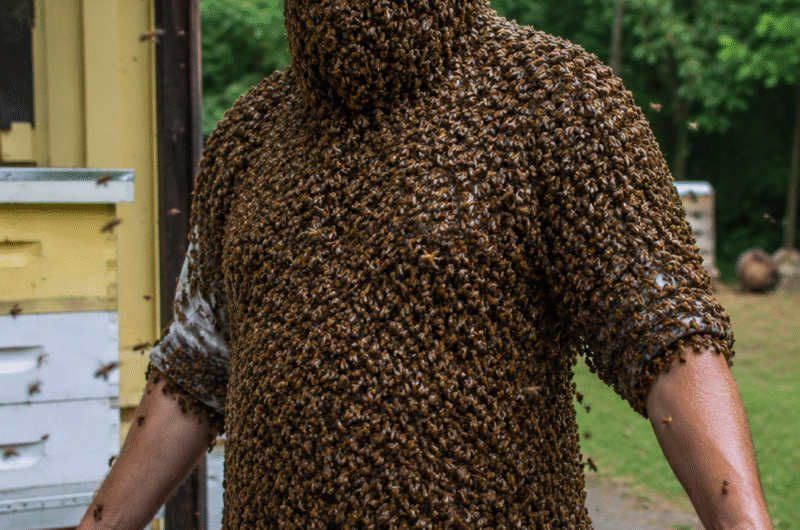

I still remember the first time I watched it happen in person. A weathered apiarist in rural Georgia, no veil, no gloves, stood still while a queen was pinned beneath his chin in a small mesh cage. Within eleven minutes, his entire torso, neck, and most of his face had vanished beneath a living, breathing mass of honey bees. He didn’t flinch. He didn’t sweat more than the Georgia heat already demanded. And when it was over, he peeled the bees away like a man removing a heavy coat, with maybe two stings to show for it.
That’s bee bearding, and despite how it looks on a phone screen, it’s not a stunt built on luck.
What’s Actually Happening Under That “Beard”
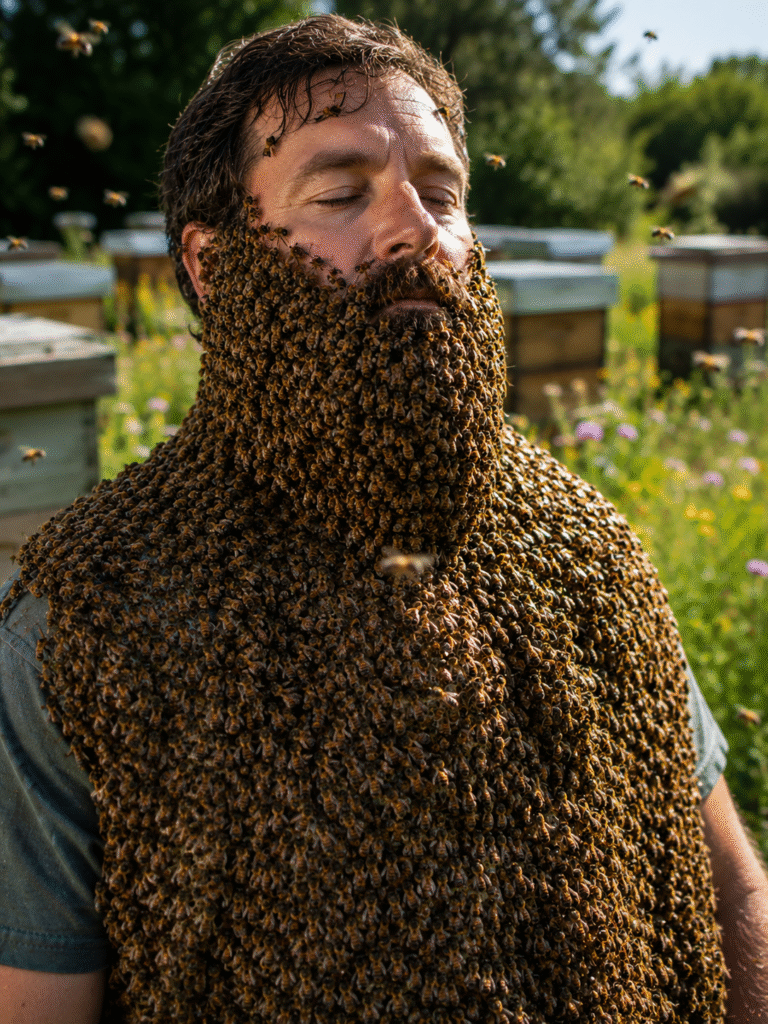
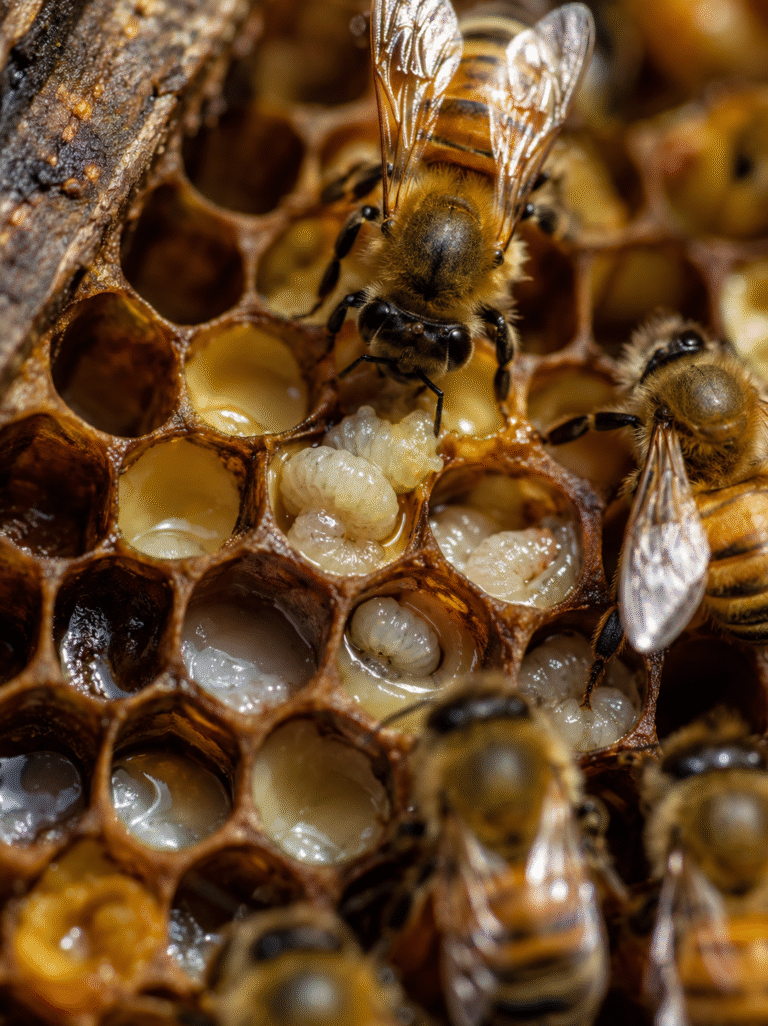
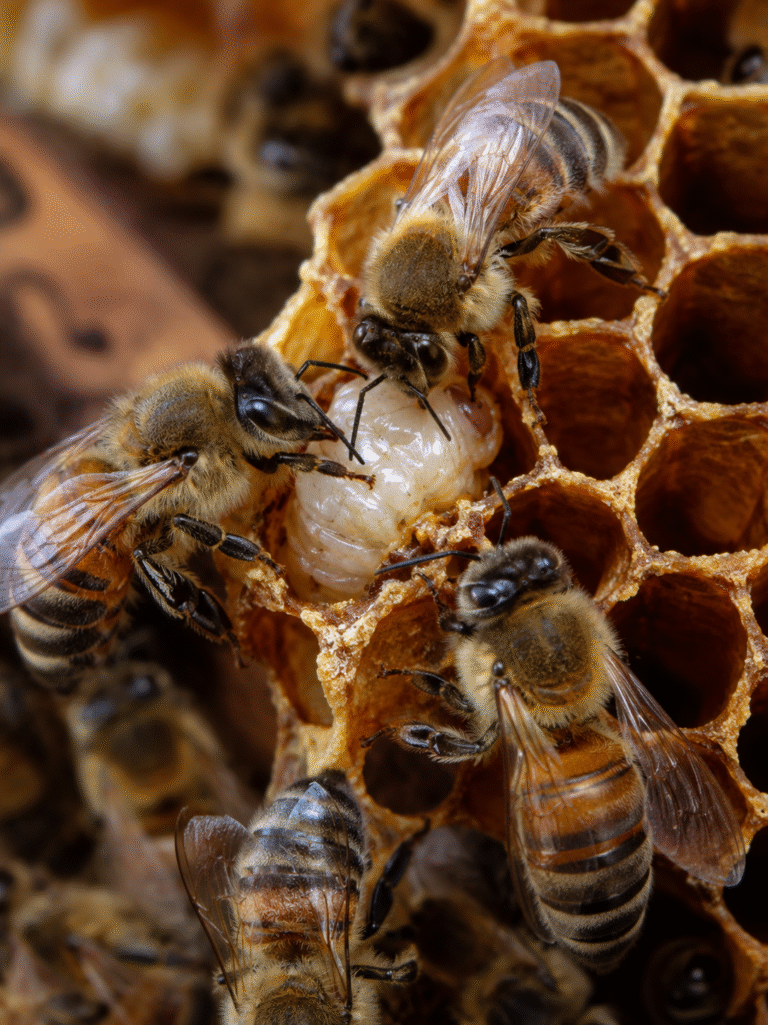
The mechanics are simpler than most people assume, but the discipline required is not. A queen — sometimes the colony’s own queen, sometimes a spare one raised specifically for this purpose — is secured in a small cage and placed against the bearder’s skin, usually at the base of the neck or chest. Worker bees follow queen pheromone with an obsessive loyalty that has nothing to do with aggression and everything to do with colony cohesion. They cluster toward her, layer over layer, the way bees naturally cluster around a queen during swarming or when temperatures drop and the colony needs to conserve heat.
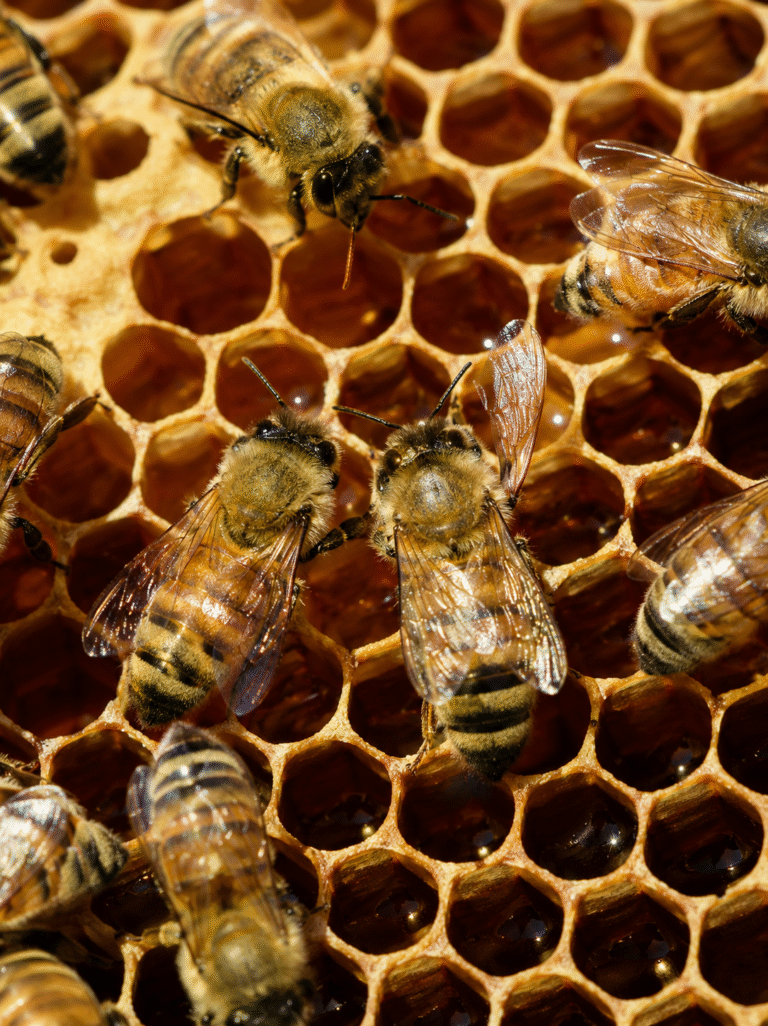
What surprises people who’ve never kept bees is this: a calm, well-fed colony in nectar flow season is, paradoxically, one of the least defensive states a hive can be in. Bees gorged on nectar have a harder time curling their abdomens to sting — their bodies are physically distended. Beekeepers who do this professionally almost always stage their bearding sessions during a strong flow, never during a dearth, and never with a colony that’s shown any defensive temperament in prior inspections.
I’ve talked to three commercial beekeepers who’ve done organized bearding demonstrations at county fairs, and every single one told me the same thing in different words: the bees aren’t tolerating you, they’re ignoring you. You’ve become furniture. You’re not prey, not a threat, not even particularly interesting once the queen’s pheromone trail is established.
The Stings Nobody Talks About
Here’s where I’ll push back on how this phenomenon usually gets covered. Most articles and viral clips present bee bearding as essentially sting-free, which isn’t accurate and does a disservice to anyone curious enough to try it themselves.
Every beekeeper I interviewed for this piece reported at least one sting per session, typically from a bee that got pinched between skin folds, clothing seams, or accidentally crushed during repositioning. One bearder in North Carolina described it bluntly: “You will get stung. The question is whether you panic when it happens, because that’s when things go wrong.” A sudden flinch sends a vibration through the cluster that other bees interpret as alarm, and alarm pheromone (isopentyl acetate, for the chemistry-minded readers) recruits nearby bees to investigate or defend. One sting handled calmly stays one sting. One sting handled with a jerk or a slap can become five.
This is the part hobbyist beekeepers underestimate when they see bearding online and think it looks achievable on a weekend. It’s not a beginner activity, and frankly, most experienced commercial beekeepers I spoke with don’t do it casually either — it’s reserved for demonstrations, photography, or, occasionally, competitive record attempts.
The Record Chasers
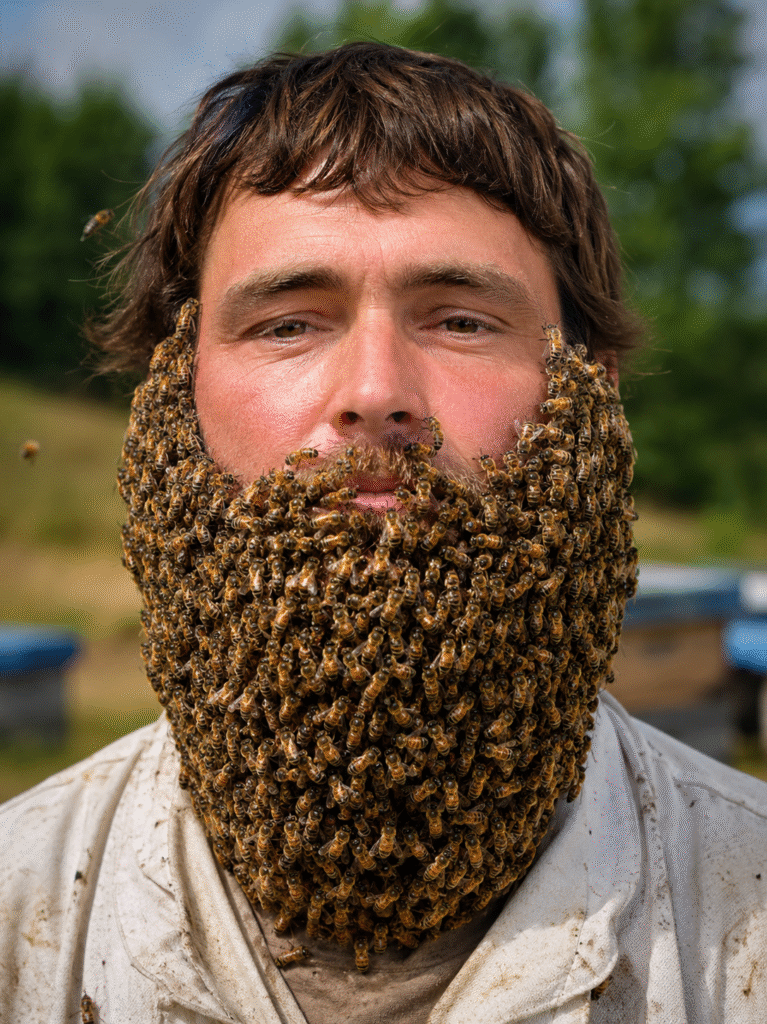
Bee bearding has an actual competitive history, which surprised me when I first started researching it years ago. Beekeepers have attempted to set records for total weight of bees worn, often using multiple queens distributed across the body to spread the cluster wider rather than deeper. The logic here matters: a thinner, broader beard is actually safer than a thick, concentrated one, because bees toward the center of a dense cluster generate more heat and carbon dioxide, which can agitate the colony faster than the bearder realizes.
This is a detail almost never mentioned in mainstream coverage, and it’s the kind of thing you only learn by either doing it or talking at length to someone who has. A beard that looks more impressive on camera — thick, towering, dramatic — is often closer to the line of being genuinely risky than a wider, flatter coating of bees that looks comparatively modest.
Why This Story Keeps Resurfacing — and Why It Matters Beyond the Spectacle
Bee bearding videos go viral every single year, often the same handful of demonstrations recirculated to new audiences who’ve never seen it before. I think the reason it keeps working as a piece of content isn’t just shock value. It quietly does something for public perception of honey bees that years of “save the bees” messaging struggles to accomplish: it makes people recalibrate how dangerous bees actually are.
Most people’s fear of bees is wildly disproportionate to the actual risk a calm honey bee colony presents. Wasps and yellowjackets, which are far more likely to sting unprovoked, get conflated with honey bees in the public imagination constantly. A video of a person standing peacefully under 50,000 honey bees does more to correct that misunderstanding in fifteen seconds than most educational pamphlets manage in a page of text.
That recalibration has real consequences. Homeowners who panic and call exterminators on a swarm resting in a tree are, more often than not, destroying a colony that would have moved on within 24 to 48 hours on its own, or could have been safely collected by a local swarm catcher. Every viral bearding clip that nudges public perception even slightly toward “bees aren’t out to get me” translates, in a roundabout way, into fewer unnecessary colony destructions.
What I’d Tell a Beekeeper Curious About Trying This
If you’re a hobbyist reading this and thinking about attempting a small-scale version, here’s what I’d actually say, having watched it done correctly and incorrectly:
Don’t start with your only hive’s queen. Use a nucleus colony or a spare mated queen you don’t mind losing if something goes wrong during the cage transfer. Pick a day during strong nectar flow, ideally midday when foragers are out and the remaining bees in the hive are younger, less defensive nurse bees. Have a second, experienced beekeeper present, not for theater, but because they’ll spot early signs of agitation — pitch change in the hum, increased bee density around your face — before you will.
And accept, going in, that this isn’t really about proving you’re fearless. The beekeepers who do this well aren’t suppressing fear through bravado. They’ve built an accurate enough mental model of bee behavior that there’s genuinely less to fear than instinct suggests. That’s the actual skill on display, and it took most of them years of regular hive work to develop it.
The Takeaway
Bee bearding will keep going viral because it’s visually arresting and counterintuitive in a way that’s hard to look away from. But underneath the spectacle is a useful, almost overlooked lesson about colony behavior: honey bees are reactive, not aggressive, and their defensiveness is contextual, predictable, and manageable by anyone who’s put in the time to understand it. The people who pull this off aren’t lucky. They’re reading their bees correctly, second by second, in a way that took years to learn — and that’s a far more interesting story than the photo suggests.