
I’ll be honest with you: I didn’t know what I was getting into.
I’d agreed to spend a full day with Marcus, a third-generation beekeeper who manages 47 hives across three properties outside of rural Tennessee. I figured it would be peaceful. Maybe a little slow. I imagined him strolling through a meadow, lifting wooden frames, nodding wisely as golden honey dripped off his fingers.
I was not entirely wrong. But I was missing about 90% of the picture.
5:30 AM — It Starts Before Sunrise
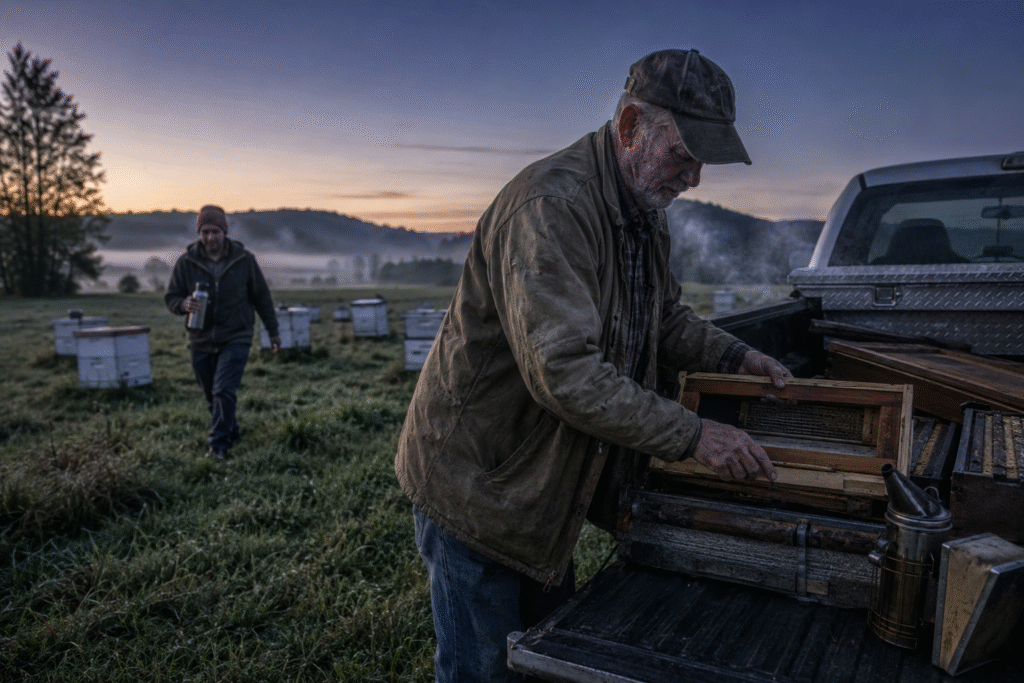
“Bees wake up with the sun,” Marcus told me as I climbed into his truck, clutching a thermos of coffee like a life raft. “Which means we have to be there before they do.”
This was my first lesson: beekeeping is not a leisurely hobby. It is, in many ways, farming — with all the early mornings, physical labor, and dependence on weather that farming implies.
We drove out to his first apiary as the sky turned from black to a bruised purple. Marcus talked the whole way, not in the rehearsed way of someone giving a tour, but in the casual, distracted way of someone who has simply been thinking about bees for 40 years and can’t quite turn it off.
“You know what most people don’t realize?” he said, eyes on the road. “A hive isn’t a collection of individual bees. It’s a single organism. The bees are more like cells than like people. The hive thinks. The hive decides. The individual bee? She barely matters.”
I filed that away. It would come back to me later.
7:00 AM — Suiting Up (And the First Thing Nobody Tells You)
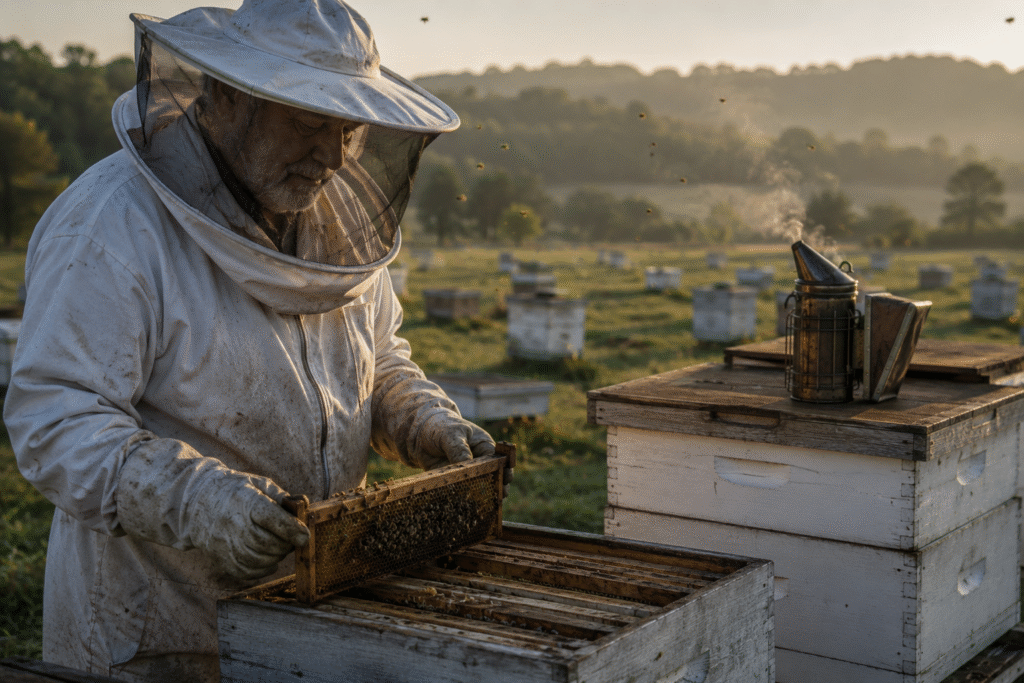
Here is what nobody tells you about bee suits: you will sweat.
We’re talking about a full white suit, gloves, and a veil, worn in June, in Tennessee, while bending over wooden boxes and lifting frames that weigh several pounds each. By 7:15 AM I was already damp. By 9:00 AM, I had fully renegotiated my relationship with discomfort.
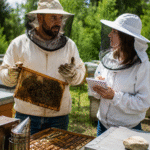
Marcus, who has been doing this since he was eight years old, works with a lighter veil and bare hands most of the time. He’s been stung so often — somewhere between 3,000 and 5,000 times by his own rough estimate — that his immune response has essentially adapted. A sting that would have my hand swelling for three days barely registers for him anymore.
“The secret,” he told me, pulling on his veil with the practiced ease of someone tying their shoes, “is to stay calm. They can smell adrenaline. Not literally, but almost — they pick up on fast movements, on erratic breathing. If you’re scared, they know.”
I resolved to appear serene. I was not serene.
7:30 AM — Inside the Hive
The smoker came first. Marcus packed it with dry wood chips, got it going with a lighter, and puffed cool white smoke across the entrance of the first hive before easing off the lid.
“Smoke triggers a feeding response,” he explained. “The bees think there’s a fire nearby, so they gorge on honey — getting ready to flee. A full bee is a calm bee. It’s also harder to bend your abdomen to sting when you’re full.”
I had not known this. It’s one of those facts that sounds obvious in retrospect but had simply never occurred to me.
What happened next is genuinely difficult to describe.
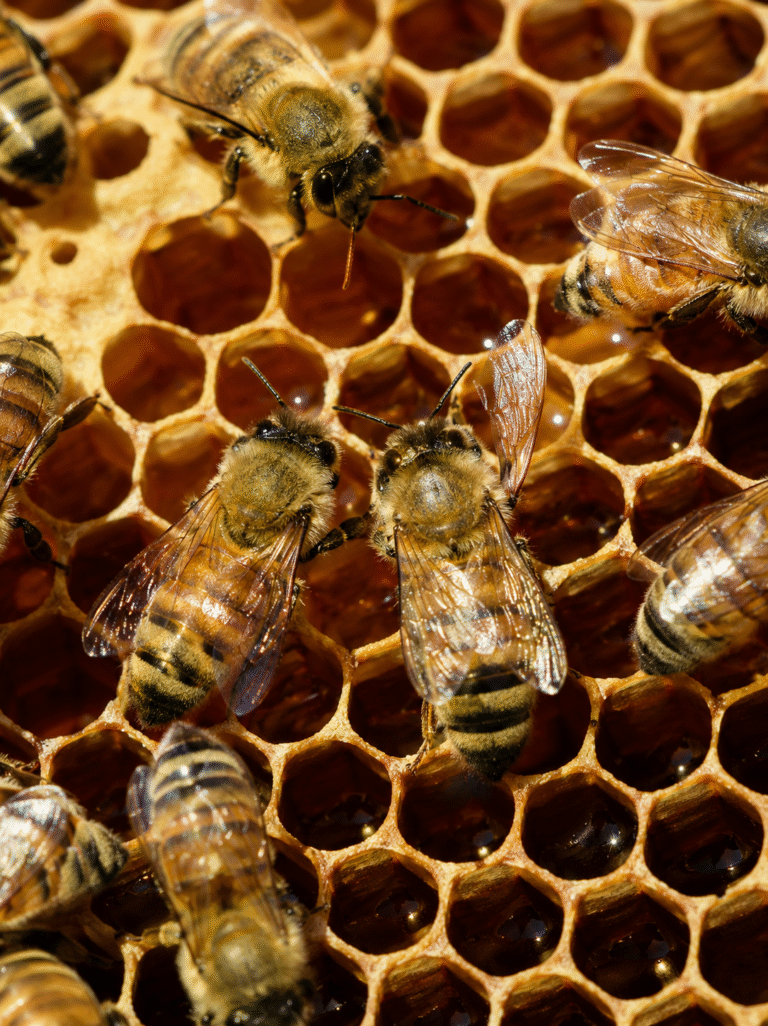
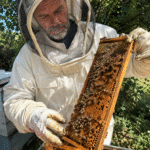
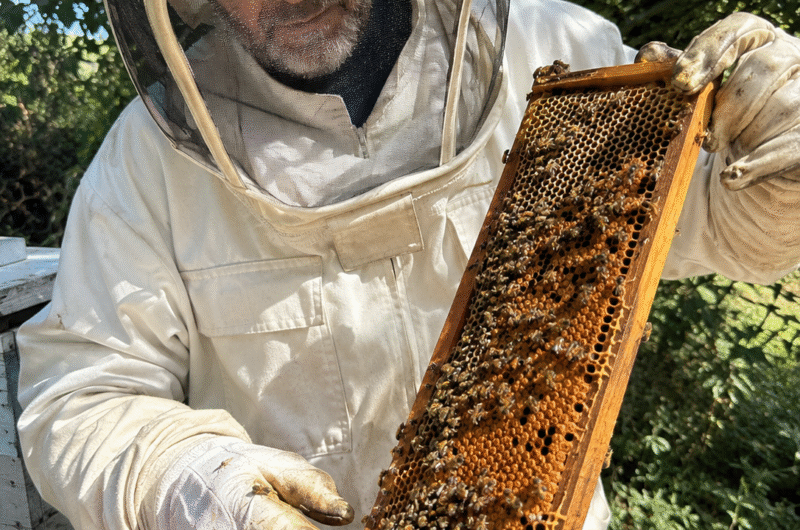
Marcus lifted the first frame — a wooden rectangle covered in bees, thousands of them, moving in a slow, purposeful swarm — and held it up to the morning light. And it was stunning. Not frightening (though my heart rate suggested otherwise), but genuinely, unexpectedly beautiful.
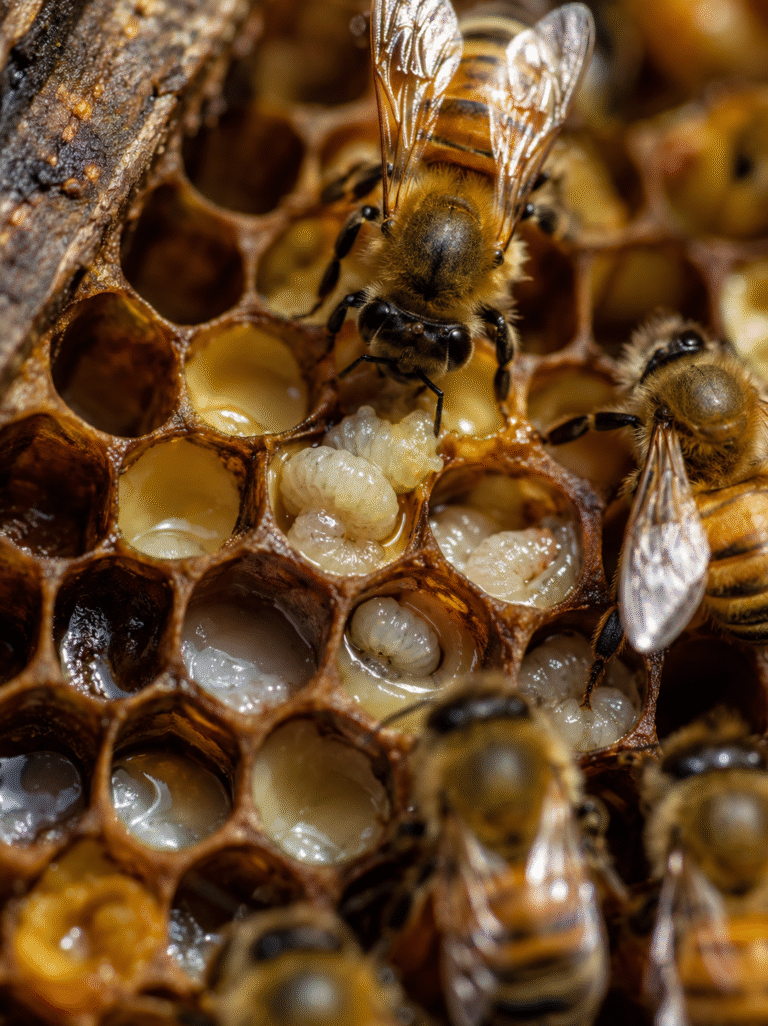
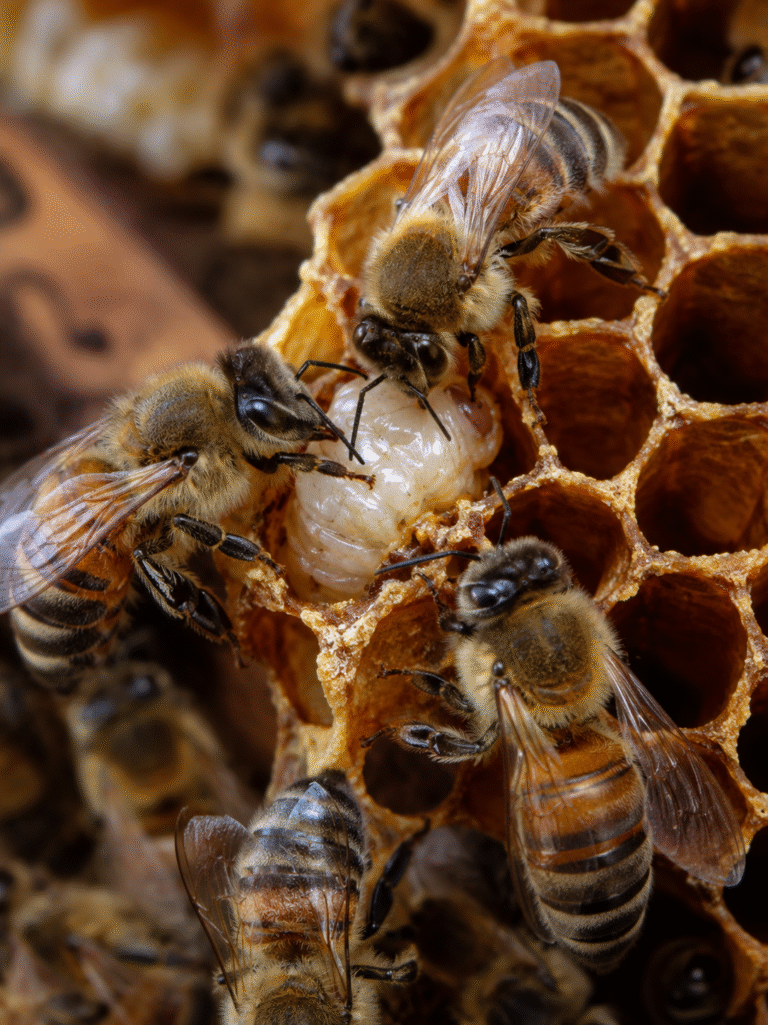
The honeycomb glowed amber in the sunlight. The bees moved over it like a living mosaic, each one occupied with something specific: capping cells, feeding larvae, building new wax. And in the center, moving with a slightly different gait than the others, slightly longer, slightly more deliberate —
“There she is,” Marcus said quietly. “The queen.”
I don’t know what I expected. Something more dramatic, maybe. A bee with a crown. What I saw instead was a bee that was maybe 20% larger than the others, moving through the crowd with an unhurried confidence while the workers around her literally adjusted their paths to avoid bumping into her.
“She lays up to 2,000 eggs a day,” Marcus said. “Every single bee in this box came from her. If she dies and we don’t replace her within a few days, the colony is finished.”
I stared at this small, extraordinary creature for a long moment. Then a worker bee landed on my veil approximately one inch from my left eye, and I remembered where I was.
10:00 AM — The Math of Honey
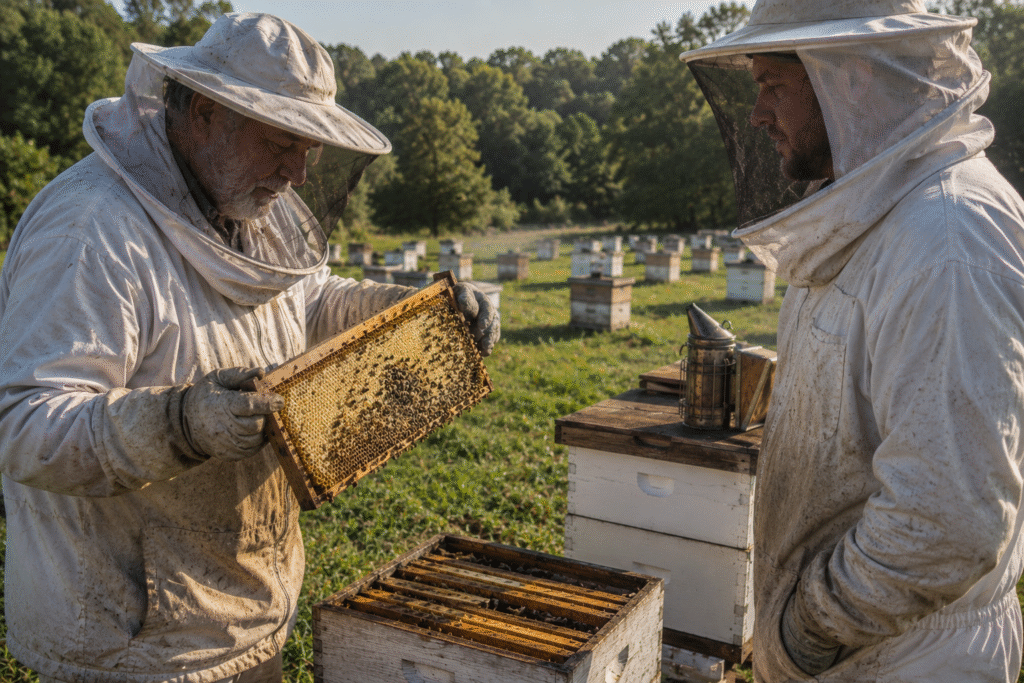
By mid-morning we’d checked a dozen hives. Marcus talked as he worked — inspecting frames, checking for signs of disease, looking for the tell-tale rust-colored spots that indicate Varroa mites.
At some point I asked the question I’d been building up to: how much honey does a hive actually produce?
“Depends on the year. Depends on the location.” He set down a frame and thought about it. “A strong hive, good summer, good forage nearby? Maybe 60, 70 pounds of surplus honey. That’s what we harvest. But here’s the thing people always forget.”
He picked the frame back up.
“The bees make that honey for themselves. They need around 60 pounds just to survive the winter. So everything we take, they have to replace. We’re not taking their excess — we’re taking their reserves and hoping they make more.”
I hadn’t thought about it that way before. Beekeeping, framed like that, starts to sound less like farming and more like a negotiation.
1:00 PM — The Hive That Was Struggling
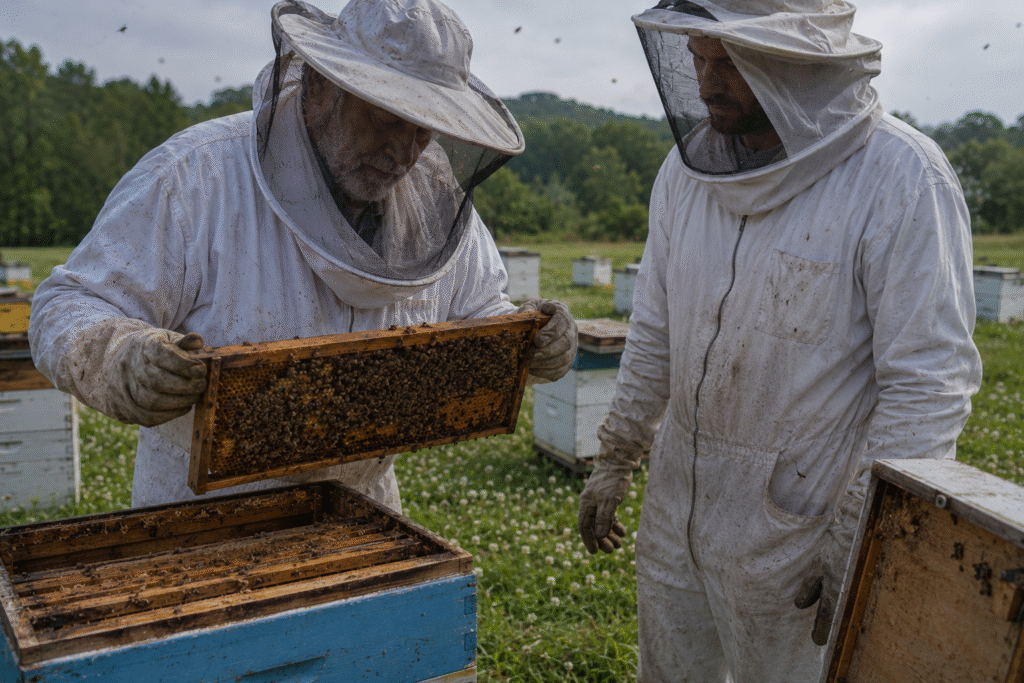
Not every hive we visited that day was thriving.
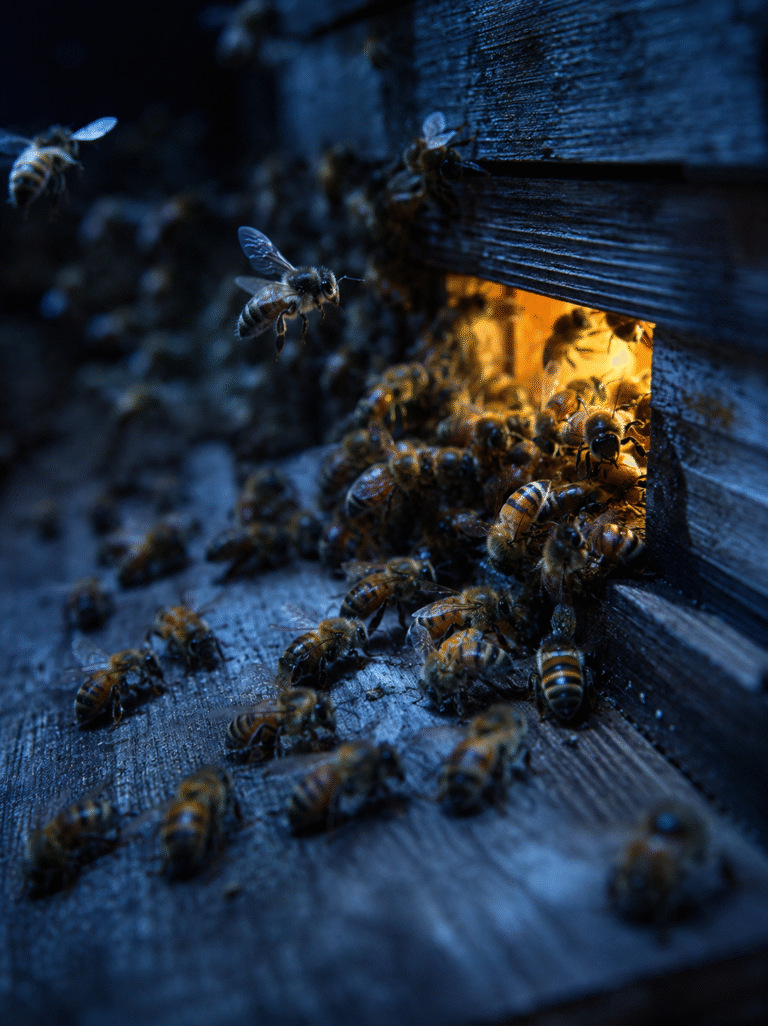
One of them — a blue-painted box at the far end of a clover field — was quiet in a way that felt wrong. Fewer bees at the entrance. Less activity. Marcus opened it with a look on his face I hadn’t seen yet.
“She’s failing,” he said, almost to himself.
The queen in this hive was old. Her egg-laying pattern had become “spotty” — gaps in the brood comb where healthy queens lay in solid sheets. The colony was declining, and without intervention, it would be gone before winter.
Marcus made a decision quickly and without drama: this hive would get a new queen, ordered from a breeder he trusts in Georgia. The old queen would be removed.
“Does that bother you?” I asked. “After all these years?”
He considered the question seriously. “It would bother me more to let the colony die,” he said. “The queen isn’t a pet. She’s the heartbeat of 50,000 bees. My job is to keep the heart beating.”
4:00 PM — What I Actually Learned
By late afternoon, we were back at Marcus’s barn, extracting honey from the frames we’d pulled. The extractor — a large centrifuge that spins the honey out by force — hummed steadily while we talked.
I asked him what he wished people understood about bees that they don’t.
He didn’t hesitate.
“That they’re not dangerous. People are terrified of bees, and it’s completely backwards. Bees don’t want to sting you — it kills them. A bee will only sting if it genuinely believes the hive is under threat. If you see a bee flying around your picnic, it’s not hunting you. It’s looking for food, or it’s lost. Just… let it go.”
He paused.
“The things that are actually threatening bees? Those are invisible. Pesticides in the pollen. Mites in the brood cells. Winters that are too warm, then suddenly too cold. Those are the things that should frighten people. Not a bee on a flower.”
What Nobody Tells You (The Real List)
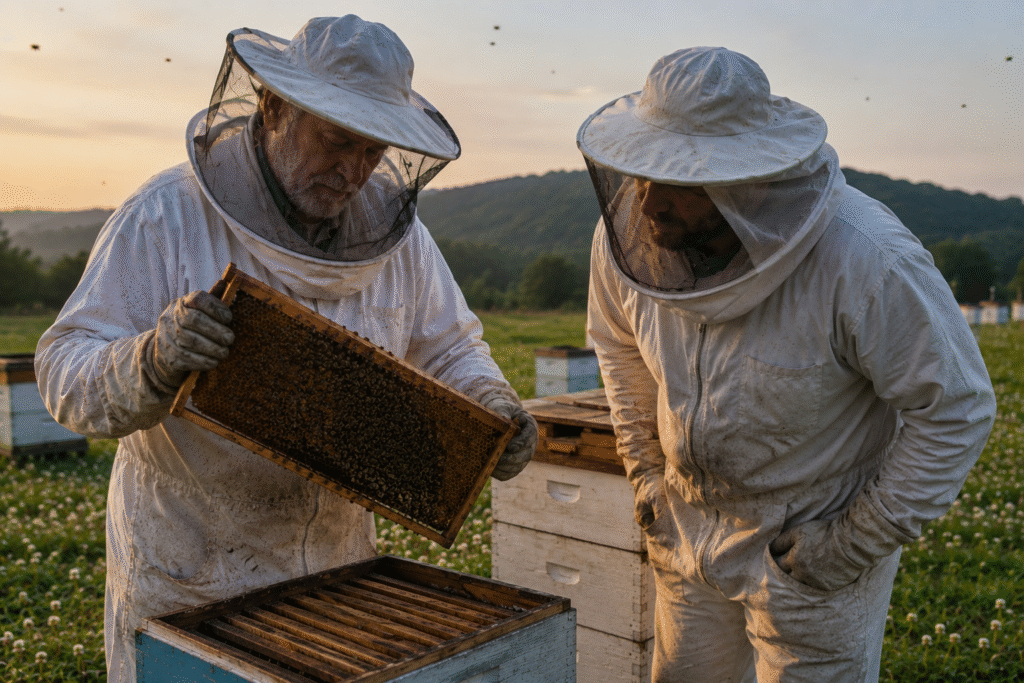
After a full day with Marcus, here’s what I came away with — the things that genuinely surprised me, that no article I’d ever read had mentioned:
Beekeeping is physically demanding. You’re lifting heavy boxes in the heat, in a suit, for hours.
A hive smells incredible. Like warm wax and grass and something sweet that doesn’t have a name.
The sound of a healthy hive is different from an unhappy one. Marcus could tell the mood of a colony by the pitch of the buzz before he even opened the lid.
Bees recognize their beekeeper. Not individually — but they do distinguish between familiar handlers and strangers, based on scent and movement patterns.
And the biggest one: beekeeping will change how you look at a garden, a meadow, a wildflower on the side of the road. Once you understand what bees need — what they’re searching for, how far they fly, how much their survival depends on what we plant and spray and pave — you can’t unsee it.
You start noticing what’s missing.
Ready to Meet the Bees Yourself?
If this sparked something in you — a curiosity, a pull toward something slower and more connected than your usual Tuesday — that’s exactly the feeling that makes people into beekeepers.
It doesn’t require acres of land or years of experience. It requires patience, a willingness to learn, and a genuine respect for creatures that have been doing their job perfectly for 100 million years.
We’re here to help you start. Explore the rest of Beekeeping Corners — and when you’re ready, the hive is waiting.
Have questions about getting started in beekeeping? Leave them in the comments.