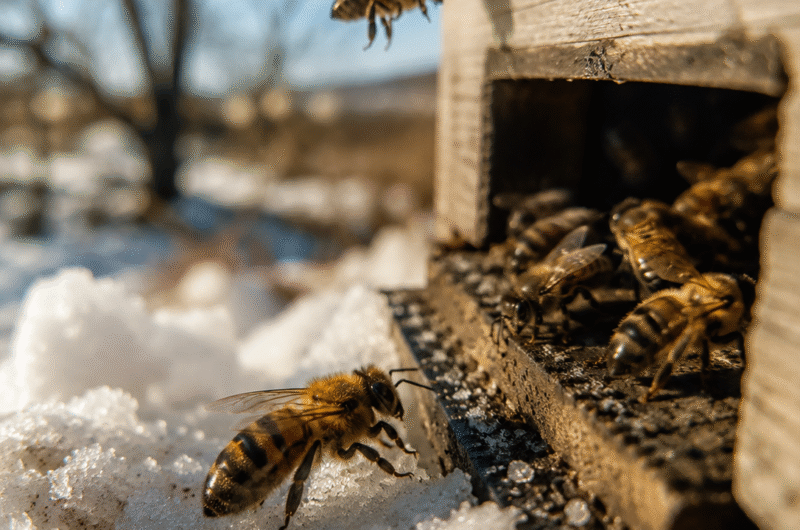

Three years ago, my dandelion bloom — the signal I’ve used for over a decade to know when spring buildup is really underway — showed up eleven days earlier than the year before. Not a slow creep. Eleven days, in one season. I remember standing in the yard doing the math on whether my mite treatment schedule, timed off the calendar rather than the flowers, was already running behind before I’d even opened the first hive of the year.
That gap between the wall calendar and what the bees are actually doing outside is not a fluke of one weird spring. It’s a pattern researchers are now documenting at a scale big enough to matter to every beekeeper reading this.
Phenological mismatch — the growing gap between when bees are ready to forage and when their food plants actually bloom — is now being identified as a direct, current driver of colony stress, alongside heat and pesticide pressure. A study published in early July 2026 pointed to exactly this combination as a factor behind bee mortality trends this summer, and it sits on top of a growing body of peer-reviewed research tracking the same shift across multiple continents.
What the 2026 research actually shows
I want to be careful here, because “climate change is bad for bees” is such a broad, over-repeated claim that it’s easy to tune out. The specific mechanism matters more than the headline.
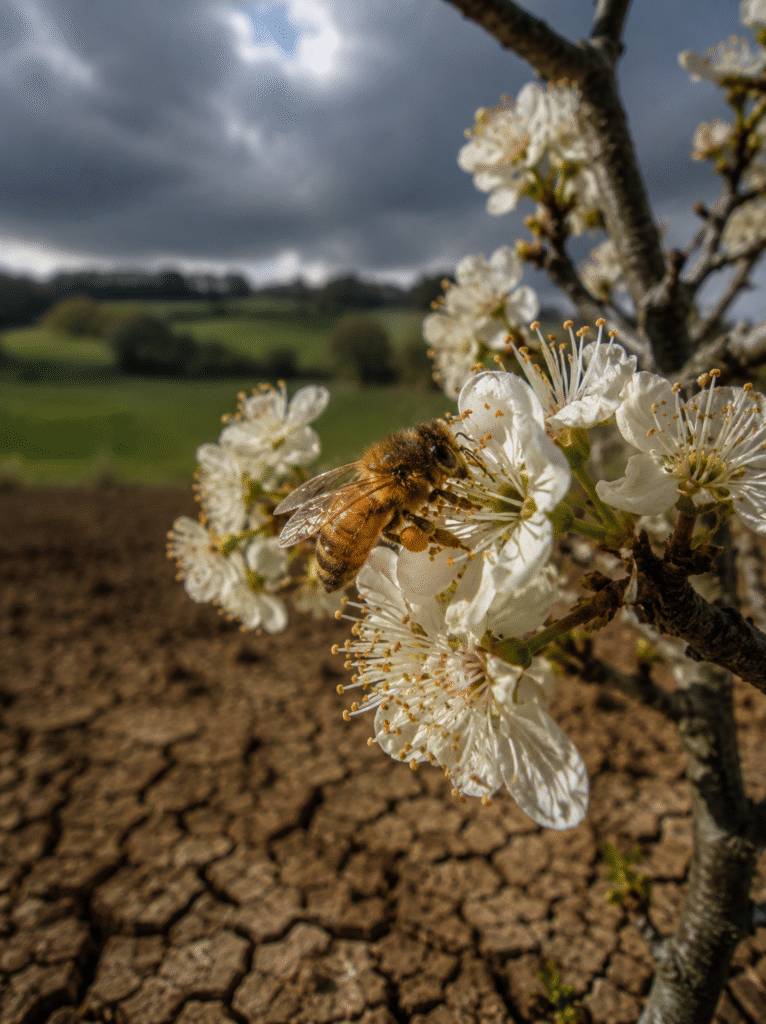
A 2026 study that analyzed 2,500 pollen samples collected by honey bee colonies across 310 apiary sites in Europe found that rising temperatures and reduced precipitation are shrinking the diversity of floral resources bees have access to — not eliminating flowers outright, but pushing many plant species past the climatic thresholds where they reliably bloom on their old schedule. When both warming and drying happen in the same season, the researchers found the resilience mechanisms colonies normally lean on — shifting foraging timing, moving to different plants — get squeezed from both directions at once.
Climate-driven mismatch isn’t the only thing behind this, of course — it sits alongside the broader set of pressures I’ve covered in why bees are disappearing, one driver behind bee decline that compounds with the others rather than replacing them.
Separately, a Colorado Rockies study spanning nine years and 67 bee species found that elevation and individual species traits — not just temperature alone — shape how badly a given bee population is affected by shifting bloom timing, which is a useful reminder that this isn’t a uniform, one-size-fits-all shift. Your region’s mismatch will look different from someone else’s three states over.
And this isn’t just a slow, seasonal drift. Research on short-term warming has shown that even within a single day, higher temperatures can shift both when bees forage and when plants open their flowers — meaning the mismatch problem isn’t only about which week spring starts, it’s baked into finer-grained daily timing too.
Why “reading blooms” beats “reading dates”
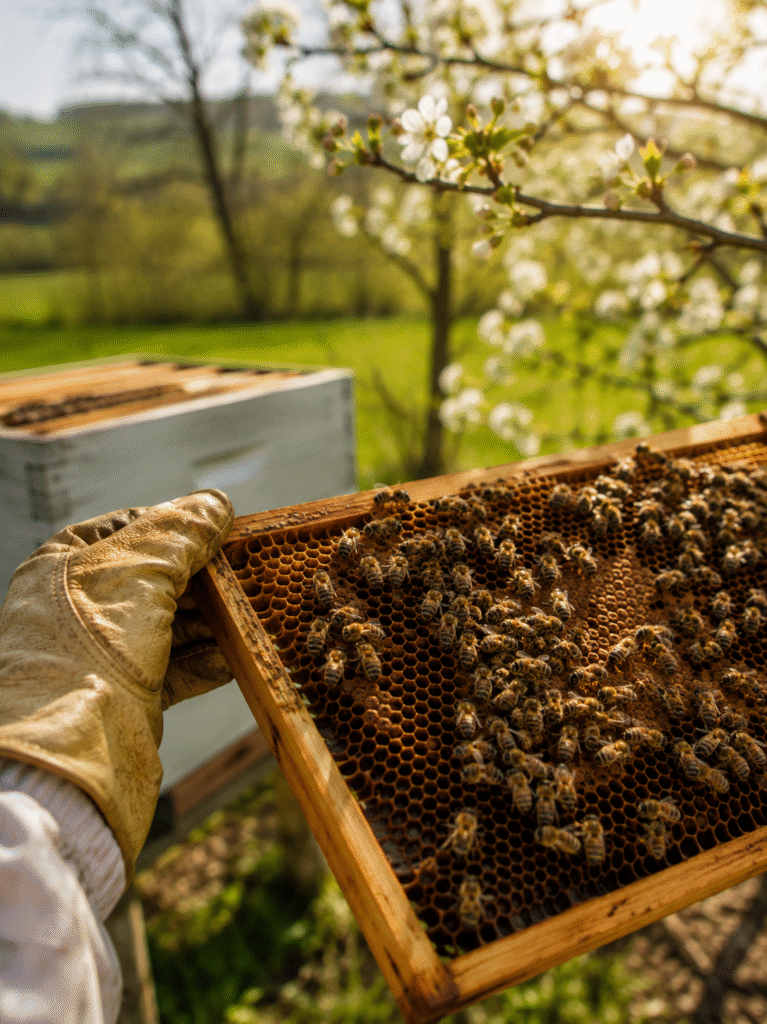
Here’s the practical shift I’d encourage: stop treating your beekeeping calendar as a set of dates, and start treating it as a set of triggers.
Every beekeeping calendar you’ll find — and there are a lot of good ones — eventually includes some version of the same disclaimer: adjust for your local conditions, because a spring task in Georgia might still be a winter task in Minnesota. That advice is correct, but it doesn’t go far enough anymore. Local conditions themselves are shifting year to year within the same region, which means even a calendar built around “your zone” can be off by a week or two in either direction depending on what kind of year it’s turning out to be.
Key indicator blooms and what each one tells you
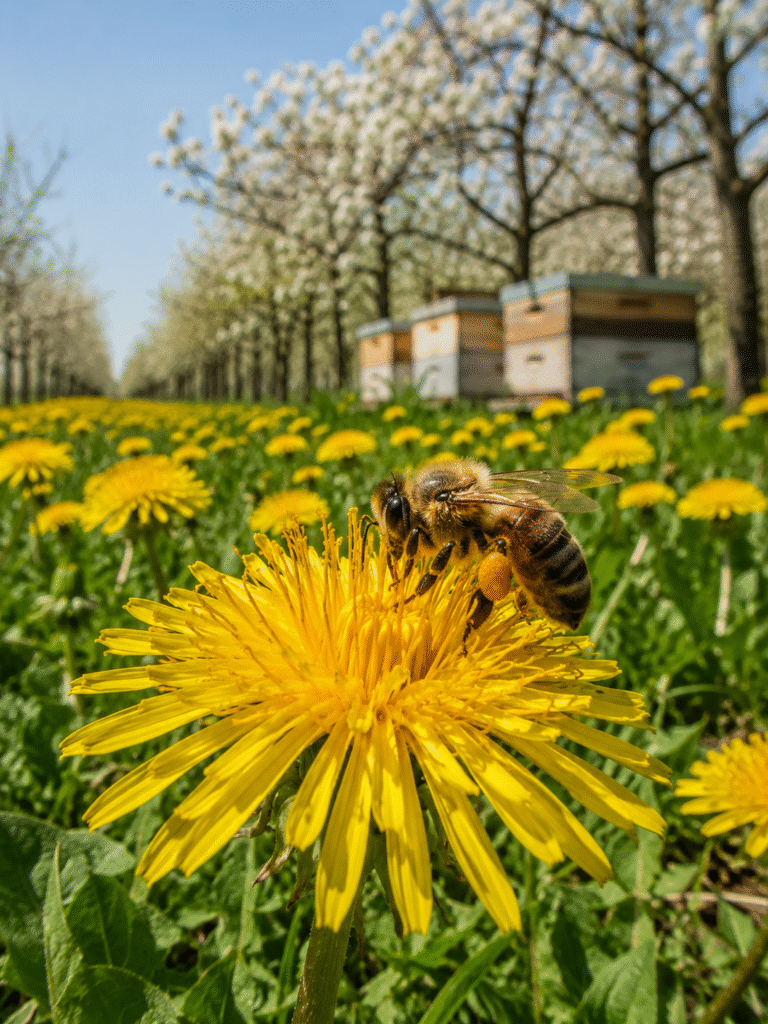
I use a short list of indicator plants rather than a date on the calendar, and I’d encourage any beekeeper to build their own version of this list for their specific area:
- Early spring flow starters (maples, willows, crocus, witch hazel in colder regions) — these tell you brood rearing is likely accelerating even if the calendar still says “too early to look.”
- Mid-spring workhorses (fruit trees, dandelion) — a strong dandelion bloom is one of the most reliable universal signals that spring buildup has genuinely started, regardless of what the date says.
- The transition into summer dearth indicators — when your early bloomers fade and nothing has visibly replaced them yet, that’s your cue to check stores, not a fixed date in June.
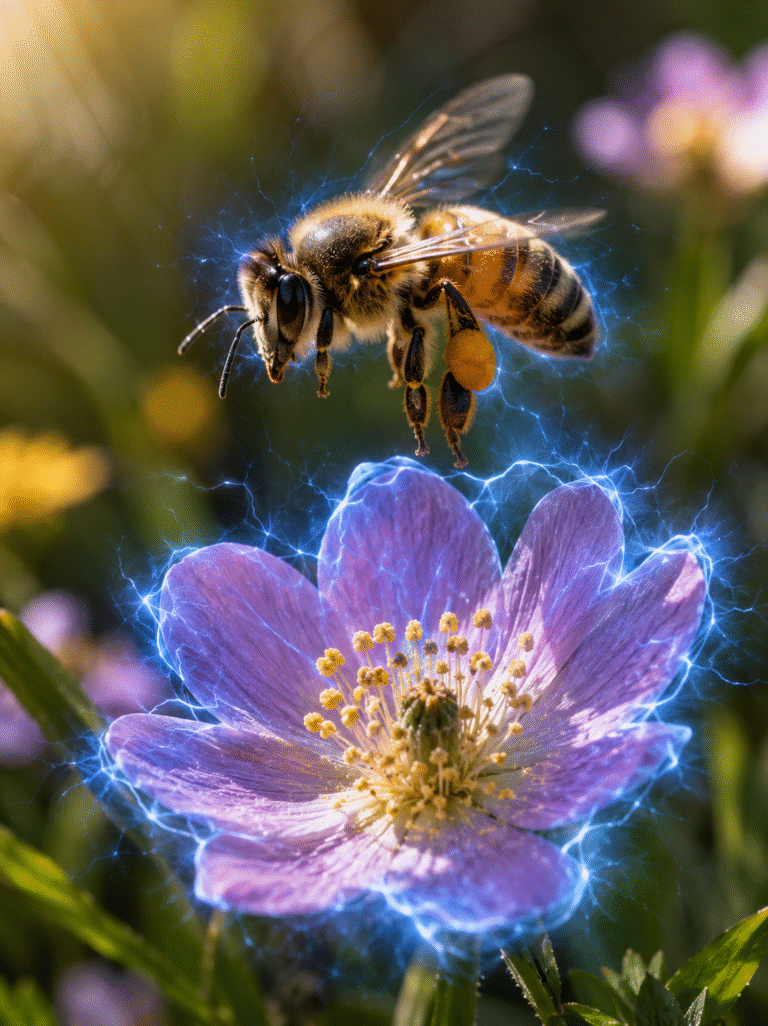
It helps to remember, too, that bees aren’t reading a bloom the way we do. Understanding how bees actually read a flower through ultraviolet patterning explains why a bloom that looks unremarkable to us can be a five-star signal to a forager — and why a plant that still looks “in bloom” to your eye can already be past its useful window for the bees.
Growing degree days, explained without the jargon
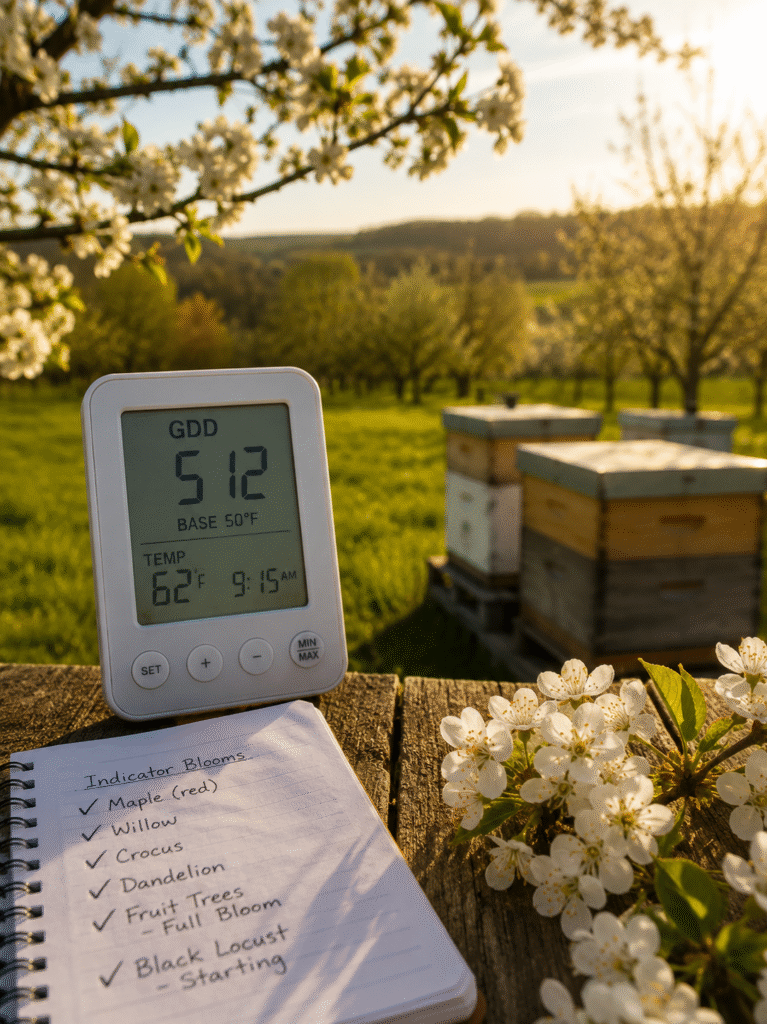
If you want something more precise than “watch the flowers,” growing degree days (GDD) are worth learning. It’s a running tally of accumulated warmth above a baseline temperature, and it correlates with plant bloom timing far more reliably than the calendar date does — which is why agricultural extension programs already use it for crop and pest forecasting. You don’t need to calculate it by hand; several state extension sites publish local GDD trackers, and cross-referencing that number against your indicator blooms gives you a two-point check instead of relying on either signal alone.
What’s changing for foragers, not just flowers
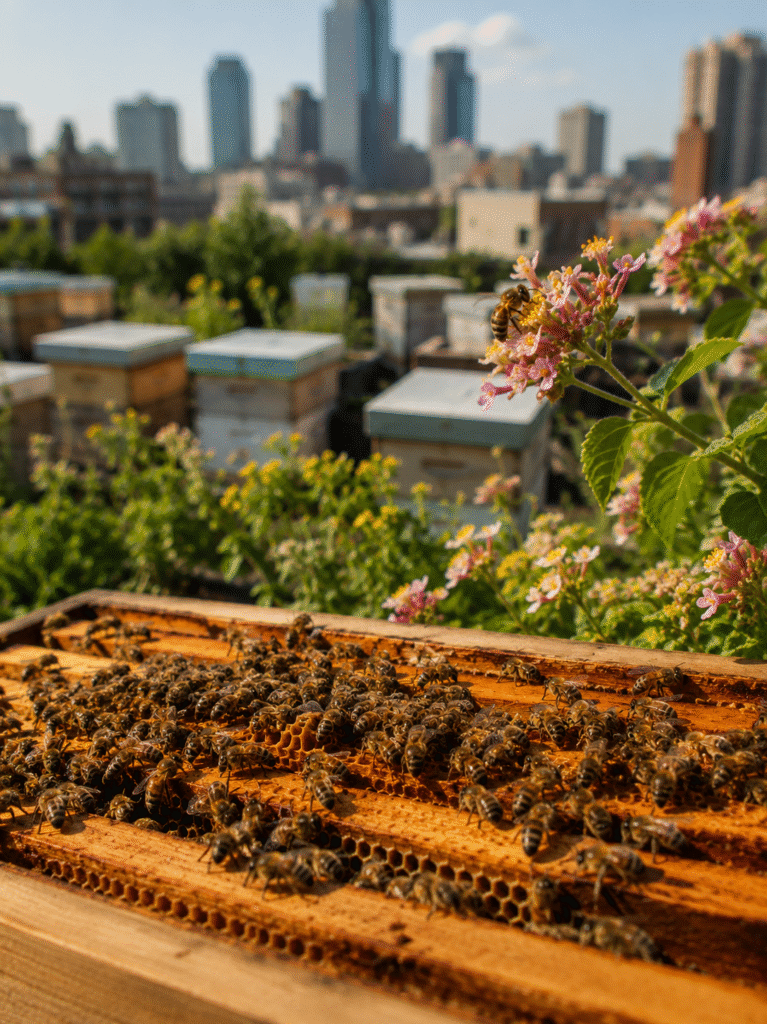
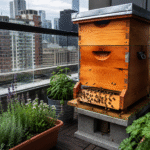
It’s tempting to think of this purely as a bloom-timing story, but the pressure compounds. Reduced floral diversity from shifting bloom windows doesn’t just mean less nectar — it can mean a narrower, less balanced diet for a colony that used to have a wider buffet to choose from, at exactly the same time other stressors haven’t gone away. Pesticide exposure through contaminated pollen and nectar remains a documented risk layered on top of forage stress, not a separate, unrelated problem. And in areas with dense hive placement — urban rooftops, shared bee yards — a shrinking bloom window means more colonies competing for the same, narrower resource base, which is worth factoring in if you’re keeping bees in tight quarters.
None of this is a reason for despair. It’s a reason to plan differently.
5 practical adjustments for a shifting season
- Build your own indicator-bloom list this year, even if it’s just three or four plants you can reliably track, and start noting bloom dates alongside your usual hive records. If you’re also keeping an eye on native pollinators — say, via solitary bees, even more sensitive to timing like the ones a mason bee house attracts — know that their emergence windows are often tied even more tightly to specific bloom cues than a honey bee colony’s, so the same approach applies, just with a narrower margin for error.
- Check your GDD tracker alongside your calendar, not instead of it — the two together are more reliable than either on its own.
- Feed reactively to conditions, not proactively to dates — if pollen patties or syrup are calendar-triggered in your current routine, shift the trigger to colony weight and observed forage availability instead. On genuinely thin years, supplemental feeding grounded in supplemental nutrition research can help bridge a real forage gap — though it’s a bridge, not a substitute for diverse natural forage.
- Assume more year-to-year variability, not less, when planning splits, swarm prevention, and honey harvest timing — build in a wider buffer than you used to.
- Compare notes locally. Bee clubs and regional forums are full of beekeepers independently tracking exactly this kind of local drift; pooling observations gets you a faster, more accurate read than any single apiary can produce alone.
What this means for planning ahead
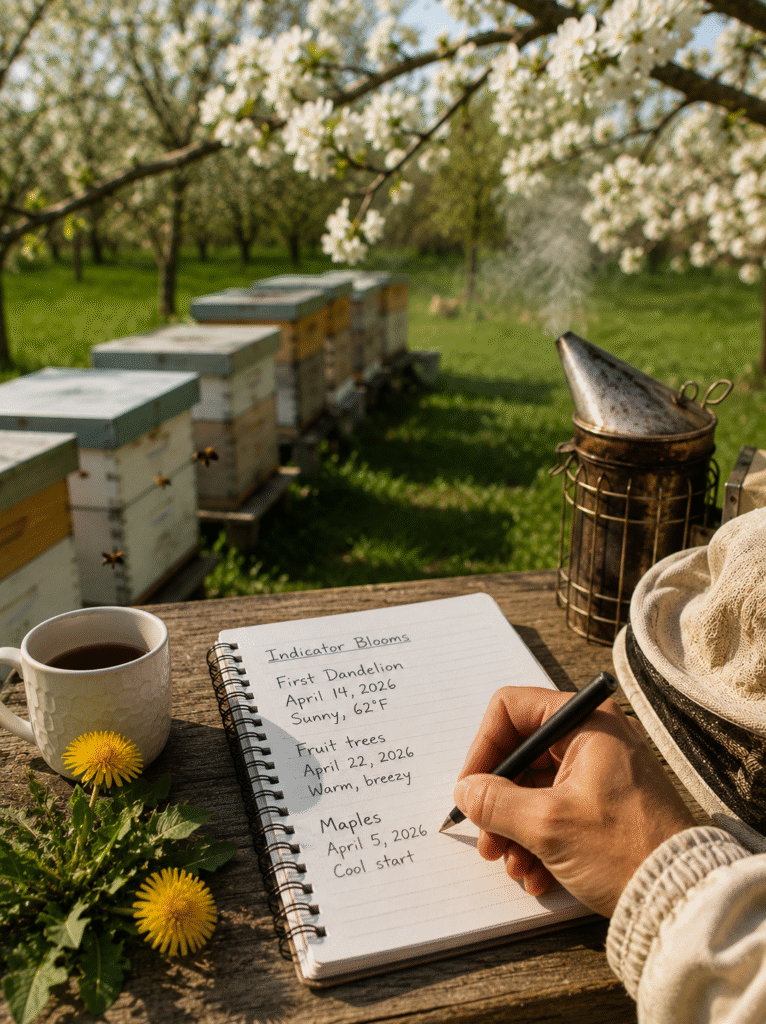
The old model — a fixed calendar, adjusted once for your climate zone and then followed year after year — was never perfectly accurate, but it used to be close enough. The research coming out of 2026 suggests that gap is widening, not staying flat, and that the beekeepers who adapt fastest will be the ones who shift their primary reference point from the wall calendar to what their bees and their landscape are actually telling them in real time.
Start with one indicator bloom this season. Just one. Note the date. Compare it to what you would have assumed from the calendar alone. That single data point is usually enough to make the case for yourself.
FAQ
How does climate change affect when bees start foraging?
Rising temperatures shift when both bees become active and when their food plants bloom, but not always at the same rate — creating a widening gap between colony readiness and available forage known as phenological mismatch.
What is phenological mismatch?
It’s the growing disconnect between the timing of a biological event — like a bee colony’s spring buildup — and the timing of a related event it depends on, like flower bloom, as climate shifts change each on a different schedule.
Should I change my beekeeping calendar because of climate change?
Not abandon it, but supplement it. Use your regional calendar as a starting framework, then adjust actively each season based on indicator blooms and growing degree days rather than treating the dates as fixed.
How do I know when nectar flow starts in my area?
Track a small set of locally reliable indicator plants — often maples or willows early, then dandelion and fruit trees — and cross-reference with your state extension’s growing degree day tracker if one is available.
Are bees emerging earlier in spring than they used to?
In many regions, yes, though the shift varies by species, elevation, and local climate patterns rather than following one uniform national trend.
Does climate change affect what plants bees can rely on?
Research shows warming and reduced precipitation are shrinking the diversity of floral resources available to bees in some regions, particularly when both pressures occur in the same season.
What can beekeepers do to adapt to shifting bloom times?
Build a personal indicator-bloom list, check regional GDD data, shift feeding decisions to observed conditions rather than fixed dates, and plan wider timing buffers for splits, swarm prevention, and harvest.