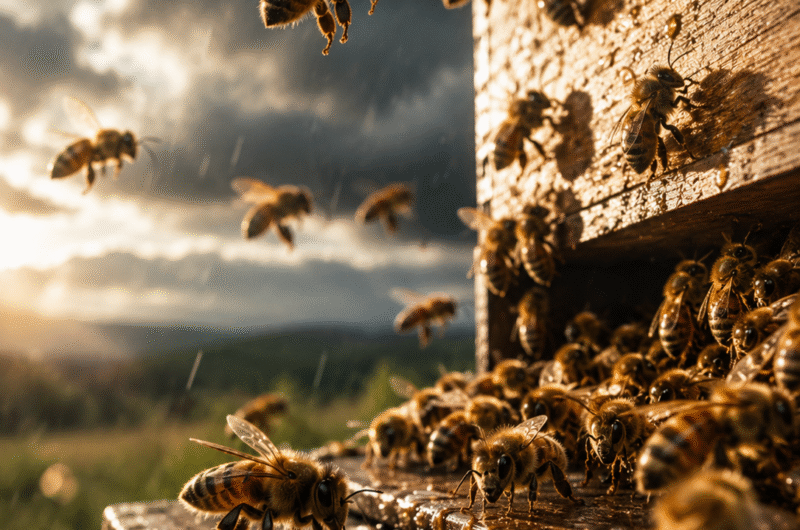

Stressed bees turn pessimistic. Rewarded bees act optimistic. Here’s what real research says about bee emotion — and why it matters.
Do Bees Get Stressed? The Science of Bee Emotion
Three days after a rough mite treatment last season, I opened a hive that had been calm and predictable all summer and found something I couldn’t quite explain with a checklist. The bees weren’t aggressive, not exactly. They were jumpy — bumping the veil, abandoning frames mid-inspection, behaving like a colony bracing for something. I closed it back up faster than usual and stood there turning the moment over. It’s easy to write that off as anthropomorphizing. It turns out a growing body of research says I might not have been entirely wrong to notice it.
The Short Answer
Bees don’t have emotions in the human sense — they can’t tell you how they feel, and scientists are careful not to claim otherwise. But peer-reviewed research shows bees display measurable emotion-like states: stressed bees become significantly more pessimistic in decision-making tests, while bees given an unexpected reward act more optimistically. Both shifts are linked to the same neurochemicals — dopamine, serotonin, and octopamine — involved in mood regulation in vertebrates, including humans.
How Do You Test “Feelings” in an Insect?
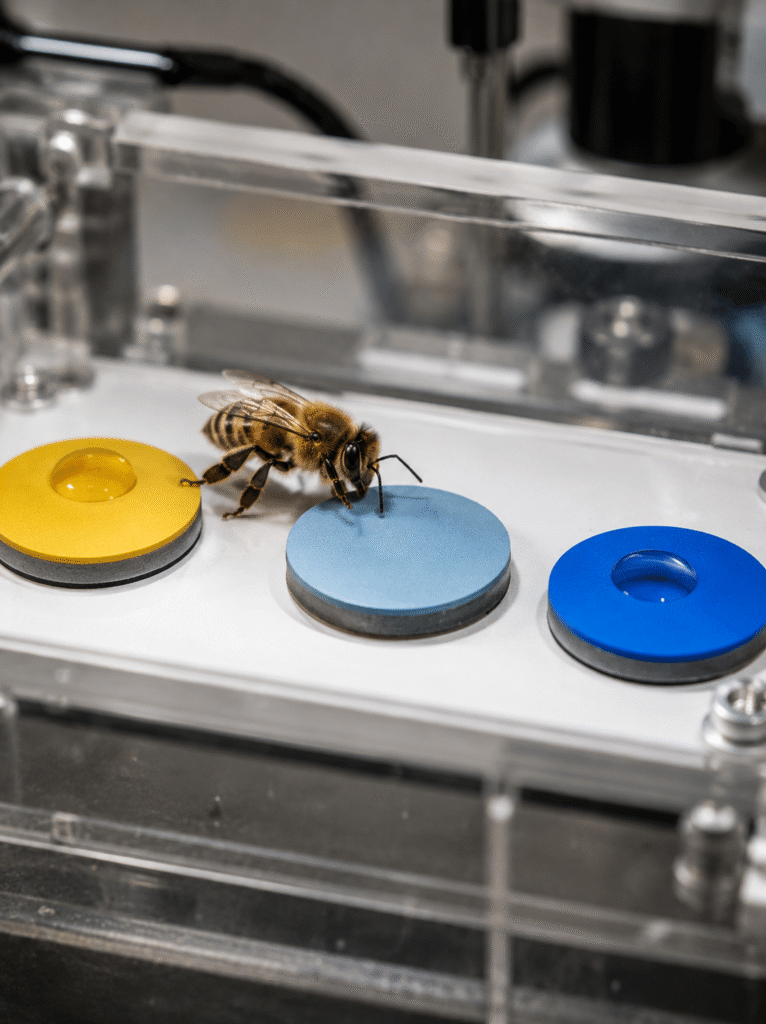
You obviously can’t hand a bee a questionnaire, so researchers borrowed a method from human psychology called a cognitive bias test. The logic is simple: your emotional state colors how you interpret ambiguous situations. Someone in a good mood tends to read an unclear situation optimistically; someone anxious or stressed tends to expect the worst. If the same pattern shows up in an animal that can’t self-report, it’s strong indirect evidence of an underlying emotional state, not just a reflex.
Researchers train bees to associate one color or scent with a strong sugar reward and a second with a weak or absent one. Once the bees have clearly learned the difference, they’re presented with an ambiguous, in-between signal — something halfway between the two trained cues. How fast, and how confidently, a bee approaches that ambiguous cue reveals whether it’s currently leaning “optimistic” or “pessimistic.”
The Pessimistic Bee Experiment
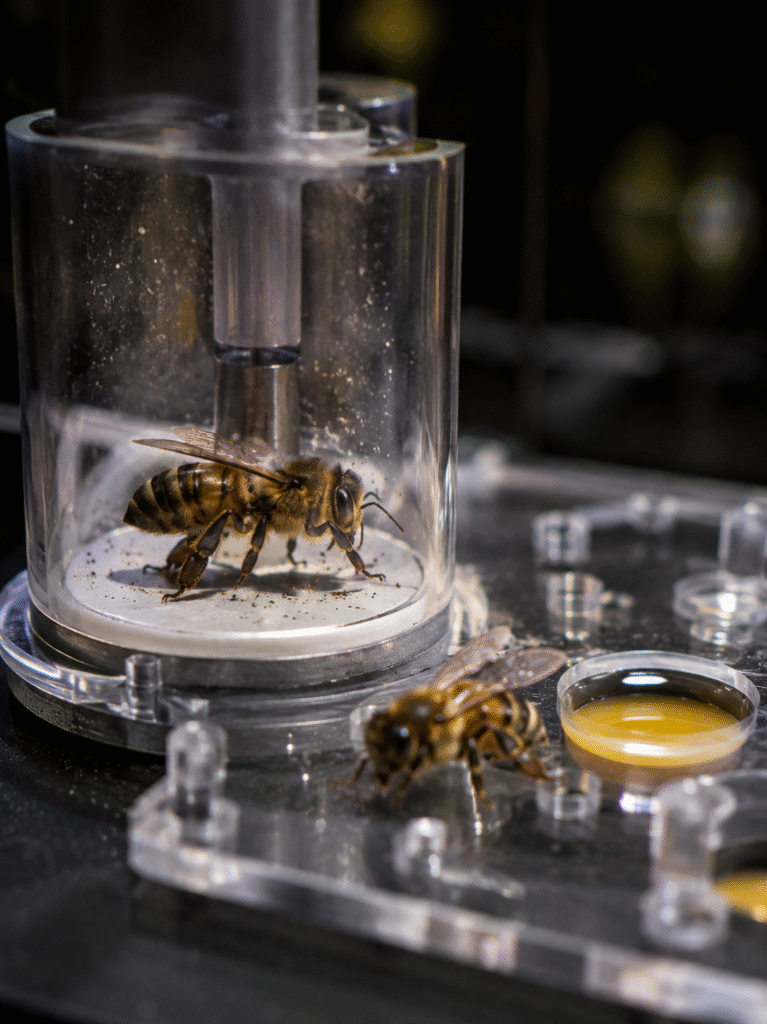
To simulate a predator attack, researchers subjected honeybees to a few seconds of vigorous shaking, then ran them through the ambiguous-cue test. The agitated bees were significantly more likely to treat the unclear signal as a warning sign, hesitating or avoiding it altogether, compared to bees that hadn’t been shaken. Blood-equivalent hemolymph samples backed up the behavioral shift: the stressed bees showed measurably lower levels of dopamine, octopamine, and serotonin, the same class of neurochemicals tied to mood in mammals.
A more recent study out of Newcastle University pushed this further using physical stress rather than a simulated predator event, and found the effect was even more dramatic than expected. Bees under stress behaved as though a high-value reward was available as little as 6% of the time in situations where unstressed bees expected roughly even odds — a shift the research team described as genuinely comparable to how anxious or low-mood humans tend to underestimate good outcomes.
The Optimistic Bee Experiment
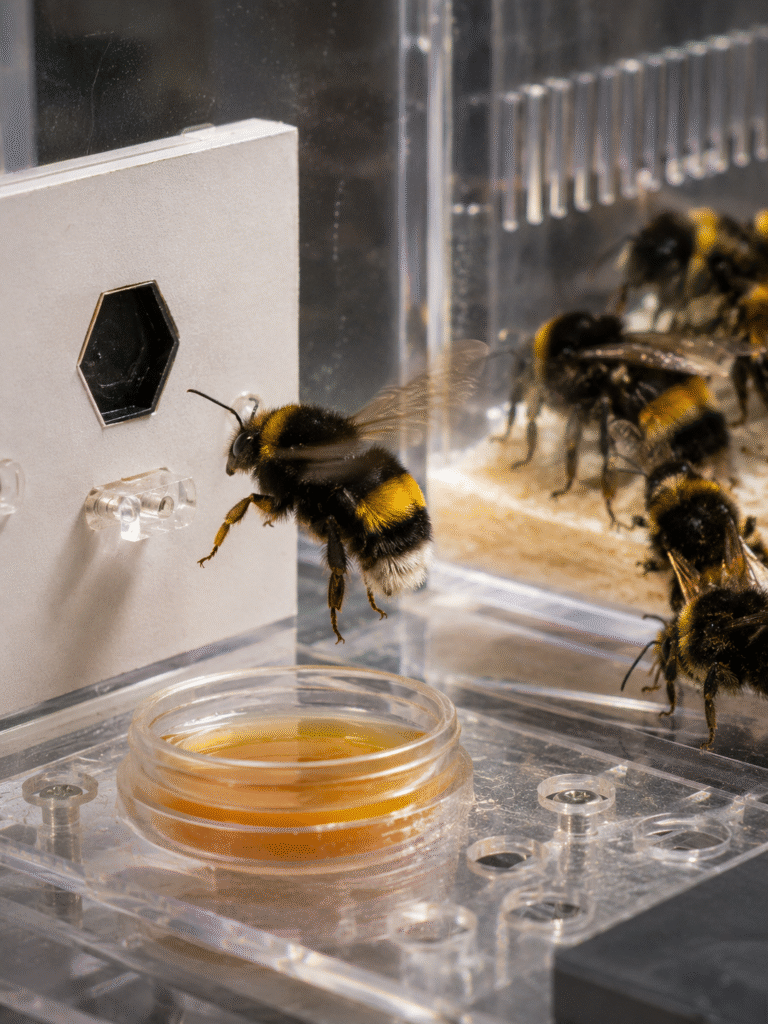
The reverse effect shows up too. In studies where bumblebees received an unexpected sugar reward — sweeter or larger than what they’d learned to expect — they approached the ambiguous cue noticeably faster afterward, behaving as though a good outcome was more likely. That optimism-like shift depends heavily on dopamine, the same reward-related neurotransmitter that plays a central role in human motivation and mood. Bees given a dopamine-blocking compound before the reward stopped showing the optimistic response entirely, which is about as close as this kind of research can get to confirming the mechanism directly rather than just observing the pattern.
There’s a further wrinkle that’s genuinely surprising: some experiments suggest bumblebees can pick up on the emotional state of other bees nearby, a phenomenon researchers call affective contagion — previously documented in social vertebrates, but only recently demonstrated in an invertebrate. A colony, in other words, may not just contain individually stressed or content bees. It may spread that state between them.
What’s Actually Happening in a Bee’s Brain
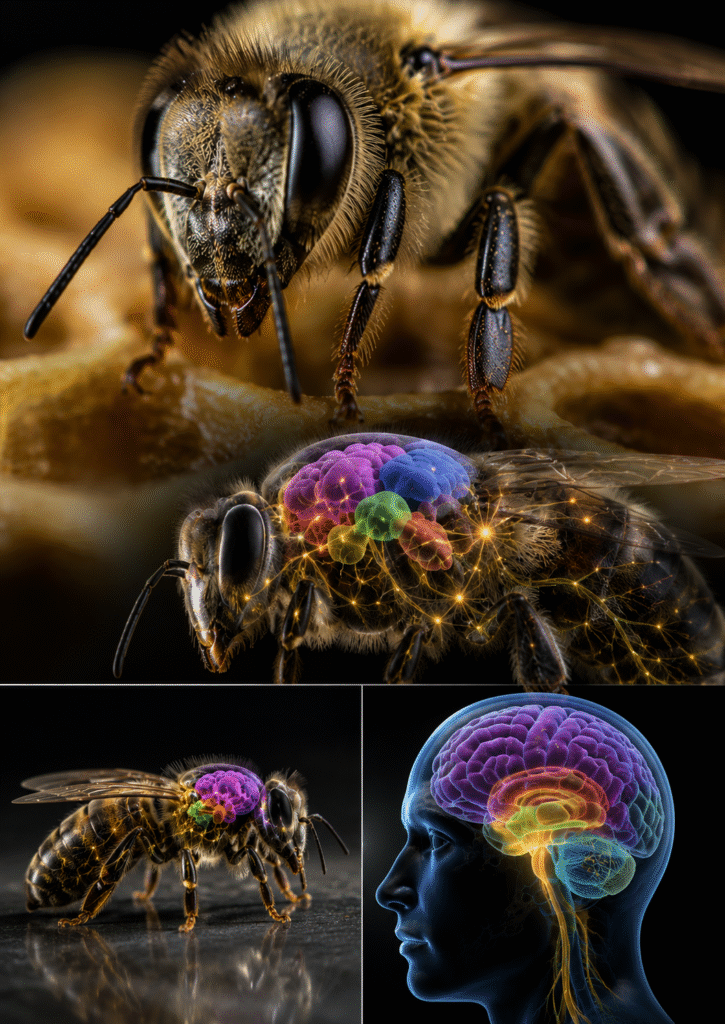
None of this means a bee’s brain works like a human’s — a bee has roughly a million neurons, compared to our roughly 86 billion, and researchers studying this area are careful to use language like “emotion-like states” rather than claiming bees consciously feel anything the way we do. What the research does show is that the biological machinery involved — dopamine for reward and motivation, serotonin and octopamine for stress response — is evolutionarily old enough that bees and humans share meaningful pieces of it. That’s arguably the more interesting finding than the emotion question itself: these chemical systems for encoding “good” and “bad” experiences may go back much further in the evolutionary tree than anyone assumed a decade ago.
Why This Isn’t Just an Academic Curiosity
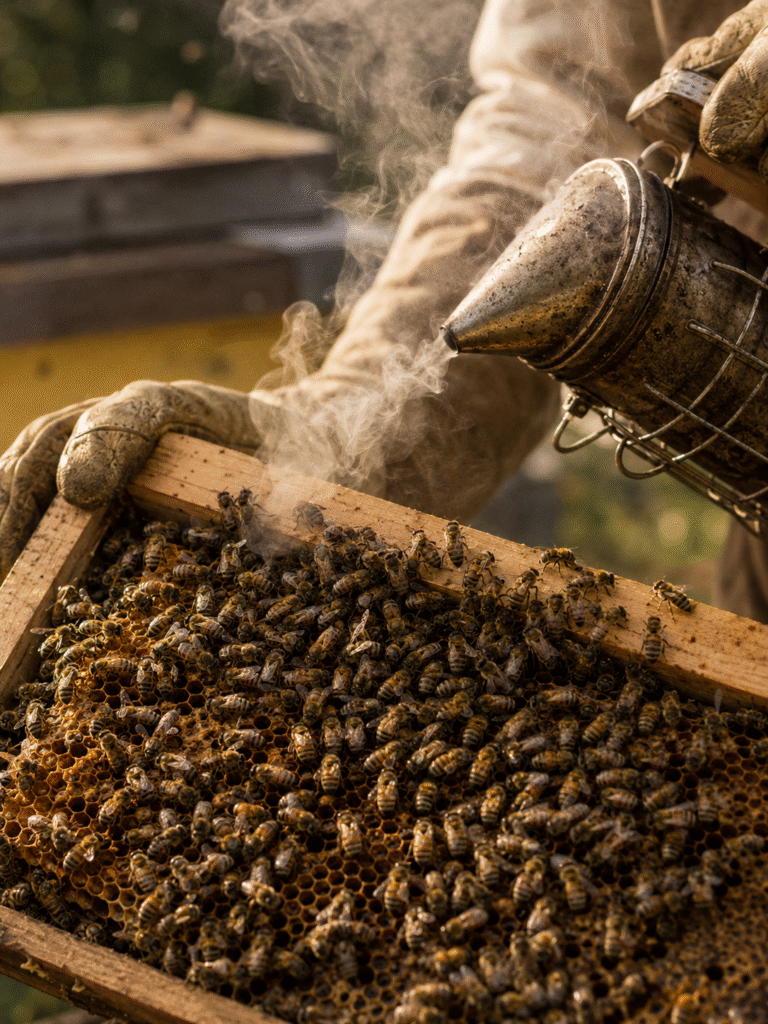
This has real, practical stakes for anyone managing hives, not just a fun dinner-party fact. Bees already communicate danger chemically through alarm pheromones the instant a threat appears — but this research suggests the aftermath of a stressful event lingers well beyond that immediate chemical alert, shaping decision-making for some period afterward. For a colony under chronic pressure from pesticide exposure, Varroa treatments, or habitat loss, that’s not a one-off blip. It’s a persistent shift that plausibly affects foraging efficiency and, by extension, pollination itself — precisely the concern the Newcastle team flagged as a direction for future research.
It also puts a finer point on something most experienced keepers already sense intuitively: a stressed colony can even turn aggressive, and it’s worth asking whether “aggressive” and “stressed” are sometimes describing the same underlying state from two different angles. My own hive after that rough mite treatment wasn’t malfunctioning. It may simply have been reacting the way any stressed animal does — more defensive, less willing to give an ambiguous situation the benefit of the doubt.
Do Bees Feel Empathy Too?
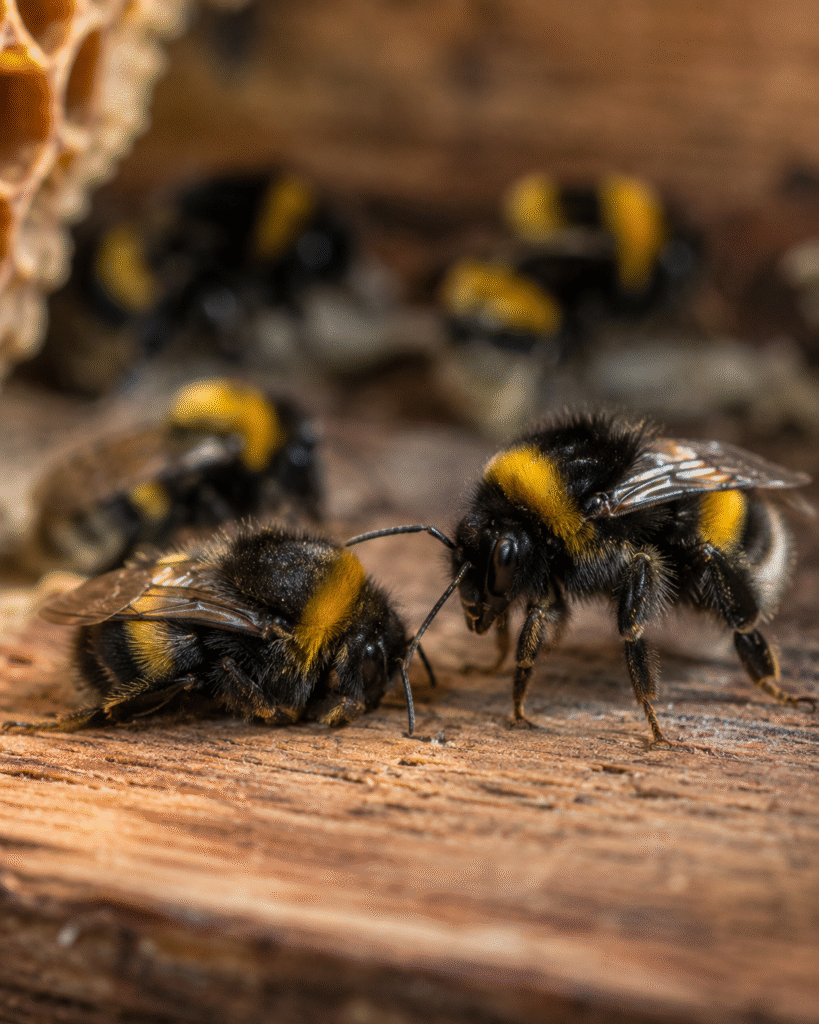
The affective-contagion research is the newest and least settled piece of this picture, and it’s worth flagging that clearly rather than overstating it. One study found that bumblebees exposed to a stressed nestmate were more likely to show pessimistic bias themselves shortly after, even without experiencing the stressful event directly. That’s a long way from proving empathy in any meaningful sense, and the researchers involved are careful about that distinction. But it does suggest that a colony’s emotional weather, if that’s a fair way to describe it, might not stay contained to the individual bee that experienced it — which is a genuinely new idea in insect biology, not a repackaged old one.
FAQ
Do bees feel pain?
Research suggests bees show measurable behavioral responses consistent with pain-like states — for example, some studies found bees will endure a mildly unpleasant stimulus if the reward is high enough, a pattern associated with pain processing in other animals. Scientists remain cautious about claiming bees “feel” pain the way humans do, since that’s difficult to prove directly.
Can bees get stressed?
Yes. Physical agitation, simulating a predator attack, and other stressors measurably shift bees toward more pessimistic decision-making in controlled tests, alongside reduced levels of dopamine, serotonin, and octopamine.
Do bees have feelings like humans?
Not in the way humans experience feelings — bees can’t self-report, and their nervous systems are vastly simpler. But they display emotion-like states: measurable shifts in optimism and pessimism driven by the same core neurochemicals involved in human mood.
What happens to a bee’s brain when it’s stressed?
Stress lowers hemolymph levels of dopamine, octopamine, and serotonin — neurochemicals tied to reward, arousal, and mood regulation — and this drop correlates with more pessimistic, risk-averse decision-making in behavioral tests.
Can pesticides affect a bee’s mood?
Directly testing pesticide exposure with this specific method is an active area of research rather than settled fact, but since pesticide stress and physical stress both act on the same neurochemical pathways, researchers consider it a plausible and important line of ongoing investigation.
Are bees capable of empathy?
Early research on “affective contagion” suggests bumblebees can be influenced by the stress state of nearby bees, but scientists stop well short of calling this empathy in the human sense. It’s a genuinely new and still-developing area of insect behavior research.