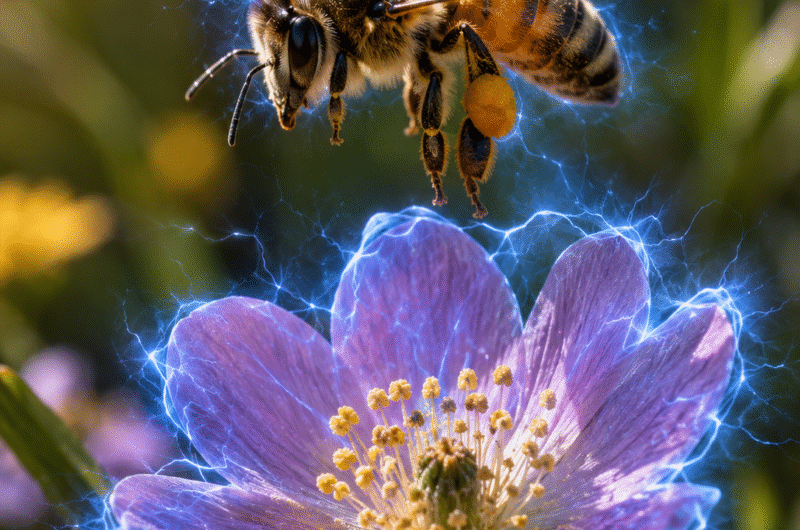

Bees carry a positive charge and can sense a flower’s electric field — a sixth sense scientists only discovered in 2013. Here’s how it works.
Bees Can Sense a Flower’s Electric Field (Here’s How)
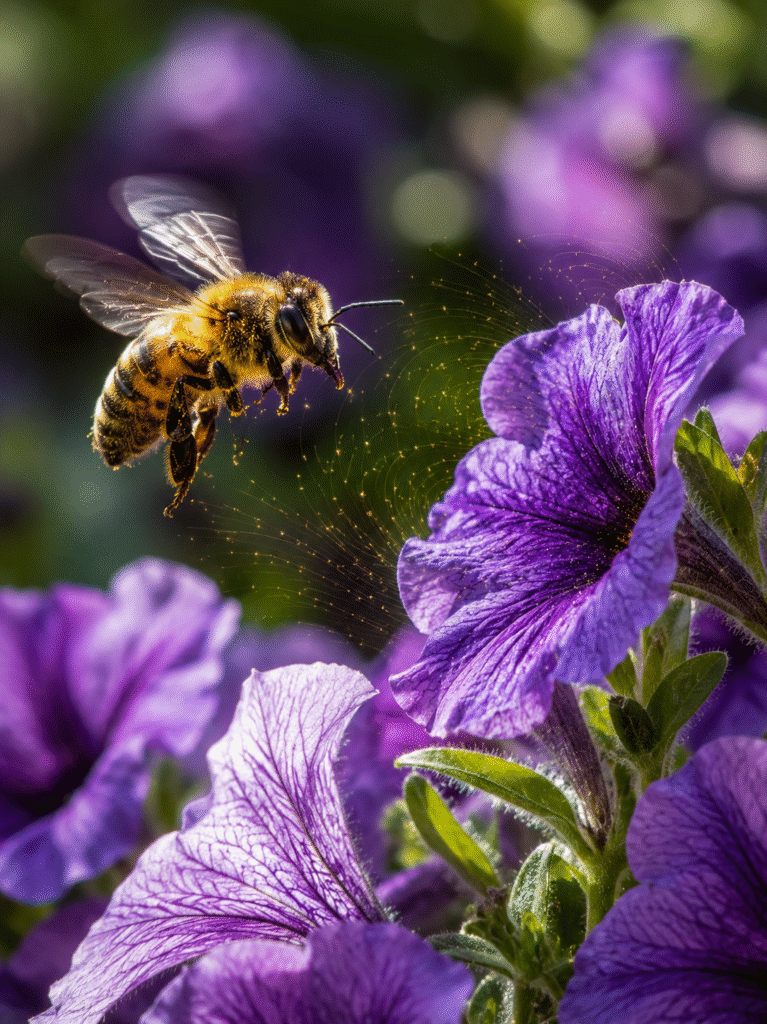
Watch a forager work a bed of petunias long enough and you’ll notice something odd if you’re paying close attention: she doesn’t land on every open bloom. She skips some entirely, circles others twice, and settles on flowers that, to your eyes, look no different from the ones she ignored. For years the assumption was scent or subtle color variation. It turns out bees may be reading something we can’t perceive at all — electricity.
The Discovery That Surprised Everyone
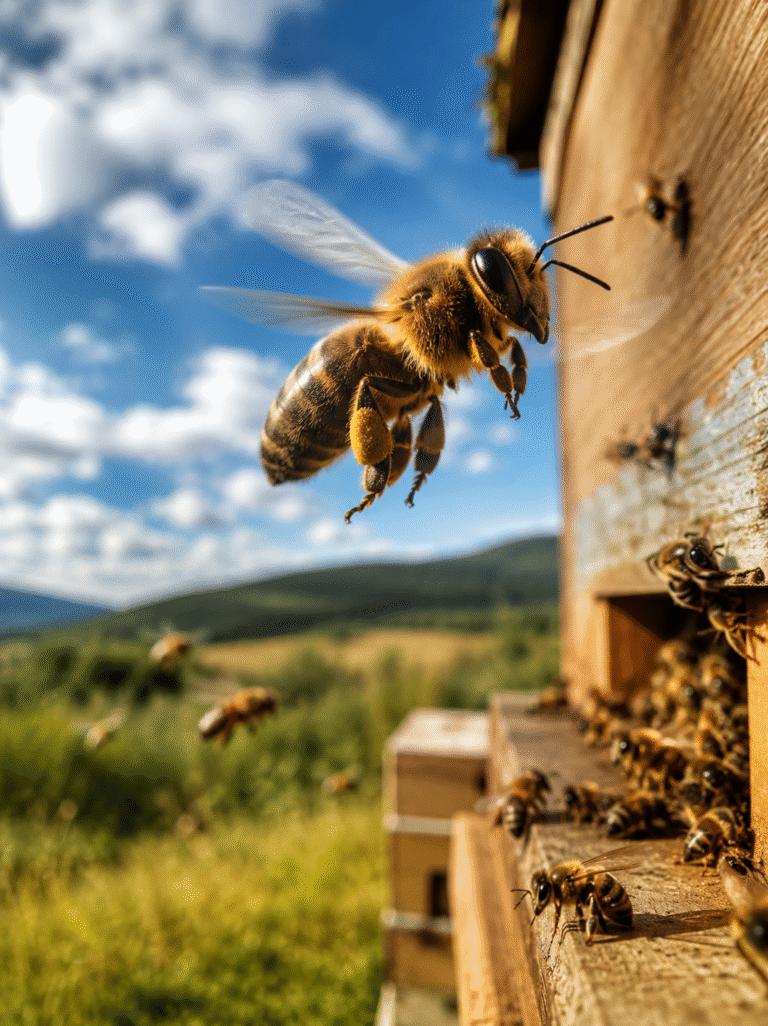
In 2013, researchers at the University of Bristol published a finding that quietly rewrote part of what we thought we knew about pollinator senses. Bumblebees, it turned out, can detect and distinguish between the electric fields given off by different flowers — a sense no one had confirmed in any insect before. Flowers are typically charged negatively and give off a weak electric field. Bees, meanwhile, pick up a positive charge simply from flying through the air, sometimes reaching as much as 200 volts. No spark passes between them, but a small electric force builds up as a charged bee approaches a charged flower — and that force, the researchers showed, carries information a bee can actually use.
How It Actually Works
A bee detects a flower’s electric field through thousands of tiny mechanosensory hairs covering its body, which physically move in response to the weak electric force — much like a static-charged balloon makes your own hair stand up — sending a signal to the bee’s nervous system.
That mechanism wasn’t confirmed until a follow-up study in 2016, also out of Bristol, which found that these body hairs deflect measurably in the presence of a floral electric field. It’s a genuinely novel sensory channel — until this research, scientists believed only aquatic or semi-aquatic animals like sharks, rays, and the platypus could detect electric fields at all, since water conducts electricity far more readily than dry air. Finding this ability in a dry-air insect was, by the researchers’ own account, unexpected.
Why Bees Get a Positive Charge Just by Flying
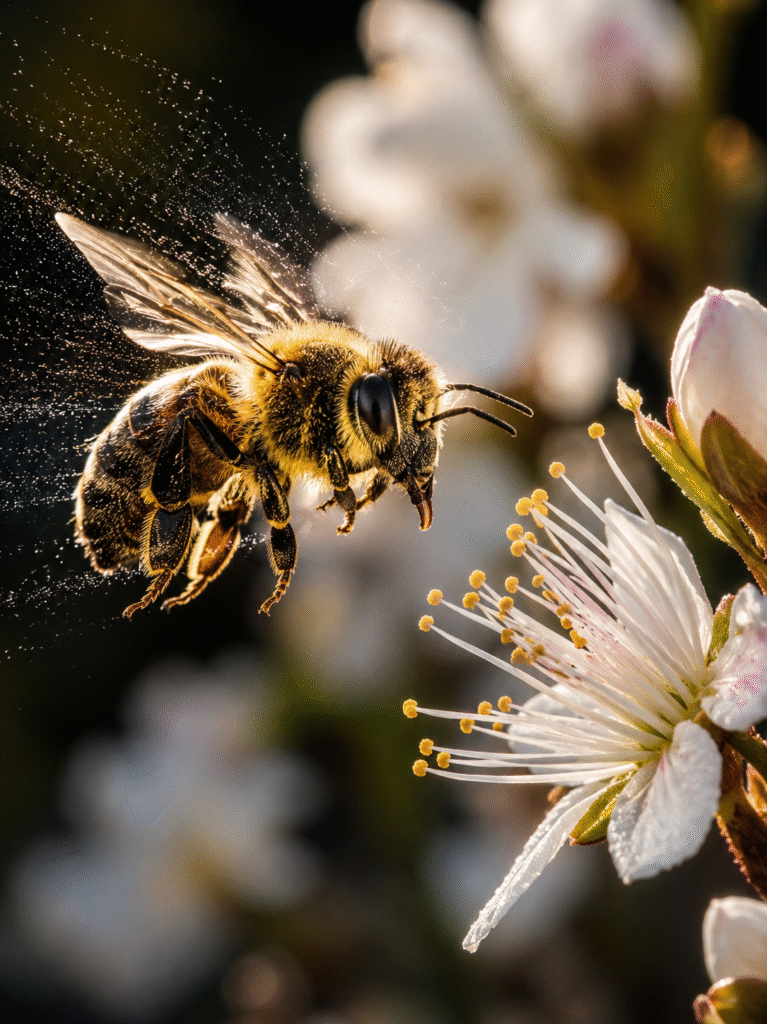
The charge isn’t something bees generate deliberately. Friction between a bee’s body and air molecules during flight strips away electrons, leaving the bee slightly positively charged by the time it approaches a flower — the same basic physics behind static electricity building up when you walk across a carpet.
What This Tells a Bee
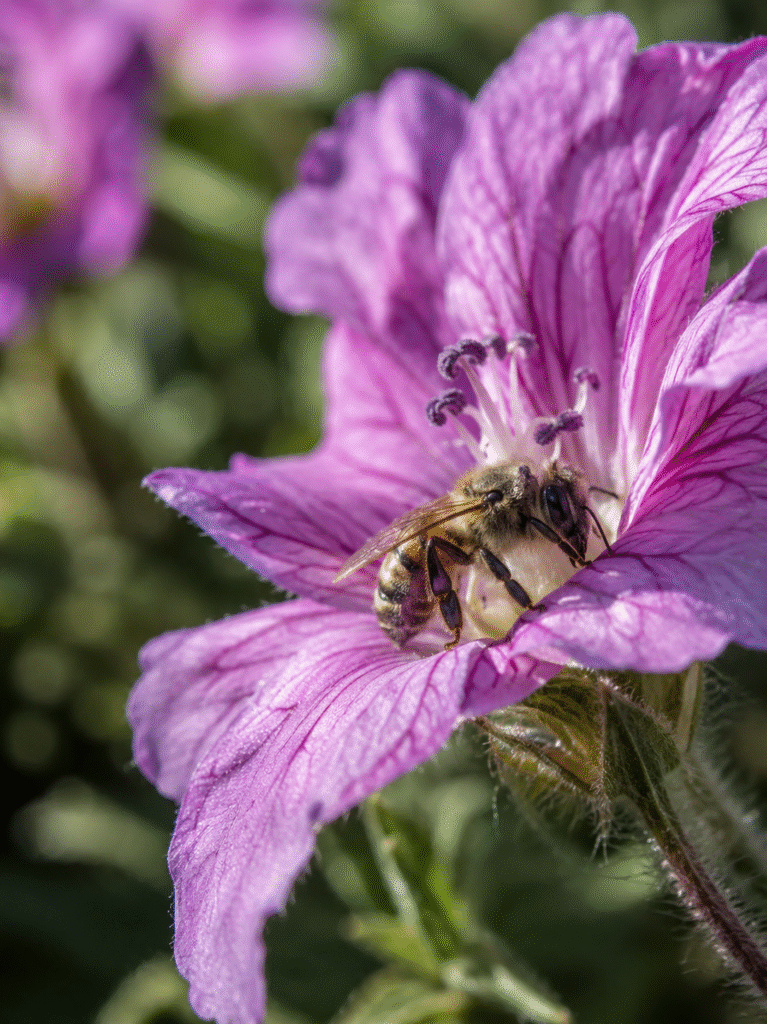
Here’s where it gets genuinely useful for foraging. When a bee lands on a flower, the flower’s electrical potential measurably shifts and stays shifted for several minutes afterward. Researchers working with petunias recorded the stem’s electrical potential rising by roughly 25 millivolts the moment a bee touched down — a change that begins just before contact and lingers well past the length of a typical visit. For a second bee arriving shortly after, that lingering shift functions almost like a “recently visited” sign, letting her judge whether a flower is likely to still hold a worthwhile reward or whether she’d do better moving on. In experiments, bees given access to both electric and visual signals learned to distinguish between flower colors faster than bees relying on color alone.
Does This Affect Human Technology Near Hives?
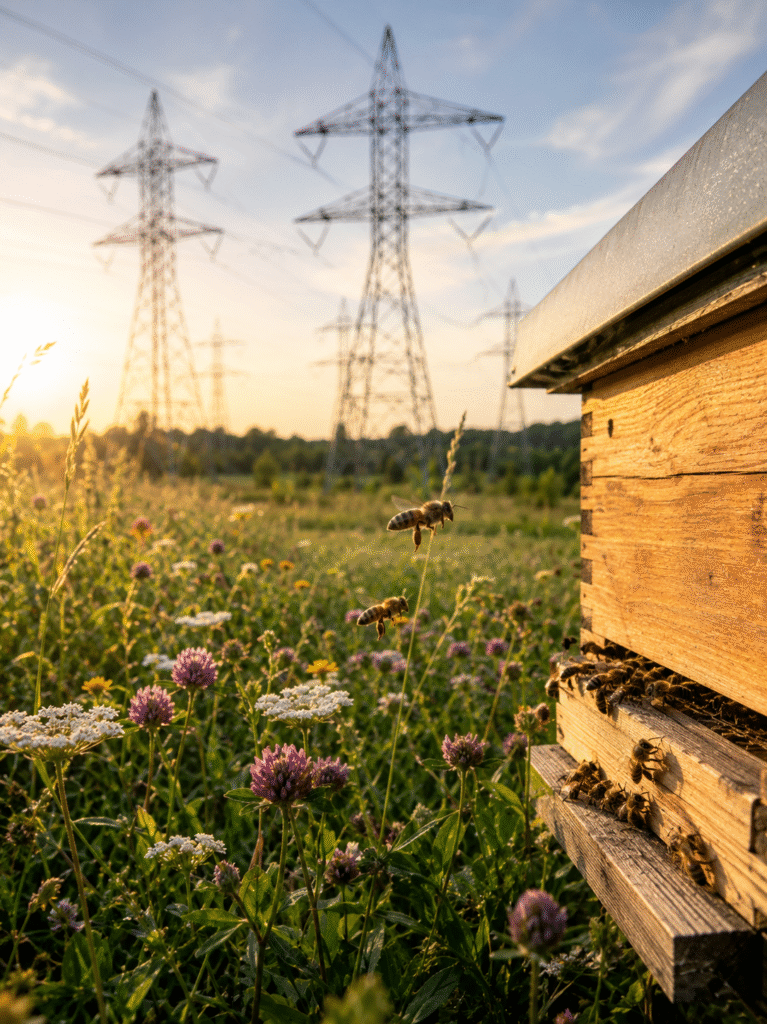
Myth: Man-made electrical infrastructure — power lines, Wi-Fi routers, phone chargers — is strong enough to interfere with a bee’s ability to sense flowers.
Fact: The electric fields produced by our everyday technology are actually far weaker than the fields bees themselves generate through flight and floral interaction. Researchers studying this question have noted that unless a hive sits directly beneath a high-voltage line, everyday human electrical activity shouldn’t meaningfully disrupt this sense.
There’s also an intriguing open question researchers are still chasing: whether bees use electric-field detection for more than foraging. Some evidence suggests honeybees can detect the electric fields produced by other bees during the waggle dance, raising the possibility that this sense plays a role in hive communication as well as flower-finding — though that piece of the puzzle is still being actively studied and isn’t settled science yet.
Field Notes — Watching It Play Out at the Hive
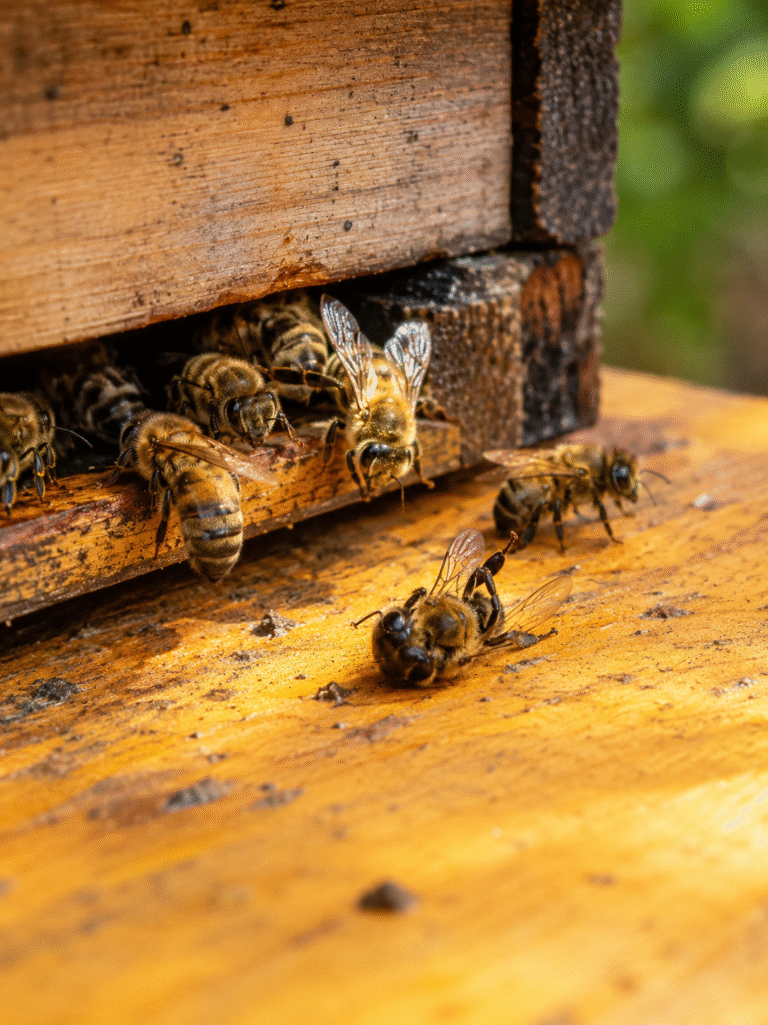
I can’t claim to have measured an electric field with my own equipment, but once you know this sense exists, forager behavior starts to look different. I’ve watched bees hover over an already-visited bloom for a beat longer than usual before peeling off toward an untouched one nearby, and it’s hard not to wonder how much of that split-second decision is electrical rather than visual. It’s a reminder that a lot of what looks like “instinct” in a hive is actually a bee processing information channels we don’t have access to at all. Pair that with what we already know about how bees see flowers — bees perceive ultraviolet patterns invisible to us — and it becomes clear a bee’s picture of a flower bed is built from senses that barely overlap with our own.
FAQ
Can bees feel electricity?
Yes — bumblebees, and likely honeybees, can detect the natural electric fields flowers produce, using tiny body hairs that physically respond to the electric force.
How do bees know a flower has already been visited?
When a bee lands, the flower’s electric field shifts for several minutes afterward. A second bee arriving during that window can sense the change and judge whether the flower is likely still worth visiting.
Do flowers have an electric charge?
Yes. Most flowers carry a weak negative charge, while bees pick up a positive charge simply by flying, creating a detectable force when the two meet.
What senses do bees use to find flowers?
Bees combine vision (including ultraviolet patterns), scent, and electric-field detection to locate and evaluate flowers — no single sense tells the full story on its own.
Can humans feel electric fields like bees do?
No. Humans lack the specialized mechanosensory hairs bees use for this, and the fields involved are far too weak for us to perceive through any of our natural senses.
Is this the same as a bee’s magnetic sense?
No — electroreception (sensing electric fields from flowers) and magnetoreception (sensing Earth’s magnetic field for navigation) are two separate sensory systems working through different mechanisms.