
Worker bees live weeks — queens can live years. Here’s the real lifespan gap, why it exists, and how beekeepers track a queen’s age.
How Long Do Queen Bees Actually Live?
I marked a queen yellow in the spring of one season and didn’t think much of it — until I found that same yellow dot on a queen still laying strong two summers later, in a hive that by then had swarmed once, superseded a rival attempt, and weathered a rough mite year. Most people who’ve never opened a hive assume all bees live a few weeks and die. That queen was still going when workers born the same week she was marked had been dead for going on two years.
The Real Number
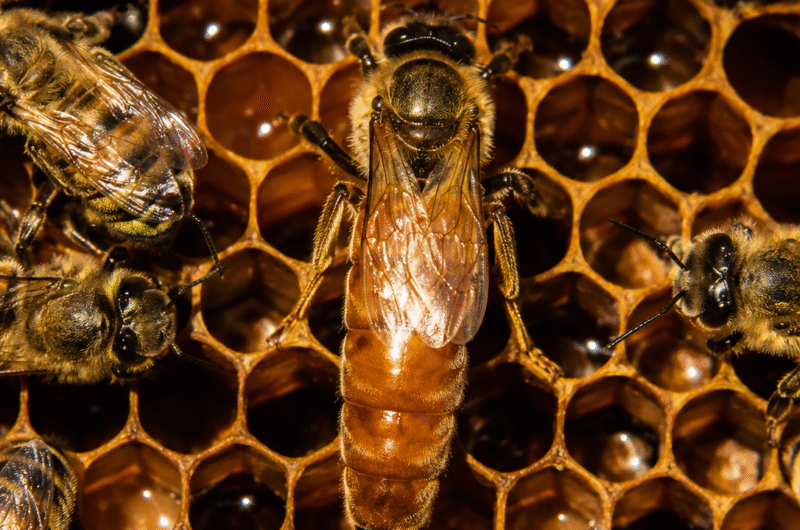
A queen honey bee typically lives 2 to 5 years, compared to just 5 to 6 weeks for a summer worker bee — a lifespan gap of roughly 20 to 40 times. Some queens under exceptional hive management have been documented living even longer, though most beekeepers replace queens well before then for productivity reasons.
Why Queens Live So Much Longer Than Workers
Diet: royal jelly’s role
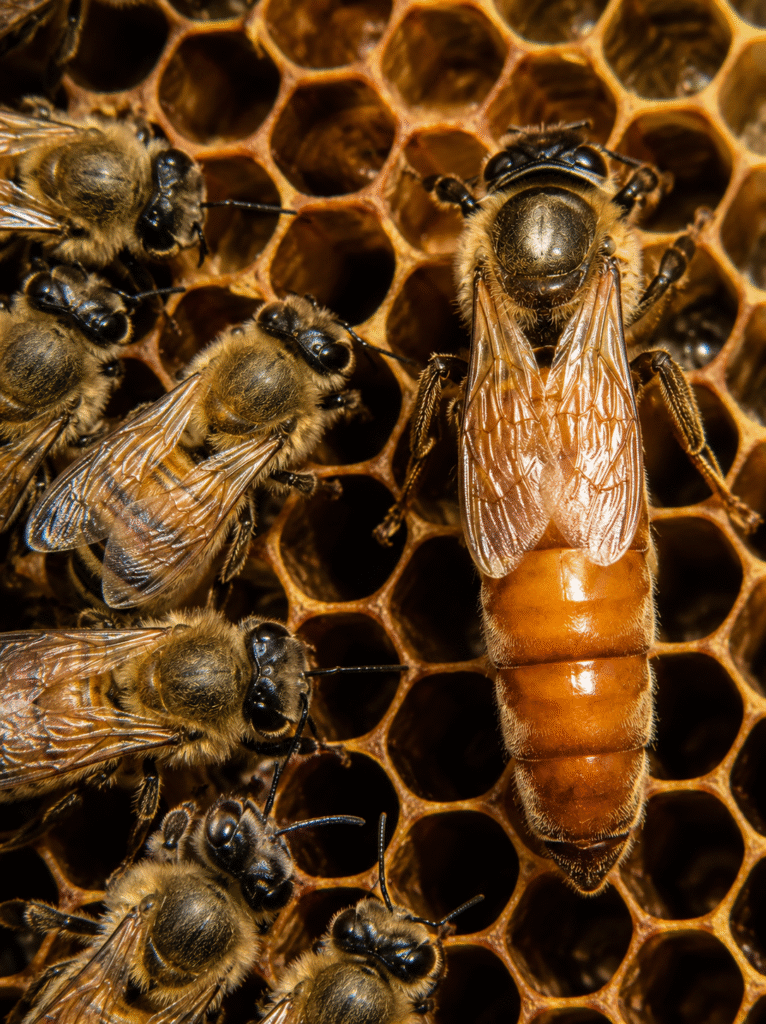
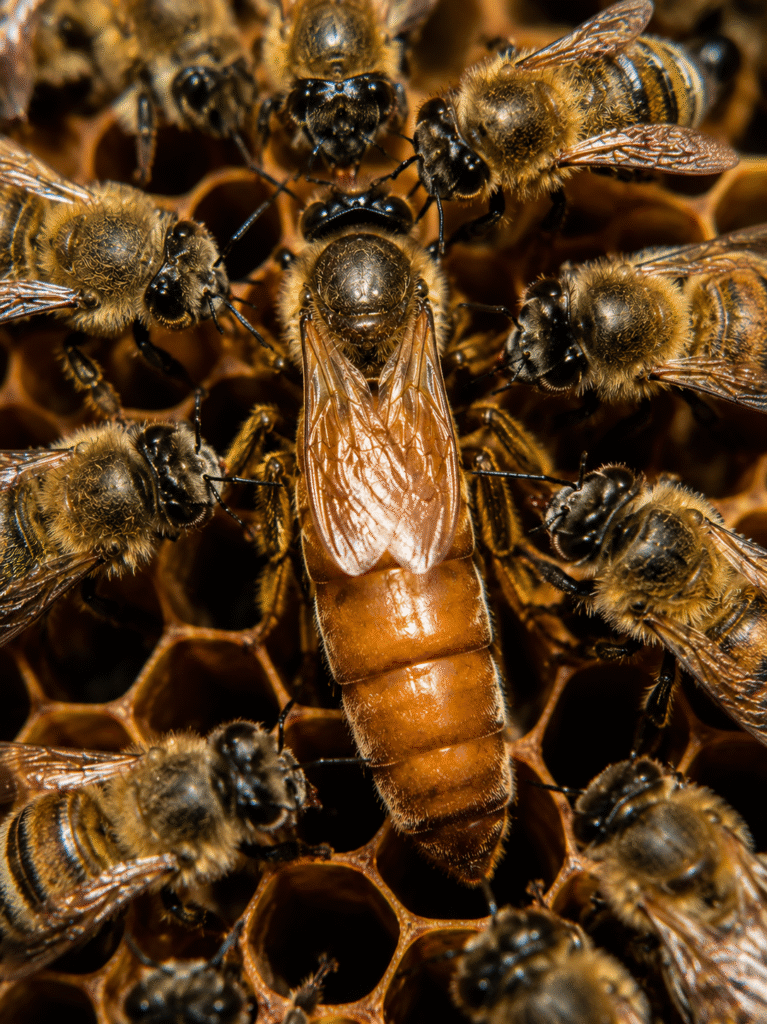
A queen is fed royal jelly exclusively for her entire life, while workers only receive it briefly as larvae before switching to pollen and honey. Royal jelly’s proteins and compounds appear to switch on different developmental and metabolic pathways entirely — it’s not just richer food, it’s a different biological program, which is part of why the lifespan gap is so extreme rather than incremental.
Reduced physical wear
A worker bee’s body simply wears out fast: her wings fray from tens of thousands of foraging trips, her sting apparatus is a one-time-use weapon, and her flight muscles burn through resources at a pace that limits her regardless of disease or predation. A queen does none of that. She rarely leaves the hive after her mating flights, never forages, and only stings in queen-versus-queen combat — which means the physical attrition that caps a worker’s life at weeks simply doesn’t apply to her.
Queen Lifespan vs. Worker Lifespan vs. Drone Lifespan
| Caste | Typical Lifespan | Primary Cause of Death |
|---|---|---|
| Queen | 2–5 years | Age-related decline in egg-laying, leading to supersedure |
| Worker (summer) | 5–6 weeks | Physical exhaustion from foraging |
| Worker (winter) | 4–6 months | Natural attrition over dormant season |
| Drone | 4–8 weeks (or death upon mating) | Expelled by workers in autumn, or dies immediately after successful mating |
What Actually Shortens a Queen’s Life
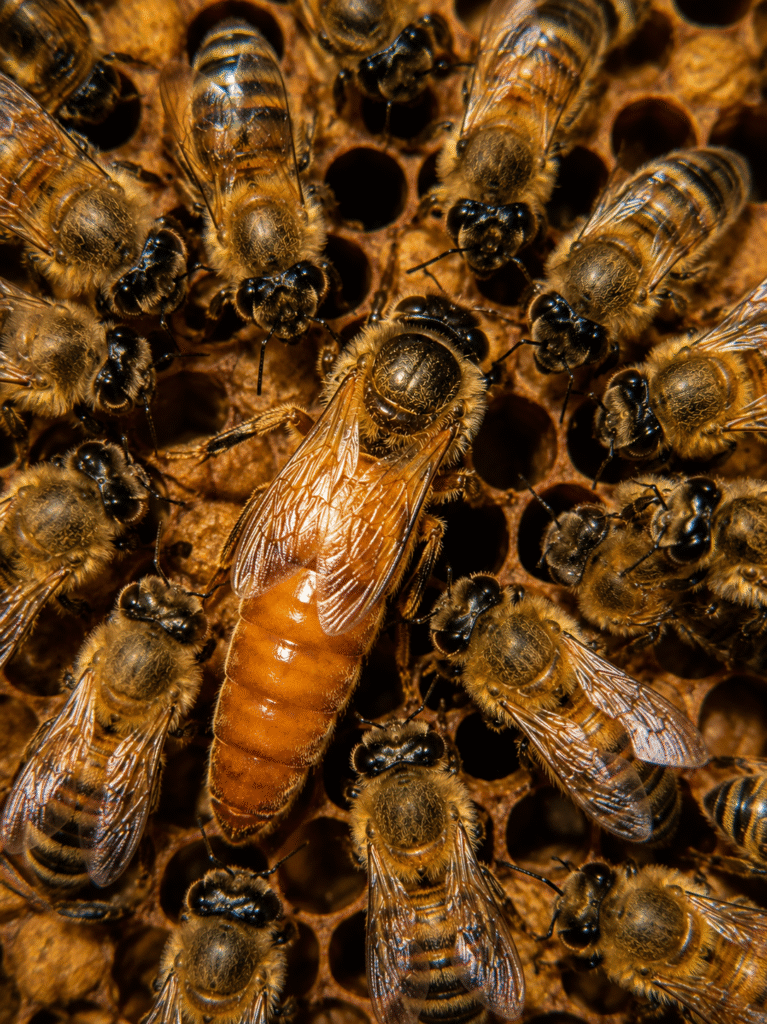
A queen’s productive life is rarely cut short by old age reaching some hard biological ceiling — it’s usually cut short by her colony deciding she’s no longer good enough. A queen whose egg-laying rate drops, whose pheromone signal weakens, or who returns from a failed mating flight with insufficient sperm stored will typically be superseded by her own workers long before any theoretical maximum lifespan. Pesticide exposure, disease, and poor mating conditions during her one fertile flight period can all accelerate this decline well ahead of schedule.
How Beekeepers Know It’s Time to Requeen
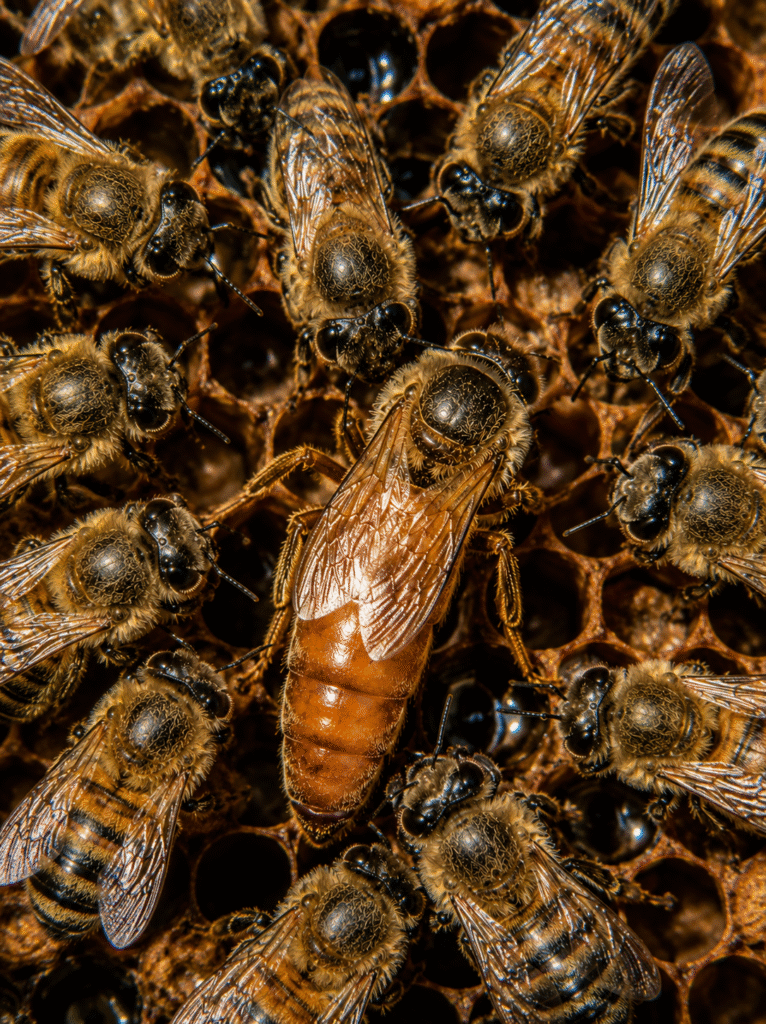
The signals are practical, not mysterious: a spotty, inconsistent brood pattern, a visibly slower-moving or smaller queen, a colony’s temperament shifting unexpectedly, or simply a queen’s marked age crossing into her third year, when productivity commonly starts to taper. Most commercial operations requeen proactively every one to two years regardless of visible decline, trading a queen’s full natural lifespan for consistent colony productivity — a tradeoff that surprises a lot of new beekeepers who assume “if she’s not dead, why replace her.” If your own hive is already showing these signs, here’s how to requeen safely without disrupting the colony further.
Frequently Asked Questions
How long does a queen bee live compared to worker bees? A queen typically lives 2 to 5 years, while a summer worker bee lives only about 5 to 6 weeks — a difference of 20 to 40 times.
What is the oldest recorded queen bee age? While most commercial queens are replaced within 1-2 years for productivity, queens under favorable conditions have been documented living beyond 5 years, though this is uncommon in actively managed hives.
Why do worker bees only live 6 weeks? Summer workers wear out physically from constant foraging flights, wing damage, and the metabolic demands of the job — their bodies simply aren’t built for longevity the way a queen’s is.
What shortens a queen bee’s lifespan? Poor mating success, pesticide exposure, disease, and a declining egg-laying rate all lead colonies to supersede a queen long before any natural age limit is reached.
How do you know when a queen bee is dying of old age? A spotty or inconsistent brood pattern, reduced pheromone presence, and a visibly slower queen are the main practical signs beekeepers watch for.
Do queen bees know when they’re going to die? There’s no evidence queens have any awareness of mortality — but colonies do detect a queen’s physical decline through pheromone changes and will begin raising a replacement queen well before she actually dies.