
Why beekeepers have told their bees about deaths and weddings for centuries — and whether anyone still does it. A beekeeper investigates.
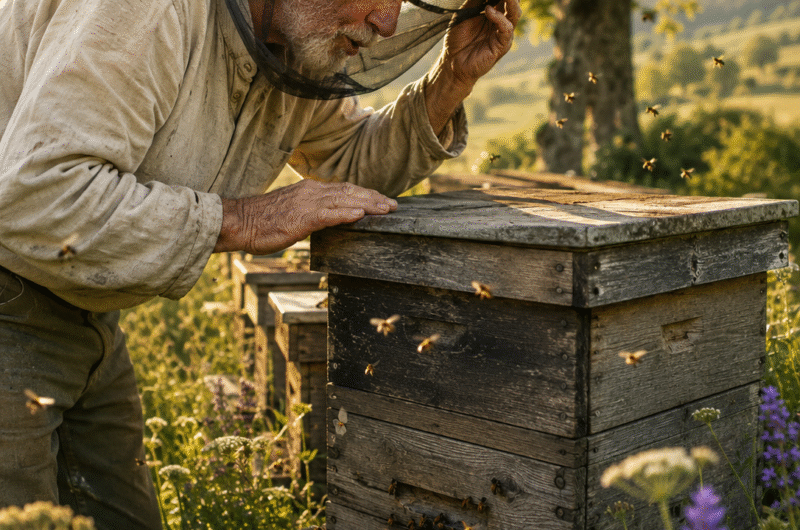
I knocked on a hive once. Not out of superstition — I was checking for a hollow sound that tells you a colony’s gone queenless — but an old-timer at a swap meet in upstate New York saw me do it and asked, dead serious, “did you tell them anything first?” I hadn’t. He looked genuinely uneasy about that, the way you’d feel if someone walked into a room and started rearranging furniture without saying hello to the person living there.
Short answer: Telling the bees is a centuries-old Western European custom of informing a household’s hives about major life events — deaths, births, weddings — out of a belief that an uninformed colony would sicken, leave, or stop producing honey. It’s mostly faded from everyday practice, but it hasn’t disappeared entirely, and the reasons it persisted for so long say more about beekeepers than about bees.
What “Telling the Bees” Actually Involves
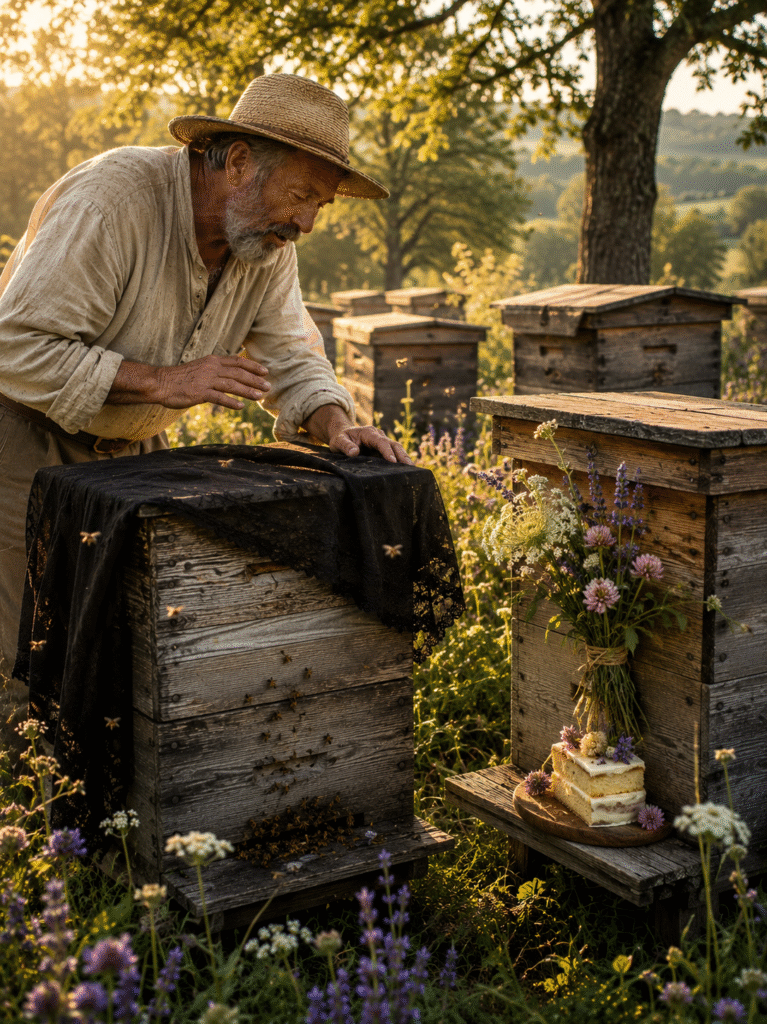
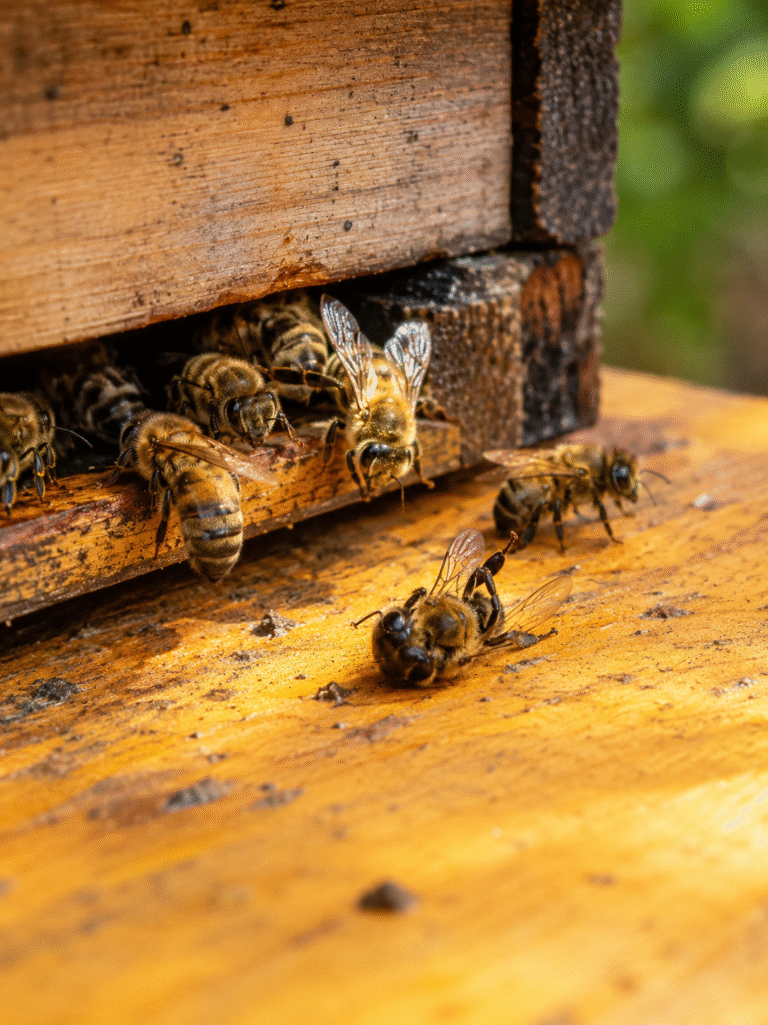
The custom, in its fullest form, wasn’t a single gesture — it was a small ritual with variations depending on the region and the event. For a death in the family, someone would go out to the hives, often draping them in a scrap of black cloth, knock gently on the hive body, and speak the news aloud in a soft voice, sometimes reciting a specific rhyme. For a wedding, the tradition flipped toward celebration: a piece of the wedding cake left near the entrance, sometimes flowers tied to the hive, and the new couple formally “introduced” to the colony as if the bees were extended family who needed to meet the newest members.
Where the Tradition Comes From
The Celtic mythology roots
Nobody can point to a single origin date, which is itself telling — the custom is old enough that its beginning is lost. Folklorists trace the earliest threads to Celtic belief systems, where bees were thought to move between the world of the living and the realm of the dead, carrying messages across that boundary. A bee lingering near someone’s head wasn’t dismissed as an insect being an insect; it was read as a sign.
How it spread through New England and Appalachia
European immigrants carried the custom across the Atlantic, and it took root hardest in rural New England and Appalachia, where beekeeping was still a household craft rather than a specialized trade. Families draped hives in mourning cloth for generations after the practice had started fading in its countries of origin, and the custom shows up in the historical record as late as the early 20th century in isolated pockets.
What Was Supposed to Happen If You Forgot
The stakes, according to the folklore, were not small. An uninformed hive might sicken, abandon its box entirely, or simply stop making honey out of what amounted to grief or offense. In some regional versions, the bad luck didn’t stay contained to the hive — it was believed to spread to the family itself, which raises the obvious question of whether the ritual was really about the bees at all, or about giving a grieving household something concrete to do with their hands during the worst days.
The Tradition in Literature and Royalty
Whittier’s 1858 poem
John Greenleaf Whittier gave the custom its most famous literary treatment in 1858, when he published a poem — at his editor’s suggestion — specifically titled to preserve the phrase itself. Whittier included a note acknowledging the custom had “formerly prevailed” in rural New England, which is a quiet admission that even in his own time, the practice was already becoming something people talked about rather than something people did.
The Royal Beekeeper and Queen Elizabeth II’s hives in 2022
The tradition’s most widely reported modern moment came in September 2022, when the Royal Beekeeper at Buckingham Palace formally told the palace hives of Queen Elizabeth II’s death, tying black ribbons around the hive bodies in the same gesture families had performed for centuries. It made international news largely because of how strange it looked to a modern audience — proof that the custom had crossed from “everyday practice” into “notable enough to report on” territory decades earlier.
I Asked Working Beekeepers If They Still Do This
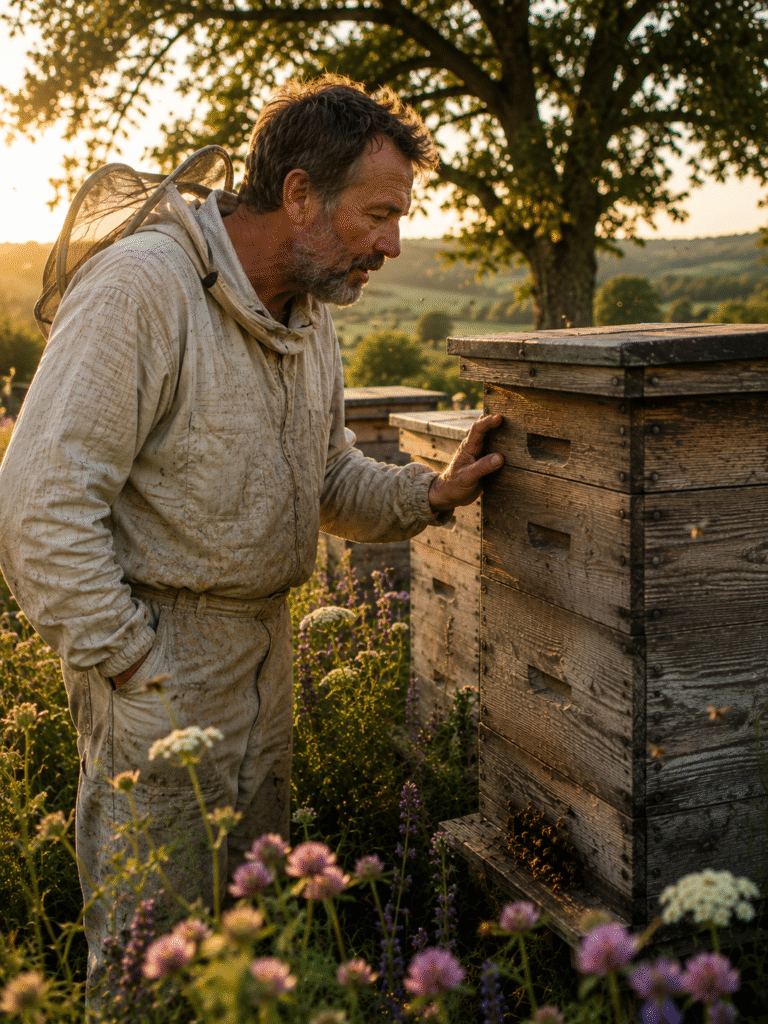
I brought this up at a regional bee club meeting a few winters back, half expecting to be laughed at, and got a more interesting answer than I anticipated. Nobody in the room performed the full ritual — the mourning cloth, the rhyme, the whole production — but three separate people admitted to a smaller version of it: talking to their hives out loud during hard weeks, without necessarily believing the bees understood a word. One beekeeper from the group put it about as well as I’ve heard it put: the habit isn’t really for the bees. It’s a forcing function that gets you out to the apiary during the exact weeks — after a death, before a wedding, during any major disruption — when your attention on the colony is most likely to slip, and slipping attention is when problems actually start. It’s not so different from the kind of quiet, personal attention a beekeeper brings to every visit to the apiary — the ritual just gives that attention a specific occasion to attach itself to.
That reframing changed how I think about the custom entirely. The folklore promised consequences for the bees if you forgot. The real consequence, if there is one, runs the other direction — a beekeeper distracted by grief or celebration who stops checking on the hive regularly is the one actually putting the colony at risk, and “telling the bees” was a socially sanctioned excuse to go check anyway.
Is There Any Real Science Behind It?
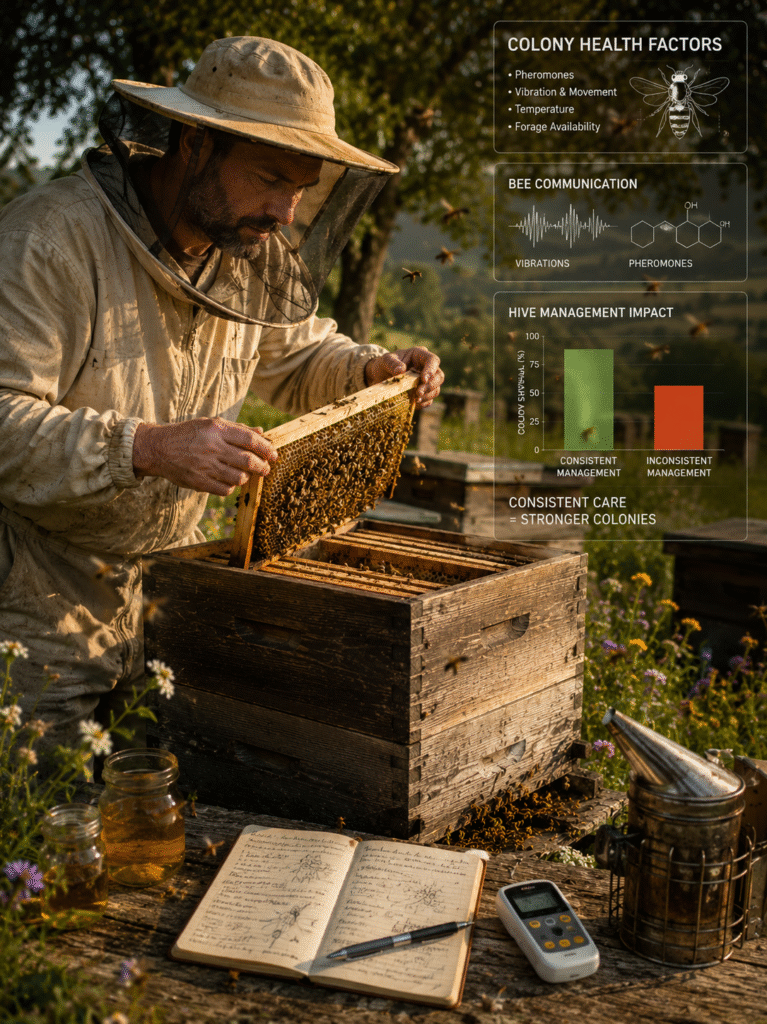
I want to be straightforward about where the evidence actually sits: there is no documented biological mechanism by which a colony reacts to news it wasn’t “told.” Bees respond to pheromones, vibration and movement patterns they read from each other constantly, temperature, and forage availability — not spoken language. What is documented is that beekeeper behavior changes measurably during periods of stress, and inconsistent hive management is a real, well-established contributor to colony decline. The folklore may have encoded a genuinely useful behavioral nudge inside a supernatural explanation, which is a pattern that shows up constantly in old agricultural traditions once you look past the superstition itself.
A Beekeeper’s Takeaway
If you keep bees, the ritual is worth keeping loosely, even if you don’t believe a word of the mythology — not because the bees need the news, but because you need the reminder. The next time something big happens in your life, go check on the hive. Tell them if you want to. It won’t hurt, and there’s a decent chance it’ll do exactly what it always did.
FAQ
Why do beekeepers tell their bees about deaths in the family?
The tradition holds that an uninformed hive would grieve, sicken, or leave, but the more practical explanation is that the ritual gave beekeepers a reason to check on their colonies during emotionally difficult periods when that attention might otherwise slip.Do people still practice telling the bees today?
The full ritual — mourning cloth, formal announcements, specific rhymes — is largely gone, but a softer version survives: some beekeepers still talk to their hives during major life events, even without believing the bees understand the words.
What happens if you don’t tell the bees?
According to the folklore, the consequences ranged from the colony sickening to it abandoning the hive entirely or ceasing honey production, with some regional versions extending the bad luck to the family itself. There’s no documented biological basis for any of this.
Where did the tradition of telling the bees come from?
Its exact origin is lost, but folklorists trace the earliest roots to Celtic mythology, where bees were seen as messengers between the living and the dead. It spread through Western Europe and later crossed to New England and Appalachia with European settlers.
What is the Whittier poem “Telling the Bees” about?
Published in 1858, John Greenleaf Whittier’s poem describes a man returning home to find the household’s hives already draped in mourning cloth, realizing before anyone tells him directly that someone has died — the custom itself becomes the narrator’s first, silent piece of bad news.
Did the Royal Beekeeper really tell the bees about the Queen’s death?
Yes. In September 2022, Buckingham Palace’s Royal Beekeeper formally informed the palace hives of Queen Elizabeth II’s death and tied them in black ribbon, following the same custom described in this article, which drew significant international media attention at the time.