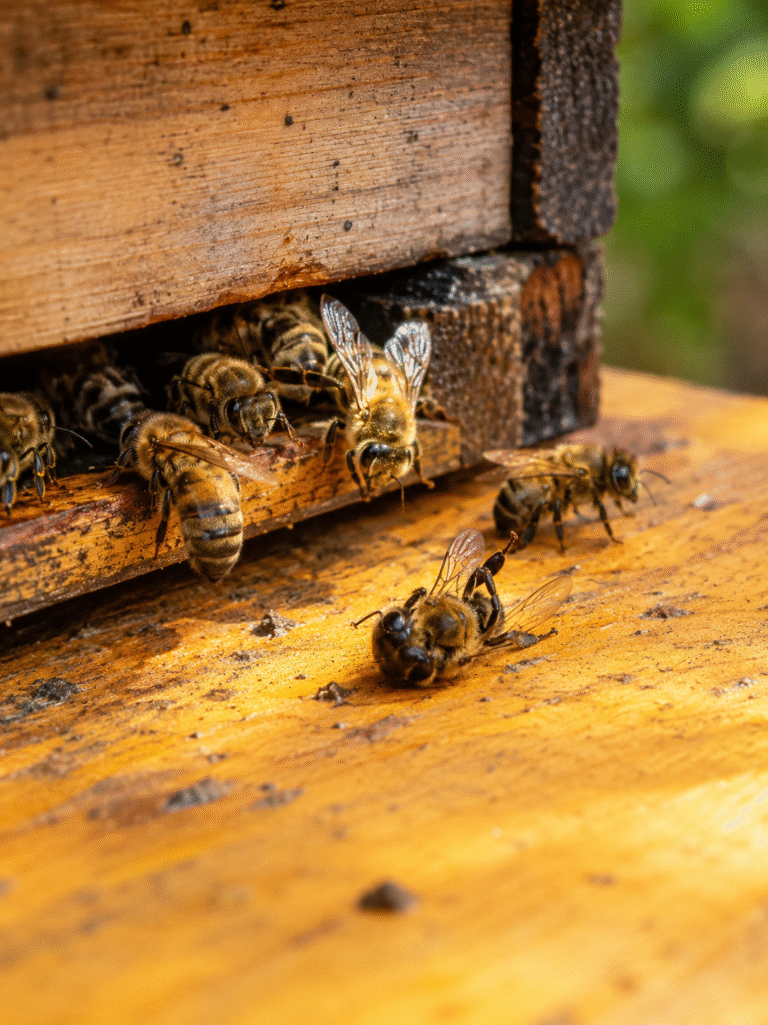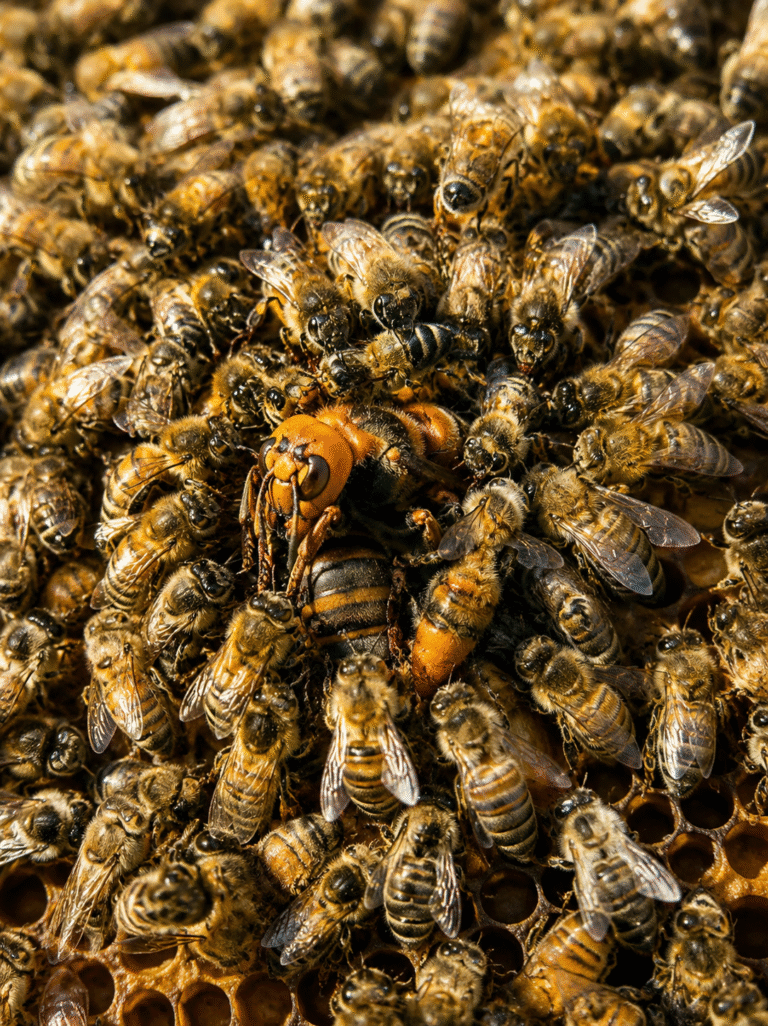
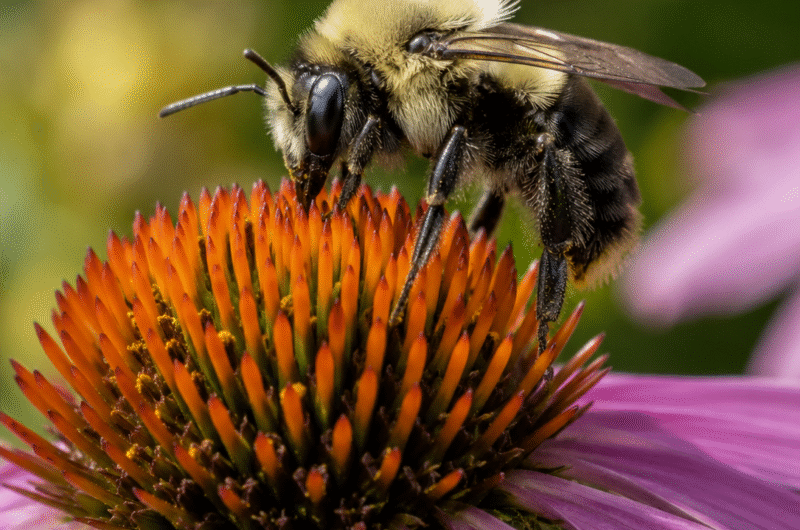

Mason bees, mining bees, leafcutter bees, and more — a field guide to identifying the solitary bees living alongside your honeybees.
Last April, I watched a woman in my neighbor’s community garden spray a can of wasp killer into a patch of bare dirt because “the bees were digging holes and she didn’t want to get stung.” What she’d found was a mining bee aggregation — dozens of females, each excavating her own solitary tunnel, none of them remotely interested in her. By the time I got there to explain, the damage was done. That’s the story behind this guide: most people who ask me to identify native bees in your garden aren’t trying to become entomologists. They’re trying to figure out whether to be afraid of something, and the honest answer is almost always no.
I keep honeybee colonies, and I write mostly about them here. But every beekeeper who spends real time outdoors starts noticing the bees that aren’t theirs — the ones that show up in March before a single honeybee colony has built up foraging strength, that vanish from view by July, that don’t live in anything resembling a hive. There are roughly 20,000 bee species worldwide, and only eight of them make honey. Exactly zero of the honey-making species are native to North America. Everything else buzzing around your tomatoes, your roses, and that one patch of lawn you never quite got around to mowing is a native species doing work your honeybees can’t.
This is a field guide to the ones you’re most likely to actually see.
Why Most “Bees” in Your Garden Aren’t Honeybees
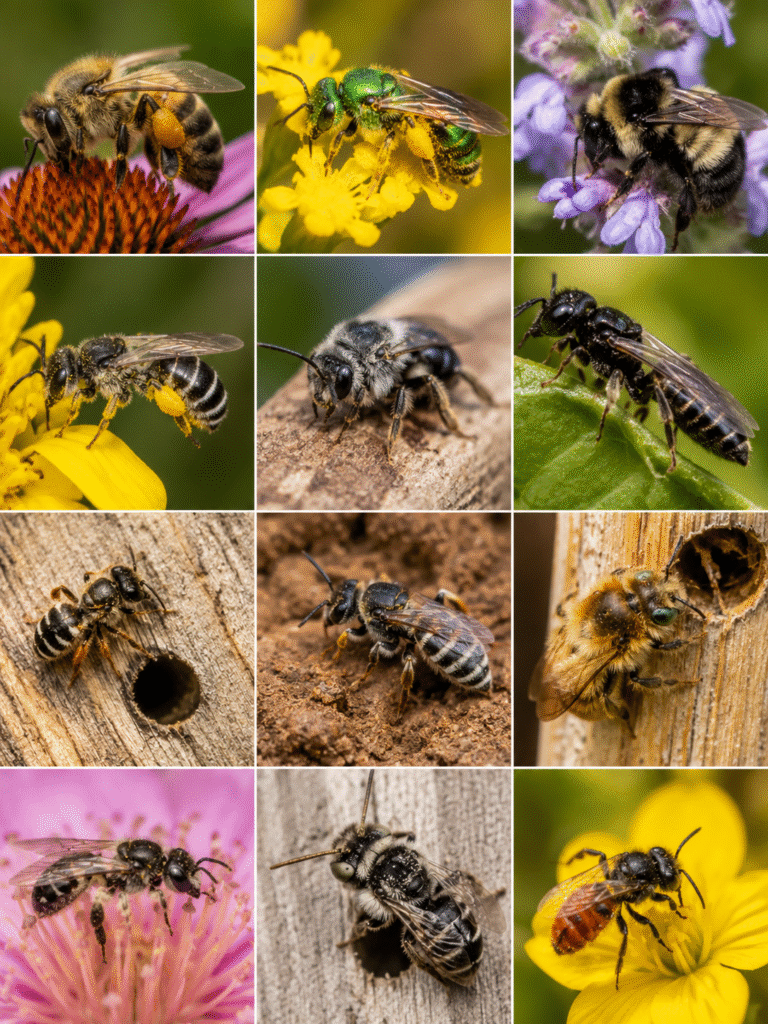
North America is home to roughly 4,000 native bee species, and the overwhelming majority of them are solitary — no queen, no worker caste, no shared hive. A single female builds her own nest, provisions it with pollen and nectar, lays her eggs, and in most species never lives to see her offspring hatch. There’s no defensive colony behind her, which is the single biggest reason solitary bees are so much less aggressive than the honeybees people are used to.
The confusion is understandable. A honey bee is small, brownish-gold, and banded, and most people’s mental image of “bee” stops there. But drop a few dozen native species into the same backyard and the range is enormous: bees the size of a grain of rice, bees with metallic green abdomens that look more like flies, bees that nest in solid wood, bees that nest three inches underground. Once you know what to look for, you stop seeing “a bee” and start seeing which bee — and that distinction matters, because each one interacts with your garden differently.
Mason Bees — The Spring Orchard Specialists
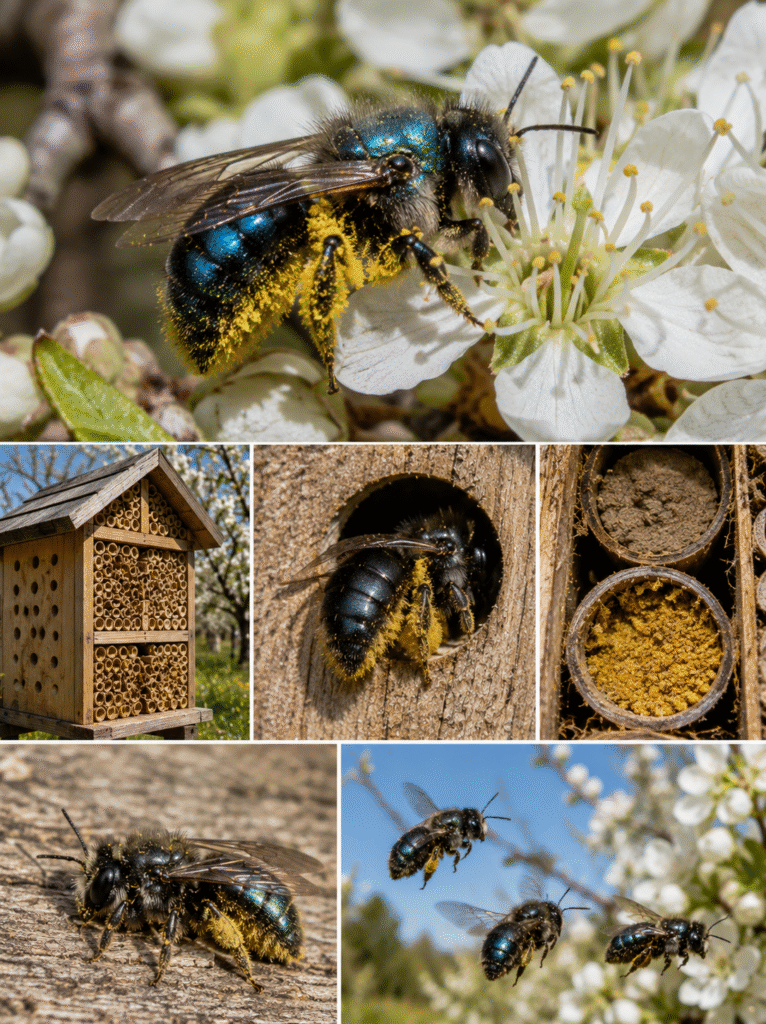
Mason bees (genus Osmia) are usually the first native bees active in spring, often flying in temperatures too cold for honeybees to leave the hive. They’re compact, metallic blue, green, or black, and unlike honeybees they don’t carry pollen in leg baskets — they pack it into dense hair on the underside of the abdomen, which is why a working female often looks dusted in yellow from below.
Their nesting habit gives them their name: they seal off nest cells in hollow stems, beetle tunnels, or cavities using mud, plastering each chamber shut like a tiny mason at work. If you’ve built or bought a bee house with drilled wooden blocks or paper tubes, mason bees are almost certainly the tenants you were hoping for. Research on their pollination efficiency is genuinely striking — roughly 400 female blue orchard mason bees can pollinate an almond orchard as effectively as 10,000 honeybees, largely because mason bees fly in cooler, wetter conditions and visit far more flowers per outing. If you already have a mason bee house going, I’ve written a full setup guide covering how to build a mason bee house bees will actually use — the placement and hole-diameter details matter more than most kits let on.
Field ID: Small, stocky, metallic sheen, pollen carried on the belly rather than the legs, active late winter through mid-spring, found around cavities and bee hotels rather than open ground.
Mining Bees — The Ground-Nesters Mistaken for Ant Hills
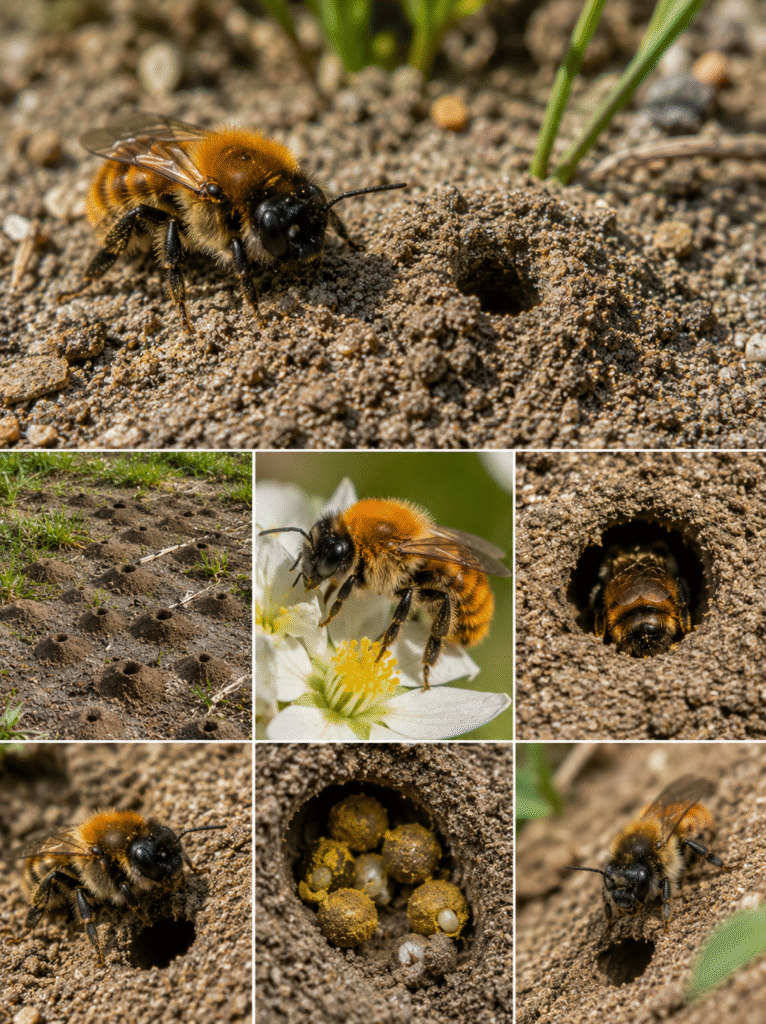
Mining bees (family Andrenidae) are the ones behind that scene in my neighbor’s garden. They’re solitary ground-nesters, and in early spring you’ll often see small volcano-shaped mounds of excavated soil with a pencil-sized hole at the center — frequently in the exact same patch of lawn, year after year, because females tend to prefer soil conditions similar to where they themselves emerged.
What looks like a single colony is actually dozens or even hundreds of individual females, each digging and provisioning her own tunnel, in what’s called a nesting aggregation. They’re not coordinating. They’re not defending shared territory. And because there’s no hive to protect, mining bees are remarkably reluctant to sting — most species barely can, given how weak their venom delivery is compared to a honeybee’s.
The tawny mining bee is one of the more recognizable species: females are roughly honeybee-sized with a distinctive coat of reddish-orange fur on the thorax, lighter orange on the abdomen, and a black face and legs underneath it all. If you see small mounds appearing in bare or thinly grassed soil each March or April, resist the urge to treat it as a pest problem — it’s a sign your soil is doing exactly what mining bees need it to do.
Field ID: Small soil mounds with a central hole, often clustered in a “city” of individual nests, active early spring, generally in bare, well-drained, sun-exposed ground.
Leafcutter Bees — Who’s Cutting Those Neat Circles From Your Roses
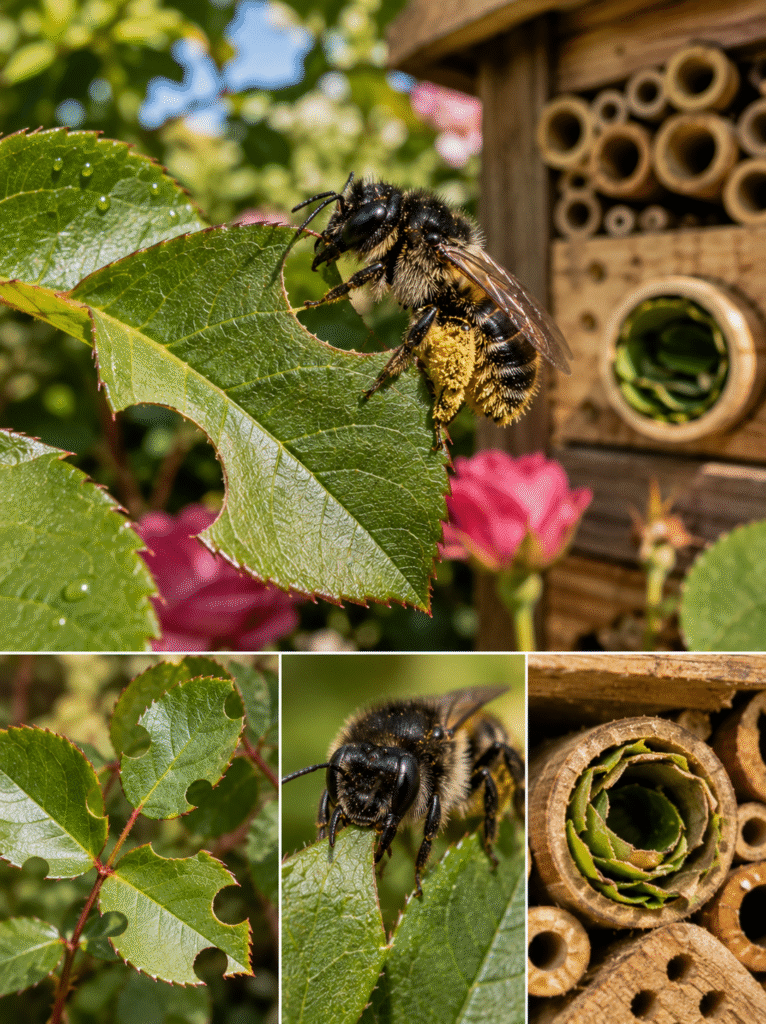
If you’ve ever found your rose bush, lilac, or redbud leaves with clean, near-perfect semicircles missing from the edges, you’ve met a leafcutter bee (family Megachilidae, genus Megachile), not a garden pest. Leafcutter bees use their large mandibles to snip precise oval or crescent sections of leaf material, then carry them back to a nest cavity — often the same kind of hollow stem or cavity a mason bee would use — where the leaf pieces are folded and layered to build individual brood cells.
The giveaway is the precision. Caterpillars and other leaf-eating insects leave ragged, irregular damage. Leafcutter bees leave clean, almost surgical cuts, which is exactly what makes them easy to misdiagnose as a plant disease or a pest infestation instead of pollinator activity. Like mason bees, they carry pollen on abdominal hair rather than leg baskets, and their pollination efficiency in agricultural settings is remarkable — around 150 leafcutter bees working a greenhouse crop can do the pollination work of roughly 3,000 honeybees. Alfalfa seed production in much of the western United States depends almost entirely on managed leafcutter bees for exactly this reason.
Field ID: Stout black body, prominent jaws, hairy pollen-carrying belly, fast erratic flight, evidence shows up as clean semicircular cuts on leaf edges rather than the bee itself.
Sweat Bees & Bumblebees — The Metallic and the Fuzzy
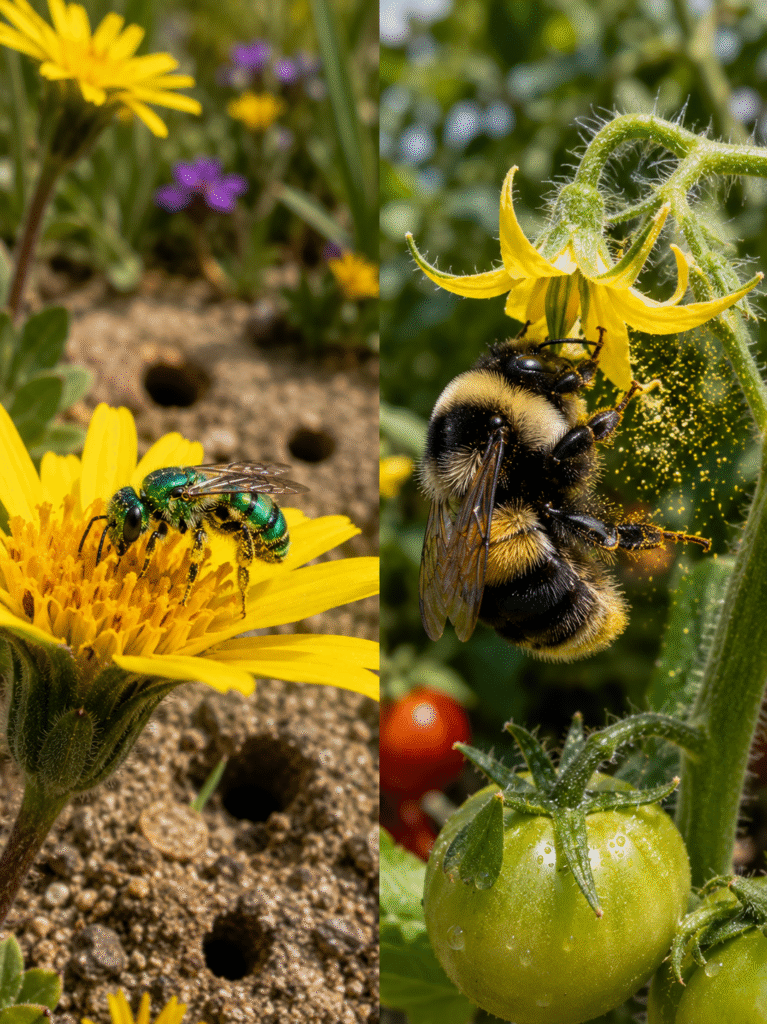
Two more groups round out what you’re likely to encounter. Sweat bees (family Halictidae) are often the bees people mistake for flies — small, frequently metallic green or blue, and named for their odd habit of occasionally landing on skin to lap up perspiration for the salt content, which is harmless but startles people every time. Most sweat bee species nest in the ground, similar to mining bees, though some nest communally in shared tunnel entrances with individual chambers branching off.
Bumblebees (genus Bombus) are the outlier in this whole conversation, because they’re actually social — living in small colonies with a queen, workers, and an annual colony cycle, unlike every other native bee on this list. They’re also the most visually distinct: large, round-bodied, densely fuzzy, and slow, deliberate fliers compared to the quick darting of solitary species. Bumblebees are exceptional cold-weather foragers and are responsible for buzz pollination — vibrating their flight muscles at a frequency that shakes pollen loose from flowers like tomatoes and blueberries, something honeybees physically cannot do.
Field ID (sweat bees): Small, often metallic, ground-nesting, occasionally attracted to skin. Field ID (bumblebees): Large, round, densely fuzzy, black-and-yellow banded, slow deliberate flight.
Solitary vs. Social: The One Distinction That Explains Everything
What is a solitary bee? A solitary bee is a species in which a single female builds, provisions, and defends her own nest without workers, a queen, or a shared colony structure. Roughly 90% of native North American bee species are solitary, which is why most native bees you encounter are far less defensive than honeybees — there’s no hive worth dying to protect.
That single fact resolves nearly every “should I be worried” question I get asked about native bees. A honeybee stinging you is an act of colony defense — she’s protecting tens of thousands of relatives, food stores, and a queen, and it costs her life to do it. A solitary female mining bee or mason bee has none of that at stake. She’s protecting an investment of days or weeks of provisioning work in one nest, and stinging a human does nothing to defend it. Most solitary species can barely penetrate human skin even if they try, and the overwhelming majority never try at all.
Are They Dangerous? Sting Risk, Myths, and What to Actually Worry About
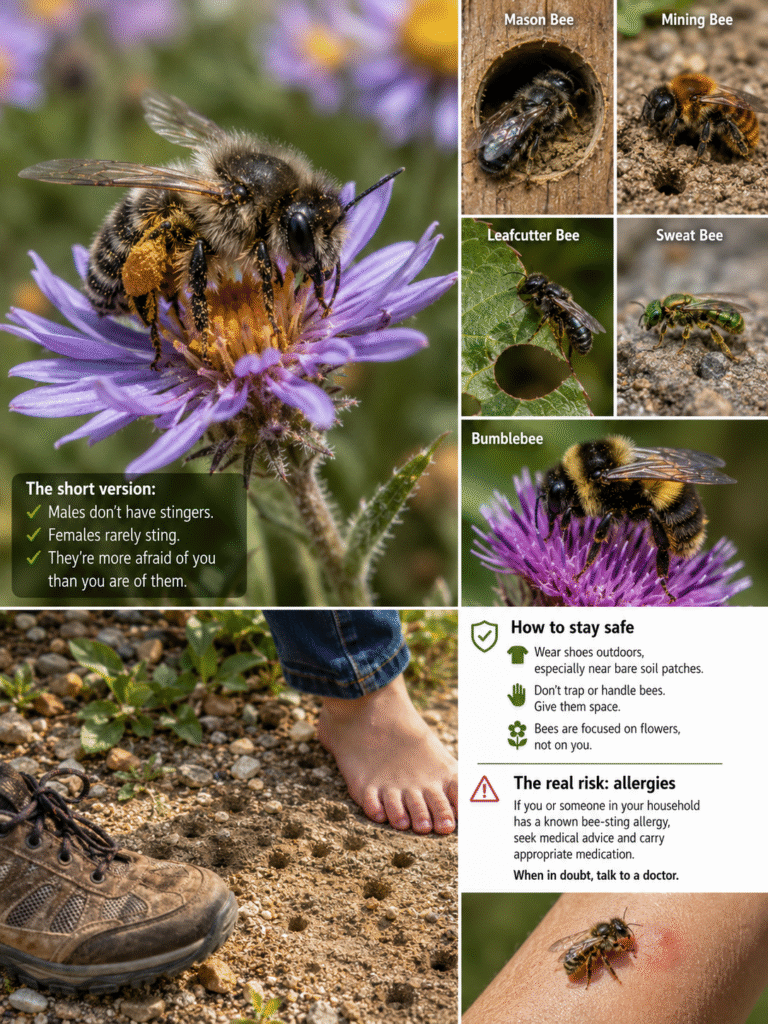
I get some version of “is this dangerous” almost every time I post native bee photos, and the honest field answer is: less dangerous than the honeybees I keep on purpose. Male bees of every species listed here — mason, mining, leafcutter, sweat — have no stinger at all; only females do, and stinging is a last resort used mainly when a bee is physically grabbed or trapped, not when it’s approached or photographed.
The one real exception worth naming is allergy. If someone in your household has a known bee-sting allergy, any stinging insect deserves caution regardless of species, and that’s a conversation for a doctor, not a blog post. Beyond that, the actual risks in a native-bee-friendly garden are minor and manageable — a family walking barefoot through a mining bee aggregation might occasionally get an accidental sting underfoot, which is more a reason to wear shoes near known nesting patches than a reason to eliminate the bees.
How to Make Your Garden Native-Bee Friendly
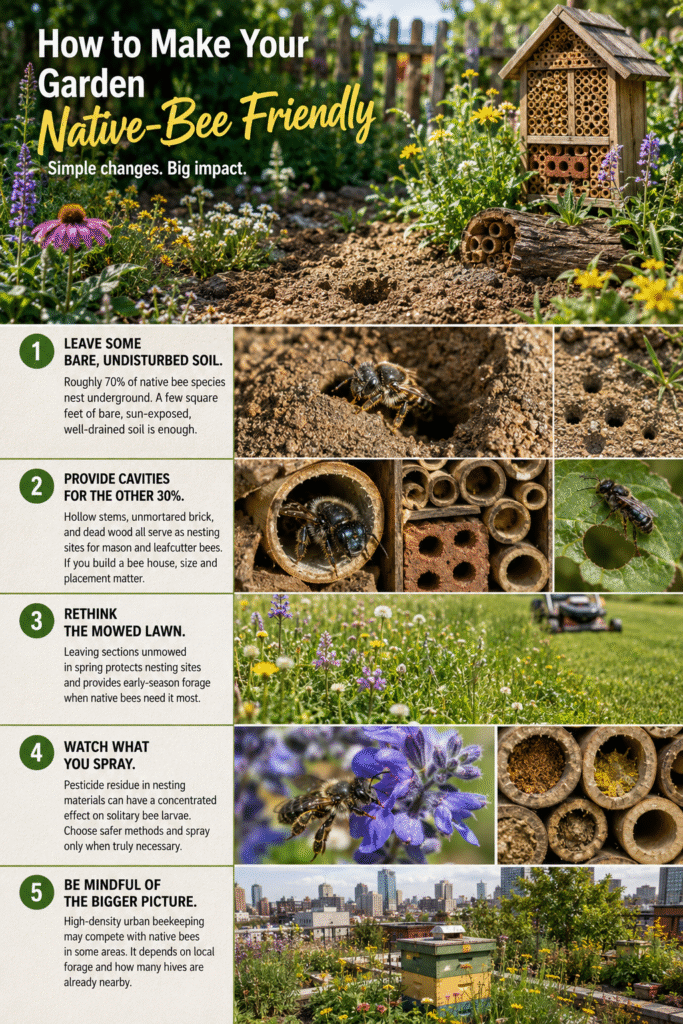
If you’ve read this far, you probably don’t need convincing that native bees are worth having around — you need to know what actually helps them. Three things matter more than anything else, and none of them require buying equipment.
Leave some bare, undisturbed soil. Roughly 70% of native bee species nest underground, and a garden that’s fully mulched, planted, or paved edge-to-edge has nowhere for mining bees or sweat bees to dig. A few square feet of bare, sun-exposed, well-drained soil is enough.
Provide cavities for the other 30%. Hollow plant stems, unmortared brick, and dead wood all serve as nesting sites for mason and leafcutter bees. If you want something more deliberate, a properly built and maintained mason bee house works — but hole diameter and placement genuinely matter, and a poorly designed box can do more harm than good by concentrating parasites and disease.
Rethink the mowed lawn. Programs like No Mow May get debated for how much they actually help honeybee colonies specifically, but for ground-nesting native bees, leaving sections of lawn unmowed and undisturbed through spring is one of the highest-impact things a homeowner can do — it protects both nesting sites and the early-season forage those species depend on before most garden flowers bloom. Pair that with intentional planting; my guide to bee-friendly garden plants covers species that support both honeybees and native pollinators without much maintenance effort.
Watch what you spray. Pesticide residue in nesting material has emerged as a genuinely concerning research area for solitary bees specifically — because they provision individual cells with pollen and nectar that sits in direct, prolonged contact with developing larvae, contamination has a more concentrated effect than it does in a honeybee colony where forage is diluted across thousands of individuals.
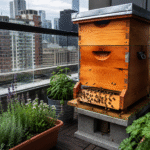
I’ll be straightforward about one thing: the interaction between managed honeybee colonies and wild native bee populations is a live, sometimes contentious debate among researchers, not a settled question. Some studies suggest high-density urban beekeeping can create real forage competition with native species in resource-limited areas; others find minimal impact depending on regional flower availability. I cover that debate directly in the urban beekeeping controversy piece, and if you’re weighing whether to add honeybees to a small urban space, my guide to beekeeping on a balcony is worth reading alongside this one. There isn’t a clean, universal answer — the honest version is that it depends heavily on your local forage density and how many other hives are already nearby.
For a quick companion to this guide, my breakdown of how to tell a honeybee from a wasp or bumblebee covers the identification questions people ask most often before they even get to the native-bee side of things.
The Takeaway
Next time something small and buzzing shows up in your garden that doesn’t quite match your mental picture of a honeybee, resist the reflex to treat it as a threat. Look at where it’s nesting, how it’s carrying pollen, and how it’s flying — those three details will tell you almost everything you need to know, and in the vast majority of cases, what you’re looking at is doing more good for your garden than harm to you.
FAQ
Is a ground bee dangerous to have in my yard?
No. Ground-nesting bees like mining bees and sweat bees are solitary, meaning there’s no hive to defend, and most species rarely sting even when handled. The soil mounds they leave behind are a sign of healthy nesting habitat, not a pest problem.
Why are there circular holes cut out of my rose leaves?
Clean, near-perfect semicircular cuts on leaf edges are the work of leafcutter bees, which use the leaf pieces to build nest cells. It’s cosmetic damage, not a disease or infestation, and doesn’t harm the plant’s health.
How can I tell a mason bee from a honey bee?
Mason bees are smaller and stockier, have a metallic blue, green, or black sheen, and carry pollen in hair on the underside of their abdomen rather than in leg baskets like honeybees do. They’re also active earlier in spring, often before honeybee colonies are flying regularly.
Do solitary bees sting?
Females can, but rarely do — without a colony to defend, most solitary species only sting when physically grabbed or trapped. Male bees of every solitary species have no stinger at all.
What’s making small mounds of dirt in my lawn every spring?
Mining bees, a group of solitary ground-nesting native bees. What looks like one colony is actually many individual females each digging her own nest tunnel in soil conditions she finds favorable, often the same patch year after year.
Can I attract native bees the same way I attract honeybees?
Partially. Native bees respond to the same bee-friendly flowering plants honeybees do, but they also need nesting habitat — bare soil for ground-nesters and hollow stems or cavities for mason and leafcutter bees — which honeybee-focused gardens sometimes overlook.
Do native bees need a hive?
No. Roughly 90% of native bee species are solitary and build individual nests rather than living in a shared hive. Only bumblebees among the species covered here form true colonies, and even those are much smaller and more short-lived than a honeybee colony.