
Bees detect death in total darkness and remove bodies within 30 minutes. Meet the undertaker bees keeping the hive disease-free
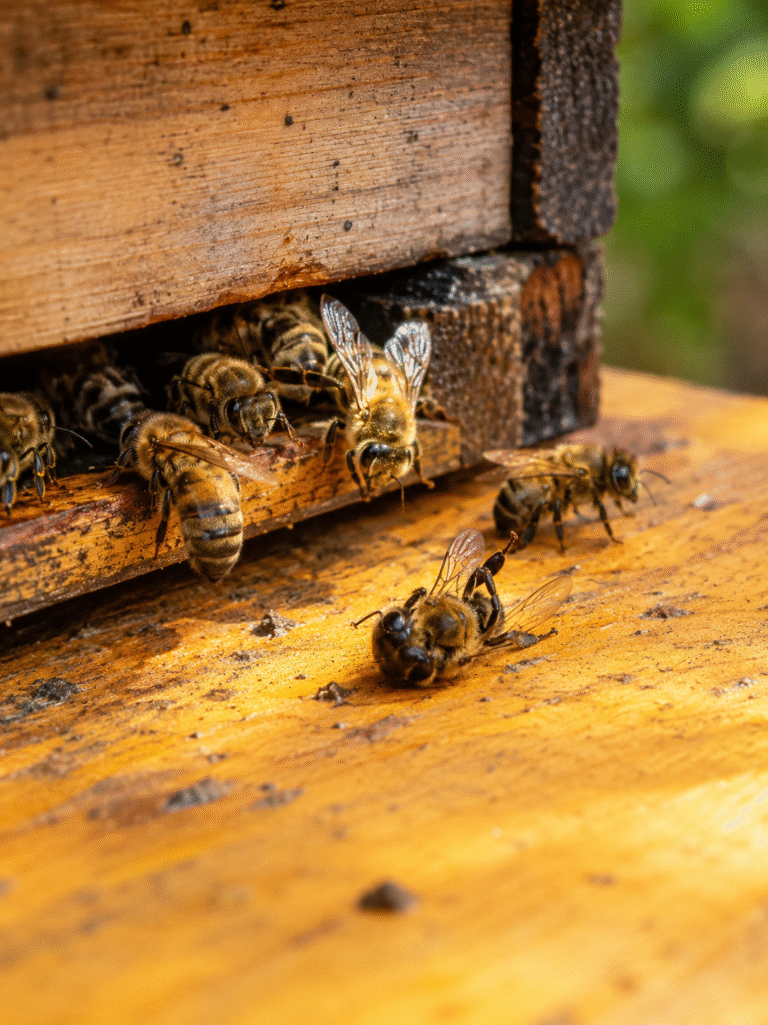
I was kneeling in front of a hive on a cool April morning, coffee going cold on the fence post beside me, when I noticed something I’d walked past a hundred times without really seeing. A worker bee backed out of the entrance dragging something twice her own length — another bee, clearly dead, legs curled inward. She didn’t pause. She hauled the body a few inches past the landing board, took off, and didn’t come back with it. Twenty minutes later, a different bee was doing the exact same thing with a second corpse.
That’s an undertaker bee at work, and once you know what you’re looking at, you can’t unsee it.
What Is an “Undertaker Bee,” Exactly?
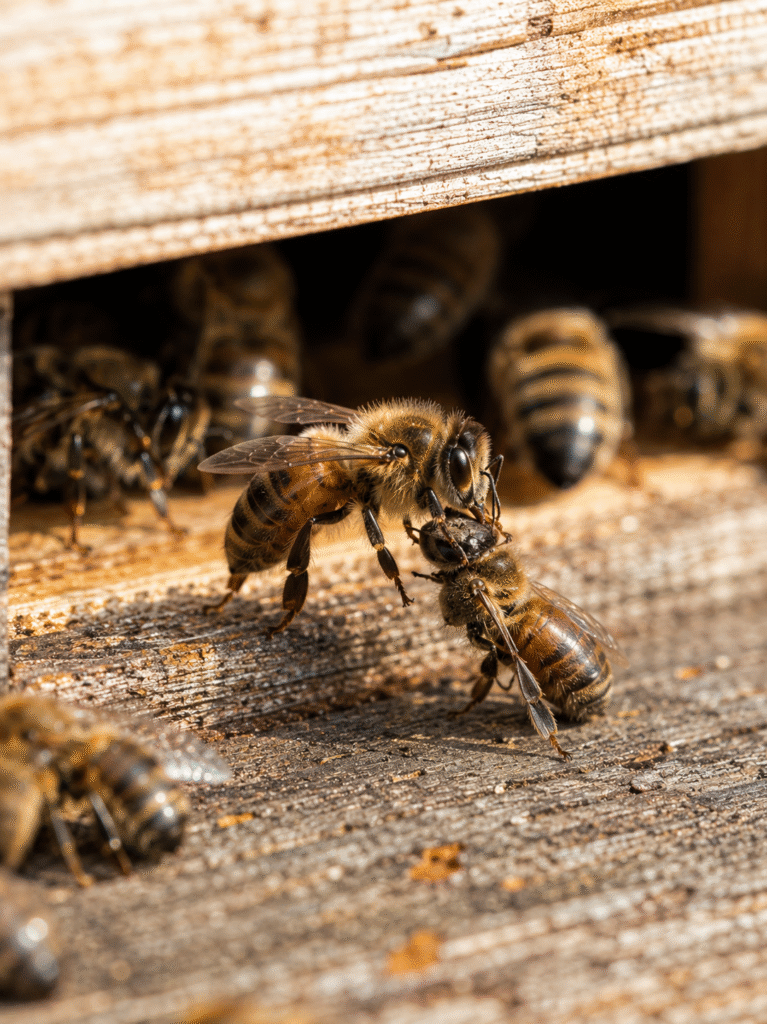
An undertaker bee is a worker honey bee that specializes in locating dead bees inside the hive and removing them, usually within about thirty minutes of death. It’s not a permanent job — undertakers are typically middle-aged workers who take on the task for a few days before moving to other duties like foraging or comb building.
Only a small fraction of any colony ever performs this work. Most bees will live their entire six-week lifespan without carrying out a single corpse. The ones that do it, do it repeatedly, sometimes for a week or more straight, hauling body after body out through the same entrance the rest of the colony uses to bring in nectar and pollen.
How Bees Detect Death in Total Darkness
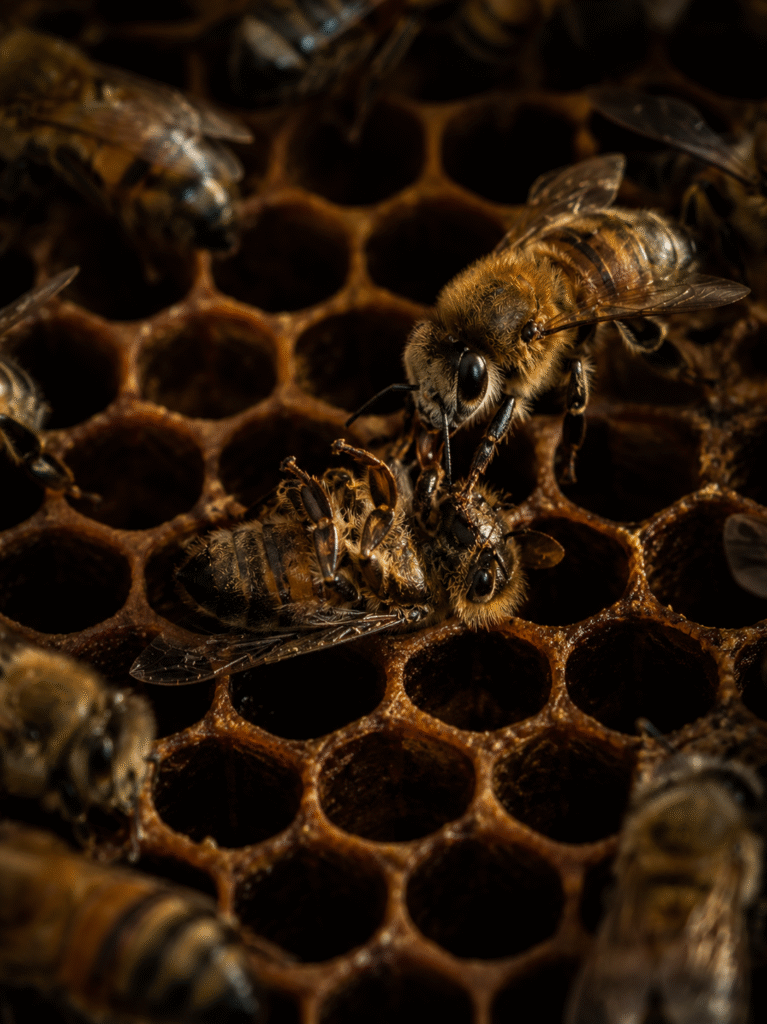
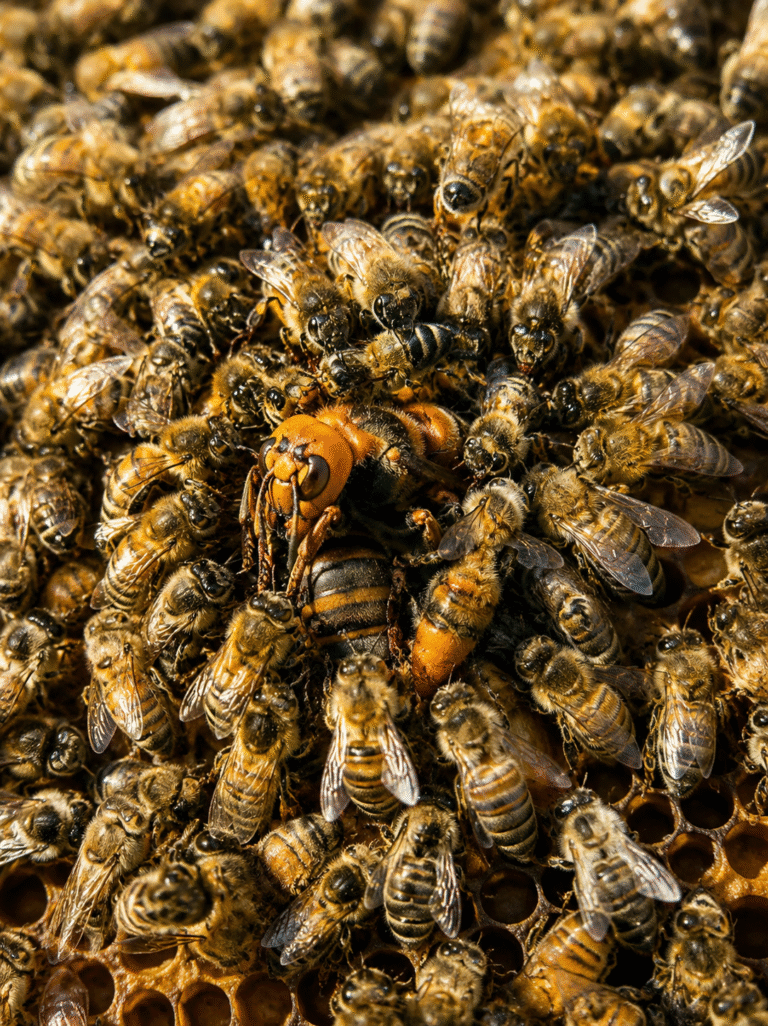
Here’s the part that stopped me in my tracks when I first read into it: the inside of a hive is pitch black. There’s no light to see by, so an undertaker isn’t spotting a corpse the way we would. She’s smelling it, or more precisely, she’s noticing the absence of a smell.
Living bees constantly emit a blend of waxy compounds on their outer cuticle — think of it as a chemical “I’m alive” signal that fades the moment body temperature starts dropping after death. Researchers studying this behavior have found that undertakers respond specifically to that drop-off, not to any obvious “death smell” building up from decomposition. A bee that’s been dead five minutes and a bee that’s been dead five hours can both get flagged for removal, because the trigger isn’t decay — it’s the missing life signal.
That distinction matters more than it sounds like it should. It means the hive isn’t waiting for a corpse to start smelling bad before doing something about it. The cleanup starts almost immediately, which is exactly the point.
Quick answer: An undertaker bee is a worker that detects and removes dead bees from the hive, usually within 30 minutes, using chemical cues rather than sight, since the inside of a hive has no light at all.
The Job Nobody Wants: A Day in the Life of an Undertaker
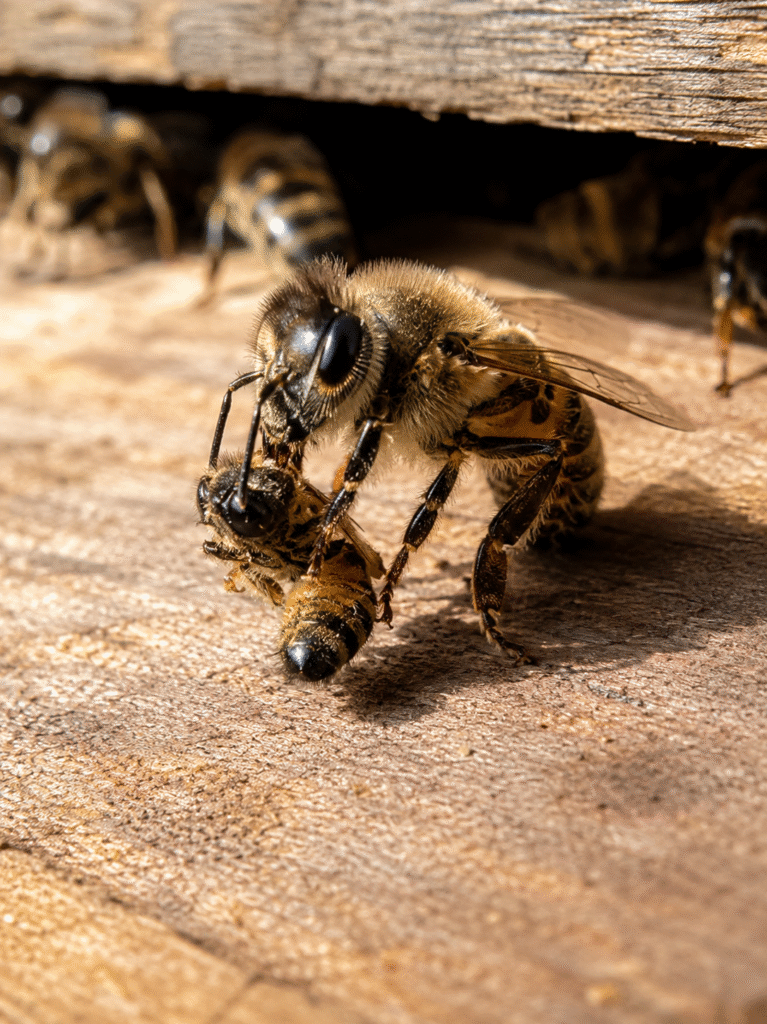
Picture the process from the undertaker’s side. She locates a body — often near the hive floor or tucked against a comb, since that’s where bees tend to die during routine attrition. She grabs it, usually by a leg or the thorax, and drags it toward the entrance. If the body’s small enough, she’ll sometimes take off and fly it out directly, dropping it anywhere from a few feet to over a hundred meters from the hive before returning empty-handed.
That distance isn’t random. Dumping a corpse right at the entrance would just create a pile that attracts scavengers and pathogens to the exact spot every forager has to pass through on the way in and out. Carrying it well clear of the hive keeps that risk away from the colony’s main traffic zone.
I’ve watched a single undertaker make that same round trip four or five times in an hour during a rough patch — usually after a cold snap that killed off a chunk of the older forager population overnight. It’s not glamorous work, and it’s easy to miss if you’re not specifically watching the entrance for it. Most people checking on their hives are looking at brood patterns or honey stores, not at the small pile of bodies quietly disappearing from the landing board.
Why Corpse Removal Matters for Colony Survival
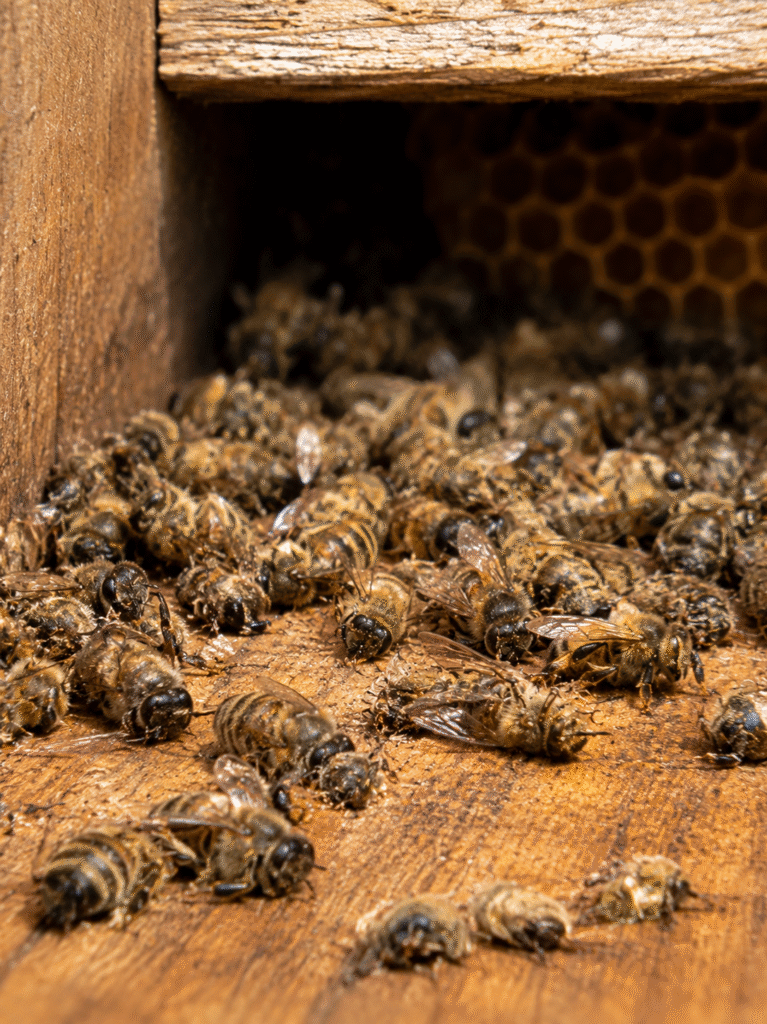
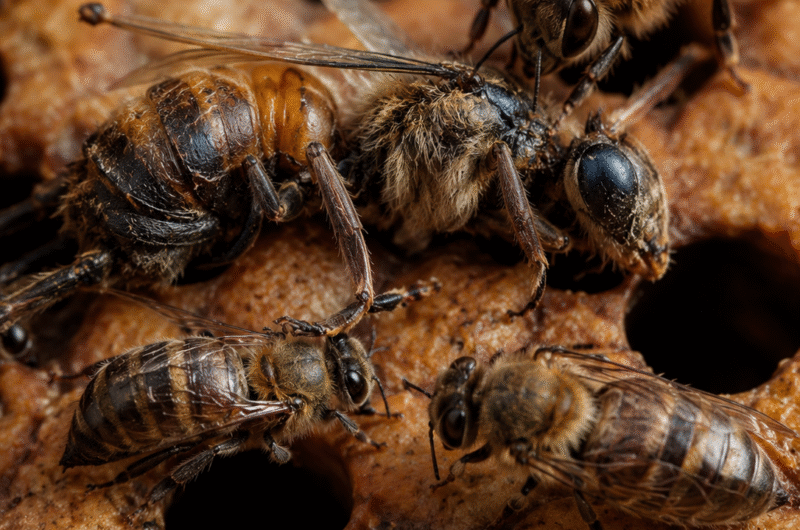
This isn’t housekeeping for its own sake. A dead bee left inside the hive is a potential source of pathogens, and a colony packed into a dark, warm, humid box is about as good an environment for disease spread as you could design on purpose. Leaving corpses in place would give bacteria and fungal spores a foothold right at the center of colony life.
That’s part of why hygienic behavior — the broader category undertaking falls under — gets so much attention from anyone dealing with brood diseases like <a href=”https://beekeeperscorner.com/american-foulbrood-how-to-spot-it-before-it-spreads/”>diseases like American Foulbrood</a>. Colonies with strong hygienic instincts detect and remove infected brood fast enough to slow or stop an outbreak before it takes hold, and the same undertaking mechanism that clears out a single dead forager is doing a version of that same disease-prevention work at a larger scale.
The same logic applies to pathogens such as <a href=”https://beekeeperscorner.com/nosema-disease-in-honey-bees/”>pathogens such as Nosema</a>, which spreads through spores that can linger in a hive far longer than a single dead bee would if undertakers weren’t clearing bodies out quickly. A hive that’s slow to remove its dead is, functionally, a hive that’s slower to interrupt disease transmission — and that gap adds up over a season.
There’s a secondary risk too. A pile of dead bees sitting inside or near a weak colony doesn’t just spread pathogens — it can draw in opportunistic pests such as <a href=”https://beekeeperscorner.com/small-hive-beetle-the-pest-most-beekeepers-ignore-until-its-too-late/”>opportunistic pests</a> looking for an easy foothold in a hive that’s already struggling to defend itself. Undertaking behavior removes that invitation before it becomes a problem.
Undertaker Bees vs. Hygienic Bees — What’s the Difference?
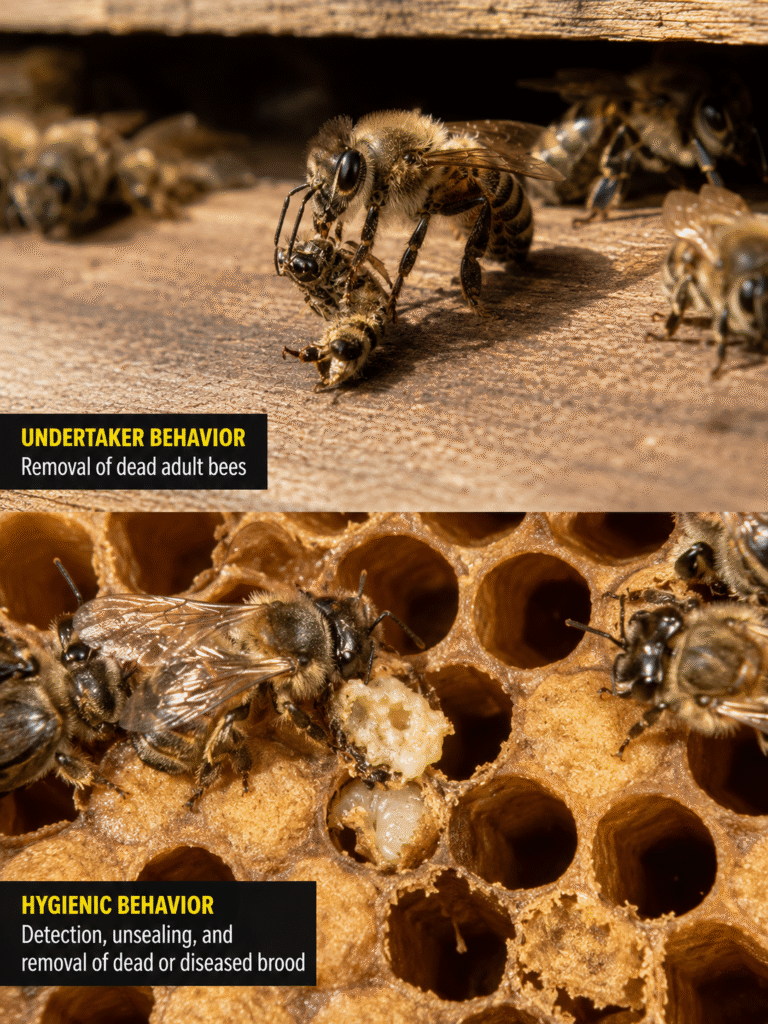
People sometimes use these terms as if they’re the same thing, and they’re closely related, but they’re not identical.
Myth: Undertaking and hygienic behavior are the same trait. Fact: Undertaking specifically refers to removing dead adult bees. Hygienic behavior is the broader term covering the detection and removal of diseased or dead brood — larvae and pupae still capped in their cells — which requires a different set of steps, including uncapping the cell before removal.
A colony can be strong at one and weaker at the other, though the two traits tend to correlate. Breeding programs that select for “hygienic” queens are specifically testing how fast a colony detects and clears out dead or freeze-killed brood, not how fast it removes adult corpses from the hive floor — though in practice, colonies that score well on one test usually perform reasonably well on the other too.
What Beekeepers Can Learn From Watching the Hive Entrance
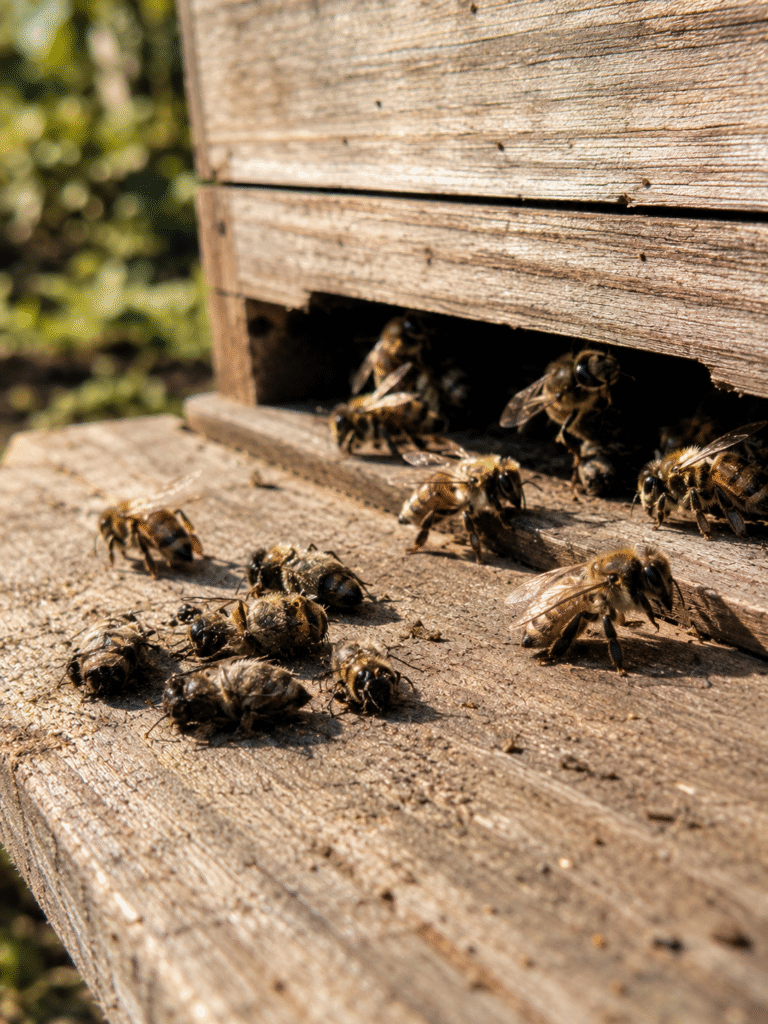
If you want a low-effort early warning system, the entrance is a good place to start. A sudden spike in dead bees being carried out — more than the usual trickle — is worth paying attention to. It can mean a rough weather stretch killed off older foragers, which is normal and not alarming on its own. But a persistent, heavy pile of corpses, especially paired with bees crawling weakly near the entrance or trembling, is a different signal entirely, and it’s often one of the first visible hints of pesticide exposure or a serious disease event before it shows up anywhere else.
I’ve started treating undertaker activity the way some beekeepers treat mite counts — not as the whole picture, but as one more data point worth a glance every time I’m at the apiary. It costs nothing to watch for thirty seconds before you even open the hive.
Takeaway: Next time you’re at your hives, spend a minute watching the landing board instead of going straight for the lid. The undertakers working that entrance are quietly telling you more about colony health than most people realize — and it’s one of the easiest signals in beekeeping to read, once you know what you’re looking at.
FAQ
Do bees bury their dead? No. Rather than burying corpses, undertaker bees carry them out of the hive and drop them some distance away, often tens of meters or more from the entrance.
How do bees know when another bee has died? They detect a drop in specific chemical compounds on the body’s outer surface that fade as the corpse cools, rather than relying on sight or smell of decay.
What happens to dead bees in a hive? Specialized worker bees called undertakers locate and remove them, typically within about 30 minutes of death, to reduce disease risk inside the colony.
Do all bees become undertakers? No. It’s a temporary task taken on by a small number of middle-aged workers, and most bees in a colony will never perform it during their lifetime.
What is hygienic behavior in bees? It’s the broader trait of detecting and removing dead or diseased brood from capped cells, closely related to but distinct from adult corpse removal.