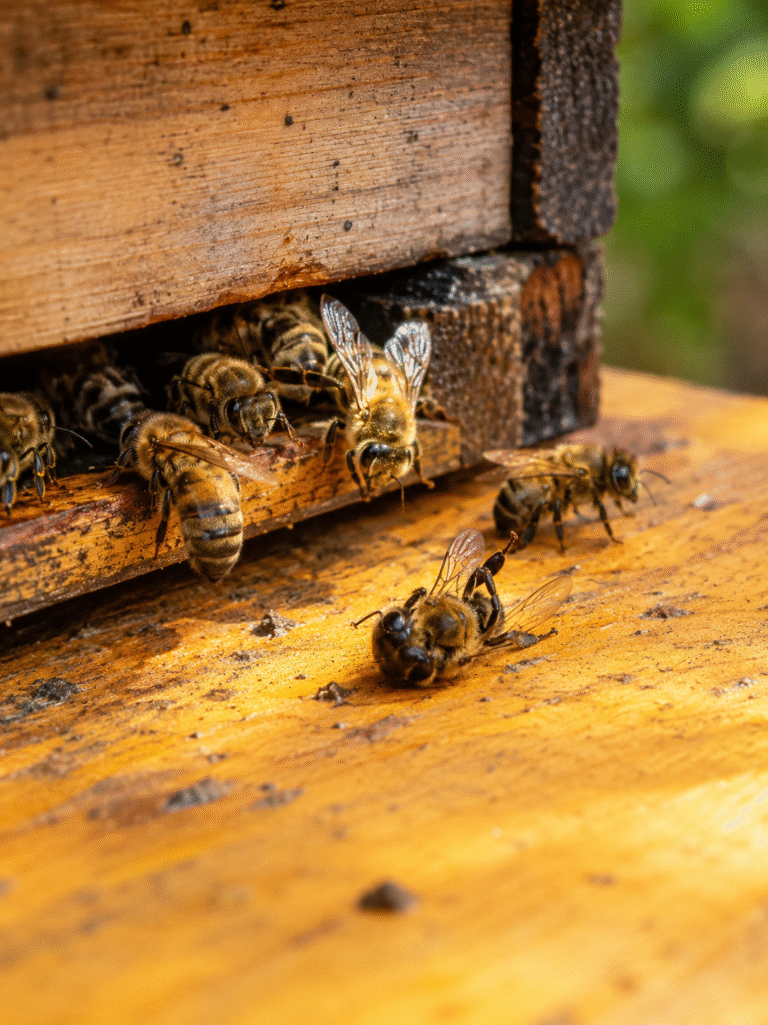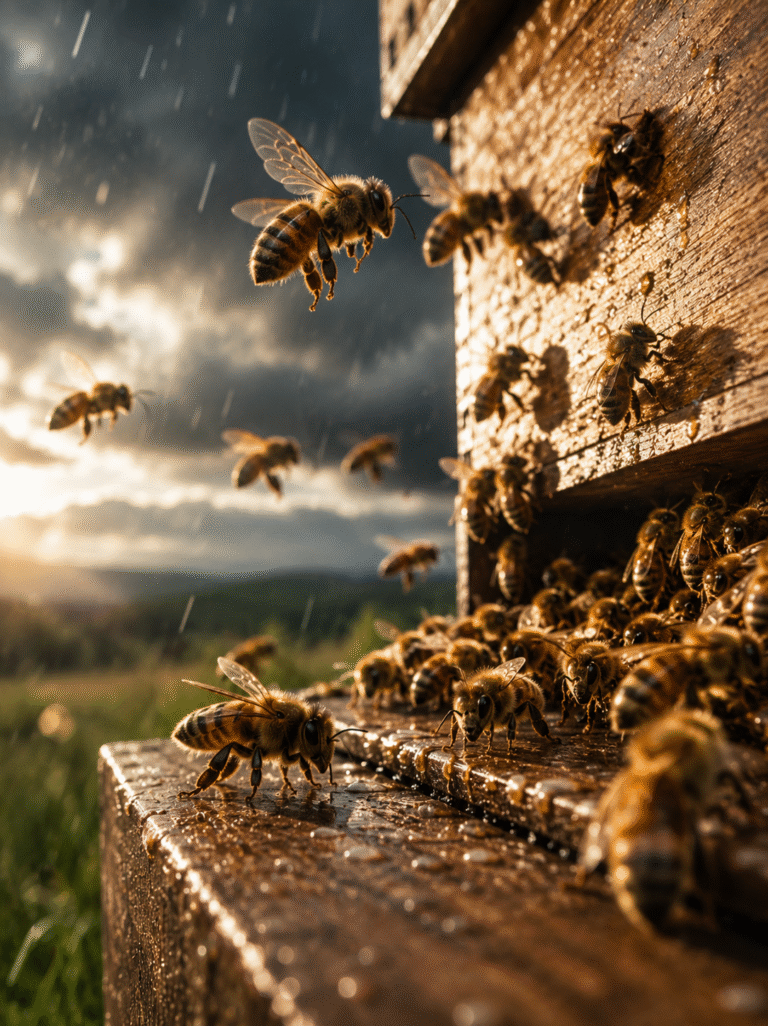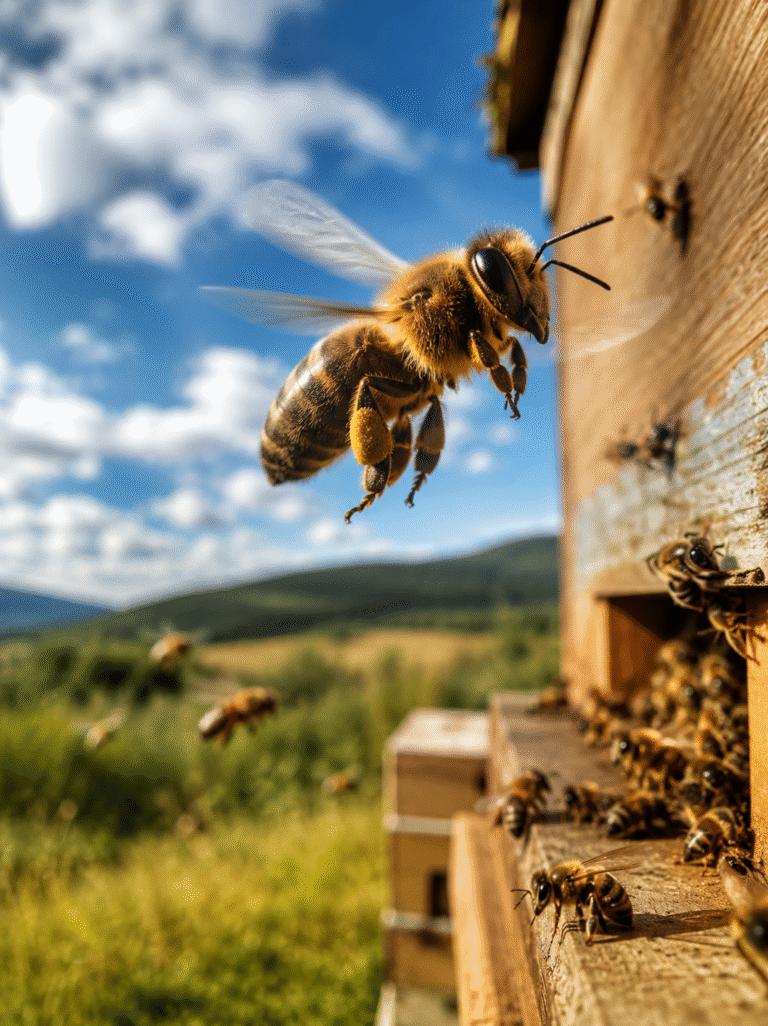
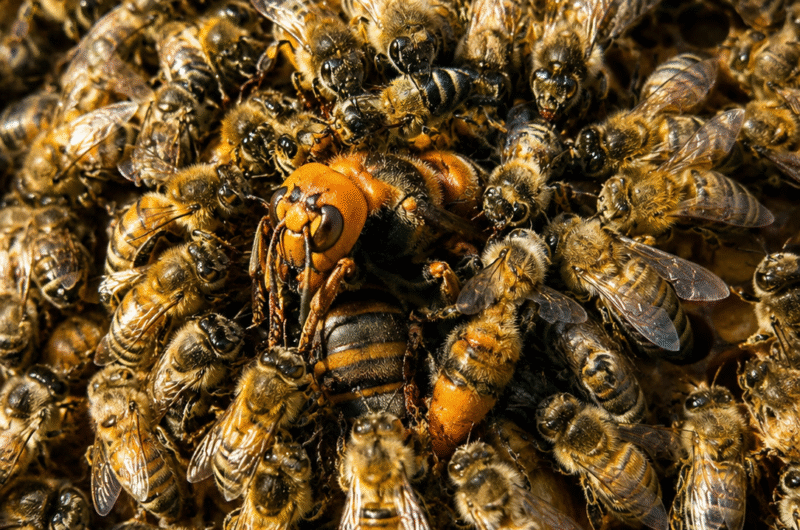

Bees can’t sting through a hornet’s armor — so they swarm it and raise the temperature to 47°C instead. Here’s how the ‘hot bee ball’ works.
How Bees Kill Hornets by Cooking Them Alive
I’ve pulled a lot of strange things out of a hive over the years — mummified brood, a mouse nest tucked behind a frame, once an entire wasp colony that had somehow moved in uninvited. None of it prepared me for the first time I watched footage of a hornet disappearing into a solid, writhing ball of honeybees. It wasn’t a fight. There was no visible struggle after the first few seconds. The hornet just went still inside a mass of bees that looked, from the outside, like nothing more than a clump on a branch.
What was actually happening inside that ball is one of the strangest and most effective defense mechanisms in the insect world — and it has nothing to do with stinging.
The Problem — Why Stingers Don’t Work on Hornets
A honeybee’s sting is built for soft-bodied intruders: mammals, other bees, the occasional careless beekeeper. Against a giant hornet, it’s close to useless. The hornet’s exoskeleton is thick enough that most stings simply can’t get through, and even when one does land, hornets can usually pull the stinger free and keep fighting. A single hornet raiding a weak colony can kill dozens of bees in an afternoon by decapitating them at the entrance, one after another, largely unopposed.
For a species that evolved alongside these hornets, stinging your way out of that problem isn’t an option. So a different defense evolved instead — one that trades venom for heat.
The Solution — What a “Hot Defensive Bee Ball” Actually Is
The behavior is called a hot defensive bee ball, and it’s exactly what it sounds like: a tightly packed sphere of worker bees that surrounds an intruding hornet and raises the internal temperature past what the hornet’s body can survive. It’s most extensively documented in the Japanese honeybee, Apis cerana japonica, defending against the giant hornet Vespa mandarinia — the same hornet species that made headlines in North America under the “murder hornet” label a few years back.
Step 1 — Detecting the Threat
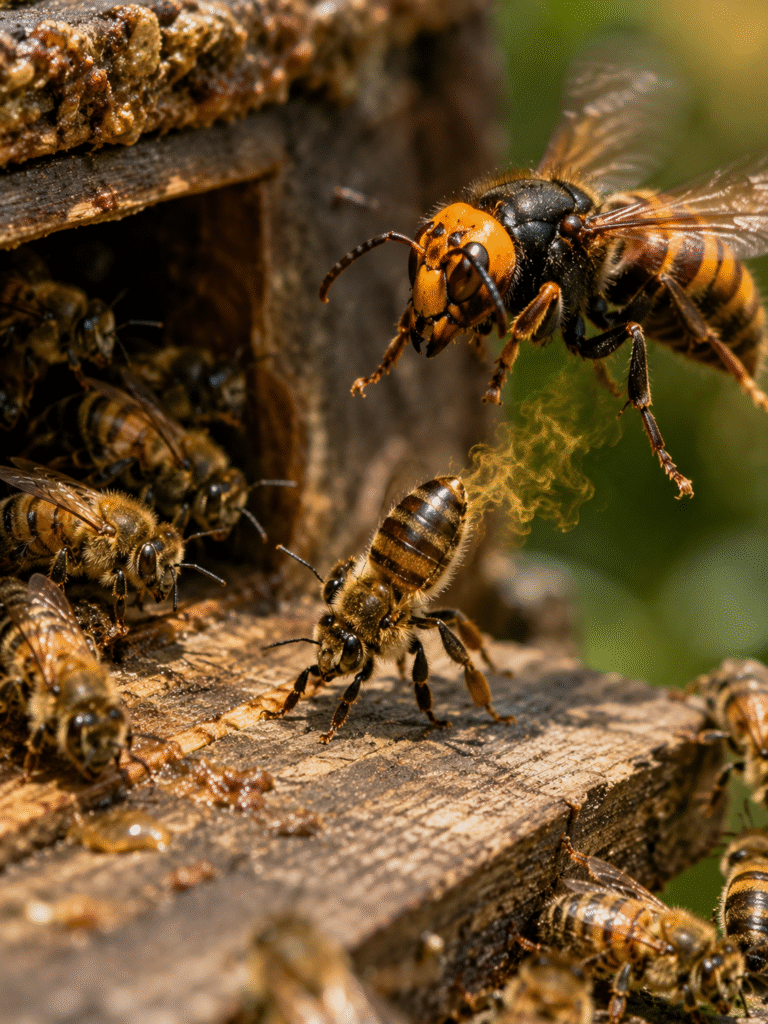
A scout hornet marks a target colony with a scent trail before returning with reinforcements, or in some cases attacks directly. Guard bees near the entrance pick up on the intrusion almost immediately — hornets are large, fast, and their movement pattern near the hive entrance is distinct from anything a bee would mistake for normal traffic. The first bees to notice often release an alarm pheromone to rally nearby defenders — the same banana-scented signal bees use whenever they need to recruit backup fast, whether the threat is a hornet or something far more mundane.
Step 2 — Hundreds of Bees Swarm as One
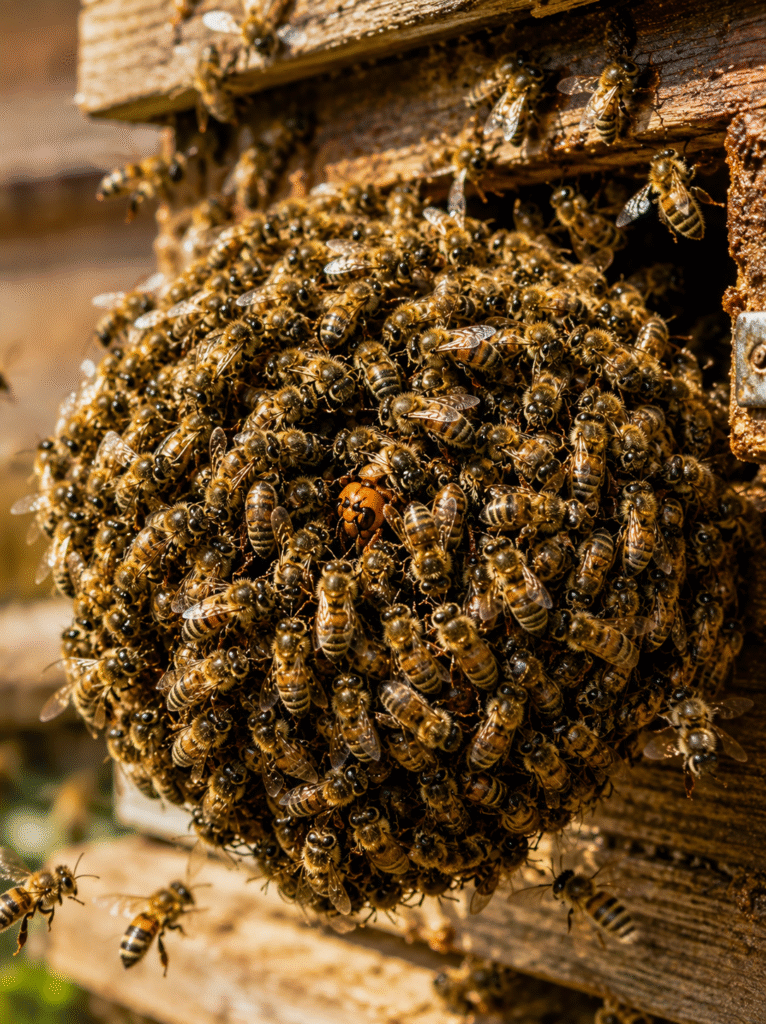
Once the alarm spreads, workers don’t retreat — they converge. Researchers studying the behavior have documented more than 500 bees piling onto a single hornet within moments, forming a ball with the hornet trapped dead center. There’s no visible coordination from any single “leader” bee; it’s a collective response built entirely on local signals passed bee to bee.
Step 3 — Vibrating to 46–47°C
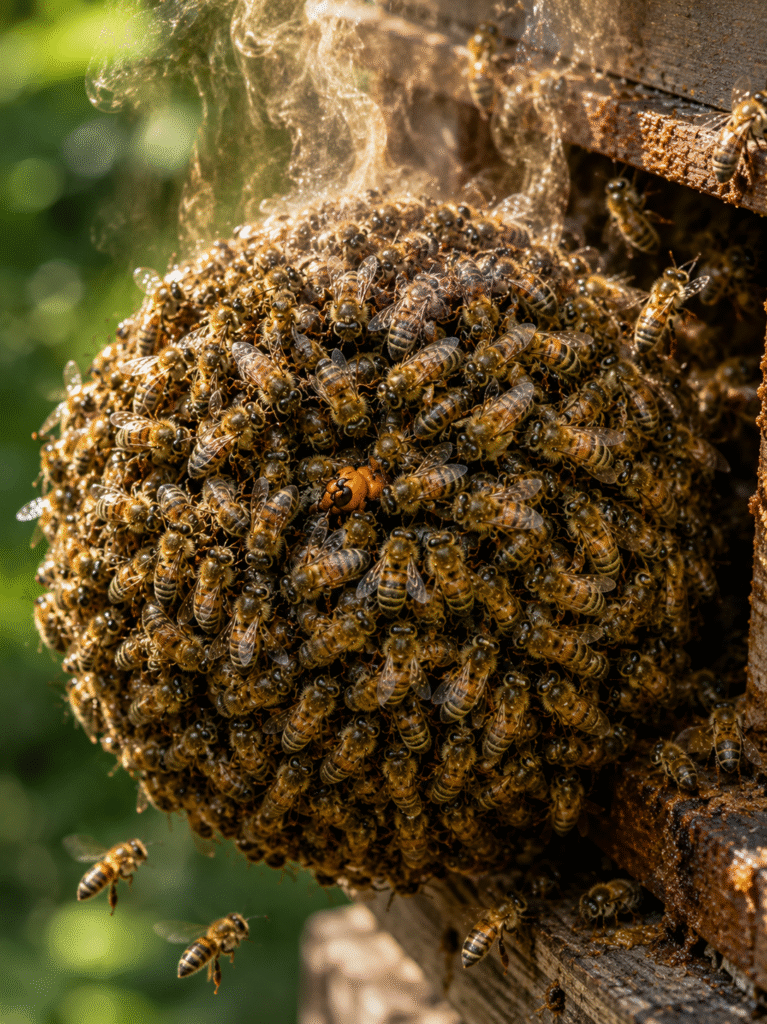
This is the part that still gets me every time I read about it: the bees inside the ball vibrate their flight muscles, the same muscles that power flight, but without actually flying. That vibration generates heat, and with hundreds of bees producing it simultaneously in a tightly packed cluster, the core temperature of the ball climbs to somewhere between 46°C and 47°C (115–117°F). Japanese honeybees can tolerate slightly higher temperatures than the hornet can, and that narrow gap is the entire mechanism. It’s not a large margin — but it’s enough.
Step 4 — Holding the Line for 30–60 Minutes
The ball doesn’t dissolve the moment the hornet stops moving. Bees maintain the formation for roughly 20 minutes at peak temperature, and the full process — from first contact to a dead hornet — typically runs 30 to 60 minutes. Some bees on the outer layer of the ball rotate positions with bees closer to the center, which researchers believe helps distribute the thermal load so no single bee overheats.
How Hot Does a Hot Defensive Bee Ball Get?
A hot defensive bee ball reaches an internal temperature of roughly 46–47°C (115–117°F) — hot enough to kill a hornet within 30 to 60 minutes, but just below the lethal threshold for the honeybees producing the heat.
Why European Honeybees Mostly Can’t Do This
Here’s where it gets genuinely regionally variable, and I want to be upfront that this isn’t a “bees vs. bees” simplification — it’s a real evolutionary gap. European honeybees, Apis mellifera, evolved without sustained exposure to giant hornet species, so they never developed the same finely tuned heat-balling instinct. When European honeybee colonies encounter Asian giant hornets — as has happened in parts of the Pacific Northwest — they’re often defenseless in a way their Japanese counterparts simply aren’t. A single hornet can slaughter a European honeybee colony’s entire population over several weeks if left unchecked.
It’s not that European honeybees never attempt any group defense — there’s documented heat-balling behavior against smaller, regionally familiar hornet species like the European hornet, Vespa crabro. But against an unfamiliar predator like the Asian giant hornet, that instinct either doesn’t activate the same way or isn’t nearly as effective.
| Japanese Honeybee (A. cerana japonica) | European Honeybee (A. mellifera) | |
|---|---|---|
| Sympatric hornet predator | Yes — long co-evolutionary history with Vespa mandarinia | No — historically unexposed to giant hornets |
| Heat-ball effectiveness vs. giant hornet | High — reliably lethal within 30–60 min | Low to none — colonies often destroyed instead |
| Behavior vs. familiar regional hornets (e.g. V. crabro) | N/A (different regional predator) | Some heat-balling documented, lower efficiency than Japanese bees |
| Primary defense against unfamiliar hornets | Heat-balling | Stinging (largely ineffective against thick exoskeletons) |
The Cost to the Bees Themselves
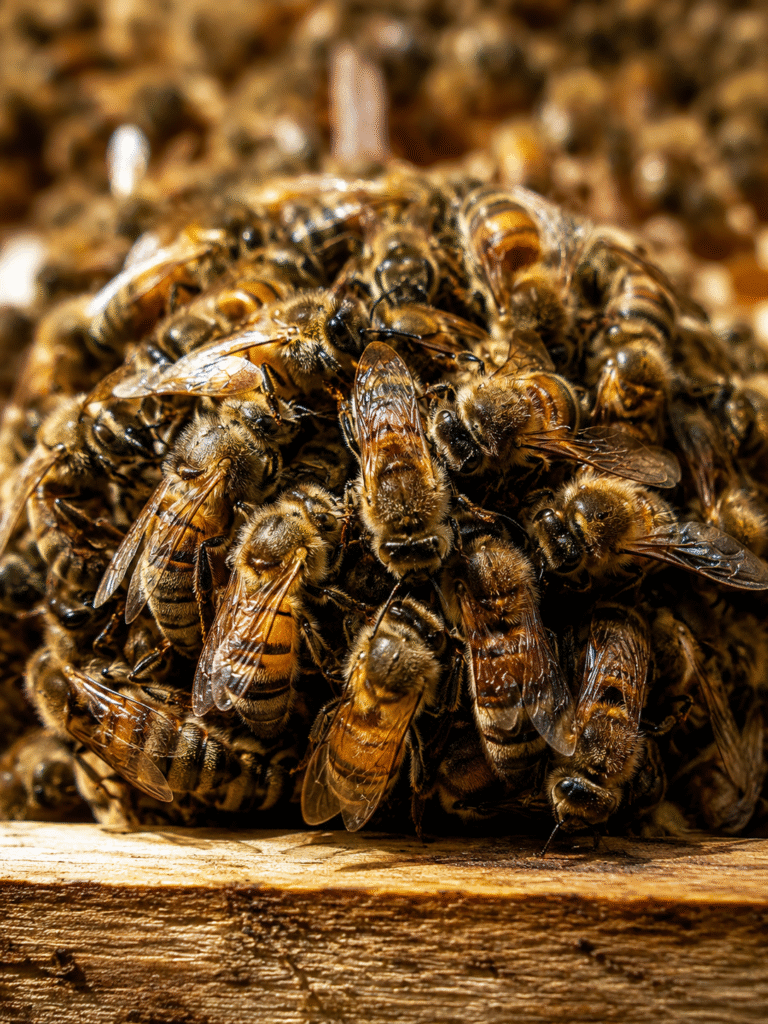
Nothing about this defense is free. Bees that participate in a hot defensive bee ball are pushing their own bodies close to a lethal temperature threshold for a sustained period, and studies tracking individual worker bees afterward have found a measurable reduction in life expectancy for those that took part. The colony survives, but it survives by spending the remaining lifespan of dozens or hundreds of workers all at once. It’s a brutal trade, but against a predator capable of wiping out an entire colony in days, it’s clearly one that’s paid off across evolutionary time.
Field Notes — What This Means If Hornets Reach Your Hives
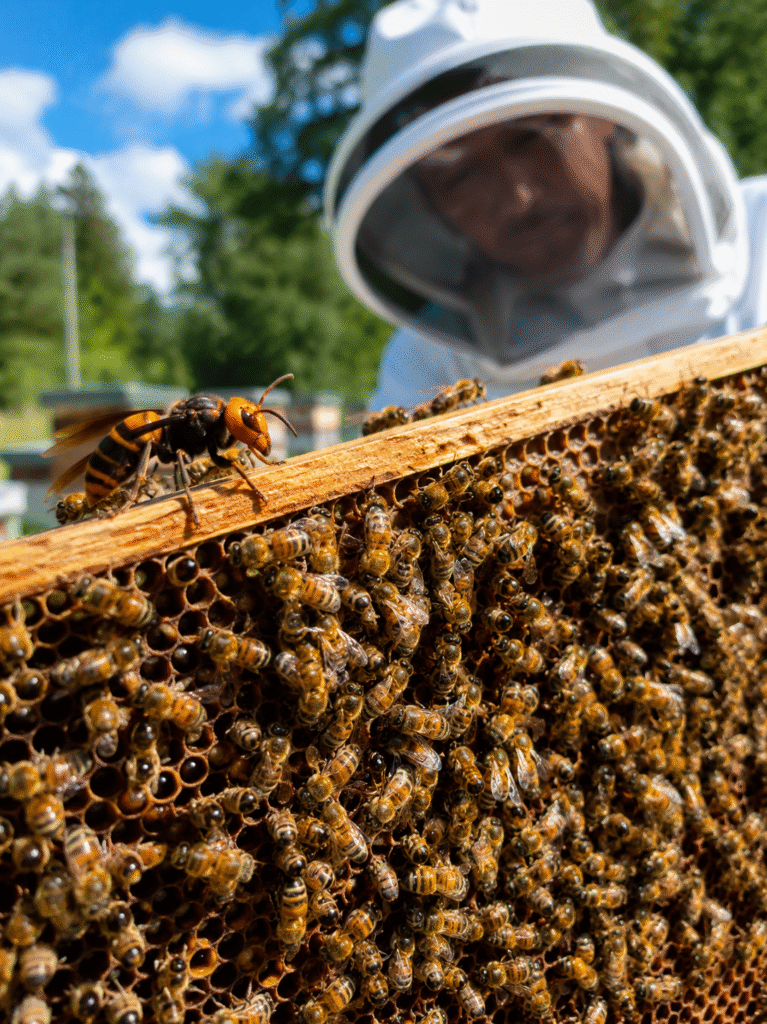
I don’t keep bees in a region where Asian giant hornets are established, and I want to be honest about that rather than pretend otherwise — most beekeepers reading this in North America or Europe are working with European honeybee stock that doesn’t have this defense reliably available. If giant hornet sightings are confirmed anywhere near your apiary, the practical takeaway isn’t “trust the bees to handle it.” It’s early reporting to local agricultural authorities, hornet trapping where recommended, and entrance reducers to limit how many bees a hornet can pick off at once. The heat-ball defense is a remarkable piece of biology, not a safety net you can count on if you’re keeping European stock.
Not every hive threat announces itself with a swarm of hundreds, either — some, like the small hive beetle, do their damage quietly enough that you won’t notice until the colony’s already stressed.
FAQ
How do bees kill hornets without stinging?
They swarm the hornet in a tightly packed cluster and vibrate their flight muscles to generate heat, raising the temperature inside the ball to a level the hornet’s body can’t survive — without ever using their stingers.
What is a hot defensive bee ball?
It’s a defensive behavior, most documented in Japanese honeybees, in which hundreds of workers surround an intruding hornet and collectively raise the internal temperature to around 46–47°C, killing the hornet through heat rather than venom.
Can European honeybees cook hornets too?
Only partially. European honeybees have limited heat-balling ability against regionally familiar hornets, but they generally lack an effective defense against unfamiliar predators like the Asian giant hornet, since they didn’t evolve alongside it.
How hot does a bee ball get?
Roughly 46–47°C (115–117°F) — just above the hornet’s lethal threshold and just below the honeybees’ own.
Why can’t bees just sting a hornet?
A hornet’s exoskeleton is thick enough to block most stings, and hornets can often pull out a stinger before it delivers enough venom to matter.
Do the bees die when they cook a hornet?
Not usually outright, but participating bees experience a measurable drop in remaining lifespan afterward — the defense works, but it isn’t free.