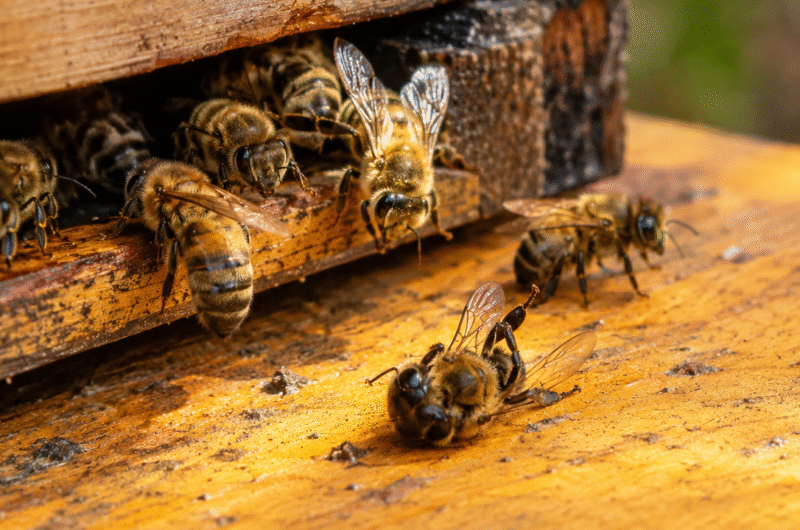

Every autumn, worker bees drag their own brothers out of the hive to die. Here’s the cold logic behind a colony’s most brutal seasonal ritual.
Why Male Bees Get Evicted Every Fall
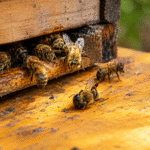
I noticed it before I understood what I was looking at. Early one October, standing at the entrance of a hive that had been humming with activity all summer, I watched three or four bees shoulder something larger out through the entrance, drop it a few inches away, and go straight back inside without a second glance. It wasn’t dead when it landed. It was a drone — a male bee — and it was being evicted from its own home while it was still very much alive.
That moment is easy to misread as cruelty if you don’t know the biology behind it. It isn’t cruelty. It’s arithmetic, and every colony runs the same calculation once the days get short enough.
What a Drone Bee’s Entire Life Actually Looks Like
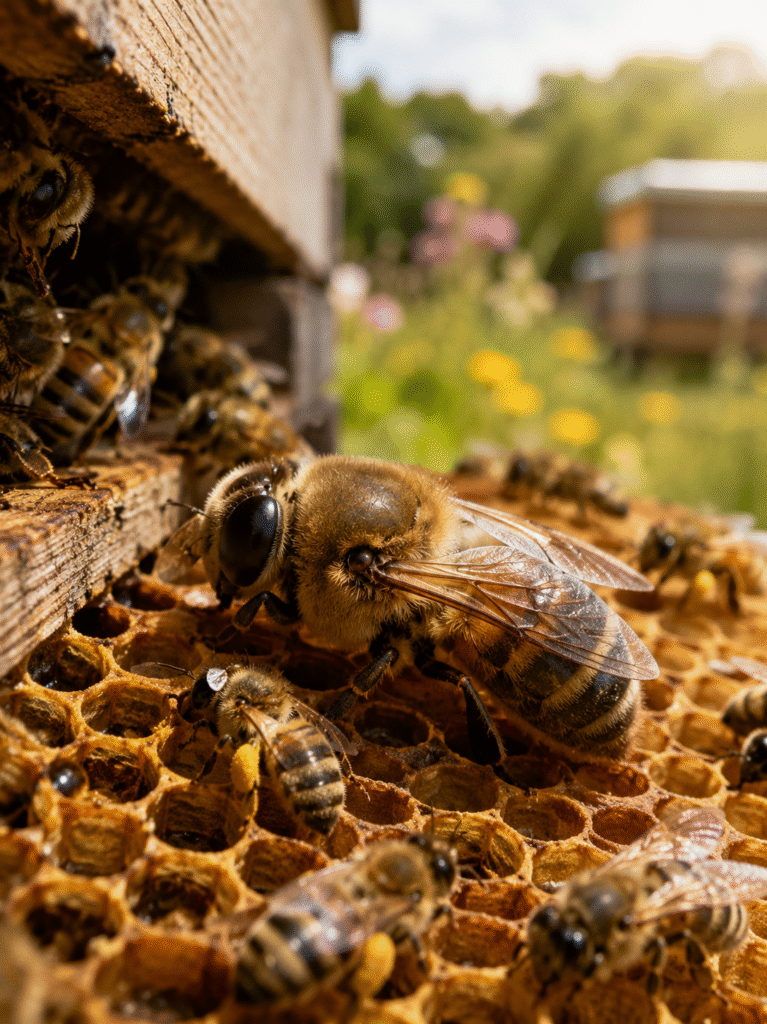
A drone hatches from an unfertilized egg, which already sets him apart from every worker in the hive — he has a mother but no father, and his entire genetic contribution to the colony comes from her alone. He’s larger than a worker, louder in flight, and completely unequipped for hive labor: no stinger, no wax glands, no ability to forage or feed brood. His single biological function is to leave the hive on warm afternoons, gather at what’s called a drone congregation area alongside males from other colonies, and attempt to mate with a queen mid-flight.
Most drones never get that chance. A congregation area might host thousands of males competing for a handful of queens passing through during their entire lives, and pure statistics mean the odds favor almost none of them. The ones that do mate die in the act — a drone’s reproductive anatomy is built for a single use, and it doesn’t survive the encounter. The ones that don’t mate simply keep living inside the colony, fed and tolerated, contributing nothing measurable except the standing possibility that today might be the day.
Why Do Bees Kick Out Drones?
Worker bees evict drones from the hive each autumn because a non-foraging, non-mating male becomes a pure cost to the colony once mating season ends. With no more queens flying and winter food reserves needing to stretch through months of confinement, a colony that keeps feeding idle drones risks starving before spring.
That single fact drives everything else in this article, so it’s worth sitting with for a second. A hive isn’t a family in the sentimental sense. It’s a resource-allocation system that has been refined by evolution to protect the queen and the workforce that keeps her alive, and anything that stops contributing to that goal becomes expendable the moment resources tighten.
The Eviction Itself — What It Looks Like at the Hive Entrance
By late summer, the shift in worker behavior toward drones is already visible if you know what to watch for. Foragers start feeding drones less readily, and by early autumn that reluctance turns into open hostility.
Workers Physically Blocking Re-Entry
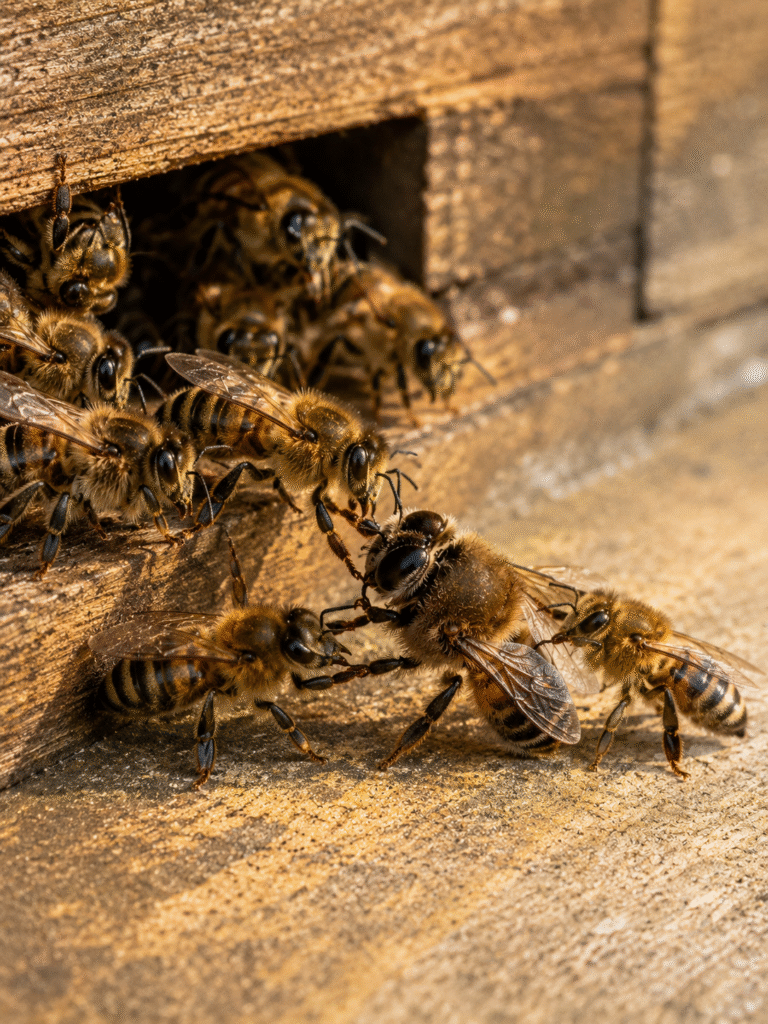
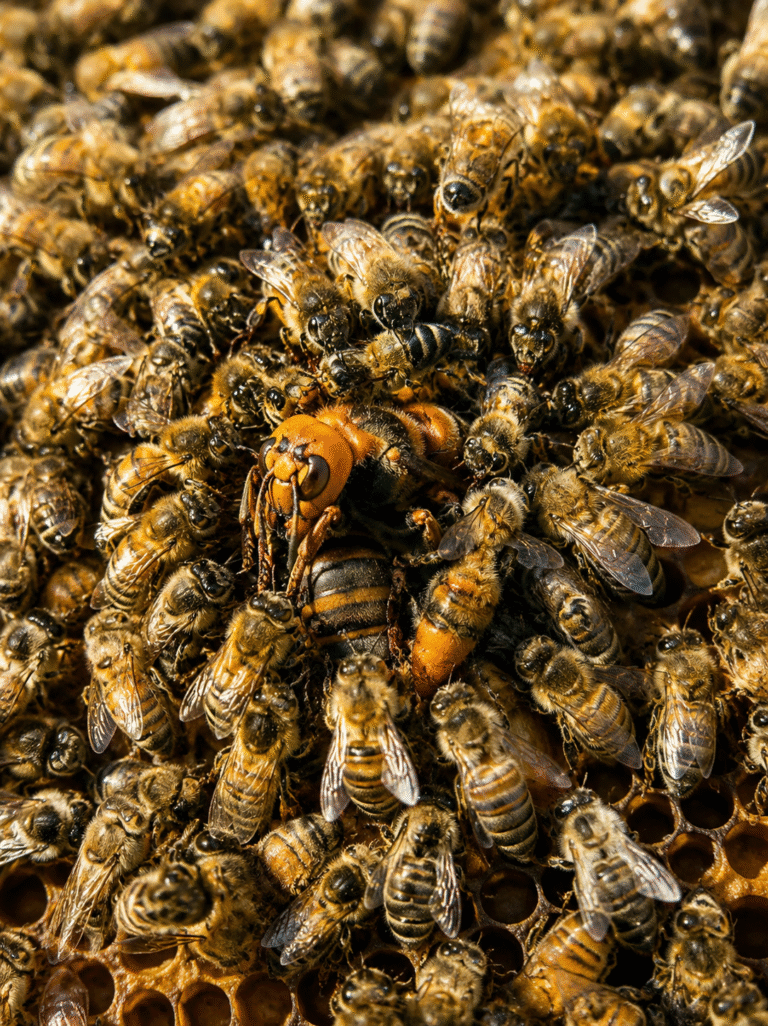
Guard bees, which normally check incoming traffic and wave familiar workers through, start intercepting drones at the entrance. A drone that’s spent the morning outside will return to find himself shouldered, bitten at the base of his wings, and physically dragged away from the hive rather than allowed back in. It’s not subtle. Multiple workers will grip a single drone by his legs or wings and haul him several inches from the entrance before releasing him.
Drones That Try to Fight Their Way Back In
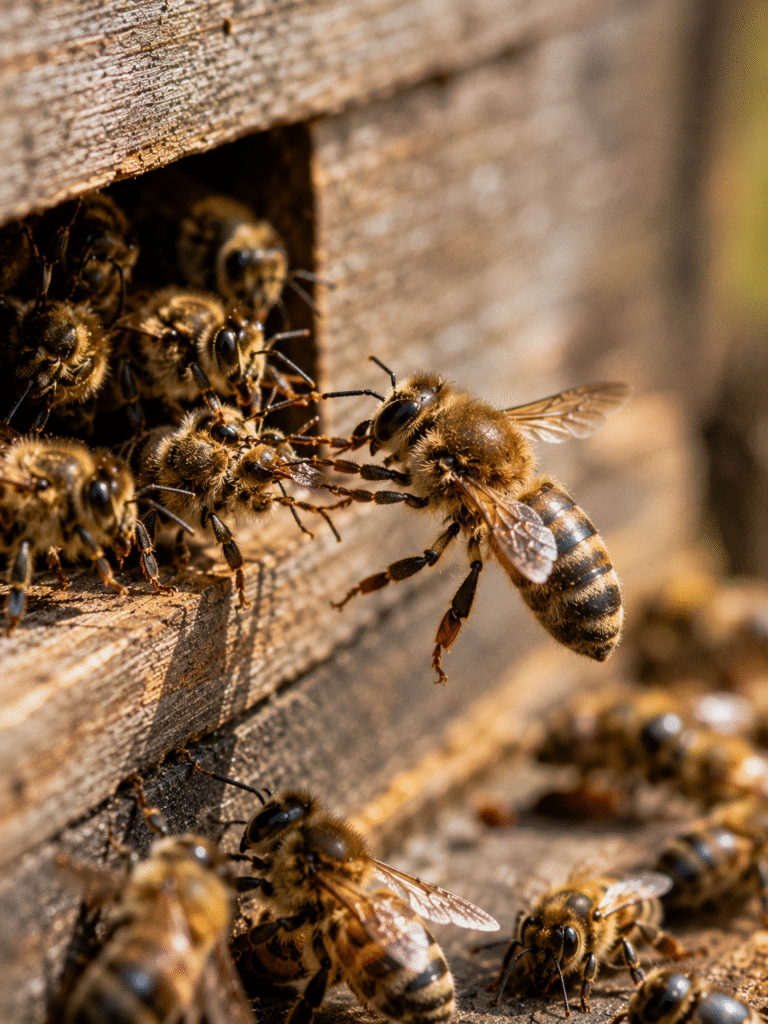
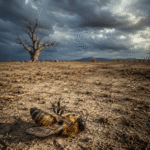
What struck me the first autumn I watched this closely was how persistent some drones were. A rejected drone doesn’t necessarily leave — he’ll often circle back toward the entrance repeatedly, sometimes for the better part of an hour, only to be intercepted and dragged off again each time. Eventually, without flight muscles built for sustained cold exposure and no ability to feed himself, he weakens, and either starves or freezes within a day or two outside the cluster.
The Cold Colony Logic Behind It
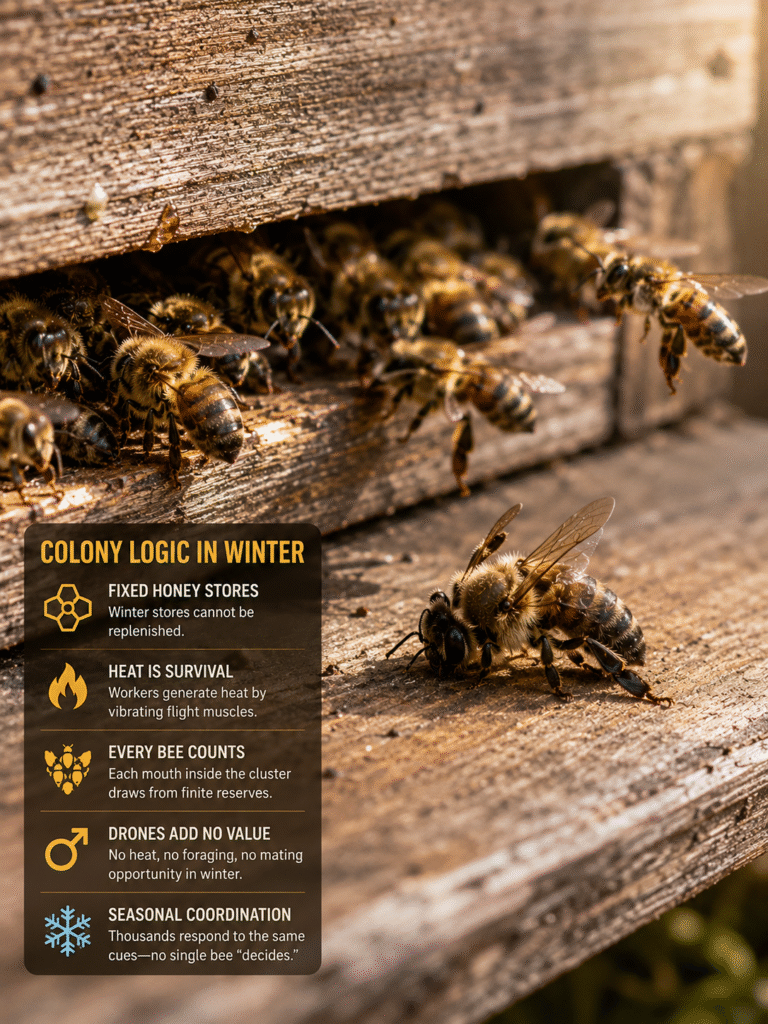
It helps to think about what a colony is actually managing through winter: a fixed store of honey that has to feed every remaining bee until spring flowers return, with zero opportunity to replenish it along the way. Every mouth left inside the winter cluster is a mouth drawing down that finite reserve. Workers are essential to that reserve’s survival — they cluster around the queen, generate heat by vibrating their flight muscles, and rotate positions to keep everyone alive through the cold months. Drones contribute none of that. They can’t produce heat efficiently in a winter cluster the way workers can, and their only conceivable value — mating with a queen — has no outlet once autumn arrives, since virgin queens aren’t flying anymore.
Colony-level decision-making like this doesn’t run through any single bee weighing options. It emerges from thousands of individual workers responding to the same seasonal cues — shortening days, dropping temperatures, reduced nectar flow — in roughly the same way at roughly the same time, the same kind of decentralized coordination that governs how a colony replaces a failing queen without any bee “deciding” on behalf of the group.
Do Any Drones Survive?
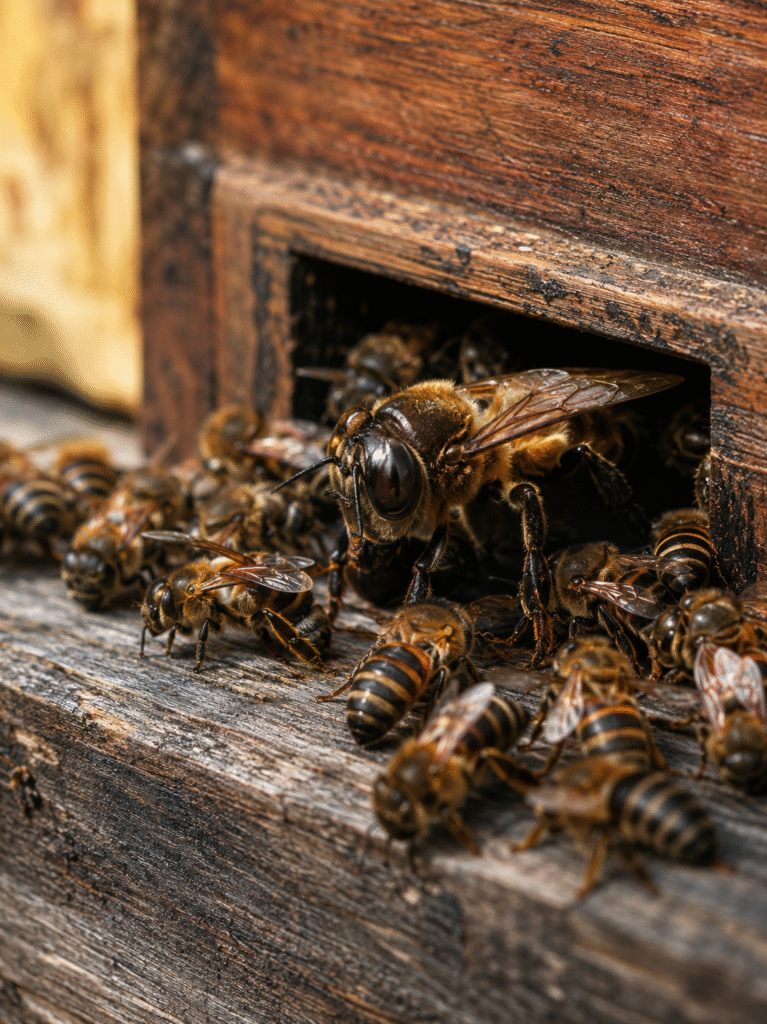
Some do, depending on region and colony strength. A particularly strong colony heading into a mild winter may retain a small number of drones longer than a weaker one, and beekeepers in warmer climates sometimes report drones present well into what would be deep winter further north. But this is genuinely variable rather than a fixed rule — colony health, regional climate, and even individual colony temperament all shift the exact timing, and a colony under stress from disease or a poor summer nectar flow will often evict drones earlier and more aggressively than a thriving one.
Field Notes — Watching It Happen at My Own Hives
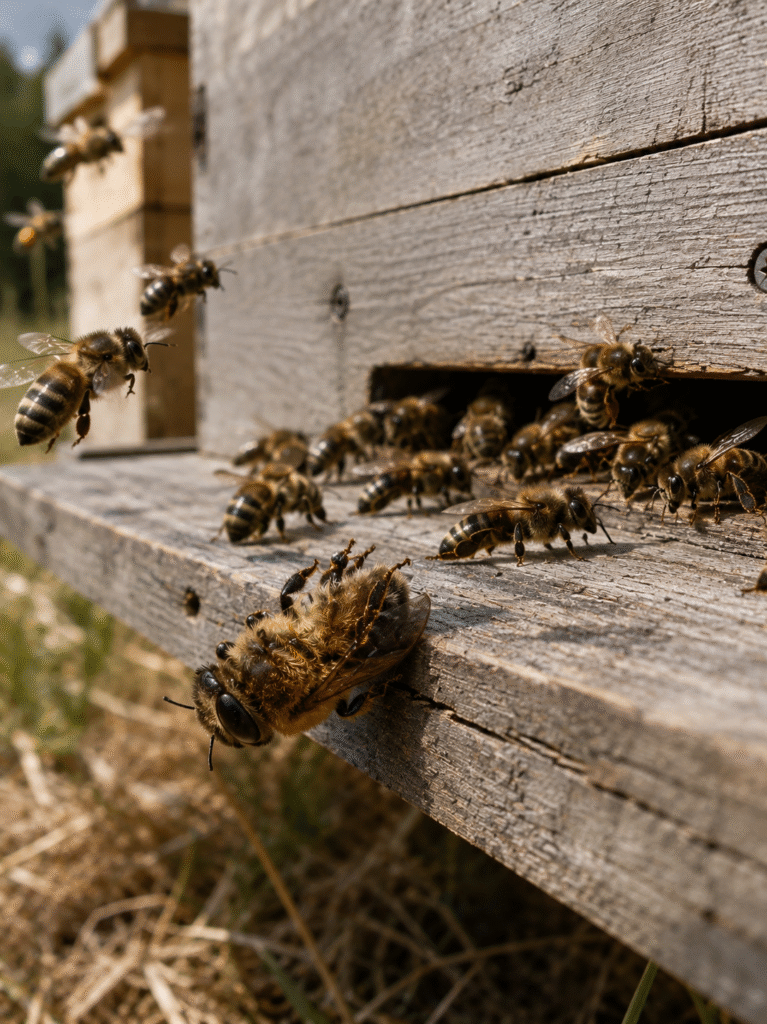
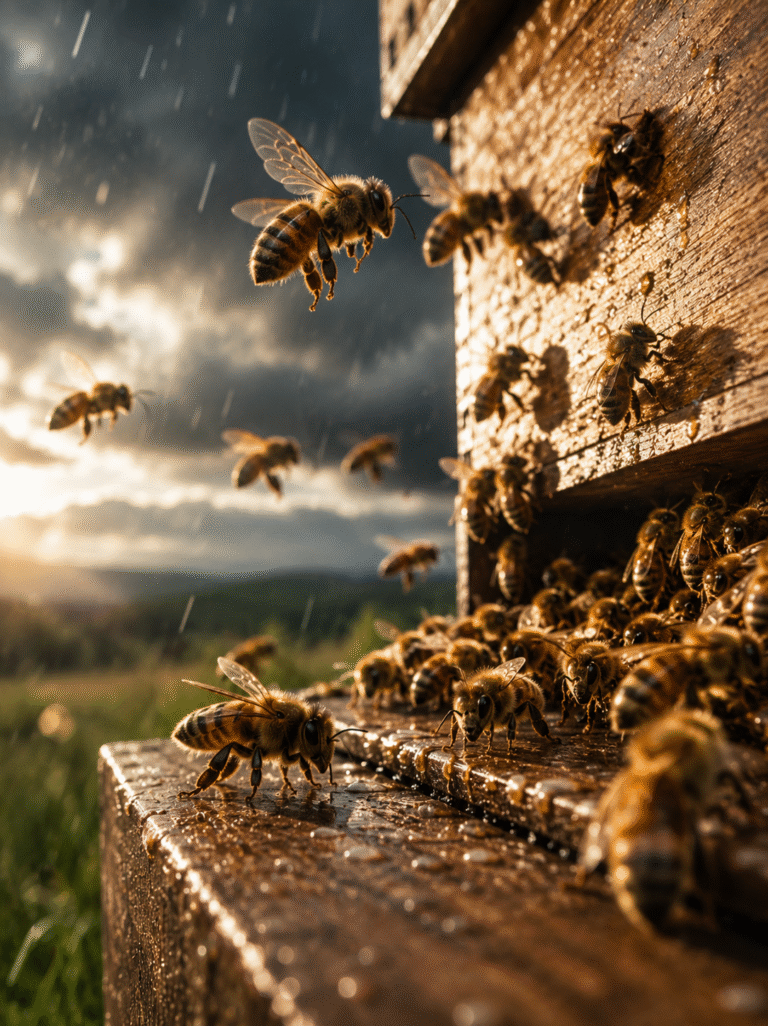
The thing that surprised me most, once I understood what I was watching, was the silence of it. A summer hive is loud — foragers coming and going constantly, a low steady hum from thousands of wings. The autumn drone eviction happens against a backdrop that’s already quieting down for the season, which somehow makes it feel more deliberate than it would in the middle of July’s chaos. I’ve since started treating the sight of drones being evicted as a genuinely useful seasonal marker — it tells me, as reliably as the first cold night, that the colony has fully shifted into winter-prep mode, and it’s worth double-checking stores and reducing entrances before the weather turns further.
FAQ
What happens to male bees in the fall?
Worker bees stop feeding them normally and begin physically driving them out of the hive as autumn progresses, since drones no longer serve any reproductive purpose once queens stop flying and become a drain on dwindling winter food stores.
Do drone bees serve any purpose after mating?
No — a drone’s only biological role is mating with a queen, and once that window closes for the season, he has no remaining function within the colony.
Why do bees kick out drones?
Because feeding a non-contributing male through winter threatens the colony’s fixed food reserves, and with no queens left to mate, drones offer no further value to the hive.
Do drone bees die after mating with the queen?
Yes, but only the small fraction that actually mate — most drones never mate at all before the colony evicts them each autumn.
Can a drone bee survive winter?
Rarely, and mostly in particularly strong colonies or milder climates — without flight muscles built for sustained cold and no ability to feed himself outside the cluster, an evicted drone typically dies within a day or two.
What’s the difference between a drone and a worker bee?
Drones are male, hatch from unfertilized eggs, and exist solely to mate; workers are female, hatch from fertilized eggs, and handle every task that keeps the colony running — foraging, brood care, defense, and winter clustering.