
Bees don’t design hexagons — they start with circles. Here’s the surprising physics behind nature’s most efficient shape.
Why Is Honeycomb Always a Hexagon (Not a Circle)
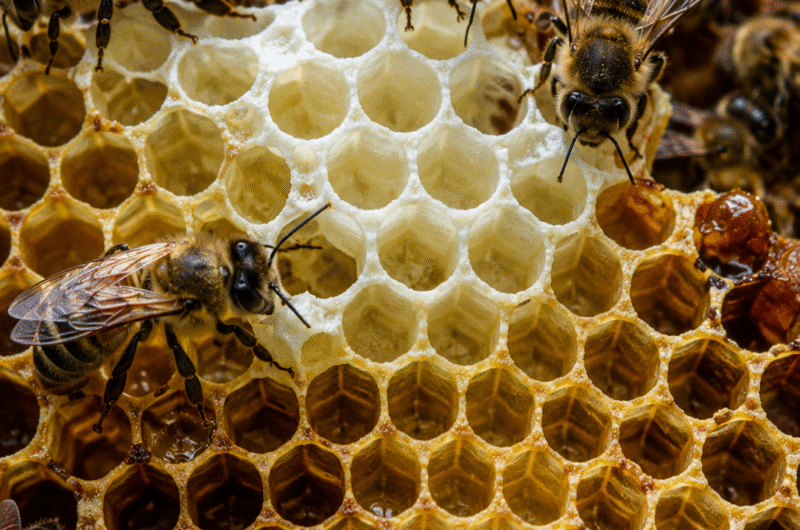
Pull a frame of fresh comb out of a hive on the day bees start building it, and you won’t see a single hexagon. You’ll see rows of soft, rounded cells, almost bubble-like, still warm from the bees packed around them. Come back forty-eight hours later and every one of those cells has snapped into a near-perfect hexagon, walls flat, corners crisp, packed edge to edge without a gap anywhere in the comb. Nobody redrew them. Nothing was measured. And that gap between what I saw on day one and what I saw on day three is where the actual story lives — because bees aren’t hexagon-builders in the way most people assume.
The Surprising Truth: Bees Don’t Start With Hexagons
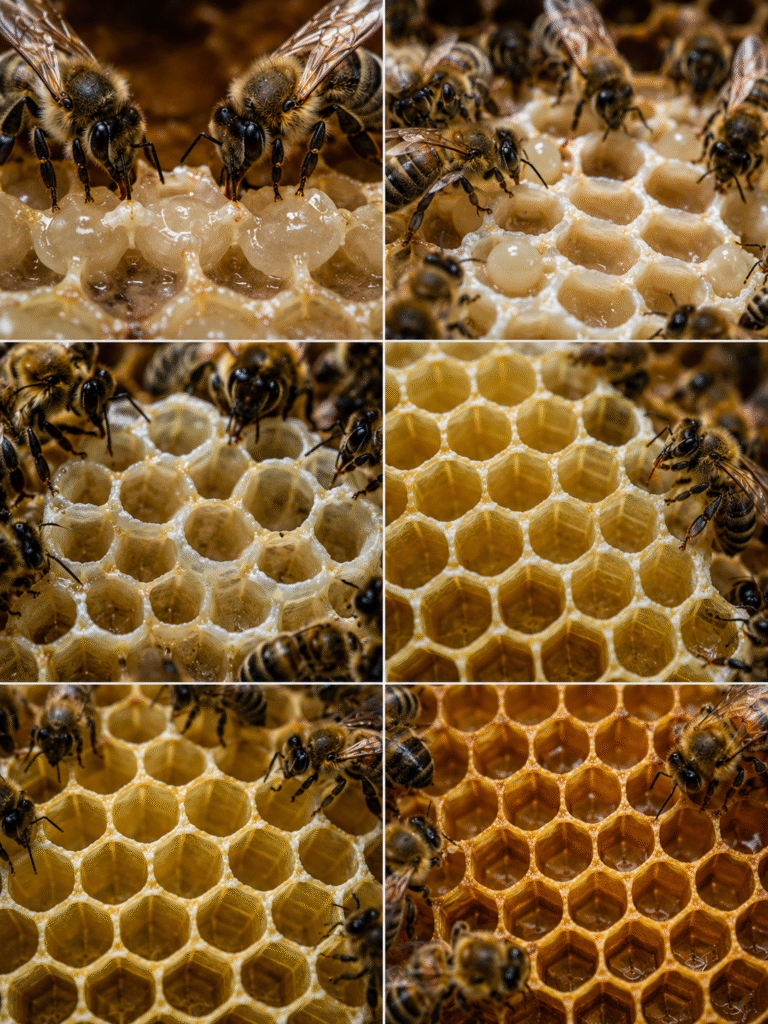
Bees begin building comb as rounded, roughly circular cells, and the wax reshapes itself into hexagons afterward as warm wax flows under mechanical tension — the hexagon isn’t a blueprint the bees follow, it’s what circles packed tightly together and softened by heat naturally become. Individual bees deposit wax and shape cells with their mandibles and body heat, but the crisp geometric precision that shows up a day or two later is largely a physical process, not a construction process.
This matters because it flips the popular framing on its head. The usual story is “bees are brilliant geometric engineers.” The more accurate story is closer to: bees are excellent at generating warm, pliable wax and packing cells close together, and physics does the rest. That’s not a smaller achievement — arguably it’s a more interesting one, because it means the hexagon emerges from a handful of simple rules rather than requiring any bee to “know” geometry at all.
The Math: Why Hexagons Beat Every Other Shape
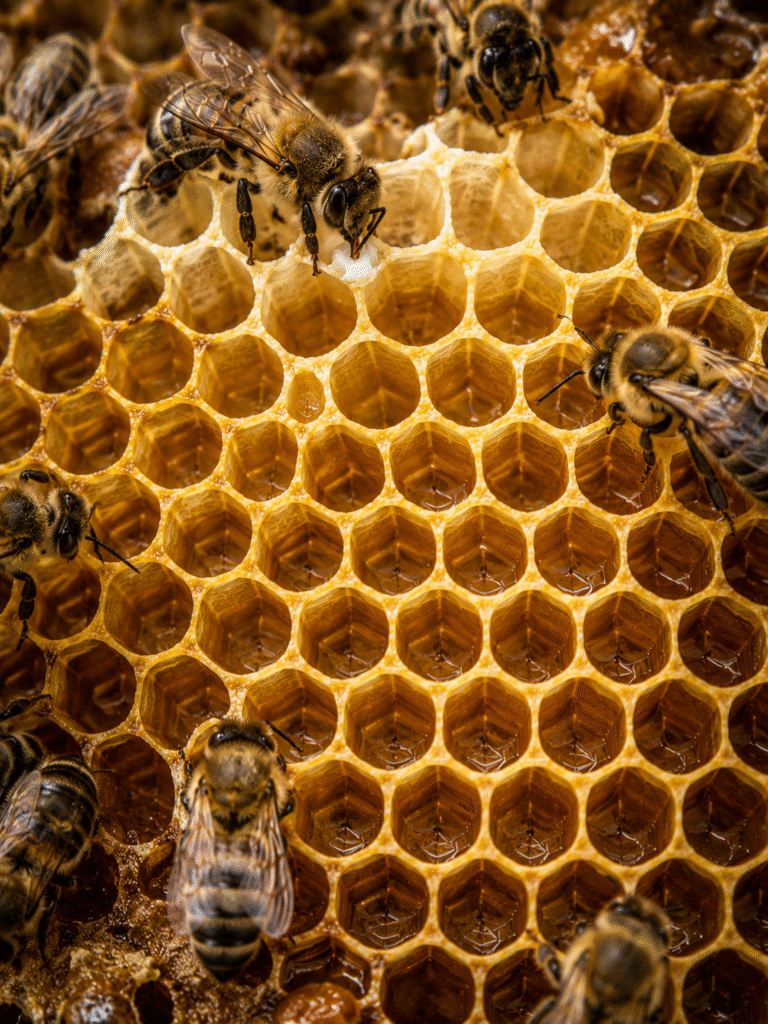
Of the shapes that can tile a flat surface with no gaps — triangles, squares, and hexagons are really the only practical options — the hexagon uses the least total wall length to enclose a given amount of storage space. That’s not a small efficiency gain. For a colony that has to produce every gram of wax from consumed honey, at a cost that beekeeping researchers have long estimated runs into multiple pounds of honey per pound of wax produced, shaving material off millions of cell walls across a hive’s lifetime is a real metabolic advantage, not a cosmetic one.
Circles, for comparison, are actually the most efficient shape for a single cell in isolation — but they leave wasted gaps where they meet their neighbors. Squares and triangles tile perfectly with no gaps, but both require more total wall material than a hexagon to hold the same volume. Hexagons land in the sweet spot: zero wasted space between cells, and the least wax spent on walls to get there. Mathematicians have a name for this — it’s sometimes called the honeycomb conjecture — and it wasn’t formally proven until 1999, more than two thousand years after the pattern was first noted in nature.
Do All Bees Build Hexagonal Comb?
Not universally, and this is a genuinely debated corner of the topic. Honey bees (the genus most beekeepers work with) reliably produce hexagonal comb, and so do several related social wasps that build paper nests using a similar wax-or-pulp tension process. But not every bee species does — many solitary bees, including several native mason and mining bees, build individual, non-hexagonal cells because they aren’t packing thousands of cells edge-to-edge under shared heat and pressure the way a honey bee colony does. The hexagon, in other words, seems to be less a “bee trait” and more an outcome of the specific conditions honey bee colonies create: many cells, tightly packed, softened by shared body heat.
What This Means for Honey Storage and Hive Strength
Beyond the wax savings, the hexagon shape has a second, less-discussed advantage: structural strength. A comb built from hexagonal cells resists deformation from the weight of stored honey far better than one built from circular or irregular cells would, which matters enormously once you consider that a single deep frame of capped honey can weigh several kilograms, all suspended vertically inside the hive. I’ve pulled plenty of frames that were bulging slightly under a heavy summer flow, and it’s genuinely reassuring how rarely that geometry lets go, even under real load.
There’s a practical takeaway here for anyone who works with the wax bees use to build comb after the fact — whether that’s rendering old comb for candles or wraps, it helps to understand that the material you’re working with was never arbitrary to begin with. The same properties that make hexagonal comb strong and efficient inside the hive are part of why beeswax behaves the way it does once it’s melted down and repurposed. If you’ve ever wondered exactly what beeswax is made of before you start working with it at home, this hexagon-forming process is effectively where that raw material starts its life.
FAQ
Why do bees make hexagons and not other shapes? Bees don’t deliberately choose the hexagon — they build rounded cells that get reshaped into hexagons as warm wax flows under tension while packed tightly with neighboring cells, and the hexagon happens to be the most material-efficient shape that tiles without gaps.
Is honeycomb the strongest shape? Among shapes that tile a flat surface without gaps, the hexagon offers the best combination of strength and material efficiency, which is why honeycomb structures are also used in engineering applications like aircraft panels and packaging.
Do bees plan the hexagon shape? No — individual bees build rounded cells, and the hexagon emerges afterward from the physics of warm wax under mechanical tension, not from any deliberate geometric planning by the bees themselves.
What shape do bees start building? Freshly built comb cells start out rounded and roughly circular before reshaping into hexagons over the following day or two as the wax warms and settles.
Why is hexagon the most efficient shape in nature? Among the shapes that can tile a surface with zero gaps, the hexagon requires the least total wall material to enclose a given area — a mathematical property known as the honeycomb conjecture, formally proven in 1999.
Do all bee species build hexagonal comb? No. Honey bees reliably do, but many solitary bees, like mason and mining bees, build individual, non-hexagonal cells since they aren’t packing large numbers of cells edge-to-edge the way a honey bee colony does.