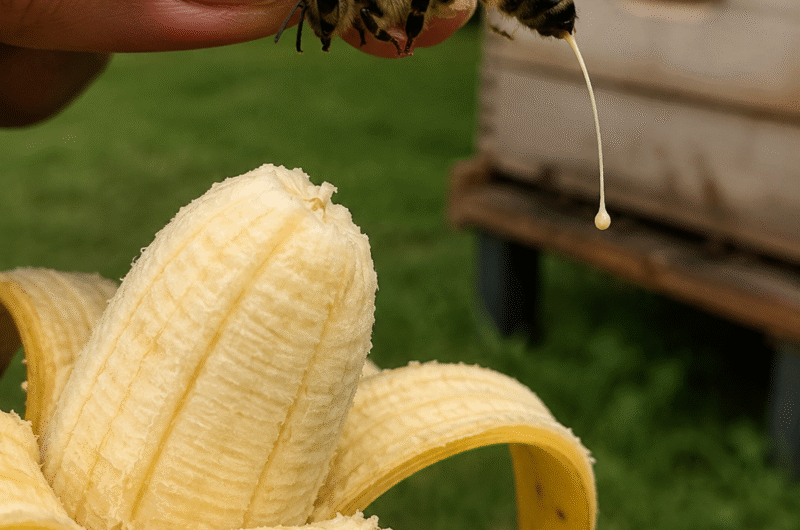

A bee sting doesn’t just hurt — it releases a banana-scented chemical signal that tells nearby bees exactly where to attack next.
Why Bees Attack in Groups: The Banana-Scented Alarm Signal
I got stung twice in the same spot on my left forearm two summers ago, four minutes apart, by two different bees, and it took me longer than I’d like to admit to realize that wasn’t bad luck. It was chemistry. The first sting hadn’t just hurt — it had marked me. And somewhere in that colony, a second guard bee had followed the scent trail straight to the exact same patch of skin.
That’s the part most people never learn about bee stings: the injury is only half the event. The other half is a chemical broadcast, and it smells, very specifically, like bananas.
The Sting That Keeps Talking After It’s Gone
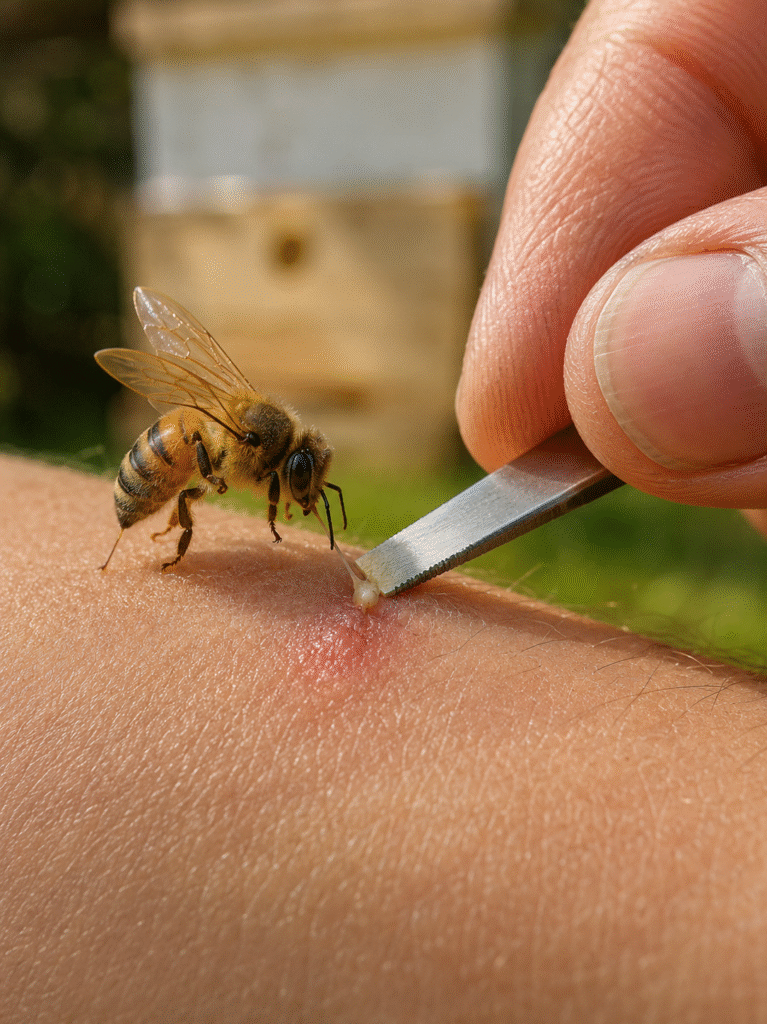
When a honey bee stings, her barbed stinger tears free and stays lodged in the target — which is why she dies shortly after, and why you should scrape a stinger out sideways rather than pinch it. But that abandoned stinger isn’t just sitting there. It keeps pumping venom for several minutes, and alongside the venom, it releases a separate chemical signal from a structure near the sting apparatus called the Koschevnikov gland.
That signal is the alarm pheromone, and its job isn’t to hurt you. It’s to recruit backup.
I didn’t think much about this the first few seasons I kept bees. A sting was a sting — an occupational hazard, mildly infuriating, quickly forgotten. It wasn’t until I read through some of the chemical ecology research on this that the pattern from that summer afternoon clicked into place. The reason stings tend to cluster in the same spot during a real defensive event isn’t coincidence or clumsy aim. It’s targeting.
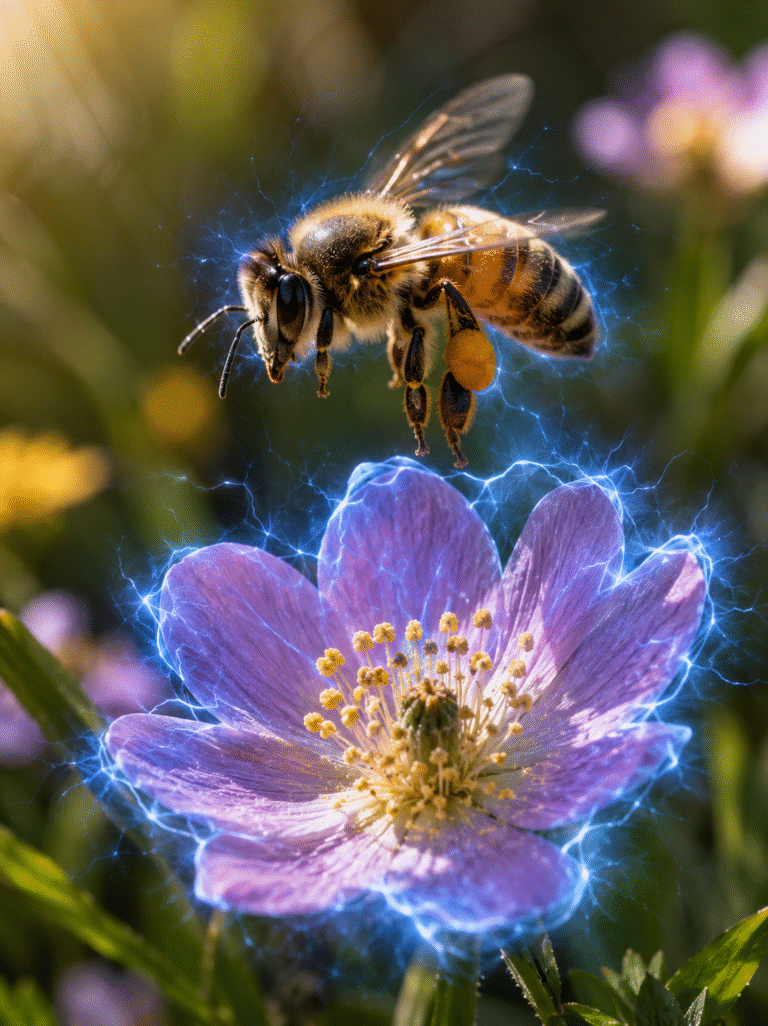
Meet Isopentyl Acetate — the Alarm Compound That Smells Like Bananas
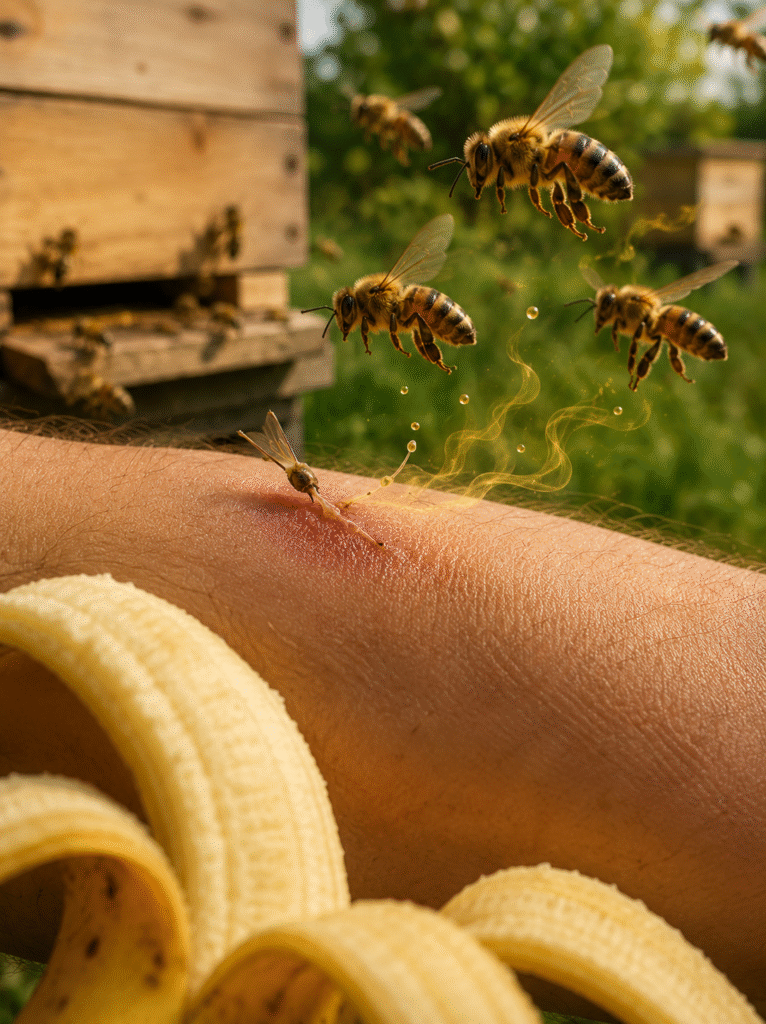
The primary component of the alarm pheromone blend is a compound called isopentyl acetate (also written isoamyl acetate), and it genuinely does smell like ripe bananas — close enough that entomologists have used the comparison in published research for decades, not as a folksy analogy but as a literal chemical description.
Here’s the direct answer, if that’s what brought you here:
A bee sting releases a chemical alarm signal — primarily isopentyl acetate — that smells like bananas and marks the sting site so nearby guard bees know exactly where to direct follow-up stings. The compound is released from a gland near the stinger and lingers at the site for several minutes, which is why multiple stings during a real defensive event tend to land close together rather than scattering randomly.
What struck me most, reading into this, is how deliberate the mechanism is. This isn’t bees losing their tempers in a chaotic swarm. It’s closer to a targeting beacon — a chemical equivalent of someone shouting “here, exactly here” while everyone else converges on the coordinates.
It’s Not Just One Chemical — the Full Alarm Blend
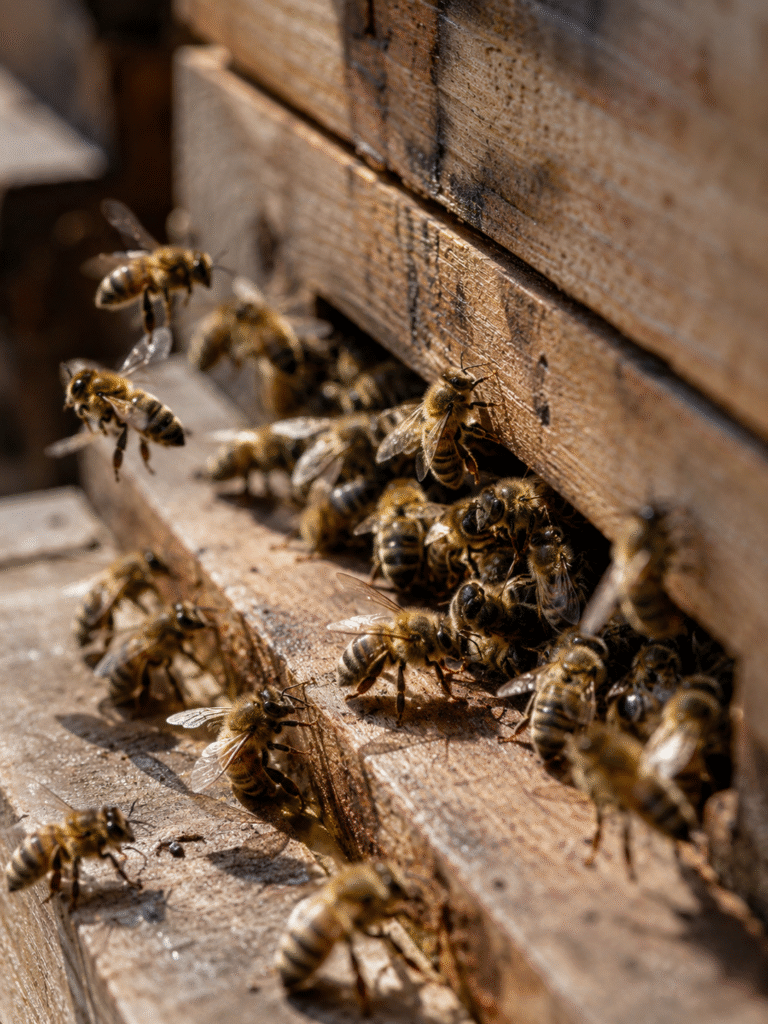
Isopentyl acetate gets most of the attention because it’s the most abundant compound and the easiest to describe, but researchers have identified well over a dozen compounds in the full alarm pheromone blend, and they don’t all do the same job. Some, like benzyl acetate, trigger flight behavior in nearby bees — essentially an “get airborne, something’s wrong” signal — without necessarily provoking stinging. Others, like 1-octanol and hexyl acetate, are more about recruitment: pulling nearby workers toward the disturbance without directly triggering aggression. Octyl acetate appears to be the most effective at helping flying bees actually locate a moving target, functioning almost like a chemical compass rather than a simple alert.
It’s a layered communication system, not a single switch. A colony under real threat isn’t reacting to one signal — it’s processing a chemical conversation happening in real time near the entrance.
What This Means If You’re Ever Stung Near a Hive
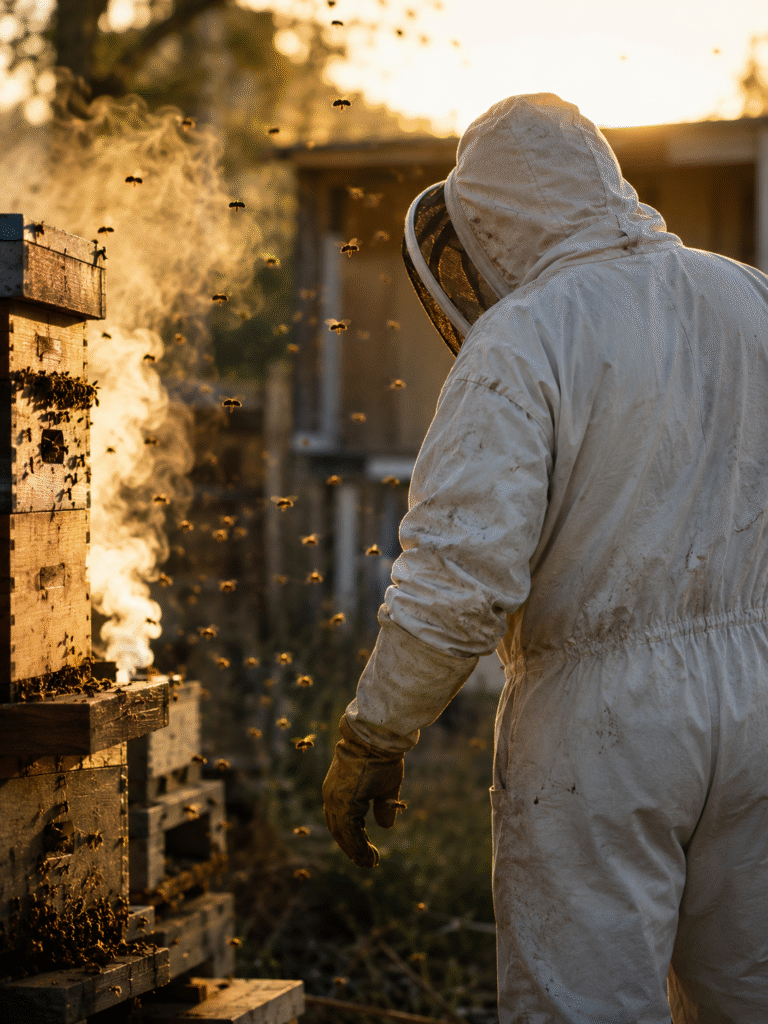
This is the part that matters practically, and it’s the reason I now handle a sting completely differently than I did in my first season.
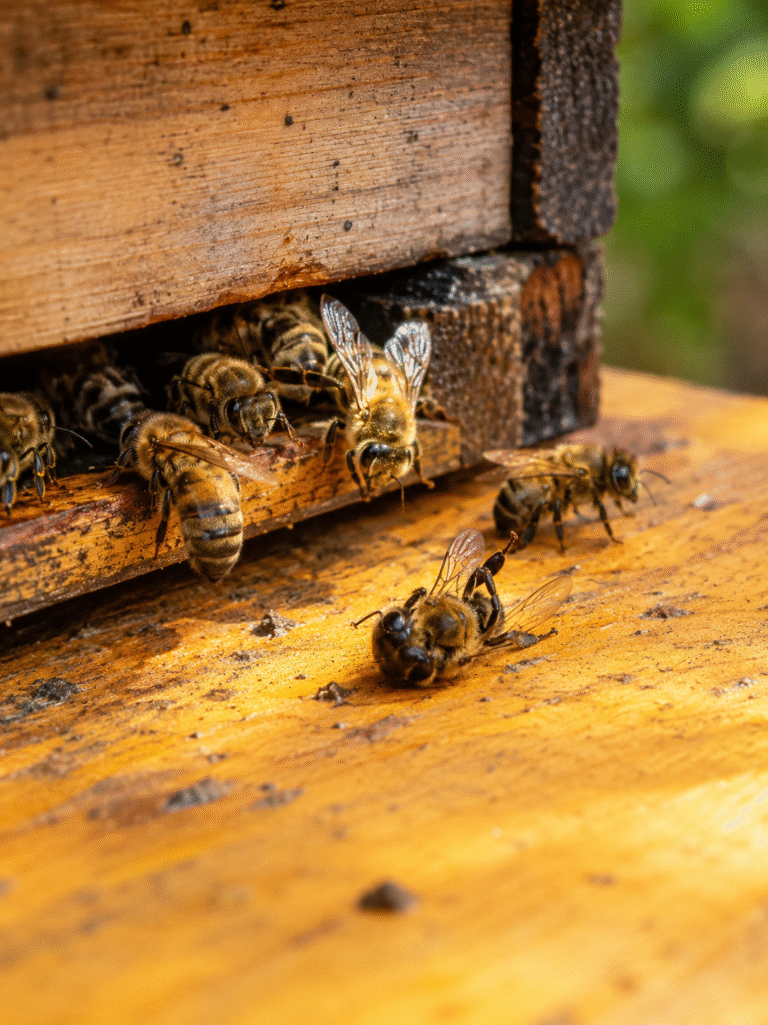
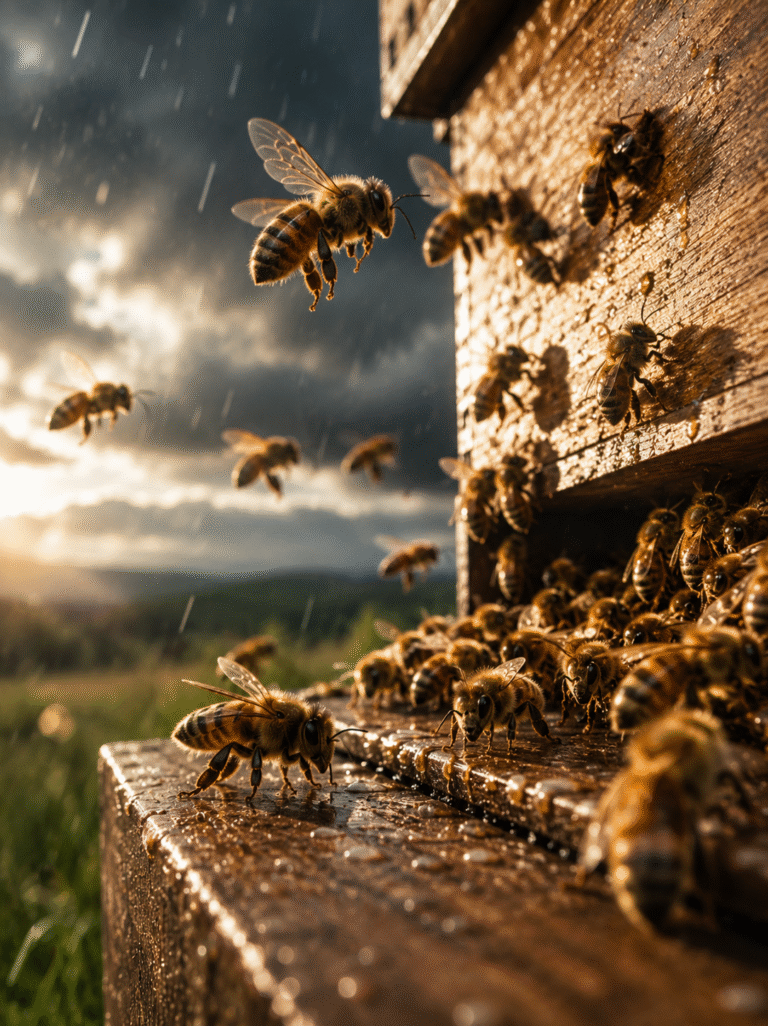
If you get stung near an active hive, the instinct is to swat, panic, or stand there assessing the damage. All three are mistakes. The alarm pheromone is already dispersing, and standing still near the source gives more bees time to home in on it. The single best move is to walk away calmly — not sprint, which can trigger more chasing behavior, but move steadily out of the immediate area, ideally indoors or behind a barrier like a car door or a screen.
There’s also a genuinely useful, slightly counterintuitive takeaway here: skip the banana-scented sunscreen or hair product on inspection days. I learned this the unglamorous way after a lotion mix-up before an afternoon inspection turned an otherwise calm colony noticeably twitchier at the entrance than usual. Isopentyl acetate is a specific enough compound that a strong banana scent can register as a false alarm signal to a defensive colony. It’s a small thing, but it’s the kind of detail that separates “I read that bees can smell fear” folklore from something you can actually act on.
How Experienced Beekeepers Work With This, Not Against It
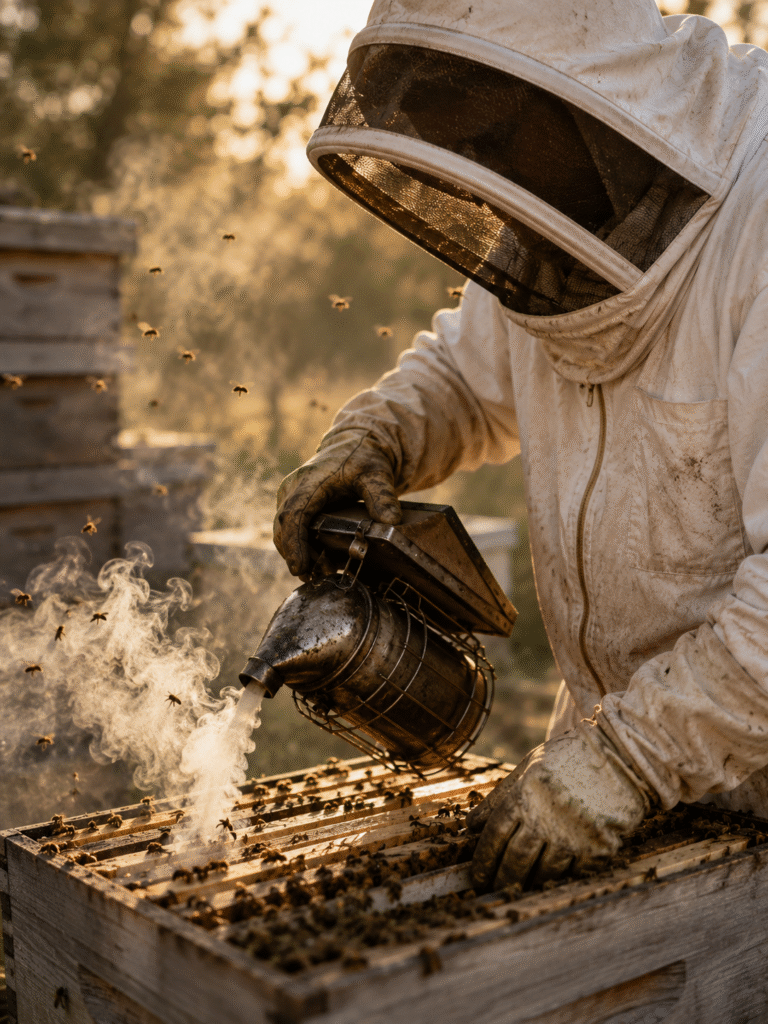
Smoke is the classic tool here, and understanding the alarm pheromone is what makes smoke make sense as more than tradition. Smoke doesn’t “calm” bees in some vague emotional sense — the leading explanation is that it disrupts the colony’s ability to detect and respond to alarm pheromone efficiently, both by masking the scent and by triggering a feeding response that shifts the colony’s attention. A few gentle puffs at the entrance before opening a hive, and a light reapplication if bees start bearding up defensively during an inspection, does real chemical work, not just psychological work on the beekeeper.
Slow, deliberate movement matters for the same underlying reason. Sudden motion and vibration seem to amplify how quickly alarm signals spread through a colony — which tracks with what I’ve watched happen during a rushed inspection versus a patient one. The rushed ones are almost always the ones where I walk away having been stung more than once.
Myth vs. Fact
Myth: Bees that attack in groups are simply more aggressive by temperament.
Fact: Group stinging is coordinated chemical signaling, not a personality trait. Any honey bee colony can produce a defensive, multi-sting response under the right conditions — a strong alarm signal, colony stress, or a genetically defensive strain (Africanized bees, for instance, are documented to mount faster, more intense alarm-pheromone-driven responses than typical European stock, which is part of why they’re managed so differently). Individual “aggression” is largely a myth; what varies is how quickly and strongly a colony amplifies the alarm signal once it starts.
The Bigger Picture
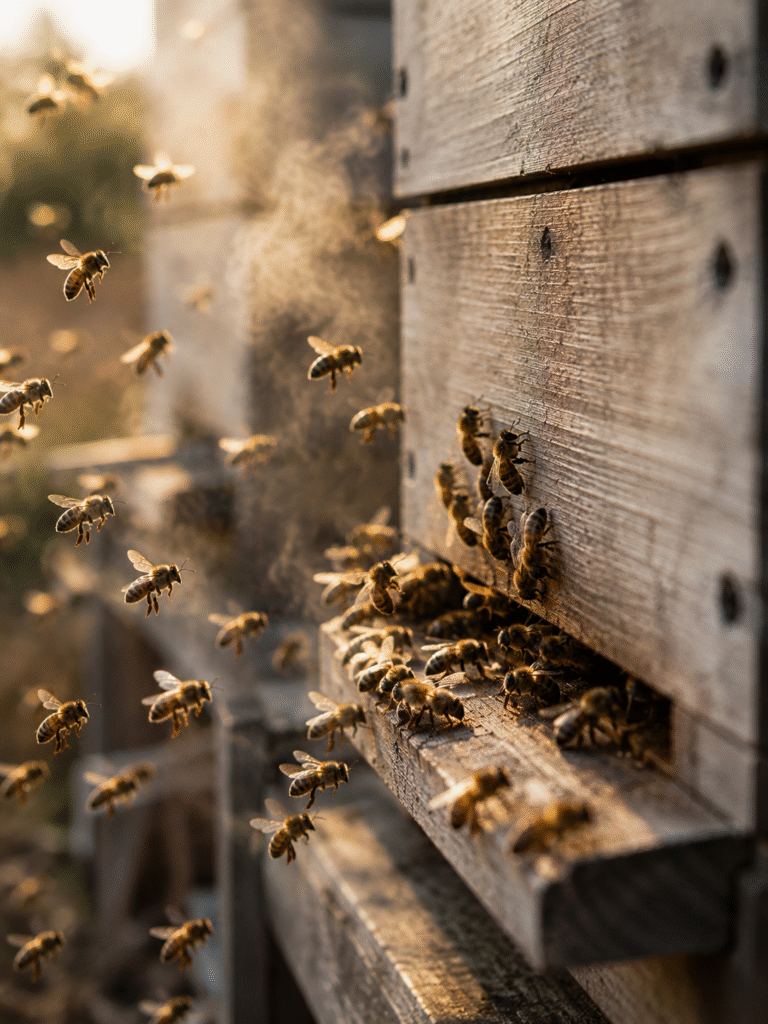
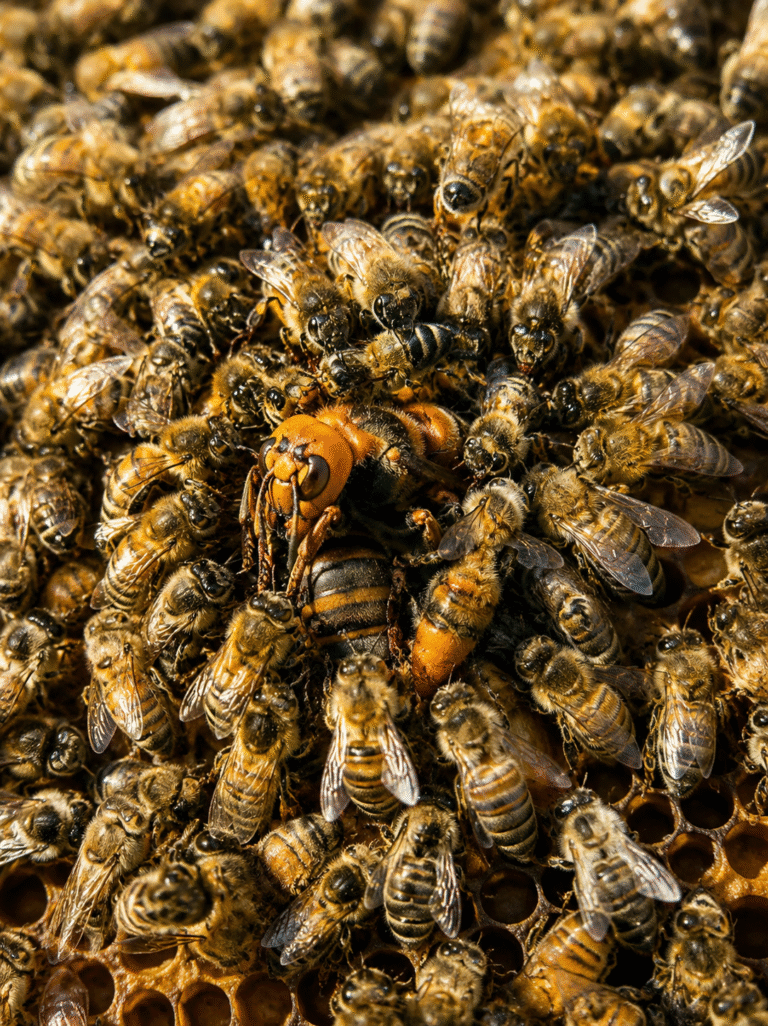
What I find genuinely remarkable about this, the longer I sit with it, is what it says about how a colony functions as a single unit rather than tens of thousands of individuals. No single bee “decides” to organize a group defense. The alarm pheromone does that work automatically, chemically, faster than any coordinated decision could travel through a crowd of insects by sight or sound alone. It’s one of the clearest examples I know of a superorganism behaving like a single nervous system — pain in one part of the body triggering a response felt, and acted on, everywhere else almost instantly.
That’s not a comforting thought in the middle of a real defensive event. But it is, I think, one of the more genuinely impressive things about how a hive holds itself together.
FAQ
Does a bee sting smell like banana? Yes. The primary alarm pheromone compound released during a sting, isopentyl acetate, has a distinct banana-like scent that has been documented in chemical ecology research for decades.
Why do bees attack in groups? A sting releases a chemical alarm signal that marks the target and recruits nearby guard bees to the same location, which is why group stinging tends to cluster at one spot rather than scattering randomly across a target.
Should I avoid banana-scented products near bees? Yes, if you can. Strong banana scents can register as a false alarm signal to a defensive colony, potentially triggering the same recruitment response as a real sting.
Can bees smell fear or adrenaline? Not in the way the folklore suggests. What bees actually detect is the alarm pheromone released by other stinging bees — not a chemical signature of human fear or stress hormones.
How far does bee alarm pheromone travel? It disperses within a few meters of the release point and fades within several minutes, though a colony under sustained stress can keep the alarm state active for longer as more bees release the signal.