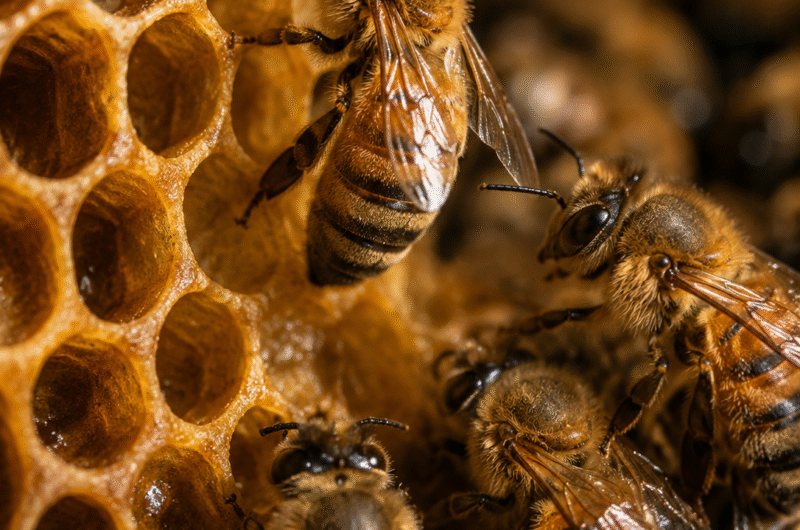

Bees can distinguish quantities and may even grasp zero. Here’s what the research actually shows about honey bee math.
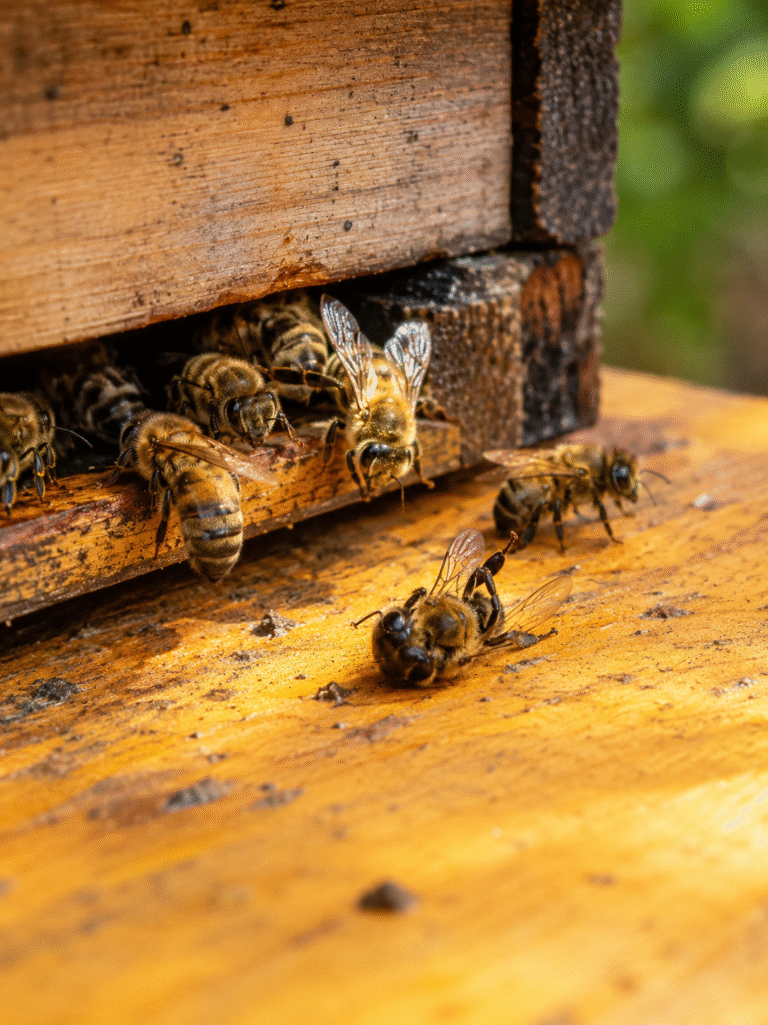
Watch a forager work a patch of clover long enough and you’ll start to notice something odd: she doesn’t visit flowers randomly. She works a route, skips ones she’s already drained, and seems to know — in some rough, functional sense — how many blossoms she’s already checked in a given pass. I used to write this off as instinct dressed up as intelligence. Then I started reading the actual cognition research, and it turns out that instinct might be doing more arithmetic than any of us gave it credit for.
Research on honey bee cognition has shown that bees can reliably distinguish between small quantities of objects, and in trained experimental settings, some studies indicate they can grasp a rudimentary concept of zero as “less than one” — a numerical concept that even some vertebrates struggle with. That’s not the same as a bee doing long division, but it’s a lot more than the old “tiny brain, pure reflex” model most of us grew up assuming.
What “Counting” Actually Means in Insect Cognition Research
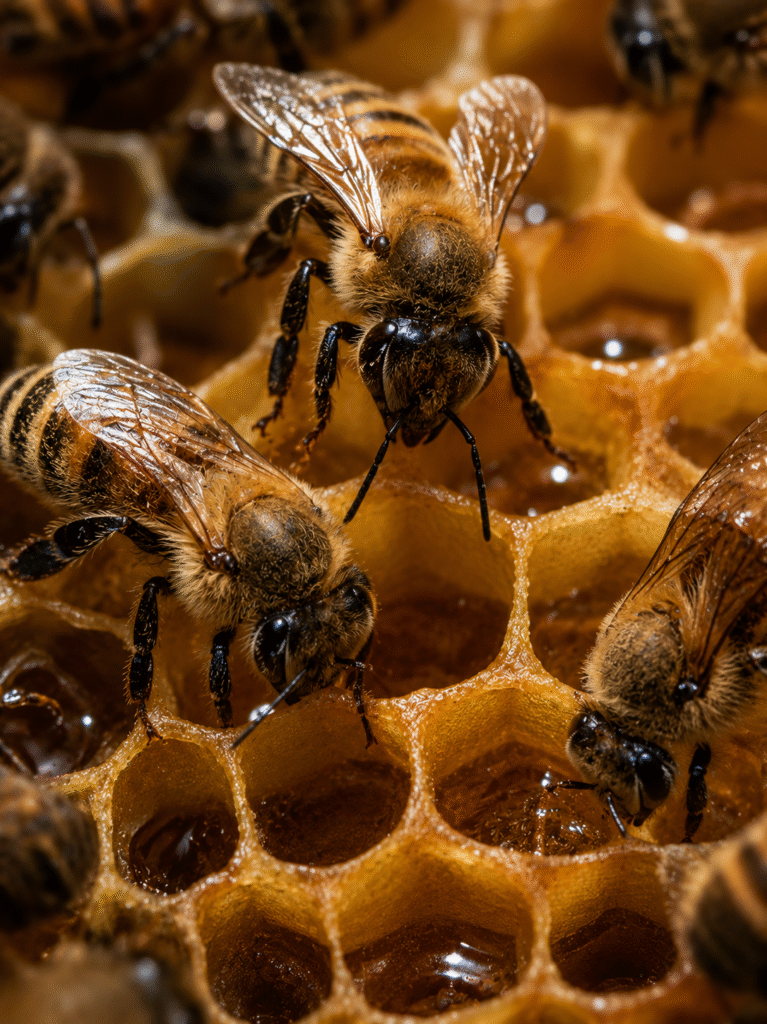
Before going further, it’s worth being precise about what researchers mean when they say an animal can “count,” because it’s easy to overstate this and just as easy to dismiss it unfairly.
Cognition researchers generally distinguish a few separate abilities that get lumped together under “counting” in casual conversation:
- Subitizing — instantly recognizing small quantities (typically up to three or four) without counting sequentially, the way you can glance at three dots and know it’s three without tallying them.
- Relative quantity discrimination — telling that one group has more or fewer items than another, without needing to know the exact number.
- Ordinal understanding — grasping sequence, like “first,” “second,” “third.”
- True counting — sequentially tagging items with number symbols or words, which requires symbolic language most animals don’t have.
Bees have shown solid evidence for the first two, and — more surprisingly — some evidence relevant to a limited form of the third and even engagement with the concept of zero, which is its own separate cognitive leap. What they haven’t demonstrated is true counting in the human sense, and no serious researcher claims they have.
The Study That Rewrote the Zero-Understanding Conversation
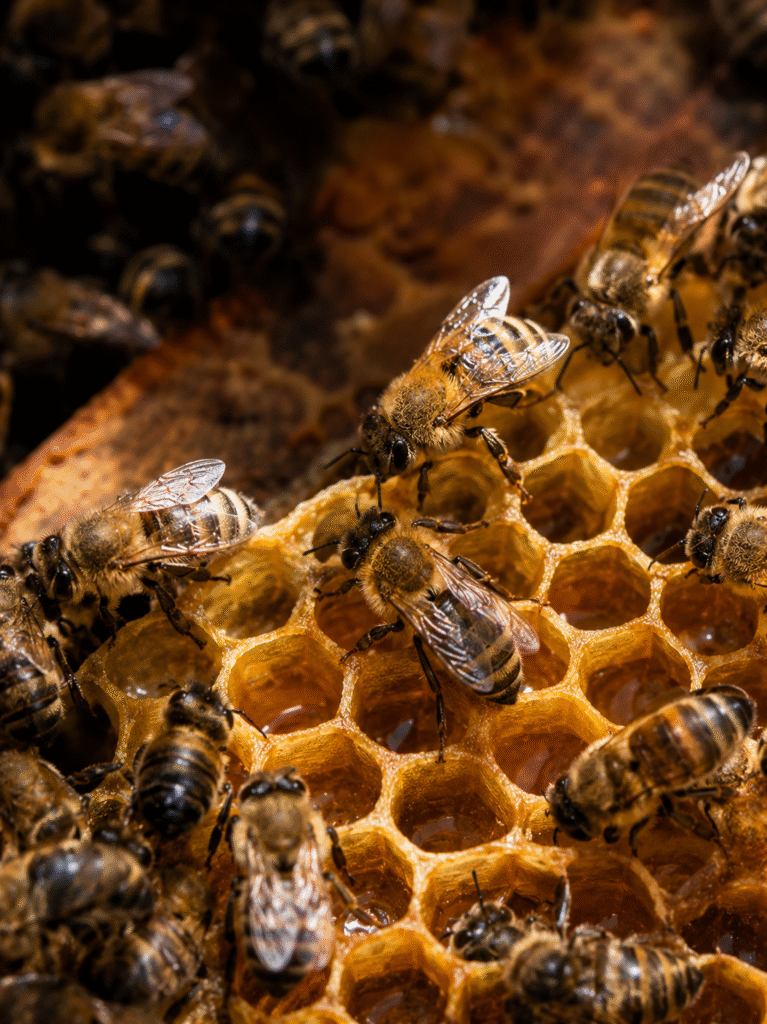
The zero result is the one that tends to raise eyebrows, so it’s worth explaining carefully rather than just citing it as a headline fact. In controlled experiments, bees were trained to choose the image containing fewer elements between two options. When researchers then presented a blank image against one containing a small number of elements, trained bees were able to correctly treat “blank” as the lower quantity — placing it below one on a mental number line, in effect, rather than treating an empty set as simply uninterpretable or ignoring it.
That’s meaningfully different from a bee “understanding zero” the way a human child eventually does in a formal math class. It’s closer to an operational rule: fewer is fewer, all the way down to nothing. But that’s still a more sophisticated numerical placement than researchers expected from an insect brain running on fewer than a million neurons — for comparison, a human brain runs on roughly 86 billion.
How Bees Use Numbers in the Real World
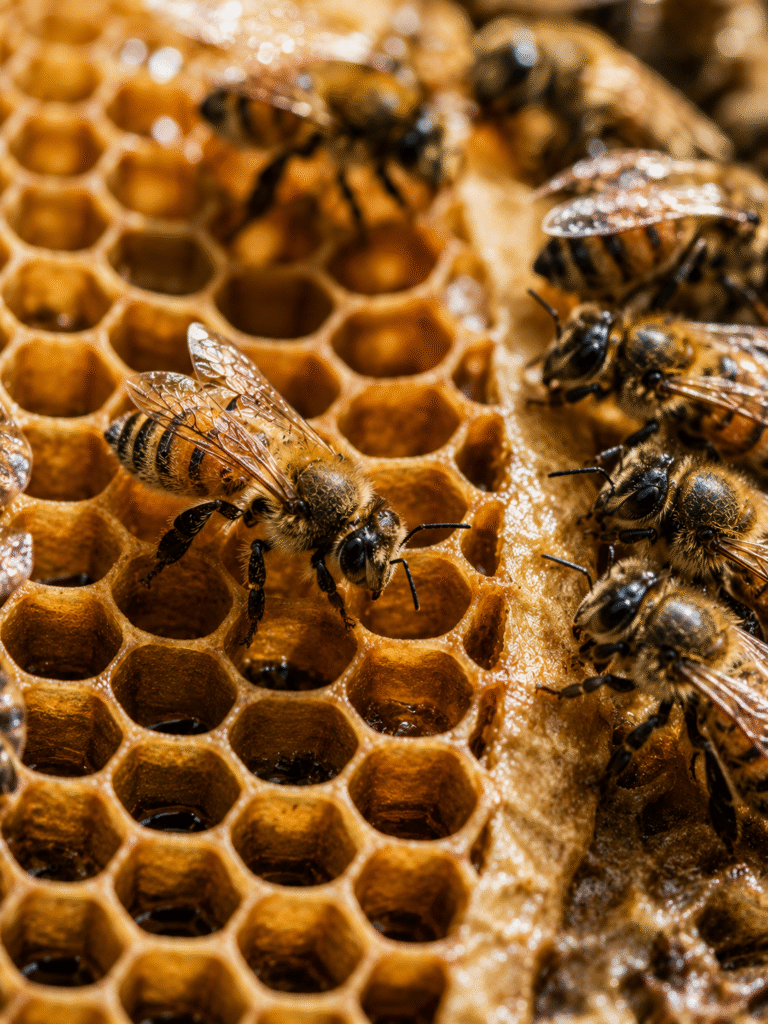
This isn’t just a laboratory curiosity, and it isn’t the only cognitive trick foragers pull off. The same brains that handle quantity discrimination also recognize individual human faces — a separate but related feat of visual pattern processing — and perceive ultraviolet patterns on flowers that are completely invisible to us, which gives them another layer of information to weigh when deciding where and how often to forage. Numbers are just one input among several that a forager appears to be tracking constantly:
- Route optimization. Bees build efficient foraging circuits, sometimes called “trap-lining,” where they learn and repeat a sequence of flower visits rather than searching randomly — a task that benefits from some sense of relative position and quantity of resources encountered.
- Waggle dance distance encoding. The famous waggle dance communicates distance and direction to a food source through duration and angle, which requires the dancing bee to encode something functionally numerical about how far she traveled. We’ve gone deeper into how that dance actually works as a kind of internal map if you want the fuller picture of that communication system.
- Landmark sequencing. Bees navigating back to a hive appear to use ordered landmark cues — essentially “third turn after the big oak” — which implies some capacity for ordinal sequencing, not just raw quantity discrimination.
None of this requires the bee to be doing conscious arithmetic. It requires a nervous system tuned by evolutionary pressure to extract and use quantity-relevant information efficiently, because a forager that wastes energy revisiting drained flowers doesn’t pass on her genes.
How a Brain This Small Can Do This Much
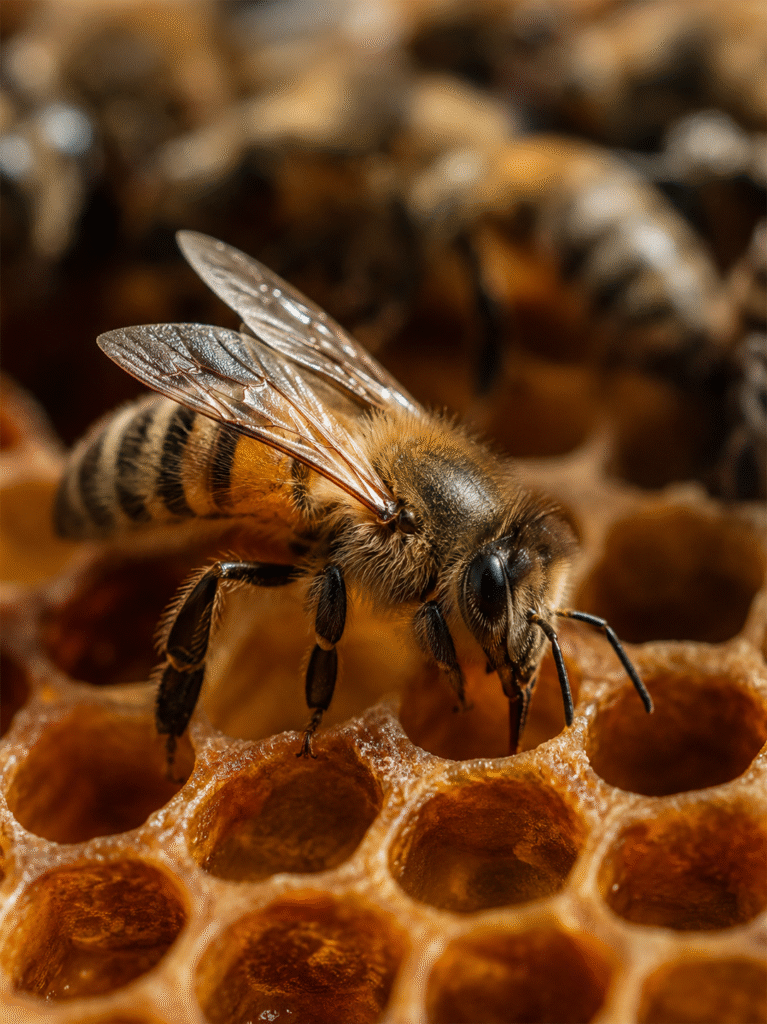
A honey bee’s brain contains roughly one million neurons, compared to a human brain’s estimated 86 billion, yet it supports flight, navigation, complex social communication, and — per the cognition research above — surprisingly capable numerical discrimination, which suggests intelligence in insects may depend more on neural efficiency and circuit design than on raw neuron count.
This is the part of the research I find genuinely humbling to sit with as someone who spends a lot of time physically close to these animals. We tend to assume cognitive sophistication scales with brain size in a straightforward way, and bees are one of the clearest counterexamples in the animal kingdom. Their brains appear to be doing an enormous amount with very limited hardware — likely through densely optimized, specialized neural circuits rather than sheer volume.
I’ll admit some caution here too, because it’s easy for this kind of research to get overstated in popular coverage. A colony making foraging decisions that look numerically informed is not the same claim as an individual bee possessing abstract mathematical reasoning, and researchers in this field are generally careful to draw that line even when headlines blur it.
Myth vs. Fact: Insect Cognition
| Myth | What the Research Actually Shows |
|---|---|
| Insects operate purely on fixed reflexes, with no real cognitive flexibility | Bees demonstrate trainable, flexible responses to novel quantity-based tasks in controlled experiments |
| “Counting” in bees means they do arithmetic like humans | Bees show quantity discrimination and limited numerical placement, not symbolic counting or arithmetic |
| Small brains can’t support complex behavior | Bee brains achieve sophisticated navigation, communication, and quantity discrimination with roughly one million neurons through efficient circuit design |
What This Means for How We Think About Insect Intelligence
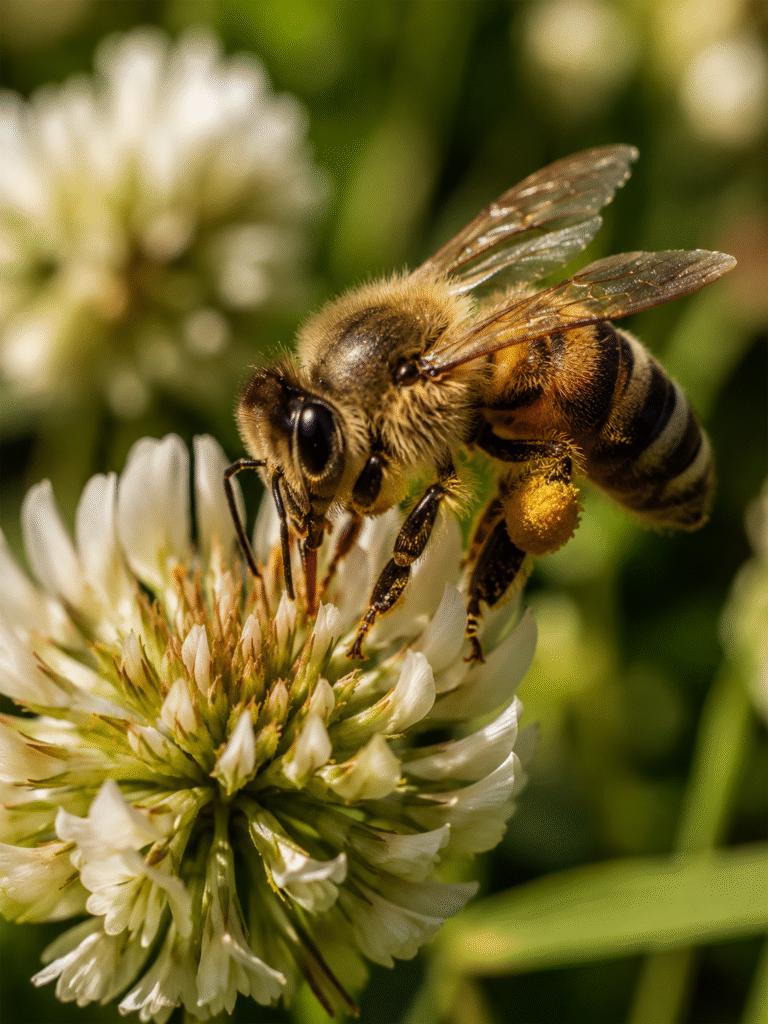
The honest takeaway isn’t “bees can do math” in the pop-science headline sense — it’s that the line we draw between “instinct” and “intelligence” is blurrier than it feels intuitively. A forager working a clover patch efficiently isn’t following a rigid script; she’s applying something that functions like learned numerical judgment, tuned over millions of years of selection pressure. Whether you want to call that “counting” is partly a definitional question, and reasonable researchers land in different places on it.
What’s not in question is that this research keeps pushing the goalposts on what we assumed small-brained animals were capable of — which is worth remembering the next time you watch a bee work a flower bed like she knows exactly where she’s already been. She probably does, in her own terms.
FAQ
Can bees really count? Research shows bees can reliably distinguish between small quantities and demonstrate some ordinal and zero-related numerical processing in controlled experiments — not true symbolic counting the way humans do, but more sophisticated quantity discrimination than researchers previously expected from an insect.
Do bees understand the concept of zero? In experimental settings, trained bees have correctly treated a blank (empty) image as representing a lower quantity than any populated image, suggesting a basic operational grasp of “less than one” — though this is distinct from abstract mathematical understanding of zero.
How smart are honey bees compared to other insects? Honey bees are considered among the most cognitively sophisticated insects studied, showing complex social communication, flexible learning, facial recognition of humans in lab settings, and measurable numerical discrimination — all with a brain of roughly one million neurons.
Can bees do basic math? Bees can perform tasks that require processing relative quantities and, in some studies, ordinal sequencing, but there’s no evidence they perform arithmetic operations like addition or subtraction in any symbolic sense.
What is the smallest number of neurons needed for counting? There’s no fixed threshold — bee research suggests that quantity discrimination can emerge from relatively small, efficiently organized neural circuits rather than requiring large absolute neuron counts, which is still an active area of comparative cognition research.